


IPPF works to ensure that every woman and girl has the human right to choose to be pregnant or not and we will continue to supply and support safe and legal abortion services and care. We are committed to reducing the number of deaths of women and girls who are forced to turn to unsafe abortion methods. Make Abortion Safe. Make Abortion Legal. For all Women and Girls. Everywhere.
Articles about Abortion Care
16 June 2016
Service Delivery
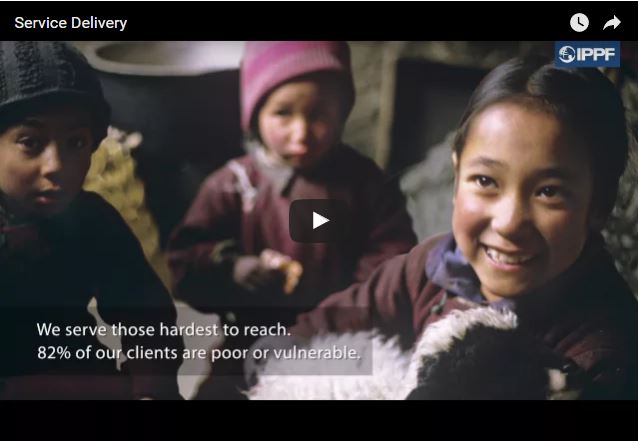
Women and girls around the world have an unmet need for reproductive health services. In 2015, IPPF provided 175 million services, 82% of which went to poor and marginalised people.
06 June 2016
Annual Performance Report 2015
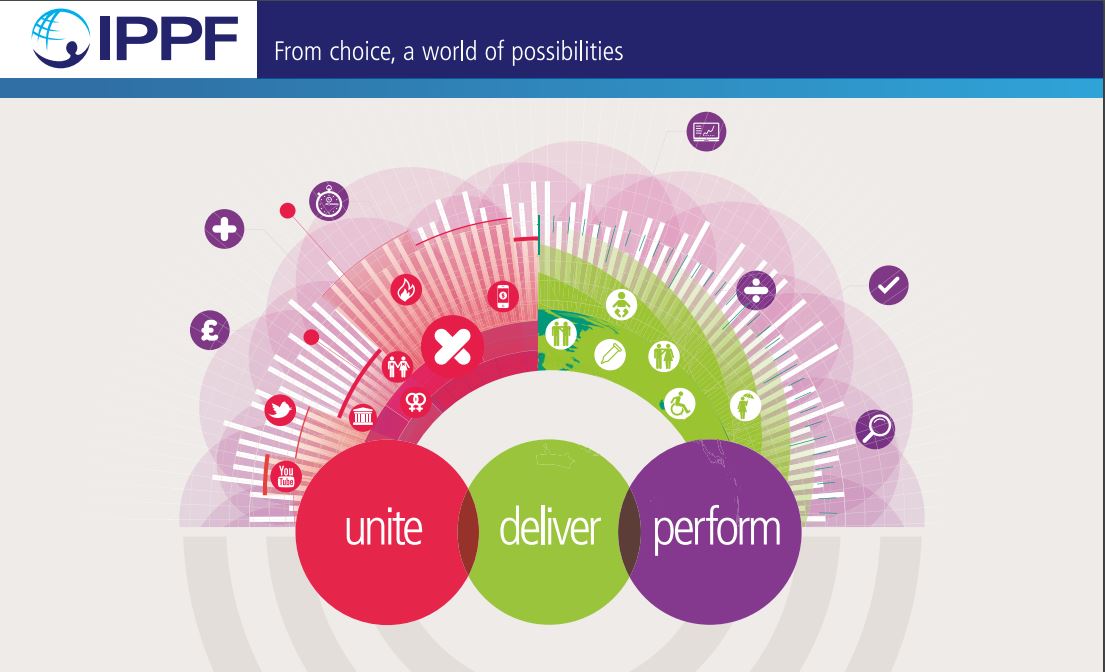
When IPPF refocused efforts with the three Changes Goals – Unite, Deliver and Perform – an ambitious commitment was made to double the number of sexual and reproductive health services provided between 2010 and 2015. We are proud to announce that 175.3 million services were provided in 2015, only 1 per cent below the goal of 176.4 million. This is a remarkable achievement and a result of Member Associations’ unwavering efforts and commitment. More than eight in ten clients who received services from IPPF were poor and vulnerable, while 44 per cent of our services went to young people. In 2015, Member Associations and collaborative partners in 48 countries contributed to 82 legal and policy changes that support or defend sexual and reproductive health and rights. At the regional and global levels, IPPF’s advocacy contributed to 22 policy changes. The highlight of our advocacy achievements was the inclusion of gender equality and women’s empowerment, sexual and reproductive health, and reproductive rights in the 2030 Agenda for Sustainable Development. IPPF continued to invest in learning, business processes and information management systems to drive performance and value for money. We are increasingly using data to guide decision making and to ensure accountability to our clients, donors and partners.

Options: Maya contemplates abortion
He seemed so nice, I felt excited. I never thought he would push me to the ground and pull my underwear down. I should have fought harder, but he was so strong. He was hurting me so much – I was just crushed. I wish I had said something to Mama straight away but as the time passed it became harder to talk about it so I told no one. My friends would have said it was my fault – I always said I fancied him. Mama and Papa would never understand or support me. Mama found my diary and read it. The hardest thing was figuring out what to do. We were both confused. She had heard of a woman who helped girls like me to get an abortion. We went to the woman’s house, it was dirty and she was not friendly to us – just asked if we had money. Mama didn’t like it so we left. She said it didn’t look safe and it would be bad for me to be seen there. She decided that we would go to a clinic in the next town so no one would know me. I felt scared. Because I had left it a long time the nurse told me I was 17 weeks pregnant. She then went through all the options with me. It was a lot of information to take in, but I felt like it was my decision and the most important thing was I didn’t feel ready to be a mama myself. It was quite a long medical check up with lots of embarrassing questions. I don’t remember much of what happened next. I was quite scared. I had an injection so I don’t remember anything until it was all over. The nurse came to talk to me about contraception. Then I had an STI and HIV test and that was ok. It still shocks me when I think about all that has happened. I am sure that I made the right decision to have an abortion. It let me get on with my life and studies.

24 May 2016
How to educate about abortion: A guide for peer educators, teachers and trainers
How to educate about abortion: A guide for peer educators, teachers and trainers, has been developed for trainers and educators who want to deliver workshops or training on abortion to young people, especially those training young peer educators. The guide includes key terms, instructions for facilitators as well as specific activities that educators can use. We also published a summary of this publication:

IPPF welcomes Guttmacher Institute’s new worldwide study on abortion
IPPF welcomes the release by the Guttmacher Institute of new worldwide estimates of abortion incidence. These estimates provide valuable information for organizations like IPPF working to improve access to sexual and reproductive health and rights. A key finding from the study is that roughly one in four pregnancies globally ends in abortion, showing that abortion is a common occurrence in many women’s life. The study also shows that the larger decline in abortion rates between 1990 and 2014 occurred in developed countries (where abortion is generally legal and available), but rates have not changed significantly in the developing world, where abortion laws are often restrictive. This demonstrates that restricting access to safe legal abortion does not reduce the number of abortions but rather pushes abortions underground, leading to risks to women’s health and lives. While estimates seem to indicate a reduction in abortion related deaths, complications from unsafe abortion - while less serious due to increased access to post-abortion care and increased availability of misoprostol - continue to affect millions of women each year. In fact, data for 2012 show that 6.9 million women in developing regions were treated for complications from unsafe abortions. Developing regions also continue to be disproportionally affected by unsafe abortion, with nearly all deaths due to unsafe abortion occurring in developing countries, with the highest number occurring in Africa. Very importantly, the study outlines how high levels of unmet need for contraception contribute to higher abortion rates in developing regions. This again shows the relevance of organizations like IPPF working to prevent unwanted pregnancy through modern contraceptive services, promote comprehensive sexuality education and eliminate sexual violence and coercion. At the same time, IPPF recognizes the importance of increasing access to safe abortion services and IPPF will continue to provide access to safe abortion and to promote a woman’s right to choose.
23 May 2016
IPPF Humanitarian Report

05 May 2016
IPPF funds youth-led projects to tackle abortion stigma
As part of our work in tackling abortion stigma, IPPF awards small grants to young people to create projects that would tackle the issue of abortion stigma in their communities. In 2015, small grants were awarded to promising projects submitted by young people in Ghana, Palestine, Spain, Macedonia and Nepal. In 2017, a further six grants were awarded to young people in Guinea, Kenya, Nepal, Puerto Rico, Sierra Leone and Venezuela. In 2019 five more grants were awarded to youth-led projects in Albania, Colombia, Nigeria, Spain and Tanzania. These documents give more information about what these projects set out to do, their methods and the results.

05 May 2016
Tackling abortion stigma
Abortion stigma affects women and girls, abortion providers, reproductive rights advocates and communities. Although abortion is a common experience around the world, it is still largely stigmatised. Negative attitudes and beliefs about abortion may act as barriers to accessing safe services and can make it difficult for people to talk about their experiences of abortion. This can be very isolating, and may force people to continue unwanted pregnancies or to seek unsafe abortion. Since 2011 the David & Lucile Packard Foundation has supported IPPF to implement a range of initiatives to investigate and address abortion stigma. Find out more here, about the effective strategies and learning over the course of this project. It is often young people who are most severely affected by abortion stigma, and who are most at risk of suffering health complications as a result of unsafe abortion. Since 2014 IPPF has delivered a project focused on abortion stigma as it affects young people’s access to services, with targeted work in our Member Associations in Benin, Burkina Faso, India and Pakistan. This builds on previous initiatives and includes: Implementing individual, community and clinic-based interventions in the four countries where abortion stigma research was conducted under the previous grant. Abortion stigma at the community level will be measured at the beginning and end of each project using an adapted version of the Stigmatizing Attitudes, Beliefs and Actions Scale (SABAS) developed by Ipas Developing global guidance and tools to improve abortion messaging to ensure abortion is integrated into peer educator training and better raise awareness of abortion-related services to young people Building capacity of youth advocates to speak out on the right to access abortion services Generating and sharing of evidence and good practices on addressing abortion stigma In addition to the abortion stigma work supported by the Packard Foundation, the IPPF Western Hemisphere Region (WHR) has been conducting a research study in collaboration with Ibis Reproductive Health to better understand the effects that the provision of abortion-related services have on providers’ and clients’ perceptions and experiences of stigma. This research has been conducted in four countries with different legal contexts and varying degrees of access to services: the Dominican Republic, Uruguay, Colombia, and Argentina. WHR is also working with the University of Michigan to pilot facilitated group workshops to reduce stigma and foster resilience among abortion service providers in Colombia, Argentina, Bolivia, Mexico and Peru. Through this project IPPF has created a range of tools and resources to support understanding of abortion stigma and to increase the capacity of our Member Associations to advocate for safe abortion, and to provide non-stigmatising education and information. How to talk about abortion: A guide for journalists, editors and media outlets encourages accurate reporting of the facts about abortion, and honest portrayals of abortion as part of real people’s lives and relationships. How to educate about abortion: A guide for peer educators, trainers and teachers is a comprehensive guide providing the rationale for teaching about abortion issues, as well a number of practical activities for doing so. The accompanying short animation distills this advice into just two minutes! How to talk about abortion: A guide to rights-based messaging is designed to help individuals and organizations think about the language and images they use to communicate about abortion and offers best practice tips. Again, a short animation has been created to share these tips further Our Member Associations in Bosnia and Herzegovina, Cameroon, Ghana, and Pakistan have shared best practices for improving young people’s access to safe abortion services. These feature strategies based on: creating a ‘buddy system’ for young people accessing services, working with educational establishments, using social media, and youth friendly spaces respectively. In 2015, young people from IPPF Member Associations in Spain, Nepal, Macedonia, Ghana and Palestine were awarded small grants to support projects focused on tackling abortion stigma. Read more about these youth-led projects. The ‘Youth Against Abortion Stigma’ website features blogposts from young IPPF volunteers around the world. In 2017, young people from IPPF Member Associations in Guinea, Kenya, Nepal, Puerto Rico, Sierra Leone and Venezuela were awarded small grants to support youth-led projects focused on tackling abortion stigma. SEE OUR RESULTS
IPPF welcomes new UN commentary on indivisible right to sexual and reproductive health
On International Women’s Day, the International Planned Parenthood Federation (IPPF) has welcomed a new commentary from UN experts which says that the right to sexual and reproductive health is indivisible from other human rights. “It is absolutely right for the Committee to address the issue of sexual and reproductive health specifically, today of all days,” said Tewodros Melesse, IPPF’s Director General. “Sadly millions of women are still denied their basic rights because they are poor, because they suffer discrimination or because they lack legal protection.” The 18 independent members of the Committee on Economic, Social and Cultural Rights said that the right to sexual and reproductive health was not only an integral part of the general right to health, but fundamentally linked to the enjoyment of many other human rights, including the rights to education, work and equality. They said that a lack of care for mothers in childbirth or a lack of access to safe abortion, often leading to maternal death, constitutes a violation of the right to life, and in certain circumstances can amount to torture. “No woman should die in childbirth in 2016 because of a lack of adequate care,” said Mr Melesse. “We know that access to safe abortion saves women’s lives, yet millions are denied that right.” IPPF is a network of sexual and reproductive health and rights organisations in 170 countries that are equipped to monitor and respond to any member of the public who wants information, services, contraception and access to abortion and are available to serve at the first point of response. For further information and interviews contact press office 02079398227

IPPF calls for G7 leaders to prioritize the full range of sexual and reproductive health care services in Universal Health Coverage
18 February, Tokyo:The International Planned Parenthood Federation (IPPF) calls for G7 leaders to prioritize the full range of sexual and reproductive health care services in plans for Universal Health Coverage in their forthcoming Ise Shima G7 Summit in May. IPPF made this call at this week’s G7 Health Experts’ Meeting in Tokyo. IPPF said sexual and reproductive health care (SRH)services are essential because they save lives, are cost effective and offer universal benefits. IPPF highlighted that SRH services are critical to achieving women’s empowerment, equality and full participation in society. These services play a crucial part in the development of resilient health systems that can help reduce the impact of humanitarian disasters. Giselle Carino, IPPF Western Hemisphere Regional Director Designate, who attended at the meeting said: "Governments (public sector) cannot work alone to ensure that no-one is left behind. Locally-owned organizations, such as IPPF Member Associations, are working at the frontline supporting communities, particularly poor and underserved people including women and adolescents, to make a real and sustainable difference in their health status and realize human security. G7 leaders must recognize the role of civil society in health system strengthening and building a new global health architecture". IPPF also calls for: The principle of Universal Health Coverage: that everyone has the right to health without facing financial hardship and no social groups can be left behind. Essential sexual, reproductive, maternal, new-born, child and adolescent health services at the primary care level should be a priority of Universal Health Coverage because investment in these services is among the most cost-effective interventions that a health system can provide. The importance of the social and gender determinants of health should be recognized by mainstreaming gender equality into Universal Health Coverage and national health strategies. Making significant progress on both targets 3.7 and 3.8 would be transformative. Therefore IPPF urges the G7 to prioritize discussion of how these targets can be achieved during preparations for the Ise-Shima summit and in particular calls on the G7 to ensure that sexual and reproductive health services are prioritized in plans for Universal Health Coverage.
16 June 2016
Service Delivery
Women and girls around the world have an unmet need for reproductive health services. In 2015, IPPF provided 175 million services, 82% of which went to poor and marginalised people.
06 June 2016
Annual Performance Report 2015
When IPPF refocused efforts with the three Changes Goals – Unite, Deliver and Perform – an ambitious commitment was made to double the number of sexual and reproductive health services provided between 2010 and 2015. We are proud to announce that 175.3 million services were provided in 2015, only 1 per cent below the goal of 176.4 million. This is a remarkable achievement and a result of Member Associations’ unwavering efforts and commitment. More than eight in ten clients who received services from IPPF were poor and vulnerable, while 44 per cent of our services went to young people. In 2015, Member Associations and collaborative partners in 48 countries contributed to 82 legal and policy changes that support or defend sexual and reproductive health and rights. At the regional and global levels, IPPF’s advocacy contributed to 22 policy changes. The highlight of our advocacy achievements was the inclusion of gender equality and women’s empowerment, sexual and reproductive health, and reproductive rights in the 2030 Agenda for Sustainable Development. IPPF continued to invest in learning, business processes and information management systems to drive performance and value for money. We are increasingly using data to guide decision making and to ensure accountability to our clients, donors and partners.
Options: Maya contemplates abortion
He seemed so nice, I felt excited. I never thought he would push me to the ground and pull my underwear down. I should have fought harder, but he was so strong. He was hurting me so much – I was just crushed. I wish I had said something to Mama straight away but as the time passed it became harder to talk about it so I told no one. My friends would have said it was my fault – I always said I fancied him. Mama and Papa would never understand or support me. Mama found my diary and read it. The hardest thing was figuring out what to do. We were both confused. She had heard of a woman who helped girls like me to get an abortion. We went to the woman’s house, it was dirty and she was not friendly to us – just asked if we had money. Mama didn’t like it so we left. She said it didn’t look safe and it would be bad for me to be seen there. She decided that we would go to a clinic in the next town so no one would know me. I felt scared. Because I had left it a long time the nurse told me I was 17 weeks pregnant. She then went through all the options with me. It was a lot of information to take in, but I felt like it was my decision and the most important thing was I didn’t feel ready to be a mama myself. It was quite a long medical check up with lots of embarrassing questions. I don’t remember much of what happened next. I was quite scared. I had an injection so I don’t remember anything until it was all over. The nurse came to talk to me about contraception. Then I had an STI and HIV test and that was ok. It still shocks me when I think about all that has happened. I am sure that I made the right decision to have an abortion. It let me get on with my life and studies.
24 May 2016
How to educate about abortion: A guide for peer educators, teachers and trainers
How to educate about abortion: A guide for peer educators, teachers and trainers, has been developed for trainers and educators who want to deliver workshops or training on abortion to young people, especially those training young peer educators. The guide includes key terms, instructions for facilitators as well as specific activities that educators can use. We also published a summary of this publication:
IPPF welcomes Guttmacher Institute’s new worldwide study on abortion
IPPF welcomes the release by the Guttmacher Institute of new worldwide estimates of abortion incidence. These estimates provide valuable information for organizations like IPPF working to improve access to sexual and reproductive health and rights. A key finding from the study is that roughly one in four pregnancies globally ends in abortion, showing that abortion is a common occurrence in many women’s life. The study also shows that the larger decline in abortion rates between 1990 and 2014 occurred in developed countries (where abortion is generally legal and available), but rates have not changed significantly in the developing world, where abortion laws are often restrictive. This demonstrates that restricting access to safe legal abortion does not reduce the number of abortions but rather pushes abortions underground, leading to risks to women’s health and lives. While estimates seem to indicate a reduction in abortion related deaths, complications from unsafe abortion - while less serious due to increased access to post-abortion care and increased availability of misoprostol - continue to affect millions of women each year. In fact, data for 2012 show that 6.9 million women in developing regions were treated for complications from unsafe abortions. Developing regions also continue to be disproportionally affected by unsafe abortion, with nearly all deaths due to unsafe abortion occurring in developing countries, with the highest number occurring in Africa. Very importantly, the study outlines how high levels of unmet need for contraception contribute to higher abortion rates in developing regions. This again shows the relevance of organizations like IPPF working to prevent unwanted pregnancy through modern contraceptive services, promote comprehensive sexuality education and eliminate sexual violence and coercion. At the same time, IPPF recognizes the importance of increasing access to safe abortion services and IPPF will continue to provide access to safe abortion and to promote a woman’s right to choose.
23 May 2016
IPPF Humanitarian Report
05 May 2016
IPPF funds youth-led projects to tackle abortion stigma
As part of our work in tackling abortion stigma, IPPF awards small grants to young people to create projects that would tackle the issue of abortion stigma in their communities. In 2015, small grants were awarded to promising projects submitted by young people in Ghana, Palestine, Spain, Macedonia and Nepal. In 2017, a further six grants were awarded to young people in Guinea, Kenya, Nepal, Puerto Rico, Sierra Leone and Venezuela. In 2019 five more grants were awarded to youth-led projects in Albania, Colombia, Nigeria, Spain and Tanzania. These documents give more information about what these projects set out to do, their methods and the results.
05 May 2016
Tackling abortion stigma
Abortion stigma affects women and girls, abortion providers, reproductive rights advocates and communities. Although abortion is a common experience around the world, it is still largely stigmatised. Negative attitudes and beliefs about abortion may act as barriers to accessing safe services and can make it difficult for people to talk about their experiences of abortion. This can be very isolating, and may force people to continue unwanted pregnancies or to seek unsafe abortion. Since 2011 the David & Lucile Packard Foundation has supported IPPF to implement a range of initiatives to investigate and address abortion stigma. Find out more here, about the effective strategies and learning over the course of this project. It is often young people who are most severely affected by abortion stigma, and who are most at risk of suffering health complications as a result of unsafe abortion. Since 2014 IPPF has delivered a project focused on abortion stigma as it affects young people’s access to services, with targeted work in our Member Associations in Benin, Burkina Faso, India and Pakistan. This builds on previous initiatives and includes: Implementing individual, community and clinic-based interventions in the four countries where abortion stigma research was conducted under the previous grant. Abortion stigma at the community level will be measured at the beginning and end of each project using an adapted version of the Stigmatizing Attitudes, Beliefs and Actions Scale (SABAS) developed by Ipas Developing global guidance and tools to improve abortion messaging to ensure abortion is integrated into peer educator training and better raise awareness of abortion-related services to young people Building capacity of youth advocates to speak out on the right to access abortion services Generating and sharing of evidence and good practices on addressing abortion stigma In addition to the abortion stigma work supported by the Packard Foundation, the IPPF Western Hemisphere Region (WHR) has been conducting a research study in collaboration with Ibis Reproductive Health to better understand the effects that the provision of abortion-related services have on providers’ and clients’ perceptions and experiences of stigma. This research has been conducted in four countries with different legal contexts and varying degrees of access to services: the Dominican Republic, Uruguay, Colombia, and Argentina. WHR is also working with the University of Michigan to pilot facilitated group workshops to reduce stigma and foster resilience among abortion service providers in Colombia, Argentina, Bolivia, Mexico and Peru. Through this project IPPF has created a range of tools and resources to support understanding of abortion stigma and to increase the capacity of our Member Associations to advocate for safe abortion, and to provide non-stigmatising education and information. How to talk about abortion: A guide for journalists, editors and media outlets encourages accurate reporting of the facts about abortion, and honest portrayals of abortion as part of real people’s lives and relationships. How to educate about abortion: A guide for peer educators, trainers and teachers is a comprehensive guide providing the rationale for teaching about abortion issues, as well a number of practical activities for doing so. The accompanying short animation distills this advice into just two minutes! How to talk about abortion: A guide to rights-based messaging is designed to help individuals and organizations think about the language and images they use to communicate about abortion and offers best practice tips. Again, a short animation has been created to share these tips further Our Member Associations in Bosnia and Herzegovina, Cameroon, Ghana, and Pakistan have shared best practices for improving young people’s access to safe abortion services. These feature strategies based on: creating a ‘buddy system’ for young people accessing services, working with educational establishments, using social media, and youth friendly spaces respectively. In 2015, young people from IPPF Member Associations in Spain, Nepal, Macedonia, Ghana and Palestine were awarded small grants to support projects focused on tackling abortion stigma. Read more about these youth-led projects. The ‘Youth Against Abortion Stigma’ website features blogposts from young IPPF volunteers around the world. In 2017, young people from IPPF Member Associations in Guinea, Kenya, Nepal, Puerto Rico, Sierra Leone and Venezuela were awarded small grants to support youth-led projects focused on tackling abortion stigma. SEE OUR RESULTS
IPPF welcomes new UN commentary on indivisible right to sexual and reproductive health
On International Women’s Day, the International Planned Parenthood Federation (IPPF) has welcomed a new commentary from UN experts which says that the right to sexual and reproductive health is indivisible from other human rights. “It is absolutely right for the Committee to address the issue of sexual and reproductive health specifically, today of all days,” said Tewodros Melesse, IPPF’s Director General. “Sadly millions of women are still denied their basic rights because they are poor, because they suffer discrimination or because they lack legal protection.” The 18 independent members of the Committee on Economic, Social and Cultural Rights said that the right to sexual and reproductive health was not only an integral part of the general right to health, but fundamentally linked to the enjoyment of many other human rights, including the rights to education, work and equality. They said that a lack of care for mothers in childbirth or a lack of access to safe abortion, often leading to maternal death, constitutes a violation of the right to life, and in certain circumstances can amount to torture. “No woman should die in childbirth in 2016 because of a lack of adequate care,” said Mr Melesse. “We know that access to safe abortion saves women’s lives, yet millions are denied that right.” IPPF is a network of sexual and reproductive health and rights organisations in 170 countries that are equipped to monitor and respond to any member of the public who wants information, services, contraception and access to abortion and are available to serve at the first point of response. For further information and interviews contact press office 02079398227
IPPF calls for G7 leaders to prioritize the full range of sexual and reproductive health care services in Universal Health Coverage
18 February, Tokyo:The International Planned Parenthood Federation (IPPF) calls for G7 leaders to prioritize the full range of sexual and reproductive health care services in plans for Universal Health Coverage in their forthcoming Ise Shima G7 Summit in May. IPPF made this call at this week’s G7 Health Experts’ Meeting in Tokyo. IPPF said sexual and reproductive health care (SRH)services are essential because they save lives, are cost effective and offer universal benefits. IPPF highlighted that SRH services are critical to achieving women’s empowerment, equality and full participation in society. These services play a crucial part in the development of resilient health systems that can help reduce the impact of humanitarian disasters. Giselle Carino, IPPF Western Hemisphere Regional Director Designate, who attended at the meeting said: "Governments (public sector) cannot work alone to ensure that no-one is left behind. Locally-owned organizations, such as IPPF Member Associations, are working at the frontline supporting communities, particularly poor and underserved people including women and adolescents, to make a real and sustainable difference in their health status and realize human security. G7 leaders must recognize the role of civil society in health system strengthening and building a new global health architecture". IPPF also calls for: The principle of Universal Health Coverage: that everyone has the right to health without facing financial hardship and no social groups can be left behind. Essential sexual, reproductive, maternal, new-born, child and adolescent health services at the primary care level should be a priority of Universal Health Coverage because investment in these services is among the most cost-effective interventions that a health system can provide. The importance of the social and gender determinants of health should be recognized by mainstreaming gender equality into Universal Health Coverage and national health strategies. Making significant progress on both targets 3.7 and 3.8 would be transformative. Therefore IPPF urges the G7 to prioritize discussion of how these targets can be achieved during preparations for the Ise-Shima summit and in particular calls on the G7 to ensure that sexual and reproductive health services are prioritized in plans for Universal Health Coverage.