


IPPF works to ensure that every woman and girl has the human right to choose to be pregnant or not and we will continue to supply and support safe and legal abortion services and care. We are committed to reducing the number of deaths of women and girls who are forced to turn to unsafe abortion methods. Make Abortion Safe. Make Abortion Legal. For all Women and Girls. Everywhere.
Articles about Abortion Care

IPPF responds to the announcement of funding from the Government of Japan
IPPF’s Director General, Tewodros Melesse, has paid tribute to the Government and people of Japan, following the announcement that Japan will support the provision of sexual and reproductive health and rights (SRHR) for 2017. The Japanese Government has announced that it will contribute approximately 3.1 billion yen (roughly $28 million) to IPPF and the United Nations Population Fund (UNFPA) in annual support. Mr Melesse said: “IPPF is grateful for Japan’s continuing support to SRHR through funding IPPF and UNFPA. Particularly in the current negative climate around SRHR, Japan’s expression of its strong will to continue its support for SRHR is warmly welcome.” “Japan’s long-lasting support for IPPF and for sexual and reproductive health care and rights has always been appreciated. These funds will help IPPF member associations around the world mitigate the cuts in funding we are seeing from some other sources. This will help protect health and save the lives of many people, especially women and girls.” Mr Melesse added: “We agree completely with the Government of Japan when it says that the provision of services relating to sexual and reproductive health and rights is essential for realizing universal health coverage (UHC), that ensures affordable access to basic health services for all whenever they need them throughout their lives. This is stated clearly in the Basic Design for Peace and Health, Japan’s global health policy and one of the outcome documents of the G7 Ise-Shima Summit, as well as in an outcome document from the The World Assembly for Women in Tokyo 2016 (WAW), the Third United Nations World Conference on Disaster Risk Reduction and the Sixth Tokyo International Conference on African Development (TICAD VI). IPPF would like to congratulate Japan’s leadership and commits to working closely with the Government of Japan to make a real difference to the lives of women, men and young people in around world and to achieve the Strategic Development Goals.” IPPF received approximately $1.13m from Japan in early 2017 for its activities targeted to Syrian refugees and internally displaced people, and will receive funding of $7.76m which was recently approved by the Japanese Parliaments.
21 March 2017
A roll back on women’s rights? The impact of the global gag rule
The Commission on the Status of Women (CSW) is a functional commission of the United Nations Economic and Social Council (ECOSOC). It is the principal global policy-making body dedicated exclusively to gender equality and advancement of women. IPPF convened a panel at CSW61 to examine the far-reaching implications of the US government's Global Gag Rule on the advancement of women’s rights globally. To open the meeting, IPPF provided context to the sexual and reproductive health and rights (SRHR) agenda, reminding us primarily of the huge strides made in recent years on women’s access to SRHR. With an increased policy focus on rights, significant drops in maternal mortality, systematic screening of gender-based violence at health facilities, increased uptake of family planning and post primary school retention of girls, women globally are more empowered to access their rights than ever before. However, recent political shifts have significantly changed the global landscape which could see these rights severely compromised if not removed entirely. IPPF provided an overview of the pivotal policies that have marked this shift, most notably the Global Gag Rule (GGR) passed by the Trump administration in January 2017 - an Executive Order which sees U.S. funding denied to health organizations if they use money from other donors to provide abortion services, counselling or referrals. This is accompanied by other damaging policies such as the application of the Kemp-Kasten amendment that could see funding for UNFPA, the world’s largest supplier of contraceptives, dramatically cut. This is despite evidence showing that the implementation of the GGR under previous Republican administrations did not reduce the number of unsafe abortions; rather, by eliminating access to contraception, it led to more unintended pregnancies and more unsafe abortions. IPPF also highlighted that it is the most vulnerable women who will suffer most from these policies: they will hit women living at the margins of society hardest – the poorest, women of colour, disabled women, the most remote and those under 25. And it is not just women’s access to SRHR that's at stake; panelists offered perspectives on how the Global Gag Rule and its potential chilling effect could impact upon their work. Amnesty International UK outlined the ways in which the Global Gag Rule could increase stigma around abortion and bolster the anti-choice movement. Cutting support to reproductive health sends a clear ideological message on abortion and could serve to embolden ultra conservative, anti-choice and anti-rights attitudes, causing a rollback on women’s rights. This in turn could undermine women’s rights organisations including violating their right to freedom of speech, association, and their ability to participate in the strengthening of their civil societies and holding their governments to account. Action Aid advised that the reduction in sexual and reproductive health services could also impact upon gender-based violence. They used the example of a series of women’s shelters that they set up in Uganda in partnership with UNFPA to support women escaping domestic violence and rape; the cuts experienced by UNFPA will likely mean these shelters are forced to close down despite the fact they are in no way related to abortion or the provision of reproductive health services. In light of this, Action Aid stressed the need to invest in and support local women's rights organisations who can take on the role of providing shelter and refuge as it is being retracted elsewhere. JustActions added to the debate by highlighting the extent to which policies like the Global Gag Rule could undermine the achievement of several of the new Sustainable Development Goals (SDGs). When you restrict women’s access to products and services that affect their sexual and reproductive health, it is harder to reduce poverty (SDG 1) and hunger (SDG 2), and is pretty much impossible to improve women’s health (SDG 3), education (SDG 4) and achieve gender equality (SDG 5). Economic growth and sustainability (SDG 8/9) will also suffer as lack of access to SRH impacts upon women's ability to work and it will therefore be harder to close income inequality gaps (SDG 9). That’s almost half of the 17 SDGS compromised right there. McCann Health, a global communications agency, suggested that in order to better focus attention on these issues and build public support, we need to reach out to sympathetic private sector partners and new communications platforms that could help us make our case to a different audience. Whether through social media based initiatives or formal events and protests, clear and loud communications that are accessible to everyone, do make a difference in the national and global discussion. Intersectionality, partnership and moving forward So what can we take from this? The fact that such a diverse range of organizations, some of whom do not even work on SRHR, came together in this high-profile, global space to speak out on the danger of these policies demonstrates just how wide-ranging and profound the implications could be. It also highlights the intersectionality of the issues at stake; it is very difficult to move towards women’s economic, political and social empowerment without access to sexual and reproductive rights and vice versa. This calls for a more holistic approach to women’s empowerment that does not isolate issues but acknowledges interlinkages and looks to foster cooperation and partnership where possible; be it through advocacy, campaigns or programmes. Perhaps most importantly, the impassioned speeches given by senior representatives from influential CSOs and the private sector calling for a progressive SRHR agenda show us that whilst the policy landscape is changing, so is our support base. And whilst the GGR may loom large on our horizon, we also see a groundswell of organisations, individuals and governments rising up in support of those who will be affected, and exploring ways to mitigate the financial and human cost of this policy. Ultimately this panel was about solidarity. Solidarity in the face of adversity. Solidarity for progress. Solidarity for human rights. And solidarity for women everywhere. And that at the very least is what CSW should foster. Long may it do so. WANT TO GET INVOLVED? SUBSCRIBE NOW TO GET UPDATES FROM IPPF SUPPORT OUR WORK WITH A DONATION
12 March 2017
Three ways Donald Trump's Global Gag Rule will impact contraception
In case you missed it – one of President Trump’s first order of business was to re-enact the Mexico City Policy, or as we in the sexual and reproductive health community un-affectionately call it - the Global Gag Rule (GGR). With a stroke of his pen – and may I mention surrounded by men in suits - Trump doubled down on women and girls' most basic human rights. Now, millions of women and girls will not have the right to choice – placing them at risk of unsafe abortion, maternal death and denying their basic human rights of accessing life-saving contraception. The GGR will have far reaching consequences on the health and lives of women and girls, and will go beyond their right to access safe abortion. In Africa, Asia and Latin America the ability for women and girls to access life-saving contraception will be compromised. US-donated contraceptives will be reduced and even eliminated, clinics and community health services may have to close their doors, and already fragile national health systems will be compromised. Here are three ways that Trump’s Global Gag Rule will impact on contraception in particular: It further exacerbates a growing global contraceptive funding gap. By 2020, the world will be facing a funding gap estimated at US173 million. Sufficient investment is not being prioritized for contraceptives at the global, national and subnational level. The US is the largest bilateral donor to family planning. Any reduction in political and financial commitment will have an impact on filling the funding gap. And we are concerned that this will lead to contraceptive stockouts – or women and girls leaving clinics empty handed. More will need to come out of pocket from women and girls in developing countries. While traditional donor funding is changing and diversifying, national governments need to invest more in family planning services and contraceptive supplies. Yet, contraceptives remain underfunded and a significant proportion is covered by individual through out of pocket expenses. Individual women and girls, including those that are poor and marginalized, will need to cover a substantial proportion of funding for contraceptives. We cannot take for granted that donor support to contraception alone will increase the availability of contraceptives. Investment and support is required for better supply chain management, and efficiencies in managing contraceptive security. Civil society organizations – like IPPF’s nationally-owned Member Associations – are instrumental in strengthening national and community contraceptive supplies processes and systems. Without contraceptives, there are no programmes. And without contraceptives, the Sustainable Development Goals and ambition of Universal Health Coverage will not be achieved as women and girls are denied to the means to prevent unwanted pregnancy. All people – women, men and young people - have the right to choose whether or not, how and when, to have children. 2017 is a pivotal moment, and we cannot be complacent. We must unite and be unwavering in our commitment to uphold the rights of women and girls. WANT TO GET INVOLVED? SUBSCRIBE NOW TO GET UPDATES FROM IPPF SUPPORT OUR WORK WITH A DONATION

17 March 2017
"The focus of our work is not abortion, it's human dignity"- Marta Royo at She Decides
by Marta Royo, Executive Director of Profamilia Colombia A couple of years ago Profamilia launched a campaign: "The decisions is yours". Its purpose was to inform women about what the constitution of our country says regarding the right to have access to a legal and safe abortion under three causes. It was not huge, it was carried out with funding from an anonymous donor, but it was a beginning, a necessary step in order to advance the wellbeing or women in my country, Colombia. So when I was invited to the She Decides Conference, to give testimony about the actual situation of sexual and reproductive health and rights in Colombia, and the challenges we are facing today in the beautiful region of Latin America due to very extreme conservative views and politics, I felt I was coming home. I sincerely hope I will be able to convey what it means for a black, or an indigenous, or a displace young woman in Colombia, to grow up and to live when it comes to her sexual and reproductive rights. We have a lot of statistics, numbers, plenty of laws that address most of the crucial issues around human rights but we are not reaching far enough, deep enough. I see these girls, every day, at my work, right outside my office -and those are the lucky ones, they were able to come to us, they already knew about Promafilia. In their eyes I see suffering, cruelty and abuse, sometimes ignorance and despair. They are looking for answers, for help, sometimes just counselling, a piece of information that takes their feelings and context into account, recognizing them as human beings, worthy of attention and respect. I also see light, curiosity, strength, perseverance, resilience and I cannot look away as I hope you will not look away. Now travel with me to Fundación and Cienaga in Magdalena, Apartado and Turbó in Antioquia, Ayapel, San Antero and Tierralta in Cordoba, Algarrobo and Guamal in Meta. Despite their beautiful, musical names, these are 10 municipalities that have been affected by conflict, war for way too many years - all types of conflict: guerilla, paramilitary, drug trafficking…whole communities that have had to move away from their homes over and over again, leaving everything behind, their whole lives. Amelia (not her real name) lives in one of these rural areas. She is a 13-year-old girl, abused by her father since she was very young. A couple of months after she got her period, she got pregnant. She wasn't feeling well and at first she thought it was a tumour -and so did a small, local clinic near her place. Only talking about it with her friends she realised that she was pregnant of her father´s baby. She decided she did not wanted to be a mother at 13 and with that decision started her long journey into inequality and injustices. She was denied her right for three times: first, the public health insurance provider in her area told her that she needed her parents authorization to get an abortion, because she was too young. Then, the only institution where she could get the procedure refused to conduct it, claiming the institution’s right to conscious objection, and finally the Colombian Family Welfare Institute (ICBF) tried to convince her to change her mind and have her father´s baby. The case eventually landed in one of our clinics in Bogotá where the pregnancy was terminated. However all the barriers she faced left a mark on her. To make matters worse, nothing happened to the father. She is now living in a protection shelter, having nowhere else to go. This is just one story. The adolescent pregnancy rate in these municipalities can be as high as 30%, proving the enormous inequality we see in our region and the gaps that exist between the cities and rural areas. The country has one of the highest adolescent pregnancy rates in the world, starting at a very young age, meaning 10 years old. There are way too many Amelias in Colombia. We only came to meet Amelia through a project that is founded by USAID. And I want to make very clear that the purpose of the program is not to provide abortions. Its purpose is to deliver education, health services, contraceptive products and empowerment to the marginalized victims that live in the 10 municipalities. It has meant working with young people, strengthening their self-esteem, building capacities, carrying out alliances with the local government institutions to guarantee the continuity of our work by building local knowledge. The funding for this program will be cut off because of the Global Gag Rule. But more so because we are doing our job right, because we are defending what the constitution of my country says and it clearly says that a women of any age has the right to have an abortion under three causes, one of them being when her life or health is at risk. We will lose the funding because we believe that every woman has the right to decide about her body, when to have sex, with who and when to become a mother, if such is her decision. So when I was invited to come to Brussels I thought of all the Amelias in my country and I decided to share her story. It is crucial we find the political support, the motivation but also the funds to continue doing our work, which is not centered on performing abortions; it is centered on knowledge and respect, on education and access. It is centered on something immense: human dignity, and the most basic human rights of all, sexual and reproductive rights. If we want other Amelias to be able to decide about their future…we need to come together as one voice and put all our efforts in making sure we do not lose more battles when it comes to our rights. I invite you to become Amelia´s voice and replicate throughout the world the message that we all have the right TO DECIDE. As Gabriel Garcia Marquez once said, “We do not have another world to which we can move away”. Hopefully all the people that have gathered here today will try to make this one a better one for all! WANT TO GET INVOLVED? SUBSCRIBE NOW TO GET UPDATES FROM IPPF SUPPORT OUR WORK WITH A DONATION *Photo from the archive. The person in the photo is not the Amelia* in the story.

IPPF at the She Decides Conference
The International Planned Parenthood Federation (IPPF) is grateful to the international community for its ongoing support for women and girls through the She Decides initiative. 2 March 2017 was a powerful moment for our movement. The recent return of the Global Gag Rule, has left the community concerned and frustrated. But many governments, as well as other entities, have stepped up to the challenge. The She Decides initiative and conference offered the platform and the momentum to help shape a new global partnership for sexual and reproductive health and rights (SRHR). #Ploumen: ‘People - especially women & girls - all over the world should feel empowered and supported in their right to decide’ #SheDecides pic.twitter.com/HBrUOmz8KF — Netherlands ?? MFA (@DutchMFA) March 2, 2017 In total €181 Million was pledged at the conference. Many of our Member Associations spoke at the conference to give powerful testimonies of how they are working on women’s sexual and reproductive health and rights. They highlighted the need for financial and political support to deliver these lifesaving programmes. IPPF Director General gave a passionate speech on how the Global Gag Rule impacts the Federations’ work. He talked about how this was not about money but human rights. "When it comes to women's Rights, there's no North or South, it's a GLOBAL movement until #SheDecides" - T. Melesse @ippf pic.twitter.com/h7QMNIy3Lq — IPPF Global (@ippf) March 2, 2017 IPPF was delighted to hear that the Canadian Government announced a $4 million as part of their ongoing support to women’s rights. This was one among the many pledges of support IPPF received. Women rights are human rights. Canada just pledged up to $20M to @UNFPA @IpasOrg @ippf @MarieStopes @PSIimpact #SheDecides pic.twitter.com/m7KLKK1eGE — Marie-Claude Bibeau (@mclaudebibeau) March 2, 2017 Anonymous donation of $50M brings #Shedecide funding to €181M. Thank you @Ploumen4Women for starting it and all donors for making it HUGE! — IPPF Global (@ippf) March 2, 2017 There was strong commitment from the European Commission. The European Commissioner for International Cooperation and Development, stated that the Commission will continue to support sexual and reproductive health and rights, comprehensive family planning, education, information and preventive health programme. He also proudly announced that we will continue to support the work of our partners - like UNFPA, UNICEF, IPPF and many NGOs - to improve the lives of women and girls. The Conference was just the beginning. Mobilising the international support and commitment of 50 governments to safeguard women’s sexual and reproductive health and rights. We will continue to work with Governments, foundations and other actors to ensure that this journey becomes a reality. Because in the end it is she who must decide. The result after just 5 weeks, minister #Ploumen on #SheDecides at the end of the Brussels conference pic.twitter.com/wwit5ATG5z — Netherlands ?? MFA (@DutchMFA) March 2, 2017 Subscribe to our updates! SUPPORT OUR WORK WITH A DONATION
01 March 2017
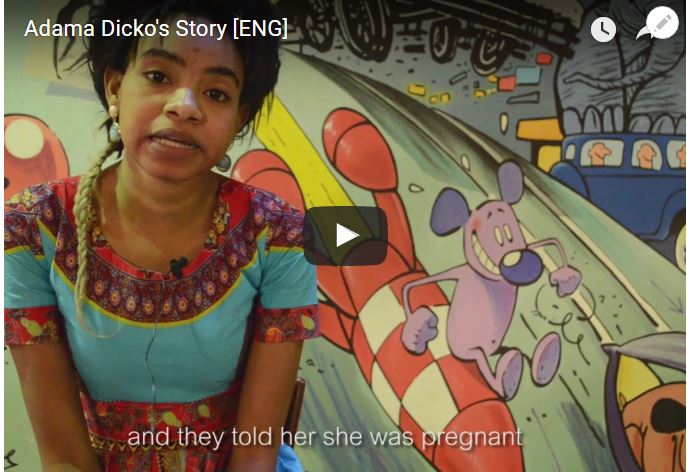
"If we could have accessed to contraception, my friend would be still alive"
Adama lost her best friend due to an unsafe abortion. This tragedy pushed her to work for and with young people to ensure them access to sexual and reproductive health information and services. WANT TO GET INVOLVED? SUBSCRIBE NOW TO GET UPDATES FROM IPPF SUPPORT OUR WORK WITH A DONATION
02 February 2017
Tackling the Gag Rule is beyond money -it’s about saving lives
Human rights have always been an important issue but never have they commanded the public agenda as they do now. Politically, ethically, socially and morally what we are seeing on our newsfeeds goes beyond a lot of what we have been accustomed to. It is our new reality. It’s the same for the policies around human rights that shape our lives, both in developed and in developing countries. These rapid shifts towards restrictive policies throw out the tremendous progress we have made working together as a global community. For us this is crystallised in the Mexico City policy, known as the Global Gag Rule. It denies U.S. funding to organisations like IPPF if they use money from other donors to provide abortion services, counselling or referrals—even if abortion is legal in a country. But not one US dollar that we receive goes on abortion. Instead it blocks critical funding for health services like contraception, maternal health, and HIV prevention and treatment for any organisation that refuses to sign it. For over 30 years, the Mexico City Policy has played politics with women’s lives. But never to the extent that we see now. We will not sign a policy that denies human rights and puts the lives of women at risk. We are committed to protect all those who come through our clinic doors. This goes beyond the USD $100m that we lose. It will have adevastating impact. Millions will be denied lifesaving healthcare they need. The policy will hit hardest, the women living at the margins of society – the poorest, the most remote and those under 25. We care about the lives that will be affected and how this could ripples through generations. It is a cynical attempt to silence the choice and voice of the world’s poorest. As a champion for them and people everywhere, we will not be held back. In all this sadness, there is hope. Protests and marches of recent weeks show how much people care. We have seen so much solidarity and deep personal commitment both inside and outside the United States. In the last week, we have seen governments step-up their commitment to this cause, like the She Decides initiative from the Dutch. I am proud to see European governments unambiguously taking the side of poor and vulnerable women. This is a work in progress to bridge the funding and service gaps the Global Gag Rule creates. We still have a long way to go. The policy that we see before us threatens wider global public health efforts. It is short-sighted and dangerous. It threatens years of IPPF gains to advance the health and well-being of communities and undercuts health care access for millions worldwide. We will remain strong. We stand united as a Federation of Member Associations working in 171 countries. We cannot—and will not—deny life-saving services to the world’s poorest, wherever they are and for as long as they need it. WANT TO GET INVOLVED? SUBSCRIBE NOW TO GET UPDATES FROM IPPF SUPPORT OUR WORK WITH A DONATION

The human cost of the Global Gag Rule
IPPF has now compiled data outlining how the reinstatement of the Global Gag Rule will affect people’s health around the world. Our global network of local partners delivers more than 300 services every minute of every day. During President Trump’s term, we will forego approximately USD$100m funding from the US government, which would have supported our family planning and HIV programmes for women with the greatest need for these health care services. The regions most affected are sub-Saharan Africa, South Asia and Latin America and the Caribbean. In practical terms, this level of funding could have prevented: 20,000 maternal deaths 4.8 million unintended pregnancies 1.7 million unsafe abortions It could have also provided: treatment to 275,000 pregnant women living with HIV to protect their health and help prevent transmission of HIV to their infants 70 million condoms to prevent unintended pregnancies, HIV and other STIs 725,000 HIV tests to enable people to know their HIV status The foregone funding could have also treated 525,000 sexually transmitted infections. As an organisation that seeks to protect and improve the lives of women, men and children around the world, IPPF and its partners in 171 countries will not sign a policy that denies human rights and puts the lives of women at risk. We are working with governments and others to bridge this new funding gap and help keep our clinics open. Sign up now to get updates on how you can be involved and make a difference. JOIN OUR THUNDERCLAP TO SPREAD THE MESSAGE SUPPORT OUR WORK WITH A DONATION
01 February 2017
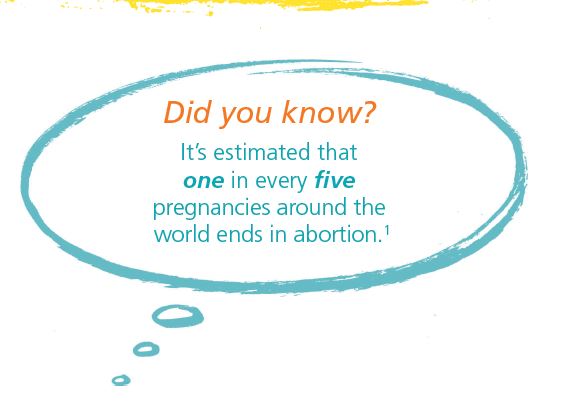
How to educate about abortion - The essentials
Abortion is an issue which people can have strong feelings about. Some consider it too ‘controversial' to include in education programmes. However, unplanned pregnancy and abortion are common occurrences around the world and IPPF believes that we all need accurate information to form our own values and make informed choices. This publication is a summary version of the peer education guide previously published.

Extended Mexico City Policy detrimental to health care of world's poorest
Mexico City Policy will have a devastating impact for International Planned Parenthood Federation (IPPF) with its extension far beyond family planning. Restrictions into support for HIV, maternal health and infectious diseases programmes will mean that millions will be denied lifesaving healthcare they need. The policy will hit hardest, the women living at the margins of society – the poorest, the most remote and those under 25. The Global Gag Rule, also known as the Mexico City Policy, denies US funding to organizations who provide any abortion related services, including counselling, even when such services are legal in a national context. IPPF has a special focus on working with the world’s most poor and vulnerable and tailoring services to meet their needs. At country levels, the US funding loss will reduce or halt IPPF’s services and arrest opportunities to scale up, build capacity and reach more people. Tewodros Melesse, IPPF Director General, said in reaction, “For over 30 years, the Mexico City Policy has played politics with women’s lives. It is a cynical attempt to silence the choice and voice of the world’s poorest women. As a champion for them and people everywhere, we will not be held back. "This extended policy covers every aspect of IPPF’s work with the world's poorest people. It also fails in its stated intent to reduce the global incidence of abortion. With the expansion of its restrictions to work on broader health efforts it is short-sighted and dangerous, and threatens years of IPPF gains to advance the health and well-being of communities and undercuts health care access for millions worldwide.” The extended policy will now affect IPPF’s long record of working on HIV prevention in more than 20 countries covering Africa and Latin America often providing clients integrated sexual and reproductive health care services. The Global Gag rule could also endanger emergency funding for Zika prevention, education and health services in Latin America and the Caribbean, where the epidemic continues to rage. Examples of Country Impact: Barbados: IPPF partner Barbados Family Planning Association receives funding from the U.S. government to provide HIV prevention and education services to at-risk, hard-to-reach populations including men who have sex with men. The Caribbean has the second-highest HIV prevalence rate among adults after Sub-Saharan Africa. Nepal: IPPF aims to increase voluntary use of family planning services by increasing accessibility and availability of quality comprehensive family planning services to the hard to reach, disadvantaged, poor and adolescent populations in 11 districts and increase access to voluntary family planning information, education, and services. Nepal has failing and patchy family planning coverage which is often only available at certain times of the year. IPPF are working closely with the government to expand and strengthen static clinics in selected district hospitals, health posts and health facilities with birthing centers to reach all year round, reaching eligible couples with high unmet need. Malawi: The Family Planning Association of Malawi are providing much needed integrated family planning and HIV prevention to young adolescent and women in Malawi via clinics and outreach teams travelling to communities to raise awareness and offer services for vulnerable young women to prevent and treat sexual gender based violence, HIV infection and access to family planning. Without funding they will no longer be able to provide or expand this vital information, support community learning and offer both family planning services and treatment for sexual and gender based violence in one place. The rule blocks critical funding for health services like contraception, maternal health, and HIV prevention and treatment for any organization that refuses to sign up to it. For IPPF, it means foregoing US$100,000,000 that would be directed to proven programmes that provide comprehensive sexual and reproductive health services for millions of women and girls who would otherwise go without vital services that save lives. IPPF is the world’s largest women’s health network with members in 170 countries with over 45,000 service delivery points delivering over 300 services a minute. Individuals can donate to IPPF’s online appeal www.ippf.org/donate WANT TO GET INVOLVED? SUBSCRIBE NOW TO GET UPDATES FROM IPPF SUPPORT OUR WORK WITH A DONATION JOIN OUR THUNDERCLAP View my Flipboard Magazine.
IPPF responds to the announcement of funding from the Government of Japan
IPPF’s Director General, Tewodros Melesse, has paid tribute to the Government and people of Japan, following the announcement that Japan will support the provision of sexual and reproductive health and rights (SRHR) for 2017. The Japanese Government has announced that it will contribute approximately 3.1 billion yen (roughly $28 million) to IPPF and the United Nations Population Fund (UNFPA) in annual support. Mr Melesse said: “IPPF is grateful for Japan’s continuing support to SRHR through funding IPPF and UNFPA. Particularly in the current negative climate around SRHR, Japan’s expression of its strong will to continue its support for SRHR is warmly welcome.” “Japan’s long-lasting support for IPPF and for sexual and reproductive health care and rights has always been appreciated. These funds will help IPPF member associations around the world mitigate the cuts in funding we are seeing from some other sources. This will help protect health and save the lives of many people, especially women and girls.” Mr Melesse added: “We agree completely with the Government of Japan when it says that the provision of services relating to sexual and reproductive health and rights is essential for realizing universal health coverage (UHC), that ensures affordable access to basic health services for all whenever they need them throughout their lives. This is stated clearly in the Basic Design for Peace and Health, Japan’s global health policy and one of the outcome documents of the G7 Ise-Shima Summit, as well as in an outcome document from the The World Assembly for Women in Tokyo 2016 (WAW), the Third United Nations World Conference on Disaster Risk Reduction and the Sixth Tokyo International Conference on African Development (TICAD VI). IPPF would like to congratulate Japan’s leadership and commits to working closely with the Government of Japan to make a real difference to the lives of women, men and young people in around world and to achieve the Strategic Development Goals.” IPPF received approximately $1.13m from Japan in early 2017 for its activities targeted to Syrian refugees and internally displaced people, and will receive funding of $7.76m which was recently approved by the Japanese Parliaments.
21 March 2017
A roll back on women’s rights? The impact of the global gag rule
The Commission on the Status of Women (CSW) is a functional commission of the United Nations Economic and Social Council (ECOSOC). It is the principal global policy-making body dedicated exclusively to gender equality and advancement of women. IPPF convened a panel at CSW61 to examine the far-reaching implications of the US government's Global Gag Rule on the advancement of women’s rights globally. To open the meeting, IPPF provided context to the sexual and reproductive health and rights (SRHR) agenda, reminding us primarily of the huge strides made in recent years on women’s access to SRHR. With an increased policy focus on rights, significant drops in maternal mortality, systematic screening of gender-based violence at health facilities, increased uptake of family planning and post primary school retention of girls, women globally are more empowered to access their rights than ever before. However, recent political shifts have significantly changed the global landscape which could see these rights severely compromised if not removed entirely. IPPF provided an overview of the pivotal policies that have marked this shift, most notably the Global Gag Rule (GGR) passed by the Trump administration in January 2017 - an Executive Order which sees U.S. funding denied to health organizations if they use money from other donors to provide abortion services, counselling or referrals. This is accompanied by other damaging policies such as the application of the Kemp-Kasten amendment that could see funding for UNFPA, the world’s largest supplier of contraceptives, dramatically cut. This is despite evidence showing that the implementation of the GGR under previous Republican administrations did not reduce the number of unsafe abortions; rather, by eliminating access to contraception, it led to more unintended pregnancies and more unsafe abortions. IPPF also highlighted that it is the most vulnerable women who will suffer most from these policies: they will hit women living at the margins of society hardest – the poorest, women of colour, disabled women, the most remote and those under 25. And it is not just women’s access to SRHR that's at stake; panelists offered perspectives on how the Global Gag Rule and its potential chilling effect could impact upon their work. Amnesty International UK outlined the ways in which the Global Gag Rule could increase stigma around abortion and bolster the anti-choice movement. Cutting support to reproductive health sends a clear ideological message on abortion and could serve to embolden ultra conservative, anti-choice and anti-rights attitudes, causing a rollback on women’s rights. This in turn could undermine women’s rights organisations including violating their right to freedom of speech, association, and their ability to participate in the strengthening of their civil societies and holding their governments to account. Action Aid advised that the reduction in sexual and reproductive health services could also impact upon gender-based violence. They used the example of a series of women’s shelters that they set up in Uganda in partnership with UNFPA to support women escaping domestic violence and rape; the cuts experienced by UNFPA will likely mean these shelters are forced to close down despite the fact they are in no way related to abortion or the provision of reproductive health services. In light of this, Action Aid stressed the need to invest in and support local women's rights organisations who can take on the role of providing shelter and refuge as it is being retracted elsewhere. JustActions added to the debate by highlighting the extent to which policies like the Global Gag Rule could undermine the achievement of several of the new Sustainable Development Goals (SDGs). When you restrict women’s access to products and services that affect their sexual and reproductive health, it is harder to reduce poverty (SDG 1) and hunger (SDG 2), and is pretty much impossible to improve women’s health (SDG 3), education (SDG 4) and achieve gender equality (SDG 5). Economic growth and sustainability (SDG 8/9) will also suffer as lack of access to SRH impacts upon women's ability to work and it will therefore be harder to close income inequality gaps (SDG 9). That’s almost half of the 17 SDGS compromised right there. McCann Health, a global communications agency, suggested that in order to better focus attention on these issues and build public support, we need to reach out to sympathetic private sector partners and new communications platforms that could help us make our case to a different audience. Whether through social media based initiatives or formal events and protests, clear and loud communications that are accessible to everyone, do make a difference in the national and global discussion. Intersectionality, partnership and moving forward So what can we take from this? The fact that such a diverse range of organizations, some of whom do not even work on SRHR, came together in this high-profile, global space to speak out on the danger of these policies demonstrates just how wide-ranging and profound the implications could be. It also highlights the intersectionality of the issues at stake; it is very difficult to move towards women’s economic, political and social empowerment without access to sexual and reproductive rights and vice versa. This calls for a more holistic approach to women’s empowerment that does not isolate issues but acknowledges interlinkages and looks to foster cooperation and partnership where possible; be it through advocacy, campaigns or programmes. Perhaps most importantly, the impassioned speeches given by senior representatives from influential CSOs and the private sector calling for a progressive SRHR agenda show us that whilst the policy landscape is changing, so is our support base. And whilst the GGR may loom large on our horizon, we also see a groundswell of organisations, individuals and governments rising up in support of those who will be affected, and exploring ways to mitigate the financial and human cost of this policy. Ultimately this panel was about solidarity. Solidarity in the face of adversity. Solidarity for progress. Solidarity for human rights. And solidarity for women everywhere. And that at the very least is what CSW should foster. Long may it do so. WANT TO GET INVOLVED? SUBSCRIBE NOW TO GET UPDATES FROM IPPF SUPPORT OUR WORK WITH A DONATION
12 March 2017
Three ways Donald Trump's Global Gag Rule will impact contraception
In case you missed it – one of President Trump’s first order of business was to re-enact the Mexico City Policy, or as we in the sexual and reproductive health community un-affectionately call it - the Global Gag Rule (GGR). With a stroke of his pen – and may I mention surrounded by men in suits - Trump doubled down on women and girls' most basic human rights. Now, millions of women and girls will not have the right to choice – placing them at risk of unsafe abortion, maternal death and denying their basic human rights of accessing life-saving contraception. The GGR will have far reaching consequences on the health and lives of women and girls, and will go beyond their right to access safe abortion. In Africa, Asia and Latin America the ability for women and girls to access life-saving contraception will be compromised. US-donated contraceptives will be reduced and even eliminated, clinics and community health services may have to close their doors, and already fragile national health systems will be compromised. Here are three ways that Trump’s Global Gag Rule will impact on contraception in particular: It further exacerbates a growing global contraceptive funding gap. By 2020, the world will be facing a funding gap estimated at US173 million. Sufficient investment is not being prioritized for contraceptives at the global, national and subnational level. The US is the largest bilateral donor to family planning. Any reduction in political and financial commitment will have an impact on filling the funding gap. And we are concerned that this will lead to contraceptive stockouts – or women and girls leaving clinics empty handed. More will need to come out of pocket from women and girls in developing countries. While traditional donor funding is changing and diversifying, national governments need to invest more in family planning services and contraceptive supplies. Yet, contraceptives remain underfunded and a significant proportion is covered by individual through out of pocket expenses. Individual women and girls, including those that are poor and marginalized, will need to cover a substantial proportion of funding for contraceptives. We cannot take for granted that donor support to contraception alone will increase the availability of contraceptives. Investment and support is required for better supply chain management, and efficiencies in managing contraceptive security. Civil society organizations – like IPPF’s nationally-owned Member Associations – are instrumental in strengthening national and community contraceptive supplies processes and systems. Without contraceptives, there are no programmes. And without contraceptives, the Sustainable Development Goals and ambition of Universal Health Coverage will not be achieved as women and girls are denied to the means to prevent unwanted pregnancy. All people – women, men and young people - have the right to choose whether or not, how and when, to have children. 2017 is a pivotal moment, and we cannot be complacent. We must unite and be unwavering in our commitment to uphold the rights of women and girls. WANT TO GET INVOLVED? SUBSCRIBE NOW TO GET UPDATES FROM IPPF SUPPORT OUR WORK WITH A DONATION
17 March 2017
"The focus of our work is not abortion, it's human dignity"- Marta Royo at She Decides
by Marta Royo, Executive Director of Profamilia Colombia A couple of years ago Profamilia launched a campaign: "The decisions is yours". Its purpose was to inform women about what the constitution of our country says regarding the right to have access to a legal and safe abortion under three causes. It was not huge, it was carried out with funding from an anonymous donor, but it was a beginning, a necessary step in order to advance the wellbeing or women in my country, Colombia. So when I was invited to the She Decides Conference, to give testimony about the actual situation of sexual and reproductive health and rights in Colombia, and the challenges we are facing today in the beautiful region of Latin America due to very extreme conservative views and politics, I felt I was coming home. I sincerely hope I will be able to convey what it means for a black, or an indigenous, or a displace young woman in Colombia, to grow up and to live when it comes to her sexual and reproductive rights. We have a lot of statistics, numbers, plenty of laws that address most of the crucial issues around human rights but we are not reaching far enough, deep enough. I see these girls, every day, at my work, right outside my office -and those are the lucky ones, they were able to come to us, they already knew about Promafilia. In their eyes I see suffering, cruelty and abuse, sometimes ignorance and despair. They are looking for answers, for help, sometimes just counselling, a piece of information that takes their feelings and context into account, recognizing them as human beings, worthy of attention and respect. I also see light, curiosity, strength, perseverance, resilience and I cannot look away as I hope you will not look away. Now travel with me to Fundación and Cienaga in Magdalena, Apartado and Turbó in Antioquia, Ayapel, San Antero and Tierralta in Cordoba, Algarrobo and Guamal in Meta. Despite their beautiful, musical names, these are 10 municipalities that have been affected by conflict, war for way too many years - all types of conflict: guerilla, paramilitary, drug trafficking…whole communities that have had to move away from their homes over and over again, leaving everything behind, their whole lives. Amelia (not her real name) lives in one of these rural areas. She is a 13-year-old girl, abused by her father since she was very young. A couple of months after she got her period, she got pregnant. She wasn't feeling well and at first she thought it was a tumour -and so did a small, local clinic near her place. Only talking about it with her friends she realised that she was pregnant of her father´s baby. She decided she did not wanted to be a mother at 13 and with that decision started her long journey into inequality and injustices. She was denied her right for three times: first, the public health insurance provider in her area told her that she needed her parents authorization to get an abortion, because she was too young. Then, the only institution where she could get the procedure refused to conduct it, claiming the institution’s right to conscious objection, and finally the Colombian Family Welfare Institute (ICBF) tried to convince her to change her mind and have her father´s baby. The case eventually landed in one of our clinics in Bogotá where the pregnancy was terminated. However all the barriers she faced left a mark on her. To make matters worse, nothing happened to the father. She is now living in a protection shelter, having nowhere else to go. This is just one story. The adolescent pregnancy rate in these municipalities can be as high as 30%, proving the enormous inequality we see in our region and the gaps that exist between the cities and rural areas. The country has one of the highest adolescent pregnancy rates in the world, starting at a very young age, meaning 10 years old. There are way too many Amelias in Colombia. We only came to meet Amelia through a project that is founded by USAID. And I want to make very clear that the purpose of the program is not to provide abortions. Its purpose is to deliver education, health services, contraceptive products and empowerment to the marginalized victims that live in the 10 municipalities. It has meant working with young people, strengthening their self-esteem, building capacities, carrying out alliances with the local government institutions to guarantee the continuity of our work by building local knowledge. The funding for this program will be cut off because of the Global Gag Rule. But more so because we are doing our job right, because we are defending what the constitution of my country says and it clearly says that a women of any age has the right to have an abortion under three causes, one of them being when her life or health is at risk. We will lose the funding because we believe that every woman has the right to decide about her body, when to have sex, with who and when to become a mother, if such is her decision. So when I was invited to come to Brussels I thought of all the Amelias in my country and I decided to share her story. It is crucial we find the political support, the motivation but also the funds to continue doing our work, which is not centered on performing abortions; it is centered on knowledge and respect, on education and access. It is centered on something immense: human dignity, and the most basic human rights of all, sexual and reproductive rights. If we want other Amelias to be able to decide about their future…we need to come together as one voice and put all our efforts in making sure we do not lose more battles when it comes to our rights. I invite you to become Amelia´s voice and replicate throughout the world the message that we all have the right TO DECIDE. As Gabriel Garcia Marquez once said, “We do not have another world to which we can move away”. Hopefully all the people that have gathered here today will try to make this one a better one for all! WANT TO GET INVOLVED? SUBSCRIBE NOW TO GET UPDATES FROM IPPF SUPPORT OUR WORK WITH A DONATION *Photo from the archive. The person in the photo is not the Amelia* in the story.
IPPF at the She Decides Conference
The International Planned Parenthood Federation (IPPF) is grateful to the international community for its ongoing support for women and girls through the She Decides initiative. 2 March 2017 was a powerful moment for our movement. The recent return of the Global Gag Rule, has left the community concerned and frustrated. But many governments, as well as other entities, have stepped up to the challenge. The She Decides initiative and conference offered the platform and the momentum to help shape a new global partnership for sexual and reproductive health and rights (SRHR). #Ploumen: ‘People - especially women & girls - all over the world should feel empowered and supported in their right to decide’ #SheDecides pic.twitter.com/HBrUOmz8KF — Netherlands ?? MFA (@DutchMFA) March 2, 2017 In total €181 Million was pledged at the conference. Many of our Member Associations spoke at the conference to give powerful testimonies of how they are working on women’s sexual and reproductive health and rights. They highlighted the need for financial and political support to deliver these lifesaving programmes. IPPF Director General gave a passionate speech on how the Global Gag Rule impacts the Federations’ work. He talked about how this was not about money but human rights. "When it comes to women's Rights, there's no North or South, it's a GLOBAL movement until #SheDecides" - T. Melesse @ippf pic.twitter.com/h7QMNIy3Lq — IPPF Global (@ippf) March 2, 2017 IPPF was delighted to hear that the Canadian Government announced a $4 million as part of their ongoing support to women’s rights. This was one among the many pledges of support IPPF received. Women rights are human rights. Canada just pledged up to $20M to @UNFPA @IpasOrg @ippf @MarieStopes @PSIimpact #SheDecides pic.twitter.com/m7KLKK1eGE — Marie-Claude Bibeau (@mclaudebibeau) March 2, 2017 Anonymous donation of $50M brings #Shedecide funding to €181M. Thank you @Ploumen4Women for starting it and all donors for making it HUGE! — IPPF Global (@ippf) March 2, 2017 There was strong commitment from the European Commission. The European Commissioner for International Cooperation and Development, stated that the Commission will continue to support sexual and reproductive health and rights, comprehensive family planning, education, information and preventive health programme. He also proudly announced that we will continue to support the work of our partners - like UNFPA, UNICEF, IPPF and many NGOs - to improve the lives of women and girls. The Conference was just the beginning. Mobilising the international support and commitment of 50 governments to safeguard women’s sexual and reproductive health and rights. We will continue to work with Governments, foundations and other actors to ensure that this journey becomes a reality. Because in the end it is she who must decide. The result after just 5 weeks, minister #Ploumen on #SheDecides at the end of the Brussels conference pic.twitter.com/wwit5ATG5z — Netherlands ?? MFA (@DutchMFA) March 2, 2017 Subscribe to our updates! SUPPORT OUR WORK WITH A DONATION
01 March 2017
"If we could have accessed to contraception, my friend would be still alive"
Adama lost her best friend due to an unsafe abortion. This tragedy pushed her to work for and with young people to ensure them access to sexual and reproductive health information and services. WANT TO GET INVOLVED? SUBSCRIBE NOW TO GET UPDATES FROM IPPF SUPPORT OUR WORK WITH A DONATION
02 February 2017
Tackling the Gag Rule is beyond money -it’s about saving lives
Human rights have always been an important issue but never have they commanded the public agenda as they do now. Politically, ethically, socially and morally what we are seeing on our newsfeeds goes beyond a lot of what we have been accustomed to. It is our new reality. It’s the same for the policies around human rights that shape our lives, both in developed and in developing countries. These rapid shifts towards restrictive policies throw out the tremendous progress we have made working together as a global community. For us this is crystallised in the Mexico City policy, known as the Global Gag Rule. It denies U.S. funding to organisations like IPPF if they use money from other donors to provide abortion services, counselling or referrals—even if abortion is legal in a country. But not one US dollar that we receive goes on abortion. Instead it blocks critical funding for health services like contraception, maternal health, and HIV prevention and treatment for any organisation that refuses to sign it. For over 30 years, the Mexico City Policy has played politics with women’s lives. But never to the extent that we see now. We will not sign a policy that denies human rights and puts the lives of women at risk. We are committed to protect all those who come through our clinic doors. This goes beyond the USD $100m that we lose. It will have adevastating impact. Millions will be denied lifesaving healthcare they need. The policy will hit hardest, the women living at the margins of society – the poorest, the most remote and those under 25. We care about the lives that will be affected and how this could ripples through generations. It is a cynical attempt to silence the choice and voice of the world’s poorest. As a champion for them and people everywhere, we will not be held back. In all this sadness, there is hope. Protests and marches of recent weeks show how much people care. We have seen so much solidarity and deep personal commitment both inside and outside the United States. In the last week, we have seen governments step-up their commitment to this cause, like the She Decides initiative from the Dutch. I am proud to see European governments unambiguously taking the side of poor and vulnerable women. This is a work in progress to bridge the funding and service gaps the Global Gag Rule creates. We still have a long way to go. The policy that we see before us threatens wider global public health efforts. It is short-sighted and dangerous. It threatens years of IPPF gains to advance the health and well-being of communities and undercuts health care access for millions worldwide. We will remain strong. We stand united as a Federation of Member Associations working in 171 countries. We cannot—and will not—deny life-saving services to the world’s poorest, wherever they are and for as long as they need it. WANT TO GET INVOLVED? SUBSCRIBE NOW TO GET UPDATES FROM IPPF SUPPORT OUR WORK WITH A DONATION
The human cost of the Global Gag Rule
IPPF has now compiled data outlining how the reinstatement of the Global Gag Rule will affect people’s health around the world. Our global network of local partners delivers more than 300 services every minute of every day. During President Trump’s term, we will forego approximately USD$100m funding from the US government, which would have supported our family planning and HIV programmes for women with the greatest need for these health care services. The regions most affected are sub-Saharan Africa, South Asia and Latin America and the Caribbean. In practical terms, this level of funding could have prevented: 20,000 maternal deaths 4.8 million unintended pregnancies 1.7 million unsafe abortions It could have also provided: treatment to 275,000 pregnant women living with HIV to protect their health and help prevent transmission of HIV to their infants 70 million condoms to prevent unintended pregnancies, HIV and other STIs 725,000 HIV tests to enable people to know their HIV status The foregone funding could have also treated 525,000 sexually transmitted infections. As an organisation that seeks to protect and improve the lives of women, men and children around the world, IPPF and its partners in 171 countries will not sign a policy that denies human rights and puts the lives of women at risk. We are working with governments and others to bridge this new funding gap and help keep our clinics open. Sign up now to get updates on how you can be involved and make a difference. JOIN OUR THUNDERCLAP TO SPREAD THE MESSAGE SUPPORT OUR WORK WITH A DONATION
01 February 2017
How to educate about abortion - The essentials
Abortion is an issue which people can have strong feelings about. Some consider it too ‘controversial' to include in education programmes. However, unplanned pregnancy and abortion are common occurrences around the world and IPPF believes that we all need accurate information to form our own values and make informed choices. This publication is a summary version of the peer education guide previously published.
Extended Mexico City Policy detrimental to health care of world's poorest
Mexico City Policy will have a devastating impact for International Planned Parenthood Federation (IPPF) with its extension far beyond family planning. Restrictions into support for HIV, maternal health and infectious diseases programmes will mean that millions will be denied lifesaving healthcare they need. The policy will hit hardest, the women living at the margins of society – the poorest, the most remote and those under 25. The Global Gag Rule, also known as the Mexico City Policy, denies US funding to organizations who provide any abortion related services, including counselling, even when such services are legal in a national context. IPPF has a special focus on working with the world’s most poor and vulnerable and tailoring services to meet their needs. At country levels, the US funding loss will reduce or halt IPPF’s services and arrest opportunities to scale up, build capacity and reach more people. Tewodros Melesse, IPPF Director General, said in reaction, “For over 30 years, the Mexico City Policy has played politics with women’s lives. It is a cynical attempt to silence the choice and voice of the world’s poorest women. As a champion for them and people everywhere, we will not be held back. "This extended policy covers every aspect of IPPF’s work with the world's poorest people. It also fails in its stated intent to reduce the global incidence of abortion. With the expansion of its restrictions to work on broader health efforts it is short-sighted and dangerous, and threatens years of IPPF gains to advance the health and well-being of communities and undercuts health care access for millions worldwide.” The extended policy will now affect IPPF’s long record of working on HIV prevention in more than 20 countries covering Africa and Latin America often providing clients integrated sexual and reproductive health care services. The Global Gag rule could also endanger emergency funding for Zika prevention, education and health services in Latin America and the Caribbean, where the epidemic continues to rage. Examples of Country Impact: Barbados: IPPF partner Barbados Family Planning Association receives funding from the U.S. government to provide HIV prevention and education services to at-risk, hard-to-reach populations including men who have sex with men. The Caribbean has the second-highest HIV prevalence rate among adults after Sub-Saharan Africa. Nepal: IPPF aims to increase voluntary use of family planning services by increasing accessibility and availability of quality comprehensive family planning services to the hard to reach, disadvantaged, poor and adolescent populations in 11 districts and increase access to voluntary family planning information, education, and services. Nepal has failing and patchy family planning coverage which is often only available at certain times of the year. IPPF are working closely with the government to expand and strengthen static clinics in selected district hospitals, health posts and health facilities with birthing centers to reach all year round, reaching eligible couples with high unmet need. Malawi: The Family Planning Association of Malawi are providing much needed integrated family planning and HIV prevention to young adolescent and women in Malawi via clinics and outreach teams travelling to communities to raise awareness and offer services for vulnerable young women to prevent and treat sexual gender based violence, HIV infection and access to family planning. Without funding they will no longer be able to provide or expand this vital information, support community learning and offer both family planning services and treatment for sexual and gender based violence in one place. The rule blocks critical funding for health services like contraception, maternal health, and HIV prevention and treatment for any organization that refuses to sign up to it. For IPPF, it means foregoing US$100,000,000 that would be directed to proven programmes that provide comprehensive sexual and reproductive health services for millions of women and girls who would otherwise go without vital services that save lives. IPPF is the world’s largest women’s health network with members in 170 countries with over 45,000 service delivery points delivering over 300 services a minute. Individuals can donate to IPPF’s online appeal www.ippf.org/donate WANT TO GET INVOLVED? SUBSCRIBE NOW TO GET UPDATES FROM IPPF SUPPORT OUR WORK WITH A DONATION JOIN OUR THUNDERCLAP View my Flipboard Magazine.