



Spotlight
A selection of news from across the Federation

Nepal
News item
Family Planning Association of Nepal assesses vital needs following devastating floods
As search and rescue operations continue following the devastating floods and landslides in northern Nepal and Tibet, the thoughts of the International Planned Parenthood Federation (IPPF) are with the communities and families affected by the disaster.
Most Popular This Week
Nepal

News item
|
Family Planning Association of Nepal assesses vital needs following devastating floods
As search and rescue operations continue following the devastating floods and landslides in northern Nepal and Tibet, the thoughts of the International Planned Parenthood Federation (IPPF) are

News item
|
Civil society calls on UN Secretary-General to withdraw proposed UN Women–UNFPA merger
Feminist, women’s rights and civil society organisations from 146 countries have written to UN Secretary-General António Guterres calling for the proposed merger of UN Women and UNFPA under the UN8
Colombia

News item
|
Devastating earthquake in Colombia badly damages clinics run by IPPF Member Association Profamilia
The International Planned Parenthood Federation is deeply concerned by the loss of life and widespread destruction caused by the magnitude 7.4 earthquake that struck western
Thailand

News item
|
Statement of the Sex Work Consortium on the Death of Tunchanok Donhomla
The murder of 17-year-old Tunchanok Donhomla in Pattaya, Thailand is a tragedy that demands justice.

News item
|
UN Human Rights Council adopts first negotiated resolution naming reproductive violence as a distinct form of gender-based violence
Geneva, 7 July 2026: The Human Rights Council today

News item
|
Feminist Joint Statement on the 2026 Political Declaration on HIV/AIDS
Statement on behalf of APHA, ATHENA Network, AWPCAB, DIVA for Equality, EWNA, FEIM, Frontline AIDS, Gestos, Harm Reduction International, International Community of Women Living w

News item
|
2026 High-Level Meeting on HIV and AIDS
The International Planned Parenthood Federation (IPPF) welcomes the opportunity of the 2026 High- Level Meeting (HLM) on HIV and AIDS to review progress and renew the engagement an

News item
|
IPPF’s response to the UNFPA-UN Women merger assessment
IPPF recognizes the need for the long-overdue need for UN reform and to transform the institution to more effectively respond to real-world challenges and to the needs of the people
Filter our news by:

news item
| 01 December 2025
IPPF stands against Trumps enforced silence on World AIDS Day
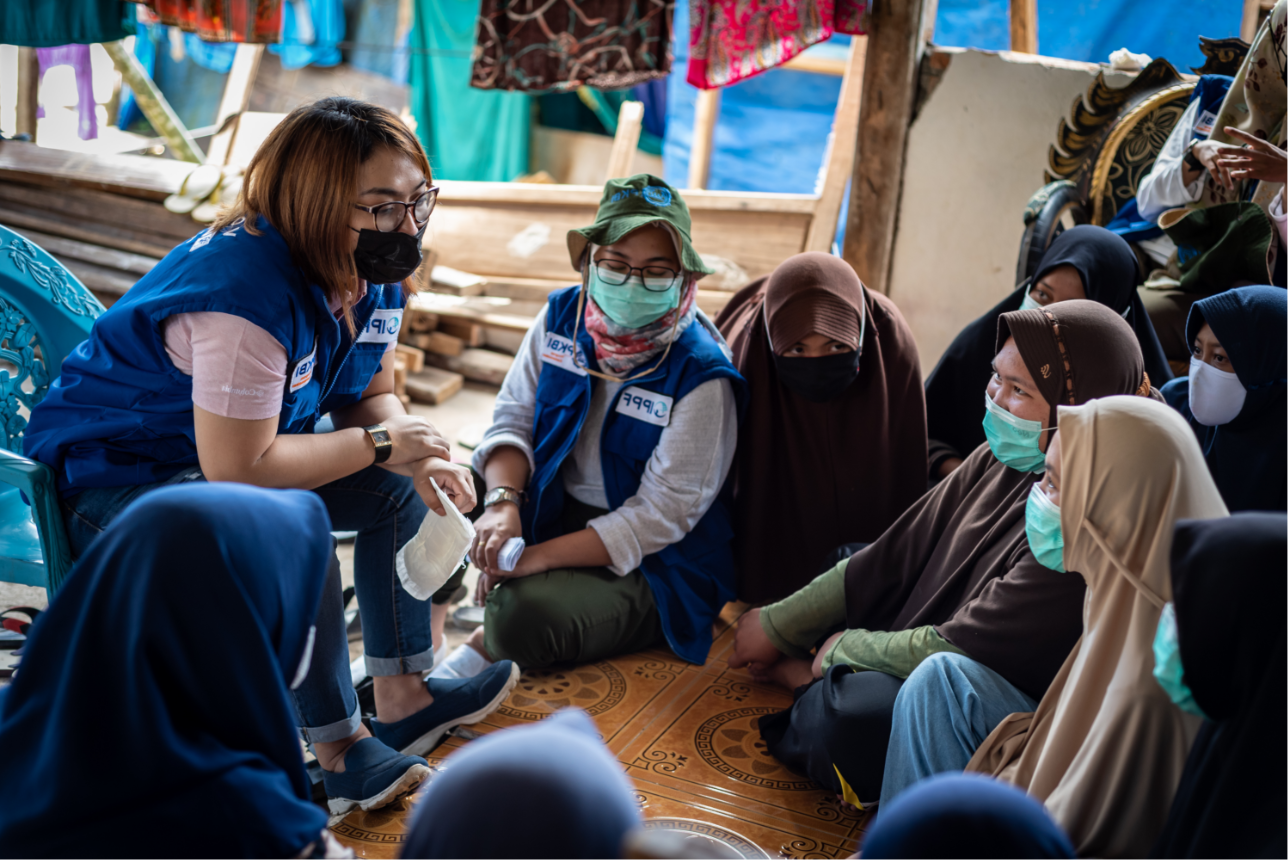
This year, the Trump administration has banned federal employees and grant recipients from acknowledging World AIDS Day, celebrated on the 1st December 2025. The State Department’s directive told employees to “refrain from publicly promoting World AIDS Day through any communication channels, including social media, media engagements, speeches or other public-facing messaging”.This latest directive comes after US funding cuts this year put essential sexual and reproductive healthcare, which includes HIV prevention services, at risk for millions worldwide. A global survey of Member Associations conducted by IPPF revealed the devastating impacts on our Member Associations who provide integrated sexual and reproductive healthcare services. Over half our Member Associations were affected, with an estimated loss of $85million. The Trump administration’s decision to enforce silence around World AIDS Day demonstrates a lack of respect for the lived experiences of those living with HIV, those who died of AIDS, and all affected by HIV. This directive impedes the ongoing efforts to reduce the transmission of HIV and to address stigma, discrimination, and inequality. These decisions are not isolated from broader state driven ideologies and anti-rights pushbacks that continue to suppress the acceptance and fair inclusion of all people in society. This enforced silence on World AIDS Day serves only to further embed stigma and injustice and is another reminder as to why we must confront these moments with equal strength and clarity. IPPF supports the rights of all people in society and works to provide sexual and reproductive health services to all, in particular those who are marginalised, such as gay men and other men who have sex with men, sex workers, trans people, people who inject drugs, and prisoners. IPPF works with our Member Associations doing vital work to support those living with HIV, to end stigma, and ‘overcome disruption’ to providing essential health services to communities, including HIV testing, prevention and treatment. In times of crisis and oppression, rights and dignity need champions. At IPPF we carry this moment with our Member Associations on the ground and stand behind them in their continued dignity and fight for the right to continue the vital work they do. At IPPF we will continue our work towards a vision of a world free from HIV where everyone is valued equally, has a healthy, pleasurable, and fulfilling life within a just and equal society. Key to an impactful HIV programme is understanding and addressing drivers of the HIV pandemic, including structural barriers; violence against women; discrimination; stigma; harmful social norms; inequalities related to sex, gender, sexual orientation, race, disability, and economic status; criminalisation of HIV transmission and certain populations; and restrictive laws and policies.Due to social and biological vulnerabilities, certain groups of people experience higher rates of HIV including women and girls; gay, bisexual, and other men who have sex with men; sex workers; people who inject drugs; trans people; and people in prisons. Working with those affected by and living with HIV to design, implement, and evaluate IPPF services and programmes is essential on our pathway to realise a society free of discrimination and stigma, and for all people living with HIV to live healthy and fulfilled lives. A community-led and inclusive response includes both tailoring services and programmes to address the needs of communities more severely affected by HIV, as well as addressing the needs of all people who would benefit from HIV‑related services such as youth, people with disabilities, pregnant women and infants, people in sexual relationships with individuals living with HIV, boys and men, and others who may not identify as a member of certain groups. Of key importance is creating programmes, services, and spaces that are inclusive, discrimination-free, and accessible to all, where each person feels welcomed and that their health and well‑being needs will be at the centre of the care that they receive.At IPPF our Member Association’s work demonstrates what we can achieve when we lead with community-led responses. For example, in Mozambique, the Associação Moçambicana para o Desenvolvimento da Família (AMODEFA), together with sex workers, are working to ensure that sex workers have access to comprehensive sexual and reproductive health services, with oral pre-exposure prophylaxis (PrEP*) for HIV prevention.In Zambia, the Planned Parenthood Association of Zambia (PPAZ), through a partnership between the Children’s Investment Fund Foundation (CIFF) and the Global Fund to Fight AIDS, Tuberculosis, and Malaria—has secured 21,600 Dapivirine Vaginal Rings for HIV prevention for women. Adding the PrEP ring as an additional HIV prevention option gives women more choice about which HIV prevention method they can use, empowers them to make informed decisions about their health, and increases the chance that individuals can find a method that works for them.On Worlds AIDS day we are doubling down on our commitment and support to the communities we work with and our Member Associations who continue to provide innovative healthcare models to prevent HIV transmission, and provide vital care to those living with HIV. The work in Mozambique and Zambia are just two examples of the work that many Member Associations are implementing globally to provide essential health services to communities, including HIV testing, treatment and prevention. *Pre-Exposure Prophylaxis (PrEP) is used to reduce the risk of getting HIV.
news_item
| 01 December 2025
IPPF stands against Trumps enforced silence on World AIDS Day
This year, the Trump administration has banned federal employees and grant recipients from acknowledging World AIDS Day, celebrated on the 1st December 2025. The State Department’s directive told employees to “refrain from publicly promoting World AIDS Day through any communication channels, including social media, media engagements, speeches or other public-facing messaging”.This latest directive comes after US funding cuts this year put essential sexual and reproductive healthcare, which includes HIV prevention services, at risk for millions worldwide. A global survey of Member Associations conducted by IPPF revealed the devastating impacts on our Member Associations who provide integrated sexual and reproductive healthcare services. Over half our Member Associations were affected, with an estimated loss of $85million. The Trump administration’s decision to enforce silence around World AIDS Day demonstrates a lack of respect for the lived experiences of those living with HIV, those who died of AIDS, and all affected by HIV. This directive impedes the ongoing efforts to reduce the transmission of HIV and to address stigma, discrimination, and inequality. These decisions are not isolated from broader state driven ideologies and anti-rights pushbacks that continue to suppress the acceptance and fair inclusion of all people in society. This enforced silence on World AIDS Day serves only to further embed stigma and injustice and is another reminder as to why we must confront these moments with equal strength and clarity. IPPF supports the rights of all people in society and works to provide sexual and reproductive health services to all, in particular those who are marginalised, such as gay men and other men who have sex with men, sex workers, trans people, people who inject drugs, and prisoners. IPPF works with our Member Associations doing vital work to support those living with HIV, to end stigma, and ‘overcome disruption’ to providing essential health services to communities, including HIV testing, prevention and treatment. In times of crisis and oppression, rights and dignity need champions. At IPPF we carry this moment with our Member Associations on the ground and stand behind them in their continued dignity and fight for the right to continue the vital work they do. At IPPF we will continue our work towards a vision of a world free from HIV where everyone is valued equally, has a healthy, pleasurable, and fulfilling life within a just and equal society. Key to an impactful HIV programme is understanding and addressing drivers of the HIV pandemic, including structural barriers; violence against women; discrimination; stigma; harmful social norms; inequalities related to sex, gender, sexual orientation, race, disability, and economic status; criminalisation of HIV transmission and certain populations; and restrictive laws and policies.Due to social and biological vulnerabilities, certain groups of people experience higher rates of HIV including women and girls; gay, bisexual, and other men who have sex with men; sex workers; people who inject drugs; trans people; and people in prisons. Working with those affected by and living with HIV to design, implement, and evaluate IPPF services and programmes is essential on our pathway to realise a society free of discrimination and stigma, and for all people living with HIV to live healthy and fulfilled lives. A community-led and inclusive response includes both tailoring services and programmes to address the needs of communities more severely affected by HIV, as well as addressing the needs of all people who would benefit from HIV‑related services such as youth, people with disabilities, pregnant women and infants, people in sexual relationships with individuals living with HIV, boys and men, and others who may not identify as a member of certain groups. Of key importance is creating programmes, services, and spaces that are inclusive, discrimination-free, and accessible to all, where each person feels welcomed and that their health and well‑being needs will be at the centre of the care that they receive.At IPPF our Member Association’s work demonstrates what we can achieve when we lead with community-led responses. For example, in Mozambique, the Associação Moçambicana para o Desenvolvimento da Família (AMODEFA), together with sex workers, are working to ensure that sex workers have access to comprehensive sexual and reproductive health services, with oral pre-exposure prophylaxis (PrEP*) for HIV prevention.In Zambia, the Planned Parenthood Association of Zambia (PPAZ), through a partnership between the Children’s Investment Fund Foundation (CIFF) and the Global Fund to Fight AIDS, Tuberculosis, and Malaria—has secured 21,600 Dapivirine Vaginal Rings for HIV prevention for women. Adding the PrEP ring as an additional HIV prevention option gives women more choice about which HIV prevention method they can use, empowers them to make informed decisions about their health, and increases the chance that individuals can find a method that works for them.On Worlds AIDS day we are doubling down on our commitment and support to the communities we work with and our Member Associations who continue to provide innovative healthcare models to prevent HIV transmission, and provide vital care to those living with HIV. The work in Mozambique and Zambia are just two examples of the work that many Member Associations are implementing globally to provide essential health services to communities, including HIV testing, treatment and prevention. *Pre-Exposure Prophylaxis (PrEP) is used to reduce the risk of getting HIV.
news item
| 17 August 2023
Japanese MP visits IPPF Member Association in Mozambique
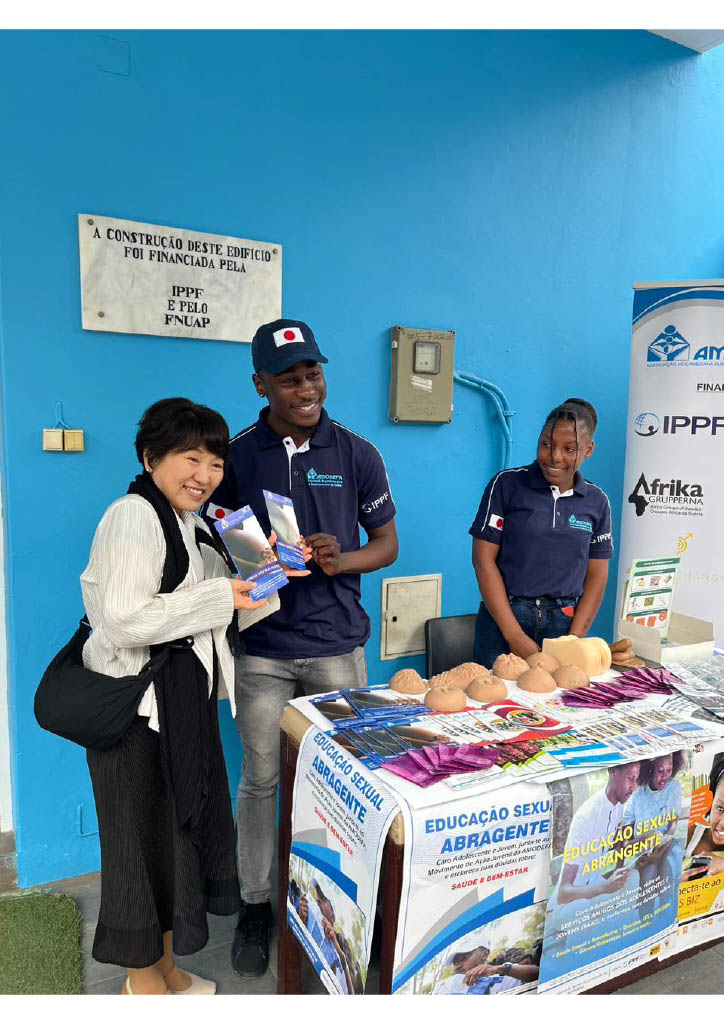
On 16 August 2023, Japanese House of Representatives member Dr Toshiko Abe visited head office and the Adolescent and Youth Friendly Services Centre of IPPF’s Member Association in Mozambique, the Associação Moçambicana para Desenvolvimento da Família (AMODEFA). Dr Abe visited one of AMODEFA’s eight youth centres in a particularly marginalised and high poverty density area, where youth friendly health services is difficult to reach for the local youth who need them most. Their youth centre functions as the hub of youth target activities such as provision of a range of services from HIV testing and treatment to SRHR counselling and other information and services around sexual health and rights. In 2022 23.57 % of AMODEFA’s family planning services were provided to clients under 20 years. AMODEFA was established in 1989 and has been IPPF’s Full Member Association since 2010. It is an independent, non-profit, and non-governmental association working in 10 provinces in Mozambique. As the leading service provider in Mozambique, AMODEFA provides comprehensive and diverse sexual and reproductive health, including that related to SGBV. Their focus is on vulnerable people such as women, girls, people with disabilities.
news_item
| 17 August 2023
Japanese MP visits IPPF Member Association in Mozambique
On 16 August 2023, Japanese House of Representatives member Dr Toshiko Abe visited head office and the Adolescent and Youth Friendly Services Centre of IPPF’s Member Association in Mozambique, the Associação Moçambicana para Desenvolvimento da Família (AMODEFA). Dr Abe visited one of AMODEFA’s eight youth centres in a particularly marginalised and high poverty density area, where youth friendly health services is difficult to reach for the local youth who need them most. Their youth centre functions as the hub of youth target activities such as provision of a range of services from HIV testing and treatment to SRHR counselling and other information and services around sexual health and rights. In 2022 23.57 % of AMODEFA’s family planning services were provided to clients under 20 years. AMODEFA was established in 1989 and has been IPPF’s Full Member Association since 2010. It is an independent, non-profit, and non-governmental association working in 10 provinces in Mozambique. As the leading service provider in Mozambique, AMODEFA provides comprehensive and diverse sexual and reproductive health, including that related to SGBV. Their focus is on vulnerable people such as women, girls, people with disabilities.
news item
| 07 December 2017
Al Jazeera highlights Global Gag Rule impact for IPPF Member Association in Mozambique
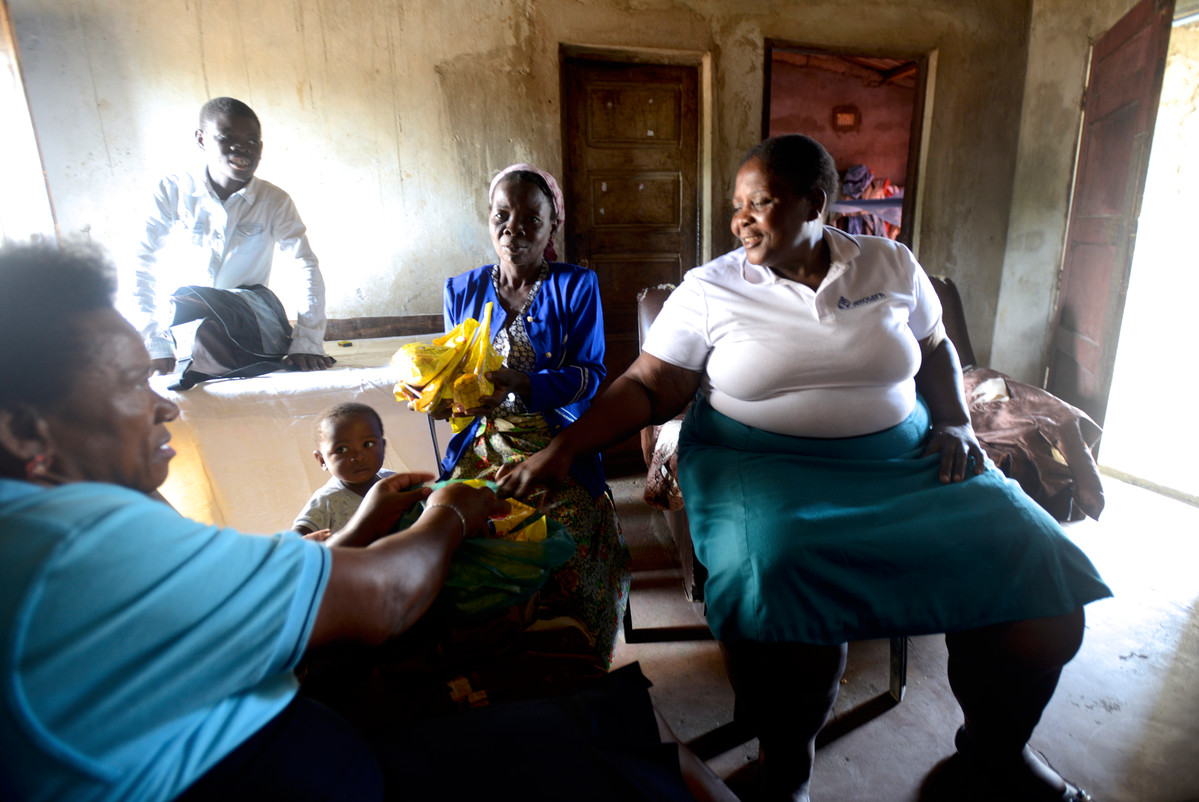
In the latest People and Power documentary, the team travel round Mozambique with AMODEFA, to look first-hand at the human impact the Gag rule has had in the country. The Global Gag Rule denies U.S. funding to organisations like IPPF if they use money from other donors to provide abortion services, counselling or referrals—even if abortion is legal in a country. It blocks critical funding for health services like contraception, maternal health, and HIV prevention and treatment for any organisation that refuses to sign it. The documentary talks to AMODEFA clients and staff who have been involved and helped by the US funded health programmes covering young people, HIV and Tuberculosis. AMODEFA faces significant losses to their programming budget of $2 million. Work that has built trust and provided support and treatment for many people who would have been left behind. The documentary spans several provinces, with the team visiting specialised outreach services that go out to the most rural populations. ‘We will have generations that are sick without knowing what they have. They will run the risk of transmitting HIV to other people because they do not know their HIV status,’ says project leader, Dr Marcel Kant. ‘We are condemning our society to live with this illness and there will be a large number of deaths.’ IPPF is working with AMODEFA to find alternative sources of funding. Executive Director Santos Simione, is working tirelessly with his team to ensure AMODEFA’s works continues, “We must be resilient! This also means being resilient to ensure that the progress made in sexual and reproductive health and rights continues and the provision of services minimizes the suffering of our population, particularly adolescents and young people, women and children”. The team Read more about AMODEFA's tireless work in Mozambique
news_item
| 07 December 2017
Al Jazeera highlights Global Gag Rule impact for IPPF Member Association in Mozambique
In the latest People and Power documentary, the team travel round Mozambique with AMODEFA, to look first-hand at the human impact the Gag rule has had in the country. The Global Gag Rule denies U.S. funding to organisations like IPPF if they use money from other donors to provide abortion services, counselling or referrals—even if abortion is legal in a country. It blocks critical funding for health services like contraception, maternal health, and HIV prevention and treatment for any organisation that refuses to sign it. The documentary talks to AMODEFA clients and staff who have been involved and helped by the US funded health programmes covering young people, HIV and Tuberculosis. AMODEFA faces significant losses to their programming budget of $2 million. Work that has built trust and provided support and treatment for many people who would have been left behind. The documentary spans several provinces, with the team visiting specialised outreach services that go out to the most rural populations. ‘We will have generations that are sick without knowing what they have. They will run the risk of transmitting HIV to other people because they do not know their HIV status,’ says project leader, Dr Marcel Kant. ‘We are condemning our society to live with this illness and there will be a large number of deaths.’ IPPF is working with AMODEFA to find alternative sources of funding. Executive Director Santos Simione, is working tirelessly with his team to ensure AMODEFA’s works continues, “We must be resilient! This also means being resilient to ensure that the progress made in sexual and reproductive health and rights continues and the provision of services minimizes the suffering of our population, particularly adolescents and young people, women and children”. The team Read more about AMODEFA's tireless work in Mozambique
news item
| 01 December 2025
IPPF stands against Trumps enforced silence on World AIDS Day
This year, the Trump administration has banned federal employees and grant recipients from acknowledging World AIDS Day, celebrated on the 1st December 2025. The State Department’s directive told employees to “refrain from publicly promoting World AIDS Day through any communication channels, including social media, media engagements, speeches or other public-facing messaging”.This latest directive comes after US funding cuts this year put essential sexual and reproductive healthcare, which includes HIV prevention services, at risk for millions worldwide. A global survey of Member Associations conducted by IPPF revealed the devastating impacts on our Member Associations who provide integrated sexual and reproductive healthcare services. Over half our Member Associations were affected, with an estimated loss of $85million. The Trump administration’s decision to enforce silence around World AIDS Day demonstrates a lack of respect for the lived experiences of those living with HIV, those who died of AIDS, and all affected by HIV. This directive impedes the ongoing efforts to reduce the transmission of HIV and to address stigma, discrimination, and inequality. These decisions are not isolated from broader state driven ideologies and anti-rights pushbacks that continue to suppress the acceptance and fair inclusion of all people in society. This enforced silence on World AIDS Day serves only to further embed stigma and injustice and is another reminder as to why we must confront these moments with equal strength and clarity. IPPF supports the rights of all people in society and works to provide sexual and reproductive health services to all, in particular those who are marginalised, such as gay men and other men who have sex with men, sex workers, trans people, people who inject drugs, and prisoners. IPPF works with our Member Associations doing vital work to support those living with HIV, to end stigma, and ‘overcome disruption’ to providing essential health services to communities, including HIV testing, prevention and treatment. In times of crisis and oppression, rights and dignity need champions. At IPPF we carry this moment with our Member Associations on the ground and stand behind them in their continued dignity and fight for the right to continue the vital work they do. At IPPF we will continue our work towards a vision of a world free from HIV where everyone is valued equally, has a healthy, pleasurable, and fulfilling life within a just and equal society. Key to an impactful HIV programme is understanding and addressing drivers of the HIV pandemic, including structural barriers; violence against women; discrimination; stigma; harmful social norms; inequalities related to sex, gender, sexual orientation, race, disability, and economic status; criminalisation of HIV transmission and certain populations; and restrictive laws and policies.Due to social and biological vulnerabilities, certain groups of people experience higher rates of HIV including women and girls; gay, bisexual, and other men who have sex with men; sex workers; people who inject drugs; trans people; and people in prisons. Working with those affected by and living with HIV to design, implement, and evaluate IPPF services and programmes is essential on our pathway to realise a society free of discrimination and stigma, and for all people living with HIV to live healthy and fulfilled lives. A community-led and inclusive response includes both tailoring services and programmes to address the needs of communities more severely affected by HIV, as well as addressing the needs of all people who would benefit from HIV‑related services such as youth, people with disabilities, pregnant women and infants, people in sexual relationships with individuals living with HIV, boys and men, and others who may not identify as a member of certain groups. Of key importance is creating programmes, services, and spaces that are inclusive, discrimination-free, and accessible to all, where each person feels welcomed and that their health and well‑being needs will be at the centre of the care that they receive.At IPPF our Member Association’s work demonstrates what we can achieve when we lead with community-led responses. For example, in Mozambique, the Associação Moçambicana para o Desenvolvimento da Família (AMODEFA), together with sex workers, are working to ensure that sex workers have access to comprehensive sexual and reproductive health services, with oral pre-exposure prophylaxis (PrEP*) for HIV prevention.In Zambia, the Planned Parenthood Association of Zambia (PPAZ), through a partnership between the Children’s Investment Fund Foundation (CIFF) and the Global Fund to Fight AIDS, Tuberculosis, and Malaria—has secured 21,600 Dapivirine Vaginal Rings for HIV prevention for women. Adding the PrEP ring as an additional HIV prevention option gives women more choice about which HIV prevention method they can use, empowers them to make informed decisions about their health, and increases the chance that individuals can find a method that works for them.On Worlds AIDS day we are doubling down on our commitment and support to the communities we work with and our Member Associations who continue to provide innovative healthcare models to prevent HIV transmission, and provide vital care to those living with HIV. The work in Mozambique and Zambia are just two examples of the work that many Member Associations are implementing globally to provide essential health services to communities, including HIV testing, treatment and prevention. *Pre-Exposure Prophylaxis (PrEP) is used to reduce the risk of getting HIV.
news_item
| 01 December 2025
IPPF stands against Trumps enforced silence on World AIDS Day
This year, the Trump administration has banned federal employees and grant recipients from acknowledging World AIDS Day, celebrated on the 1st December 2025. The State Department’s directive told employees to “refrain from publicly promoting World AIDS Day through any communication channels, including social media, media engagements, speeches or other public-facing messaging”.This latest directive comes after US funding cuts this year put essential sexual and reproductive healthcare, which includes HIV prevention services, at risk for millions worldwide. A global survey of Member Associations conducted by IPPF revealed the devastating impacts on our Member Associations who provide integrated sexual and reproductive healthcare services. Over half our Member Associations were affected, with an estimated loss of $85million. The Trump administration’s decision to enforce silence around World AIDS Day demonstrates a lack of respect for the lived experiences of those living with HIV, those who died of AIDS, and all affected by HIV. This directive impedes the ongoing efforts to reduce the transmission of HIV and to address stigma, discrimination, and inequality. These decisions are not isolated from broader state driven ideologies and anti-rights pushbacks that continue to suppress the acceptance and fair inclusion of all people in society. This enforced silence on World AIDS Day serves only to further embed stigma and injustice and is another reminder as to why we must confront these moments with equal strength and clarity. IPPF supports the rights of all people in society and works to provide sexual and reproductive health services to all, in particular those who are marginalised, such as gay men and other men who have sex with men, sex workers, trans people, people who inject drugs, and prisoners. IPPF works with our Member Associations doing vital work to support those living with HIV, to end stigma, and ‘overcome disruption’ to providing essential health services to communities, including HIV testing, prevention and treatment. In times of crisis and oppression, rights and dignity need champions. At IPPF we carry this moment with our Member Associations on the ground and stand behind them in their continued dignity and fight for the right to continue the vital work they do. At IPPF we will continue our work towards a vision of a world free from HIV where everyone is valued equally, has a healthy, pleasurable, and fulfilling life within a just and equal society. Key to an impactful HIV programme is understanding and addressing drivers of the HIV pandemic, including structural barriers; violence against women; discrimination; stigma; harmful social norms; inequalities related to sex, gender, sexual orientation, race, disability, and economic status; criminalisation of HIV transmission and certain populations; and restrictive laws and policies.Due to social and biological vulnerabilities, certain groups of people experience higher rates of HIV including women and girls; gay, bisexual, and other men who have sex with men; sex workers; people who inject drugs; trans people; and people in prisons. Working with those affected by and living with HIV to design, implement, and evaluate IPPF services and programmes is essential on our pathway to realise a society free of discrimination and stigma, and for all people living with HIV to live healthy and fulfilled lives. A community-led and inclusive response includes both tailoring services and programmes to address the needs of communities more severely affected by HIV, as well as addressing the needs of all people who would benefit from HIV‑related services such as youth, people with disabilities, pregnant women and infants, people in sexual relationships with individuals living with HIV, boys and men, and others who may not identify as a member of certain groups. Of key importance is creating programmes, services, and spaces that are inclusive, discrimination-free, and accessible to all, where each person feels welcomed and that their health and well‑being needs will be at the centre of the care that they receive.At IPPF our Member Association’s work demonstrates what we can achieve when we lead with community-led responses. For example, in Mozambique, the Associação Moçambicana para o Desenvolvimento da Família (AMODEFA), together with sex workers, are working to ensure that sex workers have access to comprehensive sexual and reproductive health services, with oral pre-exposure prophylaxis (PrEP*) for HIV prevention.In Zambia, the Planned Parenthood Association of Zambia (PPAZ), through a partnership between the Children’s Investment Fund Foundation (CIFF) and the Global Fund to Fight AIDS, Tuberculosis, and Malaria—has secured 21,600 Dapivirine Vaginal Rings for HIV prevention for women. Adding the PrEP ring as an additional HIV prevention option gives women more choice about which HIV prevention method they can use, empowers them to make informed decisions about their health, and increases the chance that individuals can find a method that works for them.On Worlds AIDS day we are doubling down on our commitment and support to the communities we work with and our Member Associations who continue to provide innovative healthcare models to prevent HIV transmission, and provide vital care to those living with HIV. The work in Mozambique and Zambia are just two examples of the work that many Member Associations are implementing globally to provide essential health services to communities, including HIV testing, treatment and prevention. *Pre-Exposure Prophylaxis (PrEP) is used to reduce the risk of getting HIV.
news item
| 17 August 2023
Japanese MP visits IPPF Member Association in Mozambique
On 16 August 2023, Japanese House of Representatives member Dr Toshiko Abe visited head office and the Adolescent and Youth Friendly Services Centre of IPPF’s Member Association in Mozambique, the Associação Moçambicana para Desenvolvimento da Família (AMODEFA). Dr Abe visited one of AMODEFA’s eight youth centres in a particularly marginalised and high poverty density area, where youth friendly health services is difficult to reach for the local youth who need them most. Their youth centre functions as the hub of youth target activities such as provision of a range of services from HIV testing and treatment to SRHR counselling and other information and services around sexual health and rights. In 2022 23.57 % of AMODEFA’s family planning services were provided to clients under 20 years. AMODEFA was established in 1989 and has been IPPF’s Full Member Association since 2010. It is an independent, non-profit, and non-governmental association working in 10 provinces in Mozambique. As the leading service provider in Mozambique, AMODEFA provides comprehensive and diverse sexual and reproductive health, including that related to SGBV. Their focus is on vulnerable people such as women, girls, people with disabilities.
news_item
| 17 August 2023
Japanese MP visits IPPF Member Association in Mozambique
On 16 August 2023, Japanese House of Representatives member Dr Toshiko Abe visited head office and the Adolescent and Youth Friendly Services Centre of IPPF’s Member Association in Mozambique, the Associação Moçambicana para Desenvolvimento da Família (AMODEFA). Dr Abe visited one of AMODEFA’s eight youth centres in a particularly marginalised and high poverty density area, where youth friendly health services is difficult to reach for the local youth who need them most. Their youth centre functions as the hub of youth target activities such as provision of a range of services from HIV testing and treatment to SRHR counselling and other information and services around sexual health and rights. In 2022 23.57 % of AMODEFA’s family planning services were provided to clients under 20 years. AMODEFA was established in 1989 and has been IPPF’s Full Member Association since 2010. It is an independent, non-profit, and non-governmental association working in 10 provinces in Mozambique. As the leading service provider in Mozambique, AMODEFA provides comprehensive and diverse sexual and reproductive health, including that related to SGBV. Their focus is on vulnerable people such as women, girls, people with disabilities.
news item
| 07 December 2017
Al Jazeera highlights Global Gag Rule impact for IPPF Member Association in Mozambique
In the latest People and Power documentary, the team travel round Mozambique with AMODEFA, to look first-hand at the human impact the Gag rule has had in the country. The Global Gag Rule denies U.S. funding to organisations like IPPF if they use money from other donors to provide abortion services, counselling or referrals—even if abortion is legal in a country. It blocks critical funding for health services like contraception, maternal health, and HIV prevention and treatment for any organisation that refuses to sign it. The documentary talks to AMODEFA clients and staff who have been involved and helped by the US funded health programmes covering young people, HIV and Tuberculosis. AMODEFA faces significant losses to their programming budget of $2 million. Work that has built trust and provided support and treatment for many people who would have been left behind. The documentary spans several provinces, with the team visiting specialised outreach services that go out to the most rural populations. ‘We will have generations that are sick without knowing what they have. They will run the risk of transmitting HIV to other people because they do not know their HIV status,’ says project leader, Dr Marcel Kant. ‘We are condemning our society to live with this illness and there will be a large number of deaths.’ IPPF is working with AMODEFA to find alternative sources of funding. Executive Director Santos Simione, is working tirelessly with his team to ensure AMODEFA’s works continues, “We must be resilient! This also means being resilient to ensure that the progress made in sexual and reproductive health and rights continues and the provision of services minimizes the suffering of our population, particularly adolescents and young people, women and children”. The team Read more about AMODEFA's tireless work in Mozambique
news_item
| 07 December 2017
Al Jazeera highlights Global Gag Rule impact for IPPF Member Association in Mozambique
In the latest People and Power documentary, the team travel round Mozambique with AMODEFA, to look first-hand at the human impact the Gag rule has had in the country. The Global Gag Rule denies U.S. funding to organisations like IPPF if they use money from other donors to provide abortion services, counselling or referrals—even if abortion is legal in a country. It blocks critical funding for health services like contraception, maternal health, and HIV prevention and treatment for any organisation that refuses to sign it. The documentary talks to AMODEFA clients and staff who have been involved and helped by the US funded health programmes covering young people, HIV and Tuberculosis. AMODEFA faces significant losses to their programming budget of $2 million. Work that has built trust and provided support and treatment for many people who would have been left behind. The documentary spans several provinces, with the team visiting specialised outreach services that go out to the most rural populations. ‘We will have generations that are sick without knowing what they have. They will run the risk of transmitting HIV to other people because they do not know their HIV status,’ says project leader, Dr Marcel Kant. ‘We are condemning our society to live with this illness and there will be a large number of deaths.’ IPPF is working with AMODEFA to find alternative sources of funding. Executive Director Santos Simione, is working tirelessly with his team to ensure AMODEFA’s works continues, “We must be resilient! This also means being resilient to ensure that the progress made in sexual and reproductive health and rights continues and the provision of services minimizes the suffering of our population, particularly adolescents and young people, women and children”. The team Read more about AMODEFA's tireless work in Mozambique
