


Spotlight
A selection of resources from across the Federation

Resource
Advancing Sex Workers’ Sexual and Reproductive Health and Rights: A Toolkit for Inclusive Programming
This toolkit is grounded in international guidance and frameworks on sex workers’ health and human rights.
Most Popular This Week

Resource
|
Advancing Sex Workers’ Sexual and Reproductive Health and Rights: A Toolkit for Inclusive Programming
Sexual and reproductive health and rights (SRHR) are not only an integral part of the right to health but also necessary to enjoy many other human rights.

Resource
|
IPPF Annual Report and Financial Statements 2025
IPPF is a global federation and movement of 100+ locally led Member Associations and Collaborative Partnersin 150+ countries, dedicated to sexual and reproductive health, rights

Resource
|
Annual Performance Report 2025
The IPPF Annual Performance Report 2025 tells a story of resilience, solidarity and shared leadership across our Federation.


Resource
|
Review of IPPF’s Governance Reform
Following IPPF’s governance reform in 2019/2020, a review of the reform process was conducted, which provided important insights for the new Board of Trustees and the Secretariat to support the cha

Resource
|
IMAP Statement on Sex Worker-Centred Sexual and Reproductive Health Services
This statement is intended to provide guidance to Member Associations and Collaborative Partners across the Federation on delivering comprehensive, evidence‑based sexual and reproductive health (SR


Filter our resources by:

Resource
| 17 June 2016
Financial Statement 2015
IPPF’s total income has fallen by US$10.0 million from US$126.2 million to US$116.2 million. This reduction is due to a fall in unrestricted government income of US$5.8 million, a reduction of restricted government income of US$6.2 million and reduced donations in kind of US$0.6 million offset by an increase in restricted grants from multilaterals of US$4m with the balance of US$0.9 million decrease in other income and trading activities. The total decrease is split between restricted and unrestricted funds by US$2.3 million and US$7.6 million respectively. With the exception of Norway and Japan, all government (more significantly Australia and Sweden) donors have held level or increased their unrestricted funding to IPPF in the donor currency. However the strengthening of the US dollar has had a significant impact, effectively reducing US dollar unrestricted income by approximately 14% on a like for like basis compared to 2014. Total expenditure has decreased from US$137.5 million to US$131.8 million. Unrestricted expenditure has risen from US$84.2 million to US$85.6 million while restricted expenditure has fallen from US$53.3 million to US$46.2 million. The increase in unrestricted expenditure is driven by an exchange loss (US$1.9 million) and the use of US$8.9m designated funds to provide support in a number of areas: support in South Asia for system strengthening (US$2.3m); support for resource mobilization at regional and central level (US$1.5 million); campaign and advocacy for UN Liaison office (US$0.9 million); scale up fund for SGBV support to MAs (US$0.5 million); contingency spend on various activities (US$0.4 million). Restricted expenditure levels are driven by the timing of donor funded programmes, which vary on a year-by-year basis. This has resulted in an unrestricted net operating expenditure of US$13.4 million before other unrecognized gains and losses and a restricted deficit of US$2.1 million, to generate a total operating deficit of US$15.6 million. After taking into account actuarial gain on the defined benefit pension scheme and investment losses the resulting net movement in funds was a reduction of US$13.6 million. The level of unrestricted income received was approximately US$4 million less than forecast primarily due to the strength of the US dollar versus donor currencies and the expenditure in excess of income levels was funded using approved designated funds (US$2m million). This resulted in a decrease in general reserves to US$21.9 million and a fall in designated reserves to US$73.3 million.
Resource
| 17 June 2016
Financial Statement 2015
IPPF’s total income has fallen by US$10.0 million from US$126.2 million to US$116.2 million. This reduction is due to a fall in unrestricted government income of US$5.8 million, a reduction of restricted government income of US$6.2 million and reduced donations in kind of US$0.6 million offset by an increase in restricted grants from multilaterals of US$4m with the balance of US$0.9 million decrease in other income and trading activities. The total decrease is split between restricted and unrestricted funds by US$2.3 million and US$7.6 million respectively. With the exception of Norway and Japan, all government (more significantly Australia and Sweden) donors have held level or increased their unrestricted funding to IPPF in the donor currency. However the strengthening of the US dollar has had a significant impact, effectively reducing US dollar unrestricted income by approximately 14% on a like for like basis compared to 2014. Total expenditure has decreased from US$137.5 million to US$131.8 million. Unrestricted expenditure has risen from US$84.2 million to US$85.6 million while restricted expenditure has fallen from US$53.3 million to US$46.2 million. The increase in unrestricted expenditure is driven by an exchange loss (US$1.9 million) and the use of US$8.9m designated funds to provide support in a number of areas: support in South Asia for system strengthening (US$2.3m); support for resource mobilization at regional and central level (US$1.5 million); campaign and advocacy for UN Liaison office (US$0.9 million); scale up fund for SGBV support to MAs (US$0.5 million); contingency spend on various activities (US$0.4 million). Restricted expenditure levels are driven by the timing of donor funded programmes, which vary on a year-by-year basis. This has resulted in an unrestricted net operating expenditure of US$13.4 million before other unrecognized gains and losses and a restricted deficit of US$2.1 million, to generate a total operating deficit of US$15.6 million. After taking into account actuarial gain on the defined benefit pension scheme and investment losses the resulting net movement in funds was a reduction of US$13.6 million. The level of unrestricted income received was approximately US$4 million less than forecast primarily due to the strength of the US dollar versus donor currencies and the expenditure in excess of income levels was funded using approved designated funds (US$2m million). This resulted in a decrease in general reserves to US$21.9 million and a fall in designated reserves to US$73.3 million.
Resource
| 16 June 2016
Locally owned
We want to enable all women and girls to decide about their body, the size of their family, their education and future. We provide services to meet their contraceptive needs, and bring about policy changes locally and globally, as their sexual and reproductive rights are human rights.
Resource
| 16 June 2016
Locally owned
We want to enable all women and girls to decide about their body, the size of their family, their education and future. We provide services to meet their contraceptive needs, and bring about policy changes locally and globally, as their sexual and reproductive rights are human rights.
Resource
| 16 June 2016
IPPF and Youth
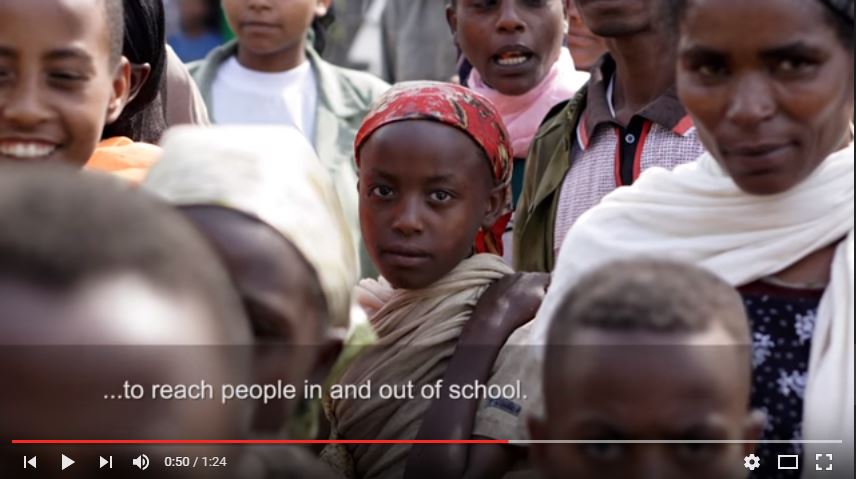
The world has the largest youth generation ever. IPPF is putting young people at the heart of its services: with them, we want to change social norms and guarantee their rights.
Resource
| 16 June 2016
IPPF and Youth
The world has the largest youth generation ever. IPPF is putting young people at the heart of its services: with them, we want to change social norms and guarantee their rights.
Resource
| 16 June 2016
Social Enterprise
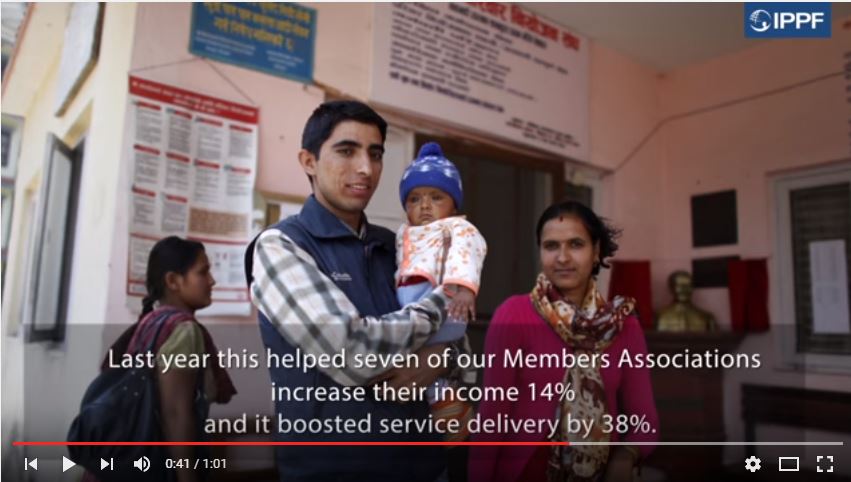
As lack of funding is threatening health and the lives of millions of women and girls, we're turning to social enterprises to generate funds. This helps our Member Associations to increase their services.
Resource
| 16 June 2016
Social Enterprise
As lack of funding is threatening health and the lives of millions of women and girls, we're turning to social enterprises to generate funds. This helps our Member Associations to increase their services.

Resource
| 16 June 2016
Women, Girls and Gender
The data about gender inequality are shocking: millions of women are victims of early marriage, female genital mutilation and different sorts of gender violence and discrimination.
Resource
| 16 June 2016
Women, Girls and Gender
The data about gender inequality are shocking: millions of women are victims of early marriage, female genital mutilation and different sorts of gender violence and discrimination.
Resource
| 16 June 2016
Service Delivery
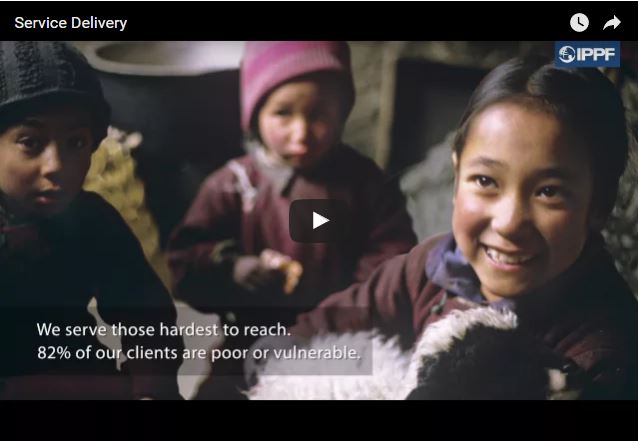
Women and girls around the world have an unmet need for reproductive health services. In 2015, IPPF provided 175 million services, 82% of which went to poor and marginalised people.
Resource
| 16 June 2016
Service Delivery
Women and girls around the world have an unmet need for reproductive health services. In 2015, IPPF provided 175 million services, 82% of which went to poor and marginalised people.
Resource
| 06 June 2016
Annual Performance Report 2015
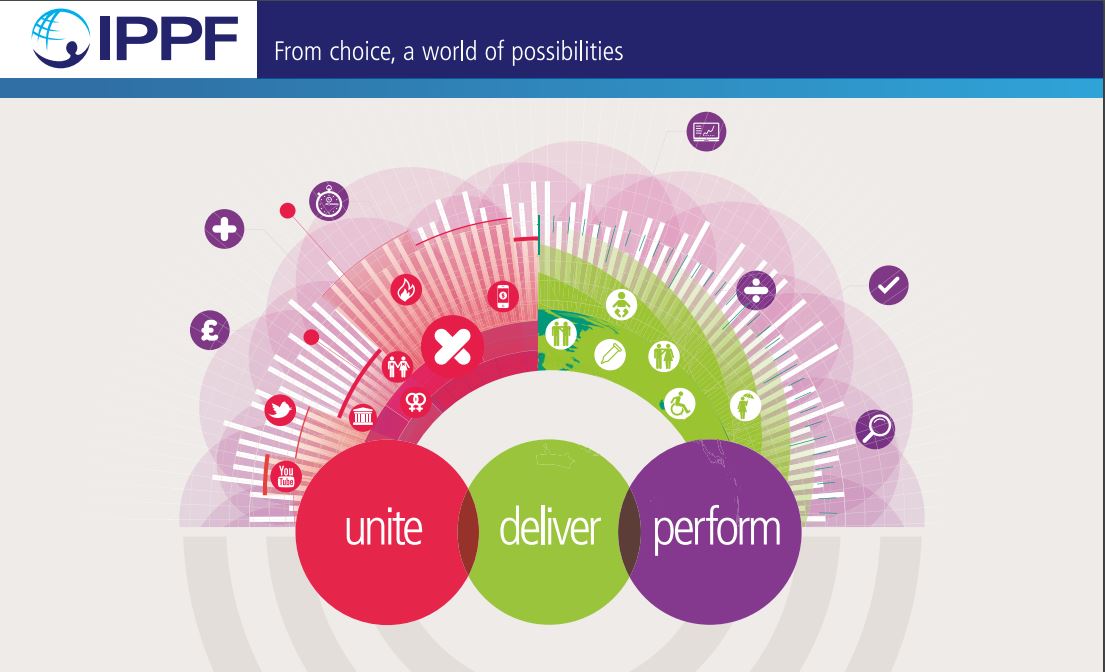
When IPPF refocused efforts with the three Changes Goals – Unite, Deliver and Perform – an ambitious commitment was made to double the number of sexual and reproductive health services provided between 2010 and 2015. We are proud to announce that 175.3 million services were provided in 2015, only 1 per cent below the goal of 176.4 million. This is a remarkable achievement and a result of Member Associations’ unwavering efforts and commitment. More than eight in ten clients who received services from IPPF were poor and vulnerable, while 44 per cent of our services went to young people. In 2015, Member Associations and collaborative partners in 48 countries contributed to 82 legal and policy changes that support or defend sexual and reproductive health and rights. At the regional and global levels, IPPF’s advocacy contributed to 22 policy changes. The highlight of our advocacy achievements was the inclusion of gender equality and women’s empowerment, sexual and reproductive health, and reproductive rights in the 2030 Agenda for Sustainable Development. IPPF continued to invest in learning, business processes and information management systems to drive performance and value for money. We are increasingly using data to guide decision making and to ensure accountability to our clients, donors and partners.
Resource
| 06 June 2016
Annual Performance Report 2015
When IPPF refocused efforts with the three Changes Goals – Unite, Deliver and Perform – an ambitious commitment was made to double the number of sexual and reproductive health services provided between 2010 and 2015. We are proud to announce that 175.3 million services were provided in 2015, only 1 per cent below the goal of 176.4 million. This is a remarkable achievement and a result of Member Associations’ unwavering efforts and commitment. More than eight in ten clients who received services from IPPF were poor and vulnerable, while 44 per cent of our services went to young people. In 2015, Member Associations and collaborative partners in 48 countries contributed to 82 legal and policy changes that support or defend sexual and reproductive health and rights. At the regional and global levels, IPPF’s advocacy contributed to 22 policy changes. The highlight of our advocacy achievements was the inclusion of gender equality and women’s empowerment, sexual and reproductive health, and reproductive rights in the 2030 Agenda for Sustainable Development. IPPF continued to invest in learning, business processes and information management systems to drive performance and value for money. We are increasingly using data to guide decision making and to ensure accountability to our clients, donors and partners.

Resource
| 31 May 2016
#KnowItOwnIt - your sexual rights matter!
IPPF's 2016 campaign is on strengthening quality comprehensive sexuality education for all young people, globally. Your sexual rights matter. It's time to Know It, Own It!
Resource
| 31 May 2016
#KnowItOwnIt - your sexual rights matter!
IPPF's 2016 campaign is on strengthening quality comprehensive sexuality education for all young people, globally. Your sexual rights matter. It's time to Know It, Own It!

Resource
| 27 May 2016
Addressing sexual and reproductive health and HIV needs among key populations
This factsheet summarises the results of the past collaboration between BACKUP and the International Planned Parenthood Federation (IPPF) on the ‘Shadows and Light’ project.
Resource
| 27 May 2016
Addressing sexual and reproductive health and HIV needs among key populations
This factsheet summarises the results of the past collaboration between BACKUP and the International Planned Parenthood Federation (IPPF) on the ‘Shadows and Light’ project.
Resource
| 24 May 2016
How to educate about abortion: A guide for peer educators, teachers and trainers
How to educate about abortion: A guide for peer educators, teachers and trainers, has been developed for trainers and educators who want to deliver workshops or training on abortion to young people, especially those training young peer educators. The guide includes key terms, instructions for facilitators as well as specific activities that educators can use. We also published a summary of this publication:
Resource
| 24 May 2016
How to educate about abortion: A guide for peer educators, teachers and trainers
How to educate about abortion: A guide for peer educators, teachers and trainers, has been developed for trainers and educators who want to deliver workshops or training on abortion to young people, especially those training young peer educators. The guide includes key terms, instructions for facilitators as well as specific activities that educators can use. We also published a summary of this publication:
Resource
| 17 June 2016
Financial Statement 2015
IPPF’s total income has fallen by US$10.0 million from US$126.2 million to US$116.2 million. This reduction is due to a fall in unrestricted government income of US$5.8 million, a reduction of restricted government income of US$6.2 million and reduced donations in kind of US$0.6 million offset by an increase in restricted grants from multilaterals of US$4m with the balance of US$0.9 million decrease in other income and trading activities. The total decrease is split between restricted and unrestricted funds by US$2.3 million and US$7.6 million respectively. With the exception of Norway and Japan, all government (more significantly Australia and Sweden) donors have held level or increased their unrestricted funding to IPPF in the donor currency. However the strengthening of the US dollar has had a significant impact, effectively reducing US dollar unrestricted income by approximately 14% on a like for like basis compared to 2014. Total expenditure has decreased from US$137.5 million to US$131.8 million. Unrestricted expenditure has risen from US$84.2 million to US$85.6 million while restricted expenditure has fallen from US$53.3 million to US$46.2 million. The increase in unrestricted expenditure is driven by an exchange loss (US$1.9 million) and the use of US$8.9m designated funds to provide support in a number of areas: support in South Asia for system strengthening (US$2.3m); support for resource mobilization at regional and central level (US$1.5 million); campaign and advocacy for UN Liaison office (US$0.9 million); scale up fund for SGBV support to MAs (US$0.5 million); contingency spend on various activities (US$0.4 million). Restricted expenditure levels are driven by the timing of donor funded programmes, which vary on a year-by-year basis. This has resulted in an unrestricted net operating expenditure of US$13.4 million before other unrecognized gains and losses and a restricted deficit of US$2.1 million, to generate a total operating deficit of US$15.6 million. After taking into account actuarial gain on the defined benefit pension scheme and investment losses the resulting net movement in funds was a reduction of US$13.6 million. The level of unrestricted income received was approximately US$4 million less than forecast primarily due to the strength of the US dollar versus donor currencies and the expenditure in excess of income levels was funded using approved designated funds (US$2m million). This resulted in a decrease in general reserves to US$21.9 million and a fall in designated reserves to US$73.3 million.
Resource
| 17 June 2016
Financial Statement 2015
IPPF’s total income has fallen by US$10.0 million from US$126.2 million to US$116.2 million. This reduction is due to a fall in unrestricted government income of US$5.8 million, a reduction of restricted government income of US$6.2 million and reduced donations in kind of US$0.6 million offset by an increase in restricted grants from multilaterals of US$4m with the balance of US$0.9 million decrease in other income and trading activities. The total decrease is split between restricted and unrestricted funds by US$2.3 million and US$7.6 million respectively. With the exception of Norway and Japan, all government (more significantly Australia and Sweden) donors have held level or increased their unrestricted funding to IPPF in the donor currency. However the strengthening of the US dollar has had a significant impact, effectively reducing US dollar unrestricted income by approximately 14% on a like for like basis compared to 2014. Total expenditure has decreased from US$137.5 million to US$131.8 million. Unrestricted expenditure has risen from US$84.2 million to US$85.6 million while restricted expenditure has fallen from US$53.3 million to US$46.2 million. The increase in unrestricted expenditure is driven by an exchange loss (US$1.9 million) and the use of US$8.9m designated funds to provide support in a number of areas: support in South Asia for system strengthening (US$2.3m); support for resource mobilization at regional and central level (US$1.5 million); campaign and advocacy for UN Liaison office (US$0.9 million); scale up fund for SGBV support to MAs (US$0.5 million); contingency spend on various activities (US$0.4 million). Restricted expenditure levels are driven by the timing of donor funded programmes, which vary on a year-by-year basis. This has resulted in an unrestricted net operating expenditure of US$13.4 million before other unrecognized gains and losses and a restricted deficit of US$2.1 million, to generate a total operating deficit of US$15.6 million. After taking into account actuarial gain on the defined benefit pension scheme and investment losses the resulting net movement in funds was a reduction of US$13.6 million. The level of unrestricted income received was approximately US$4 million less than forecast primarily due to the strength of the US dollar versus donor currencies and the expenditure in excess of income levels was funded using approved designated funds (US$2m million). This resulted in a decrease in general reserves to US$21.9 million and a fall in designated reserves to US$73.3 million.
Resource
| 16 June 2016
Locally owned
We want to enable all women and girls to decide about their body, the size of their family, their education and future. We provide services to meet their contraceptive needs, and bring about policy changes locally and globally, as their sexual and reproductive rights are human rights.
Resource
| 16 June 2016
Locally owned
We want to enable all women and girls to decide about their body, the size of their family, their education and future. We provide services to meet their contraceptive needs, and bring about policy changes locally and globally, as their sexual and reproductive rights are human rights.
Resource
| 16 June 2016
IPPF and Youth
The world has the largest youth generation ever. IPPF is putting young people at the heart of its services: with them, we want to change social norms and guarantee their rights.
Resource
| 16 June 2016
IPPF and Youth
The world has the largest youth generation ever. IPPF is putting young people at the heart of its services: with them, we want to change social norms and guarantee their rights.
Resource
| 16 June 2016
Social Enterprise
As lack of funding is threatening health and the lives of millions of women and girls, we're turning to social enterprises to generate funds. This helps our Member Associations to increase their services.
Resource
| 16 June 2016
Social Enterprise
As lack of funding is threatening health and the lives of millions of women and girls, we're turning to social enterprises to generate funds. This helps our Member Associations to increase their services.
Resource
| 16 June 2016
Women, Girls and Gender
The data about gender inequality are shocking: millions of women are victims of early marriage, female genital mutilation and different sorts of gender violence and discrimination.
Resource
| 16 June 2016
Women, Girls and Gender
The data about gender inequality are shocking: millions of women are victims of early marriage, female genital mutilation and different sorts of gender violence and discrimination.
Resource
| 16 June 2016
Service Delivery
Women and girls around the world have an unmet need for reproductive health services. In 2015, IPPF provided 175 million services, 82% of which went to poor and marginalised people.
Resource
| 16 June 2016
Service Delivery
Women and girls around the world have an unmet need for reproductive health services. In 2015, IPPF provided 175 million services, 82% of which went to poor and marginalised people.
Resource
| 06 June 2016
Annual Performance Report 2015
When IPPF refocused efforts with the three Changes Goals – Unite, Deliver and Perform – an ambitious commitment was made to double the number of sexual and reproductive health services provided between 2010 and 2015. We are proud to announce that 175.3 million services were provided in 2015, only 1 per cent below the goal of 176.4 million. This is a remarkable achievement and a result of Member Associations’ unwavering efforts and commitment. More than eight in ten clients who received services from IPPF were poor and vulnerable, while 44 per cent of our services went to young people. In 2015, Member Associations and collaborative partners in 48 countries contributed to 82 legal and policy changes that support or defend sexual and reproductive health and rights. At the regional and global levels, IPPF’s advocacy contributed to 22 policy changes. The highlight of our advocacy achievements was the inclusion of gender equality and women’s empowerment, sexual and reproductive health, and reproductive rights in the 2030 Agenda for Sustainable Development. IPPF continued to invest in learning, business processes and information management systems to drive performance and value for money. We are increasingly using data to guide decision making and to ensure accountability to our clients, donors and partners.
Resource
| 06 June 2016
Annual Performance Report 2015
When IPPF refocused efforts with the three Changes Goals – Unite, Deliver and Perform – an ambitious commitment was made to double the number of sexual and reproductive health services provided between 2010 and 2015. We are proud to announce that 175.3 million services were provided in 2015, only 1 per cent below the goal of 176.4 million. This is a remarkable achievement and a result of Member Associations’ unwavering efforts and commitment. More than eight in ten clients who received services from IPPF were poor and vulnerable, while 44 per cent of our services went to young people. In 2015, Member Associations and collaborative partners in 48 countries contributed to 82 legal and policy changes that support or defend sexual and reproductive health and rights. At the regional and global levels, IPPF’s advocacy contributed to 22 policy changes. The highlight of our advocacy achievements was the inclusion of gender equality and women’s empowerment, sexual and reproductive health, and reproductive rights in the 2030 Agenda for Sustainable Development. IPPF continued to invest in learning, business processes and information management systems to drive performance and value for money. We are increasingly using data to guide decision making and to ensure accountability to our clients, donors and partners.
Resource
| 31 May 2016
#KnowItOwnIt - your sexual rights matter!
IPPF's 2016 campaign is on strengthening quality comprehensive sexuality education for all young people, globally. Your sexual rights matter. It's time to Know It, Own It!
Resource
| 31 May 2016
#KnowItOwnIt - your sexual rights matter!
IPPF's 2016 campaign is on strengthening quality comprehensive sexuality education for all young people, globally. Your sexual rights matter. It's time to Know It, Own It!
Resource
| 27 May 2016
Addressing sexual and reproductive health and HIV needs among key populations
This factsheet summarises the results of the past collaboration between BACKUP and the International Planned Parenthood Federation (IPPF) on the ‘Shadows and Light’ project.
Resource
| 27 May 2016
Addressing sexual and reproductive health and HIV needs among key populations
This factsheet summarises the results of the past collaboration between BACKUP and the International Planned Parenthood Federation (IPPF) on the ‘Shadows and Light’ project.
Resource
| 24 May 2016
How to educate about abortion: A guide for peer educators, teachers and trainers
How to educate about abortion: A guide for peer educators, teachers and trainers, has been developed for trainers and educators who want to deliver workshops or training on abortion to young people, especially those training young peer educators. The guide includes key terms, instructions for facilitators as well as specific activities that educators can use. We also published a summary of this publication:
Resource
| 24 May 2016
How to educate about abortion: A guide for peer educators, teachers and trainers
How to educate about abortion: A guide for peer educators, teachers and trainers, has been developed for trainers and educators who want to deliver workshops or training on abortion to young people, especially those training young peer educators. The guide includes key terms, instructions for facilitators as well as specific activities that educators can use. We also published a summary of this publication:
