


IPPF works to ensure that every woman and girl has the human right to choose to be pregnant or not and we will continue to supply and support safe and legal abortion services and care. We are committed to reducing the number of deaths of women and girls who are forced to turn to unsafe abortion methods. Make Abortion Safe. Make Abortion Legal. For all Women and Girls. Everywhere.
Articles about Abortion Care

"The students don’t normally ask about abortion as it is such a taboo"
Women and girls in Palestine face a number of difficulties and challenges. The ongoing conflict and lack of sitting government as well as high unemployment, has led to poverty and inequality, while an increasingly conservative society and traditionally patriarchal culture has led to increased gender-inequality and lack of access to sexual and reproductive healthcare. The current abortion law unfairly pushes women to risk their lives and health to attempt to end their unwanted pregnancies in unsafe ways. In this context, the Palestinian Family Planning and Protection Agency (PFPPA) has been working since 1964, to provide sexual and reproductive healthcare and advocate for women’s rights. Having received two grants from Safe Abortion Action Fund (SAAF) since 2014, they have been working on the lack of access to safe abortion in the country with a focus on increasing their provision of abortion-related services and advocating at community and national level for changes to the abortion law. My name is Amani and I am 24 years old. I live with my parents in Bethlehem in the West Bank and I work as a midwife in a family hospital in Jerusalem as well as a peer education volunteer with the Palestinian Family Planning and Protection Agency. Working in schools Part of my role as a volunteer involves going to schools and doing presentations about early-marriage, family planning and gender-based violence. Even though sex outside of marriage is taboo, it does happen. However, it is very hard for unmarried people to access contraception as the culture is so restrictive, especially here in Hebron. When they need contraception, the man usually goes by himself or they look online. When we go to schools and talk to students about the subject of sexual health, the students want to know more because at home it is a taboo to talk about such things. We get many questions about issues such as masturbation or what causes pregnancy. They just know that it happens when men and women are together, they do not know how it happens. So people may ask a question like: ‘if I touch somebody, if I stand near someone or kiss them will I get pregnant?’ Abortion is still a taboo The students don’t normally ask about abortion as it is such a taboo. I do know that unsafe abortion happens though, for example my grandmother tried to end her pregnancy once. She was forty-five years old and had six children already. She did not know any way of not getting pregnant or safely ending the pregnancy. She told me that she drank liquids and jumped from the stairs, taking a great risk. She really didn’t want to be pregnant again and tried hard to end it but it did not work. I am very proud that as a peer educator I have expanded my knowledge on many issues, including how to provide harm reduction information to women so that they can reduce risks of unsafe abortion and not do what my grandmother did in case they don’t want to be pregnant. Once I met with a woman who already had six children, she was tired of having children but her husband wanted to have more so we visited them at home and through conversation, the husband understood the need, so she was able to access an IUD. Here we work a lot with women, we change them, we speak with them, they change their opinions, they become decision-makers and they leave the clinic as different people. Read more stories from SAAF in Palestine

03 April 2019
Improving the quality and availability of post-abortion care in a humanitarian crisis
The world is facing stronger and longer natural disasters, protracted complex emergencies, conflicts and epidemics. These humanitarian crises can expose weakness in health systems, with particularly serious consequences for women and girls in need of reproductive health care. To improve the quality and availability of post‑abortion care during a flood, the University of Leicester and International Planned Parenthood Federation South Asia Region (IPPF-SAR), in collaboration with the Government of Bangladesh, developed and measured the impact of an integrated intervention package, called RHCC. First tested in a flood-prone area of Bangladesh, this novel approach includes: i) Pre-positioning medicines and supplies, using the UNFPA’s Inter-Agency Reproductive Health Kit 8; ii) Capacity building of service providers; and iii) Community awareness raising. Supported by IPPF's Innovation Programme, the project aligns with IPPF’s commitment to ensuring that crisis-affected populations receive timely, quality, life-saving, gender-responsive and inclusive sexual and reproductive health services.

"From my experience the situation in relation to abortion in Palestine is very hard"
Women and girls in Palestine face a number of difficulties and challenges. The ongoing conflict and lack of sitting government as well as high unemployment, has led to poverty and inequality, while an increasingly conservative society and traditionally patriarchal culture has led to increased gender-inequality and lack of access to sexual and reproductive healthcare. The current abortion law unfairly pushes women to risk their lives and health to attempt to end their unwanted pregnancies in unsafe ways. In this context, the Palestinian Family Planning and Protection Agency (PFPPA) has been working since 1964, to provide sexual and reproductive healthcare and advocate for women’s rights. Having received two grants from Safe Abortion Action Fund (SAAF) since 2014, they have been working on the lack of access to safe abortion in the country with a focus on increasing their provision of abortion-related services and advocating at community and national level for changes to the abortion law. My name is Khawla*, I am 42 years old and I am a midwife and university lecturer. I have been married for 10 years and have three children, two boys and a girl. I have multiple health issues and a number of hereditary conditions in my family. I first became involved with PFPPA through my work, having taken many trainings with them about issues such as early marriage, gender-based violence, sexual health and safe abortion. Then last year I accidentally became pregnant myself. My youngest child was just two years old, I had a new job at the time and was suffering with a number of health issues that would make another pregnancy dangerous for me. Unintended pregnancy When I read that the pregnancy test was positive, it was a very hard time. I started crying – I felt like the world was very black – it was the end of my life. I would kill myself, if I didn’t end this pregnancy. So I came to PFPPA and they treated me as a client. I met with the social worker, midwife and doctor and, since the pregnancy was risk to my life and I was very weak and bleeding when I reached them they were able to prescribe the tablets. These pills are highly regulated and restricted here and not all pharmacists stock them but I was able to access them with the prescription and they worked. PFPPA provided follow up afterwards helping me to find an effective long-acting family planning method. Even though I knew about the different methods, they discussed them all with me to ensure that they would be appropriate for my health. Even though the law allows abortion in cases of risks to health of the woman, you need to get permission from the religious leaders and they are very hard to convince. I took my case to them and, despite my health issues, they refused despite it being very early in the pregnancy, before the ensoulment and is allowed according to Islam. The public hospital will not perform it unless they receive the permission from the religious leaders and they don’t give it despite what the religious rules say. Stigma & access From my experience the situation in relation to abortion in Palestine is very hard. There are many women who get pregnant who did not plan it and it’s not the time for the pregnancy. The door is closed to them from the public health system. I have started to campaign on this issue now, I talk to the students in my course about how we can solve this problem. I think the stigma is very difficult. I never thought I would be in this situation, I talked a lot about it before but when you are in the situation, it is totally different. I really appreciated the help given from the PFPPA team, particularly the psychological support. When I felt bad, they helped me to see that I was doing the right thing and it was my right. Read more stories from SAAF in Palestine *Not her real name

26 March 2019
I Decide: A global campaign to break down barriers for safe abortion access
In September 2018, people all over the world joined together to demand safe abortion access to all after we launched our international movement: I Decide What Happens To My Body. It has been truly phenomenal. From handing in petitions to governments, to activists taking to the streets, WhatsApp and Facebook to pursue rights for themselves and others, dozens of IPPF Member Associations (MAs), activists and volunteers have made incredible steps forward – sometimes in challenging circumstances. Changing hearts and minds In Malaysia, activists created a range of informative but fun videos, busting myths around abortion in a campaign that is continuing to build momentum and will continue running for much of this year; Yemen featured on radio interviews and held flash mobs and talks; Morocco has been running a country-wide university competition that will become a yearly event, and; activists in eSwatini (formerly Swaziland) has been utilizing the power of social media to raise (normally unheard) voices, stimulating a country-wide debate on the provision of abortion that has got them invited to consult with the Ministry of Health. And those are just a few of the countries involved. It’s been an incredible journey for us all, and without doubt, each of us has been a crucial component of I Decide’s mission to spread the word on the ground that everyone must have the human right to make choices about their own bodies and futures. Like any movement, there are so many of those who joined in. We were even fortunate enough to get some expert insights from our MA in Sri Lanka, whose advocacy director, Sonali Gunasekera, spoke extensively about the challenges of changing hearts and minds over the issue of abortion in their country. We saw an incredible variety of information produced to normalise abortion for the everyday procedure that it is – from videos on how a safe abortion takes place, a podcast on youth abortion stigma and stories on those who campaigned successfully to lift abortion restrictions in Ireland. We also produced a landmark policy report, Her in charge, on the importance of medical abortion as a means of protecting and promoting women’s health. All this fascinating material and more is still available on the I Decide website. To make I Decide even more effective, over 300 people from all walks of life pledged their voices to have open, honest and frank conversations about abortion with the people around them. Journalists including Lucy Mangan and Hadley Freeman even got involved, lending their support to the campaign by writing about I Decide both online and in print. The work continues... So many people participated in I Decide. And every one of them have been a true champion for basic human rights. This month, the campaign came to an official end but the work does not end here. IPPF, our MAs and activists are committed to ensuring that everyone can have access to safe abortion. IPPF has been working around the world for nearly 70 years, and we’re here for as long as it takes. We hope you will also continue to be a part of breaking the stigma on abortion wide open, until absolutely everyone, everywhere can say: “I decide what happens to my body.”

12 March 2019
The top 6 priorities of quality abortion services according to women
Safe abortion services are a crucial aspect of healthcare. Estimates suggest that approximately 1 in 4 pregnancies worldwide will end in abortion. But what constitutes quality abortion care for the people that access these services? In order to find out women’s priorities in abortion care, IPPF in partnership with Ibis Reproductive Health interviewed 45 women in Kenya and India. These women identified important characteristics of what they perceived as the highest quality care. Here are the 6 most commonly identified characteristics: 1. Being attended to by kind and polite clinic staff “He made me feel really comfortable… That is in fact what I liked about him… He just told me this is going to be a quick thing. Don’t fear, you are going to be safe.” People accessing abortion services prioritize being treated with respect, politeness and kindness. Positive interactions with clinic staff are highly valued as abortion remains stigmatized in many communities. The interviewed women said they wanted clinic staff to be “encouraging”, “supportive”, “concerned” and “reassuring”. They also mentioned the importance of a warm welcome when they first arrived at the clinic. 2. Receiving an effective and safe procedure “The most important [aspect] is this one on the doctor, the way he attends you, because when he gives you a drug, he gives you the right one, and he offers you the right service.” Women highly value the importance of the efficacy and safety of the procedure as well as the competence of the provider. Many women interviewed also mentioned the importance of accessing quality medication. Women defined a “successful abortion” as one that brings no complications, maintains a woman’s fertility, and doesn’t lead to death. 3. Receiving accurate and clear information “They must make the patient aware of what will happen after taking the tablet and when to call back and ask for help, if there is heavy bleeding then what to do.” People accessing abortion services want to have a clear understanding of what to expect during the procedure. Most of the interviewed women had little or no knowledge about abortion services prior to seeking care so it was important to them to receive clear and accurate information about all aspects of the procedure, including on pre and post-abortion care. 4. Accessing supportive and non-judgmental counselling “When someone just gives you a platform to speak, that one sounds better. I can call that quality.” Women also valued receiving good counselling when they access abortion care. The women interviewed in Kenya particularly valued being listened to, supported during the decision-making process and to be able to share their concerns with the healthcare providers. 5. Being offered follow up services “I got the service beyond my expectations. After giving me that service, they called me here again for a check-up [about] whether I have any problem[s] or not.” (India) Women emphasized that follow-up services are a crucial aspect of quality care. Follow up services are perceived as an indicator that providers care about a woman's health after the abortion procedure. It was considered a useful way to receive detailed information about after-care and to discuss any questions or concerns. 6. Maintaining confidentiality and privacy “I would like [it] to be that I share [my experience] with the health provider I will find in the room. I don’t want that information to be leaked out of that room. So confidentiality is very key.” Privacy is a key consideration for women when seeking abortion services. One woman in Kenya defined a respectful abortion as one that guaranteed confidentiality. Privacy and confidentiality are particularly important as women fear facing abortion stigma from their communities. Blog by Eliana Vaz Martins & Rebecca Wilkins

27 February 2019
Fighting for safe abortion access in Sri Lanka
“I’ve met many women who were forced to have abortions, and one that stands out is a woman who had gone abroad to work and was raped by the husband in the family for which she worked… she had to come back to Sri Lanka and get an unsafe, backstreet abortion.” – Sonali Gunaseka, Director of Advocacy at the Family Planning Association of Sri Lanka In Sri Lanka, abortion is so severely restricted that people who cannot afford high-quality services, either in the country or else abroad, are forced to risk their lives to get the procedure done in unsafe conditions, or are forced through a pregnancy that they cannot afford, manage, or do not want. Sonali Gunasekera, Director of Advocacy at the Family Planning Association of Sri Lanka (IPPF’s partner organisation in the country) has been working to change people’s hearts and minds there regarding abortion access. She wants women to decide what happens to their bodies, and to have control over their own futures. She wants to prevent people being forced to risk their lives by receiving this form of healthcare in unsafe, backstreet conditions. We spoke with Sonali (pictured below) about access to this vital healthcare service and the impact it has. IPPF: Can you tell us about the context of abortion in Sri Lanka? Sonali: Sri Lanka has one of the strictest abortion laws in the world, which stipulates that abortion is illegal unless the life of the mother is at risk. You must have three doctors’ signatures to agree to this; if not, the abortion is not permitted. Right now, you cannot have an abortion in cases of rape, incest or foetal deformities; but there is some movement to change the law to allow abortion in these cases, which is good. There has been a lot of resistance to this movement, and it is important to bear in mind that even if it does go through, it will be a small change that won’t affect most women who seek access to abortion. This is because they are usually women over 35 years old, who already have two children and do not fall within any of the categories mentioned above. IPPF: How does this affect people who are pregnant and don’t want to be, for whatever reason? Sonali: If you are of the upper-middle class in Sri Lanka, you can go to certain private hospitals and pay for the service. But, if you don’t have the money, you will be unable to access this service and due to a lack of officially regulated information, it is often the case that you will hear about places and procedures by word-of-mouth. These places can be unhygienic, or else the provider could be unskilled. The woman may not be given pain relief, so it can be quite a horrible experience for her, as has been related to me by women that I have interviewed regarding their experiences. Although Sri Lanka’s maternal mortality rate is low, unsafe abortions and their consequences account for a high proportion of the deaths that do occur, and the mortality rate for abortion stands at about 15%. We can legally access post-abortion care, but there’s a lot of stigma around it, so a woman who seeks medical help may be asked all sorts of questions that make them feel judged or afraid of possible consequences. Questions can include things like “How did this happen?” “Why did you go for an abortion?” “Did you not know this is illegal in the country?” So, the women who aren’t deterred by this and do seek help may not disclose that they’ve had an abortion, which means that they may not get the right care. IPPF: Around the world – where it’s legal to have an abortion under these strict circumstances – we’ve seen people dying because it’s difficult to get multiple doctors or lawmakers to agree that these circumstances happened. So what does this possible new law mean for women and girls in Sri Lanka in practical terms? Sonali: About 1% or less seek abortions for incest, rape and foetal deformities. The law is so strict that it requires that you get multiple doctors or a judicial medical officer to give their signature. But doctors will only sign it off if they have absolute proof of rape, incest or foetal abnormality; this makes sign off difficult as the medics could go to prison themselves for allowing the abortion. With rape, it can take our legal system about 20 years before a rape case is finally proved. So, when someone needs to prove rape in a matter of weeks in order to get an abortion, I’m not sure this will be possible. It makes me feel quite angry that these men who put these women through so much trauma have impunity and that they are not prosecuted. The women must prove beyond any doubt that all these things happened; they must go to the judicial medical officials and show their underwear as proof; they must take tests to prove that the hymen has been perforated; all these procedures that are invasive and re-traumatizing because there exists so much doubt and bureaucracy for victim-survivors. It’s just very skewed and unfair; as a gender issue, it is something that I feel very strongly needs to change. IPPF: What’s your experience of the psychological impact of how women are treated when they seek help? Sonali: The experience can be traumatic. I have spoken with women who have said that they receive rude treatment from nurses and also doctors in hospitals. Their self-esteem goes down a lot when they are shouted at and treated like criminals. They may feel isolated and scared and alone because there is stigma around pre-marital sex or sex out of wedlock, so women may feel ashamed and not reach out to a support system, if at all one exists for them. Seeking a source of help and medical intervention itself can be difficult and stressful. There is a lot of discrimination throughout this process. It’s a gender issue, as if it is the case of a relationship, men do not necessarily have to go through any of this stigma, self-esteem issues, or deal with rude doctors or nurses. IPPF: How can we change things? Sonali: Looking at Ireland’s situation, I feel as though having people out on the street protesting and showing their support did a lot. I have so much respect for people who mobilize like this. In Sri Lanka, I think we’ve got to mobilize the public, because if you keep it in the hands of parliamentarians and religious leaders, there is no way the restrictive law and all the negative consequences that come with it are going to change. Contrary to the popular argument, it’s not even Sri Lankan culture, but rather British Victorian values and laws that criminalize women. I think we need to work with women who are understanding and who would be willing to think of their daughters and others close to them who could face similar situations. In the past month in Sri Lanka, I’ve seen a lot of young people coming to the streets and saying: “It is important to take our views into account; the voices of our generation.” So, we need to create mass attitudinal changes through media, and also through innovative ways like street dramas and other ways of working with young people. Do you believe every woman and girl around the world has the human right to decide what happens to their body? Then add your voice to our I Decide campaign.

"I’m so happy I now don’t have to worry about contraception for another five years”
In August 2017, weeks of continued and heavy rainfall across Nepal resulted in flash floods and landslides that affected 36 of the 75 districts. Many people lost their homes or were displaced. It was estimated that of those affected, 112,500 were women of reproductive age, including 8,694 pregnant women. IPPF Humanitarian, through their Member Association, The Family Planning Association of Nepal (FPAN), activated its emergency response system early on. With funding support from the Australian Government, FPAN and IPPF Humanitarian initially mobilised their response in four of the worst affected districts (Sunsari, Saptari, Bardiya, and Dang). Mobile medical camps were established to meet the sexual and reproductive health needs of the affected population, including through the distribution of short and long acting methods of contraception, STI and HIV screening, and GBV referrals. In collaboration with the USAID-SIFPO project, services were then expanded into five more affected districts. IPPF Humanitarian spoke with 21-year old Muna in her home district of Sunsari in Nepal. “I got married at 16 years old and have two children, a four-year-old girl and two-year-old boy. In my caste, we get married early, so my parents took me to get an arranged marriage. I was in the 8th class at the time, and returned to school after I got married, but only lasted one year. My husband works in construction and had to stop working for two weeks when the floods came. When he doesn’t work, he doesn’t get paid, so it’s been very difficult. A FPAN social worker told me about the mobile medical camp today. I used to be on the three-month injectable but today I changed to the five-year implant in my arm. When my youngest child was eight months old I found out I was pregnant again. I decided to discontinue that pregnancy, so I took the five small tablets given to me by my neighbourhood doctor. I was two months pregnant at the time. From this, I had two days bleeding and cramp like pain, and then weakness. I decided to abort that pregnancy because my youngest will still only eight months old, and I didn’t want any more children. If I had more than two children, it would be very difficult to feed and educate them, and would badly affect my body too. I’m so happy I now don’t have to worry about contraception for another five years.” Want to know more about safe abortion access? Join IPPF'S I Decide movement

15 January 2019
Abortion and the referendum in Ireland
25 May 2018 brought a landslide victory for the Yes campaign to repeal the eighth amendment in the Irish constitution, which effectively gave equal rights to the pregnant woman and the fetus. Before the repeal victory, abortion was only permitted if the woman’s life was at risk but not in cases of rape, incest or foetal abnormality. Such strict laws had dire, and in some instances, fatal consequences for women seeking abortion services. Many women were forced to turn to unsafe abortion methods or to seek safe abortion services in the UK. Following years of campaigning and perseverance, a seismic change in public opinion on abortion had taken place. With the 8th amendment now repealed, Ireland’s Government has committed to delivering legislation which legalizes abortion care on a woman’s own indication in the first twelve weeks of pregnancy. As of January 2018, the Irish Family Planning Association provides early medical abortion up to 9 weeks of pregnancy. Abortion care is free for women living in the Republic of Ireland. For more details please visit www.ifpa.ie. Meet some of the people who tirelessly campaigned to repeal the eighth amendment, what it means to them and the future of women and girls in Ireland. Want to know more about how medical and surgical abortion works? You can watch our explainer videos here. Niall Behan Chief Executive, IFPA One fear we had was that men might see this as a women’s issue and not bother to vote, so we worked hard to engage male voters. Ivana Bacik Labour Party Senator, Leinster House, Dublin My personal reproductive rights journey began when I was President of the Student Union at Trinity College, Dublin in 1989 and I was threatened with prison. Siobhán Silke Communications Officer, IFPA On the day of the vote, there were probably at least 10 women and girls sitting in an airport getting ready to get on flights to go to the UK to seek the care in another country that they should have been able to get in Ireland. Catherine Forde Activist, barrister and former board member of the IFPA The Irish Family Planning Association continued to argue this is a health issue, it's not a matter for criminal law. Dr Cliona Murphy Consultant obstetrician gynaecologist During my medical training abortion really didn't enter the sphere. Like most Irish people I accepted it wasn’t part of our culture. Dr Mark Murphy Doctors for Choice One of the biggest tragedies is that for three months of the campaign you’d turn on the radio and hear cases upon cases of women and couples talking about how the 8th amendment had harmed them. Maura Leahy Director of Counselling, IFPA During the referendum campaign we had people coming for counselling who had abortions 20 or 25 years ago and hadn't spoken to anybody since about it. Alison Spillane Policy Officer, IFPA I think there is a role for Ireland to step up as a country, a country that is traditionally quite conservative, having now in three years passed two very progressive referendums – one on abortion and one on same sex marriage. Maeve Taylor Director of Advocacy and Communications, IFPA This is about a woman, about a woman's decision. It’s about her health, autonomy, dignity - her fundamental rights. Áine Kavanagh Advocacy and Communications Assistant, IFPA Young people are often seen as politically apathetic, but it’s important my generation are involved in the reproductive rights movement. Dr Catriona Henchion Medical Director, IFPA As a doctor I heard so many stories of how abortion law in Ireland caused problems for women.
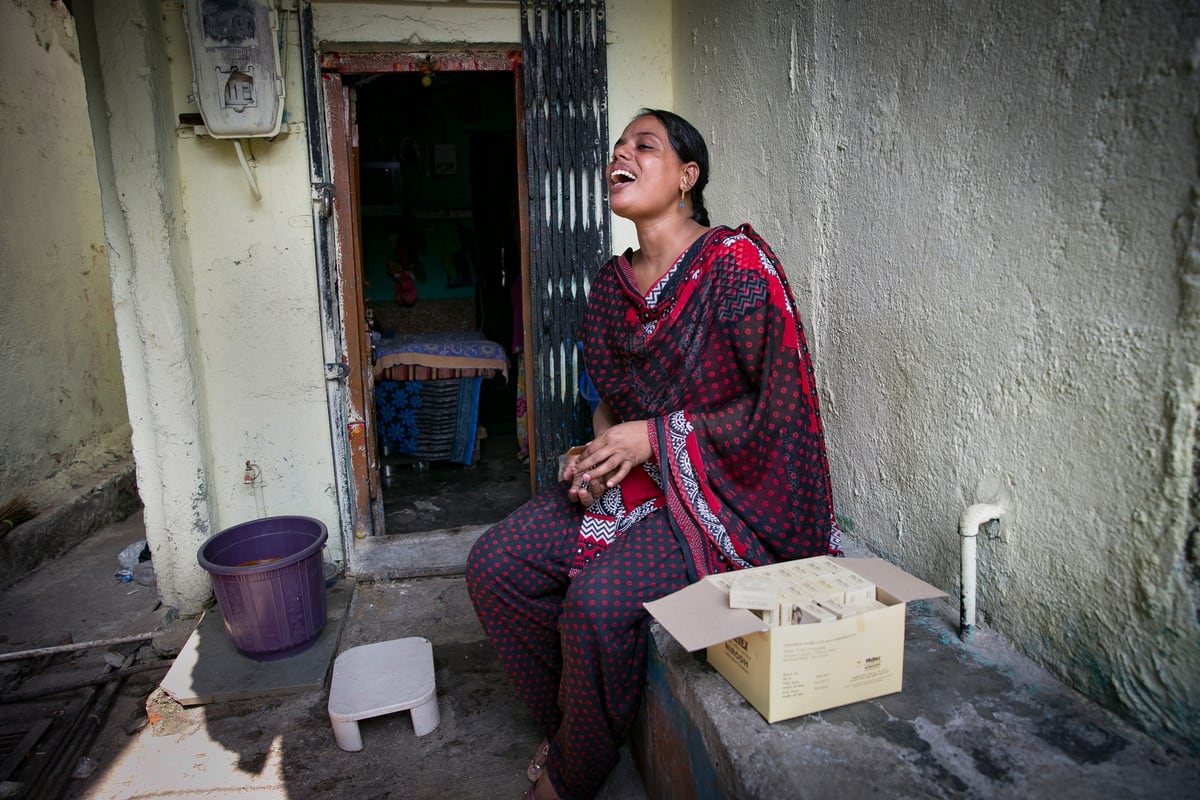
"Selling my body doesn’t make me a bad person"
“Selling my body doesn’t make me a bad person, but working as a peer educator has helped enabled me to help many like me.” Hasina is one of the estimated 1,500 sex workers living in Haunman Tekri, a red-light area in Bhiwandi, a town near Mumbai. When her husband passed away six years ago leaving behind a three-year-old daughter, Hasina turned to sex work as her only option to earn money. She admits that it came with a feeling of powerlessness. "You don't choose this trade; it is the result of life circumstances.” She works as a peer educator with PSK, one of the Family Planning Association of India's (FPAI) clinics. "Working with Parivar Swasthya Kedra (PSK), has made me feel less helpless; it's given me some control over my body; the ability to choose whether or not to bring another life into this world.” Building trust through education Hasina has been a peer educator for three years, working within the district to educate other women on safe sex, contraception, and abortion. Hasina admits she was once wary of PSK workers. "I used to think that these workers who insist we use condoms, would only sabotage my clientele. But soon I realized they were only looking out for us." When talking with local women, Hasina advocates the use of contraception but says in the case of an unintended pregnancy, abortion is a viable option. "It's easy to judge us, but many of us have no choice; we simply cannot feed another on just Rs. 400 a day." Hasina is now the go-to woman in the district when it comes to sexual health. "Since I am one of them, the women trust me." This is the secret behind PSK success; a model where sex workers educate their peers, understanding the complexities and prejudices of their daily lives. "I hope one day I am able to put all of this behind me. But I hope that through PSK I am able to make another woman's life just a little bit safer, a little bit better." Do you want to show your support for women and girls to be free to decide what happens to their body? Pledge your voice to our I Decide campaign,IPPF’s movement for safe abortion access for all. You'll be provided with toolkits on how to talk about abortion and you'll have access to a range of content from personal testimonies to videos explaining the different types of abortion available.

"Most women are from marginalised sections of society and are denied the right to make their own decisions"
In the district of Gwalior in Madhya Pradesh, the summer season has started and the heat in town is already extreme. Here, the Family Planning Association of India GCACI clinic serves many people living in poverty. In the ten years since the GCACI project started there, the clinic has provided 16,301 women with comprehensive abortion care and 202,758 women with contraceptive services. The two-storey clinic is situated in a residential area and, inside, women queue up to see the counsellors and medical staff. Many are accompanied by link workers who have travelled with them from outlying districts. Neelam Dixit is in charge of the branch. “Most women are from marginalised sections of society and are denied the right to make their own decisions. By the time they visit our clinic, the woman is already a couple of months pregnant”. FPA India’s work is making an impact and Dixit is seeing views change on abortion. “There is a shift in attitude among women since FPAI started providing services. Presently, there is little stigma attached to abortion. Our aim is to provide quality health services at low cost. We create awareness about the consequences of unsafe abortion and train volunteers to be sure women in villages are aware of our clinic.” The clinic has served around 300,000 people from rural and semi-urban populations with comprehensive sexual and reproductive health services, and provides both first- and second-trimester abortion services.
"The students don’t normally ask about abortion as it is such a taboo"
Women and girls in Palestine face a number of difficulties and challenges. The ongoing conflict and lack of sitting government as well as high unemployment, has led to poverty and inequality, while an increasingly conservative society and traditionally patriarchal culture has led to increased gender-inequality and lack of access to sexual and reproductive healthcare. The current abortion law unfairly pushes women to risk their lives and health to attempt to end their unwanted pregnancies in unsafe ways. In this context, the Palestinian Family Planning and Protection Agency (PFPPA) has been working since 1964, to provide sexual and reproductive healthcare and advocate for women’s rights. Having received two grants from Safe Abortion Action Fund (SAAF) since 2014, they have been working on the lack of access to safe abortion in the country with a focus on increasing their provision of abortion-related services and advocating at community and national level for changes to the abortion law. My name is Amani and I am 24 years old. I live with my parents in Bethlehem in the West Bank and I work as a midwife in a family hospital in Jerusalem as well as a peer education volunteer with the Palestinian Family Planning and Protection Agency. Working in schools Part of my role as a volunteer involves going to schools and doing presentations about early-marriage, family planning and gender-based violence. Even though sex outside of marriage is taboo, it does happen. However, it is very hard for unmarried people to access contraception as the culture is so restrictive, especially here in Hebron. When they need contraception, the man usually goes by himself or they look online. When we go to schools and talk to students about the subject of sexual health, the students want to know more because at home it is a taboo to talk about such things. We get many questions about issues such as masturbation or what causes pregnancy. They just know that it happens when men and women are together, they do not know how it happens. So people may ask a question like: ‘if I touch somebody, if I stand near someone or kiss them will I get pregnant?’ Abortion is still a taboo The students don’t normally ask about abortion as it is such a taboo. I do know that unsafe abortion happens though, for example my grandmother tried to end her pregnancy once. She was forty-five years old and had six children already. She did not know any way of not getting pregnant or safely ending the pregnancy. She told me that she drank liquids and jumped from the stairs, taking a great risk. She really didn’t want to be pregnant again and tried hard to end it but it did not work. I am very proud that as a peer educator I have expanded my knowledge on many issues, including how to provide harm reduction information to women so that they can reduce risks of unsafe abortion and not do what my grandmother did in case they don’t want to be pregnant. Once I met with a woman who already had six children, she was tired of having children but her husband wanted to have more so we visited them at home and through conversation, the husband understood the need, so she was able to access an IUD. Here we work a lot with women, we change them, we speak with them, they change their opinions, they become decision-makers and they leave the clinic as different people. Read more stories from SAAF in Palestine
03 April 2019
Improving the quality and availability of post-abortion care in a humanitarian crisis
The world is facing stronger and longer natural disasters, protracted complex emergencies, conflicts and epidemics. These humanitarian crises can expose weakness in health systems, with particularly serious consequences for women and girls in need of reproductive health care. To improve the quality and availability of post‑abortion care during a flood, the University of Leicester and International Planned Parenthood Federation South Asia Region (IPPF-SAR), in collaboration with the Government of Bangladesh, developed and measured the impact of an integrated intervention package, called RHCC. First tested in a flood-prone area of Bangladesh, this novel approach includes: i) Pre-positioning medicines and supplies, using the UNFPA’s Inter-Agency Reproductive Health Kit 8; ii) Capacity building of service providers; and iii) Community awareness raising. Supported by IPPF's Innovation Programme, the project aligns with IPPF’s commitment to ensuring that crisis-affected populations receive timely, quality, life-saving, gender-responsive and inclusive sexual and reproductive health services.
"From my experience the situation in relation to abortion in Palestine is very hard"
Women and girls in Palestine face a number of difficulties and challenges. The ongoing conflict and lack of sitting government as well as high unemployment, has led to poverty and inequality, while an increasingly conservative society and traditionally patriarchal culture has led to increased gender-inequality and lack of access to sexual and reproductive healthcare. The current abortion law unfairly pushes women to risk their lives and health to attempt to end their unwanted pregnancies in unsafe ways. In this context, the Palestinian Family Planning and Protection Agency (PFPPA) has been working since 1964, to provide sexual and reproductive healthcare and advocate for women’s rights. Having received two grants from Safe Abortion Action Fund (SAAF) since 2014, they have been working on the lack of access to safe abortion in the country with a focus on increasing their provision of abortion-related services and advocating at community and national level for changes to the abortion law. My name is Khawla*, I am 42 years old and I am a midwife and university lecturer. I have been married for 10 years and have three children, two boys and a girl. I have multiple health issues and a number of hereditary conditions in my family. I first became involved with PFPPA through my work, having taken many trainings with them about issues such as early marriage, gender-based violence, sexual health and safe abortion. Then last year I accidentally became pregnant myself. My youngest child was just two years old, I had a new job at the time and was suffering with a number of health issues that would make another pregnancy dangerous for me. Unintended pregnancy When I read that the pregnancy test was positive, it was a very hard time. I started crying – I felt like the world was very black – it was the end of my life. I would kill myself, if I didn’t end this pregnancy. So I came to PFPPA and they treated me as a client. I met with the social worker, midwife and doctor and, since the pregnancy was risk to my life and I was very weak and bleeding when I reached them they were able to prescribe the tablets. These pills are highly regulated and restricted here and not all pharmacists stock them but I was able to access them with the prescription and they worked. PFPPA provided follow up afterwards helping me to find an effective long-acting family planning method. Even though I knew about the different methods, they discussed them all with me to ensure that they would be appropriate for my health. Even though the law allows abortion in cases of risks to health of the woman, you need to get permission from the religious leaders and they are very hard to convince. I took my case to them and, despite my health issues, they refused despite it being very early in the pregnancy, before the ensoulment and is allowed according to Islam. The public hospital will not perform it unless they receive the permission from the religious leaders and they don’t give it despite what the religious rules say. Stigma & access From my experience the situation in relation to abortion in Palestine is very hard. There are many women who get pregnant who did not plan it and it’s not the time for the pregnancy. The door is closed to them from the public health system. I have started to campaign on this issue now, I talk to the students in my course about how we can solve this problem. I think the stigma is very difficult. I never thought I would be in this situation, I talked a lot about it before but when you are in the situation, it is totally different. I really appreciated the help given from the PFPPA team, particularly the psychological support. When I felt bad, they helped me to see that I was doing the right thing and it was my right. Read more stories from SAAF in Palestine *Not her real name
26 March 2019
I Decide: A global campaign to break down barriers for safe abortion access
In September 2018, people all over the world joined together to demand safe abortion access to all after we launched our international movement: I Decide What Happens To My Body. It has been truly phenomenal. From handing in petitions to governments, to activists taking to the streets, WhatsApp and Facebook to pursue rights for themselves and others, dozens of IPPF Member Associations (MAs), activists and volunteers have made incredible steps forward – sometimes in challenging circumstances. Changing hearts and minds In Malaysia, activists created a range of informative but fun videos, busting myths around abortion in a campaign that is continuing to build momentum and will continue running for much of this year; Yemen featured on radio interviews and held flash mobs and talks; Morocco has been running a country-wide university competition that will become a yearly event, and; activists in eSwatini (formerly Swaziland) has been utilizing the power of social media to raise (normally unheard) voices, stimulating a country-wide debate on the provision of abortion that has got them invited to consult with the Ministry of Health. And those are just a few of the countries involved. It’s been an incredible journey for us all, and without doubt, each of us has been a crucial component of I Decide’s mission to spread the word on the ground that everyone must have the human right to make choices about their own bodies and futures. Like any movement, there are so many of those who joined in. We were even fortunate enough to get some expert insights from our MA in Sri Lanka, whose advocacy director, Sonali Gunasekera, spoke extensively about the challenges of changing hearts and minds over the issue of abortion in their country. We saw an incredible variety of information produced to normalise abortion for the everyday procedure that it is – from videos on how a safe abortion takes place, a podcast on youth abortion stigma and stories on those who campaigned successfully to lift abortion restrictions in Ireland. We also produced a landmark policy report, Her in charge, on the importance of medical abortion as a means of protecting and promoting women’s health. All this fascinating material and more is still available on the I Decide website. To make I Decide even more effective, over 300 people from all walks of life pledged their voices to have open, honest and frank conversations about abortion with the people around them. Journalists including Lucy Mangan and Hadley Freeman even got involved, lending their support to the campaign by writing about I Decide both online and in print. The work continues... So many people participated in I Decide. And every one of them have been a true champion for basic human rights. This month, the campaign came to an official end but the work does not end here. IPPF, our MAs and activists are committed to ensuring that everyone can have access to safe abortion. IPPF has been working around the world for nearly 70 years, and we’re here for as long as it takes. We hope you will also continue to be a part of breaking the stigma on abortion wide open, until absolutely everyone, everywhere can say: “I decide what happens to my body.”
12 March 2019
The top 6 priorities of quality abortion services according to women
Safe abortion services are a crucial aspect of healthcare. Estimates suggest that approximately 1 in 4 pregnancies worldwide will end in abortion. But what constitutes quality abortion care for the people that access these services? In order to find out women’s priorities in abortion care, IPPF in partnership with Ibis Reproductive Health interviewed 45 women in Kenya and India. These women identified important characteristics of what they perceived as the highest quality care. Here are the 6 most commonly identified characteristics: 1. Being attended to by kind and polite clinic staff “He made me feel really comfortable… That is in fact what I liked about him… He just told me this is going to be a quick thing. Don’t fear, you are going to be safe.” People accessing abortion services prioritize being treated with respect, politeness and kindness. Positive interactions with clinic staff are highly valued as abortion remains stigmatized in many communities. The interviewed women said they wanted clinic staff to be “encouraging”, “supportive”, “concerned” and “reassuring”. They also mentioned the importance of a warm welcome when they first arrived at the clinic. 2. Receiving an effective and safe procedure “The most important [aspect] is this one on the doctor, the way he attends you, because when he gives you a drug, he gives you the right one, and he offers you the right service.” Women highly value the importance of the efficacy and safety of the procedure as well as the competence of the provider. Many women interviewed also mentioned the importance of accessing quality medication. Women defined a “successful abortion” as one that brings no complications, maintains a woman’s fertility, and doesn’t lead to death. 3. Receiving accurate and clear information “They must make the patient aware of what will happen after taking the tablet and when to call back and ask for help, if there is heavy bleeding then what to do.” People accessing abortion services want to have a clear understanding of what to expect during the procedure. Most of the interviewed women had little or no knowledge about abortion services prior to seeking care so it was important to them to receive clear and accurate information about all aspects of the procedure, including on pre and post-abortion care. 4. Accessing supportive and non-judgmental counselling “When someone just gives you a platform to speak, that one sounds better. I can call that quality.” Women also valued receiving good counselling when they access abortion care. The women interviewed in Kenya particularly valued being listened to, supported during the decision-making process and to be able to share their concerns with the healthcare providers. 5. Being offered follow up services “I got the service beyond my expectations. After giving me that service, they called me here again for a check-up [about] whether I have any problem[s] or not.” (India) Women emphasized that follow-up services are a crucial aspect of quality care. Follow up services are perceived as an indicator that providers care about a woman's health after the abortion procedure. It was considered a useful way to receive detailed information about after-care and to discuss any questions or concerns. 6. Maintaining confidentiality and privacy “I would like [it] to be that I share [my experience] with the health provider I will find in the room. I don’t want that information to be leaked out of that room. So confidentiality is very key.” Privacy is a key consideration for women when seeking abortion services. One woman in Kenya defined a respectful abortion as one that guaranteed confidentiality. Privacy and confidentiality are particularly important as women fear facing abortion stigma from their communities. Blog by Eliana Vaz Martins & Rebecca Wilkins
27 February 2019
Fighting for safe abortion access in Sri Lanka
“I’ve met many women who were forced to have abortions, and one that stands out is a woman who had gone abroad to work and was raped by the husband in the family for which she worked… she had to come back to Sri Lanka and get an unsafe, backstreet abortion.” – Sonali Gunaseka, Director of Advocacy at the Family Planning Association of Sri Lanka In Sri Lanka, abortion is so severely restricted that people who cannot afford high-quality services, either in the country or else abroad, are forced to risk their lives to get the procedure done in unsafe conditions, or are forced through a pregnancy that they cannot afford, manage, or do not want. Sonali Gunasekera, Director of Advocacy at the Family Planning Association of Sri Lanka (IPPF’s partner organisation in the country) has been working to change people’s hearts and minds there regarding abortion access. She wants women to decide what happens to their bodies, and to have control over their own futures. She wants to prevent people being forced to risk their lives by receiving this form of healthcare in unsafe, backstreet conditions. We spoke with Sonali (pictured below) about access to this vital healthcare service and the impact it has. IPPF: Can you tell us about the context of abortion in Sri Lanka? Sonali: Sri Lanka has one of the strictest abortion laws in the world, which stipulates that abortion is illegal unless the life of the mother is at risk. You must have three doctors’ signatures to agree to this; if not, the abortion is not permitted. Right now, you cannot have an abortion in cases of rape, incest or foetal deformities; but there is some movement to change the law to allow abortion in these cases, which is good. There has been a lot of resistance to this movement, and it is important to bear in mind that even if it does go through, it will be a small change that won’t affect most women who seek access to abortion. This is because they are usually women over 35 years old, who already have two children and do not fall within any of the categories mentioned above. IPPF: How does this affect people who are pregnant and don’t want to be, for whatever reason? Sonali: If you are of the upper-middle class in Sri Lanka, you can go to certain private hospitals and pay for the service. But, if you don’t have the money, you will be unable to access this service and due to a lack of officially regulated information, it is often the case that you will hear about places and procedures by word-of-mouth. These places can be unhygienic, or else the provider could be unskilled. The woman may not be given pain relief, so it can be quite a horrible experience for her, as has been related to me by women that I have interviewed regarding their experiences. Although Sri Lanka’s maternal mortality rate is low, unsafe abortions and their consequences account for a high proportion of the deaths that do occur, and the mortality rate for abortion stands at about 15%. We can legally access post-abortion care, but there’s a lot of stigma around it, so a woman who seeks medical help may be asked all sorts of questions that make them feel judged or afraid of possible consequences. Questions can include things like “How did this happen?” “Why did you go for an abortion?” “Did you not know this is illegal in the country?” So, the women who aren’t deterred by this and do seek help may not disclose that they’ve had an abortion, which means that they may not get the right care. IPPF: Around the world – where it’s legal to have an abortion under these strict circumstances – we’ve seen people dying because it’s difficult to get multiple doctors or lawmakers to agree that these circumstances happened. So what does this possible new law mean for women and girls in Sri Lanka in practical terms? Sonali: About 1% or less seek abortions for incest, rape and foetal deformities. The law is so strict that it requires that you get multiple doctors or a judicial medical officer to give their signature. But doctors will only sign it off if they have absolute proof of rape, incest or foetal abnormality; this makes sign off difficult as the medics could go to prison themselves for allowing the abortion. With rape, it can take our legal system about 20 years before a rape case is finally proved. So, when someone needs to prove rape in a matter of weeks in order to get an abortion, I’m not sure this will be possible. It makes me feel quite angry that these men who put these women through so much trauma have impunity and that they are not prosecuted. The women must prove beyond any doubt that all these things happened; they must go to the judicial medical officials and show their underwear as proof; they must take tests to prove that the hymen has been perforated; all these procedures that are invasive and re-traumatizing because there exists so much doubt and bureaucracy for victim-survivors. It’s just very skewed and unfair; as a gender issue, it is something that I feel very strongly needs to change. IPPF: What’s your experience of the psychological impact of how women are treated when they seek help? Sonali: The experience can be traumatic. I have spoken with women who have said that they receive rude treatment from nurses and also doctors in hospitals. Their self-esteem goes down a lot when they are shouted at and treated like criminals. They may feel isolated and scared and alone because there is stigma around pre-marital sex or sex out of wedlock, so women may feel ashamed and not reach out to a support system, if at all one exists for them. Seeking a source of help and medical intervention itself can be difficult and stressful. There is a lot of discrimination throughout this process. It’s a gender issue, as if it is the case of a relationship, men do not necessarily have to go through any of this stigma, self-esteem issues, or deal with rude doctors or nurses. IPPF: How can we change things? Sonali: Looking at Ireland’s situation, I feel as though having people out on the street protesting and showing their support did a lot. I have so much respect for people who mobilize like this. In Sri Lanka, I think we’ve got to mobilize the public, because if you keep it in the hands of parliamentarians and religious leaders, there is no way the restrictive law and all the negative consequences that come with it are going to change. Contrary to the popular argument, it’s not even Sri Lankan culture, but rather British Victorian values and laws that criminalize women. I think we need to work with women who are understanding and who would be willing to think of their daughters and others close to them who could face similar situations. In the past month in Sri Lanka, I’ve seen a lot of young people coming to the streets and saying: “It is important to take our views into account; the voices of our generation.” So, we need to create mass attitudinal changes through media, and also through innovative ways like street dramas and other ways of working with young people. Do you believe every woman and girl around the world has the human right to decide what happens to their body? Then add your voice to our I Decide campaign.
"I’m so happy I now don’t have to worry about contraception for another five years”
In August 2017, weeks of continued and heavy rainfall across Nepal resulted in flash floods and landslides that affected 36 of the 75 districts. Many people lost their homes or were displaced. It was estimated that of those affected, 112,500 were women of reproductive age, including 8,694 pregnant women. IPPF Humanitarian, through their Member Association, The Family Planning Association of Nepal (FPAN), activated its emergency response system early on. With funding support from the Australian Government, FPAN and IPPF Humanitarian initially mobilised their response in four of the worst affected districts (Sunsari, Saptari, Bardiya, and Dang). Mobile medical camps were established to meet the sexual and reproductive health needs of the affected population, including through the distribution of short and long acting methods of contraception, STI and HIV screening, and GBV referrals. In collaboration with the USAID-SIFPO project, services were then expanded into five more affected districts. IPPF Humanitarian spoke with 21-year old Muna in her home district of Sunsari in Nepal. “I got married at 16 years old and have two children, a four-year-old girl and two-year-old boy. In my caste, we get married early, so my parents took me to get an arranged marriage. I was in the 8th class at the time, and returned to school after I got married, but only lasted one year. My husband works in construction and had to stop working for two weeks when the floods came. When he doesn’t work, he doesn’t get paid, so it’s been very difficult. A FPAN social worker told me about the mobile medical camp today. I used to be on the three-month injectable but today I changed to the five-year implant in my arm. When my youngest child was eight months old I found out I was pregnant again. I decided to discontinue that pregnancy, so I took the five small tablets given to me by my neighbourhood doctor. I was two months pregnant at the time. From this, I had two days bleeding and cramp like pain, and then weakness. I decided to abort that pregnancy because my youngest will still only eight months old, and I didn’t want any more children. If I had more than two children, it would be very difficult to feed and educate them, and would badly affect my body too. I’m so happy I now don’t have to worry about contraception for another five years.” Want to know more about safe abortion access? Join IPPF'S I Decide movement
15 January 2019
Abortion and the referendum in Ireland
25 May 2018 brought a landslide victory for the Yes campaign to repeal the eighth amendment in the Irish constitution, which effectively gave equal rights to the pregnant woman and the fetus. Before the repeal victory, abortion was only permitted if the woman’s life was at risk but not in cases of rape, incest or foetal abnormality. Such strict laws had dire, and in some instances, fatal consequences for women seeking abortion services. Many women were forced to turn to unsafe abortion methods or to seek safe abortion services in the UK. Following years of campaigning and perseverance, a seismic change in public opinion on abortion had taken place. With the 8th amendment now repealed, Ireland’s Government has committed to delivering legislation which legalizes abortion care on a woman’s own indication in the first twelve weeks of pregnancy. As of January 2018, the Irish Family Planning Association provides early medical abortion up to 9 weeks of pregnancy. Abortion care is free for women living in the Republic of Ireland. For more details please visit www.ifpa.ie. Meet some of the people who tirelessly campaigned to repeal the eighth amendment, what it means to them and the future of women and girls in Ireland. Want to know more about how medical and surgical abortion works? You can watch our explainer videos here. Niall Behan Chief Executive, IFPA One fear we had was that men might see this as a women’s issue and not bother to vote, so we worked hard to engage male voters. Ivana Bacik Labour Party Senator, Leinster House, Dublin My personal reproductive rights journey began when I was President of the Student Union at Trinity College, Dublin in 1989 and I was threatened with prison. Siobhán Silke Communications Officer, IFPA On the day of the vote, there were probably at least 10 women and girls sitting in an airport getting ready to get on flights to go to the UK to seek the care in another country that they should have been able to get in Ireland. Catherine Forde Activist, barrister and former board member of the IFPA The Irish Family Planning Association continued to argue this is a health issue, it's not a matter for criminal law. Dr Cliona Murphy Consultant obstetrician gynaecologist During my medical training abortion really didn't enter the sphere. Like most Irish people I accepted it wasn’t part of our culture. Dr Mark Murphy Doctors for Choice One of the biggest tragedies is that for three months of the campaign you’d turn on the radio and hear cases upon cases of women and couples talking about how the 8th amendment had harmed them. Maura Leahy Director of Counselling, IFPA During the referendum campaign we had people coming for counselling who had abortions 20 or 25 years ago and hadn't spoken to anybody since about it. Alison Spillane Policy Officer, IFPA I think there is a role for Ireland to step up as a country, a country that is traditionally quite conservative, having now in three years passed two very progressive referendums – one on abortion and one on same sex marriage. Maeve Taylor Director of Advocacy and Communications, IFPA This is about a woman, about a woman's decision. It’s about her health, autonomy, dignity - her fundamental rights. Áine Kavanagh Advocacy and Communications Assistant, IFPA Young people are often seen as politically apathetic, but it’s important my generation are involved in the reproductive rights movement. Dr Catriona Henchion Medical Director, IFPA As a doctor I heard so many stories of how abortion law in Ireland caused problems for women.
"Selling my body doesn’t make me a bad person"
“Selling my body doesn’t make me a bad person, but working as a peer educator has helped enabled me to help many like me.” Hasina is one of the estimated 1,500 sex workers living in Haunman Tekri, a red-light area in Bhiwandi, a town near Mumbai. When her husband passed away six years ago leaving behind a three-year-old daughter, Hasina turned to sex work as her only option to earn money. She admits that it came with a feeling of powerlessness. "You don't choose this trade; it is the result of life circumstances.” She works as a peer educator with PSK, one of the Family Planning Association of India's (FPAI) clinics. "Working with Parivar Swasthya Kedra (PSK), has made me feel less helpless; it's given me some control over my body; the ability to choose whether or not to bring another life into this world.” Building trust through education Hasina has been a peer educator for three years, working within the district to educate other women on safe sex, contraception, and abortion. Hasina admits she was once wary of PSK workers. "I used to think that these workers who insist we use condoms, would only sabotage my clientele. But soon I realized they were only looking out for us." When talking with local women, Hasina advocates the use of contraception but says in the case of an unintended pregnancy, abortion is a viable option. "It's easy to judge us, but many of us have no choice; we simply cannot feed another on just Rs. 400 a day." Hasina is now the go-to woman in the district when it comes to sexual health. "Since I am one of them, the women trust me." This is the secret behind PSK success; a model where sex workers educate their peers, understanding the complexities and prejudices of their daily lives. "I hope one day I am able to put all of this behind me. But I hope that through PSK I am able to make another woman's life just a little bit safer, a little bit better." Do you want to show your support for women and girls to be free to decide what happens to their body? Pledge your voice to our I Decide campaign,IPPF’s movement for safe abortion access for all. You'll be provided with toolkits on how to talk about abortion and you'll have access to a range of content from personal testimonies to videos explaining the different types of abortion available.
"Most women are from marginalised sections of society and are denied the right to make their own decisions"
In the district of Gwalior in Madhya Pradesh, the summer season has started and the heat in town is already extreme. Here, the Family Planning Association of India GCACI clinic serves many people living in poverty. In the ten years since the GCACI project started there, the clinic has provided 16,301 women with comprehensive abortion care and 202,758 women with contraceptive services. The two-storey clinic is situated in a residential area and, inside, women queue up to see the counsellors and medical staff. Many are accompanied by link workers who have travelled with them from outlying districts. Neelam Dixit is in charge of the branch. “Most women are from marginalised sections of society and are denied the right to make their own decisions. By the time they visit our clinic, the woman is already a couple of months pregnant”. FPA India’s work is making an impact and Dixit is seeing views change on abortion. “There is a shift in attitude among women since FPAI started providing services. Presently, there is little stigma attached to abortion. Our aim is to provide quality health services at low cost. We create awareness about the consequences of unsafe abortion and train volunteers to be sure women in villages are aware of our clinic.” The clinic has served around 300,000 people from rural and semi-urban populations with comprehensive sexual and reproductive health services, and provides both first- and second-trimester abortion services.