


IPPF works to ensure that every woman and girl has the human right to choose to be pregnant or not and we will continue to supply and support safe and legal abortion services and care. We are committed to reducing the number of deaths of women and girls who are forced to turn to unsafe abortion methods. Make Abortion Safe. Make Abortion Legal. For all Women and Girls. Everywhere.
Articles about Abortion Care
17 July 2017
Tackling Sexual & Reproductive Coercion through the 2030 Agenda
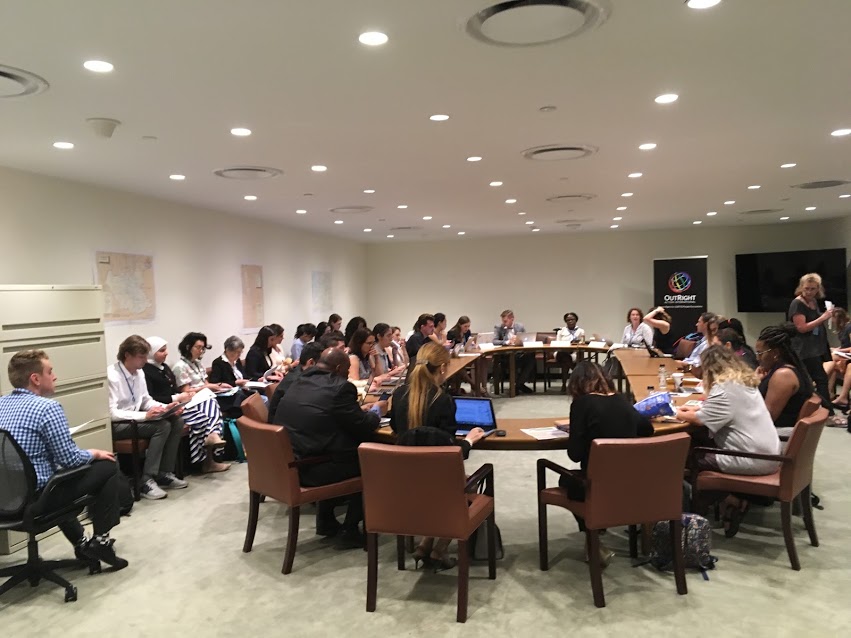
The United Nations Headquarters in New York is currently hosting the High-Level Political Forum on Sustainable Development, a ten-day gathering of government representatives, UN agencies, civil society and other stakeholders to review current global progress towards achieving the 2030 Agenda for Sustainable Development. The 2030 Agenda, with its 17 Sustainable Development Goals, is an ambitious global framework with the potential to change lives. It covers everything from health, gender equality, climate change, sanitation and energy, nutrition, poverty, and employment. Within the Agenda are specific targets to ensure universal access to sexual and reproductive health information and services and reproductive rights. However, we still have a long way to go in this area. We still live in societies where heteronormative and patriarchal social norms police and stigmatize women’s sexuality, and prevent women and girls from seeking and accessing the information and services they need to protect themselves and live a healthy life. In many countries, governments have put into place laws, policies and practices that interfere with the lives of individuals whose sexual orientation, gender identity and expression or sex characteristics may not conform with a perceived “norm”. These laws only serve to perpetuate and increase inequalities by denying vital health care to people who are already vulnerable, for fear of harm, arrest or even death. Restrictive laws and policies limit women’s ability to access contraception and safe, legal abortion services. In over 70 countries, young people require a parent’s signature to access sexual and reproductive health care. Violence against women and girls is pervasive: around 120 million girls worldwide have experienced forced sex at some point in their lives, mostly at the hands of male partners who may be protected from prosecution by gender discriminatory laws. Policies and laws that dictate sexual and reproductive choice can be harmful and coercive by restricting access to healthcare, limiting individuals’ ability to live their lives free from rigid and unrealistic societal standard. The 2030 Agenda presents a renewed opportunity for governments to achieve their sexual and reproductive health goals, and for advocates to hold governments to account for sexual and reproductive health and rights within this framework. Activists can use the 2030 Agenda to demand a more equitable legal system that protects their human rights, realises their right to health care, and ensures that they are able to prosper in the community. During the High-Level Political Forum on Sustainable Development, IPPF partnered with OutRight Action International to host an event titled, “From Side-Line to Centre: Using the 2030 Agenda to Tackle Sexual and Reproductive Coercion.” The panel, made up of speakers from the Guttmacher Institute, OutRight, IPPF Western Hemisphere Region and IPPF Central Office, and moderated by a youth advocate from Bulgaria, explored how policies and practices that seek to restrict access to life-saving information and services, including modern contraception, abortion and comprehensive sexuality education, limit the ability of women, LGBTI people and their families to live free from harm, violence and coercion, and will hinder our ability to achieve the Sustainable Development Goals by 2030. Sexual and reproductive health and rights underpin every aspect of sustainable development and economic growth, and are especially central to eradicating poverty and promoting prosperity. When women and LGBTI people can control their choices about their bodies, and be safe and healthy in their sexual and reproductive lives, they are better able to participate in education and the labour market, to care for their families, and have more capacity to contribute to their communities and social life. When Member States adopted the 2030 Agenda, they also adopted equity as a fundamental principle - “no one left behind”. However, we will not be able to realise this ambition if legal and policy barriers exclude millions of people, including the most marginalised and vulnerable people from all corners of the world, from accessing these services. Speakers emphasised the importance of data. We cannot act on inequality if we don’t have the data to show that it exists - and without accurate statistics, it’s hard to have a clear picture of who is being left behind, and who is not having their needs met. We have called on member states to collect comprehensive, accurate data which is disaggregated by age, sex, and key population status, as well as sexual orientation, gender identity or expression and sex characteristics (or other characteristics specific to national context) so that we can design effective and responsive programmes. In order to ensure that everyone, regardless of age, sexual orientation, gender identity or expression and sex characteristics is free to fully exercise their sexual and reproductive rights, we must not shy away from inequality or pretend it’s not happening. We need to recognise it, understand the drivers, and work from the ground up to uproot the social determinants and structural barriers that keep people at risk. We are not equal until we are all equal.
Small grants for youth-led projects tackling abortion stigma
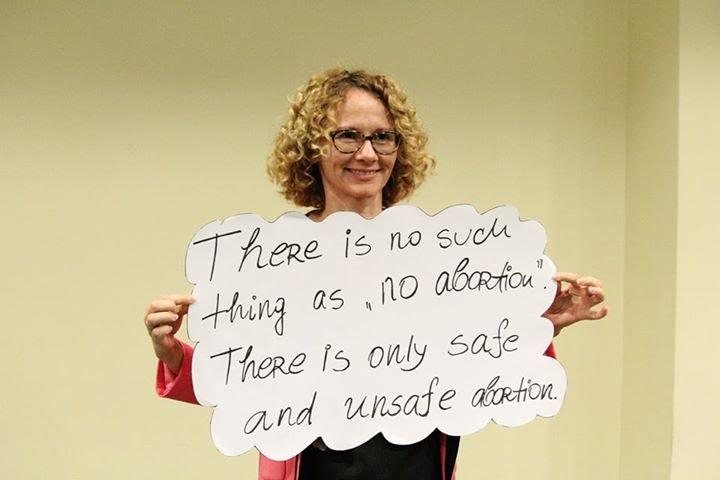
IPPF is committed to tackling abortion stigma at the individual, community, institutional and legal levels. This year, thanks to the Packard Foundation, we are pleased once again to be offering funding for youth-led projects tackling abortion stigma. These grants (of up to $2000 USD) are available for young people (under 25) working or volunteering in IPPF Member Associations. Abortion stigma will look different and have different solutions in every community. If you’re passionate about reproductive rights and have an idea for a project to tackle abortion stigma in your community, please download the application form and guidance. The deadline for applications is Sunday 16 July 2017 and all applications will need to be approved by Member Associations before being sent to youthgrants@ippf.org English Application Form Guidance French Application Form Guidance Spanish Application Form Guidance See examples of inspiring projects we have supported in the past.
13 June 2017
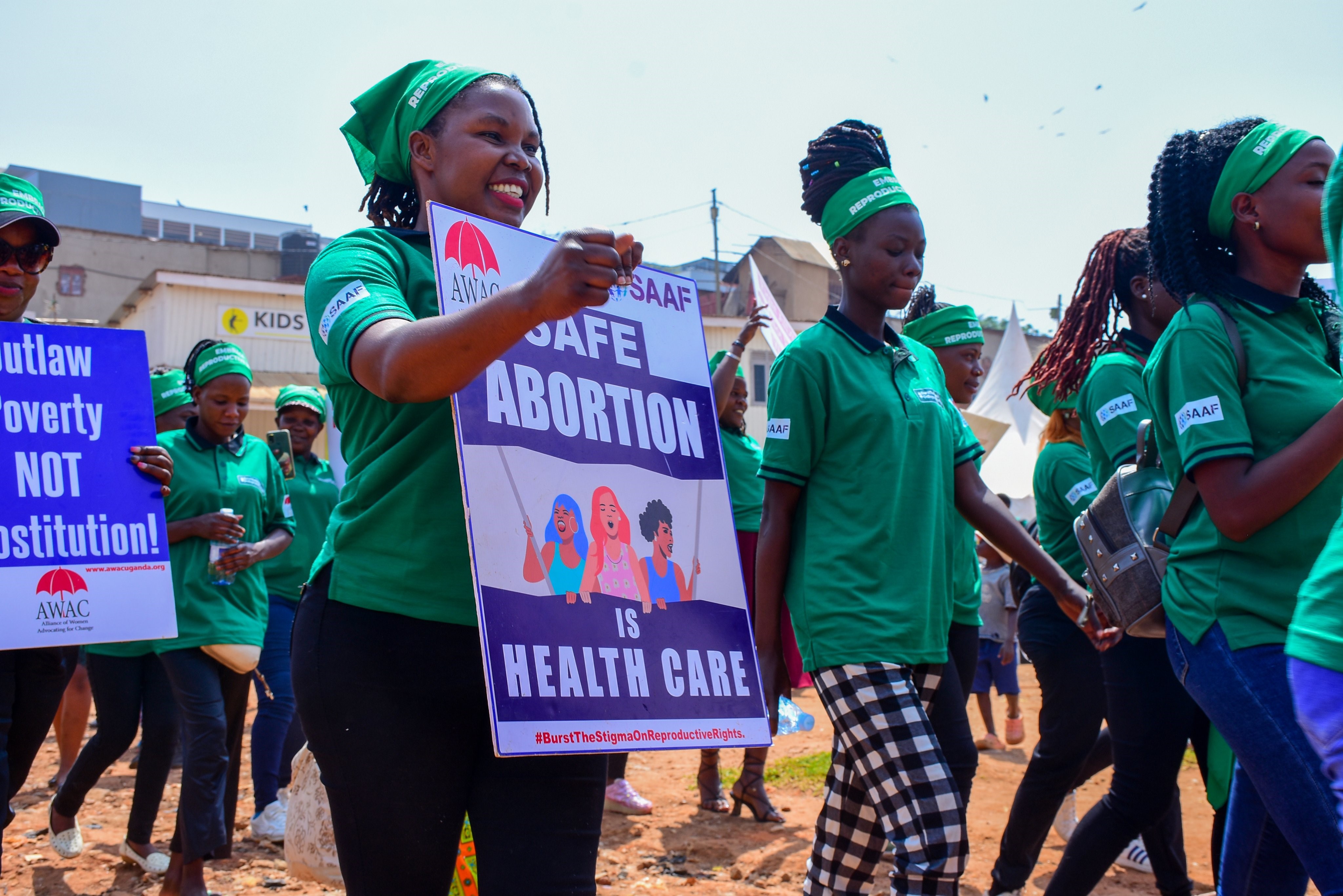
Safe Abortion Action Fund
The Safe Abortion Action Fund (SAAF) is the only international fund focused exclusively on the right to safe and legal abortion. It was established in 2006 in part to meet the critical need for funding that arose upon the re-imposition of the ‘Global Gag Rule’.SAAF (hosted by IPPF) quickly became an important and unique funding mechanism – unequivocally focusing on de-stigmatizing and increasing access to safe legal abortion across the world and supporting organisations that serve people living in the most restrictive environments.Where financial support for abortion initiatives is scarce, particularly for organisations that may not be able to access large international funding mechanisms, SAAF provides a channel that can effectively support and strengthen the capacity of these groups, without the high administrative burden required by many donors.For more information about the fund visit the SAAF website www.saafund.org.

12 June 2017
Watch: Tips on how to talk about abortion
This short video (also available in French and Spanish) provides useful tips about what to consider when developing materials relating to abortion, including how to use rights-based messages and how to avoid using stigmatizing language and images.
31 May 2017
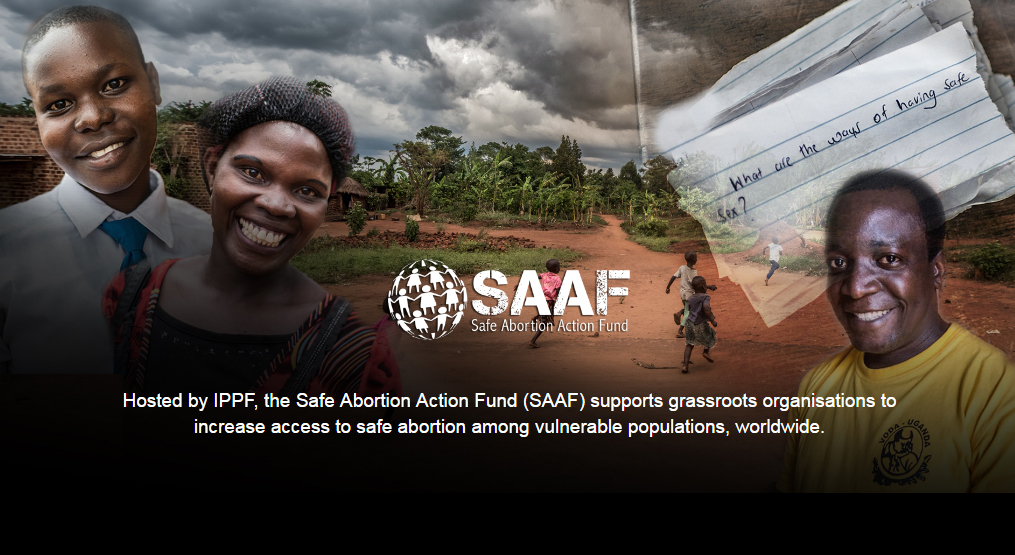
Safe Abortion Action Fund in Uganda
Safe abortion is heavily restricted in Uganda, yet gender inequality and sexual violence are widespread. Hosted by IPPF, the Safe Abortion Action Fund is helping vulnerable women to turn their lives around. People are learning about safe abortion and fewer girls are dying. Community attitudes have been transformed and social stigma has started to give way to human rights and understanding. Read the success stories and meet the people behind the scenes
23 May 2017
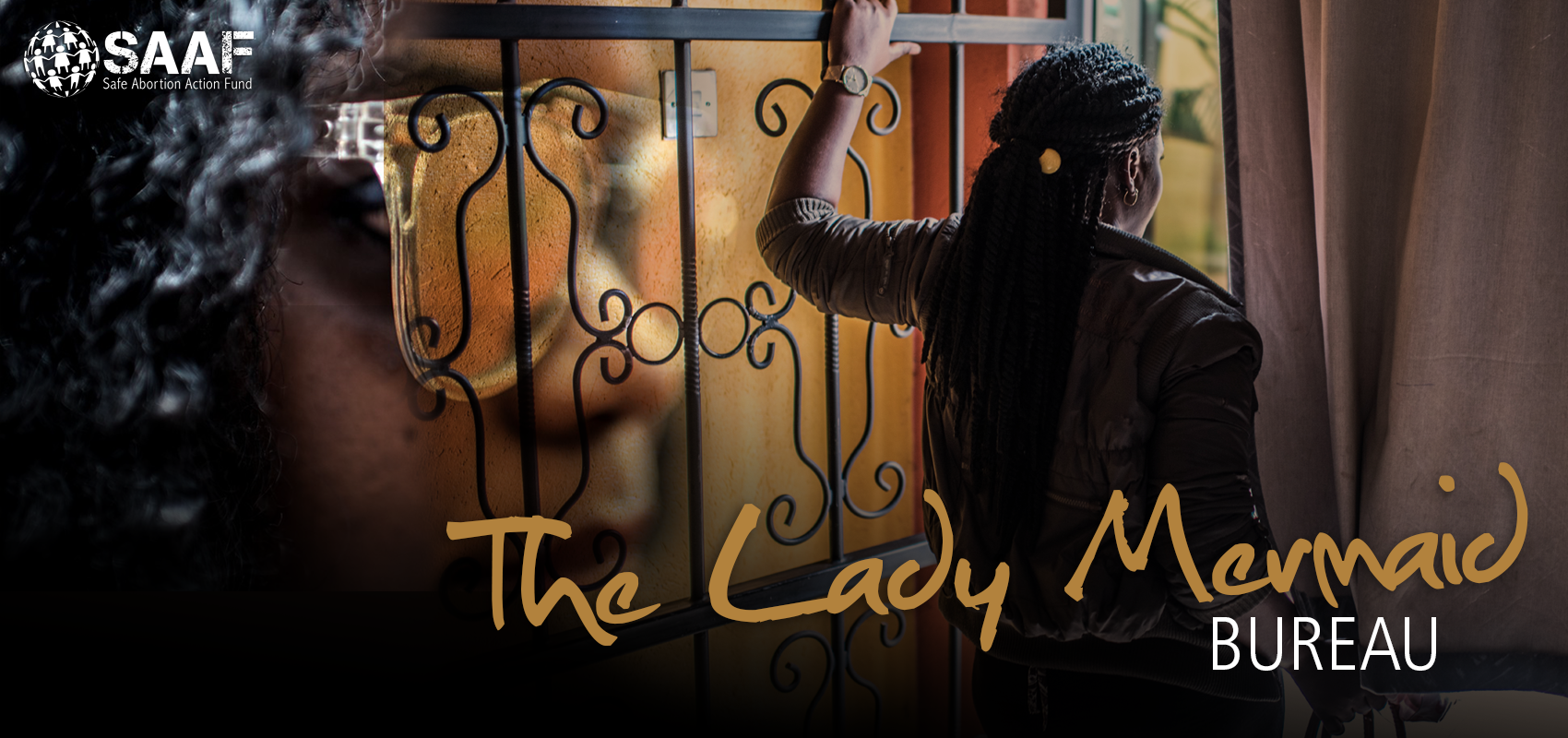
Sex workers in Uganda: fighting violence and inequality
In Uganda, 42% of all pregnancies each year are unintended. The country's weak economy is exacerbated by high levels of gender inequality and poor access to jobs for women. Many women who turn to sex work are at risk of abuse and often rape. Abortion is heavily restricted in Uganda and clandestine safe services are very costly. This results in further poverty for many sex workers and sometimes unplanned pregnancies or even death from unsafe abortion. View the project and meet the women who are turning their lives around

23 May 2017
Ugandan communities against unsafe abortions
Rural communities in Uganda have a high prevalence rate of gender inequality, sexual abuse and incest. There is little provision of sexual and reproductive health services and abortion is highly restricted. The Safe Abortion Action Fund, hosted by IPPF, is financing the grassroots organization, VODA, to empower young people as changemakers in their schools and communities. With training and support, peer educators have been educating friends about sexual and reproductive health, and local health providers are serving women in need. Death from unsafe abortion was once a widespread problem but through the power of peer education, these have almost disappeared and community attitudes towards safe abortion has been transformed. View the project and meet the school communities making change
A graduate in need turns to sex work
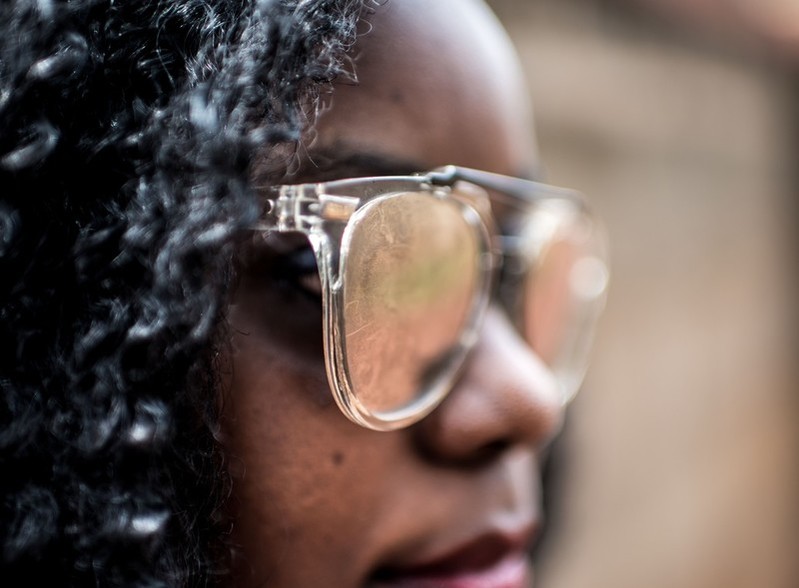
The Safe Abortion Action Fund (SAAF) which is hosted by IPPF was set up in 2006 in order to support grass-roots organisations to increase access to safe abortion. One such organisation which received support under the last round of funding is called Lady Mermaid's Bureau. I am Pretty Lynn, aged 25. I am a sex worker but I went to university. I graduated with a Bachelor's Degree in Tourism in 2013. But now, during the day I’m sleeping and during the night I’m working. That is how my day goes every day. I got into sex work through friends. Okay it is not good but I am earning. I tried to get a job when I graduated. I have been applying since I graduated in 2013. I’m still applying but I’m not getting anywhere. You know to get jobs in Uganda; you have to know someone there and no one knows me there. To be a sex worker is like a curse. People look at you like, I don’t know, as someone that has no use in society. People look at you in a bad way. They even don’t consider why you are selling. They just see you as the worst thing that can happen in the society. So it is not comfortable, it is really hard but we try and survive. The fact sex working is illegal means you have to hide yourself when you are selling so that police cannot take you. And then you get diseases, men don’t want to pay. When the police come and take us, sometimes they even use us and don’t pay. So it is really hard. They want a free service. Like if they come and take you and pay that would be fair. But they say it is illegal to sell yourself. But they still use you yet they are saying it is illegal. You can’t report the police because there is no evidence. Abortion and unwanted pregnancies are really common because men don’t want to use condoms and female condoms are really rare and they are expensive. Though at times we get female condoms from Lady Marmaid’s Bureau (LMB) because there are so many of us they can’t keep on giving you them all the time. At times when we get pregnant we use local methods. You can go and use local herbs but it is not safe. One time I used local herbs and I was successful. Then the other time I used Omo washing powder and tea leaves but it was really hard for me. I almost died. I had a friend who died last year from this. But the good thing is that LMB taught us about safe abortion. I have had a safe abortion too. There are some tabs they are called Miso (misoprostol). It costs about fifty thousand shillings (£10 pounds or $20.) It is a lot of money. But if I’m working and I know I’m pregnant, I can say, "this week I’m working for my safe abortion". So if I’m working for twenty thousand, by the end of the week I will have the money. It is expensive compared to Omo at five hundred shillings but that is risky. So if I say I will work this whole week for Miso (misoprostol) it is better. But I'm working and I'm not eating. A project like this one from Lady Mermaid's can help young girls and women. But to take us from sex work, it would really be hard. They would not have enough money to cater for all of us. So what they have to do is to teach us how to protect ourselves, how to defend ourselves. Safe abortion yes. They will just have to sensitise us more about our lives, protection, female condoms and all that. I don't have a boyfriend but maybe when I get money and leave this job I will. But for now, no man would like a woman who sells. No man will bear the wife selling herself. And that will happen only if I get funds, settle somewhere else and become responsible woman. I don’t want this job. I don’t want to be in this business of sex work all the time. I want be married, with my children happily, not selling myself. Stories Read more stories about the amazing success of SAAF in Uganda
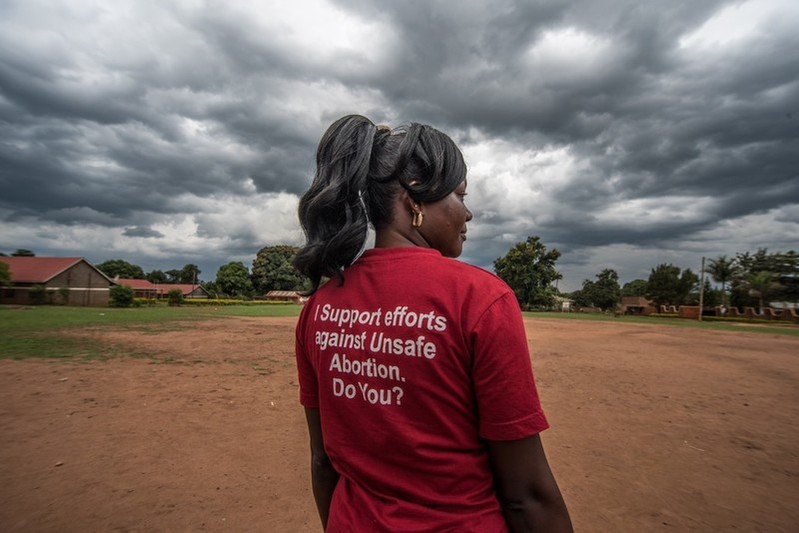
Working to stop unsafe abortion for school girls
The Safe Abortion Action Fund (SAAF) which is hosted by IPPF was set up in 2006 in order to support grass-roots organisations to increase access to safe abortion. One such organisation which received support under the last round of funding is called Volunteers for Development Association Uganda (VODA). Unsafe abortion is a huge problem in Uganda with an estimated 400,000 women having an unsafe abortion per year. The law is confusing and unclear, with abortion permitted only under certain circumstances. Post-abortion care is permitted to treat women who have undergone an unsafe abortion, however lack of awareness of the law and stigma surrounding abortion mean that service providers are not always willing to treat patients who arrive seeking care. The VODA project aims to ensure that young women in Uganda are able to lead healthier lives free from unsafe abortion related deaths or complications through reducing abortion stigma in the community, increasing access to abortion-related services and ensuring the providers are trained to provide quality post-abortion care services. I am Helen. I have been a midwife at this small clinic for seven years and I have worked with VODA for four years. Unsafe abortion continues and some schoolgirls are raped. They then go to local herbalists and some of them tell me that they are given emilandira [roots] which they insert inside themselves to rupture the membranes. Some of them even try to induce an abortion by using Omo [douching with detergent or bleach]. At the end of the day they get complications then they land here, so we help them. Unsafe abortion is very common. In one month you can get more than five cases. It is a big problem. We help them, they need to go back to school, and we counsel them. If it is less than 12 weeks, we handle them from here. If they are more than 12 weeks along we refer them to the hospital. Most referrals from VODA are related to unwanted pregnancies, HIV testing, family planning, and youth friendly services. A few parents come for services for their children who are at school. So we counsel them that contraception, other than condoms, will only prevent pregnancy, but you can still get HIV and STIs, so take care. I am Josephine and I work as a midwife at a rural health centre. I deal with pregnant mothers, postnatal mothers, and there are girls who come with problems like unwanted pregnancy. I used to have a negative attitude towards abortion. But then VODA helped us understand the importance of helping someone with the problem because many people were dying in the villages because of unsafe abortion. According to my religion, helping someone to have an abortion was not allowed. But again when you look into it, it’s not good to leave someone to die. So I decided to change my attitude to help people. Post-abortion care has helped many people because these days we don’t have many people in the villages dying because of unsafe abortion. These days I’m proud of what we are doing because before I didn’t know the importance of helping someone with a problem. But these days, since people no longer die, people no longer get problems and I’m proud and happy because we help so many people. My name is Jonathan. I am married with three children. I have a Bachelor of Social Work and Social Administration. I have worked with VODA as a project officer since 2008. Due to the training that we have done about abortion many people have changed their attitudes and we have helped people to talk about the issue. Most people were against abortion before but they are now realising that if it’s done safely it is important because otherwise many people die from unsafe abortion. I have talked to religious leaders, I have talked to local leaders; I have talked to people of different categories. At first when you approach them, they have a different perception. The health workers were difficult to work with at first. However they knew people were approaching them with the problems of unsafe abortion. Due to religion, communities can be hard against this issue. But after some time we have seen that they have changed their perception toward the issue of safe and unsafe abortion. And now many of them know that in some instances, abortion is inevitable but it should be done in a safe way. I’m Stevens and I am nurse. We have some clients who come when they have already attempted an unsafe abortion. You find that it is often inevitable. The only solution you have to help those clients is to provide treatment of incomplete abortion as part of post-abortion care. Because of the VODA project there is a very remarkable change in the community. Now, those people who used to have unsafe abortions locally, know where to go for post-abortion care - unlike in the past. I remember a schoolgirl, she was in a very sorry state because she had tried some local remedies to abort. I attended to her and things went well. She went back to school. I feel so proud because that was a big life rescue. A girl like that could have died but now she is alive and I see her carrying on with her studies, I feel so proud. I praise VODA for that encouragement. This service should be legalised because whether they restrict it or not, there is abortion and it is going on. And if it’s not out in the open, so that our people know where to go for such services, it leads to more deaths. Stories Read more stories about the amazing success of SAAF in Uganda

A mother's heart break after losing teen daughter to unsafe abortion
The Safe Abortion Action Fund (SAAF) which is hosted by IPPF was set up in 2006 in order to support grass-roots organisations to increase access to safe abortion. One such organisation which received support under the last round of funding is called Volunteers for Development Association Uganda (VODA). Margaret's daughter, Gladys, was raped by a relative as a teenager and became pregnant. She did not tell her mother what had happened and not wanting to have a child at such a young age conceived through incest, Gladys tried to terminate the pregnancy herself using local herbs but got an infection and died. "My name is Margaret and I am a widow." "I lost my daughter in 2011. She was called Gladys and she was 16. I didn’t know that she was pregnant. She tried to use local herbs to abort. I only found out about it three days later when she was bleeding very heavily. I tried to take her to the hospital but unfortunately she died on the way." Despite being the cause of many deaths in the region, the stigma surrounding abortion means that most people do not mention the cause of death publically. However at Gladys' funeral one of her school friends spoke out and said that she had died due to unsafe abortion. This prompted VODA to start working on the issue and when the project started they included Margaret in their training on how to prevent unsafe abortion. "The training made me stronger to talk about it. Now, I continue to tell my remaining two girls about the dangers of unsafe abortion, sexually transmitted infections and unwanted pregnancies. VODA has really helped us. I think my girl wouldn’t have died if VODA was active then like it is now." "I have used VODA's information to carry on with my parental work. That information has been helpful because we are noticing change. I keep on reminding them, 'didn’t you see what happened to your friend here?'. So they have really changed especially with the ongoing help of the people from VODA." "Unsafe abortion was rampant in the past. We had tried to speak to the students, as parents, but it seemed that our information was not enough. But now we have another helping hand from VODA, especially with those seminars targeting the girls." Stories Read more stories about the amazing success of SAAF in Uganda
17 July 2017
Tackling Sexual & Reproductive Coercion through the 2030 Agenda
The United Nations Headquarters in New York is currently hosting the High-Level Political Forum on Sustainable Development, a ten-day gathering of government representatives, UN agencies, civil society and other stakeholders to review current global progress towards achieving the 2030 Agenda for Sustainable Development. The 2030 Agenda, with its 17 Sustainable Development Goals, is an ambitious global framework with the potential to change lives. It covers everything from health, gender equality, climate change, sanitation and energy, nutrition, poverty, and employment. Within the Agenda are specific targets to ensure universal access to sexual and reproductive health information and services and reproductive rights. However, we still have a long way to go in this area. We still live in societies where heteronormative and patriarchal social norms police and stigmatize women’s sexuality, and prevent women and girls from seeking and accessing the information and services they need to protect themselves and live a healthy life. In many countries, governments have put into place laws, policies and practices that interfere with the lives of individuals whose sexual orientation, gender identity and expression or sex characteristics may not conform with a perceived “norm”. These laws only serve to perpetuate and increase inequalities by denying vital health care to people who are already vulnerable, for fear of harm, arrest or even death. Restrictive laws and policies limit women’s ability to access contraception and safe, legal abortion services. In over 70 countries, young people require a parent’s signature to access sexual and reproductive health care. Violence against women and girls is pervasive: around 120 million girls worldwide have experienced forced sex at some point in their lives, mostly at the hands of male partners who may be protected from prosecution by gender discriminatory laws. Policies and laws that dictate sexual and reproductive choice can be harmful and coercive by restricting access to healthcare, limiting individuals’ ability to live their lives free from rigid and unrealistic societal standard. The 2030 Agenda presents a renewed opportunity for governments to achieve their sexual and reproductive health goals, and for advocates to hold governments to account for sexual and reproductive health and rights within this framework. Activists can use the 2030 Agenda to demand a more equitable legal system that protects their human rights, realises their right to health care, and ensures that they are able to prosper in the community. During the High-Level Political Forum on Sustainable Development, IPPF partnered with OutRight Action International to host an event titled, “From Side-Line to Centre: Using the 2030 Agenda to Tackle Sexual and Reproductive Coercion.” The panel, made up of speakers from the Guttmacher Institute, OutRight, IPPF Western Hemisphere Region and IPPF Central Office, and moderated by a youth advocate from Bulgaria, explored how policies and practices that seek to restrict access to life-saving information and services, including modern contraception, abortion and comprehensive sexuality education, limit the ability of women, LGBTI people and their families to live free from harm, violence and coercion, and will hinder our ability to achieve the Sustainable Development Goals by 2030. Sexual and reproductive health and rights underpin every aspect of sustainable development and economic growth, and are especially central to eradicating poverty and promoting prosperity. When women and LGBTI people can control their choices about their bodies, and be safe and healthy in their sexual and reproductive lives, they are better able to participate in education and the labour market, to care for their families, and have more capacity to contribute to their communities and social life. When Member States adopted the 2030 Agenda, they also adopted equity as a fundamental principle - “no one left behind”. However, we will not be able to realise this ambition if legal and policy barriers exclude millions of people, including the most marginalised and vulnerable people from all corners of the world, from accessing these services. Speakers emphasised the importance of data. We cannot act on inequality if we don’t have the data to show that it exists - and without accurate statistics, it’s hard to have a clear picture of who is being left behind, and who is not having their needs met. We have called on member states to collect comprehensive, accurate data which is disaggregated by age, sex, and key population status, as well as sexual orientation, gender identity or expression and sex characteristics (or other characteristics specific to national context) so that we can design effective and responsive programmes. In order to ensure that everyone, regardless of age, sexual orientation, gender identity or expression and sex characteristics is free to fully exercise their sexual and reproductive rights, we must not shy away from inequality or pretend it’s not happening. We need to recognise it, understand the drivers, and work from the ground up to uproot the social determinants and structural barriers that keep people at risk. We are not equal until we are all equal.
Small grants for youth-led projects tackling abortion stigma
IPPF is committed to tackling abortion stigma at the individual, community, institutional and legal levels. This year, thanks to the Packard Foundation, we are pleased once again to be offering funding for youth-led projects tackling abortion stigma. These grants (of up to $2000 USD) are available for young people (under 25) working or volunteering in IPPF Member Associations. Abortion stigma will look different and have different solutions in every community. If you’re passionate about reproductive rights and have an idea for a project to tackle abortion stigma in your community, please download the application form and guidance. The deadline for applications is Sunday 16 July 2017 and all applications will need to be approved by Member Associations before being sent to youthgrants@ippf.org English Application Form Guidance French Application Form Guidance Spanish Application Form Guidance See examples of inspiring projects we have supported in the past.
13 June 2017
Safe Abortion Action Fund
The Safe Abortion Action Fund (SAAF) is the only international fund focused exclusively on the right to safe and legal abortion. It was established in 2006 in part to meet the critical need for funding that arose upon the re-imposition of the ‘Global Gag Rule’.SAAF (hosted by IPPF) quickly became an important and unique funding mechanism – unequivocally focusing on de-stigmatizing and increasing access to safe legal abortion across the world and supporting organisations that serve people living in the most restrictive environments.Where financial support for abortion initiatives is scarce, particularly for organisations that may not be able to access large international funding mechanisms, SAAF provides a channel that can effectively support and strengthen the capacity of these groups, without the high administrative burden required by many donors.For more information about the fund visit the SAAF website www.saafund.org.
12 June 2017
Watch: Tips on how to talk about abortion
This short video (also available in French and Spanish) provides useful tips about what to consider when developing materials relating to abortion, including how to use rights-based messages and how to avoid using stigmatizing language and images.
31 May 2017
Safe Abortion Action Fund in Uganda
Safe abortion is heavily restricted in Uganda, yet gender inequality and sexual violence are widespread. Hosted by IPPF, the Safe Abortion Action Fund is helping vulnerable women to turn their lives around. People are learning about safe abortion and fewer girls are dying. Community attitudes have been transformed and social stigma has started to give way to human rights and understanding. Read the success stories and meet the people behind the scenes
23 May 2017
Sex workers in Uganda: fighting violence and inequality
In Uganda, 42% of all pregnancies each year are unintended. The country's weak economy is exacerbated by high levels of gender inequality and poor access to jobs for women. Many women who turn to sex work are at risk of abuse and often rape. Abortion is heavily restricted in Uganda and clandestine safe services are very costly. This results in further poverty for many sex workers and sometimes unplanned pregnancies or even death from unsafe abortion. View the project and meet the women who are turning their lives around
23 May 2017
Ugandan communities against unsafe abortions
Rural communities in Uganda have a high prevalence rate of gender inequality, sexual abuse and incest. There is little provision of sexual and reproductive health services and abortion is highly restricted. The Safe Abortion Action Fund, hosted by IPPF, is financing the grassroots organization, VODA, to empower young people as changemakers in their schools and communities. With training and support, peer educators have been educating friends about sexual and reproductive health, and local health providers are serving women in need. Death from unsafe abortion was once a widespread problem but through the power of peer education, these have almost disappeared and community attitudes towards safe abortion has been transformed. View the project and meet the school communities making change
A graduate in need turns to sex work
The Safe Abortion Action Fund (SAAF) which is hosted by IPPF was set up in 2006 in order to support grass-roots organisations to increase access to safe abortion. One such organisation which received support under the last round of funding is called Lady Mermaid's Bureau. I am Pretty Lynn, aged 25. I am a sex worker but I went to university. I graduated with a Bachelor's Degree in Tourism in 2013. But now, during the day I’m sleeping and during the night I’m working. That is how my day goes every day. I got into sex work through friends. Okay it is not good but I am earning. I tried to get a job when I graduated. I have been applying since I graduated in 2013. I’m still applying but I’m not getting anywhere. You know to get jobs in Uganda; you have to know someone there and no one knows me there. To be a sex worker is like a curse. People look at you like, I don’t know, as someone that has no use in society. People look at you in a bad way. They even don’t consider why you are selling. They just see you as the worst thing that can happen in the society. So it is not comfortable, it is really hard but we try and survive. The fact sex working is illegal means you have to hide yourself when you are selling so that police cannot take you. And then you get diseases, men don’t want to pay. When the police come and take us, sometimes they even use us and don’t pay. So it is really hard. They want a free service. Like if they come and take you and pay that would be fair. But they say it is illegal to sell yourself. But they still use you yet they are saying it is illegal. You can’t report the police because there is no evidence. Abortion and unwanted pregnancies are really common because men don’t want to use condoms and female condoms are really rare and they are expensive. Though at times we get female condoms from Lady Marmaid’s Bureau (LMB) because there are so many of us they can’t keep on giving you them all the time. At times when we get pregnant we use local methods. You can go and use local herbs but it is not safe. One time I used local herbs and I was successful. Then the other time I used Omo washing powder and tea leaves but it was really hard for me. I almost died. I had a friend who died last year from this. But the good thing is that LMB taught us about safe abortion. I have had a safe abortion too. There are some tabs they are called Miso (misoprostol). It costs about fifty thousand shillings (£10 pounds or $20.) It is a lot of money. But if I’m working and I know I’m pregnant, I can say, "this week I’m working for my safe abortion". So if I’m working for twenty thousand, by the end of the week I will have the money. It is expensive compared to Omo at five hundred shillings but that is risky. So if I say I will work this whole week for Miso (misoprostol) it is better. But I'm working and I'm not eating. A project like this one from Lady Mermaid's can help young girls and women. But to take us from sex work, it would really be hard. They would not have enough money to cater for all of us. So what they have to do is to teach us how to protect ourselves, how to defend ourselves. Safe abortion yes. They will just have to sensitise us more about our lives, protection, female condoms and all that. I don't have a boyfriend but maybe when I get money and leave this job I will. But for now, no man would like a woman who sells. No man will bear the wife selling herself. And that will happen only if I get funds, settle somewhere else and become responsible woman. I don’t want this job. I don’t want to be in this business of sex work all the time. I want be married, with my children happily, not selling myself. Stories Read more stories about the amazing success of SAAF in Uganda
Working to stop unsafe abortion for school girls
The Safe Abortion Action Fund (SAAF) which is hosted by IPPF was set up in 2006 in order to support grass-roots organisations to increase access to safe abortion. One such organisation which received support under the last round of funding is called Volunteers for Development Association Uganda (VODA). Unsafe abortion is a huge problem in Uganda with an estimated 400,000 women having an unsafe abortion per year. The law is confusing and unclear, with abortion permitted only under certain circumstances. Post-abortion care is permitted to treat women who have undergone an unsafe abortion, however lack of awareness of the law and stigma surrounding abortion mean that service providers are not always willing to treat patients who arrive seeking care. The VODA project aims to ensure that young women in Uganda are able to lead healthier lives free from unsafe abortion related deaths or complications through reducing abortion stigma in the community, increasing access to abortion-related services and ensuring the providers are trained to provide quality post-abortion care services. I am Helen. I have been a midwife at this small clinic for seven years and I have worked with VODA for four years. Unsafe abortion continues and some schoolgirls are raped. They then go to local herbalists and some of them tell me that they are given emilandira [roots] which they insert inside themselves to rupture the membranes. Some of them even try to induce an abortion by using Omo [douching with detergent or bleach]. At the end of the day they get complications then they land here, so we help them. Unsafe abortion is very common. In one month you can get more than five cases. It is a big problem. We help them, they need to go back to school, and we counsel them. If it is less than 12 weeks, we handle them from here. If they are more than 12 weeks along we refer them to the hospital. Most referrals from VODA are related to unwanted pregnancies, HIV testing, family planning, and youth friendly services. A few parents come for services for their children who are at school. So we counsel them that contraception, other than condoms, will only prevent pregnancy, but you can still get HIV and STIs, so take care. I am Josephine and I work as a midwife at a rural health centre. I deal with pregnant mothers, postnatal mothers, and there are girls who come with problems like unwanted pregnancy. I used to have a negative attitude towards abortion. But then VODA helped us understand the importance of helping someone with the problem because many people were dying in the villages because of unsafe abortion. According to my religion, helping someone to have an abortion was not allowed. But again when you look into it, it’s not good to leave someone to die. So I decided to change my attitude to help people. Post-abortion care has helped many people because these days we don’t have many people in the villages dying because of unsafe abortion. These days I’m proud of what we are doing because before I didn’t know the importance of helping someone with a problem. But these days, since people no longer die, people no longer get problems and I’m proud and happy because we help so many people. My name is Jonathan. I am married with three children. I have a Bachelor of Social Work and Social Administration. I have worked with VODA as a project officer since 2008. Due to the training that we have done about abortion many people have changed their attitudes and we have helped people to talk about the issue. Most people were against abortion before but they are now realising that if it’s done safely it is important because otherwise many people die from unsafe abortion. I have talked to religious leaders, I have talked to local leaders; I have talked to people of different categories. At first when you approach them, they have a different perception. The health workers were difficult to work with at first. However they knew people were approaching them with the problems of unsafe abortion. Due to religion, communities can be hard against this issue. But after some time we have seen that they have changed their perception toward the issue of safe and unsafe abortion. And now many of them know that in some instances, abortion is inevitable but it should be done in a safe way. I’m Stevens and I am nurse. We have some clients who come when they have already attempted an unsafe abortion. You find that it is often inevitable. The only solution you have to help those clients is to provide treatment of incomplete abortion as part of post-abortion care. Because of the VODA project there is a very remarkable change in the community. Now, those people who used to have unsafe abortions locally, know where to go for post-abortion care - unlike in the past. I remember a schoolgirl, she was in a very sorry state because she had tried some local remedies to abort. I attended to her and things went well. She went back to school. I feel so proud because that was a big life rescue. A girl like that could have died but now she is alive and I see her carrying on with her studies, I feel so proud. I praise VODA for that encouragement. This service should be legalised because whether they restrict it or not, there is abortion and it is going on. And if it’s not out in the open, so that our people know where to go for such services, it leads to more deaths. Stories Read more stories about the amazing success of SAAF in Uganda
A mother's heart break after losing teen daughter to unsafe abortion
The Safe Abortion Action Fund (SAAF) which is hosted by IPPF was set up in 2006 in order to support grass-roots organisations to increase access to safe abortion. One such organisation which received support under the last round of funding is called Volunteers for Development Association Uganda (VODA). Margaret's daughter, Gladys, was raped by a relative as a teenager and became pregnant. She did not tell her mother what had happened and not wanting to have a child at such a young age conceived through incest, Gladys tried to terminate the pregnancy herself using local herbs but got an infection and died. "My name is Margaret and I am a widow." "I lost my daughter in 2011. She was called Gladys and she was 16. I didn’t know that she was pregnant. She tried to use local herbs to abort. I only found out about it three days later when she was bleeding very heavily. I tried to take her to the hospital but unfortunately she died on the way." Despite being the cause of many deaths in the region, the stigma surrounding abortion means that most people do not mention the cause of death publically. However at Gladys' funeral one of her school friends spoke out and said that she had died due to unsafe abortion. This prompted VODA to start working on the issue and when the project started they included Margaret in their training on how to prevent unsafe abortion. "The training made me stronger to talk about it. Now, I continue to tell my remaining two girls about the dangers of unsafe abortion, sexually transmitted infections and unwanted pregnancies. VODA has really helped us. I think my girl wouldn’t have died if VODA was active then like it is now." "I have used VODA's information to carry on with my parental work. That information has been helpful because we are noticing change. I keep on reminding them, 'didn’t you see what happened to your friend here?'. So they have really changed especially with the ongoing help of the people from VODA." "Unsafe abortion was rampant in the past. We had tried to speak to the students, as parents, but it seemed that our information was not enough. But now we have another helping hand from VODA, especially with those seminars targeting the girls." Stories Read more stories about the amazing success of SAAF in Uganda