




Spotlight
A selection of resources from across the Federation

Resource
Advancing Sex Workers’ Sexual and Reproductive Health and Rights: A Toolkit for Inclusive Programming
This toolkit is grounded in international guidance and frameworks on sex workers’ health and human rights.
Most Popular This Week

Resource
|
Advancing Sex Workers’ Sexual and Reproductive Health and Rights: A Toolkit for Inclusive Programming
Sexual and reproductive health and rights (SRHR) are not only an integral part of the right to health but also necessary to enjoy many other human rights.

Resource
|
IPPF Annual Report and Financial Statements 2025
IPPF is a global federation and movement of 100+ locally led Member Associations and Collaborative Partnersin 150+ countries, dedicated to sexual and reproductive health, rights

Resource
|
Annual Performance Report 2025
The IPPF Annual Performance Report 2025 tells a story of resilience, solidarity and shared leadership across our Federation.


Resource
|
Review of IPPF’s Governance Reform
Following IPPF’s governance reform in 2019/2020, a review of the reform process was conducted, which provided important insights for the new Board of Trustees and the Secretariat to support the cha

Resource
|
IMAP Statement on Sex Worker-Centred Sexual and Reproductive Health Services
This statement is intended to provide guidance to Member Associations and Collaborative Partners across the Federation on delivering comprehensive, evidence‑based sexual and reproductive health (SR


Filter our resources by:

Resource
| 03 April 2019
Improving the quality and availability of post-abortion care in a humanitarian crisis
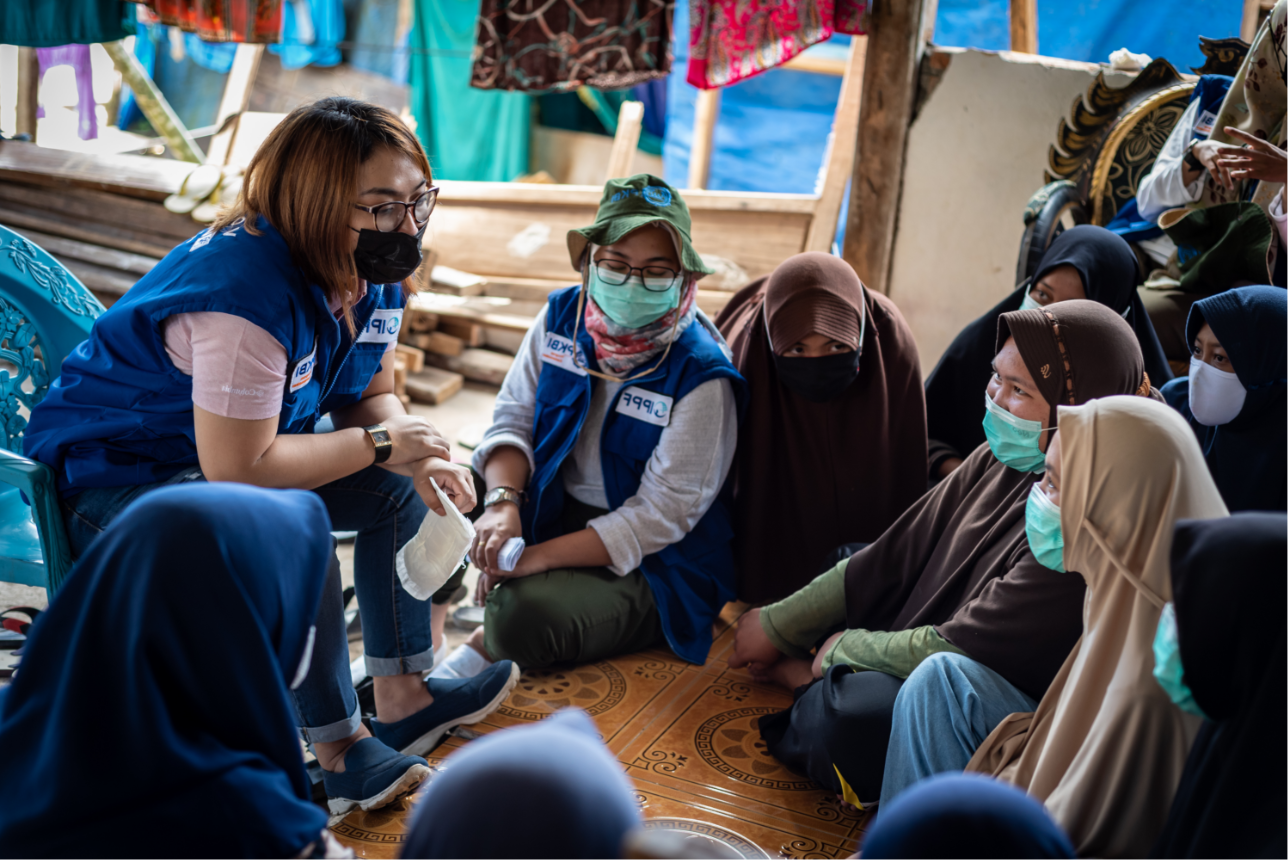
The world is facing stronger and longer natural disasters, protracted complex emergencies, conflicts and epidemics. These humanitarian crises can expose weakness in health systems, with particularly serious consequences for women and girls in need of reproductive health care. To improve the quality and availability of post‑abortion care during a flood, the University of Leicester and International Planned Parenthood Federation South Asia Region (IPPF-SAR), in collaboration with the Government of Bangladesh, developed and measured the impact of an integrated intervention package, called RHCC. First tested in a flood-prone area of Bangladesh, this novel approach includes: i) Pre-positioning medicines and supplies, using the UNFPA’s Inter-Agency Reproductive Health Kit 8; ii) Capacity building of service providers; and iii) Community awareness raising. Supported by IPPF's Innovation Programme, the project aligns with IPPF’s commitment to ensuring that crisis-affected populations receive timely, quality, life-saving, gender-responsive and inclusive sexual and reproductive health services.
Resource
| 03 April 2019
Improving the quality and availability of post-abortion care in a humanitarian crisis
The world is facing stronger and longer natural disasters, protracted complex emergencies, conflicts and epidemics. These humanitarian crises can expose weakness in health systems, with particularly serious consequences for women and girls in need of reproductive health care. To improve the quality and availability of post‑abortion care during a flood, the University of Leicester and International Planned Parenthood Federation South Asia Region (IPPF-SAR), in collaboration with the Government of Bangladesh, developed and measured the impact of an integrated intervention package, called RHCC. First tested in a flood-prone area of Bangladesh, this novel approach includes: i) Pre-positioning medicines and supplies, using the UNFPA’s Inter-Agency Reproductive Health Kit 8; ii) Capacity building of service providers; and iii) Community awareness raising. Supported by IPPF's Innovation Programme, the project aligns with IPPF’s commitment to ensuring that crisis-affected populations receive timely, quality, life-saving, gender-responsive and inclusive sexual and reproductive health services.
Resource
| 03 April 2019
Improving the quality and availability of post-abortion care in a humanitarian crisis
The world is facing stronger and longer natural disasters, protracted complex emergencies, conflicts and epidemics. These humanitarian crises can expose weakness in health systems, with particularly serious consequences for women and girls in need of reproductive health care. To improve the quality and availability of post‑abortion care during a flood, the University of Leicester and International Planned Parenthood Federation South Asia Region (IPPF-SAR), in collaboration with the Government of Bangladesh, developed and measured the impact of an integrated intervention package, called RHCC. First tested in a flood-prone area of Bangladesh, this novel approach includes: i) Pre-positioning medicines and supplies, using the UNFPA’s Inter-Agency Reproductive Health Kit 8; ii) Capacity building of service providers; and iii) Community awareness raising. Supported by IPPF's Innovation Programme, the project aligns with IPPF’s commitment to ensuring that crisis-affected populations receive timely, quality, life-saving, gender-responsive and inclusive sexual and reproductive health services.
Resource
| 03 April 2019
Improving the quality and availability of post-abortion care in a humanitarian crisis
The world is facing stronger and longer natural disasters, protracted complex emergencies, conflicts and epidemics. These humanitarian crises can expose weakness in health systems, with particularly serious consequences for women and girls in need of reproductive health care. To improve the quality and availability of post‑abortion care during a flood, the University of Leicester and International Planned Parenthood Federation South Asia Region (IPPF-SAR), in collaboration with the Government of Bangladesh, developed and measured the impact of an integrated intervention package, called RHCC. First tested in a flood-prone area of Bangladesh, this novel approach includes: i) Pre-positioning medicines and supplies, using the UNFPA’s Inter-Agency Reproductive Health Kit 8; ii) Capacity building of service providers; and iii) Community awareness raising. Supported by IPPF's Innovation Programme, the project aligns with IPPF’s commitment to ensuring that crisis-affected populations receive timely, quality, life-saving, gender-responsive and inclusive sexual and reproductive health services.
