


One of our main priorities is to ensure universal access to, and informed use of effective contraception. Millions of people lack the knowledge and information to determine when or whether they have children, and they are unable to protect themselves against sexually transmitted infections (STIs).
Articles about Contraception
26 July 2017
Four highlights from the 2017 London Family Planning Summit
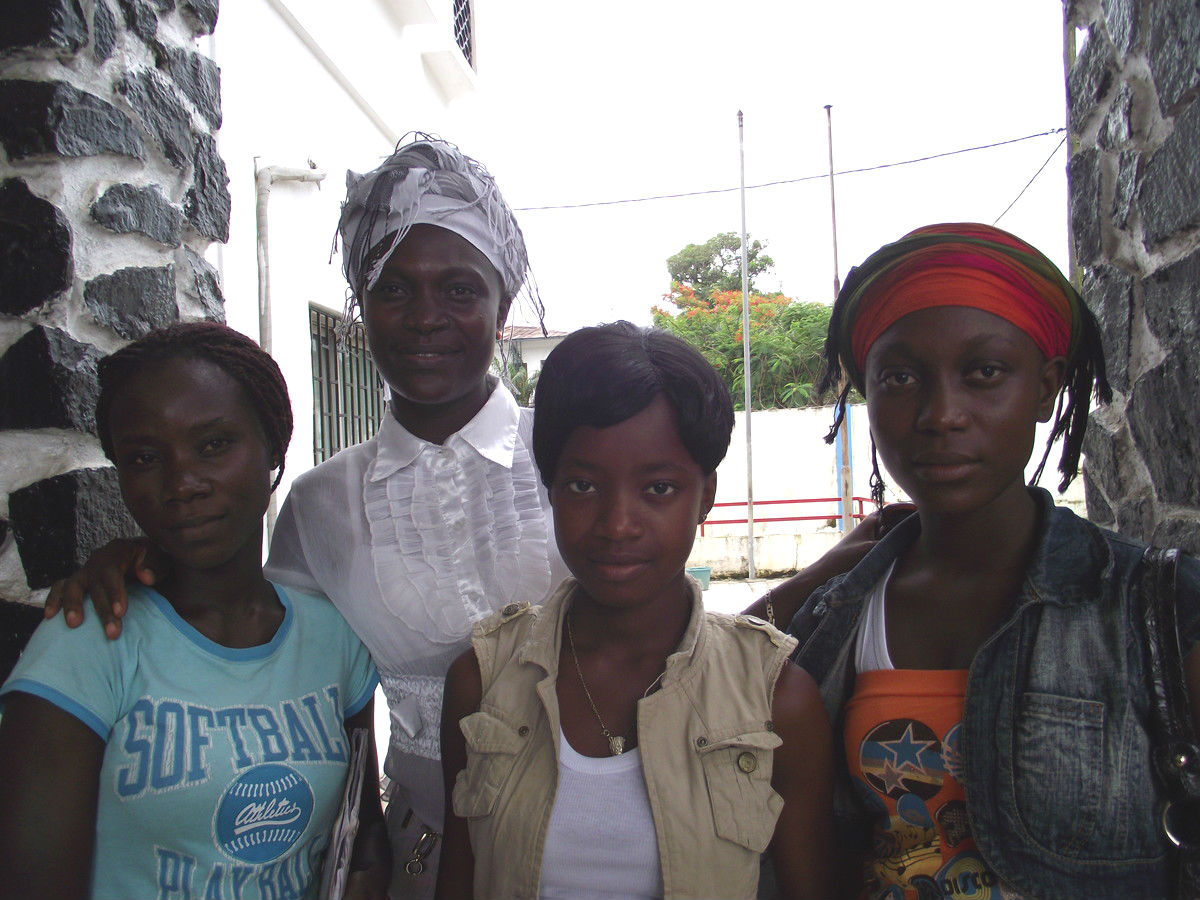
The 2017 London Family Planning Summit held earlier this month has been celebrated as a success in renewing commitments for family planning. An impressive US$2.5 billion in funding commitments by new and old partners alike to ensure 120 million more women and girls have access to contraception. The Summit built a sense of hope and optimism for the family planning sector – a sector very much under threat in recent years and especially since the reinstatement and expansion of the Global Gag Rule. And five years on from the 2012 Summit, the landscape looks very different – the universality of the Sustainable Development Goals (SDGs), greater political and financial commitment to family planning. Yet, we are also amid a rapidly changing aid environment – a contraceptive funding crisis, decreasing and diversifying official development assistance and reinstatement and decreasing funding for family planning. The real work starts now. Civil society organizations like IPPF and our partners are renewing our efforts to work in partnership to ensure the commitments are translated into reality. The progress towards 2020 must address specific challenges including stockouts of contraceptives in many countries, wider contraceptive choice, and protection and promotion of women and girls’ rights. But for now, let’s take stock of the four main highlights from the 2017 London Summit: Broader partnership: The meeting brought renewed momentum to the family planning movement, with a broader partnership joining the cause. Funding commitments were made from partners new and old. 13 new commitments from were made private sector companies, four times higher than in the 2012 Summit. Engagement with the private sector and with sectors beyond health, like the environmental protection sector, envision a path toward stronger, interlinked development agendas. New funding commitments were also made by Norway, Denmark, Australia, Belgium and the Netherlands. Pledges were also specifically made to UNFPA and She Decides. New collaborations are specifically important in the face of the loss of the largest bilateral donor of family planning – USAID. Interlinkages between climate and family planning: With an interlinked global agenda set forth in the Sustainable Development Goals, there is a need to address the interlinkages across sectors. This was perfectly illustrated by the commitment of IPPF’s partner Blue Ventures to address interlinkages between health and environment. Through focusing on the needs of communities, Blue Ventures is expanding cross-sector partnerships between health and environment organizations in seven FP2020 target countries. Together, IPPF, Blue Ventures and a number of other partners have been working for a number of years with Population Sustainable Development Alliance (PSDA) to highlight the interlinkages between environment, climate change and sexual and reproductive health and rights. Today more than ever before we need to join forces to tackle the challenges of climate change, while respecting communities’ need for sexual and reproductive health services and information. A focus on those left-behind: While the world is facing huge population shifts, the Summit emphasized the need to address the family planning needs of adolescents, displaced people and people living in humanitarian settings. There was a clear focus to reach women and girls left behind by traditional family planning programmes. Commitments from Belgium, Canada, Iceland, the International Rescue Commission (IRC), and Médecins du Monde (MdM) among others specifically highlighted FP in humanitarian contexts. Young people participated meaningfully on multiple platforms. IPPF launched the landmark report ‘Under-served and Over-looked’ to shine a light on the blind spot of family planning progress, and focus on the women and girls left behind. The report underscores the inequalities for poor women and girls in their inability to access full, free and informed choice. The report suggests programmatic and policy solutions to reach poor and marginalized women and girls towards greater contraceptive equity. Country ownership: As the world is tumbling towards a contraceptive crisis, more leadership is needed from partner countries to invest domestic resources in the health and wellbeing of their citizens. The meeting saw notable partner commitments from FP2020 focus countries, as well as first-time commitments from Chad, Haiti, and South Sudan. Greater national ownership of family planning programmes is crucial to the sustainability and progress of these programmes. With modern contraceptive prevalence rates as low as 5% in Chad and South Sudan, the recognition of the importance of family planning and women’s health will be transformative for their development. A number of Ministers of Finance attended, demonstrating a greater appreciation of the economic arguments for investing in family planning as a best buy intervention. Accountability Towards 2020, we must ensure that bold commitments made in 2017 in London translate into reality. These commitments and shifts in conversation are significant roadmaps, but reaching these goals requires a concerted effort from all stakeholders at every level. Greater accountability is needed not only to ensure political and financial commitments are fulfilled, but we also women and girls are able to access the information and services they want and need. Civil society has an important role to play to ensure citizen engagement within accountability. FP2020 will introduce a civil society focal point to its structure (along with donor focal point and government focal point), a reinforcement of the idea that none of the FP2020 goals can be achieved in silos. For a sector reeling from growing political conservatism, the London Summit together with important initiatives of the She Decides movement has built a new sense of momentum, and renewed hope that the ambitious goals of FP2020 and the SDGs may one day be a reality. Together – through an expanded partnership – the sector must persevere towards universal access to family planning services and supplies. Yet we cannot forget the importance of women and girls whose lives depend on access to sexual and reproductive health services and supplies. We cannot forget them, and cannot afford to leave them behind. Join our campaign: support universal access to contraception Watch all videos related to the 2017 Family Planning Summit This blog was written by Elisa Magalhaes, Paige Rogers and Erica Belanger, IPPF Advocacy Team
Reproductive health for Nepalese female farmers after the earthquake
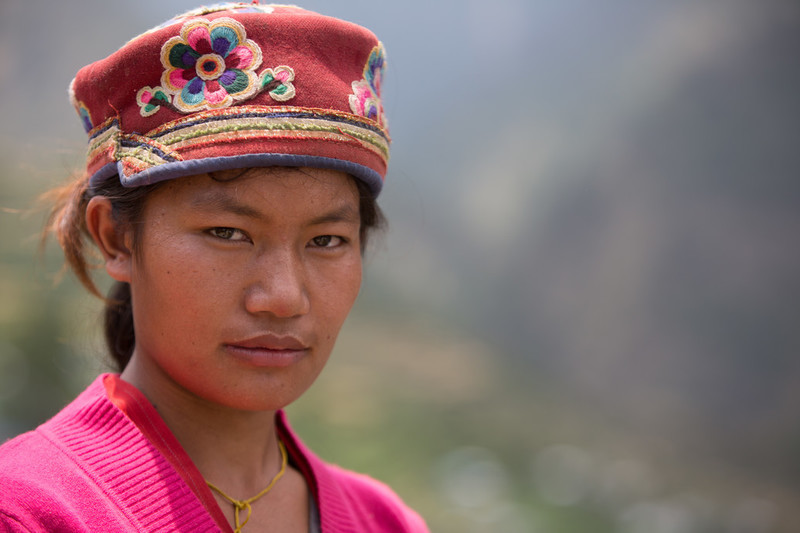
Two years after the earthquake that struck Nepal in April 2015, the village of Gatlang in the country’s mountainous north still lies in partial ruin. The houses here are built from enormous slabs of local stone, carved windows and doors, and roofs of stacked wooden planks. They face east towards the rising sun, their facades bedecked in intricate wooden carvings patterns linked to the ancient Buddhist culture of the Tamang people. Today, most of these houses lie in ruin, emptying the heart of the village of people, with most moving to temporary shacks on Gatlang’s fringes. Kopila Tamang is a 24-year-old farmer and mother to two young boys. Her husband, Nakul, works as a lorry driver and is often away. “When the earthquake struck, I was working in the fields,” she says. “If I had been at home, I would have died.” Kopila’s house – or what remains of it – lies at the centre of old Gatlang, on a street of traditional houses that have either entirely collapsed or are uninhabitable due to cracks and structural damage. Piles of stone and wooden cross beams are strewn in what was once a thriving village street. Like many families here, Kopila and her husband and boys have moved into a small shack built from corrugated iron and plastic. This was meant to be a temporary solution, but two years later, they are still living in it, unable to afford the enormous cost of rebuilding their old home. “It needs lots of money,” she says. “I don’t know when we will have the money to build this home again.” FPAN provided emergency health support to families like Kopila’s in the weeks and months after the earthquake. Mobile health camps offered medicines, health check ups, dignity kits, family planning, antenatal checks and other vital services. These days, Kopila gets regular advice from Pasang Tamang, the FPAN reproductive health female volunteer in the village. Kopila had suffered after the birth of her last child. “I didn’t menstruate for eight months, and then after that I started using the [contraceptive] injection,” she says. “But there were some side effects: I started menstruating twice a month.” She then went to a mobile health camp run by FPAN and started using the intrauterine coil. “After that, my menstruation went back to normal,” she says. In a village scarred by the earthquake, access to family planning has brought some much needed stability and relief to Kopila and her small family. “FPAN provide different services and knowledge: I have come to know that having more children can bring suffering, because it’s not enough to just feed children, they must be educated too” she says. “A small family is a happy family.”

24 July 2017
2017 London Family Planning Summit
To reinforce the commitments made during the 2012 Family Planning summit, donors, governments and civil society gathered at the 2017 London Family Planning Summit, organised by the UK Department for International Development and the Bill and Melinda Gates Foundation.
19 July 2017
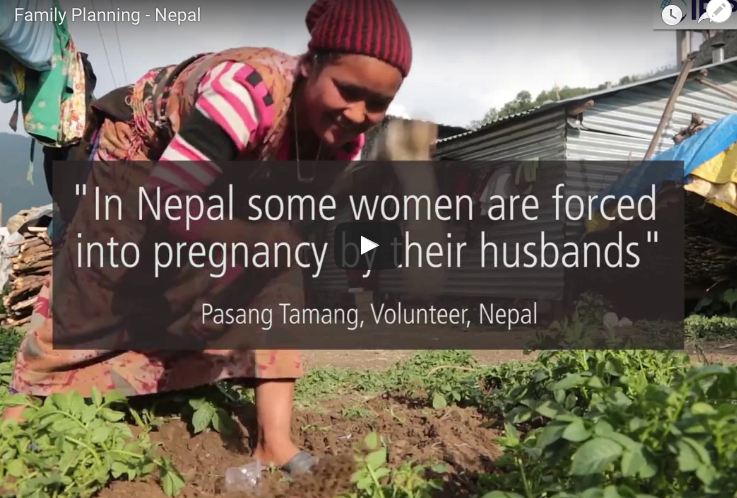
Family Planning in Nepal
For people across Nepal, access to contraception and family planning services can mean the difference between life and death. Yet in this largely patriarchal culture, where having four or five children has long been the norm, contraception remains an alien idea to many, and access to it is strictly controlled by male heads of households. IPPF Family Planning Association of Nepal is working with local community to increase awareness and access to family planning among rural communities and people affected by the 2015 earthquake. See how they're ensuring access and changing lives

19 July 2017
Myth-busting facts about withdrawal
Decided you want to learn more about contraception options? Find out more with us!

16 July 2017
'Now is the time to act', says UNFPA at 2017 London Family Planning Summit
Inspiring words by Arthur Erken, UNFPA head of communications and partnerships, pushing the international community to act now to ensure family planning access for all at the 2017 London Family Planning Summit, organised by UK Department for International Development and the Bill and Melinda Gates Foundations.

16 July 2017
"IPPF is an important partner for Denmark"
At the 2017 Family Planning Summit, we interviewed Ulla Tornaes, Danish Minister for Development Cooperation. We were pleased to see her highlighting the positive collaboration between IPPF and the Danish government.
16 July 2017
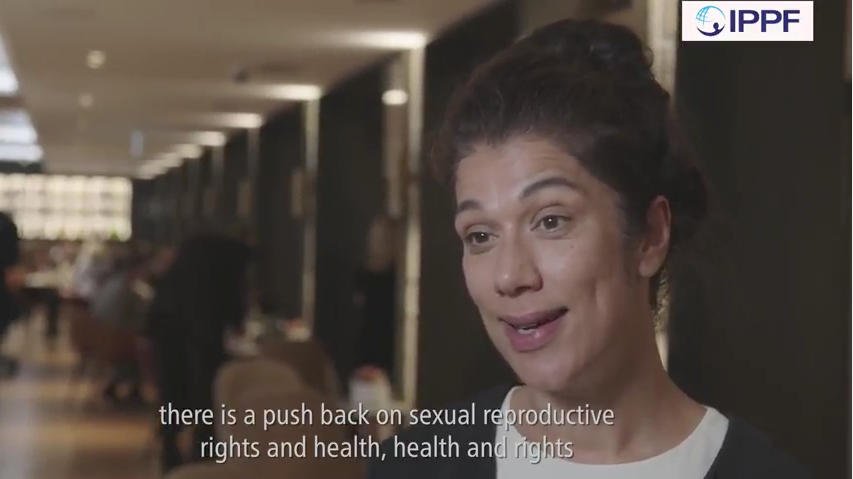
'Norway is here because we believe in women's rights' - Laila Bokhari at 2017 Family Planning Summit
Laila Bokhari, Norwegian minister of Foreign Affairs, talks about the crucial importance of sexual and reproductive rights for development.
16 July 2017
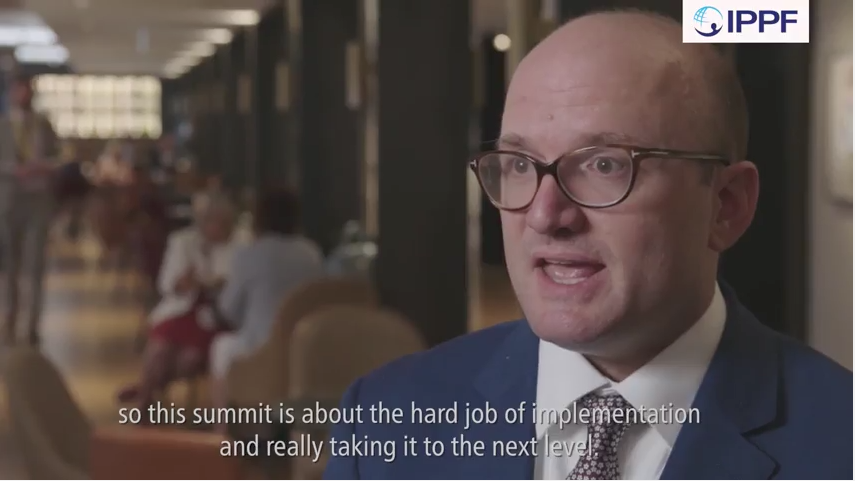
DFID at 2017 Family Planning Summit
In 2012, the Family Planning 2020 partnership was created during the London Family Planning co-hosted by the UK Department for International Development and the Bill and Melinda Gates Foundation. In 2017, the global champions come together again to ensure that steps are taken so that all women and girls can be free to decide about their body and future.
15 July 2017
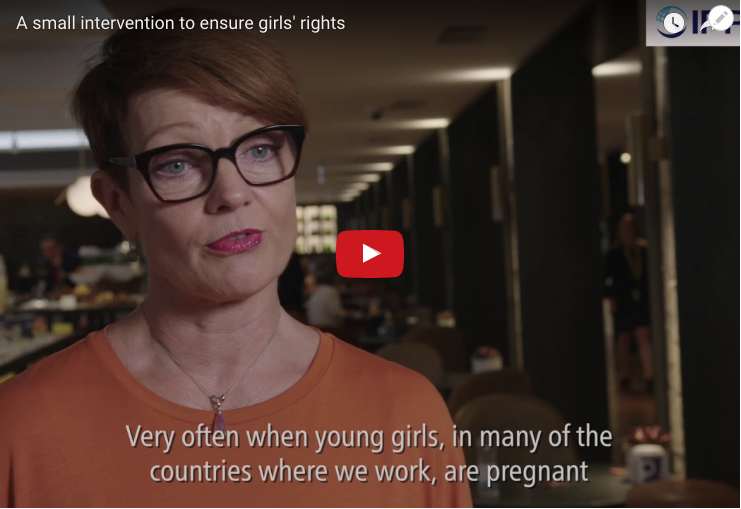
Contraceptive care is key to ensure girls' rights - Ulla Müller, EngenderHealth
Ulla E. Müller, CEO of EngenderHealth, clearly explains how, to protect girls' rights, we need to ensure them access to contraception.
26 July 2017
Four highlights from the 2017 London Family Planning Summit
The 2017 London Family Planning Summit held earlier this month has been celebrated as a success in renewing commitments for family planning. An impressive US$2.5 billion in funding commitments by new and old partners alike to ensure 120 million more women and girls have access to contraception. The Summit built a sense of hope and optimism for the family planning sector – a sector very much under threat in recent years and especially since the reinstatement and expansion of the Global Gag Rule. And five years on from the 2012 Summit, the landscape looks very different – the universality of the Sustainable Development Goals (SDGs), greater political and financial commitment to family planning. Yet, we are also amid a rapidly changing aid environment – a contraceptive funding crisis, decreasing and diversifying official development assistance and reinstatement and decreasing funding for family planning. The real work starts now. Civil society organizations like IPPF and our partners are renewing our efforts to work in partnership to ensure the commitments are translated into reality. The progress towards 2020 must address specific challenges including stockouts of contraceptives in many countries, wider contraceptive choice, and protection and promotion of women and girls’ rights. But for now, let’s take stock of the four main highlights from the 2017 London Summit: Broader partnership: The meeting brought renewed momentum to the family planning movement, with a broader partnership joining the cause. Funding commitments were made from partners new and old. 13 new commitments from were made private sector companies, four times higher than in the 2012 Summit. Engagement with the private sector and with sectors beyond health, like the environmental protection sector, envision a path toward stronger, interlinked development agendas. New funding commitments were also made by Norway, Denmark, Australia, Belgium and the Netherlands. Pledges were also specifically made to UNFPA and She Decides. New collaborations are specifically important in the face of the loss of the largest bilateral donor of family planning – USAID. Interlinkages between climate and family planning: With an interlinked global agenda set forth in the Sustainable Development Goals, there is a need to address the interlinkages across sectors. This was perfectly illustrated by the commitment of IPPF’s partner Blue Ventures to address interlinkages between health and environment. Through focusing on the needs of communities, Blue Ventures is expanding cross-sector partnerships between health and environment organizations in seven FP2020 target countries. Together, IPPF, Blue Ventures and a number of other partners have been working for a number of years with Population Sustainable Development Alliance (PSDA) to highlight the interlinkages between environment, climate change and sexual and reproductive health and rights. Today more than ever before we need to join forces to tackle the challenges of climate change, while respecting communities’ need for sexual and reproductive health services and information. A focus on those left-behind: While the world is facing huge population shifts, the Summit emphasized the need to address the family planning needs of adolescents, displaced people and people living in humanitarian settings. There was a clear focus to reach women and girls left behind by traditional family planning programmes. Commitments from Belgium, Canada, Iceland, the International Rescue Commission (IRC), and Médecins du Monde (MdM) among others specifically highlighted FP in humanitarian contexts. Young people participated meaningfully on multiple platforms. IPPF launched the landmark report ‘Under-served and Over-looked’ to shine a light on the blind spot of family planning progress, and focus on the women and girls left behind. The report underscores the inequalities for poor women and girls in their inability to access full, free and informed choice. The report suggests programmatic and policy solutions to reach poor and marginalized women and girls towards greater contraceptive equity. Country ownership: As the world is tumbling towards a contraceptive crisis, more leadership is needed from partner countries to invest domestic resources in the health and wellbeing of their citizens. The meeting saw notable partner commitments from FP2020 focus countries, as well as first-time commitments from Chad, Haiti, and South Sudan. Greater national ownership of family planning programmes is crucial to the sustainability and progress of these programmes. With modern contraceptive prevalence rates as low as 5% in Chad and South Sudan, the recognition of the importance of family planning and women’s health will be transformative for their development. A number of Ministers of Finance attended, demonstrating a greater appreciation of the economic arguments for investing in family planning as a best buy intervention. Accountability Towards 2020, we must ensure that bold commitments made in 2017 in London translate into reality. These commitments and shifts in conversation are significant roadmaps, but reaching these goals requires a concerted effort from all stakeholders at every level. Greater accountability is needed not only to ensure political and financial commitments are fulfilled, but we also women and girls are able to access the information and services they want and need. Civil society has an important role to play to ensure citizen engagement within accountability. FP2020 will introduce a civil society focal point to its structure (along with donor focal point and government focal point), a reinforcement of the idea that none of the FP2020 goals can be achieved in silos. For a sector reeling from growing political conservatism, the London Summit together with important initiatives of the She Decides movement has built a new sense of momentum, and renewed hope that the ambitious goals of FP2020 and the SDGs may one day be a reality. Together – through an expanded partnership – the sector must persevere towards universal access to family planning services and supplies. Yet we cannot forget the importance of women and girls whose lives depend on access to sexual and reproductive health services and supplies. We cannot forget them, and cannot afford to leave them behind. Join our campaign: support universal access to contraception Watch all videos related to the 2017 Family Planning Summit This blog was written by Elisa Magalhaes, Paige Rogers and Erica Belanger, IPPF Advocacy Team
Reproductive health for Nepalese female farmers after the earthquake
Two years after the earthquake that struck Nepal in April 2015, the village of Gatlang in the country’s mountainous north still lies in partial ruin. The houses here are built from enormous slabs of local stone, carved windows and doors, and roofs of stacked wooden planks. They face east towards the rising sun, their facades bedecked in intricate wooden carvings patterns linked to the ancient Buddhist culture of the Tamang people. Today, most of these houses lie in ruin, emptying the heart of the village of people, with most moving to temporary shacks on Gatlang’s fringes. Kopila Tamang is a 24-year-old farmer and mother to two young boys. Her husband, Nakul, works as a lorry driver and is often away. “When the earthquake struck, I was working in the fields,” she says. “If I had been at home, I would have died.” Kopila’s house – or what remains of it – lies at the centre of old Gatlang, on a street of traditional houses that have either entirely collapsed or are uninhabitable due to cracks and structural damage. Piles of stone and wooden cross beams are strewn in what was once a thriving village street. Like many families here, Kopila and her husband and boys have moved into a small shack built from corrugated iron and plastic. This was meant to be a temporary solution, but two years later, they are still living in it, unable to afford the enormous cost of rebuilding their old home. “It needs lots of money,” she says. “I don’t know when we will have the money to build this home again.” FPAN provided emergency health support to families like Kopila’s in the weeks and months after the earthquake. Mobile health camps offered medicines, health check ups, dignity kits, family planning, antenatal checks and other vital services. These days, Kopila gets regular advice from Pasang Tamang, the FPAN reproductive health female volunteer in the village. Kopila had suffered after the birth of her last child. “I didn’t menstruate for eight months, and then after that I started using the [contraceptive] injection,” she says. “But there were some side effects: I started menstruating twice a month.” She then went to a mobile health camp run by FPAN and started using the intrauterine coil. “After that, my menstruation went back to normal,” she says. In a village scarred by the earthquake, access to family planning has brought some much needed stability and relief to Kopila and her small family. “FPAN provide different services and knowledge: I have come to know that having more children can bring suffering, because it’s not enough to just feed children, they must be educated too” she says. “A small family is a happy family.”
24 July 2017
2017 London Family Planning Summit
To reinforce the commitments made during the 2012 Family Planning summit, donors, governments and civil society gathered at the 2017 London Family Planning Summit, organised by the UK Department for International Development and the Bill and Melinda Gates Foundation.
19 July 2017
Family Planning in Nepal
For people across Nepal, access to contraception and family planning services can mean the difference between life and death. Yet in this largely patriarchal culture, where having four or five children has long been the norm, contraception remains an alien idea to many, and access to it is strictly controlled by male heads of households. IPPF Family Planning Association of Nepal is working with local community to increase awareness and access to family planning among rural communities and people affected by the 2015 earthquake. See how they're ensuring access and changing lives
19 July 2017
Myth-busting facts about withdrawal
Decided you want to learn more about contraception options? Find out more with us!
16 July 2017
'Now is the time to act', says UNFPA at 2017 London Family Planning Summit
Inspiring words by Arthur Erken, UNFPA head of communications and partnerships, pushing the international community to act now to ensure family planning access for all at the 2017 London Family Planning Summit, organised by UK Department for International Development and the Bill and Melinda Gates Foundations.
16 July 2017
"IPPF is an important partner for Denmark"
At the 2017 Family Planning Summit, we interviewed Ulla Tornaes, Danish Minister for Development Cooperation. We were pleased to see her highlighting the positive collaboration between IPPF and the Danish government.
16 July 2017
'Norway is here because we believe in women's rights' - Laila Bokhari at 2017 Family Planning Summit
Laila Bokhari, Norwegian minister of Foreign Affairs, talks about the crucial importance of sexual and reproductive rights for development.
16 July 2017
DFID at 2017 Family Planning Summit
In 2012, the Family Planning 2020 partnership was created during the London Family Planning co-hosted by the UK Department for International Development and the Bill and Melinda Gates Foundation. In 2017, the global champions come together again to ensure that steps are taken so that all women and girls can be free to decide about their body and future.
15 July 2017
Contraceptive care is key to ensure girls' rights - Ulla Müller, EngenderHealth
Ulla E. Müller, CEO of EngenderHealth, clearly explains how, to protect girls' rights, we need to ensure them access to contraception.