




The majority of HIV infections are sexually transmitted or are associated with pregnancy, childbirth and breastfeeding.
Our work links prevention with treatment, care and support, reduces HIV-related stigma and discrimination, and responds to unique regional and national characteristics of the epidemic.
Articles about HIV and STIs
06 June 2012
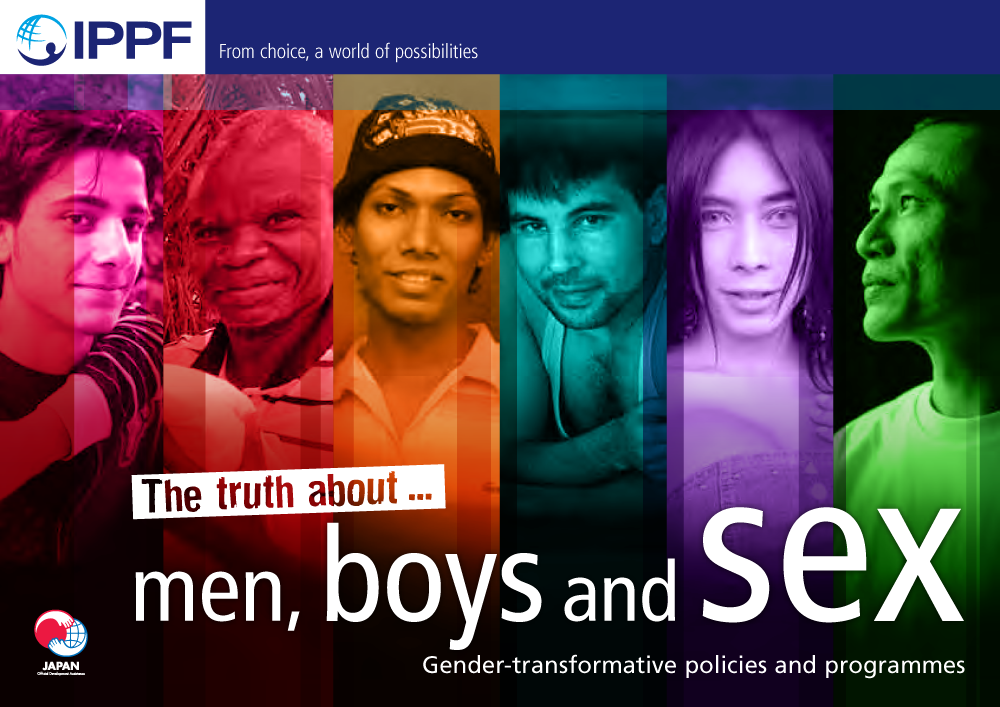
The Truth About Men, Boys and Sex: A gender-transformative guide
Over the last 25 years, much has been learned about HIV – its properties, its management and its tendency towards the path of least resistance in communities already facing poverty and prejudice. Globally, that line runs through some of the world’s least powerful communities: the poorest, most disadvantaged, stigmatized and under-developed groups, whose members carry an increasingly disproportionate share of the world’s HIV burden. In many countries, young women are three times more likely to be HIV positive than young men while in other regions of the world men are at the forefront of the epidemic. With this dynamic nature of HIV, it is imperative that every response is characterized by its ability to be increasingly relevant and meaningful. However, irrespective of the country or region, approaches that actively seek to transform gender norms and inequality need to find a stronger foundation in the work of sexual and reproductive health and HIV programmes. The essence of these programmes must empower young women and girls and provide supportive legislative frameworks. But concurrently they should ensure that men and boys – with different behaviours and sexual orientations – can find the avenues to transform their lives as individuals, partners, husbands, fathers, sons and brothers. Sexual Rights; An IPPF Declaration underlines this approach and identifies the rights of everyone to sexual autonomy, non-discrimination and choice. The IPPF Japan Trust Fund for HIV/AIDS was established in 2000 to strengthen and build the capacity of IPPF Member Associations and enable them to carry out effective, innovative and comprehensive HIV programmes. A key part of their distinctive nature is that they are based on the specific needs of individual countries and localities. As a key signatory to The Code of Good Practice for NGOs Responding to HIV/AIDS, IPPF promotes this needs and rights-based approach that has linked HIV and sexual and reproductive health and rights responses and has focused on the realities of people’s lives – the lives of men and women who are particularly vulnerable to or at risk of HIV. This publication illustrates what IPPF and its Member Associations have achieved through their energetic activities. This unique combination of case studies and interviews from six countries in Africa, Asia and Latin America – with the opinion pieces penned by experts in their field – serves as a reminder that progress on the rights of women and girls is intimately linked to ensuring that men and boys are equal partners in this dialogue. The truth about safeguarding the sexual and reproductive health of women and girls necessitates that men and boys are actively encouraged to protect their own health.
06 June 2012
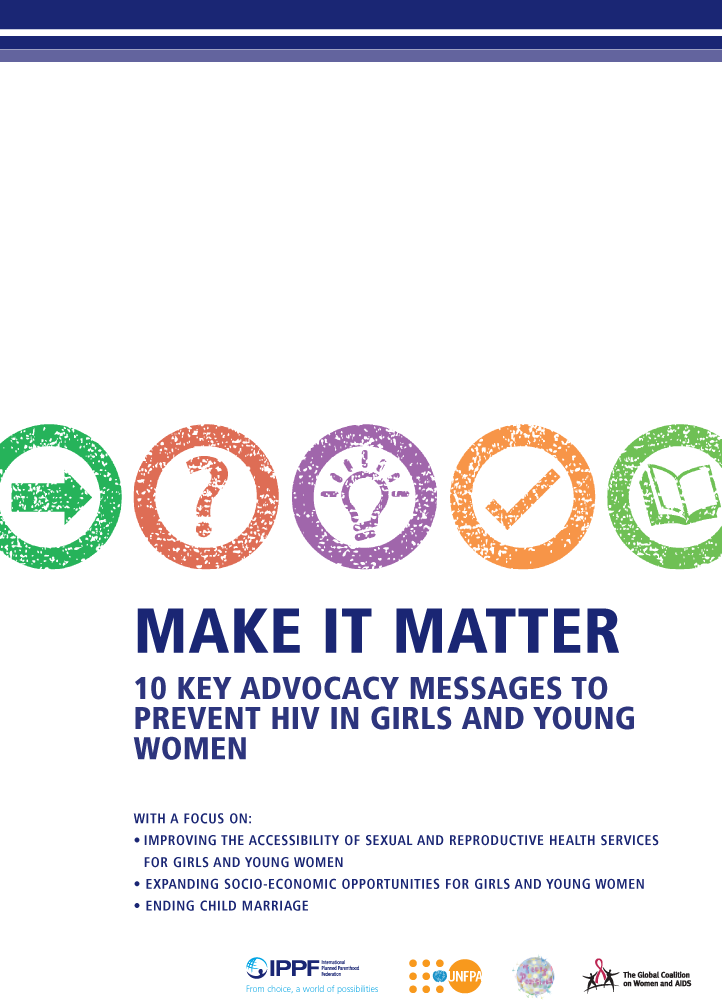
Make it Matter: 10 key advocacy messages to prevent HIV in girls and young women
This advocacy guide focuses on 3 goals that evidence shows to be part of an effective response to HIV prevention for girls and young women. These goals are: improving the accessibility of sexual and reproductive health services; expanding socio-economic opportunities; and ending child marriage.
06 June 2012
A Window into a World: HIV risk and vulnerability
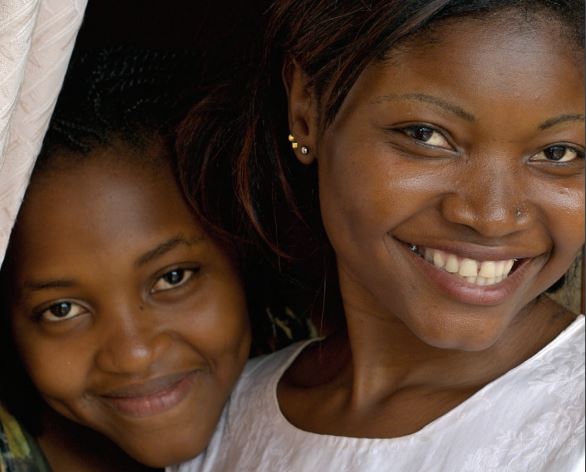
The photographs in this journal are educational and enlightening, explicit and enigmatic, moving and disturbing, beautiful and optimistic. This glimpse into a handful of lives paints a picture of life, love, learning and living with HIV. They provide a window into a world that is often neglected or hidden from our sight. A world of men and women who are particularly vulnerable to or at risk of HIV.
29 May 2012
IPPF Strategic Framework: 2005 - 2015
The product of a Federation-wide consensus, this framework brings together the ideas and experience of IPPF Member Associations, senior volunteers, Regional Offices and Central Office, and has been approved by the Governing Council. By combining an understanding of our past with a vision for our future, this new plan presents a 'framework of opportunity' that Member Associations can interpret to develop the most appropriate response to specific sexual and reproductive health challenges. The ‘Strategic Framework’ is not intended to impose a rigid set of rules or constraints. Rather, it embraces the diversity of situations Member Associations and regions face. While providing this flexibility, the framework unites the Federation in a common vision on which we are compelled to act if we are to meet the needs of women, men and young people throughout the world.
03 May 2012
Rights of People Living with HIV: A guidance package
Imperatives of both human rights and public health require that health care and legal systems support the sexual and reproductive health and rights of people living with HIV. This Guidance Package, developed by people living with HIV, describes the important issues and key areas for change. Going forward, legislators, government ministries, international organizations, donors, and community - and faith-based organizations - with the continued input and guidance of people living with HIV, must work together to put in place the services and legal supports that will build better sexual and reproductive health for everyone.
03 May 2012
IPPF Sexual Rights Declaration Pocket Guide
02 May 2012
Sexual Rights: An IPPF declaration (abridged)
The IPPF declaration is grounded in and informed by international agreements such as United Nations Conventions. This abridged version to be used in conjunction with IPPF's original Sexual Rights Declaration.

15 January 2012
HIV Works
The training content and exercises described in this guide are meant to offer ideas and inspiration for implementing your own HIV workplace policy. It is not an exhaustive guide and there are other training manuals that you may also wish to use to supplement this guide.

25 May 2011
Sexual Rights: An IPPF declaration
Sexuality is a natural and precious aspect of life, an essential and fundamental part of our humanity. For people to attain the highest standard of health, they must first be empowered to exercise choice in their sexual and reproductive lives; they must feel confident and safe in expressing their own sexual identity. Today, discrimination, stigma, fear and violence pose real threats to many people. These threats and the actions they trigger – ranging from disheartening to life-threatening in nature – prevent many people from attaining basic sexual rights and health. IPPF is committed to fulfilling its goals through an approach that embodies the principles of universality, interrelatedness, interdependence and indivisibility of all human rights. We will do all we can to ensure that sexual rights – human rights – are respected through our own service provision and advocacy, and also in the wider public sphere. Sexual Rights: An IPPF Declaration represents the culmination of more than two years of work that spanned the globe. Its development was guided by a diverse group of individuals: internationally-renowned experts in sexual and reproductive health, human rights, law and public health; senior IPPF volunteers, each of whom brought unique regional perspectives and who together represented a range of experience and strengths; and three senior directors of the IPPF secretariat. The Declaration developed through regional meetings and events that took place across the Federation and built on the IPPF Charter of Sexual and Reproductive Rights. While there has already been some progress toward meeting the Millennium Development Goals and the targets of the 1994 ICPD (International Conference on Population and Development) Programme of Action, there is still much work to be done. Sexual rights are a component of human rights, they are an evolving set of entitlements related to sexuality that contribute to the freedom, equality and dignity of all people, and they cannot be ignored. We must persevere; we must be uncompromising and passionate in our efforts to decrease stigma and improve access to services, and to increase recognition of sexuality as a positive aspect of human life. Marginalized groups such as young people, transgender people, sex workers, men having sex with men, people who are gay, lesbian or bi-sexual, child brides and girl mothers particularly need our compassion. The Declaration applies equally to girls and women who are vulnerable to or have been subjected to gender-based violence, including traditional norms such as female genital mutilation and discrimination based on male preference. Sexual Rights: An IPPF Declaration is an indispensable tool for all organizations, activists, researchers, policy- and decision-makers who are working to promote and ensure human rights. The Declaration will enable members of the sexual and reproductive health and human rights communities to create change and build on the momentum that has already begun around sexual rights in preparation for the next International Conference on Population and Development in 2015. Too often denied and too long neglected, sexual rights deserve our attention and priority. It is time to respect them. It is time to demand them. We trust that the Declaration will serve you well on the journey ahead.
29 June 2010
What Do I Do If... Ideas for young women living with HIV
What do I do if I am living with HIV and...Some ideas for young women living with HIV answers common questions asked by young women living with HIV emphasises the rights of people living with HIV to information, treatment, and respect links to further sources of information encourages young women to make positive choices and stand up for their rights recognises the diversity of young women’s experiences and desires "You have the right to choose whether or not to marry, have sex, and to freely express your sexual orientation and gender identity. Living with HIV should not limit the possibilities you have to love and be loved." Answers to questions raised by young women living with HIV, with practical rights-based information about dating and relationships; disclosing and HIV status; protecting a partner and safer sex; planning healthy pregnancy; preventing pregnancy and safe abortion; and seeking support for rights violations and discrimination. Includes: some tips for sharing your HIV status with your partner(s) a checklist of ways to protect yourself from other STIs and your partner from HIV some tips for negotiating safe sex some tips to help you conceive safely some tips to help you have a healthy pregnancy for you and your baby tips on how to get help if you need it, including if your rights have been violated How to get help if your rights have been violated p.10
06 June 2012
The Truth About Men, Boys and Sex: A gender-transformative guide
Over the last 25 years, much has been learned about HIV – its properties, its management and its tendency towards the path of least resistance in communities already facing poverty and prejudice. Globally, that line runs through some of the world’s least powerful communities: the poorest, most disadvantaged, stigmatized and under-developed groups, whose members carry an increasingly disproportionate share of the world’s HIV burden. In many countries, young women are three times more likely to be HIV positive than young men while in other regions of the world men are at the forefront of the epidemic. With this dynamic nature of HIV, it is imperative that every response is characterized by its ability to be increasingly relevant and meaningful. However, irrespective of the country or region, approaches that actively seek to transform gender norms and inequality need to find a stronger foundation in the work of sexual and reproductive health and HIV programmes. The essence of these programmes must empower young women and girls and provide supportive legislative frameworks. But concurrently they should ensure that men and boys – with different behaviours and sexual orientations – can find the avenues to transform their lives as individuals, partners, husbands, fathers, sons and brothers. Sexual Rights; An IPPF Declaration underlines this approach and identifies the rights of everyone to sexual autonomy, non-discrimination and choice. The IPPF Japan Trust Fund for HIV/AIDS was established in 2000 to strengthen and build the capacity of IPPF Member Associations and enable them to carry out effective, innovative and comprehensive HIV programmes. A key part of their distinctive nature is that they are based on the specific needs of individual countries and localities. As a key signatory to The Code of Good Practice for NGOs Responding to HIV/AIDS, IPPF promotes this needs and rights-based approach that has linked HIV and sexual and reproductive health and rights responses and has focused on the realities of people’s lives – the lives of men and women who are particularly vulnerable to or at risk of HIV. This publication illustrates what IPPF and its Member Associations have achieved through their energetic activities. This unique combination of case studies and interviews from six countries in Africa, Asia and Latin America – with the opinion pieces penned by experts in their field – serves as a reminder that progress on the rights of women and girls is intimately linked to ensuring that men and boys are equal partners in this dialogue. The truth about safeguarding the sexual and reproductive health of women and girls necessitates that men and boys are actively encouraged to protect their own health.
06 June 2012
Make it Matter: 10 key advocacy messages to prevent HIV in girls and young women
This advocacy guide focuses on 3 goals that evidence shows to be part of an effective response to HIV prevention for girls and young women. These goals are: improving the accessibility of sexual and reproductive health services; expanding socio-economic opportunities; and ending child marriage.
06 June 2012
A Window into a World: HIV risk and vulnerability
The photographs in this journal are educational and enlightening, explicit and enigmatic, moving and disturbing, beautiful and optimistic. This glimpse into a handful of lives paints a picture of life, love, learning and living with HIV. They provide a window into a world that is often neglected or hidden from our sight. A world of men and women who are particularly vulnerable to or at risk of HIV.
29 May 2012
IPPF Strategic Framework: 2005 - 2015
The product of a Federation-wide consensus, this framework brings together the ideas and experience of IPPF Member Associations, senior volunteers, Regional Offices and Central Office, and has been approved by the Governing Council. By combining an understanding of our past with a vision for our future, this new plan presents a 'framework of opportunity' that Member Associations can interpret to develop the most appropriate response to specific sexual and reproductive health challenges. The ‘Strategic Framework’ is not intended to impose a rigid set of rules or constraints. Rather, it embraces the diversity of situations Member Associations and regions face. While providing this flexibility, the framework unites the Federation in a common vision on which we are compelled to act if we are to meet the needs of women, men and young people throughout the world.
03 May 2012
Rights of People Living with HIV: A guidance package
Imperatives of both human rights and public health require that health care and legal systems support the sexual and reproductive health and rights of people living with HIV. This Guidance Package, developed by people living with HIV, describes the important issues and key areas for change. Going forward, legislators, government ministries, international organizations, donors, and community - and faith-based organizations - with the continued input and guidance of people living with HIV, must work together to put in place the services and legal supports that will build better sexual and reproductive health for everyone.
03 May 2012
IPPF Sexual Rights Declaration Pocket Guide
02 May 2012
Sexual Rights: An IPPF declaration (abridged)
The IPPF declaration is grounded in and informed by international agreements such as United Nations Conventions. This abridged version to be used in conjunction with IPPF's original Sexual Rights Declaration.
15 January 2012
HIV Works
The training content and exercises described in this guide are meant to offer ideas and inspiration for implementing your own HIV workplace policy. It is not an exhaustive guide and there are other training manuals that you may also wish to use to supplement this guide.
25 May 2011
Sexual Rights: An IPPF declaration
Sexuality is a natural and precious aspect of life, an essential and fundamental part of our humanity. For people to attain the highest standard of health, they must first be empowered to exercise choice in their sexual and reproductive lives; they must feel confident and safe in expressing their own sexual identity. Today, discrimination, stigma, fear and violence pose real threats to many people. These threats and the actions they trigger – ranging from disheartening to life-threatening in nature – prevent many people from attaining basic sexual rights and health. IPPF is committed to fulfilling its goals through an approach that embodies the principles of universality, interrelatedness, interdependence and indivisibility of all human rights. We will do all we can to ensure that sexual rights – human rights – are respected through our own service provision and advocacy, and also in the wider public sphere. Sexual Rights: An IPPF Declaration represents the culmination of more than two years of work that spanned the globe. Its development was guided by a diverse group of individuals: internationally-renowned experts in sexual and reproductive health, human rights, law and public health; senior IPPF volunteers, each of whom brought unique regional perspectives and who together represented a range of experience and strengths; and three senior directors of the IPPF secretariat. The Declaration developed through regional meetings and events that took place across the Federation and built on the IPPF Charter of Sexual and Reproductive Rights. While there has already been some progress toward meeting the Millennium Development Goals and the targets of the 1994 ICPD (International Conference on Population and Development) Programme of Action, there is still much work to be done. Sexual rights are a component of human rights, they are an evolving set of entitlements related to sexuality that contribute to the freedom, equality and dignity of all people, and they cannot be ignored. We must persevere; we must be uncompromising and passionate in our efforts to decrease stigma and improve access to services, and to increase recognition of sexuality as a positive aspect of human life. Marginalized groups such as young people, transgender people, sex workers, men having sex with men, people who are gay, lesbian or bi-sexual, child brides and girl mothers particularly need our compassion. The Declaration applies equally to girls and women who are vulnerable to or have been subjected to gender-based violence, including traditional norms such as female genital mutilation and discrimination based on male preference. Sexual Rights: An IPPF Declaration is an indispensable tool for all organizations, activists, researchers, policy- and decision-makers who are working to promote and ensure human rights. The Declaration will enable members of the sexual and reproductive health and human rights communities to create change and build on the momentum that has already begun around sexual rights in preparation for the next International Conference on Population and Development in 2015. Too often denied and too long neglected, sexual rights deserve our attention and priority. It is time to respect them. It is time to demand them. We trust that the Declaration will serve you well on the journey ahead.
29 June 2010
What Do I Do If... Ideas for young women living with HIV
What do I do if I am living with HIV and...Some ideas for young women living with HIV answers common questions asked by young women living with HIV emphasises the rights of people living with HIV to information, treatment, and respect links to further sources of information encourages young women to make positive choices and stand up for their rights recognises the diversity of young women’s experiences and desires "You have the right to choose whether or not to marry, have sex, and to freely express your sexual orientation and gender identity. Living with HIV should not limit the possibilities you have to love and be loved." Answers to questions raised by young women living with HIV, with practical rights-based information about dating and relationships; disclosing and HIV status; protecting a partner and safer sex; planning healthy pregnancy; preventing pregnancy and safe abortion; and seeking support for rights violations and discrimination. Includes: some tips for sharing your HIV status with your partner(s) a checklist of ways to protect yourself from other STIs and your partner from HIV some tips for negotiating safe sex some tips to help you conceive safely some tips to help you have a healthy pregnancy for you and your baby tips on how to get help if you need it, including if your rights have been violated How to get help if your rights have been violated p.10