




Sexual and reproductive healthcare does not become less essential during conflict. It becomes more urgent. Yet contraception, maternal healthcare, HIV and STI services, safe abortion care, and support for survivors of sexual and gender-based violence are often deprioritised, despite being lifesaving.
IPPF Member Associations and Collaborative Partners are dedicated to providing these services in even the most challenging circumstances – in 2025 fifty percent of our emergency responses were triggered by conflict.
How do conflicts impact sexual and reproductive health?
Conflict destroys health systems, fragments protection networks and deepens the inequalities that already shape who can access care, safety and justice. In conflict settings, even basic information about health and rights becomes scarce. The result is a sharp rise in preventable illness, complications, and trauma at the very moment people need care the most.
Targeted attacks on health facilities, civilian infrastructure, and health workers directly limit access to sexual and reproductive health (SRH) services and disrupt already fragile supply chains. In Sudan, now entering its third year of civil war, 80% of health facilities have been destroyed, leaving millions without even the most basic care.
Limited access to prenatal services, combined with the stresses of living in a conflict environment, leads to pregnancy complications, premature births, and maternal health risks. Nearly two‑thirds of all maternal deaths worldwide occur in fragile and conflict‑affected settings. This danger is compounded by challenges to accessing contraception, increasing the risks of unintended pregnancies and unsafe abortions. Period management, too, becomes more difficult as water, sanitation, privacy and supplies all become scarce, particularly for people who are displaced.
Sexual and gender‑based violence is increasingly used as a weapon of war and political domination, with devastating consequences for the health, protection, and dignity of women, girls, and marginalised communities. Mass displacement increases these risks as people lose their homes, support networks, and safe spaces. In the past two years alone, incidents of conflict‑related sexual violence have surged by 87%.
IPPF’s Humanitarian Response
IPPF Member Associations remain a critical frontline presence in some of the world’s most complex conflict settings, often where others are scaling back or withdrawing. Rapid, flexible emergency funding enables them to respond quickly as needs change. Our response focuses on:
Locally led care
Locally led care is especially critical in conflict, where trust, access and the ability to adapt quickly can determine whether services reach people at all. IPPF’s Member Associations are perfectly positioned to provide this care, being deeply rooted in the communities they support, whilst also connected to local, regional and national humanitarian response networks. They provide lifesaving sexual and reproductive health services, including maternal and newborn care, safe abortion care, HIV testing and treatment and contraception.
Supporting survivors of sexual and gender-based violence
With sexual violence increasingly being used as a weapon of war, our Member Associations provide vital first-line support to survivors, including emergency contraception, post-exposure prophylaxix (PEP), psychosocial support and counselling and referrals for ongoing care.
Long-term support
Protracted crises are becoming the norm, not the exception, and SRHR needs often become harder to meet as systems erode and displacement stretches on. Across protracted crises such as Gaza, Sudan, and Yemen, IPPF Member Associations continue to provide lifesaving care, adapting services over time as needs deepen.
Women, Peace and Security
Women, girls and marginalised communities are those most impacted by conflict, but are too often excluded from shaping the decisions that affect their lives. Humanitarian action must support women’s safety, health, bodily autonomy and participation in peacebuilding, so we work to ensure women’s voices, needs and leadership are shaping peace processes.
Our impact in 2025
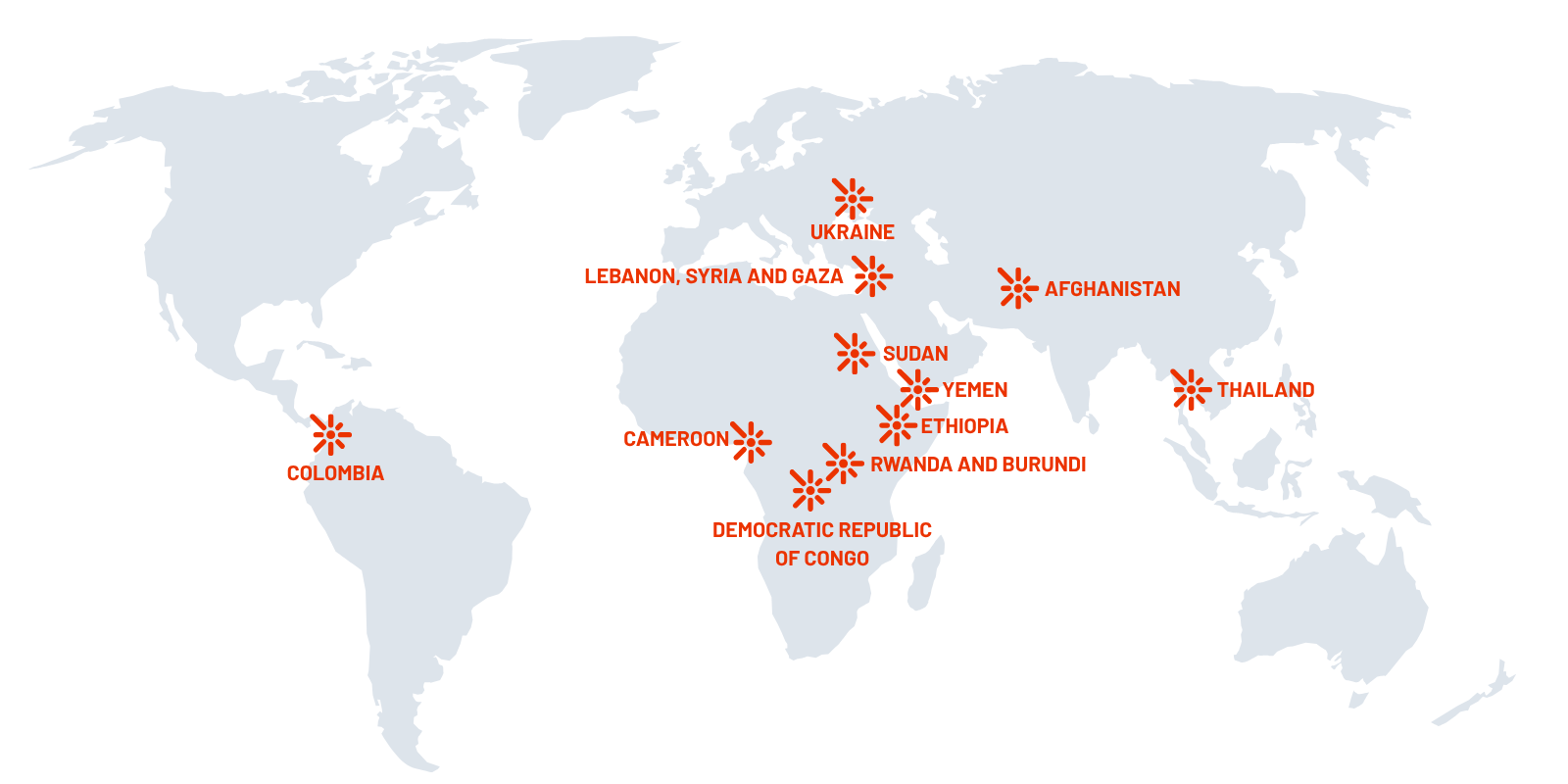
In 2025 we provided vital emergency sexual and reproductive healthcare to people impacted by conflict in Colombia, Ukraine, Lebanon, Syria, Gaza, Cameroon, Sudan, Yemen, Ethiopia, and the Democratic Republic of Congo. Member Associations also provided care for refugees fleeing to Rwanda, Burundi and Thailand.
Our work in action
when