



Background
On 29th January 2025, the Trump Administration issued stop-work orders to its USAID-implementing partners. These resulting funding cuts and ideological attacks on global development and humanitarian assistance had immediate consequences on sexual and reproductive health and rights (SRHR).
In February and July 2025, IPPF surveyed its Member Associations (MAs) and Collaborative Partners (CPs) to assess the impact of these funding cuts on their work and the clients they serve. By July 2025, $87.2 million in funding had been lost from 2025 through to 2029 due to cancelled contracts[1]. IPPF MAs / CPs in the Africa Region and the Arab World Region have been most affected, with an estimated loss of $26 million and $9.4 million in funding, respectively. Funding losses have forced the closure of nearly 1,400 clinics - 1,175 in Africa alone. In 2025, 9 million people were estimated to have lost access to SRH services including contraception, HIV testing, and care for survivors of gender-based violence (GBV) from a range of service delivery channels. MAs and CPs also reported declining stock levels of SRH commodities, especially contraceptive products, since January 2025.
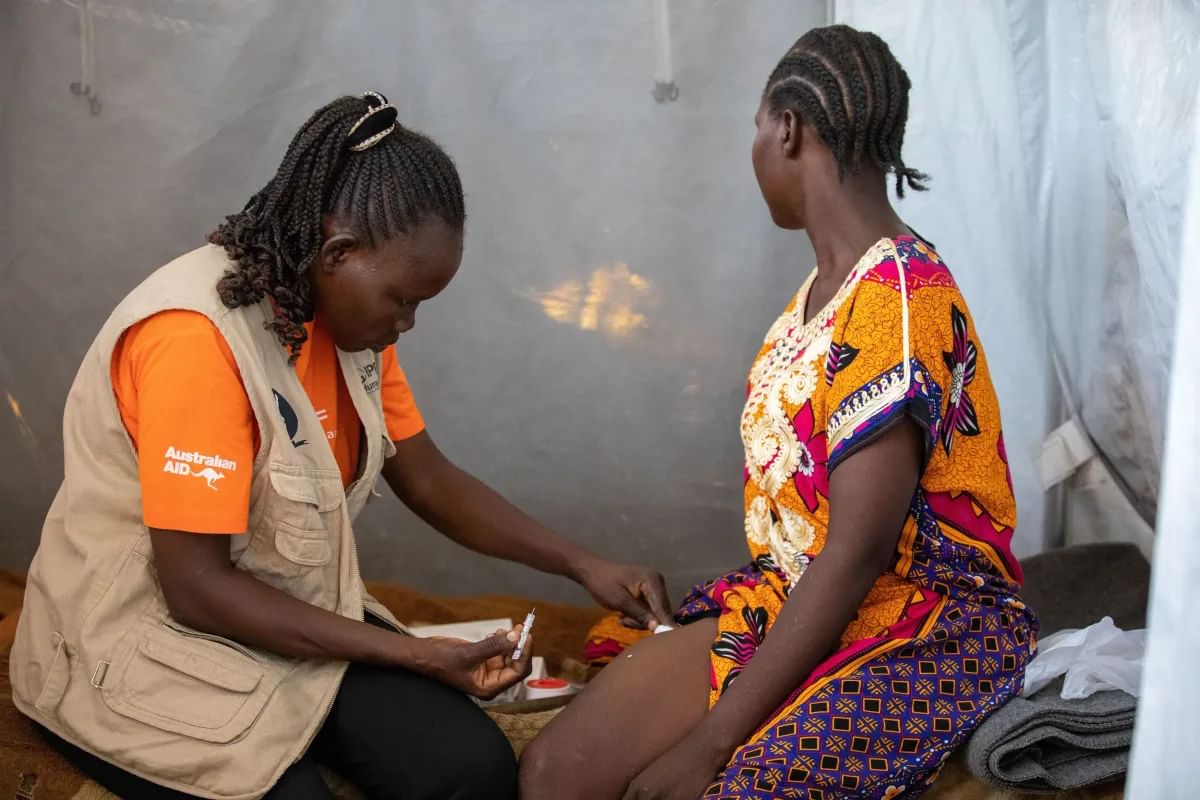
These case studies document the human cost of this retreat in funding, drawing on case studies from IPPF MAs / CPs in Bangladesh, Ethiopia, Mozambique, and Sudan.
Global Context
Government donors are withdrawing support as right-wing populism and religious fundamentalism rises. This shift is led by the US but mirrored in Europe, where governments are diverting aid budgets toward defence and border control. Trump’s "America First" Strategy has rejected the traditional model of foreign aid. It has replaced it with an investment model that prioritizes US commercial interests and biodefense, signalling a move away from multilateralism and withdrawal from the World Health Organization (WHO).
The Mexico City Policy (also known as the Global Gag Rule) was first introduced in 1984, prohibiting funding to any foreign non-governmental organisation (NGO) that provides comprehensive information on abortion and pregnancy options or performs abortion, thereby severing support for a vast network of SRH providers. The Trump Administration announced a sweeping expansion of the Mexico City Policy in late January 2026. The expanded policy is no longer limited to global health funding, and instead now weaponizes all non-military U.S. foreign assistance amounting to at least US $30 billion annually. This includes diversity, equity and inclusion (DEI) policies, and gender identity rights, recast as threats and condemned as “radical gender ideologies that prey on our children” by Vice-President JD Vance. These latest policies of the Trump Administration further institutionalise fear and paralysis in the global development sector and among the communities IPPF serves. In addition to targeting foreign non-government organisations, the scope has been widened in an attempt to block foreign assistance funding to any U.S. organizations, other governments, parastatals, and multilateral institutions who engage in upholding human rights. This is yet another attack on national sovereignty through the curtailing of SRHR and LGBTQI+ rights.
Historically, the reinstatement of the Mexico City Policy has reduced access to contraceptive services and increased abortion rates.[2] Latest measures go beyond historical precedents by:
- Framing standard contraception as "abortifacients" to broaden prohibited activities.
- Banning work on gender equality, gender-affirming care and DEI under the guise of preventing "divisive" concepts
Furthermore, the introduction of the America First Global Health Strategy has instigated discussions towards a series of bilateral agreements with a number of African governments. The recent $1.6 billion bilateral agreement with Kenya serves as the blueprint for this new era, imposing strict conditions such as significant co-financing requirements—raising fears of debt distress for partner nations—and mandatory health data sharing, which has already sparked legal challenges regarding patient privacy[3]. We are deeply concerned that this new aid modality will be used as an instrument to pressure governments to restrict sexual and reproductive rights.
Compounding the volatility of US withdrawal is the retrenchment of European donors. Nine European donors have cut a combined €30 billion from their development budgets over the next four years[4]. The European Commission has stated it cannot fill the gap left by the US.
Against this backdrop of unprecedented funding disruptions and strategic realignment, the experiences of IPPF MAs / CPs provide crucial ground-level evidence of how these macro-level policy shifts translate into real-world consequences for health systems and the people they serve.
Explore the case studies in full:
- Sudan: Bracing for the full impact in the midst of civil war
- Ethiopia: “The biggest challenge in our history”
- Mozambique: Navigating funding cuts and commodity security
- Bangladesh – Crisis on crisis for marginalised populations
when
country
Sudan, Bangladesh, Ethiopia, Mozambique
Related Member Association
Family Guidance Association of Ethiopia, Sudan Family Planning Association
References
[1] Brooks N, Bendavid E, Miller G. USA aid policy and induced abortion in sub-Saharan Africa: an analysis of the Mexico City Policy. The Lancet Global Health. 2019 Aug 1;7(8):e1046-53.
[2] LSE Global Health Blog. (2025, Dec 29). "America First global health strategy: What the Kenya-US agreement reveals about the new politics of global health assistance." Available at: https://blogs.lse.ac.uk/globalhealth/2025/12/29/america-first-global-health-strategy-what-the-kenya-us-agreement-reveals-about-the-new-politics-of-global-health-assistance/
[3] Countdown 2030 Europe. (2025). "The European Funding Gap: How slashed cooperation budgets can jeopardize global sexual and reproductive health and rights." Available at: https://www.countdown2030europe.org/resources/the-european-funding-gap-how-slashed-cooperation-budgets-can-jeopardize-global-sexual-and-reproductive-health-and-rights/