



In the West Bank, persistent attacks, roadblocks, and an oppressive Israeli military presence are cutting women and girls off from life-saving sexual and reproductive healthcare. But, for International Women’s Day, we've collaborated with Palestinian photographer Samar Hazboun, to celebrate the determined Palestinian female doctors, social workers, health workers and communities going the extra mile for vital care.
On the southern edge of a village tucked deep into the hills in the West Bank, stands a single white caravan. This modest structure is where Hiba, 26, lives with her husband and three young daughters. Under the hot sun, and with her children in tow, pregnant Hiba (pictured below) makes her way to a mobile clinic that has arrived nearby.
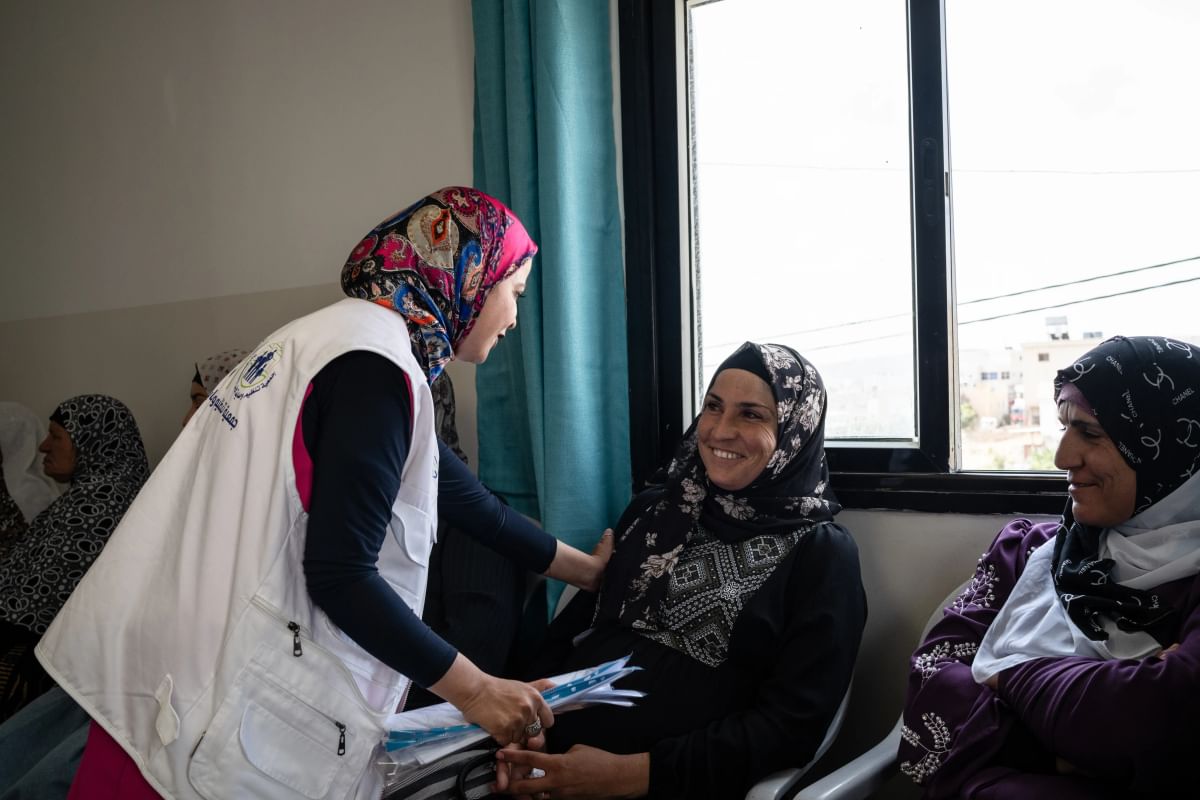
Inside, Palestinian Family Planning and Protection Association (PFPPA) staff welcomed mothers like Hiba for a day of free sexual and reproductive health services. Their vital work is designed to reach women in precisely these areas of the West Bank - isolated, targeted and overlooked.
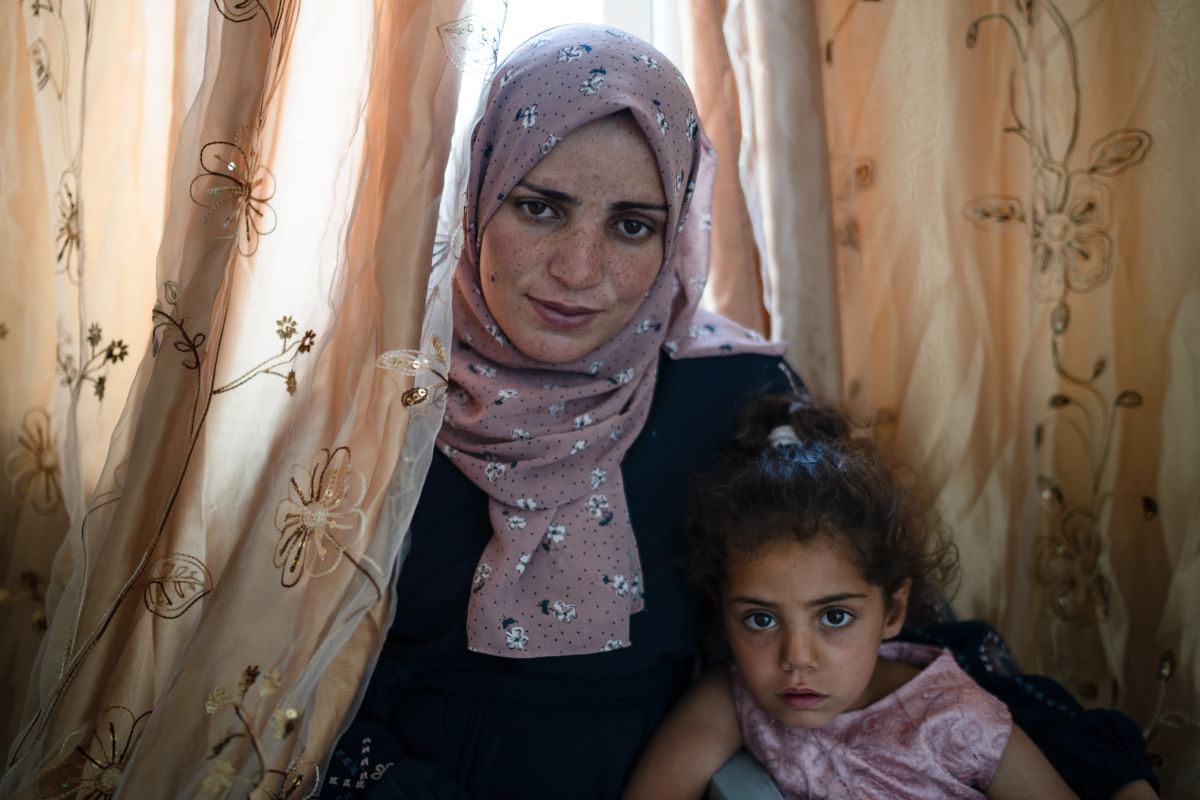
Hiba has experienced multiple miscarriages, a reality that weighs heavily on her as she seeks care. “I came today not just to check on my pregnancy,” Hiba said, “but to show that we need more doctors and health services to meet us halfway when we can’t get to them.”
The devastating destruction of health facilities by Israeli forces, severe restrictions on movement, and raids and attacks on communities in the West Bank mean Palestinians are facing increasing challenges and risks when it comes to seeking health care. In May 2025, UNFPA estimated 14,800 pregnant women in the West Bank faced limited or no care, and over 1,600 births were expected to take place in unsafe conditions.
Nearly 1,000 Israeli checkpoints, gates, and roadblocks have made access to essential services nearly impossible.
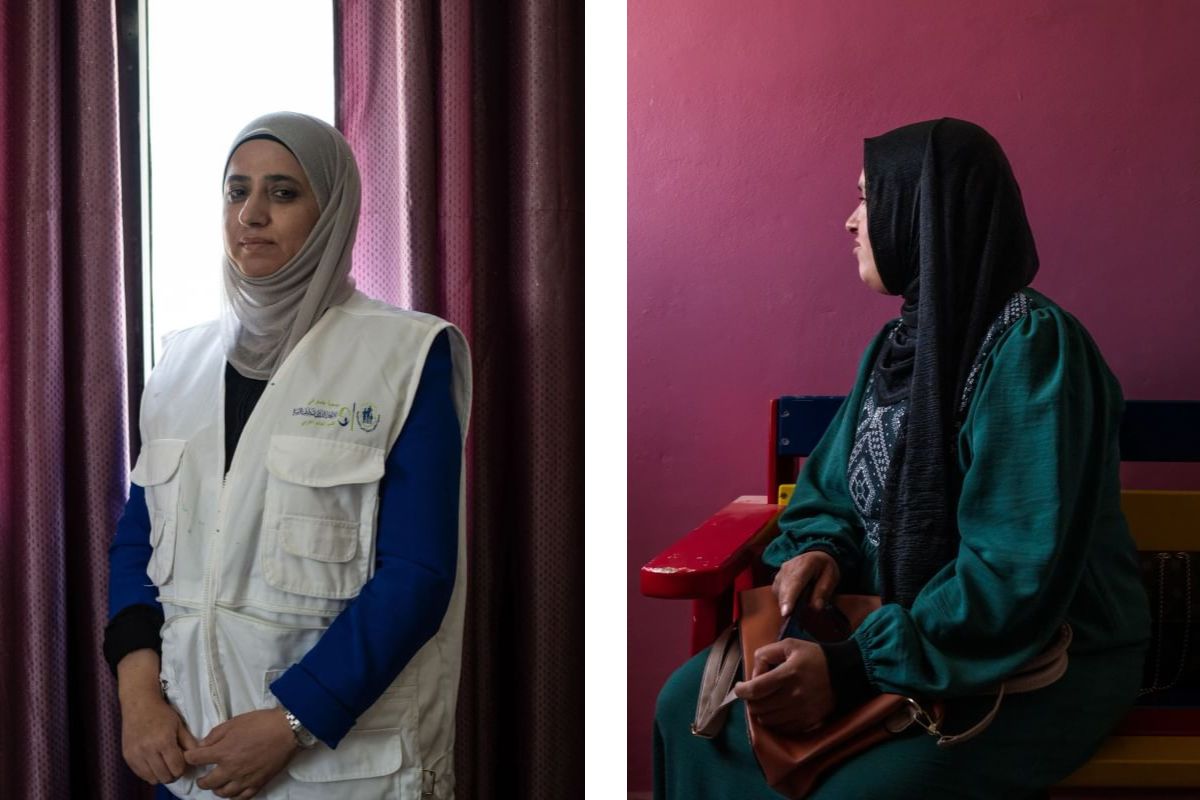
“The army barely allows us to breathe”, says Haneen, (pictured below right) a mother of three who has walked for two hours to reach a clinic.
Hiba knows all too well that these barriers don’t just cost time, they cost lives:
“A few months ago, I lost my baby son at four months old…He was the boy I always prayed for,” she said. “But we had no clinic here, and no way to get to one in time. I waited for hours for a ride. He didn’t make it.”
In the face of escalating conflict and ever-tightening restrictions on movement, in 2024 PFPPA took their life-saving services to those women cut off from care. Travelling to some of the most hard-to-reach areas, their mobile clinics contain laboratory equipment, ultrasound devices and medication which would otherwise be inaccessible or unaffordable for most of the women in these communities.
“Reaching remote villages is never easy - blocked roads, settler threats, or sudden orders to turn back are constant, but we try,” said Dr. Ghada, (pictured above left) a gynaecologist and obstetrician for 15 years. “Every woman deserves care.”
Shayma, 22, visited a mobile clinic for a check up as her two children waited nearby:
“We’re under serious economic pressure since this war started. Unemployment is up, and movement restrictions make everything harder.”
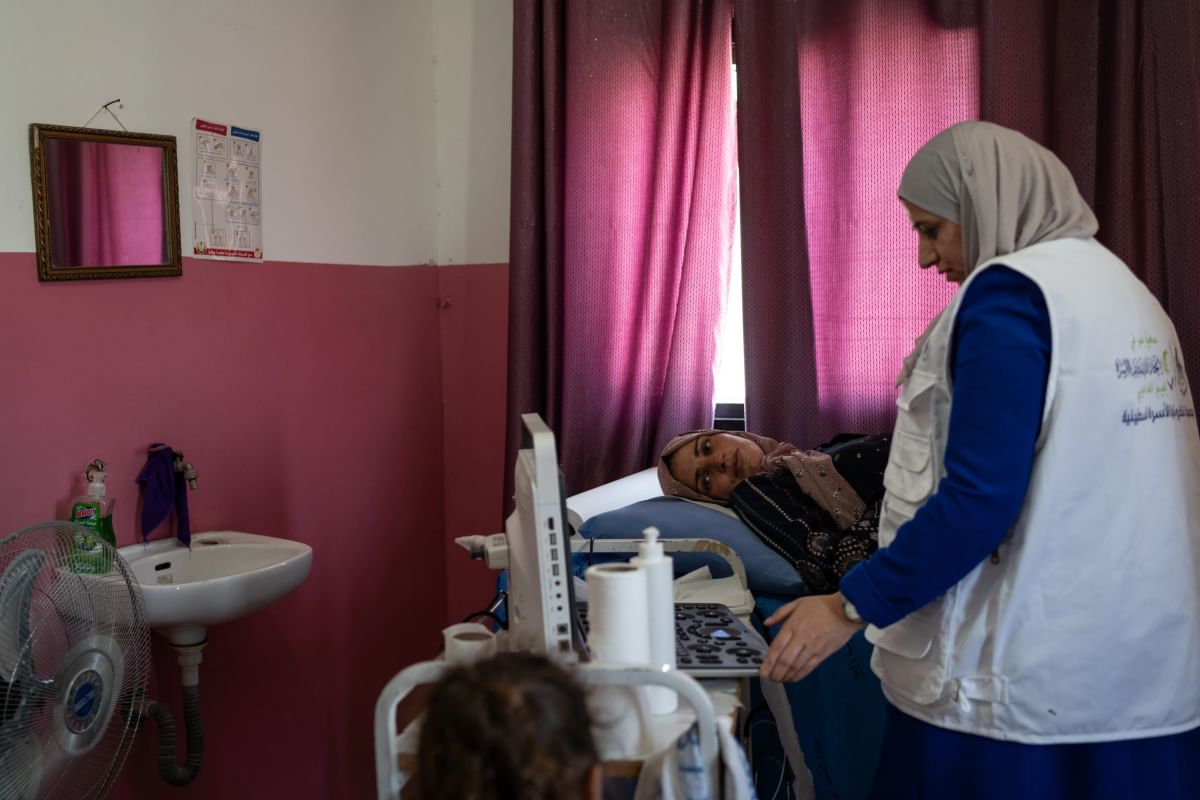
Alongside maternity care, the clinics also provide wider sexual and reproductive health care, including care and advice around contraception and support related to gender-based violence. Kifah, (pictured below) 37, mother of six and an Islamic Studies graduate, knows that knowledge is power - even in crisis.
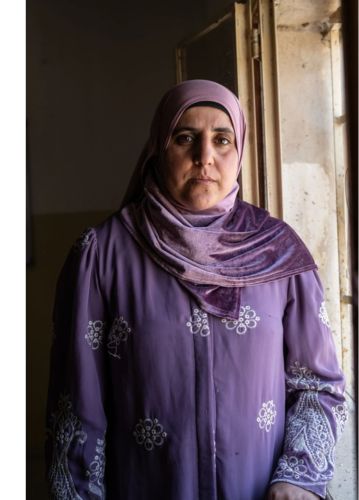
“I’ve been putting myself last,” she said, describing months of delays in seeking gynaecological care. Checkpoints, settler threats, and fear have kept her confined. “Family planning is part of self-care. It’s a right, and it’s responsible, especially now.”
She shares this message with other women in her village, telling them that caring for themselves and their reproductive health is an act of strength.
Aya, 23, is a mother of two who remembers a neighbour forced to give birth at a checkpoint. She hopes to get an IUD to avoid an unintended pregnancy. “I can’t bring another child into this and tell them I can’t even afford a toy,” she said.
So far, these mobile clinics have provided over 60,000 medical services to more than 10,000 people that may otherwise have received no sexual and reproductive healthcare. As well as the clinics, with funding from the Japan Supplementary Budget (JSB), PFPPA have also run ‘preparing for birth’ sessions, midwifery home visits, and community-based awareness sessions around safe childbirth and reproductive health.
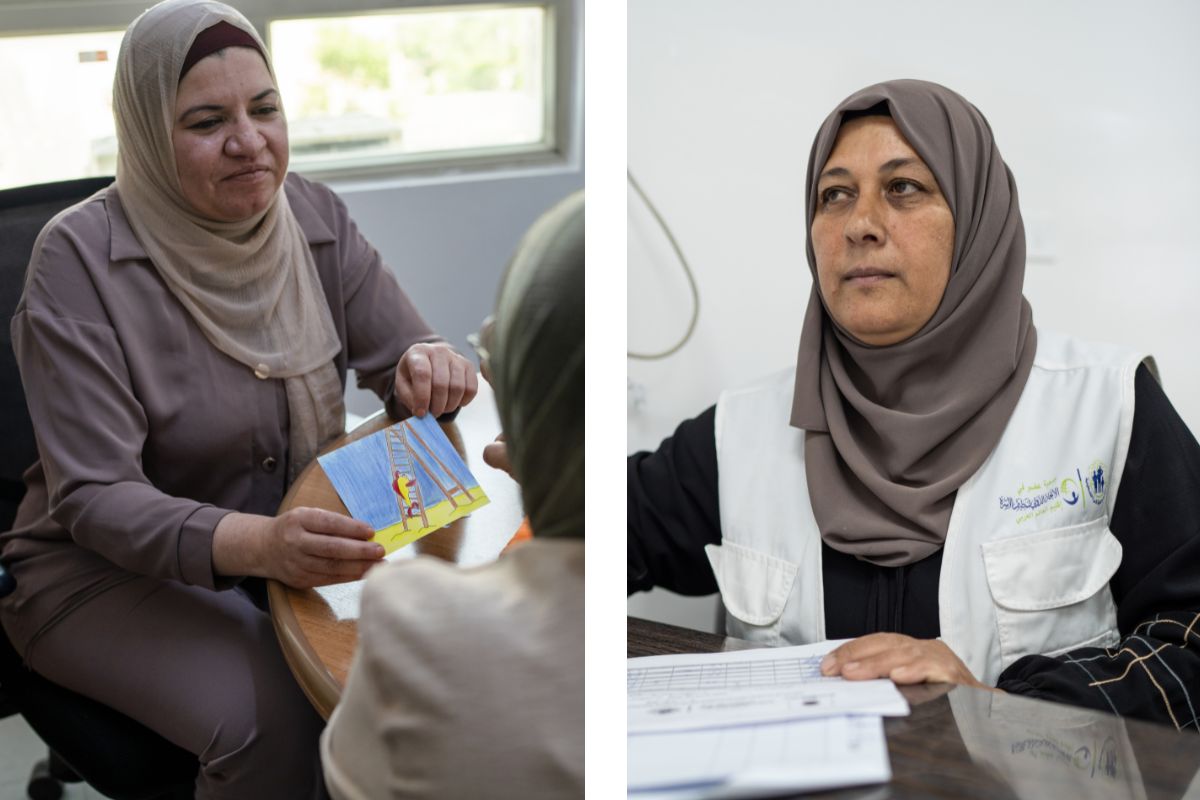
Maysa Shalaldeh (pictured above left) is an experienced psycho-social worker and the Gender Focal Person in PFPPA, delivering gender-based violence related services for women. Born and raised in Hebron, she is clear about the layered challenges Palestinian women face: legal discrimination, social stigma, economic pressure, and military occupation:
“We can’t talk about rights with someone who’s struggling to afford food,” she says. “We meet people where they are. In some places, we start with nutrition or hygiene. In others, we talk about safety or mobility. Then, when there’s trust, we talk about family planning or empowerment. They are survivors. They are women with strength and dignity, navigating unimaginable hardship.”
Determined,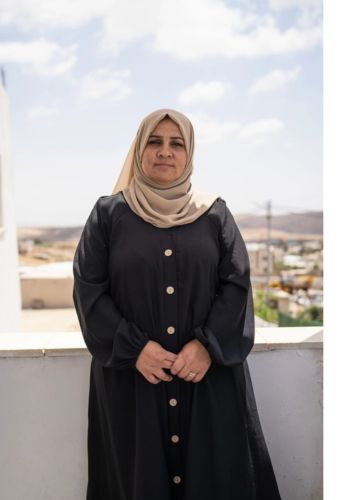 courageous women like Maysa are the cornerstone of PFPPA’s work - from social workers and pharmacists to doctors and health workers.
A nurse with nearly 20 years of experience, Lubna (pictured above right) works at the mobile clinics, helping women feel safe and heard, and guiding them through their options:
“I keep learning about reproductive health because I want to empower others. We live in a society where women always put themselves last. I try to show them: we put you first, because you matter.”
Shaima, 27, a pharmacist with PFPPA, lights up when talking about her work. “This is the most meaningful part of my job - reaching women we’d never reach otherwise,” she said. In remote villages, she distributes medication and offers advice, but also something less tangible: trust.
“I feel proud every time a woman asks me a question she was afraid to ask before,” she says. “They need more than medicine - they need someone who listens.”
The work of these women has inspired others to learn and share their knowledge within their communities. Aida, (pictured above) is a mother of six and a community leader. After joining training sessions with PFPPA in reproductive health, she now volunteers with her local women’s association to share her knowledge:
“We need each other more than ever. These pressures keep us from making the decisions we need. We have to lift each other up.”
For women like Hiba, still reeling from the loss of her young baby, and facing the terrifying prospect of giving birth again without medical care, PFPPA’s support is a lifeline. And, along with the hundreds of women who walk through the doors of their mobile clinics, she demands a safer future for herself and her family:
“I have to believe there’s a better world waiting. For my girls. For this baby. Freedom is not worrying about checkpoints. It’s giving birth safely. It’s walking to a clinic without fear. Family planning is wise. It’s power. We women need to be heard. We know what’s best for our bodies and our families.”
Her words echo the determination of thousands of Palestinian women - patients, doctors, midwives, psychologists, and volunteers - who continue to protect one another’s health and dignity despite the barriers around them. Their work is not only care - it is resistance, resilience, and hope.
This work was made possible thanks to generous funding from the Government of Japan.
when
country
Palestine
region
Arab World
Subject
Humanitarian
Related Member Association
Palestinian Family Planning and Protection Association (PFPPA)
