


Latest press releases
A selection of stories from across the Federation

Türkiye
Media center
PRESS RELEASE: Türkiye Must Drop All Charges Against LGBTQI+ Activists
Repro Uncensored and the International Planned Parenthood Federation condemn the coordinated raids, detentions and digital censorship targeting LGBTQI+ organizations, activists and community spaces.
For media enquiries
Telephone:
+66 62868 3089Media Inbox:
media@ippf.orgMost Popular This Week
Türkiye

Media center
|
PRESS RELEASE: Türkiye Must Drop All Charges Against LGBTQI+ Activists
For immediate release
Türkiye

Media center
|
Press Release: Amid Crackdown on Pride in Türkiye, More Than 120 LGBTQI+ and Feminist Social Media Accounts Suspended
Brussels / Istanbul, 13 July 2026 - Amid an escalating crackdown on LGBTQI+ communities in Türkiye, Repro Uncensored, the International Planned Par

Media center
|
May 17, IDAHOBIT: Global day celebrates sexual and gender diversity at the heart of democracy
FOR IMMEDIATE RELEASEILGA World x International Planned Parenthood Federation (IPPF)

Media center
|
RightsCon Cancelled as Global Attacks on SRHR and Digital Freedoms Intensify
FOR IMMEDIATE RELEASERepro Uncensored x International Planned Parenthood Federation (IPPF)
East and South East Asia and Oceania

Media center
|
PRESS RELEASE: Groundbreaking new report outlines the impact of Australia’s investment in SRHR
28 April 2026, Narrm (Melbourne) - Guttmacher has today released its latest report '‘Just the Numbers Australia 2026’’, providing vital analysis on the impact
South Asia, Africa

Media center
|
IPPF condemns the UK’s latest ODA budget allocations and warn of life-threatening consequences for millions
20 March 2026 - The International Planned Parenthood Federation (IPPF) strongly condemns the UK Government’s

Media center
|
US Government Expands Global Gag Rule in a Major Escalation of Regressive Foreign Policy
23 January 2026 - The International Planned Parenthood Federation

Media center
|
Nearly 9 Million Denied Essential Reproductive Healthcare as Trump-Era Funding Cuts Force Global Clinic Closures, IPPF Reports
17 December 2025 - New data reveals the Trump Administration's funding cuts have forced 34 of International Planned Parenthood Federation (IPPF) Member Associa
media center
| 28 April 2026
PRESS RELEASE: Groundbreaking new report outlines the impact of Australia’s investment in SRHR
28 April 2026, Narrm (Melbourne) - Guttmacher has today released its latest report '‘Just the Numbers Australia 2026’’, providing vital analysis on the impact of Australia’s foreign aid contributions for sexual and reproductive health and rights (SRHR) programming in the Asia and Pacific Region. Australia has established itself as an incredibly important partner in advancing SRHR, particularly across Asia and the Pacific region, where it directs nearly all of its bilateral family planning support. SRHR accounted for approximately 2.8% of Australia’s official development assistance in 2023.Australia contributed an estimated AUD $49.2 million in 2024 for family planning. This investment enabled roughly 2.8 million women and couples globally to access modern contraception, leading to 830,000 unintended pregnancies averted. Yet significant gaps remain in the region, with 27.7 million women estimated to have an unmet demand for modern contraception. The research found that even modest investments at the country level would have a profound impact. For example, an additional AUD $1 million per year for the Philippines would serve an extra 56,000 contraceptive users, reducing unmet demand by 5%. Elizabeth Sully, Director of International Research at the Guttmacher Institute highlighted: “Australia's foreign investments in family planning are delivering measurable, life-saving results, but with global sexual and reproductive health financing in crisis, the stakes have never been higher. Australia has a real opportunity to deepen its leadership on gender equality and reproductive choice--and the data shows exactly what sustained investment can achieve: preventing unintended pregnancies, unsafe abortions, and maternal deaths. These aren't abstract numbers. They are real people who depend on these services.”Maria Antoineta Alcade, IPPF’s Director General, reflected: “We know that contraceptive services provide a significant return on investment - but most importantly, it's what women want and ask for. The question is not whether we can afford to invest in family planning - it’s whether we can afford not to. Our responsibility, as global leaders and funders, is to listen, and to act on what women need to prosper and thrive. These investments are not abstract, they prevent unintended pregnancies, unsafe abortions and maternal deaths, and give women the ability to have control over their own futures.”ENDS For further information or to arrange media interviews with our spokespeople from IPPF or Guttmacher, please contact Nerida Williams on newilliams@ippf.org or +66 62868 3089 (WhatsApp). NotesTo download the full report, please visit this link: https://www.guttmacher.org/2026/04/just-numbers-australia-global-srhr-investment-impact-2024 Australia is an established development partner in SRHR, contributing a portion of its official development assistance to expand access to essential services across low- and middle-income countries (LMICs). These investments have delivered measurable, life-saving results.In 2024, Australia’s family planning funding—estimated at AUD$49.2 million—supported access to modern contraception for 2.8 million women and couples globally, resulting in:830,000 unintended pregnancies averted303,000 unsafe abortions avoided259,000 unplanned births preventedApproximately 588 maternal deaths prevented
media_center
| 28 April 2026
PRESS RELEASE: Groundbreaking new report outlines the impact of Australia’s investment in SRHR
28 April 2026, Narrm (Melbourne) - Guttmacher has today released its latest report '‘Just the Numbers Australia 2026’’, providing vital analysis on the impact of Australia’s foreign aid contributions for sexual and reproductive health and rights (SRHR) programming in the Asia and Pacific Region. Australia has established itself as an incredibly important partner in advancing SRHR, particularly across Asia and the Pacific region, where it directs nearly all of its bilateral family planning support. SRHR accounted for approximately 2.8% of Australia’s official development assistance in 2023.Australia contributed an estimated AUD $49.2 million in 2024 for family planning. This investment enabled roughly 2.8 million women and couples globally to access modern contraception, leading to 830,000 unintended pregnancies averted. Yet significant gaps remain in the region, with 27.7 million women estimated to have an unmet demand for modern contraception. The research found that even modest investments at the country level would have a profound impact. For example, an additional AUD $1 million per year for the Philippines would serve an extra 56,000 contraceptive users, reducing unmet demand by 5%. Elizabeth Sully, Director of International Research at the Guttmacher Institute highlighted: “Australia's foreign investments in family planning are delivering measurable, life-saving results, but with global sexual and reproductive health financing in crisis, the stakes have never been higher. Australia has a real opportunity to deepen its leadership on gender equality and reproductive choice--and the data shows exactly what sustained investment can achieve: preventing unintended pregnancies, unsafe abortions, and maternal deaths. These aren't abstract numbers. They are real people who depend on these services.”Maria Antoineta Alcade, IPPF’s Director General, reflected: “We know that contraceptive services provide a significant return on investment - but most importantly, it's what women want and ask for. The question is not whether we can afford to invest in family planning - it’s whether we can afford not to. Our responsibility, as global leaders and funders, is to listen, and to act on what women need to prosper and thrive. These investments are not abstract, they prevent unintended pregnancies, unsafe abortions and maternal deaths, and give women the ability to have control over their own futures.”ENDS For further information or to arrange media interviews with our spokespeople from IPPF or Guttmacher, please contact Nerida Williams on newilliams@ippf.org or +66 62868 3089 (WhatsApp). NotesTo download the full report, please visit this link: https://www.guttmacher.org/2026/04/just-numbers-australia-global-srhr-investment-impact-2024 Australia is an established development partner in SRHR, contributing a portion of its official development assistance to expand access to essential services across low- and middle-income countries (LMICs). These investments have delivered measurable, life-saving results.In 2024, Australia’s family planning funding—estimated at AUD$49.2 million—supported access to modern contraception for 2.8 million women and couples globally, resulting in:830,000 unintended pregnancies averted303,000 unsafe abortions avoided259,000 unplanned births preventedApproximately 588 maternal deaths prevented

media center
| 16 December 2025
Nearly 9 Million Denied Essential Reproductive Healthcare as Trump-Era Funding Cuts Force Global Clinic Closures, IPPF Reports
17 December 2025 - New data reveals the Trump Administration's funding cuts have forced 34 of International Planned Parenthood Federation (IPPF) Member Associations (MAs) to terminate staff, representing 969 jobs across MAs globally. Nearly 9 million clients worldwide are estimated to lose access to contraception, HIV testing, and clinical care for survivors of gender-based violence. This is in large part due to 1,394 health sites that have been forced to close, or not open as planned, many in remote or conflict-affected areas where our partners were the only provider of sexual and reproductive healthcare. IPPF's second global survey, conducted in July 2025 with 86 organizations responding across all regions, documents how U.S. funding withdrawals and policy decisions continue to impede access to sexual and reproductive health information and care in contexts where it’s critically needed. Across the Federation, $87.2 million in funding has been lost from 2025 through to 2029 due to cancelled contracts and reduced budgets. The impacts go far beyond dollar figures; they represent the collapse of health infrastructure that communities have relied on for decades, and a radical shift towards conservative ideologies that deliberately block human rights.By the Numbers: Africa and the Arab World Bear the BruntIPPF MAs in the Africa Region have lost $26.0 million in funding, and those in the Arab World Region have lost $9.4 million, accounting for the majority of service disruptions globally.1,175 health sites have closed (or not been able to open) and 396 staff members lost their jobs in the Africa Region alone, affecting 5.9 million clients.2.6 million clients are set to lose access to sexual and reproductive healthcare in IPPF’s Arab World Region."The Trump Administration's funding cuts have gutted local health systems that took decades to build," says Alvaro Bermejo, IPPF’s Director-General. "We're talking about clinics in remote areas, conflict zones, and places where IPPF MAs are often the only providers of contraception and HIV services. When we close, there's nowhere else for people to go."Commodity Shortages Compound Crisis28 MAs reported declining stock levels of sexual and reproductive health commodities since January 2025, with contraceptive commodities the most impacted. Five MAs in Uganda, Mozambique, Nigeria, Tanzania, and Bangladesh report a combined 2-year commodity funding gap of $13 million, a crisis made worse by the Trump Administration holding $9.7 million worth of U.S.-funded contraceptives in Belgium rather than delivering them to their intended recipients. IPPF and other organizations have offered to redistribute these supplies at no cost to the U.S. government, but all offers have been rejected. The contraceptives represent 28% of Tanzania's total annual need, and many products risk becoming ineligible for import as the U.S. government holds them in storage.Beyond contraception, MAs face shortages in STI testing and treatment commodities, gynecology supplies, and clinical support resources for sexual and gender-based violence survivors.Financial Sustainability at RiskOf the 77 MAs who responded, 33 reported their financial sustainability has been impacted, while 27 reported reduced capacity to engage in partnerships, movement building, and networking with other civil society organizations.The ripple effects extend beyond IPPF. In 2025, several MAs have observed national civil society and NGO partners closing down or reducing staff in their countries, with reduced sexual and reproductive health service provisions reported nationwide.IPPF's ResponseIPPF continues to provide emergency support through its Harm Mitigation Fund, with a second round of grants to be distributed to the most affected MAs. The Federation is also working to address commodity gaps and support organizations facing the most severe service disruptions."We will not allow these radical macho-political agendas to determine who can and cannot access healthcare," says Alvaro. "These funding cuts have clear and immediate consequences. They mean women giving birth without skilled care, people living with HIV unable to access testing and treatment to stay alive, and survivors of violence being turned away from the only clinic in their area."ENDSFor more information or to interview one of our staff, please contact media@ippf.org or +66628683089.
media_center
| 17 December 2025
Nearly 9 Million Denied Essential Reproductive Healthcare as Trump-Era Funding Cuts Force Global Clinic Closures, IPPF Reports
17 December 2025 - New data reveals the Trump Administration's funding cuts have forced 34 of International Planned Parenthood Federation (IPPF) Member Associations (MAs) to terminate staff, representing 969 jobs across MAs globally. Nearly 9 million clients worldwide are estimated to lose access to contraception, HIV testing, and clinical care for survivors of gender-based violence. This is in large part due to 1,394 health sites that have been forced to close, or not open as planned, many in remote or conflict-affected areas where our partners were the only provider of sexual and reproductive healthcare. IPPF's second global survey, conducted in July 2025 with 86 organizations responding across all regions, documents how U.S. funding withdrawals and policy decisions continue to impede access to sexual and reproductive health information and care in contexts where it’s critically needed. Across the Federation, $87.2 million in funding has been lost from 2025 through to 2029 due to cancelled contracts and reduced budgets. The impacts go far beyond dollar figures; they represent the collapse of health infrastructure that communities have relied on for decades, and a radical shift towards conservative ideologies that deliberately block human rights.By the Numbers: Africa and the Arab World Bear the BruntIPPF MAs in the Africa Region have lost $26.0 million in funding, and those in the Arab World Region have lost $9.4 million, accounting for the majority of service disruptions globally.1,175 health sites have closed (or not been able to open) and 396 staff members lost their jobs in the Africa Region alone, affecting 5.9 million clients.2.6 million clients are set to lose access to sexual and reproductive healthcare in IPPF’s Arab World Region."The Trump Administration's funding cuts have gutted local health systems that took decades to build," says Alvaro Bermejo, IPPF’s Director-General. "We're talking about clinics in remote areas, conflict zones, and places where IPPF MAs are often the only providers of contraception and HIV services. When we close, there's nowhere else for people to go."Commodity Shortages Compound Crisis28 MAs reported declining stock levels of sexual and reproductive health commodities since January 2025, with contraceptive commodities the most impacted. Five MAs in Uganda, Mozambique, Nigeria, Tanzania, and Bangladesh report a combined 2-year commodity funding gap of $13 million, a crisis made worse by the Trump Administration holding $9.7 million worth of U.S.-funded contraceptives in Belgium rather than delivering them to their intended recipients. IPPF and other organizations have offered to redistribute these supplies at no cost to the U.S. government, but all offers have been rejected. The contraceptives represent 28% of Tanzania's total annual need, and many products risk becoming ineligible for import as the U.S. government holds them in storage.Beyond contraception, MAs face shortages in STI testing and treatment commodities, gynecology supplies, and clinical support resources for sexual and gender-based violence survivors.Financial Sustainability at RiskOf the 77 MAs who responded, 33 reported their financial sustainability has been impacted, while 27 reported reduced capacity to engage in partnerships, movement building, and networking with other civil society organizations.The ripple effects extend beyond IPPF. In 2025, several MAs have observed national civil society and NGO partners closing down or reducing staff in their countries, with reduced sexual and reproductive health service provisions reported nationwide.IPPF's ResponseIPPF continues to provide emergency support through its Harm Mitigation Fund, with a second round of grants to be distributed to the most affected MAs. The Federation is also working to address commodity gaps and support organizations facing the most severe service disruptions."We will not allow these radical macho-political agendas to determine who can and cannot access healthcare," says Alvaro. "These funding cuts have clear and immediate consequences. They mean women giving birth without skilled care, people living with HIV unable to access testing and treatment to stay alive, and survivors of violence being turned away from the only clinic in their area."ENDSFor more information or to interview one of our staff, please contact media@ippf.org or +66628683089.

media center
| 16 October 2025
Almost US$10 mil in US-Funded Contraceptives May Go to Waste in Belgium as Trump Administration Keeps Them In Holding
16 October 2025 - The International Planned Parenthood Federation (IPPF) has been tracking the developing situation in Brussels, where the Trump administration is holding over $9.7 million of U.S.-funded contraceptives set to be destroyed. In August, IPPF shared that 77 percent of these resources were destined for five countries in the African region, with 1,031,400 injectable contraceptives and 365,100 implants earmarked for Tanzania alone. These countries have specific rules for pharmaceutical imports, and as the U.S. government holds these resources, the risk of them becoming ineligible for import becomes imminent and critical. In addition to the cruel and ideological reasons for withholding these contraceptives, the U.S. government is exploiting import regulations to:Skirt around pressure from the Belgian government that would make incinerating these products in Belgium (Flanders) illegal while they are still eligible for import.Enact their initial plan to ensure these life-saving resources do not reach the communities who need them most by withholding them until they become ineligible for importation, and eligible for legal incineration.Use the import thresholds as a loophole to legally incinerate resources before their expiration dates in 2027 to 2029.“Destination countries, including Tanzania (the main recipient), as well as others such as Malawi, Bangladesh, DR Congo, Kenya, apply importation rules that limit entry to medicines with a specific percentage of remaining shelf life. In Tanzania, for example, products with an original shelf life of more than 24 months cannot be imported if less than 60% of the total shelf life remains,” says Marcel Van Valen, Head of Supply Chain at IPPF. “Unless a practical solution is found urgently, the U.S. government may exploit this gap, allowing the products to sit until they technically fall below import thresholds and then justifying their destruction under the pretext of regulatory compliance.”IPPF made continuous efforts to take ownership of these contraceptives and distribute them at no cost to the U.S. government, only to have offers denied. “There is no doubt we could have gone and collected the products in Belgium, processed them in the Netherlands and re-distributed them to where they were needed and/or destined for,” added Van Valen. “Since the start of the negotiations until this day, IPPF is in the position to release a budget (estimated to be max $1.5 million) to support the redistribution.”Instead, the Trump administration has chosen to pursue destroying these resources, a decision that will create catastrophe for women and girls in Africa. By Tanzania’s standards, some products are below threshold already and many others come close to it; the country would have to grant an exemption waiver to allow their importation at this stage.“Even if we were given the opportunity to push for a waiver to receive the contraceptives, because the Tanzanian government is restrictive around reproductive rights, we don’t know that such an exemption would be granted,” says Dr. Bakari Omary, Project Coordinator at Umati, IPPF's Member Association in Tanzania. “It’s urgent that we receive these resources before they become ineligible for import. The contraceptives being held represent 28% of the country’s total annual need, and not having them is already impacting clients’ reproductive health and family planning freedoms.”“African women have long led the fight for reproductive rights and freedoms. The deliberate destruction of contraceptives for the sake of a political agenda is an attempt to strip them of the very freedoms for which they’ve been global advocates,” says Mallah Tabot, SRHR Lead at IPPF Africa. “The Trump administration’s use of import rules to push the blame onto African countries is a waste of millions of dollars, a crisis for human rights, and a betrayal of women’s freedom globally.”Such a critical moment demands collective action. We call on the U.S. government to immediately distribute these resources to their destination countries, and on the European Union and European countries to champion SRHRJ by advocating for the release of the contraceptives. Just as the Belgian government has done in enforcing an incineration ban on these goods, leaders of the European Union have an opportunity to demonstrate their values in action. We call on the E.U. to rally Member States, negotiate with the U.S., and explore all legal and diplomatic avenues to release these contraceptives from their hold and ensure they reach their destination countries.For more information or to interview one of our staff, please contact media@ippf.org or +66628683089.
media_center
| 16 October 2025
Almost US$10 mil in US-Funded Contraceptives May Go to Waste in Belgium as Trump Administration Keeps Them In Holding
16 October 2025 - The International Planned Parenthood Federation (IPPF) has been tracking the developing situation in Brussels, where the Trump administration is holding over $9.7 million of U.S.-funded contraceptives set to be destroyed. In August, IPPF shared that 77 percent of these resources were destined for five countries in the African region, with 1,031,400 injectable contraceptives and 365,100 implants earmarked for Tanzania alone. These countries have specific rules for pharmaceutical imports, and as the U.S. government holds these resources, the risk of them becoming ineligible for import becomes imminent and critical. In addition to the cruel and ideological reasons for withholding these contraceptives, the U.S. government is exploiting import regulations to:Skirt around pressure from the Belgian government that would make incinerating these products in Belgium (Flanders) illegal while they are still eligible for import.Enact their initial plan to ensure these life-saving resources do not reach the communities who need them most by withholding them until they become ineligible for importation, and eligible for legal incineration.Use the import thresholds as a loophole to legally incinerate resources before their expiration dates in 2027 to 2029.“Destination countries, including Tanzania (the main recipient), as well as others such as Malawi, Bangladesh, DR Congo, Kenya, apply importation rules that limit entry to medicines with a specific percentage of remaining shelf life. In Tanzania, for example, products with an original shelf life of more than 24 months cannot be imported if less than 60% of the total shelf life remains,” says Marcel Van Valen, Head of Supply Chain at IPPF. “Unless a practical solution is found urgently, the U.S. government may exploit this gap, allowing the products to sit until they technically fall below import thresholds and then justifying their destruction under the pretext of regulatory compliance.”IPPF made continuous efforts to take ownership of these contraceptives and distribute them at no cost to the U.S. government, only to have offers denied. “There is no doubt we could have gone and collected the products in Belgium, processed them in the Netherlands and re-distributed them to where they were needed and/or destined for,” added Van Valen. “Since the start of the negotiations until this day, IPPF is in the position to release a budget (estimated to be max $1.5 million) to support the redistribution.”Instead, the Trump administration has chosen to pursue destroying these resources, a decision that will create catastrophe for women and girls in Africa. By Tanzania’s standards, some products are below threshold already and many others come close to it; the country would have to grant an exemption waiver to allow their importation at this stage.“Even if we were given the opportunity to push for a waiver to receive the contraceptives, because the Tanzanian government is restrictive around reproductive rights, we don’t know that such an exemption would be granted,” says Dr. Bakari Omary, Project Coordinator at Umati, IPPF's Member Association in Tanzania. “It’s urgent that we receive these resources before they become ineligible for import. The contraceptives being held represent 28% of the country’s total annual need, and not having them is already impacting clients’ reproductive health and family planning freedoms.”“African women have long led the fight for reproductive rights and freedoms. The deliberate destruction of contraceptives for the sake of a political agenda is an attempt to strip them of the very freedoms for which they’ve been global advocates,” says Mallah Tabot, SRHR Lead at IPPF Africa. “The Trump administration’s use of import rules to push the blame onto African countries is a waste of millions of dollars, a crisis for human rights, and a betrayal of women’s freedom globally.”Such a critical moment demands collective action. We call on the U.S. government to immediately distribute these resources to their destination countries, and on the European Union and European countries to champion SRHRJ by advocating for the release of the contraceptives. Just as the Belgian government has done in enforcing an incineration ban on these goods, leaders of the European Union have an opportunity to demonstrate their values in action. We call on the E.U. to rally Member States, negotiate with the U.S., and explore all legal and diplomatic avenues to release these contraceptives from their hold and ensure they reach their destination countries.For more information or to interview one of our staff, please contact media@ippf.org or +66628683089.

media center
| 05 August 2025
Over 1.4 Million Women and Girls in Africa Left Without Contraception as U.S. Orders Destruction of Global Supply
6 August 2025 - The International Planned Parenthood Federation (IPPF) has learned that over $9.7 million worth of US-funded contraceptives are now set to be incinerated in France. Seventy-seven percent of these essential supplies were earmarked for five countries in the Africa Region - including the Democratic Republic of the Congo (DRC), Kenya, Tanzania, Zambia, and Mali — many of which are already facing severe humanitarian crises. The incineration of these contraceptives will deny more than 1.4 million women and girls access to life-saving care. Rather than reaching the communities who need them most, these essential medical supplies - many of which don’t expire until 2027 to 2029 - are being needlessly and egregiously destroyed.IPPF Member Associations in the affected countries were due to receive a share of these contraceptive stocks. Instead, they are now facing a sharp decline in supply following the decision to incinerate them. More than 40% of the total value of the contraceptive stockpiled in Brussels was allocated for shipment to Tanzania alone. Dr Bakari Omary, Project Coordinator at UMATI, IPPF’s Member Association in Tanzania, said: “We are facing a major challenge. The impact of the USAID funding cuts has already significantly affected the provision of sexual and reproductive health services in Tanzania - leading to a shortage of contraceptive commodities, especially implants. This shortage has directly impacted clients' choices regarding family planning uptake.”This development adds a new layer of outrage to what is already a cruel political decision. These contraceptives were already manufactured, packaged, and ready for distribution. IPPF offered to take them for redistribution at no cost to the US taxpayer, but this offer was declined. The actions of the U.S. administration make it clear that politics trump economics, given the additional costs necessary for transportation, storage, and incineration of these products. “This decision to destroy ready-to-use commodities is appalling and extremely wasteful. These life-saving medical supplies were destined to countries where access to reproductive care is already limited, and in some cases, part of a broader humanitarian response, such as in the DRC. The choice to incinerate them is unjustifiable and undermines efforts to protect the health and rights of women and girls,” said Marie-Evelyne Petrus-Barry, Africa Regional Director of IPPF.IPPF's local partners in Africa will now face increased challenges to deliver essential and life-saving care. According to RHSC, the loss of these supplies is projected to result in 362,000 unintended pregnancies and 110,000 unsafe abortions: Tanzania: 1,031,400 injectable contraceptives and 365,100 implants will not be distributed. These products represent over 50% of USAID annual support to Tanzania's health system and a terrifying 28% of the total annual need of the country.Mali: 1,100,880 oral contraceptives and 95,800 implants will be denied, 24% of Mali’s annual need.Zambia: 48,400 implants and 295,000 injectable contraceptives will be denied to women.Kenya: 108,000 women will not have access to contraceptive implants, 13.5% of its annual need. Nelly Munyasia, Executive Director for the Reproductive Health Network in Kenya (IPPF Member Association): “In Kenya, the effects of US funding disruptions are already being felt. The funding freeze has caused stockouts of contraceptives, leaving facilities with less than five months' supply instead of the required 15 months; reduced capacity building for health workers; disrupted digital logistics and health information systems, and caused a 46% funding gap in Kenya’s national family planning program. These systemic setbacks come at a time when unmet need for contraception remains high. Nearly 1 in 5 girls aged 15–19 is already pregnant or has given birth. Unsafe abortions remain among the five leading causes of maternal deaths in Kenya.” Sarah Durocher, President of Le Planning familial (IPPF’s French Member Association): “We call on the French government to take responsibility and act urgently to prevent the destruction of USAID-funded contraceptives. It is unacceptable that France, a country that champions feminist diplomacy, has remained silent while others, like Belgium, have stepped in to engage with the US government. In the face of this injustice, solidarity with the people who were counting on these life-saving supplies is not optional: it is a moral imperative.”“We will not stay silent while essential care is destroyed by ideology”, continued Marie-Evelyne Petrus-Barry.Notes: IPPF’s local partners in the countries affected include Reproductive Health Network Kenya, Chama cha Uzazi na Malezi Bora Tanzania, Association Malienne pour la Protection et la Promotion de la Famille, Planned Parenthood Association of Zambia, Association Burkinabé pour le Bien-Etre Familial and the Association pour le Bien-Etre Familial/Naissances Désirables.For more information or to interview one of our staff, please contact media@ippf.org or +66628683089. About the International Planned Parenthood Federation IPPF is a global healthcare provider and a leading advocate of sexual and reproductive health and rights (SRHR) for all. Led by a courageous and determined group of women, IPPF was founded in 1952 at the Third International Planned Parenthood Conference. Today, we are a movement of 158 Member Associations and Collaborative Partners with a presence in over 153 countries. Our work is wide-ranging, and includes services for sexual health and well-being, contraception, abortion care, sexually transmitted infections and reproductive tract infections, HIV, obstetrics and gynecology, fertility support, sexual and gender-based violence, comprehensive sex education, and responding to humanitarian crises. We pride ourselves on being local through our members and global through our network. At the heart of our mission is the provision of – and advocacy in support of – integrated healthcare to anyone who needs it regardless of race, gender, sex, income, and, crucially, no matter how remote.
media_center
| 06 August 2025
Over 1.4 Million Women and Girls in Africa Left Without Contraception as U.S. Orders Destruction of Global Supply
6 August 2025 - The International Planned Parenthood Federation (IPPF) has learned that over $9.7 million worth of US-funded contraceptives are now set to be incinerated in France. Seventy-seven percent of these essential supplies were earmarked for five countries in the Africa Region - including the Democratic Republic of the Congo (DRC), Kenya, Tanzania, Zambia, and Mali — many of which are already facing severe humanitarian crises. The incineration of these contraceptives will deny more than 1.4 million women and girls access to life-saving care. Rather than reaching the communities who need them most, these essential medical supplies - many of which don’t expire until 2027 to 2029 - are being needlessly and egregiously destroyed.IPPF Member Associations in the affected countries were due to receive a share of these contraceptive stocks. Instead, they are now facing a sharp decline in supply following the decision to incinerate them. More than 40% of the total value of the contraceptive stockpiled in Brussels was allocated for shipment to Tanzania alone. Dr Bakari Omary, Project Coordinator at UMATI, IPPF’s Member Association in Tanzania, said: “We are facing a major challenge. The impact of the USAID funding cuts has already significantly affected the provision of sexual and reproductive health services in Tanzania - leading to a shortage of contraceptive commodities, especially implants. This shortage has directly impacted clients' choices regarding family planning uptake.”This development adds a new layer of outrage to what is already a cruel political decision. These contraceptives were already manufactured, packaged, and ready for distribution. IPPF offered to take them for redistribution at no cost to the US taxpayer, but this offer was declined. The actions of the U.S. administration make it clear that politics trump economics, given the additional costs necessary for transportation, storage, and incineration of these products. “This decision to destroy ready-to-use commodities is appalling and extremely wasteful. These life-saving medical supplies were destined to countries where access to reproductive care is already limited, and in some cases, part of a broader humanitarian response, such as in the DRC. The choice to incinerate them is unjustifiable and undermines efforts to protect the health and rights of women and girls,” said Marie-Evelyne Petrus-Barry, Africa Regional Director of IPPF.IPPF's local partners in Africa will now face increased challenges to deliver essential and life-saving care. According to RHSC, the loss of these supplies is projected to result in 362,000 unintended pregnancies and 110,000 unsafe abortions: Tanzania: 1,031,400 injectable contraceptives and 365,100 implants will not be distributed. These products represent over 50% of USAID annual support to Tanzania's health system and a terrifying 28% of the total annual need of the country.Mali: 1,100,880 oral contraceptives and 95,800 implants will be denied, 24% of Mali’s annual need.Zambia: 48,400 implants and 295,000 injectable contraceptives will be denied to women.Kenya: 108,000 women will not have access to contraceptive implants, 13.5% of its annual need. Nelly Munyasia, Executive Director for the Reproductive Health Network in Kenya (IPPF Member Association): “In Kenya, the effects of US funding disruptions are already being felt. The funding freeze has caused stockouts of contraceptives, leaving facilities with less than five months' supply instead of the required 15 months; reduced capacity building for health workers; disrupted digital logistics and health information systems, and caused a 46% funding gap in Kenya’s national family planning program. These systemic setbacks come at a time when unmet need for contraception remains high. Nearly 1 in 5 girls aged 15–19 is already pregnant or has given birth. Unsafe abortions remain among the five leading causes of maternal deaths in Kenya.” Sarah Durocher, President of Le Planning familial (IPPF’s French Member Association): “We call on the French government to take responsibility and act urgently to prevent the destruction of USAID-funded contraceptives. It is unacceptable that France, a country that champions feminist diplomacy, has remained silent while others, like Belgium, have stepped in to engage with the US government. In the face of this injustice, solidarity with the people who were counting on these life-saving supplies is not optional: it is a moral imperative.”“We will not stay silent while essential care is destroyed by ideology”, continued Marie-Evelyne Petrus-Barry.Notes: IPPF’s local partners in the countries affected include Reproductive Health Network Kenya, Chama cha Uzazi na Malezi Bora Tanzania, Association Malienne pour la Protection et la Promotion de la Famille, Planned Parenthood Association of Zambia, Association Burkinabé pour le Bien-Etre Familial and the Association pour le Bien-Etre Familial/Naissances Désirables.For more information or to interview one of our staff, please contact media@ippf.org or +66628683089. About the International Planned Parenthood Federation IPPF is a global healthcare provider and a leading advocate of sexual and reproductive health and rights (SRHR) for all. Led by a courageous and determined group of women, IPPF was founded in 1952 at the Third International Planned Parenthood Conference. Today, we are a movement of 158 Member Associations and Collaborative Partners with a presence in over 153 countries. Our work is wide-ranging, and includes services for sexual health and well-being, contraception, abortion care, sexually transmitted infections and reproductive tract infections, HIV, obstetrics and gynecology, fertility support, sexual and gender-based violence, comprehensive sex education, and responding to humanitarian crises. We pride ourselves on being local through our members and global through our network. At the heart of our mission is the provision of – and advocacy in support of – integrated healthcare to anyone who needs it regardless of race, gender, sex, income, and, crucially, no matter how remote.

media center
| 17 April 2025
Rutgers triumphs in landmark court case against lies, online hate and disinformation
17 April 2025 - Rutgers, the Netherlands’ leading sexual and reproductive health expert and IPPF’s Member Association, has today secured a landmark legal win against an ultra-conservative group notorious for fuelling online hate and spreading disinformation. This ruling is a crucial step forward in protecting young people’s health, safety and well-being from harmful narratives designed to undermine their rights. Rutgers took legal action against Civitas Christiana, due to the persistent lies and slander that Civitas continued to spread about Rutgers and the Spring Fever Week. This is an annual campaign in the Netherlands, held in Spring, focused on resilience, heathy relationships and sexual health. The court ruled entirely in favour of Rutgers; all statements must be rectified. The statements by Civitas - made through their social media channels, mainstream media and direct outreach efforts - were not only found to be false, but also harmful and unlawful. This important decision affirms support for parents, teachers, and schools, all who are committed to ensuring children to grow up healthy, safe and happy and protected from disinformation and misinformation. Schools participate voluntarily in Spring Fever Week by providing structured, age-appropriate lessons on these topics to their primary school students. Rutgers took these legal steps to support parents, teachers, and schools, and to combat misleading and vexatious misinformation, as our work is unapologetically about child safety and protection. It’s about giving young people agency and keeping them safe from perpetrators. Young people without information and without bodily autonomy are unsafe. This case was about standing with and for the young people, parents, caregivers, educators and communities who are targeted and harmed by these toxic campaigns run by ultra-conservative groups. The court’s ruling sends a clear message: there is no place for hate and misinformation in public discourse, especially when it endangers the lives, safety and health of young people. “This legal case was not about a difference of opinion on education,” says Rutgers deputy director Luc Lauwers, “but about the spreading of fake news that puts children in danger rather than protecting them. Everyone has the right to their own values, beliefs, opinions, religious convictions, and way of life - including in matters of education and parenting. That is a fundamental pillar of our democratic legal system in the Netherlands. However, the freedom of expression and freedom of religion that Civitas Christiana appeals to are not without limits.” Victories like this matter deeply. At a time when sexuality education is under coordinated attack by alt-right movements globally, this victory speaks volumes about the power of civil society organisations to stand firm, fight back, and defend truth, science and young people’s rights. Anti-rights groups work to erode trust, sow fear and promote regressive narratives that do real harm - particularly to young people. Staying silent is not an option. Every time we speak up, seek justice and share the truth, we help build a society where young people are safe, informed and healthy. This ruling is a meaningful step, but our shared global responsibility continues. For media inquiries, please contact: n.hoeve@rutgers.nl or media@ippf.org.About the International Planned Parenthood Federation IPPF is a global healthcare provider and a leading advocate of sexual and reproductive health and rights (SRHR) for all. Led by a courageous and determined group of women, IPPF was founded in 1952 at the Third International Planned Parenthood Conference. Today, we are a movement of 158 Member Associations and Collaborative Partners with a presence in over 153 countries. Our work is wide-ranging, including comprehensive sex education, provision of contraceptive, safe abortion, and maternal care and responding to humanitarian crises. We pride ourselves on being local through our members and global through our network. At the heart of our mission is the provision of – and advocacy in support of – integrated healthcare to anyone who needs it regardless of race, gender, sex, income, and crucially no matter how remote. About RutgersRutgers is the Dutch centre of knowledge and expertise on sexual health, safety and well-being for young people. We work to improve the sexual and reproductive health and rights of all (young) people in the Netherlands and in more than 29 countries around the world. In partnership with other organisations we advocate for sexual and reproductive health and rights, promote public support and do (scientific) research.Together with partners, we work within countries and internationally to improve sexual rights, access to sexuality education and information, access to contraception and safe abortion services and to prevent sexual and gender-based violence.
media_center
| 17 April 2025
Rutgers triumphs in landmark court case against lies, online hate and disinformation
17 April 2025 - Rutgers, the Netherlands’ leading sexual and reproductive health expert and IPPF’s Member Association, has today secured a landmark legal win against an ultra-conservative group notorious for fuelling online hate and spreading disinformation. This ruling is a crucial step forward in protecting young people’s health, safety and well-being from harmful narratives designed to undermine their rights. Rutgers took legal action against Civitas Christiana, due to the persistent lies and slander that Civitas continued to spread about Rutgers and the Spring Fever Week. This is an annual campaign in the Netherlands, held in Spring, focused on resilience, heathy relationships and sexual health. The court ruled entirely in favour of Rutgers; all statements must be rectified. The statements by Civitas - made through their social media channels, mainstream media and direct outreach efforts - were not only found to be false, but also harmful and unlawful. This important decision affirms support for parents, teachers, and schools, all who are committed to ensuring children to grow up healthy, safe and happy and protected from disinformation and misinformation. Schools participate voluntarily in Spring Fever Week by providing structured, age-appropriate lessons on these topics to their primary school students. Rutgers took these legal steps to support parents, teachers, and schools, and to combat misleading and vexatious misinformation, as our work is unapologetically about child safety and protection. It’s about giving young people agency and keeping them safe from perpetrators. Young people without information and without bodily autonomy are unsafe. This case was about standing with and for the young people, parents, caregivers, educators and communities who are targeted and harmed by these toxic campaigns run by ultra-conservative groups. The court’s ruling sends a clear message: there is no place for hate and misinformation in public discourse, especially when it endangers the lives, safety and health of young people. “This legal case was not about a difference of opinion on education,” says Rutgers deputy director Luc Lauwers, “but about the spreading of fake news that puts children in danger rather than protecting them. Everyone has the right to their own values, beliefs, opinions, religious convictions, and way of life - including in matters of education and parenting. That is a fundamental pillar of our democratic legal system in the Netherlands. However, the freedom of expression and freedom of religion that Civitas Christiana appeals to are not without limits.” Victories like this matter deeply. At a time when sexuality education is under coordinated attack by alt-right movements globally, this victory speaks volumes about the power of civil society organisations to stand firm, fight back, and defend truth, science and young people’s rights. Anti-rights groups work to erode trust, sow fear and promote regressive narratives that do real harm - particularly to young people. Staying silent is not an option. Every time we speak up, seek justice and share the truth, we help build a society where young people are safe, informed and healthy. This ruling is a meaningful step, but our shared global responsibility continues. For media inquiries, please contact: n.hoeve@rutgers.nl or media@ippf.org.About the International Planned Parenthood Federation IPPF is a global healthcare provider and a leading advocate of sexual and reproductive health and rights (SRHR) for all. Led by a courageous and determined group of women, IPPF was founded in 1952 at the Third International Planned Parenthood Conference. Today, we are a movement of 158 Member Associations and Collaborative Partners with a presence in over 153 countries. Our work is wide-ranging, including comprehensive sex education, provision of contraceptive, safe abortion, and maternal care and responding to humanitarian crises. We pride ourselves on being local through our members and global through our network. At the heart of our mission is the provision of – and advocacy in support of – integrated healthcare to anyone who needs it regardless of race, gender, sex, income, and crucially no matter how remote. About RutgersRutgers is the Dutch centre of knowledge and expertise on sexual health, safety and well-being for young people. We work to improve the sexual and reproductive health and rights of all (young) people in the Netherlands and in more than 29 countries around the world. In partnership with other organisations we advocate for sexual and reproductive health and rights, promote public support and do (scientific) research.Together with partners, we work within countries and internationally to improve sexual rights, access to sexuality education and information, access to contraception and safe abortion services and to prevent sexual and gender-based violence.
media center
| 03 February 2025
The Trump administration has launched a “war on development”, leading human rights organisations say
Haz click aquí para leer este posicionamiento en español. WASHINGTON D.C., United States, 3 February 2025 – The Trump administration is using foreign aid as a deadly political weapon, ILGA World and International Planned Parenthood Federation (IPPF) said today, and millions of people are already in dire straits because of its policies. The executive order implementing a 90-day pause in US foreign development aid is wreaking havoc on the lifesaving work of human rights, civil society, and grassroots organisations —according to ILGA World and IPPF. Sexual and reproductive health services suddenly were forced to suddenly stop or drastically cut operations, including those further impacted by the reinstatement of the Global Gag Rule, leaving millions of people without access to lifesaving care. The funding suspension initially impacted also the over 20 million people living with HIV directly supported through the United States President's Emergency Plan for AIDS Relief (PEPFAR). Later, however, a life-saving humanitarian assistance waiver” walked back the decision, yet excludes activities related to abortion or family planning, gender or DEI programs, gender-affirming surgeries, and other activities deemed to be “non-life saving assistance.” IPPF anticipates it will lose US$61 million from cuts due to refusing to sign the Global Gag Rule. Programs affected - mainly in Africa - provide sexual and reproductive health services for millions of women and youth, many of whom will be forced to continue with a pregnancy they did not want or have an unsafe abortion they may not survive. United Nations agencies have begun cutting back their global aid operations as a direct consequence of the 90-day foreign aid suspension. Without guaranteed funding, implementing organisations will have no choice but to lay off thousands of health workers and programme staff. Even if funds are reinstated after the “assessment of consistency with US foreign policy”, the bottoming out of the health sector means there are no guarantees that organisations will be able to continue serving our communities. “The US, currently the largest provider of Official Development Assistance (ODA), is choosing to leave behind the already most marginalised people across the world, in the name of far-right regressive policies,” said ILGA World and IPPF. “This is a war on development. People will die because the Trump administration is using life-saving funding as a leverage to advance a hateful dystopia. American aid with further conditionality will be unable to reach the most vulnerable populations, undoing decades of progress on health, security and human rights.” “This devastating blow to foreign aid risks worsening humanitarian crises, violence, conflict, and political instability,” ILGA World and IPPF conclude. “This is the opposite of building ‘harmonious and stable relations internal to and among countries’ that the Trump administration claims to seek.” “Now more than ever, we are in solidarity with our global movements. We will continue to fight alongside them. We will not be fearful or silenced; but instead use this moment to galvanise our communities. But we need to be prepared: vital resources and life-saving programmes may not come back — at least not without severe limitations and exclusionary conditions.” “We call on more States to step in with development aid, listen to the needs and priorities of grassroots communities, and provide them with a lifeline.” Note to editors ILGA World is a worldwide federation of more than 2,000 organisations from over 170 countries and territories campaigning for the human rights of people with diverse sexual orientations, gender identities and expressions, and sex characteristics. The International Planned Parenthood Federation (IPPF) is a global healthcare provider and a leading advocate of sexual and reproductive health and rights (SRHR) for all. Founded in 1952, it is now a movement of 150 member associations and collaborative partners with a presence in over 146 countries. For ILGA World: Daniele Paletta (communications manager); media@ilga.org; time zone: UTC+1 For IPPF: Nerida Williams (senior media advisor); newilliams@ippf.org; time zone: UTC+7 Alice Ackermann (communications advisor); AAckermann@ippf.org; time zone: UTC+1
media_center
| 03 February 2025
The Trump administration has launched a “war on development”, leading human rights organisations say
Haz click aquí para leer este posicionamiento en español. WASHINGTON D.C., United States, 3 February 2025 – The Trump administration is using foreign aid as a deadly political weapon, ILGA World and International Planned Parenthood Federation (IPPF) said today, and millions of people are already in dire straits because of its policies. The executive order implementing a 90-day pause in US foreign development aid is wreaking havoc on the lifesaving work of human rights, civil society, and grassroots organisations —according to ILGA World and IPPF. Sexual and reproductive health services suddenly were forced to suddenly stop or drastically cut operations, including those further impacted by the reinstatement of the Global Gag Rule, leaving millions of people without access to lifesaving care. The funding suspension initially impacted also the over 20 million people living with HIV directly supported through the United States President's Emergency Plan for AIDS Relief (PEPFAR). Later, however, a life-saving humanitarian assistance waiver” walked back the decision, yet excludes activities related to abortion or family planning, gender or DEI programs, gender-affirming surgeries, and other activities deemed to be “non-life saving assistance.” IPPF anticipates it will lose US$61 million from cuts due to refusing to sign the Global Gag Rule. Programs affected - mainly in Africa - provide sexual and reproductive health services for millions of women and youth, many of whom will be forced to continue with a pregnancy they did not want or have an unsafe abortion they may not survive. United Nations agencies have begun cutting back their global aid operations as a direct consequence of the 90-day foreign aid suspension. Without guaranteed funding, implementing organisations will have no choice but to lay off thousands of health workers and programme staff. Even if funds are reinstated after the “assessment of consistency with US foreign policy”, the bottoming out of the health sector means there are no guarantees that organisations will be able to continue serving our communities. “The US, currently the largest provider of Official Development Assistance (ODA), is choosing to leave behind the already most marginalised people across the world, in the name of far-right regressive policies,” said ILGA World and IPPF. “This is a war on development. People will die because the Trump administration is using life-saving funding as a leverage to advance a hateful dystopia. American aid with further conditionality will be unable to reach the most vulnerable populations, undoing decades of progress on health, security and human rights.” “This devastating blow to foreign aid risks worsening humanitarian crises, violence, conflict, and political instability,” ILGA World and IPPF conclude. “This is the opposite of building ‘harmonious and stable relations internal to and among countries’ that the Trump administration claims to seek.” “Now more than ever, we are in solidarity with our global movements. We will continue to fight alongside them. We will not be fearful or silenced; but instead use this moment to galvanise our communities. But we need to be prepared: vital resources and life-saving programmes may not come back — at least not without severe limitations and exclusionary conditions.” “We call on more States to step in with development aid, listen to the needs and priorities of grassroots communities, and provide them with a lifeline.” Note to editors ILGA World is a worldwide federation of more than 2,000 organisations from over 170 countries and territories campaigning for the human rights of people with diverse sexual orientations, gender identities and expressions, and sex characteristics. The International Planned Parenthood Federation (IPPF) is a global healthcare provider and a leading advocate of sexual and reproductive health and rights (SRHR) for all. Founded in 1952, it is now a movement of 150 member associations and collaborative partners with a presence in over 146 countries. For ILGA World: Daniele Paletta (communications manager); media@ilga.org; time zone: UTC+1 For IPPF: Nerida Williams (senior media advisor); newilliams@ippf.org; time zone: UTC+7 Alice Ackermann (communications advisor); AAckermann@ippf.org; time zone: UTC+1

media center
| 19 June 2024
IPPF Statement on the Ongoing Violence in Haiti
Haz click aquí para leer este posicionamiento en español The International Planned Parenthood Federation (IPPF) is deeply concerned about the escalating violence and political instability in Haiti, particularly its disproportionate impact on women and girls since March 2024. This crisis is expected to leave 3,000 pregnant women without essential medical care, leading to nearly 450 women experiencing life-threatening childbirth complications. With almost 580,000 Haitians displaced, women and girls are experiencing an alarming surge in sexual and gender-based violence (SGBV), including rampant sexual assaults, torture, and collective rape by armed groups. From January to March 2024, there were 1,793 SGBV incidents reported. Conflict-related insecurity has also significantly increased negative coping mechanisms, contributing to the rise in SGBV, as well as sexually transmitted infections and HIV. The ongoing violence is preventing access to essential sexual and reproductive healthcare services, endangering the lives of mothers and newborns. Our partner in Haiti, the Haiti Midwives Association, informed us, ‘the gangs prohibit the movement of motorcycles and pedestrians, threatening and sometimes shooting in the air to terrorise us further. Due to these difficult conditions, fewer and fewer patients are attending the hospital, whether for prenatal consultations, deliveries or postnatal care.” This inaccessibility has led to a significant increase in maternal and infant mortality. Eugenia López Uribe, Regional Director of the IPPF Americas & the Caribbean, said, “Humanitarian aid must be granted access through local organisations, such as our partner the Haiti Midwives Association, and their wellbeing must be guaranteed in this process. Women and girls can no longer wait! Our partner has provided access to vital emergency services such as pregnancy, childbirth and postpartum care, as well as care after sexual violence for 20 years. However, since February, they have been forced to stop their activities because of the imminent risks they face as women living in Port-au-Prince and surrounding areas.” On this International Day for the Elimination of Sexual Violence in Conflict, IPPF calls for zero tolerance toward any form of SGBV and demands the immediate protection of Haitian women, children, and those most at risk. We strongly call for unhindered humanitarian access to allow aid into Haiti. This aid must be designed and controlled by local NGOs and aid workers, and any foreign peacekeepers must safeguard and protect local communities - in particular their sexual and reproductive rights - so mistakes of the past are not repeated. Let’s not forget: Haiti's poverty and instability has been shaped by decades of foreign occupation and colonialism. The international community owes Haiti more than mere condolences; they owe an unwavering commitment to a future where human rights, including sexual and reproductive health rights are respected and protected, and nobody is left behind.
media_center
| 19 June 2024
IPPF Statement on the Ongoing Violence in Haiti
Haz click aquí para leer este posicionamiento en español The International Planned Parenthood Federation (IPPF) is deeply concerned about the escalating violence and political instability in Haiti, particularly its disproportionate impact on women and girls since March 2024. This crisis is expected to leave 3,000 pregnant women without essential medical care, leading to nearly 450 women experiencing life-threatening childbirth complications. With almost 580,000 Haitians displaced, women and girls are experiencing an alarming surge in sexual and gender-based violence (SGBV), including rampant sexual assaults, torture, and collective rape by armed groups. From January to March 2024, there were 1,793 SGBV incidents reported. Conflict-related insecurity has also significantly increased negative coping mechanisms, contributing to the rise in SGBV, as well as sexually transmitted infections and HIV. The ongoing violence is preventing access to essential sexual and reproductive healthcare services, endangering the lives of mothers and newborns. Our partner in Haiti, the Haiti Midwives Association, informed us, ‘the gangs prohibit the movement of motorcycles and pedestrians, threatening and sometimes shooting in the air to terrorise us further. Due to these difficult conditions, fewer and fewer patients are attending the hospital, whether for prenatal consultations, deliveries or postnatal care.” This inaccessibility has led to a significant increase in maternal and infant mortality. Eugenia López Uribe, Regional Director of the IPPF Americas & the Caribbean, said, “Humanitarian aid must be granted access through local organisations, such as our partner the Haiti Midwives Association, and their wellbeing must be guaranteed in this process. Women and girls can no longer wait! Our partner has provided access to vital emergency services such as pregnancy, childbirth and postpartum care, as well as care after sexual violence for 20 years. However, since February, they have been forced to stop their activities because of the imminent risks they face as women living in Port-au-Prince and surrounding areas.” On this International Day for the Elimination of Sexual Violence in Conflict, IPPF calls for zero tolerance toward any form of SGBV and demands the immediate protection of Haitian women, children, and those most at risk. We strongly call for unhindered humanitarian access to allow aid into Haiti. This aid must be designed and controlled by local NGOs and aid workers, and any foreign peacekeepers must safeguard and protect local communities - in particular their sexual and reproductive rights - so mistakes of the past are not repeated. Let’s not forget: Haiti's poverty and instability has been shaped by decades of foreign occupation and colonialism. The international community owes Haiti more than mere condolences; they owe an unwavering commitment to a future where human rights, including sexual and reproductive health rights are respected and protected, and nobody is left behind.

media center
| 21 September 2023
IPPF Condemns the Arson Attacks on Schools Delivering Sex Education in Belgium
IPPF condemns the multiple school arsons across the French-speaking Wallonia region in Belgium over the past week, which have been connected to public protests against the compulsory “education in relationships, affective and sexual life” (EVRAS) program. These targeted attacks are evidence of a growing movement opposed to Comprehensive Sexuality Education (CSE) curricula, and the duty of states to support and protect children in their sexual development. IPPF is deeply concerned that a small cadre of those with extremist views are targeting schools with violence, which serve as vital safe spaces for children and young people to become educated, empowered citizens. In the face of global misinformation campaigns and attempts to silence the organizations and institutions providing high quality comprehensive sexuality education, IPPF affirms that these programs empower children and young people to protect their health and well-being and support them in developing healthy and positive relationships throughout their lives. Dr. Alvaro Bermejo, IPPF Director General said: “The violent attacks on schools in Belgium are proof of how anti-rights campaigners are multiplying around the world and fuelling divisions by spreading false or misleading information about existing education curricula. We know from decades of research and our own programmatic experience in this area that comprehensive sexuality education helps children and young people to understand and enjoy their sexuality, take responsibility for their own sexual and reproductive health and rights and respect other people’s. We stand with the educators in Belgium who are delivering on a sex education curriculum that promotes children and young people’s rights.” Research shows that parents and young people agree that sexuality education should be offered in schools, and that parents are willing to join these programs, particularly as they help their children to navigate relationships and sexuality amid the complex challenges of the digital era. Many governments around the world, including Belgium, are making sexuality education programs a national priority to protect all children and young people from harm. IPPF stands with the schools and educators delivering this vital education in Belgium and around the world, and we remain committed to providing children and young people with the knowledge to protect and promote their safety, health and wellbeing. For media inquiries, contact media@ippf.org Banner image: Shutterstock
media_center
| 21 September 2023
IPPF Condemns the Arson Attacks on Schools Delivering Sex Education in Belgium
IPPF condemns the multiple school arsons across the French-speaking Wallonia region in Belgium over the past week, which have been connected to public protests against the compulsory “education in relationships, affective and sexual life” (EVRAS) program. These targeted attacks are evidence of a growing movement opposed to Comprehensive Sexuality Education (CSE) curricula, and the duty of states to support and protect children in their sexual development. IPPF is deeply concerned that a small cadre of those with extremist views are targeting schools with violence, which serve as vital safe spaces for children and young people to become educated, empowered citizens. In the face of global misinformation campaigns and attempts to silence the organizations and institutions providing high quality comprehensive sexuality education, IPPF affirms that these programs empower children and young people to protect their health and well-being and support them in developing healthy and positive relationships throughout their lives. Dr. Alvaro Bermejo, IPPF Director General said: “The violent attacks on schools in Belgium are proof of how anti-rights campaigners are multiplying around the world and fuelling divisions by spreading false or misleading information about existing education curricula. We know from decades of research and our own programmatic experience in this area that comprehensive sexuality education helps children and young people to understand and enjoy their sexuality, take responsibility for their own sexual and reproductive health and rights and respect other people’s. We stand with the educators in Belgium who are delivering on a sex education curriculum that promotes children and young people’s rights.” Research shows that parents and young people agree that sexuality education should be offered in schools, and that parents are willing to join these programs, particularly as they help their children to navigate relationships and sexuality amid the complex challenges of the digital era. Many governments around the world, including Belgium, are making sexuality education programs a national priority to protect all children and young people from harm. IPPF stands with the schools and educators delivering this vital education in Belgium and around the world, and we remain committed to providing children and young people with the knowledge to protect and promote their safety, health and wellbeing. For media inquiries, contact media@ippf.org Banner image: Shutterstock

media center
| 19 April 2023
Statement on the Outcome of the 56th Session on the Commission on Population and Development
The International Planned Parenthood Federation expresses its disappointment that the fifty-sixth session of the Commission on Population and Development (CPD), held from 10-14 April 2023 at UN headquarters in New York, did not result in a resolution on the theme of Population, Education and Sustainable Development. The Chair’s draft resolution for consideration on 14th April was the result of many weeks of intergovernmental discussions and represented a compromise to address the positions of all delegations. It was a balanced text based on previously agreed language and included critical elements related to this year’s priority theme, including ensuring a comprehensive response to the learning crises the world is facing today. Key issues including the need for gender-responsive policy development, a focus on marginalized communities, youth and adolescents, sexual and reproductive health and reproductive rights were consensually included in the draft resolution, demonstrating global consensus on these issues. However, consensus on the document was unfortunately broken by a small minority of Member States who were unable to accept language pertaining to comprehensive education on human sexuality, which was language adopted at this very Commission in 2014, and which comes from the 1994 ICPD Programme of Action itself. It is disappointing that these few Member States found it more important to block agreed language than to adopt meaningful advancements in the area of education. The ramifications of the failure to adopt this resolution will have an impact on billions of young people, adolescents and girls worldwide who have experienced the largest disruption of education systems in history, where more than 90 % of the world’s children have had their education interrupted by COVID-19 and 263 million children and young people are still out of school (1 in 5). IPPF is, however, encouraged that the negotiations on this resolution, which took place over several weeks, demonstrated the on-going commitment of Member States to the the ICPD Programme of Action (PoA), the key actions for its further implementation, the declaration on the occasion of the twenty-fifth anniversary of the International Conference on Population and Development, and resolutions and work of the Commission on Population and Development. We also welcome the plenary program of the 56th session of the CPD, which featured strong data on comprehensive sexuality education from UN agencies as evidence of its beneficial impact on children, adolescents and young people. In addition (or equally important), the experience of national programs and the passionate voices of young people reaffirmed that comprehensive sexuality education is an essential tool to empower young people and adolescents to make informed choices about their bodies, lives and futures. With a view towards the 30th anniversary of the ICPD PoA in 2024, we appreciate the commitment of Member States to continue working to deliver on the Programme of Action of the International Conference on Population and Development (ICPD) and look forward to engaging in the national, regional, and global processes of ICPD+30, culminating in next year’s 57th session of the Commission on Population and Development.
media_center
| 19 April 2023
Statement on the Outcome of the 56th Session on the Commission on Population and Development
The International Planned Parenthood Federation expresses its disappointment that the fifty-sixth session of the Commission on Population and Development (CPD), held from 10-14 April 2023 at UN headquarters in New York, did not result in a resolution on the theme of Population, Education and Sustainable Development. The Chair’s draft resolution for consideration on 14th April was the result of many weeks of intergovernmental discussions and represented a compromise to address the positions of all delegations. It was a balanced text based on previously agreed language and included critical elements related to this year’s priority theme, including ensuring a comprehensive response to the learning crises the world is facing today. Key issues including the need for gender-responsive policy development, a focus on marginalized communities, youth and adolescents, sexual and reproductive health and reproductive rights were consensually included in the draft resolution, demonstrating global consensus on these issues. However, consensus on the document was unfortunately broken by a small minority of Member States who were unable to accept language pertaining to comprehensive education on human sexuality, which was language adopted at this very Commission in 2014, and which comes from the 1994 ICPD Programme of Action itself. It is disappointing that these few Member States found it more important to block agreed language than to adopt meaningful advancements in the area of education. The ramifications of the failure to adopt this resolution will have an impact on billions of young people, adolescents and girls worldwide who have experienced the largest disruption of education systems in history, where more than 90 % of the world’s children have had their education interrupted by COVID-19 and 263 million children and young people are still out of school (1 in 5). IPPF is, however, encouraged that the negotiations on this resolution, which took place over several weeks, demonstrated the on-going commitment of Member States to the the ICPD Programme of Action (PoA), the key actions for its further implementation, the declaration on the occasion of the twenty-fifth anniversary of the International Conference on Population and Development, and resolutions and work of the Commission on Population and Development. We also welcome the plenary program of the 56th session of the CPD, which featured strong data on comprehensive sexuality education from UN agencies as evidence of its beneficial impact on children, adolescents and young people. In addition (or equally important), the experience of national programs and the passionate voices of young people reaffirmed that comprehensive sexuality education is an essential tool to empower young people and adolescents to make informed choices about their bodies, lives and futures. With a view towards the 30th anniversary of the ICPD PoA in 2024, we appreciate the commitment of Member States to continue working to deliver on the Programme of Action of the International Conference on Population and Development (ICPD) and look forward to engaging in the national, regional, and global processes of ICPD+30, culminating in next year’s 57th session of the Commission on Population and Development.
media center
| 28 March 2023
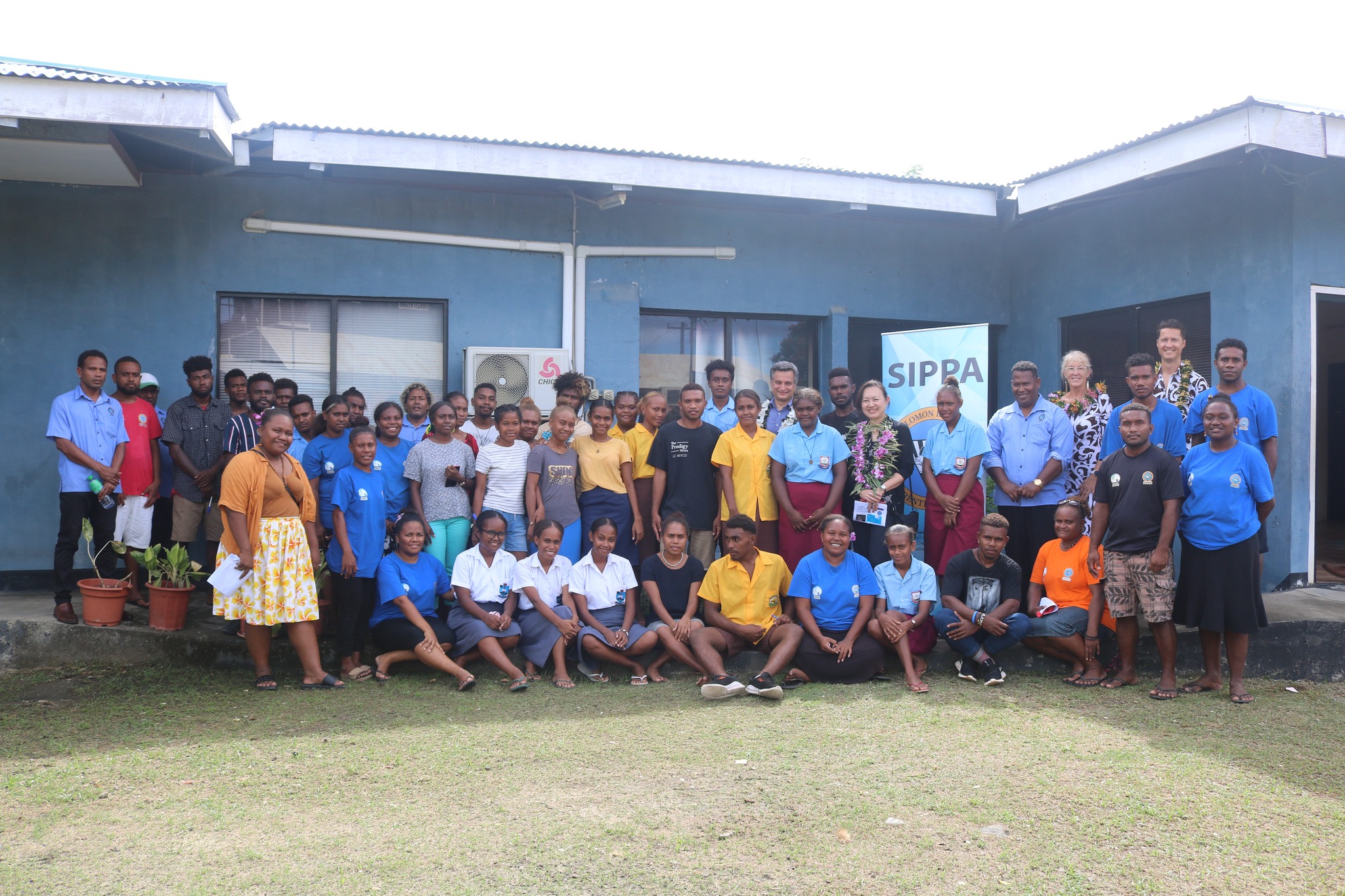
IPPF’s Director General Visits Solomon Islands and Australia
The Director General of the International Planned Parenthood Federation (IPPF), Dr Alvaro Bermejo, is in Australia this week for high level meetings with Australian Government Ministers and the Australian Department of Foreign Affairs and Trade (DFAT). He is joined by Ms Tomoka Fukuda, Regional Director of IPPF’s East and Southeast Asia and Oceania Region (ESEAOR) and Ms Phoebe Ryan, IPPF’s Chief of the Australia and New Zealand Office. In Australia, Dr Bermejo has been privileged to meet with Australia’s Minister for International Development and the Pacific, the Hon Pat Conroy. Together, they discussed how Australia can play a leadership role in advancing sexual and reproductive health and rights through Australia’s international development cooperation. Last week, Dr Bermejo and Ms Fukuda visited IPPF’s Member Association in Solomon Islands, the Solomon Islands Planned Parenthood Association (SIPPA). In Solomon Islands, they witnessed SIPPA’s life-saving and critical work delivering sexual and reproductive healthcare on the ground, including mobile outreach in remote communities of Malaita Province. Australia has been a long-standing and critical partner to IPPF, supporting programming to reach women, girls, and marginalized groups across the development–humanitarian continuum around the world, with a particular focus on the Asia Pacific. In December 2022, IPPF and DFAT signed a new four-year global funding agreement for 2023 to 2026, part of which includes dedicated support to programming across the Pacific. AUD 19 million is dedicated as global funding towards the delivery of IPPF’s Strategy 2028, along with a further AUD 5.7 million to support the delivery of IPPF’s Pacific Niu Vaka Strategy, Phase 2. This generous investment will enable IPPF to reach an anticipated 1.8 million people in the Pacific over the next six years with 4.2 million essential sexual and reproductive services. IPPF is proud to stand alongside our Pacific MAs as they continue to advocate for the health and rights of those most underserved and excluded, reaching communities with essential information and high quality, person-centred sexual and reproductive health care. In 2021, IPPF reached over 72 million people around the world with more than 155 million sexual and reproductive health services and contributed to 121 policy and legislative changes in defence of SRHR. IPPF is grateful for Australia’s ongoing support in enabling this impact. IPPF’s Director General, Alvaro Bermejo shared: “IPPF are delighted to be working with the Australian Government to continue improving the sexual and reproductive health and rights (SRHR) of women and girls across the globe. We are grateful to them for helping us deliver more services and support at a time when inequalities are deepening, the opposition is growing, and humanitarian crises continue to place the lives of millions, particularly women and girls, at risk. As we look to build the future with our new strategy, continued support from global partners is crucial to achieving a world where everyone has access to sexual and reproductive healthcare. We hope DFAT’s strong global commitment will inspire other global leaders to take action.” For media enquiries, please contact Karmen Ivey on kivey@ippf.org or Phoebe Ryan on pryan@ippf.org About the International Planned Parenthood Federation The International Planned Parenthood Federation (IPPF) is a global service provider and advocate of sexual and reproductive health and rights for all. For 70 years, IPPF has delivered high-quality sexual and reproductive healthcare and helped advance sexual rights, especially for people with intersectional and diverse needs that are currently unmet. Our Member Associations and partners are independent organizations that are locally owned, which means the support and care they provide is informed by local expertise and context. We advocate for a world where people are provided with the information they need to make informed decisions about their sexual health and bodies. We stand up and fight for sexual and reproductive rights and against those who seek to deny people their human right to bodily autonomy and freedom. We deliver care that is rooted in rights, respect, and dignity - no matter what.
media_center
| 30 September 2026
IPPF’s Director General Visits Solomon Islands and Australia
The Director General of the International Planned Parenthood Federation (IPPF), Dr Alvaro Bermejo, is in Australia this week for high level meetings with Australian Government Ministers and the Australian Department of Foreign Affairs and Trade (DFAT). He is joined by Ms Tomoka Fukuda, Regional Director of IPPF’s East and Southeast Asia and Oceania Region (ESEAOR) and Ms Phoebe Ryan, IPPF’s Chief of the Australia and New Zealand Office. In Australia, Dr Bermejo has been privileged to meet with Australia’s Minister for International Development and the Pacific, the Hon Pat Conroy. Together, they discussed how Australia can play a leadership role in advancing sexual and reproductive health and rights through Australia’s international development cooperation. Last week, Dr Bermejo and Ms Fukuda visited IPPF’s Member Association in Solomon Islands, the Solomon Islands Planned Parenthood Association (SIPPA). In Solomon Islands, they witnessed SIPPA’s life-saving and critical work delivering sexual and reproductive healthcare on the ground, including mobile outreach in remote communities of Malaita Province. Australia has been a long-standing and critical partner to IPPF, supporting programming to reach women, girls, and marginalized groups across the development–humanitarian continuum around the world, with a particular focus on the Asia Pacific. In December 2022, IPPF and DFAT signed a new four-year global funding agreement for 2023 to 2026, part of which includes dedicated support to programming across the Pacific. AUD 19 million is dedicated as global funding towards the delivery of IPPF’s Strategy 2028, along with a further AUD 5.7 million to support the delivery of IPPF’s Pacific Niu Vaka Strategy, Phase 2. This generous investment will enable IPPF to reach an anticipated 1.8 million people in the Pacific over the next six years with 4.2 million essential sexual and reproductive services. IPPF is proud to stand alongside our Pacific MAs as they continue to advocate for the health and rights of those most underserved and excluded, reaching communities with essential information and high quality, person-centred sexual and reproductive health care. In 2021, IPPF reached over 72 million people around the world with more than 155 million sexual and reproductive health services and contributed to 121 policy and legislative changes in defence of SRHR. IPPF is grateful for Australia’s ongoing support in enabling this impact. IPPF’s Director General, Alvaro Bermejo shared: “IPPF are delighted to be working with the Australian Government to continue improving the sexual and reproductive health and rights (SRHR) of women and girls across the globe. We are grateful to them for helping us deliver more services and support at a time when inequalities are deepening, the opposition is growing, and humanitarian crises continue to place the lives of millions, particularly women and girls, at risk. As we look to build the future with our new strategy, continued support from global partners is crucial to achieving a world where everyone has access to sexual and reproductive healthcare. We hope DFAT’s strong global commitment will inspire other global leaders to take action.” For media enquiries, please contact Karmen Ivey on kivey@ippf.org or Phoebe Ryan on pryan@ippf.org About the International Planned Parenthood Federation The International Planned Parenthood Federation (IPPF) is a global service provider and advocate of sexual and reproductive health and rights for all. For 70 years, IPPF has delivered high-quality sexual and reproductive healthcare and helped advance sexual rights, especially for people with intersectional and diverse needs that are currently unmet. Our Member Associations and partners are independent organizations that are locally owned, which means the support and care they provide is informed by local expertise and context. We advocate for a world where people are provided with the information they need to make informed decisions about their sexual health and bodies. We stand up and fight for sexual and reproductive rights and against those who seek to deny people their human right to bodily autonomy and freedom. We deliver care that is rooted in rights, respect, and dignity - no matter what.
media center
| 28 April 2026
PRESS RELEASE: Groundbreaking new report outlines the impact of Australia’s investment in SRHR
28 April 2026, Narrm (Melbourne) - Guttmacher has today released its latest report '‘Just the Numbers Australia 2026’’, providing vital analysis on the impact of Australia’s foreign aid contributions for sexual and reproductive health and rights (SRHR) programming in the Asia and Pacific Region. Australia has established itself as an incredibly important partner in advancing SRHR, particularly across Asia and the Pacific region, where it directs nearly all of its bilateral family planning support. SRHR accounted for approximately 2.8% of Australia’s official development assistance in 2023.Australia contributed an estimated AUD $49.2 million in 2024 for family planning. This investment enabled roughly 2.8 million women and couples globally to access modern contraception, leading to 830,000 unintended pregnancies averted. Yet significant gaps remain in the region, with 27.7 million women estimated to have an unmet demand for modern contraception. The research found that even modest investments at the country level would have a profound impact. For example, an additional AUD $1 million per year for the Philippines would serve an extra 56,000 contraceptive users, reducing unmet demand by 5%. Elizabeth Sully, Director of International Research at the Guttmacher Institute highlighted: “Australia's foreign investments in family planning are delivering measurable, life-saving results, but with global sexual and reproductive health financing in crisis, the stakes have never been higher. Australia has a real opportunity to deepen its leadership on gender equality and reproductive choice--and the data shows exactly what sustained investment can achieve: preventing unintended pregnancies, unsafe abortions, and maternal deaths. These aren't abstract numbers. They are real people who depend on these services.”Maria Antoineta Alcade, IPPF’s Director General, reflected: “We know that contraceptive services provide a significant return on investment - but most importantly, it's what women want and ask for. The question is not whether we can afford to invest in family planning - it’s whether we can afford not to. Our responsibility, as global leaders and funders, is to listen, and to act on what women need to prosper and thrive. These investments are not abstract, they prevent unintended pregnancies, unsafe abortions and maternal deaths, and give women the ability to have control over their own futures.”ENDS For further information or to arrange media interviews with our spokespeople from IPPF or Guttmacher, please contact Nerida Williams on newilliams@ippf.org or +66 62868 3089 (WhatsApp). NotesTo download the full report, please visit this link: https://www.guttmacher.org/2026/04/just-numbers-australia-global-srhr-investment-impact-2024 Australia is an established development partner in SRHR, contributing a portion of its official development assistance to expand access to essential services across low- and middle-income countries (LMICs). These investments have delivered measurable, life-saving results.In 2024, Australia’s family planning funding—estimated at AUD$49.2 million—supported access to modern contraception for 2.8 million women and couples globally, resulting in:830,000 unintended pregnancies averted303,000 unsafe abortions avoided259,000 unplanned births preventedApproximately 588 maternal deaths prevented
media_center
| 28 April 2026
PRESS RELEASE: Groundbreaking new report outlines the impact of Australia’s investment in SRHR
28 April 2026, Narrm (Melbourne) - Guttmacher has today released its latest report '‘Just the Numbers Australia 2026’’, providing vital analysis on the impact of Australia’s foreign aid contributions for sexual and reproductive health and rights (SRHR) programming in the Asia and Pacific Region. Australia has established itself as an incredibly important partner in advancing SRHR, particularly across Asia and the Pacific region, where it directs nearly all of its bilateral family planning support. SRHR accounted for approximately 2.8% of Australia’s official development assistance in 2023.Australia contributed an estimated AUD $49.2 million in 2024 for family planning. This investment enabled roughly 2.8 million women and couples globally to access modern contraception, leading to 830,000 unintended pregnancies averted. Yet significant gaps remain in the region, with 27.7 million women estimated to have an unmet demand for modern contraception. The research found that even modest investments at the country level would have a profound impact. For example, an additional AUD $1 million per year for the Philippines would serve an extra 56,000 contraceptive users, reducing unmet demand by 5%. Elizabeth Sully, Director of International Research at the Guttmacher Institute highlighted: “Australia's foreign investments in family planning are delivering measurable, life-saving results, but with global sexual and reproductive health financing in crisis, the stakes have never been higher. Australia has a real opportunity to deepen its leadership on gender equality and reproductive choice--and the data shows exactly what sustained investment can achieve: preventing unintended pregnancies, unsafe abortions, and maternal deaths. These aren't abstract numbers. They are real people who depend on these services.”Maria Antoineta Alcade, IPPF’s Director General, reflected: “We know that contraceptive services provide a significant return on investment - but most importantly, it's what women want and ask for. The question is not whether we can afford to invest in family planning - it’s whether we can afford not to. Our responsibility, as global leaders and funders, is to listen, and to act on what women need to prosper and thrive. These investments are not abstract, they prevent unintended pregnancies, unsafe abortions and maternal deaths, and give women the ability to have control over their own futures.”ENDS For further information or to arrange media interviews with our spokespeople from IPPF or Guttmacher, please contact Nerida Williams on newilliams@ippf.org or +66 62868 3089 (WhatsApp). NotesTo download the full report, please visit this link: https://www.guttmacher.org/2026/04/just-numbers-australia-global-srhr-investment-impact-2024 Australia is an established development partner in SRHR, contributing a portion of its official development assistance to expand access to essential services across low- and middle-income countries (LMICs). These investments have delivered measurable, life-saving results.In 2024, Australia’s family planning funding—estimated at AUD$49.2 million—supported access to modern contraception for 2.8 million women and couples globally, resulting in:830,000 unintended pregnancies averted303,000 unsafe abortions avoided259,000 unplanned births preventedApproximately 588 maternal deaths prevented
media center
| 16 December 2025
Nearly 9 Million Denied Essential Reproductive Healthcare as Trump-Era Funding Cuts Force Global Clinic Closures, IPPF Reports
17 December 2025 - New data reveals the Trump Administration's funding cuts have forced 34 of International Planned Parenthood Federation (IPPF) Member Associations (MAs) to terminate staff, representing 969 jobs across MAs globally. Nearly 9 million clients worldwide are estimated to lose access to contraception, HIV testing, and clinical care for survivors of gender-based violence. This is in large part due to 1,394 health sites that have been forced to close, or not open as planned, many in remote or conflict-affected areas where our partners were the only provider of sexual and reproductive healthcare. IPPF's second global survey, conducted in July 2025 with 86 organizations responding across all regions, documents how U.S. funding withdrawals and policy decisions continue to impede access to sexual and reproductive health information and care in contexts where it’s critically needed. Across the Federation, $87.2 million in funding has been lost from 2025 through to 2029 due to cancelled contracts and reduced budgets. The impacts go far beyond dollar figures; they represent the collapse of health infrastructure that communities have relied on for decades, and a radical shift towards conservative ideologies that deliberately block human rights.By the Numbers: Africa and the Arab World Bear the BruntIPPF MAs in the Africa Region have lost $26.0 million in funding, and those in the Arab World Region have lost $9.4 million, accounting for the majority of service disruptions globally.1,175 health sites have closed (or not been able to open) and 396 staff members lost their jobs in the Africa Region alone, affecting 5.9 million clients.2.6 million clients are set to lose access to sexual and reproductive healthcare in IPPF’s Arab World Region."The Trump Administration's funding cuts have gutted local health systems that took decades to build," says Alvaro Bermejo, IPPF’s Director-General. "We're talking about clinics in remote areas, conflict zones, and places where IPPF MAs are often the only providers of contraception and HIV services. When we close, there's nowhere else for people to go."Commodity Shortages Compound Crisis28 MAs reported declining stock levels of sexual and reproductive health commodities since January 2025, with contraceptive commodities the most impacted. Five MAs in Uganda, Mozambique, Nigeria, Tanzania, and Bangladesh report a combined 2-year commodity funding gap of $13 million, a crisis made worse by the Trump Administration holding $9.7 million worth of U.S.-funded contraceptives in Belgium rather than delivering them to their intended recipients. IPPF and other organizations have offered to redistribute these supplies at no cost to the U.S. government, but all offers have been rejected. The contraceptives represent 28% of Tanzania's total annual need, and many products risk becoming ineligible for import as the U.S. government holds them in storage.Beyond contraception, MAs face shortages in STI testing and treatment commodities, gynecology supplies, and clinical support resources for sexual and gender-based violence survivors.Financial Sustainability at RiskOf the 77 MAs who responded, 33 reported their financial sustainability has been impacted, while 27 reported reduced capacity to engage in partnerships, movement building, and networking with other civil society organizations.The ripple effects extend beyond IPPF. In 2025, several MAs have observed national civil society and NGO partners closing down or reducing staff in their countries, with reduced sexual and reproductive health service provisions reported nationwide.IPPF's ResponseIPPF continues to provide emergency support through its Harm Mitigation Fund, with a second round of grants to be distributed to the most affected MAs. The Federation is also working to address commodity gaps and support organizations facing the most severe service disruptions."We will not allow these radical macho-political agendas to determine who can and cannot access healthcare," says Alvaro. "These funding cuts have clear and immediate consequences. They mean women giving birth without skilled care, people living with HIV unable to access testing and treatment to stay alive, and survivors of violence being turned away from the only clinic in their area."ENDSFor more information or to interview one of our staff, please contact media@ippf.org or +66628683089.
media_center
| 17 December 2025
Nearly 9 Million Denied Essential Reproductive Healthcare as Trump-Era Funding Cuts Force Global Clinic Closures, IPPF Reports
17 December 2025 - New data reveals the Trump Administration's funding cuts have forced 34 of International Planned Parenthood Federation (IPPF) Member Associations (MAs) to terminate staff, representing 969 jobs across MAs globally. Nearly 9 million clients worldwide are estimated to lose access to contraception, HIV testing, and clinical care for survivors of gender-based violence. This is in large part due to 1,394 health sites that have been forced to close, or not open as planned, many in remote or conflict-affected areas where our partners were the only provider of sexual and reproductive healthcare. IPPF's second global survey, conducted in July 2025 with 86 organizations responding across all regions, documents how U.S. funding withdrawals and policy decisions continue to impede access to sexual and reproductive health information and care in contexts where it’s critically needed. Across the Federation, $87.2 million in funding has been lost from 2025 through to 2029 due to cancelled contracts and reduced budgets. The impacts go far beyond dollar figures; they represent the collapse of health infrastructure that communities have relied on for decades, and a radical shift towards conservative ideologies that deliberately block human rights.By the Numbers: Africa and the Arab World Bear the BruntIPPF MAs in the Africa Region have lost $26.0 million in funding, and those in the Arab World Region have lost $9.4 million, accounting for the majority of service disruptions globally.1,175 health sites have closed (or not been able to open) and 396 staff members lost their jobs in the Africa Region alone, affecting 5.9 million clients.2.6 million clients are set to lose access to sexual and reproductive healthcare in IPPF’s Arab World Region."The Trump Administration's funding cuts have gutted local health systems that took decades to build," says Alvaro Bermejo, IPPF’s Director-General. "We're talking about clinics in remote areas, conflict zones, and places where IPPF MAs are often the only providers of contraception and HIV services. When we close, there's nowhere else for people to go."Commodity Shortages Compound Crisis28 MAs reported declining stock levels of sexual and reproductive health commodities since January 2025, with contraceptive commodities the most impacted. Five MAs in Uganda, Mozambique, Nigeria, Tanzania, and Bangladesh report a combined 2-year commodity funding gap of $13 million, a crisis made worse by the Trump Administration holding $9.7 million worth of U.S.-funded contraceptives in Belgium rather than delivering them to their intended recipients. IPPF and other organizations have offered to redistribute these supplies at no cost to the U.S. government, but all offers have been rejected. The contraceptives represent 28% of Tanzania's total annual need, and many products risk becoming ineligible for import as the U.S. government holds them in storage.Beyond contraception, MAs face shortages in STI testing and treatment commodities, gynecology supplies, and clinical support resources for sexual and gender-based violence survivors.Financial Sustainability at RiskOf the 77 MAs who responded, 33 reported their financial sustainability has been impacted, while 27 reported reduced capacity to engage in partnerships, movement building, and networking with other civil society organizations.The ripple effects extend beyond IPPF. In 2025, several MAs have observed national civil society and NGO partners closing down or reducing staff in their countries, with reduced sexual and reproductive health service provisions reported nationwide.IPPF's ResponseIPPF continues to provide emergency support through its Harm Mitigation Fund, with a second round of grants to be distributed to the most affected MAs. The Federation is also working to address commodity gaps and support organizations facing the most severe service disruptions."We will not allow these radical macho-political agendas to determine who can and cannot access healthcare," says Alvaro. "These funding cuts have clear and immediate consequences. They mean women giving birth without skilled care, people living with HIV unable to access testing and treatment to stay alive, and survivors of violence being turned away from the only clinic in their area."ENDSFor more information or to interview one of our staff, please contact media@ippf.org or +66628683089.
media center
| 16 October 2025
Almost US$10 mil in US-Funded Contraceptives May Go to Waste in Belgium as Trump Administration Keeps Them In Holding
16 October 2025 - The International Planned Parenthood Federation (IPPF) has been tracking the developing situation in Brussels, where the Trump administration is holding over $9.7 million of U.S.-funded contraceptives set to be destroyed. In August, IPPF shared that 77 percent of these resources were destined for five countries in the African region, with 1,031,400 injectable contraceptives and 365,100 implants earmarked for Tanzania alone. These countries have specific rules for pharmaceutical imports, and as the U.S. government holds these resources, the risk of them becoming ineligible for import becomes imminent and critical. In addition to the cruel and ideological reasons for withholding these contraceptives, the U.S. government is exploiting import regulations to:Skirt around pressure from the Belgian government that would make incinerating these products in Belgium (Flanders) illegal while they are still eligible for import.Enact their initial plan to ensure these life-saving resources do not reach the communities who need them most by withholding them until they become ineligible for importation, and eligible for legal incineration.Use the import thresholds as a loophole to legally incinerate resources before their expiration dates in 2027 to 2029.“Destination countries, including Tanzania (the main recipient), as well as others such as Malawi, Bangladesh, DR Congo, Kenya, apply importation rules that limit entry to medicines with a specific percentage of remaining shelf life. In Tanzania, for example, products with an original shelf life of more than 24 months cannot be imported if less than 60% of the total shelf life remains,” says Marcel Van Valen, Head of Supply Chain at IPPF. “Unless a practical solution is found urgently, the U.S. government may exploit this gap, allowing the products to sit until they technically fall below import thresholds and then justifying their destruction under the pretext of regulatory compliance.”IPPF made continuous efforts to take ownership of these contraceptives and distribute them at no cost to the U.S. government, only to have offers denied. “There is no doubt we could have gone and collected the products in Belgium, processed them in the Netherlands and re-distributed them to where they were needed and/or destined for,” added Van Valen. “Since the start of the negotiations until this day, IPPF is in the position to release a budget (estimated to be max $1.5 million) to support the redistribution.”Instead, the Trump administration has chosen to pursue destroying these resources, a decision that will create catastrophe for women and girls in Africa. By Tanzania’s standards, some products are below threshold already and many others come close to it; the country would have to grant an exemption waiver to allow their importation at this stage.“Even if we were given the opportunity to push for a waiver to receive the contraceptives, because the Tanzanian government is restrictive around reproductive rights, we don’t know that such an exemption would be granted,” says Dr. Bakari Omary, Project Coordinator at Umati, IPPF's Member Association in Tanzania. “It’s urgent that we receive these resources before they become ineligible for import. The contraceptives being held represent 28% of the country’s total annual need, and not having them is already impacting clients’ reproductive health and family planning freedoms.”“African women have long led the fight for reproductive rights and freedoms. The deliberate destruction of contraceptives for the sake of a political agenda is an attempt to strip them of the very freedoms for which they’ve been global advocates,” says Mallah Tabot, SRHR Lead at IPPF Africa. “The Trump administration’s use of import rules to push the blame onto African countries is a waste of millions of dollars, a crisis for human rights, and a betrayal of women’s freedom globally.”Such a critical moment demands collective action. We call on the U.S. government to immediately distribute these resources to their destination countries, and on the European Union and European countries to champion SRHRJ by advocating for the release of the contraceptives. Just as the Belgian government has done in enforcing an incineration ban on these goods, leaders of the European Union have an opportunity to demonstrate their values in action. We call on the E.U. to rally Member States, negotiate with the U.S., and explore all legal and diplomatic avenues to release these contraceptives from their hold and ensure they reach their destination countries.For more information or to interview one of our staff, please contact media@ippf.org or +66628683089.
media_center
| 16 October 2025
Almost US$10 mil in US-Funded Contraceptives May Go to Waste in Belgium as Trump Administration Keeps Them In Holding
16 October 2025 - The International Planned Parenthood Federation (IPPF) has been tracking the developing situation in Brussels, where the Trump administration is holding over $9.7 million of U.S.-funded contraceptives set to be destroyed. In August, IPPF shared that 77 percent of these resources were destined for five countries in the African region, with 1,031,400 injectable contraceptives and 365,100 implants earmarked for Tanzania alone. These countries have specific rules for pharmaceutical imports, and as the U.S. government holds these resources, the risk of them becoming ineligible for import becomes imminent and critical. In addition to the cruel and ideological reasons for withholding these contraceptives, the U.S. government is exploiting import regulations to:Skirt around pressure from the Belgian government that would make incinerating these products in Belgium (Flanders) illegal while they are still eligible for import.Enact their initial plan to ensure these life-saving resources do not reach the communities who need them most by withholding them until they become ineligible for importation, and eligible for legal incineration.Use the import thresholds as a loophole to legally incinerate resources before their expiration dates in 2027 to 2029.“Destination countries, including Tanzania (the main recipient), as well as others such as Malawi, Bangladesh, DR Congo, Kenya, apply importation rules that limit entry to medicines with a specific percentage of remaining shelf life. In Tanzania, for example, products with an original shelf life of more than 24 months cannot be imported if less than 60% of the total shelf life remains,” says Marcel Van Valen, Head of Supply Chain at IPPF. “Unless a practical solution is found urgently, the U.S. government may exploit this gap, allowing the products to sit until they technically fall below import thresholds and then justifying their destruction under the pretext of regulatory compliance.”IPPF made continuous efforts to take ownership of these contraceptives and distribute them at no cost to the U.S. government, only to have offers denied. “There is no doubt we could have gone and collected the products in Belgium, processed them in the Netherlands and re-distributed them to where they were needed and/or destined for,” added Van Valen. “Since the start of the negotiations until this day, IPPF is in the position to release a budget (estimated to be max $1.5 million) to support the redistribution.”Instead, the Trump administration has chosen to pursue destroying these resources, a decision that will create catastrophe for women and girls in Africa. By Tanzania’s standards, some products are below threshold already and many others come close to it; the country would have to grant an exemption waiver to allow their importation at this stage.“Even if we were given the opportunity to push for a waiver to receive the contraceptives, because the Tanzanian government is restrictive around reproductive rights, we don’t know that such an exemption would be granted,” says Dr. Bakari Omary, Project Coordinator at Umati, IPPF's Member Association in Tanzania. “It’s urgent that we receive these resources before they become ineligible for import. The contraceptives being held represent 28% of the country’s total annual need, and not having them is already impacting clients’ reproductive health and family planning freedoms.”“African women have long led the fight for reproductive rights and freedoms. The deliberate destruction of contraceptives for the sake of a political agenda is an attempt to strip them of the very freedoms for which they’ve been global advocates,” says Mallah Tabot, SRHR Lead at IPPF Africa. “The Trump administration’s use of import rules to push the blame onto African countries is a waste of millions of dollars, a crisis for human rights, and a betrayal of women’s freedom globally.”Such a critical moment demands collective action. We call on the U.S. government to immediately distribute these resources to their destination countries, and on the European Union and European countries to champion SRHRJ by advocating for the release of the contraceptives. Just as the Belgian government has done in enforcing an incineration ban on these goods, leaders of the European Union have an opportunity to demonstrate their values in action. We call on the E.U. to rally Member States, negotiate with the U.S., and explore all legal and diplomatic avenues to release these contraceptives from their hold and ensure they reach their destination countries.For more information or to interview one of our staff, please contact media@ippf.org or +66628683089.
media center
| 05 August 2025
Over 1.4 Million Women and Girls in Africa Left Without Contraception as U.S. Orders Destruction of Global Supply
6 August 2025 - The International Planned Parenthood Federation (IPPF) has learned that over $9.7 million worth of US-funded contraceptives are now set to be incinerated in France. Seventy-seven percent of these essential supplies were earmarked for five countries in the Africa Region - including the Democratic Republic of the Congo (DRC), Kenya, Tanzania, Zambia, and Mali — many of which are already facing severe humanitarian crises. The incineration of these contraceptives will deny more than 1.4 million women and girls access to life-saving care. Rather than reaching the communities who need them most, these essential medical supplies - many of which don’t expire until 2027 to 2029 - are being needlessly and egregiously destroyed.IPPF Member Associations in the affected countries were due to receive a share of these contraceptive stocks. Instead, they are now facing a sharp decline in supply following the decision to incinerate them. More than 40% of the total value of the contraceptive stockpiled in Brussels was allocated for shipment to Tanzania alone. Dr Bakari Omary, Project Coordinator at UMATI, IPPF’s Member Association in Tanzania, said: “We are facing a major challenge. The impact of the USAID funding cuts has already significantly affected the provision of sexual and reproductive health services in Tanzania - leading to a shortage of contraceptive commodities, especially implants. This shortage has directly impacted clients' choices regarding family planning uptake.”This development adds a new layer of outrage to what is already a cruel political decision. These contraceptives were already manufactured, packaged, and ready for distribution. IPPF offered to take them for redistribution at no cost to the US taxpayer, but this offer was declined. The actions of the U.S. administration make it clear that politics trump economics, given the additional costs necessary for transportation, storage, and incineration of these products. “This decision to destroy ready-to-use commodities is appalling and extremely wasteful. These life-saving medical supplies were destined to countries where access to reproductive care is already limited, and in some cases, part of a broader humanitarian response, such as in the DRC. The choice to incinerate them is unjustifiable and undermines efforts to protect the health and rights of women and girls,” said Marie-Evelyne Petrus-Barry, Africa Regional Director of IPPF.IPPF's local partners in Africa will now face increased challenges to deliver essential and life-saving care. According to RHSC, the loss of these supplies is projected to result in 362,000 unintended pregnancies and 110,000 unsafe abortions: Tanzania: 1,031,400 injectable contraceptives and 365,100 implants will not be distributed. These products represent over 50% of USAID annual support to Tanzania's health system and a terrifying 28% of the total annual need of the country.Mali: 1,100,880 oral contraceptives and 95,800 implants will be denied, 24% of Mali’s annual need.Zambia: 48,400 implants and 295,000 injectable contraceptives will be denied to women.Kenya: 108,000 women will not have access to contraceptive implants, 13.5% of its annual need. Nelly Munyasia, Executive Director for the Reproductive Health Network in Kenya (IPPF Member Association): “In Kenya, the effects of US funding disruptions are already being felt. The funding freeze has caused stockouts of contraceptives, leaving facilities with less than five months' supply instead of the required 15 months; reduced capacity building for health workers; disrupted digital logistics and health information systems, and caused a 46% funding gap in Kenya’s national family planning program. These systemic setbacks come at a time when unmet need for contraception remains high. Nearly 1 in 5 girls aged 15–19 is already pregnant or has given birth. Unsafe abortions remain among the five leading causes of maternal deaths in Kenya.” Sarah Durocher, President of Le Planning familial (IPPF’s French Member Association): “We call on the French government to take responsibility and act urgently to prevent the destruction of USAID-funded contraceptives. It is unacceptable that France, a country that champions feminist diplomacy, has remained silent while others, like Belgium, have stepped in to engage with the US government. In the face of this injustice, solidarity with the people who were counting on these life-saving supplies is not optional: it is a moral imperative.”“We will not stay silent while essential care is destroyed by ideology”, continued Marie-Evelyne Petrus-Barry.Notes: IPPF’s local partners in the countries affected include Reproductive Health Network Kenya, Chama cha Uzazi na Malezi Bora Tanzania, Association Malienne pour la Protection et la Promotion de la Famille, Planned Parenthood Association of Zambia, Association Burkinabé pour le Bien-Etre Familial and the Association pour le Bien-Etre Familial/Naissances Désirables.For more information or to interview one of our staff, please contact media@ippf.org or +66628683089. About the International Planned Parenthood Federation IPPF is a global healthcare provider and a leading advocate of sexual and reproductive health and rights (SRHR) for all. Led by a courageous and determined group of women, IPPF was founded in 1952 at the Third International Planned Parenthood Conference. Today, we are a movement of 158 Member Associations and Collaborative Partners with a presence in over 153 countries. Our work is wide-ranging, and includes services for sexual health and well-being, contraception, abortion care, sexually transmitted infections and reproductive tract infections, HIV, obstetrics and gynecology, fertility support, sexual and gender-based violence, comprehensive sex education, and responding to humanitarian crises. We pride ourselves on being local through our members and global through our network. At the heart of our mission is the provision of – and advocacy in support of – integrated healthcare to anyone who needs it regardless of race, gender, sex, income, and, crucially, no matter how remote.
media_center
| 06 August 2025
Over 1.4 Million Women and Girls in Africa Left Without Contraception as U.S. Orders Destruction of Global Supply
6 August 2025 - The International Planned Parenthood Federation (IPPF) has learned that over $9.7 million worth of US-funded contraceptives are now set to be incinerated in France. Seventy-seven percent of these essential supplies were earmarked for five countries in the Africa Region - including the Democratic Republic of the Congo (DRC), Kenya, Tanzania, Zambia, and Mali — many of which are already facing severe humanitarian crises. The incineration of these contraceptives will deny more than 1.4 million women and girls access to life-saving care. Rather than reaching the communities who need them most, these essential medical supplies - many of which don’t expire until 2027 to 2029 - are being needlessly and egregiously destroyed.IPPF Member Associations in the affected countries were due to receive a share of these contraceptive stocks. Instead, they are now facing a sharp decline in supply following the decision to incinerate them. More than 40% of the total value of the contraceptive stockpiled in Brussels was allocated for shipment to Tanzania alone. Dr Bakari Omary, Project Coordinator at UMATI, IPPF’s Member Association in Tanzania, said: “We are facing a major challenge. The impact of the USAID funding cuts has already significantly affected the provision of sexual and reproductive health services in Tanzania - leading to a shortage of contraceptive commodities, especially implants. This shortage has directly impacted clients' choices regarding family planning uptake.”This development adds a new layer of outrage to what is already a cruel political decision. These contraceptives were already manufactured, packaged, and ready for distribution. IPPF offered to take them for redistribution at no cost to the US taxpayer, but this offer was declined. The actions of the U.S. administration make it clear that politics trump economics, given the additional costs necessary for transportation, storage, and incineration of these products. “This decision to destroy ready-to-use commodities is appalling and extremely wasteful. These life-saving medical supplies were destined to countries where access to reproductive care is already limited, and in some cases, part of a broader humanitarian response, such as in the DRC. The choice to incinerate them is unjustifiable and undermines efforts to protect the health and rights of women and girls,” said Marie-Evelyne Petrus-Barry, Africa Regional Director of IPPF.IPPF's local partners in Africa will now face increased challenges to deliver essential and life-saving care. According to RHSC, the loss of these supplies is projected to result in 362,000 unintended pregnancies and 110,000 unsafe abortions: Tanzania: 1,031,400 injectable contraceptives and 365,100 implants will not be distributed. These products represent over 50% of USAID annual support to Tanzania's health system and a terrifying 28% of the total annual need of the country.Mali: 1,100,880 oral contraceptives and 95,800 implants will be denied, 24% of Mali’s annual need.Zambia: 48,400 implants and 295,000 injectable contraceptives will be denied to women.Kenya: 108,000 women will not have access to contraceptive implants, 13.5% of its annual need. Nelly Munyasia, Executive Director for the Reproductive Health Network in Kenya (IPPF Member Association): “In Kenya, the effects of US funding disruptions are already being felt. The funding freeze has caused stockouts of contraceptives, leaving facilities with less than five months' supply instead of the required 15 months; reduced capacity building for health workers; disrupted digital logistics and health information systems, and caused a 46% funding gap in Kenya’s national family planning program. These systemic setbacks come at a time when unmet need for contraception remains high. Nearly 1 in 5 girls aged 15–19 is already pregnant or has given birth. Unsafe abortions remain among the five leading causes of maternal deaths in Kenya.” Sarah Durocher, President of Le Planning familial (IPPF’s French Member Association): “We call on the French government to take responsibility and act urgently to prevent the destruction of USAID-funded contraceptives. It is unacceptable that France, a country that champions feminist diplomacy, has remained silent while others, like Belgium, have stepped in to engage with the US government. In the face of this injustice, solidarity with the people who were counting on these life-saving supplies is not optional: it is a moral imperative.”“We will not stay silent while essential care is destroyed by ideology”, continued Marie-Evelyne Petrus-Barry.Notes: IPPF’s local partners in the countries affected include Reproductive Health Network Kenya, Chama cha Uzazi na Malezi Bora Tanzania, Association Malienne pour la Protection et la Promotion de la Famille, Planned Parenthood Association of Zambia, Association Burkinabé pour le Bien-Etre Familial and the Association pour le Bien-Etre Familial/Naissances Désirables.For more information or to interview one of our staff, please contact media@ippf.org or +66628683089. About the International Planned Parenthood Federation IPPF is a global healthcare provider and a leading advocate of sexual and reproductive health and rights (SRHR) for all. Led by a courageous and determined group of women, IPPF was founded in 1952 at the Third International Planned Parenthood Conference. Today, we are a movement of 158 Member Associations and Collaborative Partners with a presence in over 153 countries. Our work is wide-ranging, and includes services for sexual health and well-being, contraception, abortion care, sexually transmitted infections and reproductive tract infections, HIV, obstetrics and gynecology, fertility support, sexual and gender-based violence, comprehensive sex education, and responding to humanitarian crises. We pride ourselves on being local through our members and global through our network. At the heart of our mission is the provision of – and advocacy in support of – integrated healthcare to anyone who needs it regardless of race, gender, sex, income, and, crucially, no matter how remote.
media center
| 17 April 2025
Rutgers triumphs in landmark court case against lies, online hate and disinformation
17 April 2025 - Rutgers, the Netherlands’ leading sexual and reproductive health expert and IPPF’s Member Association, has today secured a landmark legal win against an ultra-conservative group notorious for fuelling online hate and spreading disinformation. This ruling is a crucial step forward in protecting young people’s health, safety and well-being from harmful narratives designed to undermine their rights. Rutgers took legal action against Civitas Christiana, due to the persistent lies and slander that Civitas continued to spread about Rutgers and the Spring Fever Week. This is an annual campaign in the Netherlands, held in Spring, focused on resilience, heathy relationships and sexual health. The court ruled entirely in favour of Rutgers; all statements must be rectified. The statements by Civitas - made through their social media channels, mainstream media and direct outreach efforts - were not only found to be false, but also harmful and unlawful. This important decision affirms support for parents, teachers, and schools, all who are committed to ensuring children to grow up healthy, safe and happy and protected from disinformation and misinformation. Schools participate voluntarily in Spring Fever Week by providing structured, age-appropriate lessons on these topics to their primary school students. Rutgers took these legal steps to support parents, teachers, and schools, and to combat misleading and vexatious misinformation, as our work is unapologetically about child safety and protection. It’s about giving young people agency and keeping them safe from perpetrators. Young people without information and without bodily autonomy are unsafe. This case was about standing with and for the young people, parents, caregivers, educators and communities who are targeted and harmed by these toxic campaigns run by ultra-conservative groups. The court’s ruling sends a clear message: there is no place for hate and misinformation in public discourse, especially when it endangers the lives, safety and health of young people. “This legal case was not about a difference of opinion on education,” says Rutgers deputy director Luc Lauwers, “but about the spreading of fake news that puts children in danger rather than protecting them. Everyone has the right to their own values, beliefs, opinions, religious convictions, and way of life - including in matters of education and parenting. That is a fundamental pillar of our democratic legal system in the Netherlands. However, the freedom of expression and freedom of religion that Civitas Christiana appeals to are not without limits.” Victories like this matter deeply. At a time when sexuality education is under coordinated attack by alt-right movements globally, this victory speaks volumes about the power of civil society organisations to stand firm, fight back, and defend truth, science and young people’s rights. Anti-rights groups work to erode trust, sow fear and promote regressive narratives that do real harm - particularly to young people. Staying silent is not an option. Every time we speak up, seek justice and share the truth, we help build a society where young people are safe, informed and healthy. This ruling is a meaningful step, but our shared global responsibility continues. For media inquiries, please contact: n.hoeve@rutgers.nl or media@ippf.org.About the International Planned Parenthood Federation IPPF is a global healthcare provider and a leading advocate of sexual and reproductive health and rights (SRHR) for all. Led by a courageous and determined group of women, IPPF was founded in 1952 at the Third International Planned Parenthood Conference. Today, we are a movement of 158 Member Associations and Collaborative Partners with a presence in over 153 countries. Our work is wide-ranging, including comprehensive sex education, provision of contraceptive, safe abortion, and maternal care and responding to humanitarian crises. We pride ourselves on being local through our members and global through our network. At the heart of our mission is the provision of – and advocacy in support of – integrated healthcare to anyone who needs it regardless of race, gender, sex, income, and crucially no matter how remote. About RutgersRutgers is the Dutch centre of knowledge and expertise on sexual health, safety and well-being for young people. We work to improve the sexual and reproductive health and rights of all (young) people in the Netherlands and in more than 29 countries around the world. In partnership with other organisations we advocate for sexual and reproductive health and rights, promote public support and do (scientific) research.Together with partners, we work within countries and internationally to improve sexual rights, access to sexuality education and information, access to contraception and safe abortion services and to prevent sexual and gender-based violence.
media_center
| 17 April 2025
Rutgers triumphs in landmark court case against lies, online hate and disinformation
17 April 2025 - Rutgers, the Netherlands’ leading sexual and reproductive health expert and IPPF’s Member Association, has today secured a landmark legal win against an ultra-conservative group notorious for fuelling online hate and spreading disinformation. This ruling is a crucial step forward in protecting young people’s health, safety and well-being from harmful narratives designed to undermine their rights. Rutgers took legal action against Civitas Christiana, due to the persistent lies and slander that Civitas continued to spread about Rutgers and the Spring Fever Week. This is an annual campaign in the Netherlands, held in Spring, focused on resilience, heathy relationships and sexual health. The court ruled entirely in favour of Rutgers; all statements must be rectified. The statements by Civitas - made through their social media channels, mainstream media and direct outreach efforts - were not only found to be false, but also harmful and unlawful. This important decision affirms support for parents, teachers, and schools, all who are committed to ensuring children to grow up healthy, safe and happy and protected from disinformation and misinformation. Schools participate voluntarily in Spring Fever Week by providing structured, age-appropriate lessons on these topics to their primary school students. Rutgers took these legal steps to support parents, teachers, and schools, and to combat misleading and vexatious misinformation, as our work is unapologetically about child safety and protection. It’s about giving young people agency and keeping them safe from perpetrators. Young people without information and without bodily autonomy are unsafe. This case was about standing with and for the young people, parents, caregivers, educators and communities who are targeted and harmed by these toxic campaigns run by ultra-conservative groups. The court’s ruling sends a clear message: there is no place for hate and misinformation in public discourse, especially when it endangers the lives, safety and health of young people. “This legal case was not about a difference of opinion on education,” says Rutgers deputy director Luc Lauwers, “but about the spreading of fake news that puts children in danger rather than protecting them. Everyone has the right to their own values, beliefs, opinions, religious convictions, and way of life - including in matters of education and parenting. That is a fundamental pillar of our democratic legal system in the Netherlands. However, the freedom of expression and freedom of religion that Civitas Christiana appeals to are not without limits.” Victories like this matter deeply. At a time when sexuality education is under coordinated attack by alt-right movements globally, this victory speaks volumes about the power of civil society organisations to stand firm, fight back, and defend truth, science and young people’s rights. Anti-rights groups work to erode trust, sow fear and promote regressive narratives that do real harm - particularly to young people. Staying silent is not an option. Every time we speak up, seek justice and share the truth, we help build a society where young people are safe, informed and healthy. This ruling is a meaningful step, but our shared global responsibility continues. For media inquiries, please contact: n.hoeve@rutgers.nl or media@ippf.org.About the International Planned Parenthood Federation IPPF is a global healthcare provider and a leading advocate of sexual and reproductive health and rights (SRHR) for all. Led by a courageous and determined group of women, IPPF was founded in 1952 at the Third International Planned Parenthood Conference. Today, we are a movement of 158 Member Associations and Collaborative Partners with a presence in over 153 countries. Our work is wide-ranging, including comprehensive sex education, provision of contraceptive, safe abortion, and maternal care and responding to humanitarian crises. We pride ourselves on being local through our members and global through our network. At the heart of our mission is the provision of – and advocacy in support of – integrated healthcare to anyone who needs it regardless of race, gender, sex, income, and crucially no matter how remote. About RutgersRutgers is the Dutch centre of knowledge and expertise on sexual health, safety and well-being for young people. We work to improve the sexual and reproductive health and rights of all (young) people in the Netherlands and in more than 29 countries around the world. In partnership with other organisations we advocate for sexual and reproductive health and rights, promote public support and do (scientific) research.Together with partners, we work within countries and internationally to improve sexual rights, access to sexuality education and information, access to contraception and safe abortion services and to prevent sexual and gender-based violence.
media center
| 03 February 2025
The Trump administration has launched a “war on development”, leading human rights organisations say
Haz click aquí para leer este posicionamiento en español. WASHINGTON D.C., United States, 3 February 2025 – The Trump administration is using foreign aid as a deadly political weapon, ILGA World and International Planned Parenthood Federation (IPPF) said today, and millions of people are already in dire straits because of its policies. The executive order implementing a 90-day pause in US foreign development aid is wreaking havoc on the lifesaving work of human rights, civil society, and grassroots organisations —according to ILGA World and IPPF. Sexual and reproductive health services suddenly were forced to suddenly stop or drastically cut operations, including those further impacted by the reinstatement of the Global Gag Rule, leaving millions of people without access to lifesaving care. The funding suspension initially impacted also the over 20 million people living with HIV directly supported through the United States President's Emergency Plan for AIDS Relief (PEPFAR). Later, however, a life-saving humanitarian assistance waiver” walked back the decision, yet excludes activities related to abortion or family planning, gender or DEI programs, gender-affirming surgeries, and other activities deemed to be “non-life saving assistance.” IPPF anticipates it will lose US$61 million from cuts due to refusing to sign the Global Gag Rule. Programs affected - mainly in Africa - provide sexual and reproductive health services for millions of women and youth, many of whom will be forced to continue with a pregnancy they did not want or have an unsafe abortion they may not survive. United Nations agencies have begun cutting back their global aid operations as a direct consequence of the 90-day foreign aid suspension. Without guaranteed funding, implementing organisations will have no choice but to lay off thousands of health workers and programme staff. Even if funds are reinstated after the “assessment of consistency with US foreign policy”, the bottoming out of the health sector means there are no guarantees that organisations will be able to continue serving our communities. “The US, currently the largest provider of Official Development Assistance (ODA), is choosing to leave behind the already most marginalised people across the world, in the name of far-right regressive policies,” said ILGA World and IPPF. “This is a war on development. People will die because the Trump administration is using life-saving funding as a leverage to advance a hateful dystopia. American aid with further conditionality will be unable to reach the most vulnerable populations, undoing decades of progress on health, security and human rights.” “This devastating blow to foreign aid risks worsening humanitarian crises, violence, conflict, and political instability,” ILGA World and IPPF conclude. “This is the opposite of building ‘harmonious and stable relations internal to and among countries’ that the Trump administration claims to seek.” “Now more than ever, we are in solidarity with our global movements. We will continue to fight alongside them. We will not be fearful or silenced; but instead use this moment to galvanise our communities. But we need to be prepared: vital resources and life-saving programmes may not come back — at least not without severe limitations and exclusionary conditions.” “We call on more States to step in with development aid, listen to the needs and priorities of grassroots communities, and provide them with a lifeline.” Note to editors ILGA World is a worldwide federation of more than 2,000 organisations from over 170 countries and territories campaigning for the human rights of people with diverse sexual orientations, gender identities and expressions, and sex characteristics. The International Planned Parenthood Federation (IPPF) is a global healthcare provider and a leading advocate of sexual and reproductive health and rights (SRHR) for all. Founded in 1952, it is now a movement of 150 member associations and collaborative partners with a presence in over 146 countries. For ILGA World: Daniele Paletta (communications manager); media@ilga.org; time zone: UTC+1 For IPPF: Nerida Williams (senior media advisor); newilliams@ippf.org; time zone: UTC+7 Alice Ackermann (communications advisor); AAckermann@ippf.org; time zone: UTC+1
media_center
| 03 February 2025
The Trump administration has launched a “war on development”, leading human rights organisations say
Haz click aquí para leer este posicionamiento en español. WASHINGTON D.C., United States, 3 February 2025 – The Trump administration is using foreign aid as a deadly political weapon, ILGA World and International Planned Parenthood Federation (IPPF) said today, and millions of people are already in dire straits because of its policies. The executive order implementing a 90-day pause in US foreign development aid is wreaking havoc on the lifesaving work of human rights, civil society, and grassroots organisations —according to ILGA World and IPPF. Sexual and reproductive health services suddenly were forced to suddenly stop or drastically cut operations, including those further impacted by the reinstatement of the Global Gag Rule, leaving millions of people without access to lifesaving care. The funding suspension initially impacted also the over 20 million people living with HIV directly supported through the United States President's Emergency Plan for AIDS Relief (PEPFAR). Later, however, a life-saving humanitarian assistance waiver” walked back the decision, yet excludes activities related to abortion or family planning, gender or DEI programs, gender-affirming surgeries, and other activities deemed to be “non-life saving assistance.” IPPF anticipates it will lose US$61 million from cuts due to refusing to sign the Global Gag Rule. Programs affected - mainly in Africa - provide sexual and reproductive health services for millions of women and youth, many of whom will be forced to continue with a pregnancy they did not want or have an unsafe abortion they may not survive. United Nations agencies have begun cutting back their global aid operations as a direct consequence of the 90-day foreign aid suspension. Without guaranteed funding, implementing organisations will have no choice but to lay off thousands of health workers and programme staff. Even if funds are reinstated after the “assessment of consistency with US foreign policy”, the bottoming out of the health sector means there are no guarantees that organisations will be able to continue serving our communities. “The US, currently the largest provider of Official Development Assistance (ODA), is choosing to leave behind the already most marginalised people across the world, in the name of far-right regressive policies,” said ILGA World and IPPF. “This is a war on development. People will die because the Trump administration is using life-saving funding as a leverage to advance a hateful dystopia. American aid with further conditionality will be unable to reach the most vulnerable populations, undoing decades of progress on health, security and human rights.” “This devastating blow to foreign aid risks worsening humanitarian crises, violence, conflict, and political instability,” ILGA World and IPPF conclude. “This is the opposite of building ‘harmonious and stable relations internal to and among countries’ that the Trump administration claims to seek.” “Now more than ever, we are in solidarity with our global movements. We will continue to fight alongside them. We will not be fearful or silenced; but instead use this moment to galvanise our communities. But we need to be prepared: vital resources and life-saving programmes may not come back — at least not without severe limitations and exclusionary conditions.” “We call on more States to step in with development aid, listen to the needs and priorities of grassroots communities, and provide them with a lifeline.” Note to editors ILGA World is a worldwide federation of more than 2,000 organisations from over 170 countries and territories campaigning for the human rights of people with diverse sexual orientations, gender identities and expressions, and sex characteristics. The International Planned Parenthood Federation (IPPF) is a global healthcare provider and a leading advocate of sexual and reproductive health and rights (SRHR) for all. Founded in 1952, it is now a movement of 150 member associations and collaborative partners with a presence in over 146 countries. For ILGA World: Daniele Paletta (communications manager); media@ilga.org; time zone: UTC+1 For IPPF: Nerida Williams (senior media advisor); newilliams@ippf.org; time zone: UTC+7 Alice Ackermann (communications advisor); AAckermann@ippf.org; time zone: UTC+1
media center
| 19 June 2024
IPPF Statement on the Ongoing Violence in Haiti
Haz click aquí para leer este posicionamiento en español The International Planned Parenthood Federation (IPPF) is deeply concerned about the escalating violence and political instability in Haiti, particularly its disproportionate impact on women and girls since March 2024. This crisis is expected to leave 3,000 pregnant women without essential medical care, leading to nearly 450 women experiencing life-threatening childbirth complications. With almost 580,000 Haitians displaced, women and girls are experiencing an alarming surge in sexual and gender-based violence (SGBV), including rampant sexual assaults, torture, and collective rape by armed groups. From January to March 2024, there were 1,793 SGBV incidents reported. Conflict-related insecurity has also significantly increased negative coping mechanisms, contributing to the rise in SGBV, as well as sexually transmitted infections and HIV. The ongoing violence is preventing access to essential sexual and reproductive healthcare services, endangering the lives of mothers and newborns. Our partner in Haiti, the Haiti Midwives Association, informed us, ‘the gangs prohibit the movement of motorcycles and pedestrians, threatening and sometimes shooting in the air to terrorise us further. Due to these difficult conditions, fewer and fewer patients are attending the hospital, whether for prenatal consultations, deliveries or postnatal care.” This inaccessibility has led to a significant increase in maternal and infant mortality. Eugenia López Uribe, Regional Director of the IPPF Americas & the Caribbean, said, “Humanitarian aid must be granted access through local organisations, such as our partner the Haiti Midwives Association, and their wellbeing must be guaranteed in this process. Women and girls can no longer wait! Our partner has provided access to vital emergency services such as pregnancy, childbirth and postpartum care, as well as care after sexual violence for 20 years. However, since February, they have been forced to stop their activities because of the imminent risks they face as women living in Port-au-Prince and surrounding areas.” On this International Day for the Elimination of Sexual Violence in Conflict, IPPF calls for zero tolerance toward any form of SGBV and demands the immediate protection of Haitian women, children, and those most at risk. We strongly call for unhindered humanitarian access to allow aid into Haiti. This aid must be designed and controlled by local NGOs and aid workers, and any foreign peacekeepers must safeguard and protect local communities - in particular their sexual and reproductive rights - so mistakes of the past are not repeated. Let’s not forget: Haiti's poverty and instability has been shaped by decades of foreign occupation and colonialism. The international community owes Haiti more than mere condolences; they owe an unwavering commitment to a future where human rights, including sexual and reproductive health rights are respected and protected, and nobody is left behind.
media_center
| 19 June 2024
IPPF Statement on the Ongoing Violence in Haiti
Haz click aquí para leer este posicionamiento en español The International Planned Parenthood Federation (IPPF) is deeply concerned about the escalating violence and political instability in Haiti, particularly its disproportionate impact on women and girls since March 2024. This crisis is expected to leave 3,000 pregnant women without essential medical care, leading to nearly 450 women experiencing life-threatening childbirth complications. With almost 580,000 Haitians displaced, women and girls are experiencing an alarming surge in sexual and gender-based violence (SGBV), including rampant sexual assaults, torture, and collective rape by armed groups. From January to March 2024, there were 1,793 SGBV incidents reported. Conflict-related insecurity has also significantly increased negative coping mechanisms, contributing to the rise in SGBV, as well as sexually transmitted infections and HIV. The ongoing violence is preventing access to essential sexual and reproductive healthcare services, endangering the lives of mothers and newborns. Our partner in Haiti, the Haiti Midwives Association, informed us, ‘the gangs prohibit the movement of motorcycles and pedestrians, threatening and sometimes shooting in the air to terrorise us further. Due to these difficult conditions, fewer and fewer patients are attending the hospital, whether for prenatal consultations, deliveries or postnatal care.” This inaccessibility has led to a significant increase in maternal and infant mortality. Eugenia López Uribe, Regional Director of the IPPF Americas & the Caribbean, said, “Humanitarian aid must be granted access through local organisations, such as our partner the Haiti Midwives Association, and their wellbeing must be guaranteed in this process. Women and girls can no longer wait! Our partner has provided access to vital emergency services such as pregnancy, childbirth and postpartum care, as well as care after sexual violence for 20 years. However, since February, they have been forced to stop their activities because of the imminent risks they face as women living in Port-au-Prince and surrounding areas.” On this International Day for the Elimination of Sexual Violence in Conflict, IPPF calls for zero tolerance toward any form of SGBV and demands the immediate protection of Haitian women, children, and those most at risk. We strongly call for unhindered humanitarian access to allow aid into Haiti. This aid must be designed and controlled by local NGOs and aid workers, and any foreign peacekeepers must safeguard and protect local communities - in particular their sexual and reproductive rights - so mistakes of the past are not repeated. Let’s not forget: Haiti's poverty and instability has been shaped by decades of foreign occupation and colonialism. The international community owes Haiti more than mere condolences; they owe an unwavering commitment to a future where human rights, including sexual and reproductive health rights are respected and protected, and nobody is left behind.
media center
| 21 September 2023
IPPF Condemns the Arson Attacks on Schools Delivering Sex Education in Belgium
IPPF condemns the multiple school arsons across the French-speaking Wallonia region in Belgium over the past week, which have been connected to public protests against the compulsory “education in relationships, affective and sexual life” (EVRAS) program. These targeted attacks are evidence of a growing movement opposed to Comprehensive Sexuality Education (CSE) curricula, and the duty of states to support and protect children in their sexual development. IPPF is deeply concerned that a small cadre of those with extremist views are targeting schools with violence, which serve as vital safe spaces for children and young people to become educated, empowered citizens. In the face of global misinformation campaigns and attempts to silence the organizations and institutions providing high quality comprehensive sexuality education, IPPF affirms that these programs empower children and young people to protect their health and well-being and support them in developing healthy and positive relationships throughout their lives. Dr. Alvaro Bermejo, IPPF Director General said: “The violent attacks on schools in Belgium are proof of how anti-rights campaigners are multiplying around the world and fuelling divisions by spreading false or misleading information about existing education curricula. We know from decades of research and our own programmatic experience in this area that comprehensive sexuality education helps children and young people to understand and enjoy their sexuality, take responsibility for their own sexual and reproductive health and rights and respect other people’s. We stand with the educators in Belgium who are delivering on a sex education curriculum that promotes children and young people’s rights.” Research shows that parents and young people agree that sexuality education should be offered in schools, and that parents are willing to join these programs, particularly as they help their children to navigate relationships and sexuality amid the complex challenges of the digital era. Many governments around the world, including Belgium, are making sexuality education programs a national priority to protect all children and young people from harm. IPPF stands with the schools and educators delivering this vital education in Belgium and around the world, and we remain committed to providing children and young people with the knowledge to protect and promote their safety, health and wellbeing. For media inquiries, contact media@ippf.org Banner image: Shutterstock
media_center
| 21 September 2023
IPPF Condemns the Arson Attacks on Schools Delivering Sex Education in Belgium
IPPF condemns the multiple school arsons across the French-speaking Wallonia region in Belgium over the past week, which have been connected to public protests against the compulsory “education in relationships, affective and sexual life” (EVRAS) program. These targeted attacks are evidence of a growing movement opposed to Comprehensive Sexuality Education (CSE) curricula, and the duty of states to support and protect children in their sexual development. IPPF is deeply concerned that a small cadre of those with extremist views are targeting schools with violence, which serve as vital safe spaces for children and young people to become educated, empowered citizens. In the face of global misinformation campaigns and attempts to silence the organizations and institutions providing high quality comprehensive sexuality education, IPPF affirms that these programs empower children and young people to protect their health and well-being and support them in developing healthy and positive relationships throughout their lives. Dr. Alvaro Bermejo, IPPF Director General said: “The violent attacks on schools in Belgium are proof of how anti-rights campaigners are multiplying around the world and fuelling divisions by spreading false or misleading information about existing education curricula. We know from decades of research and our own programmatic experience in this area that comprehensive sexuality education helps children and young people to understand and enjoy their sexuality, take responsibility for their own sexual and reproductive health and rights and respect other people’s. We stand with the educators in Belgium who are delivering on a sex education curriculum that promotes children and young people’s rights.” Research shows that parents and young people agree that sexuality education should be offered in schools, and that parents are willing to join these programs, particularly as they help their children to navigate relationships and sexuality amid the complex challenges of the digital era. Many governments around the world, including Belgium, are making sexuality education programs a national priority to protect all children and young people from harm. IPPF stands with the schools and educators delivering this vital education in Belgium and around the world, and we remain committed to providing children and young people with the knowledge to protect and promote their safety, health and wellbeing. For media inquiries, contact media@ippf.org Banner image: Shutterstock
media center
| 19 April 2023
Statement on the Outcome of the 56th Session on the Commission on Population and Development
The International Planned Parenthood Federation expresses its disappointment that the fifty-sixth session of the Commission on Population and Development (CPD), held from 10-14 April 2023 at UN headquarters in New York, did not result in a resolution on the theme of Population, Education and Sustainable Development. The Chair’s draft resolution for consideration on 14th April was the result of many weeks of intergovernmental discussions and represented a compromise to address the positions of all delegations. It was a balanced text based on previously agreed language and included critical elements related to this year’s priority theme, including ensuring a comprehensive response to the learning crises the world is facing today. Key issues including the need for gender-responsive policy development, a focus on marginalized communities, youth and adolescents, sexual and reproductive health and reproductive rights were consensually included in the draft resolution, demonstrating global consensus on these issues. However, consensus on the document was unfortunately broken by a small minority of Member States who were unable to accept language pertaining to comprehensive education on human sexuality, which was language adopted at this very Commission in 2014, and which comes from the 1994 ICPD Programme of Action itself. It is disappointing that these few Member States found it more important to block agreed language than to adopt meaningful advancements in the area of education. The ramifications of the failure to adopt this resolution will have an impact on billions of young people, adolescents and girls worldwide who have experienced the largest disruption of education systems in history, where more than 90 % of the world’s children have had their education interrupted by COVID-19 and 263 million children and young people are still out of school (1 in 5). IPPF is, however, encouraged that the negotiations on this resolution, which took place over several weeks, demonstrated the on-going commitment of Member States to the the ICPD Programme of Action (PoA), the key actions for its further implementation, the declaration on the occasion of the twenty-fifth anniversary of the International Conference on Population and Development, and resolutions and work of the Commission on Population and Development. We also welcome the plenary program of the 56th session of the CPD, which featured strong data on comprehensive sexuality education from UN agencies as evidence of its beneficial impact on children, adolescents and young people. In addition (or equally important), the experience of national programs and the passionate voices of young people reaffirmed that comprehensive sexuality education is an essential tool to empower young people and adolescents to make informed choices about their bodies, lives and futures. With a view towards the 30th anniversary of the ICPD PoA in 2024, we appreciate the commitment of Member States to continue working to deliver on the Programme of Action of the International Conference on Population and Development (ICPD) and look forward to engaging in the national, regional, and global processes of ICPD+30, culminating in next year’s 57th session of the Commission on Population and Development.
media_center
| 19 April 2023
Statement on the Outcome of the 56th Session on the Commission on Population and Development
The International Planned Parenthood Federation expresses its disappointment that the fifty-sixth session of the Commission on Population and Development (CPD), held from 10-14 April 2023 at UN headquarters in New York, did not result in a resolution on the theme of Population, Education and Sustainable Development. The Chair’s draft resolution for consideration on 14th April was the result of many weeks of intergovernmental discussions and represented a compromise to address the positions of all delegations. It was a balanced text based on previously agreed language and included critical elements related to this year’s priority theme, including ensuring a comprehensive response to the learning crises the world is facing today. Key issues including the need for gender-responsive policy development, a focus on marginalized communities, youth and adolescents, sexual and reproductive health and reproductive rights were consensually included in the draft resolution, demonstrating global consensus on these issues. However, consensus on the document was unfortunately broken by a small minority of Member States who were unable to accept language pertaining to comprehensive education on human sexuality, which was language adopted at this very Commission in 2014, and which comes from the 1994 ICPD Programme of Action itself. It is disappointing that these few Member States found it more important to block agreed language than to adopt meaningful advancements in the area of education. The ramifications of the failure to adopt this resolution will have an impact on billions of young people, adolescents and girls worldwide who have experienced the largest disruption of education systems in history, where more than 90 % of the world’s children have had their education interrupted by COVID-19 and 263 million children and young people are still out of school (1 in 5). IPPF is, however, encouraged that the negotiations on this resolution, which took place over several weeks, demonstrated the on-going commitment of Member States to the the ICPD Programme of Action (PoA), the key actions for its further implementation, the declaration on the occasion of the twenty-fifth anniversary of the International Conference on Population and Development, and resolutions and work of the Commission on Population and Development. We also welcome the plenary program of the 56th session of the CPD, which featured strong data on comprehensive sexuality education from UN agencies as evidence of its beneficial impact on children, adolescents and young people. In addition (or equally important), the experience of national programs and the passionate voices of young people reaffirmed that comprehensive sexuality education is an essential tool to empower young people and adolescents to make informed choices about their bodies, lives and futures. With a view towards the 30th anniversary of the ICPD PoA in 2024, we appreciate the commitment of Member States to continue working to deliver on the Programme of Action of the International Conference on Population and Development (ICPD) and look forward to engaging in the national, regional, and global processes of ICPD+30, culminating in next year’s 57th session of the Commission on Population and Development.
media center
| 28 March 2023
IPPF’s Director General Visits Solomon Islands and Australia
The Director General of the International Planned Parenthood Federation (IPPF), Dr Alvaro Bermejo, is in Australia this week for high level meetings with Australian Government Ministers and the Australian Department of Foreign Affairs and Trade (DFAT). He is joined by Ms Tomoka Fukuda, Regional Director of IPPF’s East and Southeast Asia and Oceania Region (ESEAOR) and Ms Phoebe Ryan, IPPF’s Chief of the Australia and New Zealand Office. In Australia, Dr Bermejo has been privileged to meet with Australia’s Minister for International Development and the Pacific, the Hon Pat Conroy. Together, they discussed how Australia can play a leadership role in advancing sexual and reproductive health and rights through Australia’s international development cooperation. Last week, Dr Bermejo and Ms Fukuda visited IPPF’s Member Association in Solomon Islands, the Solomon Islands Planned Parenthood Association (SIPPA). In Solomon Islands, they witnessed SIPPA’s life-saving and critical work delivering sexual and reproductive healthcare on the ground, including mobile outreach in remote communities of Malaita Province. Australia has been a long-standing and critical partner to IPPF, supporting programming to reach women, girls, and marginalized groups across the development–humanitarian continuum around the world, with a particular focus on the Asia Pacific. In December 2022, IPPF and DFAT signed a new four-year global funding agreement for 2023 to 2026, part of which includes dedicated support to programming across the Pacific. AUD 19 million is dedicated as global funding towards the delivery of IPPF’s Strategy 2028, along with a further AUD 5.7 million to support the delivery of IPPF’s Pacific Niu Vaka Strategy, Phase 2. This generous investment will enable IPPF to reach an anticipated 1.8 million people in the Pacific over the next six years with 4.2 million essential sexual and reproductive services. IPPF is proud to stand alongside our Pacific MAs as they continue to advocate for the health and rights of those most underserved and excluded, reaching communities with essential information and high quality, person-centred sexual and reproductive health care. In 2021, IPPF reached over 72 million people around the world with more than 155 million sexual and reproductive health services and contributed to 121 policy and legislative changes in defence of SRHR. IPPF is grateful for Australia’s ongoing support in enabling this impact. IPPF’s Director General, Alvaro Bermejo shared: “IPPF are delighted to be working with the Australian Government to continue improving the sexual and reproductive health and rights (SRHR) of women and girls across the globe. We are grateful to them for helping us deliver more services and support at a time when inequalities are deepening, the opposition is growing, and humanitarian crises continue to place the lives of millions, particularly women and girls, at risk. As we look to build the future with our new strategy, continued support from global partners is crucial to achieving a world where everyone has access to sexual and reproductive healthcare. We hope DFAT’s strong global commitment will inspire other global leaders to take action.” For media enquiries, please contact Karmen Ivey on kivey@ippf.org or Phoebe Ryan on pryan@ippf.org About the International Planned Parenthood Federation The International Planned Parenthood Federation (IPPF) is a global service provider and advocate of sexual and reproductive health and rights for all. For 70 years, IPPF has delivered high-quality sexual and reproductive healthcare and helped advance sexual rights, especially for people with intersectional and diverse needs that are currently unmet. Our Member Associations and partners are independent organizations that are locally owned, which means the support and care they provide is informed by local expertise and context. We advocate for a world where people are provided with the information they need to make informed decisions about their sexual health and bodies. We stand up and fight for sexual and reproductive rights and against those who seek to deny people their human right to bodily autonomy and freedom. We deliver care that is rooted in rights, respect, and dignity - no matter what.
media_center
| 30 September 2026
IPPF’s Director General Visits Solomon Islands and Australia
The Director General of the International Planned Parenthood Federation (IPPF), Dr Alvaro Bermejo, is in Australia this week for high level meetings with Australian Government Ministers and the Australian Department of Foreign Affairs and Trade (DFAT). He is joined by Ms Tomoka Fukuda, Regional Director of IPPF’s East and Southeast Asia and Oceania Region (ESEAOR) and Ms Phoebe Ryan, IPPF’s Chief of the Australia and New Zealand Office. In Australia, Dr Bermejo has been privileged to meet with Australia’s Minister for International Development and the Pacific, the Hon Pat Conroy. Together, they discussed how Australia can play a leadership role in advancing sexual and reproductive health and rights through Australia’s international development cooperation. Last week, Dr Bermejo and Ms Fukuda visited IPPF’s Member Association in Solomon Islands, the Solomon Islands Planned Parenthood Association (SIPPA). In Solomon Islands, they witnessed SIPPA’s life-saving and critical work delivering sexual and reproductive healthcare on the ground, including mobile outreach in remote communities of Malaita Province. Australia has been a long-standing and critical partner to IPPF, supporting programming to reach women, girls, and marginalized groups across the development–humanitarian continuum around the world, with a particular focus on the Asia Pacific. In December 2022, IPPF and DFAT signed a new four-year global funding agreement for 2023 to 2026, part of which includes dedicated support to programming across the Pacific. AUD 19 million is dedicated as global funding towards the delivery of IPPF’s Strategy 2028, along with a further AUD 5.7 million to support the delivery of IPPF’s Pacific Niu Vaka Strategy, Phase 2. This generous investment will enable IPPF to reach an anticipated 1.8 million people in the Pacific over the next six years with 4.2 million essential sexual and reproductive services. IPPF is proud to stand alongside our Pacific MAs as they continue to advocate for the health and rights of those most underserved and excluded, reaching communities with essential information and high quality, person-centred sexual and reproductive health care. In 2021, IPPF reached over 72 million people around the world with more than 155 million sexual and reproductive health services and contributed to 121 policy and legislative changes in defence of SRHR. IPPF is grateful for Australia’s ongoing support in enabling this impact. IPPF’s Director General, Alvaro Bermejo shared: “IPPF are delighted to be working with the Australian Government to continue improving the sexual and reproductive health and rights (SRHR) of women and girls across the globe. We are grateful to them for helping us deliver more services and support at a time when inequalities are deepening, the opposition is growing, and humanitarian crises continue to place the lives of millions, particularly women and girls, at risk. As we look to build the future with our new strategy, continued support from global partners is crucial to achieving a world where everyone has access to sexual and reproductive healthcare. We hope DFAT’s strong global commitment will inspire other global leaders to take action.” For media enquiries, please contact Karmen Ivey on kivey@ippf.org or Phoebe Ryan on pryan@ippf.org About the International Planned Parenthood Federation The International Planned Parenthood Federation (IPPF) is a global service provider and advocate of sexual and reproductive health and rights for all. For 70 years, IPPF has delivered high-quality sexual and reproductive healthcare and helped advance sexual rights, especially for people with intersectional and diverse needs that are currently unmet. Our Member Associations and partners are independent organizations that are locally owned, which means the support and care they provide is informed by local expertise and context. We advocate for a world where people are provided with the information they need to make informed decisions about their sexual health and bodies. We stand up and fight for sexual and reproductive rights and against those who seek to deny people their human right to bodily autonomy and freedom. We deliver care that is rooted in rights, respect, and dignity - no matter what.
