


Latest press releases
A selection of stories from across the Federation

Türkiye
Media center
PRESS RELEASE: Türkiye Must Drop All Charges Against LGBTQI+ Activists
Repro Uncensored and the International Planned Parenthood Federation condemn the coordinated raids, detentions and digital censorship targeting LGBTQI+ organizations, activists and community spaces.
For media enquiries
Telephone:
+66 62868 3089Media Inbox:
media@ippf.orgMost Popular This Week
Türkiye

Media center
|
PRESS RELEASE: Türkiye Must Drop All Charges Against LGBTQI+ Activists
For immediate release
Türkiye

Media center
|
Press Release: Amid Crackdown on Pride in Türkiye, More Than 120 LGBTQI+ and Feminist Social Media Accounts Suspended
Brussels / Istanbul, 13 July 2026 - Amid an escalating crackdown on LGBTQI+ communities in Türkiye, Repro Uncensored, the International Planned Par

Media center
|
May 17, IDAHOBIT: Global day celebrates sexual and gender diversity at the heart of democracy
FOR IMMEDIATE RELEASEILGA World x International Planned Parenthood Federation (IPPF)

Media center
|
RightsCon Cancelled as Global Attacks on SRHR and Digital Freedoms Intensify
FOR IMMEDIATE RELEASERepro Uncensored x International Planned Parenthood Federation (IPPF)
East and South East Asia and Oceania

Media center
|
PRESS RELEASE: Groundbreaking new report outlines the impact of Australia’s investment in SRHR
28 April 2026, Narrm (Melbourne) - Guttmacher has today released its latest report '‘Just the Numbers Australia 2026’’, providing vital analysis on the impact
South Asia, Africa

Media center
|
IPPF condemns the UK’s latest ODA budget allocations and warn of life-threatening consequences for millions
20 March 2026 - The International Planned Parenthood Federation (IPPF) strongly condemns the UK Government’s

Media center
|
US Government Expands Global Gag Rule in a Major Escalation of Regressive Foreign Policy
23 January 2026 - The International Planned Parenthood Federation

Media center
|
Nearly 9 Million Denied Essential Reproductive Healthcare as Trump-Era Funding Cuts Force Global Clinic Closures, IPPF Reports
17 December 2025 - New data reveals the Trump Administration's funding cuts have forced 34 of International Planned Parenthood Federation (IPPF) Member Associa
media center
| 28 April 2026
PRESS RELEASE: Groundbreaking new report outlines the impact of Australia’s investment in SRHR
28 April 2026, Narrm (Melbourne) - Guttmacher has today released its latest report '‘Just the Numbers Australia 2026’’, providing vital analysis on the impact of Australia’s foreign aid contributions for sexual and reproductive health and rights (SRHR) programming in the Asia and Pacific Region. Australia has established itself as an incredibly important partner in advancing SRHR, particularly across Asia and the Pacific region, where it directs nearly all of its bilateral family planning support. SRHR accounted for approximately 2.8% of Australia’s official development assistance in 2023.Australia contributed an estimated AUD $49.2 million in 2024 for family planning. This investment enabled roughly 2.8 million women and couples globally to access modern contraception, leading to 830,000 unintended pregnancies averted. Yet significant gaps remain in the region, with 27.7 million women estimated to have an unmet demand for modern contraception. The research found that even modest investments at the country level would have a profound impact. For example, an additional AUD $1 million per year for the Philippines would serve an extra 56,000 contraceptive users, reducing unmet demand by 5%. Elizabeth Sully, Director of International Research at the Guttmacher Institute highlighted: “Australia's foreign investments in family planning are delivering measurable, life-saving results, but with global sexual and reproductive health financing in crisis, the stakes have never been higher. Australia has a real opportunity to deepen its leadership on gender equality and reproductive choice--and the data shows exactly what sustained investment can achieve: preventing unintended pregnancies, unsafe abortions, and maternal deaths. These aren't abstract numbers. They are real people who depend on these services.”Maria Antoineta Alcade, IPPF’s Director General, reflected: “We know that contraceptive services provide a significant return on investment - but most importantly, it's what women want and ask for. The question is not whether we can afford to invest in family planning - it’s whether we can afford not to. Our responsibility, as global leaders and funders, is to listen, and to act on what women need to prosper and thrive. These investments are not abstract, they prevent unintended pregnancies, unsafe abortions and maternal deaths, and give women the ability to have control over their own futures.”ENDS For further information or to arrange media interviews with our spokespeople from IPPF or Guttmacher, please contact Nerida Williams on newilliams@ippf.org or +66 62868 3089 (WhatsApp). NotesTo download the full report, please visit this link: https://www.guttmacher.org/2026/04/just-numbers-australia-global-srhr-investment-impact-2024 Australia is an established development partner in SRHR, contributing a portion of its official development assistance to expand access to essential services across low- and middle-income countries (LMICs). These investments have delivered measurable, life-saving results.In 2024, Australia’s family planning funding—estimated at AUD$49.2 million—supported access to modern contraception for 2.8 million women and couples globally, resulting in:830,000 unintended pregnancies averted303,000 unsafe abortions avoided259,000 unplanned births preventedApproximately 588 maternal deaths prevented
media_center
| 28 April 2026
PRESS RELEASE: Groundbreaking new report outlines the impact of Australia’s investment in SRHR
28 April 2026, Narrm (Melbourne) - Guttmacher has today released its latest report '‘Just the Numbers Australia 2026’’, providing vital analysis on the impact of Australia’s foreign aid contributions for sexual and reproductive health and rights (SRHR) programming in the Asia and Pacific Region. Australia has established itself as an incredibly important partner in advancing SRHR, particularly across Asia and the Pacific region, where it directs nearly all of its bilateral family planning support. SRHR accounted for approximately 2.8% of Australia’s official development assistance in 2023.Australia contributed an estimated AUD $49.2 million in 2024 for family planning. This investment enabled roughly 2.8 million women and couples globally to access modern contraception, leading to 830,000 unintended pregnancies averted. Yet significant gaps remain in the region, with 27.7 million women estimated to have an unmet demand for modern contraception. The research found that even modest investments at the country level would have a profound impact. For example, an additional AUD $1 million per year for the Philippines would serve an extra 56,000 contraceptive users, reducing unmet demand by 5%. Elizabeth Sully, Director of International Research at the Guttmacher Institute highlighted: “Australia's foreign investments in family planning are delivering measurable, life-saving results, but with global sexual and reproductive health financing in crisis, the stakes have never been higher. Australia has a real opportunity to deepen its leadership on gender equality and reproductive choice--and the data shows exactly what sustained investment can achieve: preventing unintended pregnancies, unsafe abortions, and maternal deaths. These aren't abstract numbers. They are real people who depend on these services.”Maria Antoineta Alcade, IPPF’s Director General, reflected: “We know that contraceptive services provide a significant return on investment - but most importantly, it's what women want and ask for. The question is not whether we can afford to invest in family planning - it’s whether we can afford not to. Our responsibility, as global leaders and funders, is to listen, and to act on what women need to prosper and thrive. These investments are not abstract, they prevent unintended pregnancies, unsafe abortions and maternal deaths, and give women the ability to have control over their own futures.”ENDS For further information or to arrange media interviews with our spokespeople from IPPF or Guttmacher, please contact Nerida Williams on newilliams@ippf.org or +66 62868 3089 (WhatsApp). NotesTo download the full report, please visit this link: https://www.guttmacher.org/2026/04/just-numbers-australia-global-srhr-investment-impact-2024 Australia is an established development partner in SRHR, contributing a portion of its official development assistance to expand access to essential services across low- and middle-income countries (LMICs). These investments have delivered measurable, life-saving results.In 2024, Australia’s family planning funding—estimated at AUD$49.2 million—supported access to modern contraception for 2.8 million women and couples globally, resulting in:830,000 unintended pregnancies averted303,000 unsafe abortions avoided259,000 unplanned births preventedApproximately 588 maternal deaths prevented

media center
| 16 December 2025
Nearly 9 Million Denied Essential Reproductive Healthcare as Trump-Era Funding Cuts Force Global Clinic Closures, IPPF Reports
17 December 2025 - New data reveals the Trump Administration's funding cuts have forced 34 of International Planned Parenthood Federation (IPPF) Member Associations (MAs) to terminate staff, representing 969 jobs across MAs globally. Nearly 9 million clients worldwide are estimated to lose access to contraception, HIV testing, and clinical care for survivors of gender-based violence. This is in large part due to 1,394 health sites that have been forced to close, or not open as planned, many in remote or conflict-affected areas where our partners were the only provider of sexual and reproductive healthcare. IPPF's second global survey, conducted in July 2025 with 86 organizations responding across all regions, documents how U.S. funding withdrawals and policy decisions continue to impede access to sexual and reproductive health information and care in contexts where it’s critically needed. Across the Federation, $87.2 million in funding has been lost from 2025 through to 2029 due to cancelled contracts and reduced budgets. The impacts go far beyond dollar figures; they represent the collapse of health infrastructure that communities have relied on for decades, and a radical shift towards conservative ideologies that deliberately block human rights.By the Numbers: Africa and the Arab World Bear the BruntIPPF MAs in the Africa Region have lost $26.0 million in funding, and those in the Arab World Region have lost $9.4 million, accounting for the majority of service disruptions globally.1,175 health sites have closed (or not been able to open) and 396 staff members lost their jobs in the Africa Region alone, affecting 5.9 million clients.2.6 million clients are set to lose access to sexual and reproductive healthcare in IPPF’s Arab World Region."The Trump Administration's funding cuts have gutted local health systems that took decades to build," says Alvaro Bermejo, IPPF’s Director-General. "We're talking about clinics in remote areas, conflict zones, and places where IPPF MAs are often the only providers of contraception and HIV services. When we close, there's nowhere else for people to go."Commodity Shortages Compound Crisis28 MAs reported declining stock levels of sexual and reproductive health commodities since January 2025, with contraceptive commodities the most impacted. Five MAs in Uganda, Mozambique, Nigeria, Tanzania, and Bangladesh report a combined 2-year commodity funding gap of $13 million, a crisis made worse by the Trump Administration holding $9.7 million worth of U.S.-funded contraceptives in Belgium rather than delivering them to their intended recipients. IPPF and other organizations have offered to redistribute these supplies at no cost to the U.S. government, but all offers have been rejected. The contraceptives represent 28% of Tanzania's total annual need, and many products risk becoming ineligible for import as the U.S. government holds them in storage.Beyond contraception, MAs face shortages in STI testing and treatment commodities, gynecology supplies, and clinical support resources for sexual and gender-based violence survivors.Financial Sustainability at RiskOf the 77 MAs who responded, 33 reported their financial sustainability has been impacted, while 27 reported reduced capacity to engage in partnerships, movement building, and networking with other civil society organizations.The ripple effects extend beyond IPPF. In 2025, several MAs have observed national civil society and NGO partners closing down or reducing staff in their countries, with reduced sexual and reproductive health service provisions reported nationwide.IPPF's ResponseIPPF continues to provide emergency support through its Harm Mitigation Fund, with a second round of grants to be distributed to the most affected MAs. The Federation is also working to address commodity gaps and support organizations facing the most severe service disruptions."We will not allow these radical macho-political agendas to determine who can and cannot access healthcare," says Alvaro. "These funding cuts have clear and immediate consequences. They mean women giving birth without skilled care, people living with HIV unable to access testing and treatment to stay alive, and survivors of violence being turned away from the only clinic in their area."ENDSFor more information or to interview one of our staff, please contact media@ippf.org or +66628683089.
media_center
| 17 December 2025
Nearly 9 Million Denied Essential Reproductive Healthcare as Trump-Era Funding Cuts Force Global Clinic Closures, IPPF Reports
17 December 2025 - New data reveals the Trump Administration's funding cuts have forced 34 of International Planned Parenthood Federation (IPPF) Member Associations (MAs) to terminate staff, representing 969 jobs across MAs globally. Nearly 9 million clients worldwide are estimated to lose access to contraception, HIV testing, and clinical care for survivors of gender-based violence. This is in large part due to 1,394 health sites that have been forced to close, or not open as planned, many in remote or conflict-affected areas where our partners were the only provider of sexual and reproductive healthcare. IPPF's second global survey, conducted in July 2025 with 86 organizations responding across all regions, documents how U.S. funding withdrawals and policy decisions continue to impede access to sexual and reproductive health information and care in contexts where it’s critically needed. Across the Federation, $87.2 million in funding has been lost from 2025 through to 2029 due to cancelled contracts and reduced budgets. The impacts go far beyond dollar figures; they represent the collapse of health infrastructure that communities have relied on for decades, and a radical shift towards conservative ideologies that deliberately block human rights.By the Numbers: Africa and the Arab World Bear the BruntIPPF MAs in the Africa Region have lost $26.0 million in funding, and those in the Arab World Region have lost $9.4 million, accounting for the majority of service disruptions globally.1,175 health sites have closed (or not been able to open) and 396 staff members lost their jobs in the Africa Region alone, affecting 5.9 million clients.2.6 million clients are set to lose access to sexual and reproductive healthcare in IPPF’s Arab World Region."The Trump Administration's funding cuts have gutted local health systems that took decades to build," says Alvaro Bermejo, IPPF’s Director-General. "We're talking about clinics in remote areas, conflict zones, and places where IPPF MAs are often the only providers of contraception and HIV services. When we close, there's nowhere else for people to go."Commodity Shortages Compound Crisis28 MAs reported declining stock levels of sexual and reproductive health commodities since January 2025, with contraceptive commodities the most impacted. Five MAs in Uganda, Mozambique, Nigeria, Tanzania, and Bangladesh report a combined 2-year commodity funding gap of $13 million, a crisis made worse by the Trump Administration holding $9.7 million worth of U.S.-funded contraceptives in Belgium rather than delivering them to their intended recipients. IPPF and other organizations have offered to redistribute these supplies at no cost to the U.S. government, but all offers have been rejected. The contraceptives represent 28% of Tanzania's total annual need, and many products risk becoming ineligible for import as the U.S. government holds them in storage.Beyond contraception, MAs face shortages in STI testing and treatment commodities, gynecology supplies, and clinical support resources for sexual and gender-based violence survivors.Financial Sustainability at RiskOf the 77 MAs who responded, 33 reported their financial sustainability has been impacted, while 27 reported reduced capacity to engage in partnerships, movement building, and networking with other civil society organizations.The ripple effects extend beyond IPPF. In 2025, several MAs have observed national civil society and NGO partners closing down or reducing staff in their countries, with reduced sexual and reproductive health service provisions reported nationwide.IPPF's ResponseIPPF continues to provide emergency support through its Harm Mitigation Fund, with a second round of grants to be distributed to the most affected MAs. The Federation is also working to address commodity gaps and support organizations facing the most severe service disruptions."We will not allow these radical macho-political agendas to determine who can and cannot access healthcare," says Alvaro. "These funding cuts have clear and immediate consequences. They mean women giving birth without skilled care, people living with HIV unable to access testing and treatment to stay alive, and survivors of violence being turned away from the only clinic in their area."ENDSFor more information or to interview one of our staff, please contact media@ippf.org or +66628683089.

media center
| 16 October 2025
Almost US$10 mil in US-Funded Contraceptives May Go to Waste in Belgium as Trump Administration Keeps Them In Holding
16 October 2025 - The International Planned Parenthood Federation (IPPF) has been tracking the developing situation in Brussels, where the Trump administration is holding over $9.7 million of U.S.-funded contraceptives set to be destroyed. In August, IPPF shared that 77 percent of these resources were destined for five countries in the African region, with 1,031,400 injectable contraceptives and 365,100 implants earmarked for Tanzania alone. These countries have specific rules for pharmaceutical imports, and as the U.S. government holds these resources, the risk of them becoming ineligible for import becomes imminent and critical. In addition to the cruel and ideological reasons for withholding these contraceptives, the U.S. government is exploiting import regulations to:Skirt around pressure from the Belgian government that would make incinerating these products in Belgium (Flanders) illegal while they are still eligible for import.Enact their initial plan to ensure these life-saving resources do not reach the communities who need them most by withholding them until they become ineligible for importation, and eligible for legal incineration.Use the import thresholds as a loophole to legally incinerate resources before their expiration dates in 2027 to 2029.“Destination countries, including Tanzania (the main recipient), as well as others such as Malawi, Bangladesh, DR Congo, Kenya, apply importation rules that limit entry to medicines with a specific percentage of remaining shelf life. In Tanzania, for example, products with an original shelf life of more than 24 months cannot be imported if less than 60% of the total shelf life remains,” says Marcel Van Valen, Head of Supply Chain at IPPF. “Unless a practical solution is found urgently, the U.S. government may exploit this gap, allowing the products to sit until they technically fall below import thresholds and then justifying their destruction under the pretext of regulatory compliance.”IPPF made continuous efforts to take ownership of these contraceptives and distribute them at no cost to the U.S. government, only to have offers denied. “There is no doubt we could have gone and collected the products in Belgium, processed them in the Netherlands and re-distributed them to where they were needed and/or destined for,” added Van Valen. “Since the start of the negotiations until this day, IPPF is in the position to release a budget (estimated to be max $1.5 million) to support the redistribution.”Instead, the Trump administration has chosen to pursue destroying these resources, a decision that will create catastrophe for women and girls in Africa. By Tanzania’s standards, some products are below threshold already and many others come close to it; the country would have to grant an exemption waiver to allow their importation at this stage.“Even if we were given the opportunity to push for a waiver to receive the contraceptives, because the Tanzanian government is restrictive around reproductive rights, we don’t know that such an exemption would be granted,” says Dr. Bakari Omary, Project Coordinator at Umati, IPPF's Member Association in Tanzania. “It’s urgent that we receive these resources before they become ineligible for import. The contraceptives being held represent 28% of the country’s total annual need, and not having them is already impacting clients’ reproductive health and family planning freedoms.”“African women have long led the fight for reproductive rights and freedoms. The deliberate destruction of contraceptives for the sake of a political agenda is an attempt to strip them of the very freedoms for which they’ve been global advocates,” says Mallah Tabot, SRHR Lead at IPPF Africa. “The Trump administration’s use of import rules to push the blame onto African countries is a waste of millions of dollars, a crisis for human rights, and a betrayal of women’s freedom globally.”Such a critical moment demands collective action. We call on the U.S. government to immediately distribute these resources to their destination countries, and on the European Union and European countries to champion SRHRJ by advocating for the release of the contraceptives. Just as the Belgian government has done in enforcing an incineration ban on these goods, leaders of the European Union have an opportunity to demonstrate their values in action. We call on the E.U. to rally Member States, negotiate with the U.S., and explore all legal and diplomatic avenues to release these contraceptives from their hold and ensure they reach their destination countries.For more information or to interview one of our staff, please contact media@ippf.org or +66628683089.
media_center
| 16 October 2025
Almost US$10 mil in US-Funded Contraceptives May Go to Waste in Belgium as Trump Administration Keeps Them In Holding
16 October 2025 - The International Planned Parenthood Federation (IPPF) has been tracking the developing situation in Brussels, where the Trump administration is holding over $9.7 million of U.S.-funded contraceptives set to be destroyed. In August, IPPF shared that 77 percent of these resources were destined for five countries in the African region, with 1,031,400 injectable contraceptives and 365,100 implants earmarked for Tanzania alone. These countries have specific rules for pharmaceutical imports, and as the U.S. government holds these resources, the risk of them becoming ineligible for import becomes imminent and critical. In addition to the cruel and ideological reasons for withholding these contraceptives, the U.S. government is exploiting import regulations to:Skirt around pressure from the Belgian government that would make incinerating these products in Belgium (Flanders) illegal while they are still eligible for import.Enact their initial plan to ensure these life-saving resources do not reach the communities who need them most by withholding them until they become ineligible for importation, and eligible for legal incineration.Use the import thresholds as a loophole to legally incinerate resources before their expiration dates in 2027 to 2029.“Destination countries, including Tanzania (the main recipient), as well as others such as Malawi, Bangladesh, DR Congo, Kenya, apply importation rules that limit entry to medicines with a specific percentage of remaining shelf life. In Tanzania, for example, products with an original shelf life of more than 24 months cannot be imported if less than 60% of the total shelf life remains,” says Marcel Van Valen, Head of Supply Chain at IPPF. “Unless a practical solution is found urgently, the U.S. government may exploit this gap, allowing the products to sit until they technically fall below import thresholds and then justifying their destruction under the pretext of regulatory compliance.”IPPF made continuous efforts to take ownership of these contraceptives and distribute them at no cost to the U.S. government, only to have offers denied. “There is no doubt we could have gone and collected the products in Belgium, processed them in the Netherlands and re-distributed them to where they were needed and/or destined for,” added Van Valen. “Since the start of the negotiations until this day, IPPF is in the position to release a budget (estimated to be max $1.5 million) to support the redistribution.”Instead, the Trump administration has chosen to pursue destroying these resources, a decision that will create catastrophe for women and girls in Africa. By Tanzania’s standards, some products are below threshold already and many others come close to it; the country would have to grant an exemption waiver to allow their importation at this stage.“Even if we were given the opportunity to push for a waiver to receive the contraceptives, because the Tanzanian government is restrictive around reproductive rights, we don’t know that such an exemption would be granted,” says Dr. Bakari Omary, Project Coordinator at Umati, IPPF's Member Association in Tanzania. “It’s urgent that we receive these resources before they become ineligible for import. The contraceptives being held represent 28% of the country’s total annual need, and not having them is already impacting clients’ reproductive health and family planning freedoms.”“African women have long led the fight for reproductive rights and freedoms. The deliberate destruction of contraceptives for the sake of a political agenda is an attempt to strip them of the very freedoms for which they’ve been global advocates,” says Mallah Tabot, SRHR Lead at IPPF Africa. “The Trump administration’s use of import rules to push the blame onto African countries is a waste of millions of dollars, a crisis for human rights, and a betrayal of women’s freedom globally.”Such a critical moment demands collective action. We call on the U.S. government to immediately distribute these resources to their destination countries, and on the European Union and European countries to champion SRHRJ by advocating for the release of the contraceptives. Just as the Belgian government has done in enforcing an incineration ban on these goods, leaders of the European Union have an opportunity to demonstrate their values in action. We call on the E.U. to rally Member States, negotiate with the U.S., and explore all legal and diplomatic avenues to release these contraceptives from their hold and ensure they reach their destination countries.For more information or to interview one of our staff, please contact media@ippf.org or +66628683089.

media center
| 26 September 2025
IPPF response to the UN Secretary-General’s report on UN80 Initiative
September 26, 2025 - At its 80th anniversary, the UN faces its deepest crisis yet. Deep power imbalances, rooted in colonial legacies, and states' failure to respect human rights have undermined accountability for grave violations like the ongoing genocide in Gaza and other crisis such as in DRC, Sudan and for people on the move. This is compounded by massive funding cuts to the multilateral system, with global wealth shifting towards militarization, which has had devastating consequences for marginalized communities. Despite its flaws, the UN remains a key player where all countries can confront common challenges. For generations, it has been a lifeline for millions, providing food and essential medicines and serving as a shelter of universal standards when rights are violated, particularly providing important humanitarian responses. The UN has also been a catalyst for civil society engagement in global governance. IPPF recognizes the urgent and long overdue need for UN reform to transform the institution and make it responsive to real-world challenges and to the people it exists to serve, such as women, girls, indigenous peoples, LGBTQI+ and people of African descent. Such changes must strengthen the UN’s ability to uphold its purpose and values, not to dismantle the organization or deviate from those principles. Although reforming the UN Security Council is a complex and politically challenging task, distinct from the current UN80 reform, IPPF notes that without meaningful reform of the UN Security Council, the UN will remain paralyzed in the face of current tensions and wars. Regarding the UN80 reform, IPPF is commenting on the UN Secretary-General’s report on ‘Workstream 3: Changing Structures and Realigning Programmes’: Human rights at the center Human rights are one of the three pillars of the UN and our guiding star in a world full of crises, however, the U.N. has spent just 5 percent of its total budget on human rights. The revision of the budget for 2026 will disproportionately affect this underfunded pillar, with the Office of the High Commissioner for Human Rights facing a 15% cut in the funds for next year. In 2025, the UN has already suspended key activities including an investigation on the human rights situation in the DRC. Meanwhile, heavily funded anti-rights and anti-gender actors are undermining international standards. IPPF strongly supports better integration and coordination of human rights mechanisms across the UN, but increased funding is most critically needed. It’s time for all member states to get serious about funding a UN capable of upholding human rights for all and for the reforms of the UN to be driven by need and a strategic use of resources where the UN can best serve. Strengthen the work on sexual and reproductive health and rights In the current context, where sexual and reproductive health and rights (SRHR) are facing targeted attacks at local, national, regional and global levels, the UN’s work – at both normative and programmatic levels – must remain a priority, rather than diminished. The area of protecting and promoting SRHR should not be lost in any restructuring or merging discussion and should maintain independent service provision and program delivery priorities, including for reproductive health supplies and commodities that are more critically needed than ever. While a potential merger of UN Women, UNFPA, and parts of DESA is being considered to create a more unified platform for gender equality, IPPF believes it's essential to maintain a strong, coordinated effort specifically focused SRHR. It is also crucial to have a clear mandate to support countries in implementing the ICPD Programme of Action and its provisions on SRHR. We see a risk in the current proposal and emphasize that any restructuring must not dilute the critical work on SRHR. Instead, it should reinforce the UN's capacity to advance gender equality and uphold its key responsibilities in this area. Engagement and leadership of affected communities The UN Reform should be the opportunity to strengthen meaningful inclusion of civil society organizations and voices of affected communities in the UN bodies. Marginalized communities continue to be largely left out of any UN process and prevented from substantively shaping any decisions impacting them. One prominent exception has been UNAIDS, where otherwise marginalised and criminalised communities and in particular gay men and other men who have sex with men, sex workers, transgender people, people who inject drugs and prisoners and other incarcerated people as well as people living with HIV have systematic visibility and at least nominal power in decision-making. The proposal to sunset UNAIDS by 2026 poses significant risks to the continued inclusion of these groups and to the global commitment to end AIDS by 2030. Eliminating the central body that ensures a coordinated response will lead to a breakdown in program development and accountability. Recent data has already shown an increase in HIV infections and AIDS-related deaths in the Global South, and HIV-related infections are already rising as a result of global funding cuts — trends that the shutdown of UNAIDS will only exacerbate. Regardless of where the prevention, treatment and response to HIV/AIDS sits, it must remain an integral part of the global health response, prioritize engagement and leadership of affected communities in its governance and leadership structure and programming and integrate crucial human rights and community-led components vital for reaching key populations. The UNAIDS model of inclusion of affected communities should serve as an inspiration for even stronger engagement of marginalized communities across the UN system as part of the UN80 reform. Moreover, programs addressing the intersectionality and interdependency of human rights must remain central to addressing multiple and intersecting forms of discrimination. Localization as core principle for humanitarian action Every day, IPPF delivers life-saving services to the hardest to reach and the most underserved people, from Gaza to Afghanistan, Sudan and Haiti. In 2024 alone, we reached 67.5 million people, 20 percent of them in humanitarian settings. The UN’s action to deliver a humanitarian response, as suggested in the report, including its proposal to “speak with one voice in humanitarian diplomacy” must be realized with the engagement of local communities and civil society organizations, such as IPPF and many others. It is untenable to scale back humanitarian operations to a bare minimum when the evidence shows that crises are intensifying in both scale and severity of violations. At this critical moment, the UN must not only expand its operational capacity but also prioritize meaningful partnerships with localized civil society organizations. These actors are not only essential for effective and contextually grounded responses, but they also embody the moral legitimacy of humanitarian action. The UN has a responsibility to ensure their protection and enable their leadership, in full adherence to International Humanitarian Law and the humanitarian principles. The UN is in urgent need of transformative reforms that are rigorously anchored in the promotion and protection of human rights and conducted with transparency and accountability. The reform must ensure the full, meaningful and transparent engagement of civil society at every stage. Feminist, youth-led, and grassroots movements have been at the forefront of advancing the UN’s normative gains. Any vision for a revitalized United Nations must place their leadership, expertise, and living realities at the center of decision-making, as co-creators of multilateral solutions. For more information or to interview one of our staff, please contact media@ippf.org or +66628683089. About the International Planned Parenthood Federation IPPF is a global healthcare provider and a leading advocate of sexual and reproductive health and rights (SRHR) for all. Led by a courageous and determined group of women, IPPF was founded in 1952 at the Third International Planned Parenthood Conference. Today, we are a movement of 158 Member Associations and Collaborative Partners with a presence in over 153 countries. Our work is wide-ranging, and includes services for sexual health and well-being, contraception, abortion care, sexually transmitted infections and reproductive tract infections, HIV, obstetrics and gynecology, fertility support, sexual and gender-based violence, comprehensive sex education, and responding to humanitarian crises. We pride ourselves on being local through our members and global through our network. At the heart of our mission is the provision of – and advocacy in support of – integrated healthcare to anyone who needs it regardless of race, gender, sex, income, and, crucially, no matter how remote.
media_center
| 26 September 2025
IPPF response to the UN Secretary-General’s report on UN80 Initiative
September 26, 2025 - At its 80th anniversary, the UN faces its deepest crisis yet. Deep power imbalances, rooted in colonial legacies, and states' failure to respect human rights have undermined accountability for grave violations like the ongoing genocide in Gaza and other crisis such as in DRC, Sudan and for people on the move. This is compounded by massive funding cuts to the multilateral system, with global wealth shifting towards militarization, which has had devastating consequences for marginalized communities. Despite its flaws, the UN remains a key player where all countries can confront common challenges. For generations, it has been a lifeline for millions, providing food and essential medicines and serving as a shelter of universal standards when rights are violated, particularly providing important humanitarian responses. The UN has also been a catalyst for civil society engagement in global governance. IPPF recognizes the urgent and long overdue need for UN reform to transform the institution and make it responsive to real-world challenges and to the people it exists to serve, such as women, girls, indigenous peoples, LGBTQI+ and people of African descent. Such changes must strengthen the UN’s ability to uphold its purpose and values, not to dismantle the organization or deviate from those principles. Although reforming the UN Security Council is a complex and politically challenging task, distinct from the current UN80 reform, IPPF notes that without meaningful reform of the UN Security Council, the UN will remain paralyzed in the face of current tensions and wars. Regarding the UN80 reform, IPPF is commenting on the UN Secretary-General’s report on ‘Workstream 3: Changing Structures and Realigning Programmes’: Human rights at the center Human rights are one of the three pillars of the UN and our guiding star in a world full of crises, however, the U.N. has spent just 5 percent of its total budget on human rights. The revision of the budget for 2026 will disproportionately affect this underfunded pillar, with the Office of the High Commissioner for Human Rights facing a 15% cut in the funds for next year. In 2025, the UN has already suspended key activities including an investigation on the human rights situation in the DRC. Meanwhile, heavily funded anti-rights and anti-gender actors are undermining international standards. IPPF strongly supports better integration and coordination of human rights mechanisms across the UN, but increased funding is most critically needed. It’s time for all member states to get serious about funding a UN capable of upholding human rights for all and for the reforms of the UN to be driven by need and a strategic use of resources where the UN can best serve. Strengthen the work on sexual and reproductive health and rights In the current context, where sexual and reproductive health and rights (SRHR) are facing targeted attacks at local, national, regional and global levels, the UN’s work – at both normative and programmatic levels – must remain a priority, rather than diminished. The area of protecting and promoting SRHR should not be lost in any restructuring or merging discussion and should maintain independent service provision and program delivery priorities, including for reproductive health supplies and commodities that are more critically needed than ever. While a potential merger of UN Women, UNFPA, and parts of DESA is being considered to create a more unified platform for gender equality, IPPF believes it's essential to maintain a strong, coordinated effort specifically focused SRHR. It is also crucial to have a clear mandate to support countries in implementing the ICPD Programme of Action and its provisions on SRHR. We see a risk in the current proposal and emphasize that any restructuring must not dilute the critical work on SRHR. Instead, it should reinforce the UN's capacity to advance gender equality and uphold its key responsibilities in this area. Engagement and leadership of affected communities The UN Reform should be the opportunity to strengthen meaningful inclusion of civil society organizations and voices of affected communities in the UN bodies. Marginalized communities continue to be largely left out of any UN process and prevented from substantively shaping any decisions impacting them. One prominent exception has been UNAIDS, where otherwise marginalised and criminalised communities and in particular gay men and other men who have sex with men, sex workers, transgender people, people who inject drugs and prisoners and other incarcerated people as well as people living with HIV have systematic visibility and at least nominal power in decision-making. The proposal to sunset UNAIDS by 2026 poses significant risks to the continued inclusion of these groups and to the global commitment to end AIDS by 2030. Eliminating the central body that ensures a coordinated response will lead to a breakdown in program development and accountability. Recent data has already shown an increase in HIV infections and AIDS-related deaths in the Global South, and HIV-related infections are already rising as a result of global funding cuts — trends that the shutdown of UNAIDS will only exacerbate. Regardless of where the prevention, treatment and response to HIV/AIDS sits, it must remain an integral part of the global health response, prioritize engagement and leadership of affected communities in its governance and leadership structure and programming and integrate crucial human rights and community-led components vital for reaching key populations. The UNAIDS model of inclusion of affected communities should serve as an inspiration for even stronger engagement of marginalized communities across the UN system as part of the UN80 reform. Moreover, programs addressing the intersectionality and interdependency of human rights must remain central to addressing multiple and intersecting forms of discrimination. Localization as core principle for humanitarian action Every day, IPPF delivers life-saving services to the hardest to reach and the most underserved people, from Gaza to Afghanistan, Sudan and Haiti. In 2024 alone, we reached 67.5 million people, 20 percent of them in humanitarian settings. The UN’s action to deliver a humanitarian response, as suggested in the report, including its proposal to “speak with one voice in humanitarian diplomacy” must be realized with the engagement of local communities and civil society organizations, such as IPPF and many others. It is untenable to scale back humanitarian operations to a bare minimum when the evidence shows that crises are intensifying in both scale and severity of violations. At this critical moment, the UN must not only expand its operational capacity but also prioritize meaningful partnerships with localized civil society organizations. These actors are not only essential for effective and contextually grounded responses, but they also embody the moral legitimacy of humanitarian action. The UN has a responsibility to ensure their protection and enable their leadership, in full adherence to International Humanitarian Law and the humanitarian principles. The UN is in urgent need of transformative reforms that are rigorously anchored in the promotion and protection of human rights and conducted with transparency and accountability. The reform must ensure the full, meaningful and transparent engagement of civil society at every stage. Feminist, youth-led, and grassroots movements have been at the forefront of advancing the UN’s normative gains. Any vision for a revitalized United Nations must place their leadership, expertise, and living realities at the center of decision-making, as co-creators of multilateral solutions. For more information or to interview one of our staff, please contact media@ippf.org or +66628683089. About the International Planned Parenthood Federation IPPF is a global healthcare provider and a leading advocate of sexual and reproductive health and rights (SRHR) for all. Led by a courageous and determined group of women, IPPF was founded in 1952 at the Third International Planned Parenthood Conference. Today, we are a movement of 158 Member Associations and Collaborative Partners with a presence in over 153 countries. Our work is wide-ranging, and includes services for sexual health and well-being, contraception, abortion care, sexually transmitted infections and reproductive tract infections, HIV, obstetrics and gynecology, fertility support, sexual and gender-based violence, comprehensive sex education, and responding to humanitarian crises. We pride ourselves on being local through our members and global through our network. At the heart of our mission is the provision of – and advocacy in support of – integrated healthcare to anyone who needs it regardless of race, gender, sex, income, and, crucially, no matter how remote.

media center
| 05 August 2025
Over 1.4 Million Women and Girls in Africa Left Without Contraception as U.S. Orders Destruction of Global Supply
6 August 2025 - The International Planned Parenthood Federation (IPPF) has learned that over $9.7 million worth of US-funded contraceptives are now set to be incinerated in France. Seventy-seven percent of these essential supplies were earmarked for five countries in the Africa Region - including the Democratic Republic of the Congo (DRC), Kenya, Tanzania, Zambia, and Mali — many of which are already facing severe humanitarian crises. The incineration of these contraceptives will deny more than 1.4 million women and girls access to life-saving care. Rather than reaching the communities who need them most, these essential medical supplies - many of which don’t expire until 2027 to 2029 - are being needlessly and egregiously destroyed.IPPF Member Associations in the affected countries were due to receive a share of these contraceptive stocks. Instead, they are now facing a sharp decline in supply following the decision to incinerate them. More than 40% of the total value of the contraceptive stockpiled in Brussels was allocated for shipment to Tanzania alone. Dr Bakari Omary, Project Coordinator at UMATI, IPPF’s Member Association in Tanzania, said: “We are facing a major challenge. The impact of the USAID funding cuts has already significantly affected the provision of sexual and reproductive health services in Tanzania - leading to a shortage of contraceptive commodities, especially implants. This shortage has directly impacted clients' choices regarding family planning uptake.”This development adds a new layer of outrage to what is already a cruel political decision. These contraceptives were already manufactured, packaged, and ready for distribution. IPPF offered to take them for redistribution at no cost to the US taxpayer, but this offer was declined. The actions of the U.S. administration make it clear that politics trump economics, given the additional costs necessary for transportation, storage, and incineration of these products. “This decision to destroy ready-to-use commodities is appalling and extremely wasteful. These life-saving medical supplies were destined to countries where access to reproductive care is already limited, and in some cases, part of a broader humanitarian response, such as in the DRC. The choice to incinerate them is unjustifiable and undermines efforts to protect the health and rights of women and girls,” said Marie-Evelyne Petrus-Barry, Africa Regional Director of IPPF.IPPF's local partners in Africa will now face increased challenges to deliver essential and life-saving care. According to RHSC, the loss of these supplies is projected to result in 362,000 unintended pregnancies and 110,000 unsafe abortions: Tanzania: 1,031,400 injectable contraceptives and 365,100 implants will not be distributed. These products represent over 50% of USAID annual support to Tanzania's health system and a terrifying 28% of the total annual need of the country.Mali: 1,100,880 oral contraceptives and 95,800 implants will be denied, 24% of Mali’s annual need.Zambia: 48,400 implants and 295,000 injectable contraceptives will be denied to women.Kenya: 108,000 women will not have access to contraceptive implants, 13.5% of its annual need. Nelly Munyasia, Executive Director for the Reproductive Health Network in Kenya (IPPF Member Association): “In Kenya, the effects of US funding disruptions are already being felt. The funding freeze has caused stockouts of contraceptives, leaving facilities with less than five months' supply instead of the required 15 months; reduced capacity building for health workers; disrupted digital logistics and health information systems, and caused a 46% funding gap in Kenya’s national family planning program. These systemic setbacks come at a time when unmet need for contraception remains high. Nearly 1 in 5 girls aged 15–19 is already pregnant or has given birth. Unsafe abortions remain among the five leading causes of maternal deaths in Kenya.” Sarah Durocher, President of Le Planning familial (IPPF’s French Member Association): “We call on the French government to take responsibility and act urgently to prevent the destruction of USAID-funded contraceptives. It is unacceptable that France, a country that champions feminist diplomacy, has remained silent while others, like Belgium, have stepped in to engage with the US government. In the face of this injustice, solidarity with the people who were counting on these life-saving supplies is not optional: it is a moral imperative.”“We will not stay silent while essential care is destroyed by ideology”, continued Marie-Evelyne Petrus-Barry.Notes: IPPF’s local partners in the countries affected include Reproductive Health Network Kenya, Chama cha Uzazi na Malezi Bora Tanzania, Association Malienne pour la Protection et la Promotion de la Famille, Planned Parenthood Association of Zambia, Association Burkinabé pour le Bien-Etre Familial and the Association pour le Bien-Etre Familial/Naissances Désirables.For more information or to interview one of our staff, please contact media@ippf.org or +66628683089. About the International Planned Parenthood Federation IPPF is a global healthcare provider and a leading advocate of sexual and reproductive health and rights (SRHR) for all. Led by a courageous and determined group of women, IPPF was founded in 1952 at the Third International Planned Parenthood Conference. Today, we are a movement of 158 Member Associations and Collaborative Partners with a presence in over 153 countries. Our work is wide-ranging, and includes services for sexual health and well-being, contraception, abortion care, sexually transmitted infections and reproductive tract infections, HIV, obstetrics and gynecology, fertility support, sexual and gender-based violence, comprehensive sex education, and responding to humanitarian crises. We pride ourselves on being local through our members and global through our network. At the heart of our mission is the provision of – and advocacy in support of – integrated healthcare to anyone who needs it regardless of race, gender, sex, income, and, crucially, no matter how remote.
media_center
| 06 August 2025
Over 1.4 Million Women and Girls in Africa Left Without Contraception as U.S. Orders Destruction of Global Supply
6 August 2025 - The International Planned Parenthood Federation (IPPF) has learned that over $9.7 million worth of US-funded contraceptives are now set to be incinerated in France. Seventy-seven percent of these essential supplies were earmarked for five countries in the Africa Region - including the Democratic Republic of the Congo (DRC), Kenya, Tanzania, Zambia, and Mali — many of which are already facing severe humanitarian crises. The incineration of these contraceptives will deny more than 1.4 million women and girls access to life-saving care. Rather than reaching the communities who need them most, these essential medical supplies - many of which don’t expire until 2027 to 2029 - are being needlessly and egregiously destroyed.IPPF Member Associations in the affected countries were due to receive a share of these contraceptive stocks. Instead, they are now facing a sharp decline in supply following the decision to incinerate them. More than 40% of the total value of the contraceptive stockpiled in Brussels was allocated for shipment to Tanzania alone. Dr Bakari Omary, Project Coordinator at UMATI, IPPF’s Member Association in Tanzania, said: “We are facing a major challenge. The impact of the USAID funding cuts has already significantly affected the provision of sexual and reproductive health services in Tanzania - leading to a shortage of contraceptive commodities, especially implants. This shortage has directly impacted clients' choices regarding family planning uptake.”This development adds a new layer of outrage to what is already a cruel political decision. These contraceptives were already manufactured, packaged, and ready for distribution. IPPF offered to take them for redistribution at no cost to the US taxpayer, but this offer was declined. The actions of the U.S. administration make it clear that politics trump economics, given the additional costs necessary for transportation, storage, and incineration of these products. “This decision to destroy ready-to-use commodities is appalling and extremely wasteful. These life-saving medical supplies were destined to countries where access to reproductive care is already limited, and in some cases, part of a broader humanitarian response, such as in the DRC. The choice to incinerate them is unjustifiable and undermines efforts to protect the health and rights of women and girls,” said Marie-Evelyne Petrus-Barry, Africa Regional Director of IPPF.IPPF's local partners in Africa will now face increased challenges to deliver essential and life-saving care. According to RHSC, the loss of these supplies is projected to result in 362,000 unintended pregnancies and 110,000 unsafe abortions: Tanzania: 1,031,400 injectable contraceptives and 365,100 implants will not be distributed. These products represent over 50% of USAID annual support to Tanzania's health system and a terrifying 28% of the total annual need of the country.Mali: 1,100,880 oral contraceptives and 95,800 implants will be denied, 24% of Mali’s annual need.Zambia: 48,400 implants and 295,000 injectable contraceptives will be denied to women.Kenya: 108,000 women will not have access to contraceptive implants, 13.5% of its annual need. Nelly Munyasia, Executive Director for the Reproductive Health Network in Kenya (IPPF Member Association): “In Kenya, the effects of US funding disruptions are already being felt. The funding freeze has caused stockouts of contraceptives, leaving facilities with less than five months' supply instead of the required 15 months; reduced capacity building for health workers; disrupted digital logistics and health information systems, and caused a 46% funding gap in Kenya’s national family planning program. These systemic setbacks come at a time when unmet need for contraception remains high. Nearly 1 in 5 girls aged 15–19 is already pregnant or has given birth. Unsafe abortions remain among the five leading causes of maternal deaths in Kenya.” Sarah Durocher, President of Le Planning familial (IPPF’s French Member Association): “We call on the French government to take responsibility and act urgently to prevent the destruction of USAID-funded contraceptives. It is unacceptable that France, a country that champions feminist diplomacy, has remained silent while others, like Belgium, have stepped in to engage with the US government. In the face of this injustice, solidarity with the people who were counting on these life-saving supplies is not optional: it is a moral imperative.”“We will not stay silent while essential care is destroyed by ideology”, continued Marie-Evelyne Petrus-Barry.Notes: IPPF’s local partners in the countries affected include Reproductive Health Network Kenya, Chama cha Uzazi na Malezi Bora Tanzania, Association Malienne pour la Protection et la Promotion de la Famille, Planned Parenthood Association of Zambia, Association Burkinabé pour le Bien-Etre Familial and the Association pour le Bien-Etre Familial/Naissances Désirables.For more information or to interview one of our staff, please contact media@ippf.org or +66628683089. About the International Planned Parenthood Federation IPPF is a global healthcare provider and a leading advocate of sexual and reproductive health and rights (SRHR) for all. Led by a courageous and determined group of women, IPPF was founded in 1952 at the Third International Planned Parenthood Conference. Today, we are a movement of 158 Member Associations and Collaborative Partners with a presence in over 153 countries. Our work is wide-ranging, and includes services for sexual health and well-being, contraception, abortion care, sexually transmitted infections and reproductive tract infections, HIV, obstetrics and gynecology, fertility support, sexual and gender-based violence, comprehensive sex education, and responding to humanitarian crises. We pride ourselves on being local through our members and global through our network. At the heart of our mission is the provision of – and advocacy in support of – integrated healthcare to anyone who needs it regardless of race, gender, sex, income, and, crucially, no matter how remote.
media center
| 11 April 2025
CPD58 - Statement on behalf of the International Sexual and Reproductive Rights Coalition (ISRRC)
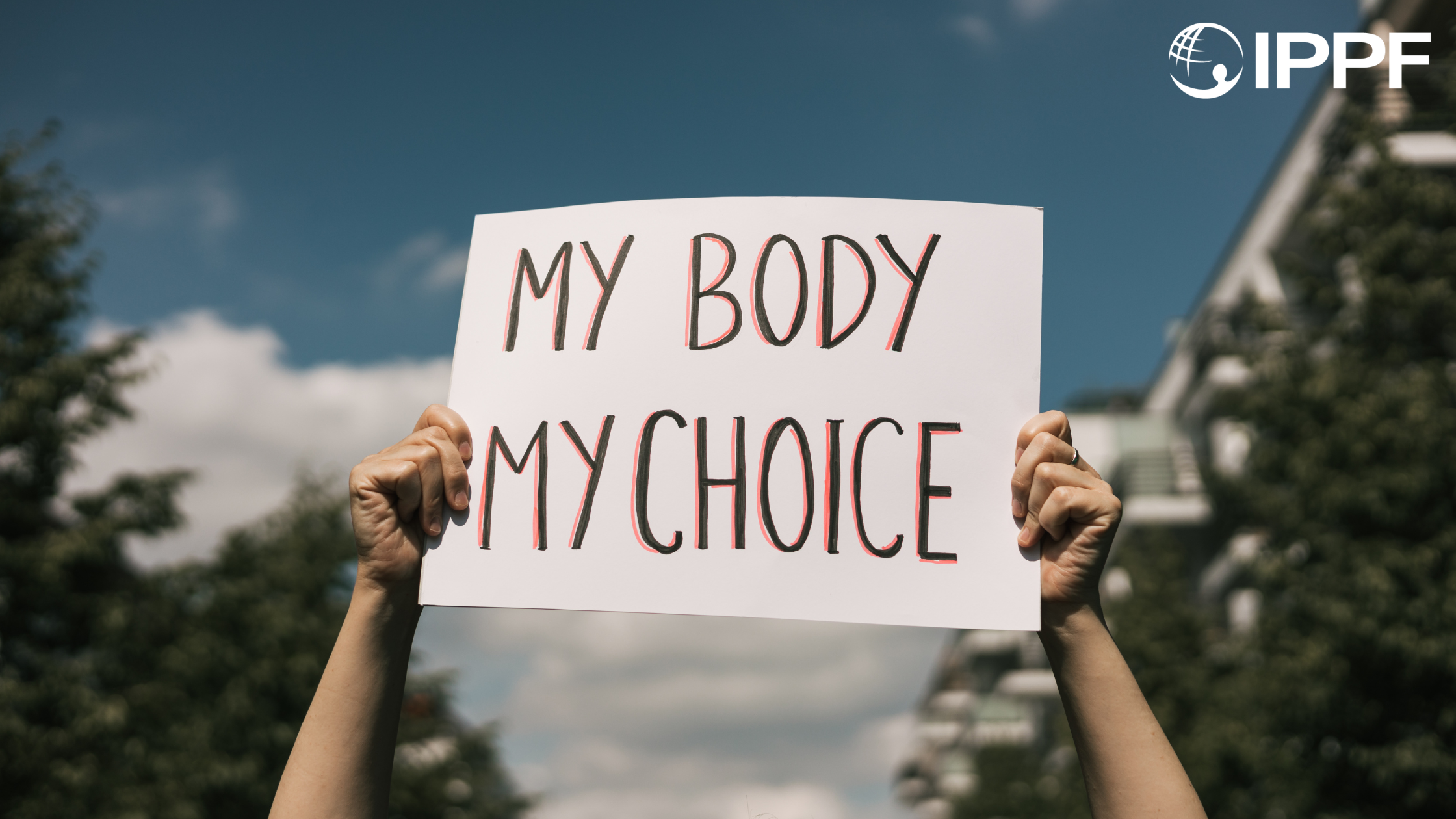
Every day, over 700 women and girls die - one every two minutes, from preventable causes related to childbirth and pregnancy. Despite this stark reality, this week, a small minority of states tried to sabotage UN negotiations to push an anti-rights and anti-health agenda on the world. From April 7th to 11th 2025, the 58th session of the Commission on Population and Development (CPD) took place with the theme of “Ensuring healthy lives and promoting well-being for all at all ages”. Governments from all over the world came together in a moment of global health crises to address persistent and continued threats that jeopardize the health and wellbeing of all women and girls worldwide. This UN process is a critical space where governments, UN agencies, civil society and young people come together to discuss priorities and make shared commitments on sexual and reproductive health and rights. For over 30 years, governments have agreed on standards for access to health services for women and girls. A very small minority of vested interests are determined to use this convening to attack the Sustainable Development Agenda. We refuse to allow the malicious undermining of hard won gains that impact the lives of millions of women and girls around the world.As recently as last year, governments from all regions of the world reached an agreement to reaffirm these shared goals and commitments. This week, in the face of efforts to sabotage the discussions and negotiations, a vast majority of countries have stepped up to hold the line on the right to health, especially of all women and girls. This disruptive behaviour from a very small minority of extremist anti-rights administrations, is not just a threat to the agenda being discussed today, but also for international cooperation on human rights and sustainable development at large. They are preventing the international community from moving forward and making progress for people’s health, rights and well-being.
media_center
| 11 April 2025
CPD58 - Statement on behalf of the International Sexual and Reproductive Rights Coalition (ISRRC)
Every day, over 700 women and girls die - one every two minutes, from preventable causes related to childbirth and pregnancy. Despite this stark reality, this week, a small minority of states tried to sabotage UN negotiations to push an anti-rights and anti-health agenda on the world. From April 7th to 11th 2025, the 58th session of the Commission on Population and Development (CPD) took place with the theme of “Ensuring healthy lives and promoting well-being for all at all ages”. Governments from all over the world came together in a moment of global health crises to address persistent and continued threats that jeopardize the health and wellbeing of all women and girls worldwide. This UN process is a critical space where governments, UN agencies, civil society and young people come together to discuss priorities and make shared commitments on sexual and reproductive health and rights. For over 30 years, governments have agreed on standards for access to health services for women and girls. A very small minority of vested interests are determined to use this convening to attack the Sustainable Development Agenda. We refuse to allow the malicious undermining of hard won gains that impact the lives of millions of women and girls around the world.As recently as last year, governments from all regions of the world reached an agreement to reaffirm these shared goals and commitments. This week, in the face of efforts to sabotage the discussions and negotiations, a vast majority of countries have stepped up to hold the line on the right to health, especially of all women and girls. This disruptive behaviour from a very small minority of extremist anti-rights administrations, is not just a threat to the agenda being discussed today, but also for international cooperation on human rights and sustainable development at large. They are preventing the international community from moving forward and making progress for people’s health, rights and well-being.
media center
| 14 March 2025
Abortion is Healthcare. Stigma is the Crisis: Global Day of Action to Destigmatize Abortion – March 28
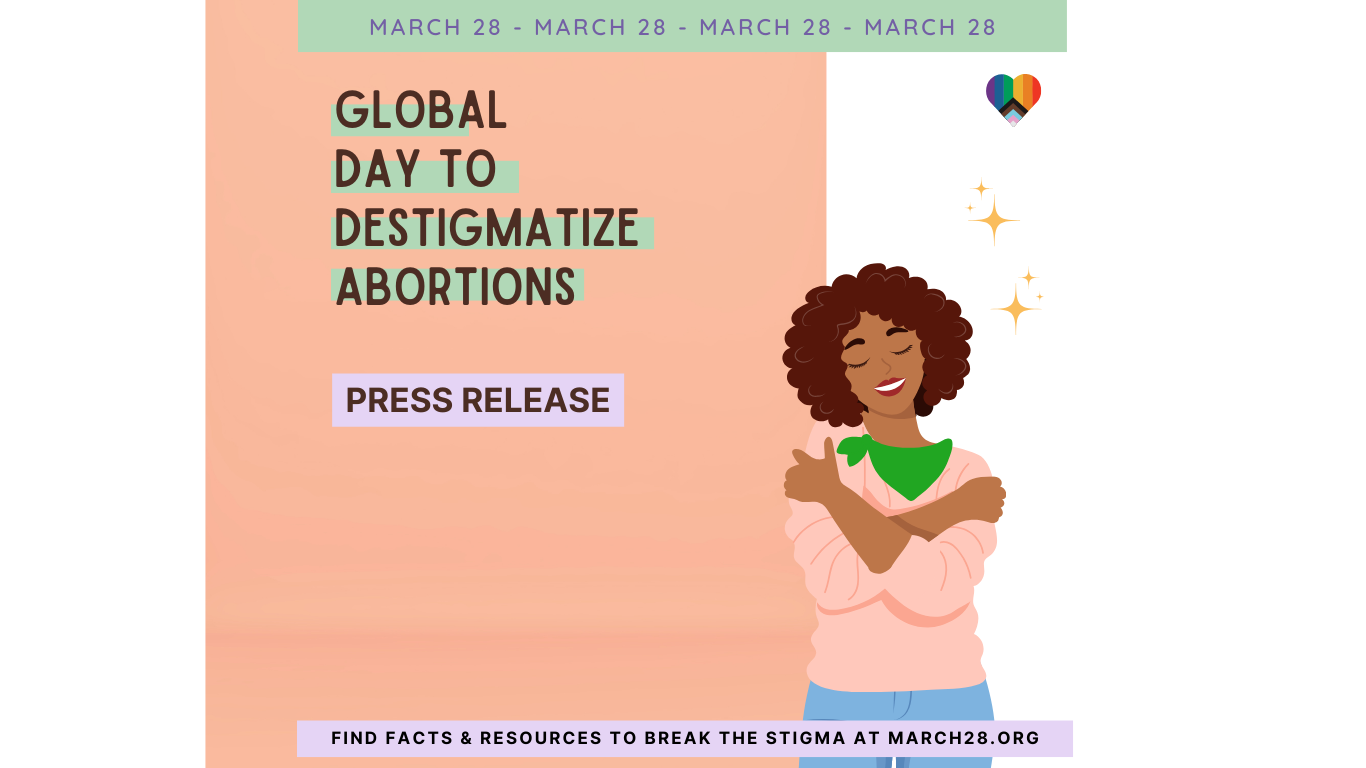
28 March 2025 - Today, reproductive justice activists worldwide are mobilising for the Global Day of Action to Destigmatize Abortion. Over 180 feminist organisations and collectives are uniting to challenge harmful narratives, dismantle barriers, and demand safe, stigma-free abortion access everywhere. Abortion stigma, fuelled by patriarchy, misinformation, and control, continues to block access, criminalise care, and force people into unsafe conditions. This global campaign demands an end to abortion bans, medical gatekeeping, and the cultural shame that silences those who seek care. “Deciding whether to continue a pregnancy is our right. The only people who should feel shame are those forcing us into unsafe conditions.” – Mariana Gonzalez, the International Network for the Reduction of Abortion Discrimination and Stigma (Inroads). Abortion bans don’t just control bodies—they reinforce systemic racism and classism. Wealthy people will always find ways to access safe abortion care, while those from marginalised communities—especially Black, Indigenous, and low-income people—face the harshest consequences. These bans are rooted in a long history of reproductive oppression, targeting those already denied healthcare, economic stability, and bodily autonomy. Restricting abortion access isn’t about "protecting life", it’s about controlling who gets to make decisions about their future. As anti-abortion movements gain momentum worldwide, this day of action is a rallying cry for bodily autonomy and real access to abortion care. “Our fight has never been just about abortion—it’s about freedom. Who controls our bodies? We do. Anti-choice forces believe the state, the church, or the government should control us. But they will never stop us—and they will never stop abortion.” – Mara Clarke, Supporting Abortions for Everyone (S.A.F.E.) “We refuse to be dictated to by anti-rights groups and governments that have seized power. We will continue to fight for sexual and reproductive health and rights for all—especially those who have been excluded and criminalised.” – Melissa Cockroft, Global Lead - Abortion, IPPF Globally, 1 in 3 women will have an abortion in their lifetime. Every year, 73 million abortions take place, accounting for 61% of all unintended pregnancies. Bans don’t stop abortions from happening, they just make it more dangerous. Giving birth is 14 times riskier than having an abortion, yet anti-choice bans claim to care about safety while forcing many into unwanted pregnancies with far greater health risks. “Abortion bans don’t protect anyone. They isolate people, fuel criminalisation, and put lives at risk. Everyone deserves access to care without fear or shame.” – Debanjana Choudhuri, WGNRR The fight isn’t just about legality, it’s about access, dignity, and justice. While anti-abortion forces push for criminalisation, activists are building a global network of support that transcends borders, oppressive systems, and state control. “We are constructing a new model for reproductive justice—one that is rooted in community, care, and the belief that everyone has the right to decide what happens to their own body.” – Lucia Berro Pizzarossa, WHW & Vecinas Feministas Abortion is a human right, and we are claiming it. ENDS For media inquiries, contact: Mariana, Communications Manager, inroads – mariana@makeinroads.org Nerida Williams, Senior Media Advisor, IPPF – newilliams@ippf.org Notes: In over 50 countries, abortion is still criminalized, putting lives at risk. Even where it is legal, stigma-fueled barriers limit authentic access and force people to navigate unnecessary restrictions, shaming, and delays. Self-managed abortion is recognized by the World Health Organization (WHO) as safe and effective. Studies show that 99% of people who use abortion pills successfully end their pregnancies, with 96.4% not requiring any surgical support. (National Center for Biotechnology Information) Abortion is also essential for miscarriage care. The same medical procedures and medication used for abortion are critical for safely treating common miscarriages and preventing complications. Abortion bans put all pregnant people at great risk. (Mayo Clinic) To commemorate this day, multiple resources & events are being organized and shared on the march28.org website. Abortion advocates and allies are invited to join the events and raise awareness on March 28th.
media_center
| 28 March 2025
Abortion is Healthcare. Stigma is the Crisis: Global Day of Action to Destigmatize Abortion – March 28
28 March 2025 - Today, reproductive justice activists worldwide are mobilising for the Global Day of Action to Destigmatize Abortion. Over 180 feminist organisations and collectives are uniting to challenge harmful narratives, dismantle barriers, and demand safe, stigma-free abortion access everywhere. Abortion stigma, fuelled by patriarchy, misinformation, and control, continues to block access, criminalise care, and force people into unsafe conditions. This global campaign demands an end to abortion bans, medical gatekeeping, and the cultural shame that silences those who seek care. “Deciding whether to continue a pregnancy is our right. The only people who should feel shame are those forcing us into unsafe conditions.” – Mariana Gonzalez, the International Network for the Reduction of Abortion Discrimination and Stigma (Inroads). Abortion bans don’t just control bodies—they reinforce systemic racism and classism. Wealthy people will always find ways to access safe abortion care, while those from marginalised communities—especially Black, Indigenous, and low-income people—face the harshest consequences. These bans are rooted in a long history of reproductive oppression, targeting those already denied healthcare, economic stability, and bodily autonomy. Restricting abortion access isn’t about "protecting life", it’s about controlling who gets to make decisions about their future. As anti-abortion movements gain momentum worldwide, this day of action is a rallying cry for bodily autonomy and real access to abortion care. “Our fight has never been just about abortion—it’s about freedom. Who controls our bodies? We do. Anti-choice forces believe the state, the church, or the government should control us. But they will never stop us—and they will never stop abortion.” – Mara Clarke, Supporting Abortions for Everyone (S.A.F.E.) “We refuse to be dictated to by anti-rights groups and governments that have seized power. We will continue to fight for sexual and reproductive health and rights for all—especially those who have been excluded and criminalised.” – Melissa Cockroft, Global Lead - Abortion, IPPF Globally, 1 in 3 women will have an abortion in their lifetime. Every year, 73 million abortions take place, accounting for 61% of all unintended pregnancies. Bans don’t stop abortions from happening, they just make it more dangerous. Giving birth is 14 times riskier than having an abortion, yet anti-choice bans claim to care about safety while forcing many into unwanted pregnancies with far greater health risks. “Abortion bans don’t protect anyone. They isolate people, fuel criminalisation, and put lives at risk. Everyone deserves access to care without fear or shame.” – Debanjana Choudhuri, WGNRR The fight isn’t just about legality, it’s about access, dignity, and justice. While anti-abortion forces push for criminalisation, activists are building a global network of support that transcends borders, oppressive systems, and state control. “We are constructing a new model for reproductive justice—one that is rooted in community, care, and the belief that everyone has the right to decide what happens to their own body.” – Lucia Berro Pizzarossa, WHW & Vecinas Feministas Abortion is a human right, and we are claiming it. ENDS For media inquiries, contact: Mariana, Communications Manager, inroads – mariana@makeinroads.org Nerida Williams, Senior Media Advisor, IPPF – newilliams@ippf.org Notes: In over 50 countries, abortion is still criminalized, putting lives at risk. Even where it is legal, stigma-fueled barriers limit authentic access and force people to navigate unnecessary restrictions, shaming, and delays. Self-managed abortion is recognized by the World Health Organization (WHO) as safe and effective. Studies show that 99% of people who use abortion pills successfully end their pregnancies, with 96.4% not requiring any surgical support. (National Center for Biotechnology Information) Abortion is also essential for miscarriage care. The same medical procedures and medication used for abortion are critical for safely treating common miscarriages and preventing complications. Abortion bans put all pregnant people at great risk. (Mayo Clinic) To commemorate this day, multiple resources & events are being organized and shared on the march28.org website. Abortion advocates and allies are invited to join the events and raise awareness on March 28th.
media center
| 10 March 2025
The Commission on the Status of Women Adopts by Consensus the Political Declaration
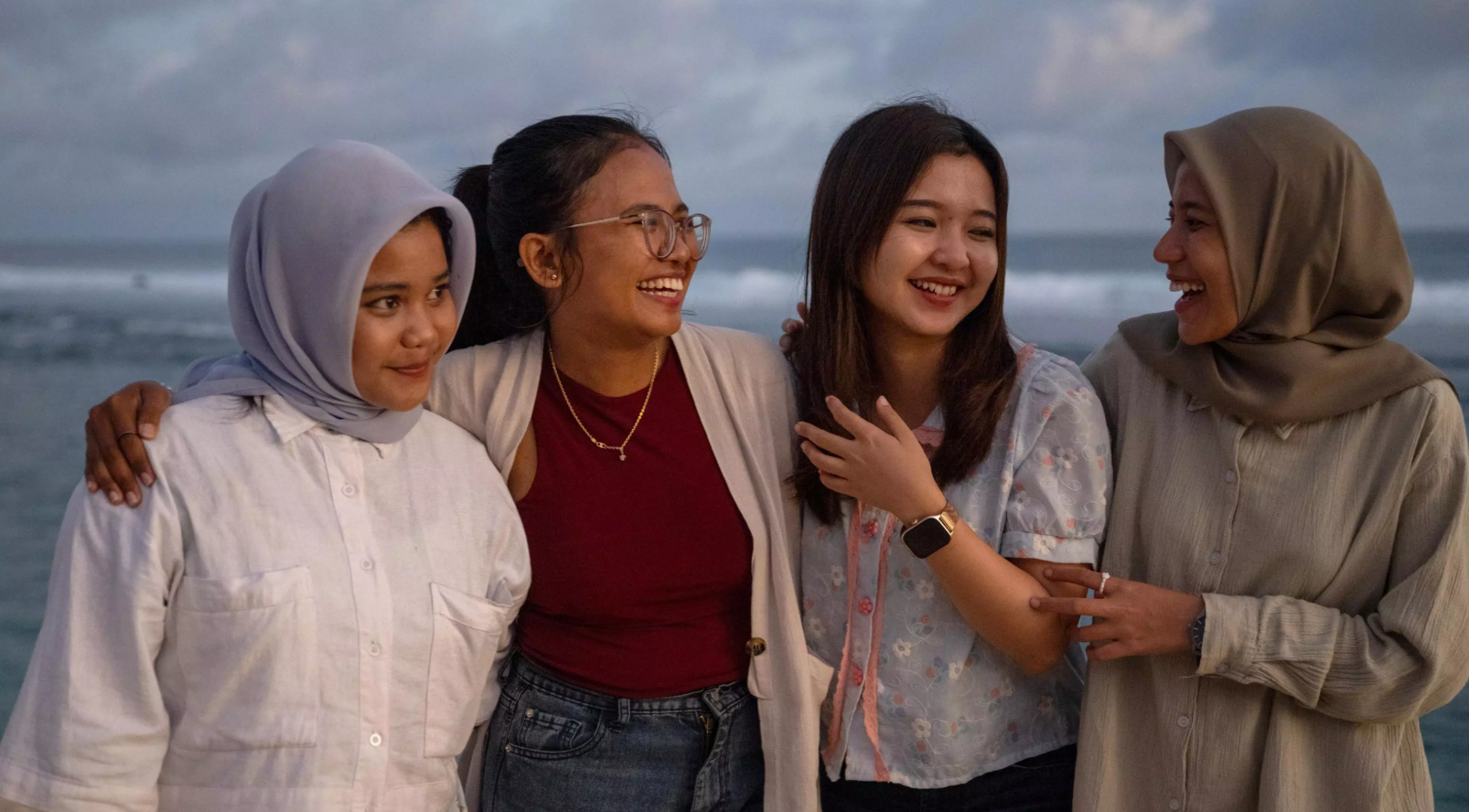
IPPF welcomes the political declaration adopted by the Commission on the Status of Women (CSW). As we are marking 30 years after the Fourth World Conference on Women in Beijing in 1995, UN Member States need to urgently accelerate the work to achieve their commitments to advancing the rights of all women and girls, especially in light of the current global pushback against fundamental human rights. IPPF welcomes the adoption of the Political Declaration on the occasion of thirtieth anniversary of the Fourth World Conference on Women and adoption of the Beijing Declaration and Platform for Action, in which Governments reaffirm their commitment to accelerate action to achieve gender equality and the empowerment of all women and girls. IPPF actively engaged in the process by providing technical inputs to Member States and raising awareness of the situations of women, girls and the most marginalized communities and bringing their real-life experiences into the conversation. The geopolitical backdrop to this year’s negotiations was extremely divided, with key issues such sexual and reproductive health and rights, multiple and intersecting forms of discrimination and even the most basic agreed terms around gender equality being challenged. Following the extensive and challenging political negotiations, the consensus adoption of this political declaration underscores strong cross-regional support for the human rights of all women and girls, the Commission’s mandate, the priority theme and the multilateral system. The true impact of this political declaration will be measured by its implementation at the national level. As a locally rooted yet globally connected Federation, IPPF and its Member Associations are uniquely positioned to drive the implementation of the political declaration across national, regional, and global spheres. By doing so, we can ensure meaningful change in the lives of women, adolescents, girls, and other marginalized communities where it matters most. As we mark the 30th anniversary of the Beijing Declaration and Programme of Action and find ourselves only 5 years away from the 2030 deadline for the UN Sustainable Development Goals (SDGs), no States are on track to achieve gender equality. Women, girls and marginalized communities continue to suffer disproportionally from lack of equality and have their fundamental human rights undermined every day, with grave consequences. In this current political moment, where governments are cutting funding and scale back support for basic lifesaving assistance for the most vulnerable, the renewed political commitment of governments with the adoption of the Political Declaration to accelerate the fulfilment of rights of all women and girls is an important step. It is now crucial to collectively hold governments accountable for their commitments. IPPF particularly welcomes the inclusion of: strong references to human rights of all women and girls, reflecting Member States’ unwavering commitment to strengthen their collective efforts toward the full, effective, and accelerated implementation of the Beijing Agenda, including ensuring the full enjoyment of women’s and girls’ human rights. The reaffirmation of the need for gender-responsive budgeting and gender-responsive implementation of the 2030 Agenda, which is crucial for addressing structural inequalities. The reference to multiple and intersecting forms of discrimination in the text, since women, adolescents, girls, and marginalized groups who experience multiple and intersecting forms of discrimination, are more likely to be structurally excluded. It is therefore important that the text recognizes the challenges in achieving gender equality for these groups. A strong paragraph on the right to health for women and girls throughout their life course, including a reference to Universal Health Coverage: The commitment to ensure that victims of and survivors of sexual and gender-based violence and sexual violence in conflict have prompt and universal access to quality social and health care services and access to justice. The commitment to addressing the risks and challenges emerging from the use of technologies, with full respect for the human rights of all women and girls, both online and offline, and that gender-perspective should be mainstreamed in policy decisions and frameworks that guide the development of digital technologies, including artificial intelligence The strong recognition of the role of women and girls in the resolution of armed conflicts, peacebuilding and post-conflict reconstruction. We are pleased that the important contributions of civil society are acknowledged, however, we regret that the Declaration does not explicitly reference Women Human Rights Defenders (WHRDs), whose work is fundamental in advancing gender equality and human rights. However, IPPF is disappointed that language on the importance of sexual and reproductive health and rights (SRHR) as a fundamental component for achieving gender equality was ultimately not included in the Political Declaration, which significantly weakens the text’s scope, as SRHR is fundamental to the lives of women, adolescents, and girls. Furthermore, despite overwhelming data and research demonstrating the benefits of investing in adolescent girls, this critical group remains underrepresented in the Political Declaration. IPPF urges all governments to unite behind this crucial call to action. Three decades after the Beijing Conference and the adoption of the Beijing Declaration and Platform for action, the world faces new and complex challenges to achieving the most fundamental human rights for all, which is further exacerbated by persistent structural inequalities. It is imperative that we act with ambition, courage, and determination to uphold the legacy of Beijing. Looking ahead, we call on the global community to embrace a bold and transformative agenda that secures the rights and well-being of all women, adolescents, and girls and the most marginalized communities—not only for today but for the generations to come. For more information, please contact media@ippf.org - +44 7918 845944 About the International Planned Parenthood Federation IPPF is a global healthcare provider and a leading advocate of sexual and reproductive health and rights (SRHR) for all. Led by a courageous and determined group of women, IPPF was founded in 1952 at the Third International Planned Parenthood Conference. Today, we are a movement of 158 Member Associations and Collaborative Partners with a presence in over 153 countries. Our work is wide-ranging, including comprehensive sex education, provision of contraceptive, safe abortion, and maternal care and responding to humanitarian crises. We pride ourselves on being local through our members and global through our network. At the heart of our mission is the provision of – and advocacy in support of – integrated healthcare to anyone who needs it regardless of race, gender, sex, income, and crucially no matter how remote. Photo credits: IPPF/Hannah Maule-ffinch/Indonesia
media_center
| 10 March 2025
The Commission on the Status of Women Adopts by Consensus the Political Declaration
IPPF welcomes the political declaration adopted by the Commission on the Status of Women (CSW). As we are marking 30 years after the Fourth World Conference on Women in Beijing in 1995, UN Member States need to urgently accelerate the work to achieve their commitments to advancing the rights of all women and girls, especially in light of the current global pushback against fundamental human rights. IPPF welcomes the adoption of the Political Declaration on the occasion of thirtieth anniversary of the Fourth World Conference on Women and adoption of the Beijing Declaration and Platform for Action, in which Governments reaffirm their commitment to accelerate action to achieve gender equality and the empowerment of all women and girls. IPPF actively engaged in the process by providing technical inputs to Member States and raising awareness of the situations of women, girls and the most marginalized communities and bringing their real-life experiences into the conversation. The geopolitical backdrop to this year’s negotiations was extremely divided, with key issues such sexual and reproductive health and rights, multiple and intersecting forms of discrimination and even the most basic agreed terms around gender equality being challenged. Following the extensive and challenging political negotiations, the consensus adoption of this political declaration underscores strong cross-regional support for the human rights of all women and girls, the Commission’s mandate, the priority theme and the multilateral system. The true impact of this political declaration will be measured by its implementation at the national level. As a locally rooted yet globally connected Federation, IPPF and its Member Associations are uniquely positioned to drive the implementation of the political declaration across national, regional, and global spheres. By doing so, we can ensure meaningful change in the lives of women, adolescents, girls, and other marginalized communities where it matters most. As we mark the 30th anniversary of the Beijing Declaration and Programme of Action and find ourselves only 5 years away from the 2030 deadline for the UN Sustainable Development Goals (SDGs), no States are on track to achieve gender equality. Women, girls and marginalized communities continue to suffer disproportionally from lack of equality and have their fundamental human rights undermined every day, with grave consequences. In this current political moment, where governments are cutting funding and scale back support for basic lifesaving assistance for the most vulnerable, the renewed political commitment of governments with the adoption of the Political Declaration to accelerate the fulfilment of rights of all women and girls is an important step. It is now crucial to collectively hold governments accountable for their commitments. IPPF particularly welcomes the inclusion of: strong references to human rights of all women and girls, reflecting Member States’ unwavering commitment to strengthen their collective efforts toward the full, effective, and accelerated implementation of the Beijing Agenda, including ensuring the full enjoyment of women’s and girls’ human rights. The reaffirmation of the need for gender-responsive budgeting and gender-responsive implementation of the 2030 Agenda, which is crucial for addressing structural inequalities. The reference to multiple and intersecting forms of discrimination in the text, since women, adolescents, girls, and marginalized groups who experience multiple and intersecting forms of discrimination, are more likely to be structurally excluded. It is therefore important that the text recognizes the challenges in achieving gender equality for these groups. A strong paragraph on the right to health for women and girls throughout their life course, including a reference to Universal Health Coverage: The commitment to ensure that victims of and survivors of sexual and gender-based violence and sexual violence in conflict have prompt and universal access to quality social and health care services and access to justice. The commitment to addressing the risks and challenges emerging from the use of technologies, with full respect for the human rights of all women and girls, both online and offline, and that gender-perspective should be mainstreamed in policy decisions and frameworks that guide the development of digital technologies, including artificial intelligence The strong recognition of the role of women and girls in the resolution of armed conflicts, peacebuilding and post-conflict reconstruction. We are pleased that the important contributions of civil society are acknowledged, however, we regret that the Declaration does not explicitly reference Women Human Rights Defenders (WHRDs), whose work is fundamental in advancing gender equality and human rights. However, IPPF is disappointed that language on the importance of sexual and reproductive health and rights (SRHR) as a fundamental component for achieving gender equality was ultimately not included in the Political Declaration, which significantly weakens the text’s scope, as SRHR is fundamental to the lives of women, adolescents, and girls. Furthermore, despite overwhelming data and research demonstrating the benefits of investing in adolescent girls, this critical group remains underrepresented in the Political Declaration. IPPF urges all governments to unite behind this crucial call to action. Three decades after the Beijing Conference and the adoption of the Beijing Declaration and Platform for action, the world faces new and complex challenges to achieving the most fundamental human rights for all, which is further exacerbated by persistent structural inequalities. It is imperative that we act with ambition, courage, and determination to uphold the legacy of Beijing. Looking ahead, we call on the global community to embrace a bold and transformative agenda that secures the rights and well-being of all women, adolescents, and girls and the most marginalized communities—not only for today but for the generations to come. For more information, please contact media@ippf.org - +44 7918 845944 About the International Planned Parenthood Federation IPPF is a global healthcare provider and a leading advocate of sexual and reproductive health and rights (SRHR) for all. Led by a courageous and determined group of women, IPPF was founded in 1952 at the Third International Planned Parenthood Conference. Today, we are a movement of 158 Member Associations and Collaborative Partners with a presence in over 153 countries. Our work is wide-ranging, including comprehensive sex education, provision of contraceptive, safe abortion, and maternal care and responding to humanitarian crises. We pride ourselves on being local through our members and global through our network. At the heart of our mission is the provision of – and advocacy in support of – integrated healthcare to anyone who needs it regardless of race, gender, sex, income, and crucially no matter how remote. Photo credits: IPPF/Hannah Maule-ffinch/Indonesia

media center
| 29 November 2024
World: States must step up protection for abortion care providers
On International Women Human Rights Defenders Day, a coalition of human rights organizations are launching a new set of guidelines for governments to protect frontline abortion rights defenders, including healthcare providers. Amnesty International, the International Planned Parenthood Federation (IPPF), Ipas, MSI Reproductive Choices, the Organisation Pour Le Dialogue Pour L’Avortement Sécurisé (ODAS Centre) and the International Confederation of Midwives (ICM) published the Key principles and actions to safeguard abortion care providers as human rights defenders. The document provides a set of concrete recommendations for governments to guarantee that health professionals and other human rights defenders of the right to abortion care for women, girls and pregnant people, can do so without fear of attacks and intimidation. “Despite the global progress we have seen on sexual and reproductive health and rights over recent years, including steps to decriminalize abortion in many countries, defending abortion rights, which includes the provision of abortion by healthcare providers, remains a dangerous job,” said Fernanda Doz Costa, Gender, Racial Justice, Migrants & Refugees Programme Director at Amnesty International. “Abortion rights defenders are failed by many States. On the one hand, States are negligent in their obligation to protect them while, on the other hand, abortion continues to be restricted and criminalized. As such defenders are deemed less ‘deserving’ of support and protection and are actively targeted. The Key Principles show governments how to break this cycle,” said Melissa Cockroft, Global Lead on Abortion, IPPF. “Democracy, human rights, and abortion rights are under attack, and so too are the frontline defenders of these rights. They risk physical and verbal attacks, threats, smears and intimidation to ensure people have access to abortion – a critical and essential health care service. We stand with them today and every day in the fight for human rights, and call on the global community to do the same,” said Dr. Anu Kumar, President and CEO of Ipas. The Key Principles include practical recommendations to: Prevent violations by implementing specific protection protocols and establishing channels to report harassment and receive support; Enable defenders to exercise their rights without fear by ensuring universal access to comprehensive sexual and reproductive health, and decriminalizing abortion – as reinforced by the WHO’s Abortion guidelines; Safeguard defenders’ rights by protecting civic space and tackling abortion stigma; Provide redress, by stopping the criminalization of abortion defenders, and by bringing to justice those who attack them; “As the organized rollback of reproductive rights continues, the attacks being directed at healthcare providers are getting worse. It's time for States to uphold their duty and defend those who are risking everything to provide lifesaving care. We look forward to working alongside and together with governments, professional associations, donors, health facility managers, and civil society organisations to ensure frontline healthcare providers are given the support they deserve,” said Simon Cooke, MSI Reproductive Choices’ CEO. "Comprehensive abortion care is an essential health service. Midwives who provide these services are often subjected to discrimination, intimidation, and in some cases, even violence. In order to uphold women's right to safe abortion care, we need to protect and enable the midwives and health professionals who provide these services. To do this, professional associations, civil society, policy makers and governments need to implement the Key principles and actions to safeguard abortion care providers as human rights defenders," said Sandra Oyarzo Torres, ICM President. “We refuse to stay silent in the face of constant attempts to restrict and criminalize abortion and its defenders, and we commit to stand firmly with this fundamental human right,” said Kadidiatou SOW, Director of the ODAS Centre. An Amnesty International report in 2023 detailed the danger and difficulties faced by those who defend abortion rights and provide access to services, often in challenging circumstances, including midwives, doctors, nurses, doulas, activists and all those who help pregnant people manage their own abortions with medication. The report evidenced how many people working in healthcare settings are exposed to hostility and abuse from colleagues, employers, patients and others who oppose abortion. Those working outside health facilities are also exposed to physical and verbal attacks, threats, smears and intimidation. Some are criminalized through prosecutions, investigations and arrests. The report also documents cases of stigmatization, isolation and ostracization, and restrictions on rights to freedom of expression, association and assembly. Attacks are more common in countries where abortion is stigmatized, restricted or criminalised. “Abortion is essential healthcare. Yet, as healthcare providers we are routinely faced with discrimination and violence for simply doing our jobs. Restrictive abortion laws and attitudes cause harm. They create hostile environments that feed abortion-related stigma that smears healthcare providers and those that seek abortion care as criminals. We all know colleagues, unfortunately, who have battled with stigma, career blocking, intimidation, physical attack, imprisonment, and even in the most extreme cases health care providers have been murdered,” said Dr Anne-Beatrice Kihara, President of the International Federation of Gynecology and Obstetrics (FIGO). For more information or to organize an interview, please contact: press@amnesty.org or media@ippf.org
media_center
| 30 September 2026
World: States must step up protection for abortion care providers
On International Women Human Rights Defenders Day, a coalition of human rights organizations are launching a new set of guidelines for governments to protect frontline abortion rights defenders, including healthcare providers. Amnesty International, the International Planned Parenthood Federation (IPPF), Ipas, MSI Reproductive Choices, the Organisation Pour Le Dialogue Pour L’Avortement Sécurisé (ODAS Centre) and the International Confederation of Midwives (ICM) published the Key principles and actions to safeguard abortion care providers as human rights defenders. The document provides a set of concrete recommendations for governments to guarantee that health professionals and other human rights defenders of the right to abortion care for women, girls and pregnant people, can do so without fear of attacks and intimidation. “Despite the global progress we have seen on sexual and reproductive health and rights over recent years, including steps to decriminalize abortion in many countries, defending abortion rights, which includes the provision of abortion by healthcare providers, remains a dangerous job,” said Fernanda Doz Costa, Gender, Racial Justice, Migrants & Refugees Programme Director at Amnesty International. “Abortion rights defenders are failed by many States. On the one hand, States are negligent in their obligation to protect them while, on the other hand, abortion continues to be restricted and criminalized. As such defenders are deemed less ‘deserving’ of support and protection and are actively targeted. The Key Principles show governments how to break this cycle,” said Melissa Cockroft, Global Lead on Abortion, IPPF. “Democracy, human rights, and abortion rights are under attack, and so too are the frontline defenders of these rights. They risk physical and verbal attacks, threats, smears and intimidation to ensure people have access to abortion – a critical and essential health care service. We stand with them today and every day in the fight for human rights, and call on the global community to do the same,” said Dr. Anu Kumar, President and CEO of Ipas. The Key Principles include practical recommendations to: Prevent violations by implementing specific protection protocols and establishing channels to report harassment and receive support; Enable defenders to exercise their rights without fear by ensuring universal access to comprehensive sexual and reproductive health, and decriminalizing abortion – as reinforced by the WHO’s Abortion guidelines; Safeguard defenders’ rights by protecting civic space and tackling abortion stigma; Provide redress, by stopping the criminalization of abortion defenders, and by bringing to justice those who attack them; “As the organized rollback of reproductive rights continues, the attacks being directed at healthcare providers are getting worse. It's time for States to uphold their duty and defend those who are risking everything to provide lifesaving care. We look forward to working alongside and together with governments, professional associations, donors, health facility managers, and civil society organisations to ensure frontline healthcare providers are given the support they deserve,” said Simon Cooke, MSI Reproductive Choices’ CEO. "Comprehensive abortion care is an essential health service. Midwives who provide these services are often subjected to discrimination, intimidation, and in some cases, even violence. In order to uphold women's right to safe abortion care, we need to protect and enable the midwives and health professionals who provide these services. To do this, professional associations, civil society, policy makers and governments need to implement the Key principles and actions to safeguard abortion care providers as human rights defenders," said Sandra Oyarzo Torres, ICM President. “We refuse to stay silent in the face of constant attempts to restrict and criminalize abortion and its defenders, and we commit to stand firmly with this fundamental human right,” said Kadidiatou SOW, Director of the ODAS Centre. An Amnesty International report in 2023 detailed the danger and difficulties faced by those who defend abortion rights and provide access to services, often in challenging circumstances, including midwives, doctors, nurses, doulas, activists and all those who help pregnant people manage their own abortions with medication. The report evidenced how many people working in healthcare settings are exposed to hostility and abuse from colleagues, employers, patients and others who oppose abortion. Those working outside health facilities are also exposed to physical and verbal attacks, threats, smears and intimidation. Some are criminalized through prosecutions, investigations and arrests. The report also documents cases of stigmatization, isolation and ostracization, and restrictions on rights to freedom of expression, association and assembly. Attacks are more common in countries where abortion is stigmatized, restricted or criminalised. “Abortion is essential healthcare. Yet, as healthcare providers we are routinely faced with discrimination and violence for simply doing our jobs. Restrictive abortion laws and attitudes cause harm. They create hostile environments that feed abortion-related stigma that smears healthcare providers and those that seek abortion care as criminals. We all know colleagues, unfortunately, who have battled with stigma, career blocking, intimidation, physical attack, imprisonment, and even in the most extreme cases health care providers have been murdered,” said Dr Anne-Beatrice Kihara, President of the International Federation of Gynecology and Obstetrics (FIGO). For more information or to organize an interview, please contact: press@amnesty.org or media@ippf.org

media center
| 12 July 2024
Landmark Decision: UN Human Rights Council Adopts First-Ever Resolution with Reference to Sexual Rights
Geneva, 12 July 2024 – The 56th Session of the Human Rights Council concluded today with major advancements for women and girls’ human rights, including the first ever reference to sexual and reproductive health and rights in a negotiated document—which was adopted by consensus. For the first time in UN history, a resolution refers to the full formulation of “sexual and reproductive rights. The resolution, “Human rights in the context of HIV and AIDS,” urges states to address the specific needs of adolescents and young persons, especially girls and young women, and persons with disabilities in the response to HIV, and “to develop (...) sexual and reproductive health services, as well as education programmes on sexual and reproductive health and rights.” It is also the first resolution on HIV adopted by consensus since 2019. In contrast to previously agreed language on ‘sexual and reproductive health and reproductive rights’, the inclusion of ‘sexual rights’ ensures that young people will learn they have the rights to be free from sexual violence, from female genital mutilation, from marital rape, and that they have freedom to build safe, healthy relationships and families with the person they choose. “The language adopted today reflects one of the most highly significant advances on sexual and reproductive rights over the past 30 years at the UN. At a time of increasing attacks on freedom, human rights and bodily autonomy, the Human Rights Council has demonstrated that it is still fit for purpose to protect people’s human rights to live free from sexual violence,” says Estelle Wagner, IPPF’s Senior International Advocacy Adviser in Geneva. During the session, the HRC also adopted the resolution “Elimination of all forms of Discrimination against Women and Girls”, which urges states to repeal “all laws and policies that that criminalize or restrict the exercise of sexual and reproductive health and reproductive rights," in addition to reaffirming the right to bodily autonomy, sexual and reproductive health, reproductive rights, access to safe abortion, and comprehensive sexuality education. The resolution also addresses menstrual poverty for the first time in a UN resolution. New resolutions on Accelerating Progress to Prevent Adolescent Pregnancy, and Technology-Facilitated Gender-Based Violence were also adopted during this session, as well as an updated resolution on Menstrual Hygiene Management, Human Rights and Gender Equality, which took a stronger health and humanitarian lens than the previous iteration. IPPF worked hand in hand with Member States and civil society partners to ensure progressive and inclusive language in these resolutions would have a meaningful impact on people’s everyday lives. In solidarity with women, girls and marginalized communities around the world who still face rights violations and significant barriers to enjoy their sexual and reproductive rights, IPPF remains committed to advancing human rights at all levels – from the UN to the local level where our Member Associations tirelessly fight for the sexual and reproductive health and rights of all individuals. We are united, we are strong, and we will not back down until all people can exercise their sexual and reproductive rights free from coercion, discrimination and violence. For media enquiries, please contact media@ippf.org About the International Planned Parenthood Federation The International Planned Parenthood Federation (IPPF) is a global healthcare provider and a leading advocate of sexual and reproductive health and rights (SRHR) for all. We are a movement of 150 Member Associations and Collaborative Partners with a presence in over 146 countries. Building on a proud history of 70 years of achievement, we commit to lead a locally owned, globally connected civil society movement that provides and enables services and champions sexual and reproductive health and rights for all, especially the under-served. We advocate for a world where people are provided with the information they need to make informed decisions about their sexual health and bodies. We stand up and fight for sexual and reproductive rights, and against those who seek to deny people their human right to bodily autonomy and freedom. We deliver care that is rooted in rights, respect, and dignity - no matter what.
media_center
| 12 July 2024
Landmark Decision: UN Human Rights Council Adopts First-Ever Resolution with Reference to Sexual Rights
Geneva, 12 July 2024 – The 56th Session of the Human Rights Council concluded today with major advancements for women and girls’ human rights, including the first ever reference to sexual and reproductive health and rights in a negotiated document—which was adopted by consensus. For the first time in UN history, a resolution refers to the full formulation of “sexual and reproductive rights. The resolution, “Human rights in the context of HIV and AIDS,” urges states to address the specific needs of adolescents and young persons, especially girls and young women, and persons with disabilities in the response to HIV, and “to develop (...) sexual and reproductive health services, as well as education programmes on sexual and reproductive health and rights.” It is also the first resolution on HIV adopted by consensus since 2019. In contrast to previously agreed language on ‘sexual and reproductive health and reproductive rights’, the inclusion of ‘sexual rights’ ensures that young people will learn they have the rights to be free from sexual violence, from female genital mutilation, from marital rape, and that they have freedom to build safe, healthy relationships and families with the person they choose. “The language adopted today reflects one of the most highly significant advances on sexual and reproductive rights over the past 30 years at the UN. At a time of increasing attacks on freedom, human rights and bodily autonomy, the Human Rights Council has demonstrated that it is still fit for purpose to protect people’s human rights to live free from sexual violence,” says Estelle Wagner, IPPF’s Senior International Advocacy Adviser in Geneva. During the session, the HRC also adopted the resolution “Elimination of all forms of Discrimination against Women and Girls”, which urges states to repeal “all laws and policies that that criminalize or restrict the exercise of sexual and reproductive health and reproductive rights," in addition to reaffirming the right to bodily autonomy, sexual and reproductive health, reproductive rights, access to safe abortion, and comprehensive sexuality education. The resolution also addresses menstrual poverty for the first time in a UN resolution. New resolutions on Accelerating Progress to Prevent Adolescent Pregnancy, and Technology-Facilitated Gender-Based Violence were also adopted during this session, as well as an updated resolution on Menstrual Hygiene Management, Human Rights and Gender Equality, which took a stronger health and humanitarian lens than the previous iteration. IPPF worked hand in hand with Member States and civil society partners to ensure progressive and inclusive language in these resolutions would have a meaningful impact on people’s everyday lives. In solidarity with women, girls and marginalized communities around the world who still face rights violations and significant barriers to enjoy their sexual and reproductive rights, IPPF remains committed to advancing human rights at all levels – from the UN to the local level where our Member Associations tirelessly fight for the sexual and reproductive health and rights of all individuals. We are united, we are strong, and we will not back down until all people can exercise their sexual and reproductive rights free from coercion, discrimination and violence. For media enquiries, please contact media@ippf.org About the International Planned Parenthood Federation The International Planned Parenthood Federation (IPPF) is a global healthcare provider and a leading advocate of sexual and reproductive health and rights (SRHR) for all. We are a movement of 150 Member Associations and Collaborative Partners with a presence in over 146 countries. Building on a proud history of 70 years of achievement, we commit to lead a locally owned, globally connected civil society movement that provides and enables services and champions sexual and reproductive health and rights for all, especially the under-served. We advocate for a world where people are provided with the information they need to make informed decisions about their sexual health and bodies. We stand up and fight for sexual and reproductive rights, and against those who seek to deny people their human right to bodily autonomy and freedom. We deliver care that is rooted in rights, respect, and dignity - no matter what.
media center
| 28 April 2026
PRESS RELEASE: Groundbreaking new report outlines the impact of Australia’s investment in SRHR
28 April 2026, Narrm (Melbourne) - Guttmacher has today released its latest report '‘Just the Numbers Australia 2026’’, providing vital analysis on the impact of Australia’s foreign aid contributions for sexual and reproductive health and rights (SRHR) programming in the Asia and Pacific Region. Australia has established itself as an incredibly important partner in advancing SRHR, particularly across Asia and the Pacific region, where it directs nearly all of its bilateral family planning support. SRHR accounted for approximately 2.8% of Australia’s official development assistance in 2023.Australia contributed an estimated AUD $49.2 million in 2024 for family planning. This investment enabled roughly 2.8 million women and couples globally to access modern contraception, leading to 830,000 unintended pregnancies averted. Yet significant gaps remain in the region, with 27.7 million women estimated to have an unmet demand for modern contraception. The research found that even modest investments at the country level would have a profound impact. For example, an additional AUD $1 million per year for the Philippines would serve an extra 56,000 contraceptive users, reducing unmet demand by 5%. Elizabeth Sully, Director of International Research at the Guttmacher Institute highlighted: “Australia's foreign investments in family planning are delivering measurable, life-saving results, but with global sexual and reproductive health financing in crisis, the stakes have never been higher. Australia has a real opportunity to deepen its leadership on gender equality and reproductive choice--and the data shows exactly what sustained investment can achieve: preventing unintended pregnancies, unsafe abortions, and maternal deaths. These aren't abstract numbers. They are real people who depend on these services.”Maria Antoineta Alcade, IPPF’s Director General, reflected: “We know that contraceptive services provide a significant return on investment - but most importantly, it's what women want and ask for. The question is not whether we can afford to invest in family planning - it’s whether we can afford not to. Our responsibility, as global leaders and funders, is to listen, and to act on what women need to prosper and thrive. These investments are not abstract, they prevent unintended pregnancies, unsafe abortions and maternal deaths, and give women the ability to have control over their own futures.”ENDS For further information or to arrange media interviews with our spokespeople from IPPF or Guttmacher, please contact Nerida Williams on newilliams@ippf.org or +66 62868 3089 (WhatsApp). NotesTo download the full report, please visit this link: https://www.guttmacher.org/2026/04/just-numbers-australia-global-srhr-investment-impact-2024 Australia is an established development partner in SRHR, contributing a portion of its official development assistance to expand access to essential services across low- and middle-income countries (LMICs). These investments have delivered measurable, life-saving results.In 2024, Australia’s family planning funding—estimated at AUD$49.2 million—supported access to modern contraception for 2.8 million women and couples globally, resulting in:830,000 unintended pregnancies averted303,000 unsafe abortions avoided259,000 unplanned births preventedApproximately 588 maternal deaths prevented
media_center
| 28 April 2026
PRESS RELEASE: Groundbreaking new report outlines the impact of Australia’s investment in SRHR
28 April 2026, Narrm (Melbourne) - Guttmacher has today released its latest report '‘Just the Numbers Australia 2026’’, providing vital analysis on the impact of Australia’s foreign aid contributions for sexual and reproductive health and rights (SRHR) programming in the Asia and Pacific Region. Australia has established itself as an incredibly important partner in advancing SRHR, particularly across Asia and the Pacific region, where it directs nearly all of its bilateral family planning support. SRHR accounted for approximately 2.8% of Australia’s official development assistance in 2023.Australia contributed an estimated AUD $49.2 million in 2024 for family planning. This investment enabled roughly 2.8 million women and couples globally to access modern contraception, leading to 830,000 unintended pregnancies averted. Yet significant gaps remain in the region, with 27.7 million women estimated to have an unmet demand for modern contraception. The research found that even modest investments at the country level would have a profound impact. For example, an additional AUD $1 million per year for the Philippines would serve an extra 56,000 contraceptive users, reducing unmet demand by 5%. Elizabeth Sully, Director of International Research at the Guttmacher Institute highlighted: “Australia's foreign investments in family planning are delivering measurable, life-saving results, but with global sexual and reproductive health financing in crisis, the stakes have never been higher. Australia has a real opportunity to deepen its leadership on gender equality and reproductive choice--and the data shows exactly what sustained investment can achieve: preventing unintended pregnancies, unsafe abortions, and maternal deaths. These aren't abstract numbers. They are real people who depend on these services.”Maria Antoineta Alcade, IPPF’s Director General, reflected: “We know that contraceptive services provide a significant return on investment - but most importantly, it's what women want and ask for. The question is not whether we can afford to invest in family planning - it’s whether we can afford not to. Our responsibility, as global leaders and funders, is to listen, and to act on what women need to prosper and thrive. These investments are not abstract, they prevent unintended pregnancies, unsafe abortions and maternal deaths, and give women the ability to have control over their own futures.”ENDS For further information or to arrange media interviews with our spokespeople from IPPF or Guttmacher, please contact Nerida Williams on newilliams@ippf.org or +66 62868 3089 (WhatsApp). NotesTo download the full report, please visit this link: https://www.guttmacher.org/2026/04/just-numbers-australia-global-srhr-investment-impact-2024 Australia is an established development partner in SRHR, contributing a portion of its official development assistance to expand access to essential services across low- and middle-income countries (LMICs). These investments have delivered measurable, life-saving results.In 2024, Australia’s family planning funding—estimated at AUD$49.2 million—supported access to modern contraception for 2.8 million women and couples globally, resulting in:830,000 unintended pregnancies averted303,000 unsafe abortions avoided259,000 unplanned births preventedApproximately 588 maternal deaths prevented
media center
| 16 December 2025
Nearly 9 Million Denied Essential Reproductive Healthcare as Trump-Era Funding Cuts Force Global Clinic Closures, IPPF Reports
17 December 2025 - New data reveals the Trump Administration's funding cuts have forced 34 of International Planned Parenthood Federation (IPPF) Member Associations (MAs) to terminate staff, representing 969 jobs across MAs globally. Nearly 9 million clients worldwide are estimated to lose access to contraception, HIV testing, and clinical care for survivors of gender-based violence. This is in large part due to 1,394 health sites that have been forced to close, or not open as planned, many in remote or conflict-affected areas where our partners were the only provider of sexual and reproductive healthcare. IPPF's second global survey, conducted in July 2025 with 86 organizations responding across all regions, documents how U.S. funding withdrawals and policy decisions continue to impede access to sexual and reproductive health information and care in contexts where it’s critically needed. Across the Federation, $87.2 million in funding has been lost from 2025 through to 2029 due to cancelled contracts and reduced budgets. The impacts go far beyond dollar figures; they represent the collapse of health infrastructure that communities have relied on for decades, and a radical shift towards conservative ideologies that deliberately block human rights.By the Numbers: Africa and the Arab World Bear the BruntIPPF MAs in the Africa Region have lost $26.0 million in funding, and those in the Arab World Region have lost $9.4 million, accounting for the majority of service disruptions globally.1,175 health sites have closed (or not been able to open) and 396 staff members lost their jobs in the Africa Region alone, affecting 5.9 million clients.2.6 million clients are set to lose access to sexual and reproductive healthcare in IPPF’s Arab World Region."The Trump Administration's funding cuts have gutted local health systems that took decades to build," says Alvaro Bermejo, IPPF’s Director-General. "We're talking about clinics in remote areas, conflict zones, and places where IPPF MAs are often the only providers of contraception and HIV services. When we close, there's nowhere else for people to go."Commodity Shortages Compound Crisis28 MAs reported declining stock levels of sexual and reproductive health commodities since January 2025, with contraceptive commodities the most impacted. Five MAs in Uganda, Mozambique, Nigeria, Tanzania, and Bangladesh report a combined 2-year commodity funding gap of $13 million, a crisis made worse by the Trump Administration holding $9.7 million worth of U.S.-funded contraceptives in Belgium rather than delivering them to their intended recipients. IPPF and other organizations have offered to redistribute these supplies at no cost to the U.S. government, but all offers have been rejected. The contraceptives represent 28% of Tanzania's total annual need, and many products risk becoming ineligible for import as the U.S. government holds them in storage.Beyond contraception, MAs face shortages in STI testing and treatment commodities, gynecology supplies, and clinical support resources for sexual and gender-based violence survivors.Financial Sustainability at RiskOf the 77 MAs who responded, 33 reported their financial sustainability has been impacted, while 27 reported reduced capacity to engage in partnerships, movement building, and networking with other civil society organizations.The ripple effects extend beyond IPPF. In 2025, several MAs have observed national civil society and NGO partners closing down or reducing staff in their countries, with reduced sexual and reproductive health service provisions reported nationwide.IPPF's ResponseIPPF continues to provide emergency support through its Harm Mitigation Fund, with a second round of grants to be distributed to the most affected MAs. The Federation is also working to address commodity gaps and support organizations facing the most severe service disruptions."We will not allow these radical macho-political agendas to determine who can and cannot access healthcare," says Alvaro. "These funding cuts have clear and immediate consequences. They mean women giving birth without skilled care, people living with HIV unable to access testing and treatment to stay alive, and survivors of violence being turned away from the only clinic in their area."ENDSFor more information or to interview one of our staff, please contact media@ippf.org or +66628683089.
media_center
| 17 December 2025
Nearly 9 Million Denied Essential Reproductive Healthcare as Trump-Era Funding Cuts Force Global Clinic Closures, IPPF Reports
17 December 2025 - New data reveals the Trump Administration's funding cuts have forced 34 of International Planned Parenthood Federation (IPPF) Member Associations (MAs) to terminate staff, representing 969 jobs across MAs globally. Nearly 9 million clients worldwide are estimated to lose access to contraception, HIV testing, and clinical care for survivors of gender-based violence. This is in large part due to 1,394 health sites that have been forced to close, or not open as planned, many in remote or conflict-affected areas where our partners were the only provider of sexual and reproductive healthcare. IPPF's second global survey, conducted in July 2025 with 86 organizations responding across all regions, documents how U.S. funding withdrawals and policy decisions continue to impede access to sexual and reproductive health information and care in contexts where it’s critically needed. Across the Federation, $87.2 million in funding has been lost from 2025 through to 2029 due to cancelled contracts and reduced budgets. The impacts go far beyond dollar figures; they represent the collapse of health infrastructure that communities have relied on for decades, and a radical shift towards conservative ideologies that deliberately block human rights.By the Numbers: Africa and the Arab World Bear the BruntIPPF MAs in the Africa Region have lost $26.0 million in funding, and those in the Arab World Region have lost $9.4 million, accounting for the majority of service disruptions globally.1,175 health sites have closed (or not been able to open) and 396 staff members lost their jobs in the Africa Region alone, affecting 5.9 million clients.2.6 million clients are set to lose access to sexual and reproductive healthcare in IPPF’s Arab World Region."The Trump Administration's funding cuts have gutted local health systems that took decades to build," says Alvaro Bermejo, IPPF’s Director-General. "We're talking about clinics in remote areas, conflict zones, and places where IPPF MAs are often the only providers of contraception and HIV services. When we close, there's nowhere else for people to go."Commodity Shortages Compound Crisis28 MAs reported declining stock levels of sexual and reproductive health commodities since January 2025, with contraceptive commodities the most impacted. Five MAs in Uganda, Mozambique, Nigeria, Tanzania, and Bangladesh report a combined 2-year commodity funding gap of $13 million, a crisis made worse by the Trump Administration holding $9.7 million worth of U.S.-funded contraceptives in Belgium rather than delivering them to their intended recipients. IPPF and other organizations have offered to redistribute these supplies at no cost to the U.S. government, but all offers have been rejected. The contraceptives represent 28% of Tanzania's total annual need, and many products risk becoming ineligible for import as the U.S. government holds them in storage.Beyond contraception, MAs face shortages in STI testing and treatment commodities, gynecology supplies, and clinical support resources for sexual and gender-based violence survivors.Financial Sustainability at RiskOf the 77 MAs who responded, 33 reported their financial sustainability has been impacted, while 27 reported reduced capacity to engage in partnerships, movement building, and networking with other civil society organizations.The ripple effects extend beyond IPPF. In 2025, several MAs have observed national civil society and NGO partners closing down or reducing staff in their countries, with reduced sexual and reproductive health service provisions reported nationwide.IPPF's ResponseIPPF continues to provide emergency support through its Harm Mitigation Fund, with a second round of grants to be distributed to the most affected MAs. The Federation is also working to address commodity gaps and support organizations facing the most severe service disruptions."We will not allow these radical macho-political agendas to determine who can and cannot access healthcare," says Alvaro. "These funding cuts have clear and immediate consequences. They mean women giving birth without skilled care, people living with HIV unable to access testing and treatment to stay alive, and survivors of violence being turned away from the only clinic in their area."ENDSFor more information or to interview one of our staff, please contact media@ippf.org or +66628683089.
media center
| 16 October 2025
Almost US$10 mil in US-Funded Contraceptives May Go to Waste in Belgium as Trump Administration Keeps Them In Holding
16 October 2025 - The International Planned Parenthood Federation (IPPF) has been tracking the developing situation in Brussels, where the Trump administration is holding over $9.7 million of U.S.-funded contraceptives set to be destroyed. In August, IPPF shared that 77 percent of these resources were destined for five countries in the African region, with 1,031,400 injectable contraceptives and 365,100 implants earmarked for Tanzania alone. These countries have specific rules for pharmaceutical imports, and as the U.S. government holds these resources, the risk of them becoming ineligible for import becomes imminent and critical. In addition to the cruel and ideological reasons for withholding these contraceptives, the U.S. government is exploiting import regulations to:Skirt around pressure from the Belgian government that would make incinerating these products in Belgium (Flanders) illegal while they are still eligible for import.Enact their initial plan to ensure these life-saving resources do not reach the communities who need them most by withholding them until they become ineligible for importation, and eligible for legal incineration.Use the import thresholds as a loophole to legally incinerate resources before their expiration dates in 2027 to 2029.“Destination countries, including Tanzania (the main recipient), as well as others such as Malawi, Bangladesh, DR Congo, Kenya, apply importation rules that limit entry to medicines with a specific percentage of remaining shelf life. In Tanzania, for example, products with an original shelf life of more than 24 months cannot be imported if less than 60% of the total shelf life remains,” says Marcel Van Valen, Head of Supply Chain at IPPF. “Unless a practical solution is found urgently, the U.S. government may exploit this gap, allowing the products to sit until they technically fall below import thresholds and then justifying their destruction under the pretext of regulatory compliance.”IPPF made continuous efforts to take ownership of these contraceptives and distribute them at no cost to the U.S. government, only to have offers denied. “There is no doubt we could have gone and collected the products in Belgium, processed them in the Netherlands and re-distributed them to where they were needed and/or destined for,” added Van Valen. “Since the start of the negotiations until this day, IPPF is in the position to release a budget (estimated to be max $1.5 million) to support the redistribution.”Instead, the Trump administration has chosen to pursue destroying these resources, a decision that will create catastrophe for women and girls in Africa. By Tanzania’s standards, some products are below threshold already and many others come close to it; the country would have to grant an exemption waiver to allow their importation at this stage.“Even if we were given the opportunity to push for a waiver to receive the contraceptives, because the Tanzanian government is restrictive around reproductive rights, we don’t know that such an exemption would be granted,” says Dr. Bakari Omary, Project Coordinator at Umati, IPPF's Member Association in Tanzania. “It’s urgent that we receive these resources before they become ineligible for import. The contraceptives being held represent 28% of the country’s total annual need, and not having them is already impacting clients’ reproductive health and family planning freedoms.”“African women have long led the fight for reproductive rights and freedoms. The deliberate destruction of contraceptives for the sake of a political agenda is an attempt to strip them of the very freedoms for which they’ve been global advocates,” says Mallah Tabot, SRHR Lead at IPPF Africa. “The Trump administration’s use of import rules to push the blame onto African countries is a waste of millions of dollars, a crisis for human rights, and a betrayal of women’s freedom globally.”Such a critical moment demands collective action. We call on the U.S. government to immediately distribute these resources to their destination countries, and on the European Union and European countries to champion SRHRJ by advocating for the release of the contraceptives. Just as the Belgian government has done in enforcing an incineration ban on these goods, leaders of the European Union have an opportunity to demonstrate their values in action. We call on the E.U. to rally Member States, negotiate with the U.S., and explore all legal and diplomatic avenues to release these contraceptives from their hold and ensure they reach their destination countries.For more information or to interview one of our staff, please contact media@ippf.org or +66628683089.
media_center
| 16 October 2025
Almost US$10 mil in US-Funded Contraceptives May Go to Waste in Belgium as Trump Administration Keeps Them In Holding
16 October 2025 - The International Planned Parenthood Federation (IPPF) has been tracking the developing situation in Brussels, where the Trump administration is holding over $9.7 million of U.S.-funded contraceptives set to be destroyed. In August, IPPF shared that 77 percent of these resources were destined for five countries in the African region, with 1,031,400 injectable contraceptives and 365,100 implants earmarked for Tanzania alone. These countries have specific rules for pharmaceutical imports, and as the U.S. government holds these resources, the risk of them becoming ineligible for import becomes imminent and critical. In addition to the cruel and ideological reasons for withholding these contraceptives, the U.S. government is exploiting import regulations to:Skirt around pressure from the Belgian government that would make incinerating these products in Belgium (Flanders) illegal while they are still eligible for import.Enact their initial plan to ensure these life-saving resources do not reach the communities who need them most by withholding them until they become ineligible for importation, and eligible for legal incineration.Use the import thresholds as a loophole to legally incinerate resources before their expiration dates in 2027 to 2029.“Destination countries, including Tanzania (the main recipient), as well as others such as Malawi, Bangladesh, DR Congo, Kenya, apply importation rules that limit entry to medicines with a specific percentage of remaining shelf life. In Tanzania, for example, products with an original shelf life of more than 24 months cannot be imported if less than 60% of the total shelf life remains,” says Marcel Van Valen, Head of Supply Chain at IPPF. “Unless a practical solution is found urgently, the U.S. government may exploit this gap, allowing the products to sit until they technically fall below import thresholds and then justifying their destruction under the pretext of regulatory compliance.”IPPF made continuous efforts to take ownership of these contraceptives and distribute them at no cost to the U.S. government, only to have offers denied. “There is no doubt we could have gone and collected the products in Belgium, processed them in the Netherlands and re-distributed them to where they were needed and/or destined for,” added Van Valen. “Since the start of the negotiations until this day, IPPF is in the position to release a budget (estimated to be max $1.5 million) to support the redistribution.”Instead, the Trump administration has chosen to pursue destroying these resources, a decision that will create catastrophe for women and girls in Africa. By Tanzania’s standards, some products are below threshold already and many others come close to it; the country would have to grant an exemption waiver to allow their importation at this stage.“Even if we were given the opportunity to push for a waiver to receive the contraceptives, because the Tanzanian government is restrictive around reproductive rights, we don’t know that such an exemption would be granted,” says Dr. Bakari Omary, Project Coordinator at Umati, IPPF's Member Association in Tanzania. “It’s urgent that we receive these resources before they become ineligible for import. The contraceptives being held represent 28% of the country’s total annual need, and not having them is already impacting clients’ reproductive health and family planning freedoms.”“African women have long led the fight for reproductive rights and freedoms. The deliberate destruction of contraceptives for the sake of a political agenda is an attempt to strip them of the very freedoms for which they’ve been global advocates,” says Mallah Tabot, SRHR Lead at IPPF Africa. “The Trump administration’s use of import rules to push the blame onto African countries is a waste of millions of dollars, a crisis for human rights, and a betrayal of women’s freedom globally.”Such a critical moment demands collective action. We call on the U.S. government to immediately distribute these resources to their destination countries, and on the European Union and European countries to champion SRHRJ by advocating for the release of the contraceptives. Just as the Belgian government has done in enforcing an incineration ban on these goods, leaders of the European Union have an opportunity to demonstrate their values in action. We call on the E.U. to rally Member States, negotiate with the U.S., and explore all legal and diplomatic avenues to release these contraceptives from their hold and ensure they reach their destination countries.For more information or to interview one of our staff, please contact media@ippf.org or +66628683089.
media center
| 26 September 2025
IPPF response to the UN Secretary-General’s report on UN80 Initiative
September 26, 2025 - At its 80th anniversary, the UN faces its deepest crisis yet. Deep power imbalances, rooted in colonial legacies, and states' failure to respect human rights have undermined accountability for grave violations like the ongoing genocide in Gaza and other crisis such as in DRC, Sudan and for people on the move. This is compounded by massive funding cuts to the multilateral system, with global wealth shifting towards militarization, which has had devastating consequences for marginalized communities. Despite its flaws, the UN remains a key player where all countries can confront common challenges. For generations, it has been a lifeline for millions, providing food and essential medicines and serving as a shelter of universal standards when rights are violated, particularly providing important humanitarian responses. The UN has also been a catalyst for civil society engagement in global governance. IPPF recognizes the urgent and long overdue need for UN reform to transform the institution and make it responsive to real-world challenges and to the people it exists to serve, such as women, girls, indigenous peoples, LGBTQI+ and people of African descent. Such changes must strengthen the UN’s ability to uphold its purpose and values, not to dismantle the organization or deviate from those principles. Although reforming the UN Security Council is a complex and politically challenging task, distinct from the current UN80 reform, IPPF notes that without meaningful reform of the UN Security Council, the UN will remain paralyzed in the face of current tensions and wars. Regarding the UN80 reform, IPPF is commenting on the UN Secretary-General’s report on ‘Workstream 3: Changing Structures and Realigning Programmes’: Human rights at the center Human rights are one of the three pillars of the UN and our guiding star in a world full of crises, however, the U.N. has spent just 5 percent of its total budget on human rights. The revision of the budget for 2026 will disproportionately affect this underfunded pillar, with the Office of the High Commissioner for Human Rights facing a 15% cut in the funds for next year. In 2025, the UN has already suspended key activities including an investigation on the human rights situation in the DRC. Meanwhile, heavily funded anti-rights and anti-gender actors are undermining international standards. IPPF strongly supports better integration and coordination of human rights mechanisms across the UN, but increased funding is most critically needed. It’s time for all member states to get serious about funding a UN capable of upholding human rights for all and for the reforms of the UN to be driven by need and a strategic use of resources where the UN can best serve. Strengthen the work on sexual and reproductive health and rights In the current context, where sexual and reproductive health and rights (SRHR) are facing targeted attacks at local, national, regional and global levels, the UN’s work – at both normative and programmatic levels – must remain a priority, rather than diminished. The area of protecting and promoting SRHR should not be lost in any restructuring or merging discussion and should maintain independent service provision and program delivery priorities, including for reproductive health supplies and commodities that are more critically needed than ever. While a potential merger of UN Women, UNFPA, and parts of DESA is being considered to create a more unified platform for gender equality, IPPF believes it's essential to maintain a strong, coordinated effort specifically focused SRHR. It is also crucial to have a clear mandate to support countries in implementing the ICPD Programme of Action and its provisions on SRHR. We see a risk in the current proposal and emphasize that any restructuring must not dilute the critical work on SRHR. Instead, it should reinforce the UN's capacity to advance gender equality and uphold its key responsibilities in this area. Engagement and leadership of affected communities The UN Reform should be the opportunity to strengthen meaningful inclusion of civil society organizations and voices of affected communities in the UN bodies. Marginalized communities continue to be largely left out of any UN process and prevented from substantively shaping any decisions impacting them. One prominent exception has been UNAIDS, where otherwise marginalised and criminalised communities and in particular gay men and other men who have sex with men, sex workers, transgender people, people who inject drugs and prisoners and other incarcerated people as well as people living with HIV have systematic visibility and at least nominal power in decision-making. The proposal to sunset UNAIDS by 2026 poses significant risks to the continued inclusion of these groups and to the global commitment to end AIDS by 2030. Eliminating the central body that ensures a coordinated response will lead to a breakdown in program development and accountability. Recent data has already shown an increase in HIV infections and AIDS-related deaths in the Global South, and HIV-related infections are already rising as a result of global funding cuts — trends that the shutdown of UNAIDS will only exacerbate. Regardless of where the prevention, treatment and response to HIV/AIDS sits, it must remain an integral part of the global health response, prioritize engagement and leadership of affected communities in its governance and leadership structure and programming and integrate crucial human rights and community-led components vital for reaching key populations. The UNAIDS model of inclusion of affected communities should serve as an inspiration for even stronger engagement of marginalized communities across the UN system as part of the UN80 reform. Moreover, programs addressing the intersectionality and interdependency of human rights must remain central to addressing multiple and intersecting forms of discrimination. Localization as core principle for humanitarian action Every day, IPPF delivers life-saving services to the hardest to reach and the most underserved people, from Gaza to Afghanistan, Sudan and Haiti. In 2024 alone, we reached 67.5 million people, 20 percent of them in humanitarian settings. The UN’s action to deliver a humanitarian response, as suggested in the report, including its proposal to “speak with one voice in humanitarian diplomacy” must be realized with the engagement of local communities and civil society organizations, such as IPPF and many others. It is untenable to scale back humanitarian operations to a bare minimum when the evidence shows that crises are intensifying in both scale and severity of violations. At this critical moment, the UN must not only expand its operational capacity but also prioritize meaningful partnerships with localized civil society organizations. These actors are not only essential for effective and contextually grounded responses, but they also embody the moral legitimacy of humanitarian action. The UN has a responsibility to ensure their protection and enable their leadership, in full adherence to International Humanitarian Law and the humanitarian principles. The UN is in urgent need of transformative reforms that are rigorously anchored in the promotion and protection of human rights and conducted with transparency and accountability. The reform must ensure the full, meaningful and transparent engagement of civil society at every stage. Feminist, youth-led, and grassroots movements have been at the forefront of advancing the UN’s normative gains. Any vision for a revitalized United Nations must place their leadership, expertise, and living realities at the center of decision-making, as co-creators of multilateral solutions. For more information or to interview one of our staff, please contact media@ippf.org or +66628683089. About the International Planned Parenthood Federation IPPF is a global healthcare provider and a leading advocate of sexual and reproductive health and rights (SRHR) for all. Led by a courageous and determined group of women, IPPF was founded in 1952 at the Third International Planned Parenthood Conference. Today, we are a movement of 158 Member Associations and Collaborative Partners with a presence in over 153 countries. Our work is wide-ranging, and includes services for sexual health and well-being, contraception, abortion care, sexually transmitted infections and reproductive tract infections, HIV, obstetrics and gynecology, fertility support, sexual and gender-based violence, comprehensive sex education, and responding to humanitarian crises. We pride ourselves on being local through our members and global through our network. At the heart of our mission is the provision of – and advocacy in support of – integrated healthcare to anyone who needs it regardless of race, gender, sex, income, and, crucially, no matter how remote.
media_center
| 26 September 2025
IPPF response to the UN Secretary-General’s report on UN80 Initiative
September 26, 2025 - At its 80th anniversary, the UN faces its deepest crisis yet. Deep power imbalances, rooted in colonial legacies, and states' failure to respect human rights have undermined accountability for grave violations like the ongoing genocide in Gaza and other crisis such as in DRC, Sudan and for people on the move. This is compounded by massive funding cuts to the multilateral system, with global wealth shifting towards militarization, which has had devastating consequences for marginalized communities. Despite its flaws, the UN remains a key player where all countries can confront common challenges. For generations, it has been a lifeline for millions, providing food and essential medicines and serving as a shelter of universal standards when rights are violated, particularly providing important humanitarian responses. The UN has also been a catalyst for civil society engagement in global governance. IPPF recognizes the urgent and long overdue need for UN reform to transform the institution and make it responsive to real-world challenges and to the people it exists to serve, such as women, girls, indigenous peoples, LGBTQI+ and people of African descent. Such changes must strengthen the UN’s ability to uphold its purpose and values, not to dismantle the organization or deviate from those principles. Although reforming the UN Security Council is a complex and politically challenging task, distinct from the current UN80 reform, IPPF notes that without meaningful reform of the UN Security Council, the UN will remain paralyzed in the face of current tensions and wars. Regarding the UN80 reform, IPPF is commenting on the UN Secretary-General’s report on ‘Workstream 3: Changing Structures and Realigning Programmes’: Human rights at the center Human rights are one of the three pillars of the UN and our guiding star in a world full of crises, however, the U.N. has spent just 5 percent of its total budget on human rights. The revision of the budget for 2026 will disproportionately affect this underfunded pillar, with the Office of the High Commissioner for Human Rights facing a 15% cut in the funds for next year. In 2025, the UN has already suspended key activities including an investigation on the human rights situation in the DRC. Meanwhile, heavily funded anti-rights and anti-gender actors are undermining international standards. IPPF strongly supports better integration and coordination of human rights mechanisms across the UN, but increased funding is most critically needed. It’s time for all member states to get serious about funding a UN capable of upholding human rights for all and for the reforms of the UN to be driven by need and a strategic use of resources where the UN can best serve. Strengthen the work on sexual and reproductive health and rights In the current context, where sexual and reproductive health and rights (SRHR) are facing targeted attacks at local, national, regional and global levels, the UN’s work – at both normative and programmatic levels – must remain a priority, rather than diminished. The area of protecting and promoting SRHR should not be lost in any restructuring or merging discussion and should maintain independent service provision and program delivery priorities, including for reproductive health supplies and commodities that are more critically needed than ever. While a potential merger of UN Women, UNFPA, and parts of DESA is being considered to create a more unified platform for gender equality, IPPF believes it's essential to maintain a strong, coordinated effort specifically focused SRHR. It is also crucial to have a clear mandate to support countries in implementing the ICPD Programme of Action and its provisions on SRHR. We see a risk in the current proposal and emphasize that any restructuring must not dilute the critical work on SRHR. Instead, it should reinforce the UN's capacity to advance gender equality and uphold its key responsibilities in this area. Engagement and leadership of affected communities The UN Reform should be the opportunity to strengthen meaningful inclusion of civil society organizations and voices of affected communities in the UN bodies. Marginalized communities continue to be largely left out of any UN process and prevented from substantively shaping any decisions impacting them. One prominent exception has been UNAIDS, where otherwise marginalised and criminalised communities and in particular gay men and other men who have sex with men, sex workers, transgender people, people who inject drugs and prisoners and other incarcerated people as well as people living with HIV have systematic visibility and at least nominal power in decision-making. The proposal to sunset UNAIDS by 2026 poses significant risks to the continued inclusion of these groups and to the global commitment to end AIDS by 2030. Eliminating the central body that ensures a coordinated response will lead to a breakdown in program development and accountability. Recent data has already shown an increase in HIV infections and AIDS-related deaths in the Global South, and HIV-related infections are already rising as a result of global funding cuts — trends that the shutdown of UNAIDS will only exacerbate. Regardless of where the prevention, treatment and response to HIV/AIDS sits, it must remain an integral part of the global health response, prioritize engagement and leadership of affected communities in its governance and leadership structure and programming and integrate crucial human rights and community-led components vital for reaching key populations. The UNAIDS model of inclusion of affected communities should serve as an inspiration for even stronger engagement of marginalized communities across the UN system as part of the UN80 reform. Moreover, programs addressing the intersectionality and interdependency of human rights must remain central to addressing multiple and intersecting forms of discrimination. Localization as core principle for humanitarian action Every day, IPPF delivers life-saving services to the hardest to reach and the most underserved people, from Gaza to Afghanistan, Sudan and Haiti. In 2024 alone, we reached 67.5 million people, 20 percent of them in humanitarian settings. The UN’s action to deliver a humanitarian response, as suggested in the report, including its proposal to “speak with one voice in humanitarian diplomacy” must be realized with the engagement of local communities and civil society organizations, such as IPPF and many others. It is untenable to scale back humanitarian operations to a bare minimum when the evidence shows that crises are intensifying in both scale and severity of violations. At this critical moment, the UN must not only expand its operational capacity but also prioritize meaningful partnerships with localized civil society organizations. These actors are not only essential for effective and contextually grounded responses, but they also embody the moral legitimacy of humanitarian action. The UN has a responsibility to ensure their protection and enable their leadership, in full adherence to International Humanitarian Law and the humanitarian principles. The UN is in urgent need of transformative reforms that are rigorously anchored in the promotion and protection of human rights and conducted with transparency and accountability. The reform must ensure the full, meaningful and transparent engagement of civil society at every stage. Feminist, youth-led, and grassroots movements have been at the forefront of advancing the UN’s normative gains. Any vision for a revitalized United Nations must place their leadership, expertise, and living realities at the center of decision-making, as co-creators of multilateral solutions. For more information or to interview one of our staff, please contact media@ippf.org or +66628683089. About the International Planned Parenthood Federation IPPF is a global healthcare provider and a leading advocate of sexual and reproductive health and rights (SRHR) for all. Led by a courageous and determined group of women, IPPF was founded in 1952 at the Third International Planned Parenthood Conference. Today, we are a movement of 158 Member Associations and Collaborative Partners with a presence in over 153 countries. Our work is wide-ranging, and includes services for sexual health and well-being, contraception, abortion care, sexually transmitted infections and reproductive tract infections, HIV, obstetrics and gynecology, fertility support, sexual and gender-based violence, comprehensive sex education, and responding to humanitarian crises. We pride ourselves on being local through our members and global through our network. At the heart of our mission is the provision of – and advocacy in support of – integrated healthcare to anyone who needs it regardless of race, gender, sex, income, and, crucially, no matter how remote.
media center
| 05 August 2025
Over 1.4 Million Women and Girls in Africa Left Without Contraception as U.S. Orders Destruction of Global Supply
6 August 2025 - The International Planned Parenthood Federation (IPPF) has learned that over $9.7 million worth of US-funded contraceptives are now set to be incinerated in France. Seventy-seven percent of these essential supplies were earmarked for five countries in the Africa Region - including the Democratic Republic of the Congo (DRC), Kenya, Tanzania, Zambia, and Mali — many of which are already facing severe humanitarian crises. The incineration of these contraceptives will deny more than 1.4 million women and girls access to life-saving care. Rather than reaching the communities who need them most, these essential medical supplies - many of which don’t expire until 2027 to 2029 - are being needlessly and egregiously destroyed.IPPF Member Associations in the affected countries were due to receive a share of these contraceptive stocks. Instead, they are now facing a sharp decline in supply following the decision to incinerate them. More than 40% of the total value of the contraceptive stockpiled in Brussels was allocated for shipment to Tanzania alone. Dr Bakari Omary, Project Coordinator at UMATI, IPPF’s Member Association in Tanzania, said: “We are facing a major challenge. The impact of the USAID funding cuts has already significantly affected the provision of sexual and reproductive health services in Tanzania - leading to a shortage of contraceptive commodities, especially implants. This shortage has directly impacted clients' choices regarding family planning uptake.”This development adds a new layer of outrage to what is already a cruel political decision. These contraceptives were already manufactured, packaged, and ready for distribution. IPPF offered to take them for redistribution at no cost to the US taxpayer, but this offer was declined. The actions of the U.S. administration make it clear that politics trump economics, given the additional costs necessary for transportation, storage, and incineration of these products. “This decision to destroy ready-to-use commodities is appalling and extremely wasteful. These life-saving medical supplies were destined to countries where access to reproductive care is already limited, and in some cases, part of a broader humanitarian response, such as in the DRC. The choice to incinerate them is unjustifiable and undermines efforts to protect the health and rights of women and girls,” said Marie-Evelyne Petrus-Barry, Africa Regional Director of IPPF.IPPF's local partners in Africa will now face increased challenges to deliver essential and life-saving care. According to RHSC, the loss of these supplies is projected to result in 362,000 unintended pregnancies and 110,000 unsafe abortions: Tanzania: 1,031,400 injectable contraceptives and 365,100 implants will not be distributed. These products represent over 50% of USAID annual support to Tanzania's health system and a terrifying 28% of the total annual need of the country.Mali: 1,100,880 oral contraceptives and 95,800 implants will be denied, 24% of Mali’s annual need.Zambia: 48,400 implants and 295,000 injectable contraceptives will be denied to women.Kenya: 108,000 women will not have access to contraceptive implants, 13.5% of its annual need. Nelly Munyasia, Executive Director for the Reproductive Health Network in Kenya (IPPF Member Association): “In Kenya, the effects of US funding disruptions are already being felt. The funding freeze has caused stockouts of contraceptives, leaving facilities with less than five months' supply instead of the required 15 months; reduced capacity building for health workers; disrupted digital logistics and health information systems, and caused a 46% funding gap in Kenya’s national family planning program. These systemic setbacks come at a time when unmet need for contraception remains high. Nearly 1 in 5 girls aged 15–19 is already pregnant or has given birth. Unsafe abortions remain among the five leading causes of maternal deaths in Kenya.” Sarah Durocher, President of Le Planning familial (IPPF’s French Member Association): “We call on the French government to take responsibility and act urgently to prevent the destruction of USAID-funded contraceptives. It is unacceptable that France, a country that champions feminist diplomacy, has remained silent while others, like Belgium, have stepped in to engage with the US government. In the face of this injustice, solidarity with the people who were counting on these life-saving supplies is not optional: it is a moral imperative.”“We will not stay silent while essential care is destroyed by ideology”, continued Marie-Evelyne Petrus-Barry.Notes: IPPF’s local partners in the countries affected include Reproductive Health Network Kenya, Chama cha Uzazi na Malezi Bora Tanzania, Association Malienne pour la Protection et la Promotion de la Famille, Planned Parenthood Association of Zambia, Association Burkinabé pour le Bien-Etre Familial and the Association pour le Bien-Etre Familial/Naissances Désirables.For more information or to interview one of our staff, please contact media@ippf.org or +66628683089. About the International Planned Parenthood Federation IPPF is a global healthcare provider and a leading advocate of sexual and reproductive health and rights (SRHR) for all. Led by a courageous and determined group of women, IPPF was founded in 1952 at the Third International Planned Parenthood Conference. Today, we are a movement of 158 Member Associations and Collaborative Partners with a presence in over 153 countries. Our work is wide-ranging, and includes services for sexual health and well-being, contraception, abortion care, sexually transmitted infections and reproductive tract infections, HIV, obstetrics and gynecology, fertility support, sexual and gender-based violence, comprehensive sex education, and responding to humanitarian crises. We pride ourselves on being local through our members and global through our network. At the heart of our mission is the provision of – and advocacy in support of – integrated healthcare to anyone who needs it regardless of race, gender, sex, income, and, crucially, no matter how remote.
media_center
| 06 August 2025
Over 1.4 Million Women and Girls in Africa Left Without Contraception as U.S. Orders Destruction of Global Supply
6 August 2025 - The International Planned Parenthood Federation (IPPF) has learned that over $9.7 million worth of US-funded contraceptives are now set to be incinerated in France. Seventy-seven percent of these essential supplies were earmarked for five countries in the Africa Region - including the Democratic Republic of the Congo (DRC), Kenya, Tanzania, Zambia, and Mali — many of which are already facing severe humanitarian crises. The incineration of these contraceptives will deny more than 1.4 million women and girls access to life-saving care. Rather than reaching the communities who need them most, these essential medical supplies - many of which don’t expire until 2027 to 2029 - are being needlessly and egregiously destroyed.IPPF Member Associations in the affected countries were due to receive a share of these contraceptive stocks. Instead, they are now facing a sharp decline in supply following the decision to incinerate them. More than 40% of the total value of the contraceptive stockpiled in Brussels was allocated for shipment to Tanzania alone. Dr Bakari Omary, Project Coordinator at UMATI, IPPF’s Member Association in Tanzania, said: “We are facing a major challenge. The impact of the USAID funding cuts has already significantly affected the provision of sexual and reproductive health services in Tanzania - leading to a shortage of contraceptive commodities, especially implants. This shortage has directly impacted clients' choices regarding family planning uptake.”This development adds a new layer of outrage to what is already a cruel political decision. These contraceptives were already manufactured, packaged, and ready for distribution. IPPF offered to take them for redistribution at no cost to the US taxpayer, but this offer was declined. The actions of the U.S. administration make it clear that politics trump economics, given the additional costs necessary for transportation, storage, and incineration of these products. “This decision to destroy ready-to-use commodities is appalling and extremely wasteful. These life-saving medical supplies were destined to countries where access to reproductive care is already limited, and in some cases, part of a broader humanitarian response, such as in the DRC. The choice to incinerate them is unjustifiable and undermines efforts to protect the health and rights of women and girls,” said Marie-Evelyne Petrus-Barry, Africa Regional Director of IPPF.IPPF's local partners in Africa will now face increased challenges to deliver essential and life-saving care. According to RHSC, the loss of these supplies is projected to result in 362,000 unintended pregnancies and 110,000 unsafe abortions: Tanzania: 1,031,400 injectable contraceptives and 365,100 implants will not be distributed. These products represent over 50% of USAID annual support to Tanzania's health system and a terrifying 28% of the total annual need of the country.Mali: 1,100,880 oral contraceptives and 95,800 implants will be denied, 24% of Mali’s annual need.Zambia: 48,400 implants and 295,000 injectable contraceptives will be denied to women.Kenya: 108,000 women will not have access to contraceptive implants, 13.5% of its annual need. Nelly Munyasia, Executive Director for the Reproductive Health Network in Kenya (IPPF Member Association): “In Kenya, the effects of US funding disruptions are already being felt. The funding freeze has caused stockouts of contraceptives, leaving facilities with less than five months' supply instead of the required 15 months; reduced capacity building for health workers; disrupted digital logistics and health information systems, and caused a 46% funding gap in Kenya’s national family planning program. These systemic setbacks come at a time when unmet need for contraception remains high. Nearly 1 in 5 girls aged 15–19 is already pregnant or has given birth. Unsafe abortions remain among the five leading causes of maternal deaths in Kenya.” Sarah Durocher, President of Le Planning familial (IPPF’s French Member Association): “We call on the French government to take responsibility and act urgently to prevent the destruction of USAID-funded contraceptives. It is unacceptable that France, a country that champions feminist diplomacy, has remained silent while others, like Belgium, have stepped in to engage with the US government. In the face of this injustice, solidarity with the people who were counting on these life-saving supplies is not optional: it is a moral imperative.”“We will not stay silent while essential care is destroyed by ideology”, continued Marie-Evelyne Petrus-Barry.Notes: IPPF’s local partners in the countries affected include Reproductive Health Network Kenya, Chama cha Uzazi na Malezi Bora Tanzania, Association Malienne pour la Protection et la Promotion de la Famille, Planned Parenthood Association of Zambia, Association Burkinabé pour le Bien-Etre Familial and the Association pour le Bien-Etre Familial/Naissances Désirables.For more information or to interview one of our staff, please contact media@ippf.org or +66628683089. About the International Planned Parenthood Federation IPPF is a global healthcare provider and a leading advocate of sexual and reproductive health and rights (SRHR) for all. Led by a courageous and determined group of women, IPPF was founded in 1952 at the Third International Planned Parenthood Conference. Today, we are a movement of 158 Member Associations and Collaborative Partners with a presence in over 153 countries. Our work is wide-ranging, and includes services for sexual health and well-being, contraception, abortion care, sexually transmitted infections and reproductive tract infections, HIV, obstetrics and gynecology, fertility support, sexual and gender-based violence, comprehensive sex education, and responding to humanitarian crises. We pride ourselves on being local through our members and global through our network. At the heart of our mission is the provision of – and advocacy in support of – integrated healthcare to anyone who needs it regardless of race, gender, sex, income, and, crucially, no matter how remote.
media center
| 11 April 2025
CPD58 - Statement on behalf of the International Sexual and Reproductive Rights Coalition (ISRRC)
Every day, over 700 women and girls die - one every two minutes, from preventable causes related to childbirth and pregnancy. Despite this stark reality, this week, a small minority of states tried to sabotage UN negotiations to push an anti-rights and anti-health agenda on the world. From April 7th to 11th 2025, the 58th session of the Commission on Population and Development (CPD) took place with the theme of “Ensuring healthy lives and promoting well-being for all at all ages”. Governments from all over the world came together in a moment of global health crises to address persistent and continued threats that jeopardize the health and wellbeing of all women and girls worldwide. This UN process is a critical space where governments, UN agencies, civil society and young people come together to discuss priorities and make shared commitments on sexual and reproductive health and rights. For over 30 years, governments have agreed on standards for access to health services for women and girls. A very small minority of vested interests are determined to use this convening to attack the Sustainable Development Agenda. We refuse to allow the malicious undermining of hard won gains that impact the lives of millions of women and girls around the world.As recently as last year, governments from all regions of the world reached an agreement to reaffirm these shared goals and commitments. This week, in the face of efforts to sabotage the discussions and negotiations, a vast majority of countries have stepped up to hold the line on the right to health, especially of all women and girls. This disruptive behaviour from a very small minority of extremist anti-rights administrations, is not just a threat to the agenda being discussed today, but also for international cooperation on human rights and sustainable development at large. They are preventing the international community from moving forward and making progress for people’s health, rights and well-being.
media_center
| 11 April 2025
CPD58 - Statement on behalf of the International Sexual and Reproductive Rights Coalition (ISRRC)
Every day, over 700 women and girls die - one every two minutes, from preventable causes related to childbirth and pregnancy. Despite this stark reality, this week, a small minority of states tried to sabotage UN negotiations to push an anti-rights and anti-health agenda on the world. From April 7th to 11th 2025, the 58th session of the Commission on Population and Development (CPD) took place with the theme of “Ensuring healthy lives and promoting well-being for all at all ages”. Governments from all over the world came together in a moment of global health crises to address persistent and continued threats that jeopardize the health and wellbeing of all women and girls worldwide. This UN process is a critical space where governments, UN agencies, civil society and young people come together to discuss priorities and make shared commitments on sexual and reproductive health and rights. For over 30 years, governments have agreed on standards for access to health services for women and girls. A very small minority of vested interests are determined to use this convening to attack the Sustainable Development Agenda. We refuse to allow the malicious undermining of hard won gains that impact the lives of millions of women and girls around the world.As recently as last year, governments from all regions of the world reached an agreement to reaffirm these shared goals and commitments. This week, in the face of efforts to sabotage the discussions and negotiations, a vast majority of countries have stepped up to hold the line on the right to health, especially of all women and girls. This disruptive behaviour from a very small minority of extremist anti-rights administrations, is not just a threat to the agenda being discussed today, but also for international cooperation on human rights and sustainable development at large. They are preventing the international community from moving forward and making progress for people’s health, rights and well-being.
media center
| 14 March 2025
Abortion is Healthcare. Stigma is the Crisis: Global Day of Action to Destigmatize Abortion – March 28
28 March 2025 - Today, reproductive justice activists worldwide are mobilising for the Global Day of Action to Destigmatize Abortion. Over 180 feminist organisations and collectives are uniting to challenge harmful narratives, dismantle barriers, and demand safe, stigma-free abortion access everywhere. Abortion stigma, fuelled by patriarchy, misinformation, and control, continues to block access, criminalise care, and force people into unsafe conditions. This global campaign demands an end to abortion bans, medical gatekeeping, and the cultural shame that silences those who seek care. “Deciding whether to continue a pregnancy is our right. The only people who should feel shame are those forcing us into unsafe conditions.” – Mariana Gonzalez, the International Network for the Reduction of Abortion Discrimination and Stigma (Inroads). Abortion bans don’t just control bodies—they reinforce systemic racism and classism. Wealthy people will always find ways to access safe abortion care, while those from marginalised communities—especially Black, Indigenous, and low-income people—face the harshest consequences. These bans are rooted in a long history of reproductive oppression, targeting those already denied healthcare, economic stability, and bodily autonomy. Restricting abortion access isn’t about "protecting life", it’s about controlling who gets to make decisions about their future. As anti-abortion movements gain momentum worldwide, this day of action is a rallying cry for bodily autonomy and real access to abortion care. “Our fight has never been just about abortion—it’s about freedom. Who controls our bodies? We do. Anti-choice forces believe the state, the church, or the government should control us. But they will never stop us—and they will never stop abortion.” – Mara Clarke, Supporting Abortions for Everyone (S.A.F.E.) “We refuse to be dictated to by anti-rights groups and governments that have seized power. We will continue to fight for sexual and reproductive health and rights for all—especially those who have been excluded and criminalised.” – Melissa Cockroft, Global Lead - Abortion, IPPF Globally, 1 in 3 women will have an abortion in their lifetime. Every year, 73 million abortions take place, accounting for 61% of all unintended pregnancies. Bans don’t stop abortions from happening, they just make it more dangerous. Giving birth is 14 times riskier than having an abortion, yet anti-choice bans claim to care about safety while forcing many into unwanted pregnancies with far greater health risks. “Abortion bans don’t protect anyone. They isolate people, fuel criminalisation, and put lives at risk. Everyone deserves access to care without fear or shame.” – Debanjana Choudhuri, WGNRR The fight isn’t just about legality, it’s about access, dignity, and justice. While anti-abortion forces push for criminalisation, activists are building a global network of support that transcends borders, oppressive systems, and state control. “We are constructing a new model for reproductive justice—one that is rooted in community, care, and the belief that everyone has the right to decide what happens to their own body.” – Lucia Berro Pizzarossa, WHW & Vecinas Feministas Abortion is a human right, and we are claiming it. ENDS For media inquiries, contact: Mariana, Communications Manager, inroads – mariana@makeinroads.org Nerida Williams, Senior Media Advisor, IPPF – newilliams@ippf.org Notes: In over 50 countries, abortion is still criminalized, putting lives at risk. Even where it is legal, stigma-fueled barriers limit authentic access and force people to navigate unnecessary restrictions, shaming, and delays. Self-managed abortion is recognized by the World Health Organization (WHO) as safe and effective. Studies show that 99% of people who use abortion pills successfully end their pregnancies, with 96.4% not requiring any surgical support. (National Center for Biotechnology Information) Abortion is also essential for miscarriage care. The same medical procedures and medication used for abortion are critical for safely treating common miscarriages and preventing complications. Abortion bans put all pregnant people at great risk. (Mayo Clinic) To commemorate this day, multiple resources & events are being organized and shared on the march28.org website. Abortion advocates and allies are invited to join the events and raise awareness on March 28th.
media_center
| 28 March 2025
Abortion is Healthcare. Stigma is the Crisis: Global Day of Action to Destigmatize Abortion – March 28
28 March 2025 - Today, reproductive justice activists worldwide are mobilising for the Global Day of Action to Destigmatize Abortion. Over 180 feminist organisations and collectives are uniting to challenge harmful narratives, dismantle barriers, and demand safe, stigma-free abortion access everywhere. Abortion stigma, fuelled by patriarchy, misinformation, and control, continues to block access, criminalise care, and force people into unsafe conditions. This global campaign demands an end to abortion bans, medical gatekeeping, and the cultural shame that silences those who seek care. “Deciding whether to continue a pregnancy is our right. The only people who should feel shame are those forcing us into unsafe conditions.” – Mariana Gonzalez, the International Network for the Reduction of Abortion Discrimination and Stigma (Inroads). Abortion bans don’t just control bodies—they reinforce systemic racism and classism. Wealthy people will always find ways to access safe abortion care, while those from marginalised communities—especially Black, Indigenous, and low-income people—face the harshest consequences. These bans are rooted in a long history of reproductive oppression, targeting those already denied healthcare, economic stability, and bodily autonomy. Restricting abortion access isn’t about "protecting life", it’s about controlling who gets to make decisions about their future. As anti-abortion movements gain momentum worldwide, this day of action is a rallying cry for bodily autonomy and real access to abortion care. “Our fight has never been just about abortion—it’s about freedom. Who controls our bodies? We do. Anti-choice forces believe the state, the church, or the government should control us. But they will never stop us—and they will never stop abortion.” – Mara Clarke, Supporting Abortions for Everyone (S.A.F.E.) “We refuse to be dictated to by anti-rights groups and governments that have seized power. We will continue to fight for sexual and reproductive health and rights for all—especially those who have been excluded and criminalised.” – Melissa Cockroft, Global Lead - Abortion, IPPF Globally, 1 in 3 women will have an abortion in their lifetime. Every year, 73 million abortions take place, accounting for 61% of all unintended pregnancies. Bans don’t stop abortions from happening, they just make it more dangerous. Giving birth is 14 times riskier than having an abortion, yet anti-choice bans claim to care about safety while forcing many into unwanted pregnancies with far greater health risks. “Abortion bans don’t protect anyone. They isolate people, fuel criminalisation, and put lives at risk. Everyone deserves access to care without fear or shame.” – Debanjana Choudhuri, WGNRR The fight isn’t just about legality, it’s about access, dignity, and justice. While anti-abortion forces push for criminalisation, activists are building a global network of support that transcends borders, oppressive systems, and state control. “We are constructing a new model for reproductive justice—one that is rooted in community, care, and the belief that everyone has the right to decide what happens to their own body.” – Lucia Berro Pizzarossa, WHW & Vecinas Feministas Abortion is a human right, and we are claiming it. ENDS For media inquiries, contact: Mariana, Communications Manager, inroads – mariana@makeinroads.org Nerida Williams, Senior Media Advisor, IPPF – newilliams@ippf.org Notes: In over 50 countries, abortion is still criminalized, putting lives at risk. Even where it is legal, stigma-fueled barriers limit authentic access and force people to navigate unnecessary restrictions, shaming, and delays. Self-managed abortion is recognized by the World Health Organization (WHO) as safe and effective. Studies show that 99% of people who use abortion pills successfully end their pregnancies, with 96.4% not requiring any surgical support. (National Center for Biotechnology Information) Abortion is also essential for miscarriage care. The same medical procedures and medication used for abortion are critical for safely treating common miscarriages and preventing complications. Abortion bans put all pregnant people at great risk. (Mayo Clinic) To commemorate this day, multiple resources & events are being organized and shared on the march28.org website. Abortion advocates and allies are invited to join the events and raise awareness on March 28th.
media center
| 10 March 2025
The Commission on the Status of Women Adopts by Consensus the Political Declaration
IPPF welcomes the political declaration adopted by the Commission on the Status of Women (CSW). As we are marking 30 years after the Fourth World Conference on Women in Beijing in 1995, UN Member States need to urgently accelerate the work to achieve their commitments to advancing the rights of all women and girls, especially in light of the current global pushback against fundamental human rights. IPPF welcomes the adoption of the Political Declaration on the occasion of thirtieth anniversary of the Fourth World Conference on Women and adoption of the Beijing Declaration and Platform for Action, in which Governments reaffirm their commitment to accelerate action to achieve gender equality and the empowerment of all women and girls. IPPF actively engaged in the process by providing technical inputs to Member States and raising awareness of the situations of women, girls and the most marginalized communities and bringing their real-life experiences into the conversation. The geopolitical backdrop to this year’s negotiations was extremely divided, with key issues such sexual and reproductive health and rights, multiple and intersecting forms of discrimination and even the most basic agreed terms around gender equality being challenged. Following the extensive and challenging political negotiations, the consensus adoption of this political declaration underscores strong cross-regional support for the human rights of all women and girls, the Commission’s mandate, the priority theme and the multilateral system. The true impact of this political declaration will be measured by its implementation at the national level. As a locally rooted yet globally connected Federation, IPPF and its Member Associations are uniquely positioned to drive the implementation of the political declaration across national, regional, and global spheres. By doing so, we can ensure meaningful change in the lives of women, adolescents, girls, and other marginalized communities where it matters most. As we mark the 30th anniversary of the Beijing Declaration and Programme of Action and find ourselves only 5 years away from the 2030 deadline for the UN Sustainable Development Goals (SDGs), no States are on track to achieve gender equality. Women, girls and marginalized communities continue to suffer disproportionally from lack of equality and have their fundamental human rights undermined every day, with grave consequences. In this current political moment, where governments are cutting funding and scale back support for basic lifesaving assistance for the most vulnerable, the renewed political commitment of governments with the adoption of the Political Declaration to accelerate the fulfilment of rights of all women and girls is an important step. It is now crucial to collectively hold governments accountable for their commitments. IPPF particularly welcomes the inclusion of: strong references to human rights of all women and girls, reflecting Member States’ unwavering commitment to strengthen their collective efforts toward the full, effective, and accelerated implementation of the Beijing Agenda, including ensuring the full enjoyment of women’s and girls’ human rights. The reaffirmation of the need for gender-responsive budgeting and gender-responsive implementation of the 2030 Agenda, which is crucial for addressing structural inequalities. The reference to multiple and intersecting forms of discrimination in the text, since women, adolescents, girls, and marginalized groups who experience multiple and intersecting forms of discrimination, are more likely to be structurally excluded. It is therefore important that the text recognizes the challenges in achieving gender equality for these groups. A strong paragraph on the right to health for women and girls throughout their life course, including a reference to Universal Health Coverage: The commitment to ensure that victims of and survivors of sexual and gender-based violence and sexual violence in conflict have prompt and universal access to quality social and health care services and access to justice. The commitment to addressing the risks and challenges emerging from the use of technologies, with full respect for the human rights of all women and girls, both online and offline, and that gender-perspective should be mainstreamed in policy decisions and frameworks that guide the development of digital technologies, including artificial intelligence The strong recognition of the role of women and girls in the resolution of armed conflicts, peacebuilding and post-conflict reconstruction. We are pleased that the important contributions of civil society are acknowledged, however, we regret that the Declaration does not explicitly reference Women Human Rights Defenders (WHRDs), whose work is fundamental in advancing gender equality and human rights. However, IPPF is disappointed that language on the importance of sexual and reproductive health and rights (SRHR) as a fundamental component for achieving gender equality was ultimately not included in the Political Declaration, which significantly weakens the text’s scope, as SRHR is fundamental to the lives of women, adolescents, and girls. Furthermore, despite overwhelming data and research demonstrating the benefits of investing in adolescent girls, this critical group remains underrepresented in the Political Declaration. IPPF urges all governments to unite behind this crucial call to action. Three decades after the Beijing Conference and the adoption of the Beijing Declaration and Platform for action, the world faces new and complex challenges to achieving the most fundamental human rights for all, which is further exacerbated by persistent structural inequalities. It is imperative that we act with ambition, courage, and determination to uphold the legacy of Beijing. Looking ahead, we call on the global community to embrace a bold and transformative agenda that secures the rights and well-being of all women, adolescents, and girls and the most marginalized communities—not only for today but for the generations to come. For more information, please contact media@ippf.org - +44 7918 845944 About the International Planned Parenthood Federation IPPF is a global healthcare provider and a leading advocate of sexual and reproductive health and rights (SRHR) for all. Led by a courageous and determined group of women, IPPF was founded in 1952 at the Third International Planned Parenthood Conference. Today, we are a movement of 158 Member Associations and Collaborative Partners with a presence in over 153 countries. Our work is wide-ranging, including comprehensive sex education, provision of contraceptive, safe abortion, and maternal care and responding to humanitarian crises. We pride ourselves on being local through our members and global through our network. At the heart of our mission is the provision of – and advocacy in support of – integrated healthcare to anyone who needs it regardless of race, gender, sex, income, and crucially no matter how remote. Photo credits: IPPF/Hannah Maule-ffinch/Indonesia
media_center
| 10 March 2025
The Commission on the Status of Women Adopts by Consensus the Political Declaration
IPPF welcomes the political declaration adopted by the Commission on the Status of Women (CSW). As we are marking 30 years after the Fourth World Conference on Women in Beijing in 1995, UN Member States need to urgently accelerate the work to achieve their commitments to advancing the rights of all women and girls, especially in light of the current global pushback against fundamental human rights. IPPF welcomes the adoption of the Political Declaration on the occasion of thirtieth anniversary of the Fourth World Conference on Women and adoption of the Beijing Declaration and Platform for Action, in which Governments reaffirm their commitment to accelerate action to achieve gender equality and the empowerment of all women and girls. IPPF actively engaged in the process by providing technical inputs to Member States and raising awareness of the situations of women, girls and the most marginalized communities and bringing their real-life experiences into the conversation. The geopolitical backdrop to this year’s negotiations was extremely divided, with key issues such sexual and reproductive health and rights, multiple and intersecting forms of discrimination and even the most basic agreed terms around gender equality being challenged. Following the extensive and challenging political negotiations, the consensus adoption of this political declaration underscores strong cross-regional support for the human rights of all women and girls, the Commission’s mandate, the priority theme and the multilateral system. The true impact of this political declaration will be measured by its implementation at the national level. As a locally rooted yet globally connected Federation, IPPF and its Member Associations are uniquely positioned to drive the implementation of the political declaration across national, regional, and global spheres. By doing so, we can ensure meaningful change in the lives of women, adolescents, girls, and other marginalized communities where it matters most. As we mark the 30th anniversary of the Beijing Declaration and Programme of Action and find ourselves only 5 years away from the 2030 deadline for the UN Sustainable Development Goals (SDGs), no States are on track to achieve gender equality. Women, girls and marginalized communities continue to suffer disproportionally from lack of equality and have their fundamental human rights undermined every day, with grave consequences. In this current political moment, where governments are cutting funding and scale back support for basic lifesaving assistance for the most vulnerable, the renewed political commitment of governments with the adoption of the Political Declaration to accelerate the fulfilment of rights of all women and girls is an important step. It is now crucial to collectively hold governments accountable for their commitments. IPPF particularly welcomes the inclusion of: strong references to human rights of all women and girls, reflecting Member States’ unwavering commitment to strengthen their collective efforts toward the full, effective, and accelerated implementation of the Beijing Agenda, including ensuring the full enjoyment of women’s and girls’ human rights. The reaffirmation of the need for gender-responsive budgeting and gender-responsive implementation of the 2030 Agenda, which is crucial for addressing structural inequalities. The reference to multiple and intersecting forms of discrimination in the text, since women, adolescents, girls, and marginalized groups who experience multiple and intersecting forms of discrimination, are more likely to be structurally excluded. It is therefore important that the text recognizes the challenges in achieving gender equality for these groups. A strong paragraph on the right to health for women and girls throughout their life course, including a reference to Universal Health Coverage: The commitment to ensure that victims of and survivors of sexual and gender-based violence and sexual violence in conflict have prompt and universal access to quality social and health care services and access to justice. The commitment to addressing the risks and challenges emerging from the use of technologies, with full respect for the human rights of all women and girls, both online and offline, and that gender-perspective should be mainstreamed in policy decisions and frameworks that guide the development of digital technologies, including artificial intelligence The strong recognition of the role of women and girls in the resolution of armed conflicts, peacebuilding and post-conflict reconstruction. We are pleased that the important contributions of civil society are acknowledged, however, we regret that the Declaration does not explicitly reference Women Human Rights Defenders (WHRDs), whose work is fundamental in advancing gender equality and human rights. However, IPPF is disappointed that language on the importance of sexual and reproductive health and rights (SRHR) as a fundamental component for achieving gender equality was ultimately not included in the Political Declaration, which significantly weakens the text’s scope, as SRHR is fundamental to the lives of women, adolescents, and girls. Furthermore, despite overwhelming data and research demonstrating the benefits of investing in adolescent girls, this critical group remains underrepresented in the Political Declaration. IPPF urges all governments to unite behind this crucial call to action. Three decades after the Beijing Conference and the adoption of the Beijing Declaration and Platform for action, the world faces new and complex challenges to achieving the most fundamental human rights for all, which is further exacerbated by persistent structural inequalities. It is imperative that we act with ambition, courage, and determination to uphold the legacy of Beijing. Looking ahead, we call on the global community to embrace a bold and transformative agenda that secures the rights and well-being of all women, adolescents, and girls and the most marginalized communities—not only for today but for the generations to come. For more information, please contact media@ippf.org - +44 7918 845944 About the International Planned Parenthood Federation IPPF is a global healthcare provider and a leading advocate of sexual and reproductive health and rights (SRHR) for all. Led by a courageous and determined group of women, IPPF was founded in 1952 at the Third International Planned Parenthood Conference. Today, we are a movement of 158 Member Associations and Collaborative Partners with a presence in over 153 countries. Our work is wide-ranging, including comprehensive sex education, provision of contraceptive, safe abortion, and maternal care and responding to humanitarian crises. We pride ourselves on being local through our members and global through our network. At the heart of our mission is the provision of – and advocacy in support of – integrated healthcare to anyone who needs it regardless of race, gender, sex, income, and crucially no matter how remote. Photo credits: IPPF/Hannah Maule-ffinch/Indonesia
media center
| 29 November 2024
World: States must step up protection for abortion care providers
On International Women Human Rights Defenders Day, a coalition of human rights organizations are launching a new set of guidelines for governments to protect frontline abortion rights defenders, including healthcare providers. Amnesty International, the International Planned Parenthood Federation (IPPF), Ipas, MSI Reproductive Choices, the Organisation Pour Le Dialogue Pour L’Avortement Sécurisé (ODAS Centre) and the International Confederation of Midwives (ICM) published the Key principles and actions to safeguard abortion care providers as human rights defenders. The document provides a set of concrete recommendations for governments to guarantee that health professionals and other human rights defenders of the right to abortion care for women, girls and pregnant people, can do so without fear of attacks and intimidation. “Despite the global progress we have seen on sexual and reproductive health and rights over recent years, including steps to decriminalize abortion in many countries, defending abortion rights, which includes the provision of abortion by healthcare providers, remains a dangerous job,” said Fernanda Doz Costa, Gender, Racial Justice, Migrants & Refugees Programme Director at Amnesty International. “Abortion rights defenders are failed by many States. On the one hand, States are negligent in their obligation to protect them while, on the other hand, abortion continues to be restricted and criminalized. As such defenders are deemed less ‘deserving’ of support and protection and are actively targeted. The Key Principles show governments how to break this cycle,” said Melissa Cockroft, Global Lead on Abortion, IPPF. “Democracy, human rights, and abortion rights are under attack, and so too are the frontline defenders of these rights. They risk physical and verbal attacks, threats, smears and intimidation to ensure people have access to abortion – a critical and essential health care service. We stand with them today and every day in the fight for human rights, and call on the global community to do the same,” said Dr. Anu Kumar, President and CEO of Ipas. The Key Principles include practical recommendations to: Prevent violations by implementing specific protection protocols and establishing channels to report harassment and receive support; Enable defenders to exercise their rights without fear by ensuring universal access to comprehensive sexual and reproductive health, and decriminalizing abortion – as reinforced by the WHO’s Abortion guidelines; Safeguard defenders’ rights by protecting civic space and tackling abortion stigma; Provide redress, by stopping the criminalization of abortion defenders, and by bringing to justice those who attack them; “As the organized rollback of reproductive rights continues, the attacks being directed at healthcare providers are getting worse. It's time for States to uphold their duty and defend those who are risking everything to provide lifesaving care. We look forward to working alongside and together with governments, professional associations, donors, health facility managers, and civil society organisations to ensure frontline healthcare providers are given the support they deserve,” said Simon Cooke, MSI Reproductive Choices’ CEO. "Comprehensive abortion care is an essential health service. Midwives who provide these services are often subjected to discrimination, intimidation, and in some cases, even violence. In order to uphold women's right to safe abortion care, we need to protect and enable the midwives and health professionals who provide these services. To do this, professional associations, civil society, policy makers and governments need to implement the Key principles and actions to safeguard abortion care providers as human rights defenders," said Sandra Oyarzo Torres, ICM President. “We refuse to stay silent in the face of constant attempts to restrict and criminalize abortion and its defenders, and we commit to stand firmly with this fundamental human right,” said Kadidiatou SOW, Director of the ODAS Centre. An Amnesty International report in 2023 detailed the danger and difficulties faced by those who defend abortion rights and provide access to services, often in challenging circumstances, including midwives, doctors, nurses, doulas, activists and all those who help pregnant people manage their own abortions with medication. The report evidenced how many people working in healthcare settings are exposed to hostility and abuse from colleagues, employers, patients and others who oppose abortion. Those working outside health facilities are also exposed to physical and verbal attacks, threats, smears and intimidation. Some are criminalized through prosecutions, investigations and arrests. The report also documents cases of stigmatization, isolation and ostracization, and restrictions on rights to freedom of expression, association and assembly. Attacks are more common in countries where abortion is stigmatized, restricted or criminalised. “Abortion is essential healthcare. Yet, as healthcare providers we are routinely faced with discrimination and violence for simply doing our jobs. Restrictive abortion laws and attitudes cause harm. They create hostile environments that feed abortion-related stigma that smears healthcare providers and those that seek abortion care as criminals. We all know colleagues, unfortunately, who have battled with stigma, career blocking, intimidation, physical attack, imprisonment, and even in the most extreme cases health care providers have been murdered,” said Dr Anne-Beatrice Kihara, President of the International Federation of Gynecology and Obstetrics (FIGO). For more information or to organize an interview, please contact: press@amnesty.org or media@ippf.org
media_center
| 30 September 2026
World: States must step up protection for abortion care providers
On International Women Human Rights Defenders Day, a coalition of human rights organizations are launching a new set of guidelines for governments to protect frontline abortion rights defenders, including healthcare providers. Amnesty International, the International Planned Parenthood Federation (IPPF), Ipas, MSI Reproductive Choices, the Organisation Pour Le Dialogue Pour L’Avortement Sécurisé (ODAS Centre) and the International Confederation of Midwives (ICM) published the Key principles and actions to safeguard abortion care providers as human rights defenders. The document provides a set of concrete recommendations for governments to guarantee that health professionals and other human rights defenders of the right to abortion care for women, girls and pregnant people, can do so without fear of attacks and intimidation. “Despite the global progress we have seen on sexual and reproductive health and rights over recent years, including steps to decriminalize abortion in many countries, defending abortion rights, which includes the provision of abortion by healthcare providers, remains a dangerous job,” said Fernanda Doz Costa, Gender, Racial Justice, Migrants & Refugees Programme Director at Amnesty International. “Abortion rights defenders are failed by many States. On the one hand, States are negligent in their obligation to protect them while, on the other hand, abortion continues to be restricted and criminalized. As such defenders are deemed less ‘deserving’ of support and protection and are actively targeted. The Key Principles show governments how to break this cycle,” said Melissa Cockroft, Global Lead on Abortion, IPPF. “Democracy, human rights, and abortion rights are under attack, and so too are the frontline defenders of these rights. They risk physical and verbal attacks, threats, smears and intimidation to ensure people have access to abortion – a critical and essential health care service. We stand with them today and every day in the fight for human rights, and call on the global community to do the same,” said Dr. Anu Kumar, President and CEO of Ipas. The Key Principles include practical recommendations to: Prevent violations by implementing specific protection protocols and establishing channels to report harassment and receive support; Enable defenders to exercise their rights without fear by ensuring universal access to comprehensive sexual and reproductive health, and decriminalizing abortion – as reinforced by the WHO’s Abortion guidelines; Safeguard defenders’ rights by protecting civic space and tackling abortion stigma; Provide redress, by stopping the criminalization of abortion defenders, and by bringing to justice those who attack them; “As the organized rollback of reproductive rights continues, the attacks being directed at healthcare providers are getting worse. It's time for States to uphold their duty and defend those who are risking everything to provide lifesaving care. We look forward to working alongside and together with governments, professional associations, donors, health facility managers, and civil society organisations to ensure frontline healthcare providers are given the support they deserve,” said Simon Cooke, MSI Reproductive Choices’ CEO. "Comprehensive abortion care is an essential health service. Midwives who provide these services are often subjected to discrimination, intimidation, and in some cases, even violence. In order to uphold women's right to safe abortion care, we need to protect and enable the midwives and health professionals who provide these services. To do this, professional associations, civil society, policy makers and governments need to implement the Key principles and actions to safeguard abortion care providers as human rights defenders," said Sandra Oyarzo Torres, ICM President. “We refuse to stay silent in the face of constant attempts to restrict and criminalize abortion and its defenders, and we commit to stand firmly with this fundamental human right,” said Kadidiatou SOW, Director of the ODAS Centre. An Amnesty International report in 2023 detailed the danger and difficulties faced by those who defend abortion rights and provide access to services, often in challenging circumstances, including midwives, doctors, nurses, doulas, activists and all those who help pregnant people manage their own abortions with medication. The report evidenced how many people working in healthcare settings are exposed to hostility and abuse from colleagues, employers, patients and others who oppose abortion. Those working outside health facilities are also exposed to physical and verbal attacks, threats, smears and intimidation. Some are criminalized through prosecutions, investigations and arrests. The report also documents cases of stigmatization, isolation and ostracization, and restrictions on rights to freedom of expression, association and assembly. Attacks are more common in countries where abortion is stigmatized, restricted or criminalised. “Abortion is essential healthcare. Yet, as healthcare providers we are routinely faced with discrimination and violence for simply doing our jobs. Restrictive abortion laws and attitudes cause harm. They create hostile environments that feed abortion-related stigma that smears healthcare providers and those that seek abortion care as criminals. We all know colleagues, unfortunately, who have battled with stigma, career blocking, intimidation, physical attack, imprisonment, and even in the most extreme cases health care providers have been murdered,” said Dr Anne-Beatrice Kihara, President of the International Federation of Gynecology and Obstetrics (FIGO). For more information or to organize an interview, please contact: press@amnesty.org or media@ippf.org
media center
| 12 July 2024
Landmark Decision: UN Human Rights Council Adopts First-Ever Resolution with Reference to Sexual Rights
Geneva, 12 July 2024 – The 56th Session of the Human Rights Council concluded today with major advancements for women and girls’ human rights, including the first ever reference to sexual and reproductive health and rights in a negotiated document—which was adopted by consensus. For the first time in UN history, a resolution refers to the full formulation of “sexual and reproductive rights. The resolution, “Human rights in the context of HIV and AIDS,” urges states to address the specific needs of adolescents and young persons, especially girls and young women, and persons with disabilities in the response to HIV, and “to develop (...) sexual and reproductive health services, as well as education programmes on sexual and reproductive health and rights.” It is also the first resolution on HIV adopted by consensus since 2019. In contrast to previously agreed language on ‘sexual and reproductive health and reproductive rights’, the inclusion of ‘sexual rights’ ensures that young people will learn they have the rights to be free from sexual violence, from female genital mutilation, from marital rape, and that they have freedom to build safe, healthy relationships and families with the person they choose. “The language adopted today reflects one of the most highly significant advances on sexual and reproductive rights over the past 30 years at the UN. At a time of increasing attacks on freedom, human rights and bodily autonomy, the Human Rights Council has demonstrated that it is still fit for purpose to protect people’s human rights to live free from sexual violence,” says Estelle Wagner, IPPF’s Senior International Advocacy Adviser in Geneva. During the session, the HRC also adopted the resolution “Elimination of all forms of Discrimination against Women and Girls”, which urges states to repeal “all laws and policies that that criminalize or restrict the exercise of sexual and reproductive health and reproductive rights," in addition to reaffirming the right to bodily autonomy, sexual and reproductive health, reproductive rights, access to safe abortion, and comprehensive sexuality education. The resolution also addresses menstrual poverty for the first time in a UN resolution. New resolutions on Accelerating Progress to Prevent Adolescent Pregnancy, and Technology-Facilitated Gender-Based Violence were also adopted during this session, as well as an updated resolution on Menstrual Hygiene Management, Human Rights and Gender Equality, which took a stronger health and humanitarian lens than the previous iteration. IPPF worked hand in hand with Member States and civil society partners to ensure progressive and inclusive language in these resolutions would have a meaningful impact on people’s everyday lives. In solidarity with women, girls and marginalized communities around the world who still face rights violations and significant barriers to enjoy their sexual and reproductive rights, IPPF remains committed to advancing human rights at all levels – from the UN to the local level where our Member Associations tirelessly fight for the sexual and reproductive health and rights of all individuals. We are united, we are strong, and we will not back down until all people can exercise their sexual and reproductive rights free from coercion, discrimination and violence. For media enquiries, please contact media@ippf.org About the International Planned Parenthood Federation The International Planned Parenthood Federation (IPPF) is a global healthcare provider and a leading advocate of sexual and reproductive health and rights (SRHR) for all. We are a movement of 150 Member Associations and Collaborative Partners with a presence in over 146 countries. Building on a proud history of 70 years of achievement, we commit to lead a locally owned, globally connected civil society movement that provides and enables services and champions sexual and reproductive health and rights for all, especially the under-served. We advocate for a world where people are provided with the information they need to make informed decisions about their sexual health and bodies. We stand up and fight for sexual and reproductive rights, and against those who seek to deny people their human right to bodily autonomy and freedom. We deliver care that is rooted in rights, respect, and dignity - no matter what.
media_center
| 12 July 2024
Landmark Decision: UN Human Rights Council Adopts First-Ever Resolution with Reference to Sexual Rights
Geneva, 12 July 2024 – The 56th Session of the Human Rights Council concluded today with major advancements for women and girls’ human rights, including the first ever reference to sexual and reproductive health and rights in a negotiated document—which was adopted by consensus. For the first time in UN history, a resolution refers to the full formulation of “sexual and reproductive rights. The resolution, “Human rights in the context of HIV and AIDS,” urges states to address the specific needs of adolescents and young persons, especially girls and young women, and persons with disabilities in the response to HIV, and “to develop (...) sexual and reproductive health services, as well as education programmes on sexual and reproductive health and rights.” It is also the first resolution on HIV adopted by consensus since 2019. In contrast to previously agreed language on ‘sexual and reproductive health and reproductive rights’, the inclusion of ‘sexual rights’ ensures that young people will learn they have the rights to be free from sexual violence, from female genital mutilation, from marital rape, and that they have freedom to build safe, healthy relationships and families with the person they choose. “The language adopted today reflects one of the most highly significant advances on sexual and reproductive rights over the past 30 years at the UN. At a time of increasing attacks on freedom, human rights and bodily autonomy, the Human Rights Council has demonstrated that it is still fit for purpose to protect people’s human rights to live free from sexual violence,” says Estelle Wagner, IPPF’s Senior International Advocacy Adviser in Geneva. During the session, the HRC also adopted the resolution “Elimination of all forms of Discrimination against Women and Girls”, which urges states to repeal “all laws and policies that that criminalize or restrict the exercise of sexual and reproductive health and reproductive rights," in addition to reaffirming the right to bodily autonomy, sexual and reproductive health, reproductive rights, access to safe abortion, and comprehensive sexuality education. The resolution also addresses menstrual poverty for the first time in a UN resolution. New resolutions on Accelerating Progress to Prevent Adolescent Pregnancy, and Technology-Facilitated Gender-Based Violence were also adopted during this session, as well as an updated resolution on Menstrual Hygiene Management, Human Rights and Gender Equality, which took a stronger health and humanitarian lens than the previous iteration. IPPF worked hand in hand with Member States and civil society partners to ensure progressive and inclusive language in these resolutions would have a meaningful impact on people’s everyday lives. In solidarity with women, girls and marginalized communities around the world who still face rights violations and significant barriers to enjoy their sexual and reproductive rights, IPPF remains committed to advancing human rights at all levels – from the UN to the local level where our Member Associations tirelessly fight for the sexual and reproductive health and rights of all individuals. We are united, we are strong, and we will not back down until all people can exercise their sexual and reproductive rights free from coercion, discrimination and violence. For media enquiries, please contact media@ippf.org About the International Planned Parenthood Federation The International Planned Parenthood Federation (IPPF) is a global healthcare provider and a leading advocate of sexual and reproductive health and rights (SRHR) for all. We are a movement of 150 Member Associations and Collaborative Partners with a presence in over 146 countries. Building on a proud history of 70 years of achievement, we commit to lead a locally owned, globally connected civil society movement that provides and enables services and champions sexual and reproductive health and rights for all, especially the under-served. We advocate for a world where people are provided with the information they need to make informed decisions about their sexual health and bodies. We stand up and fight for sexual and reproductive rights, and against those who seek to deny people their human right to bodily autonomy and freedom. We deliver care that is rooted in rights, respect, and dignity - no matter what.
