


Latest press releases
A selection of stories from across the Federation

Türkiye
Media center
PRESS RELEASE: Türkiye Must Drop All Charges Against LGBTQI+ Activists
Repro Uncensored and the International Planned Parenthood Federation condemn the coordinated raids, detentions and digital censorship targeting LGBTQI+ organizations, activists and community spaces.
For media enquiries
Telephone:
+66 62868 3089Media Inbox:
media@ippf.orgMost Popular This Week
Türkiye

Media center
|
PRESS RELEASE: Türkiye Must Drop All Charges Against LGBTQI+ Activists
For immediate release
Türkiye

Media center
|
Press Release: Amid Crackdown on Pride in Türkiye, More Than 120 LGBTQI+ and Feminist Social Media Accounts Suspended
Brussels / Istanbul, 13 July 2026 - Amid an escalating crackdown on LGBTQI+ communities in Türkiye, Repro Uncensored, the International Planned Par

Media center
|
May 17, IDAHOBIT: Global day celebrates sexual and gender diversity at the heart of democracy
FOR IMMEDIATE RELEASEILGA World x International Planned Parenthood Federation (IPPF)

Media center
|
RightsCon Cancelled as Global Attacks on SRHR and Digital Freedoms Intensify
FOR IMMEDIATE RELEASERepro Uncensored x International Planned Parenthood Federation (IPPF)
East and South East Asia and Oceania

Media center
|
PRESS RELEASE: Groundbreaking new report outlines the impact of Australia’s investment in SRHR
28 April 2026, Narrm (Melbourne) - Guttmacher has today released its latest report '‘Just the Numbers Australia 2026’’, providing vital analysis on the impact
South Asia, Africa

Media center
|
IPPF condemns the UK’s latest ODA budget allocations and warn of life-threatening consequences for millions
20 March 2026 - The International Planned Parenthood Federation (IPPF) strongly condemns the UK Government’s

Media center
|
US Government Expands Global Gag Rule in a Major Escalation of Regressive Foreign Policy
23 January 2026 - The International Planned Parenthood Federation

Media center
|
Nearly 9 Million Denied Essential Reproductive Healthcare as Trump-Era Funding Cuts Force Global Clinic Closures, IPPF Reports
17 December 2025 - New data reveals the Trump Administration's funding cuts have forced 34 of International Planned Parenthood Federation (IPPF) Member Associa

media center
| 28 April 2026
PRESS RELEASE: Groundbreaking new report outlines the impact of Australia’s investment in SRHR
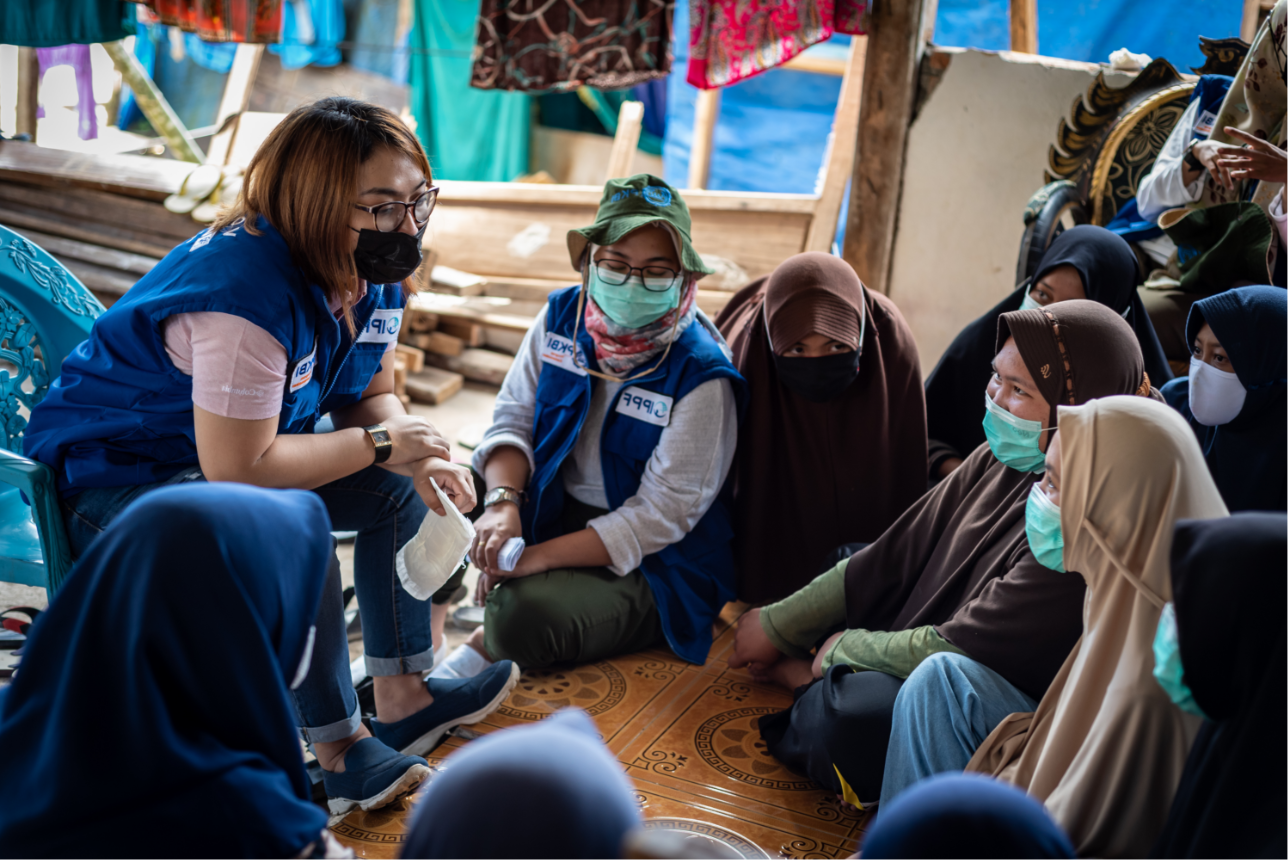
28 April 2026, Narrm (Melbourne) - Guttmacher has today released its latest report '‘Just the Numbers Australia 2026’’, providing vital analysis on the impact of Australia’s foreign aid contributions for sexual and reproductive health and rights (SRHR) programming in the Asia and Pacific Region. Australia has established itself as an incredibly important partner in advancing SRHR, particularly across Asia and the Pacific region, where it directs nearly all of its bilateral family planning support. SRHR accounted for approximately 2.8% of Australia’s official development assistance in 2023.Australia contributed an estimated AUD $49.2 million in 2024 for family planning. This investment enabled roughly 2.8 million women and couples globally to access modern contraception, leading to 830,000 unintended pregnancies averted. Yet significant gaps remain in the region, with 27.7 million women estimated to have an unmet demand for modern contraception. The research found that even modest investments at the country level would have a profound impact. For example, an additional AUD $1 million per year for the Philippines would serve an extra 56,000 contraceptive users, reducing unmet demand by 5%. Elizabeth Sully, Director of International Research at the Guttmacher Institute highlighted: “Australia's foreign investments in family planning are delivering measurable, life-saving results, but with global sexual and reproductive health financing in crisis, the stakes have never been higher. Australia has a real opportunity to deepen its leadership on gender equality and reproductive choice--and the data shows exactly what sustained investment can achieve: preventing unintended pregnancies, unsafe abortions, and maternal deaths. These aren't abstract numbers. They are real people who depend on these services.”Maria Antoineta Alcade, IPPF’s Director General, reflected: “We know that contraceptive services provide a significant return on investment - but most importantly, it's what women want and ask for. The question is not whether we can afford to invest in family planning - it’s whether we can afford not to. Our responsibility, as global leaders and funders, is to listen, and to act on what women need to prosper and thrive. These investments are not abstract, they prevent unintended pregnancies, unsafe abortions and maternal deaths, and give women the ability to have control over their own futures.”ENDS For further information or to arrange media interviews with our spokespeople from IPPF or Guttmacher, please contact Nerida Williams on newilliams@ippf.org or +66 62868 3089 (WhatsApp). NotesTo download the full report, please visit this link: https://www.guttmacher.org/2026/04/just-numbers-australia-global-srhr-investment-impact-2024 Australia is an established development partner in SRHR, contributing a portion of its official development assistance to expand access to essential services across low- and middle-income countries (LMICs). These investments have delivered measurable, life-saving results.In 2024, Australia’s family planning funding—estimated at AUD$49.2 million—supported access to modern contraception for 2.8 million women and couples globally, resulting in:830,000 unintended pregnancies averted303,000 unsafe abortions avoided259,000 unplanned births preventedApproximately 588 maternal deaths prevented
media_center
| 28 April 2026
PRESS RELEASE: Groundbreaking new report outlines the impact of Australia’s investment in SRHR
28 April 2026, Narrm (Melbourne) - Guttmacher has today released its latest report '‘Just the Numbers Australia 2026’’, providing vital analysis on the impact of Australia’s foreign aid contributions for sexual and reproductive health and rights (SRHR) programming in the Asia and Pacific Region. Australia has established itself as an incredibly important partner in advancing SRHR, particularly across Asia and the Pacific region, where it directs nearly all of its bilateral family planning support. SRHR accounted for approximately 2.8% of Australia’s official development assistance in 2023.Australia contributed an estimated AUD $49.2 million in 2024 for family planning. This investment enabled roughly 2.8 million women and couples globally to access modern contraception, leading to 830,000 unintended pregnancies averted. Yet significant gaps remain in the region, with 27.7 million women estimated to have an unmet demand for modern contraception. The research found that even modest investments at the country level would have a profound impact. For example, an additional AUD $1 million per year for the Philippines would serve an extra 56,000 contraceptive users, reducing unmet demand by 5%. Elizabeth Sully, Director of International Research at the Guttmacher Institute highlighted: “Australia's foreign investments in family planning are delivering measurable, life-saving results, but with global sexual and reproductive health financing in crisis, the stakes have never been higher. Australia has a real opportunity to deepen its leadership on gender equality and reproductive choice--and the data shows exactly what sustained investment can achieve: preventing unintended pregnancies, unsafe abortions, and maternal deaths. These aren't abstract numbers. They are real people who depend on these services.”Maria Antoineta Alcade, IPPF’s Director General, reflected: “We know that contraceptive services provide a significant return on investment - but most importantly, it's what women want and ask for. The question is not whether we can afford to invest in family planning - it’s whether we can afford not to. Our responsibility, as global leaders and funders, is to listen, and to act on what women need to prosper and thrive. These investments are not abstract, they prevent unintended pregnancies, unsafe abortions and maternal deaths, and give women the ability to have control over their own futures.”ENDS For further information or to arrange media interviews with our spokespeople from IPPF or Guttmacher, please contact Nerida Williams on newilliams@ippf.org or +66 62868 3089 (WhatsApp). NotesTo download the full report, please visit this link: https://www.guttmacher.org/2026/04/just-numbers-australia-global-srhr-investment-impact-2024 Australia is an established development partner in SRHR, contributing a portion of its official development assistance to expand access to essential services across low- and middle-income countries (LMICs). These investments have delivered measurable, life-saving results.In 2024, Australia’s family planning funding—estimated at AUD$49.2 million—supported access to modern contraception for 2.8 million women and couples globally, resulting in:830,000 unintended pregnancies averted303,000 unsafe abortions avoided259,000 unplanned births preventedApproximately 588 maternal deaths prevented

media center
| 10 March 2022
Statement on the U.S Congress' FY22 spending bill which fails to permanently repeal the global gag rule
U.S congressional leaders have announced they have reached a final spending deal for the fiscal year 2022. This bill results from months of negotiations over funding and policy decisions, including those that impact sexual and reproductive healthcare globally. Despite the inclusion of language to permanently repeal the global gag rule passed in the House and introduced in the Senate, the final legislation fails to permanently end the harmful policy that has destroyed the lives of women and girls around the world for so many years. It also does not remove discriminatory abortion bans like the Hyde, Helms, and Weldon amendments or include much-needed new investments in sexual and reproductive healthcare and international family planning programs. Dr Alvaro Bermejo, Director-General of the International Planned Parenthood Federation, said: “We are outraged to learn that the long-awaited U.S spending bill failed to permanently repeal the global gag rule, nor did it include other areas of sexual and reproductive health and rights progress on which advocates had built strong momentum. The bill fell foul to anti-choice Congress members whose primary goal is to control the bodies and reproductive rights of women and girls they will never know, whose lives they could never imagine. “Failure to utilize this golden opportunity risks the continuation of the flip-flopping of American policy that has played with the lives of millions across the globe for nearly 40 years. Ultimately the global gag rule destroys long-term access to lifesaving contraception, maternal health and HIV/STI services and forces vulnerable women and girls to carry pregnancies to term or make the agonizing decision to get a potentially deadly unsafe abortion. It also manipulates the ability of international organizations, like IPPF, to use their own funding to provide legal, safe abortion, which unethically denies women care and imposes neo-colonial policies around the world. “While the global gag rule poses serious challenges to sustained engagement with USAID, especially at a time when anti-choice movements continue to attack the rights of people worldwide, IPPF is grateful to the Biden-Harris administration for the current rescission of the policy. We will continue to engage with U.S Government global health assistance programs when possible. We are also thankful to our relentless Member Association, the Planned Parenthood Federation of America. Despite the challenges, they have worked tirelessly alongside thousands of women’s rights campaigners across the United States and worldwide to advocate for vulnerable women and girls everywhere. The fight for reproductive rights and justice will not end until every person can access high-quality sexual and reproductive healthcare when and where they need it.” Santos Siminone, Executive Director at Associação Moçambicana para Desenvolvimento da Família (AMODEFA), said: “We are deeply saddened by the failure to permanently repeal the Global Gag Rule. For AMODEFA, IPPF’s Member Association in Mozambique, a national provider of sexual and reproductive healthcare in the country since 1989, the impact of the global gag rule meant a $2 million gap in funding - about 60% of our total budget. “The impact was almost instantaneous, forcing the closure of six programs across 12 districts in Mozambique. This denied nearly 390,000 clients access to contraception, STIs, HIV, malaria, and tuberculosis services. Almost every local population was affected, with closures impacting adolescents, youths, women, and marginalized people. “For the people we serve, the permanent repeal of the policy would have meant an end to the violation of human rights. It would have meant dignity and that women’s lives would no longer be at risk. It would have meant an end to fear, pain, tears, and chaos, especially for black and brown women from low-income countries who bear the brunt of restrictive abortion policies.” For media enquiries, please contact Karmen Ivey on kivey@ippf.org or media@ippf.org
media_center
| 10 March 2022
Statement on the U.S Congress' FY22 spending bill which fails to permanently repeal the global gag rule
U.S congressional leaders have announced they have reached a final spending deal for the fiscal year 2022. This bill results from months of negotiations over funding and policy decisions, including those that impact sexual and reproductive healthcare globally. Despite the inclusion of language to permanently repeal the global gag rule passed in the House and introduced in the Senate, the final legislation fails to permanently end the harmful policy that has destroyed the lives of women and girls around the world for so many years. It also does not remove discriminatory abortion bans like the Hyde, Helms, and Weldon amendments or include much-needed new investments in sexual and reproductive healthcare and international family planning programs. Dr Alvaro Bermejo, Director-General of the International Planned Parenthood Federation, said: “We are outraged to learn that the long-awaited U.S spending bill failed to permanently repeal the global gag rule, nor did it include other areas of sexual and reproductive health and rights progress on which advocates had built strong momentum. The bill fell foul to anti-choice Congress members whose primary goal is to control the bodies and reproductive rights of women and girls they will never know, whose lives they could never imagine. “Failure to utilize this golden opportunity risks the continuation of the flip-flopping of American policy that has played with the lives of millions across the globe for nearly 40 years. Ultimately the global gag rule destroys long-term access to lifesaving contraception, maternal health and HIV/STI services and forces vulnerable women and girls to carry pregnancies to term or make the agonizing decision to get a potentially deadly unsafe abortion. It also manipulates the ability of international organizations, like IPPF, to use their own funding to provide legal, safe abortion, which unethically denies women care and imposes neo-colonial policies around the world. “While the global gag rule poses serious challenges to sustained engagement with USAID, especially at a time when anti-choice movements continue to attack the rights of people worldwide, IPPF is grateful to the Biden-Harris administration for the current rescission of the policy. We will continue to engage with U.S Government global health assistance programs when possible. We are also thankful to our relentless Member Association, the Planned Parenthood Federation of America. Despite the challenges, they have worked tirelessly alongside thousands of women’s rights campaigners across the United States and worldwide to advocate for vulnerable women and girls everywhere. The fight for reproductive rights and justice will not end until every person can access high-quality sexual and reproductive healthcare when and where they need it.” Santos Siminone, Executive Director at Associação Moçambicana para Desenvolvimento da Família (AMODEFA), said: “We are deeply saddened by the failure to permanently repeal the Global Gag Rule. For AMODEFA, IPPF’s Member Association in Mozambique, a national provider of sexual and reproductive healthcare in the country since 1989, the impact of the global gag rule meant a $2 million gap in funding - about 60% of our total budget. “The impact was almost instantaneous, forcing the closure of six programs across 12 districts in Mozambique. This denied nearly 390,000 clients access to contraception, STIs, HIV, malaria, and tuberculosis services. Almost every local population was affected, with closures impacting adolescents, youths, women, and marginalized people. “For the people we serve, the permanent repeal of the policy would have meant an end to the violation of human rights. It would have meant dignity and that women’s lives would no longer be at risk. It would have meant an end to fear, pain, tears, and chaos, especially for black and brown women from low-income countries who bear the brunt of restrictive abortion policies.” For media enquiries, please contact Karmen Ivey on kivey@ippf.org or media@ippf.org
media center
| 28 April 2026
PRESS RELEASE: Groundbreaking new report outlines the impact of Australia’s investment in SRHR
28 April 2026, Narrm (Melbourne) - Guttmacher has today released its latest report '‘Just the Numbers Australia 2026’’, providing vital analysis on the impact of Australia’s foreign aid contributions for sexual and reproductive health and rights (SRHR) programming in the Asia and Pacific Region. Australia has established itself as an incredibly important partner in advancing SRHR, particularly across Asia and the Pacific region, where it directs nearly all of its bilateral family planning support. SRHR accounted for approximately 2.8% of Australia’s official development assistance in 2023.Australia contributed an estimated AUD $49.2 million in 2024 for family planning. This investment enabled roughly 2.8 million women and couples globally to access modern contraception, leading to 830,000 unintended pregnancies averted. Yet significant gaps remain in the region, with 27.7 million women estimated to have an unmet demand for modern contraception. The research found that even modest investments at the country level would have a profound impact. For example, an additional AUD $1 million per year for the Philippines would serve an extra 56,000 contraceptive users, reducing unmet demand by 5%. Elizabeth Sully, Director of International Research at the Guttmacher Institute highlighted: “Australia's foreign investments in family planning are delivering measurable, life-saving results, but with global sexual and reproductive health financing in crisis, the stakes have never been higher. Australia has a real opportunity to deepen its leadership on gender equality and reproductive choice--and the data shows exactly what sustained investment can achieve: preventing unintended pregnancies, unsafe abortions, and maternal deaths. These aren't abstract numbers. They are real people who depend on these services.”Maria Antoineta Alcade, IPPF’s Director General, reflected: “We know that contraceptive services provide a significant return on investment - but most importantly, it's what women want and ask for. The question is not whether we can afford to invest in family planning - it’s whether we can afford not to. Our responsibility, as global leaders and funders, is to listen, and to act on what women need to prosper and thrive. These investments are not abstract, they prevent unintended pregnancies, unsafe abortions and maternal deaths, and give women the ability to have control over their own futures.”ENDS For further information or to arrange media interviews with our spokespeople from IPPF or Guttmacher, please contact Nerida Williams on newilliams@ippf.org or +66 62868 3089 (WhatsApp). NotesTo download the full report, please visit this link: https://www.guttmacher.org/2026/04/just-numbers-australia-global-srhr-investment-impact-2024 Australia is an established development partner in SRHR, contributing a portion of its official development assistance to expand access to essential services across low- and middle-income countries (LMICs). These investments have delivered measurable, life-saving results.In 2024, Australia’s family planning funding—estimated at AUD$49.2 million—supported access to modern contraception for 2.8 million women and couples globally, resulting in:830,000 unintended pregnancies averted303,000 unsafe abortions avoided259,000 unplanned births preventedApproximately 588 maternal deaths prevented
media_center
| 28 April 2026
PRESS RELEASE: Groundbreaking new report outlines the impact of Australia’s investment in SRHR
28 April 2026, Narrm (Melbourne) - Guttmacher has today released its latest report '‘Just the Numbers Australia 2026’’, providing vital analysis on the impact of Australia’s foreign aid contributions for sexual and reproductive health and rights (SRHR) programming in the Asia and Pacific Region. Australia has established itself as an incredibly important partner in advancing SRHR, particularly across Asia and the Pacific region, where it directs nearly all of its bilateral family planning support. SRHR accounted for approximately 2.8% of Australia’s official development assistance in 2023.Australia contributed an estimated AUD $49.2 million in 2024 for family planning. This investment enabled roughly 2.8 million women and couples globally to access modern contraception, leading to 830,000 unintended pregnancies averted. Yet significant gaps remain in the region, with 27.7 million women estimated to have an unmet demand for modern contraception. The research found that even modest investments at the country level would have a profound impact. For example, an additional AUD $1 million per year for the Philippines would serve an extra 56,000 contraceptive users, reducing unmet demand by 5%. Elizabeth Sully, Director of International Research at the Guttmacher Institute highlighted: “Australia's foreign investments in family planning are delivering measurable, life-saving results, but with global sexual and reproductive health financing in crisis, the stakes have never been higher. Australia has a real opportunity to deepen its leadership on gender equality and reproductive choice--and the data shows exactly what sustained investment can achieve: preventing unintended pregnancies, unsafe abortions, and maternal deaths. These aren't abstract numbers. They are real people who depend on these services.”Maria Antoineta Alcade, IPPF’s Director General, reflected: “We know that contraceptive services provide a significant return on investment - but most importantly, it's what women want and ask for. The question is not whether we can afford to invest in family planning - it’s whether we can afford not to. Our responsibility, as global leaders and funders, is to listen, and to act on what women need to prosper and thrive. These investments are not abstract, they prevent unintended pregnancies, unsafe abortions and maternal deaths, and give women the ability to have control over their own futures.”ENDS For further information or to arrange media interviews with our spokespeople from IPPF or Guttmacher, please contact Nerida Williams on newilliams@ippf.org or +66 62868 3089 (WhatsApp). NotesTo download the full report, please visit this link: https://www.guttmacher.org/2026/04/just-numbers-australia-global-srhr-investment-impact-2024 Australia is an established development partner in SRHR, contributing a portion of its official development assistance to expand access to essential services across low- and middle-income countries (LMICs). These investments have delivered measurable, life-saving results.In 2024, Australia’s family planning funding—estimated at AUD$49.2 million—supported access to modern contraception for 2.8 million women and couples globally, resulting in:830,000 unintended pregnancies averted303,000 unsafe abortions avoided259,000 unplanned births preventedApproximately 588 maternal deaths prevented
media center
| 10 March 2022
Statement on the U.S Congress' FY22 spending bill which fails to permanently repeal the global gag rule
U.S congressional leaders have announced they have reached a final spending deal for the fiscal year 2022. This bill results from months of negotiations over funding and policy decisions, including those that impact sexual and reproductive healthcare globally. Despite the inclusion of language to permanently repeal the global gag rule passed in the House and introduced in the Senate, the final legislation fails to permanently end the harmful policy that has destroyed the lives of women and girls around the world for so many years. It also does not remove discriminatory abortion bans like the Hyde, Helms, and Weldon amendments or include much-needed new investments in sexual and reproductive healthcare and international family planning programs. Dr Alvaro Bermejo, Director-General of the International Planned Parenthood Federation, said: “We are outraged to learn that the long-awaited U.S spending bill failed to permanently repeal the global gag rule, nor did it include other areas of sexual and reproductive health and rights progress on which advocates had built strong momentum. The bill fell foul to anti-choice Congress members whose primary goal is to control the bodies and reproductive rights of women and girls they will never know, whose lives they could never imagine. “Failure to utilize this golden opportunity risks the continuation of the flip-flopping of American policy that has played with the lives of millions across the globe for nearly 40 years. Ultimately the global gag rule destroys long-term access to lifesaving contraception, maternal health and HIV/STI services and forces vulnerable women and girls to carry pregnancies to term or make the agonizing decision to get a potentially deadly unsafe abortion. It also manipulates the ability of international organizations, like IPPF, to use their own funding to provide legal, safe abortion, which unethically denies women care and imposes neo-colonial policies around the world. “While the global gag rule poses serious challenges to sustained engagement with USAID, especially at a time when anti-choice movements continue to attack the rights of people worldwide, IPPF is grateful to the Biden-Harris administration for the current rescission of the policy. We will continue to engage with U.S Government global health assistance programs when possible. We are also thankful to our relentless Member Association, the Planned Parenthood Federation of America. Despite the challenges, they have worked tirelessly alongside thousands of women’s rights campaigners across the United States and worldwide to advocate for vulnerable women and girls everywhere. The fight for reproductive rights and justice will not end until every person can access high-quality sexual and reproductive healthcare when and where they need it.” Santos Siminone, Executive Director at Associação Moçambicana para Desenvolvimento da Família (AMODEFA), said: “We are deeply saddened by the failure to permanently repeal the Global Gag Rule. For AMODEFA, IPPF’s Member Association in Mozambique, a national provider of sexual and reproductive healthcare in the country since 1989, the impact of the global gag rule meant a $2 million gap in funding - about 60% of our total budget. “The impact was almost instantaneous, forcing the closure of six programs across 12 districts in Mozambique. This denied nearly 390,000 clients access to contraception, STIs, HIV, malaria, and tuberculosis services. Almost every local population was affected, with closures impacting adolescents, youths, women, and marginalized people. “For the people we serve, the permanent repeal of the policy would have meant an end to the violation of human rights. It would have meant dignity and that women’s lives would no longer be at risk. It would have meant an end to fear, pain, tears, and chaos, especially for black and brown women from low-income countries who bear the brunt of restrictive abortion policies.” For media enquiries, please contact Karmen Ivey on kivey@ippf.org or media@ippf.org
media_center
| 10 March 2022
Statement on the U.S Congress' FY22 spending bill which fails to permanently repeal the global gag rule
U.S congressional leaders have announced they have reached a final spending deal for the fiscal year 2022. This bill results from months of negotiations over funding and policy decisions, including those that impact sexual and reproductive healthcare globally. Despite the inclusion of language to permanently repeal the global gag rule passed in the House and introduced in the Senate, the final legislation fails to permanently end the harmful policy that has destroyed the lives of women and girls around the world for so many years. It also does not remove discriminatory abortion bans like the Hyde, Helms, and Weldon amendments or include much-needed new investments in sexual and reproductive healthcare and international family planning programs. Dr Alvaro Bermejo, Director-General of the International Planned Parenthood Federation, said: “We are outraged to learn that the long-awaited U.S spending bill failed to permanently repeal the global gag rule, nor did it include other areas of sexual and reproductive health and rights progress on which advocates had built strong momentum. The bill fell foul to anti-choice Congress members whose primary goal is to control the bodies and reproductive rights of women and girls they will never know, whose lives they could never imagine. “Failure to utilize this golden opportunity risks the continuation of the flip-flopping of American policy that has played with the lives of millions across the globe for nearly 40 years. Ultimately the global gag rule destroys long-term access to lifesaving contraception, maternal health and HIV/STI services and forces vulnerable women and girls to carry pregnancies to term or make the agonizing decision to get a potentially deadly unsafe abortion. It also manipulates the ability of international organizations, like IPPF, to use their own funding to provide legal, safe abortion, which unethically denies women care and imposes neo-colonial policies around the world. “While the global gag rule poses serious challenges to sustained engagement with USAID, especially at a time when anti-choice movements continue to attack the rights of people worldwide, IPPF is grateful to the Biden-Harris administration for the current rescission of the policy. We will continue to engage with U.S Government global health assistance programs when possible. We are also thankful to our relentless Member Association, the Planned Parenthood Federation of America. Despite the challenges, they have worked tirelessly alongside thousands of women’s rights campaigners across the United States and worldwide to advocate for vulnerable women and girls everywhere. The fight for reproductive rights and justice will not end until every person can access high-quality sexual and reproductive healthcare when and where they need it.” Santos Siminone, Executive Director at Associação Moçambicana para Desenvolvimento da Família (AMODEFA), said: “We are deeply saddened by the failure to permanently repeal the Global Gag Rule. For AMODEFA, IPPF’s Member Association in Mozambique, a national provider of sexual and reproductive healthcare in the country since 1989, the impact of the global gag rule meant a $2 million gap in funding - about 60% of our total budget. “The impact was almost instantaneous, forcing the closure of six programs across 12 districts in Mozambique. This denied nearly 390,000 clients access to contraception, STIs, HIV, malaria, and tuberculosis services. Almost every local population was affected, with closures impacting adolescents, youths, women, and marginalized people. “For the people we serve, the permanent repeal of the policy would have meant an end to the violation of human rights. It would have meant dignity and that women’s lives would no longer be at risk. It would have meant an end to fear, pain, tears, and chaos, especially for black and brown women from low-income countries who bear the brunt of restrictive abortion policies.” For media enquiries, please contact Karmen Ivey on kivey@ippf.org or media@ippf.org
