




Latest press releases
A selection of stories from across the Federation

Türkiye
Media center
PRESS RELEASE: Türkiye Must Drop All Charges Against LGBTQI+ Activists
Repro Uncensored and the International Planned Parenthood Federation condemn the coordinated raids, detentions and digital censorship targeting LGBTQI+ organizations, activists and community spaces.
For media enquiries
Telephone:
+66 62868 3089Media Inbox:
media@ippf.orgMost Popular This Week
Türkiye

Media center
|
PRESS RELEASE: Türkiye Must Drop All Charges Against LGBTQI+ Activists
For immediate release
Türkiye

Media center
|
Press Release: Amid Crackdown on Pride in Türkiye, More Than 120 LGBTQI+ and Feminist Social Media Accounts Suspended
Brussels / Istanbul, 13 July 2026 - Amid an escalating crackdown on LGBTQI+ communities in Türkiye, Repro Uncensored, the International Planned Par

Media center
|
May 17, IDAHOBIT: Global day celebrates sexual and gender diversity at the heart of democracy
FOR IMMEDIATE RELEASEILGA World x International Planned Parenthood Federation (IPPF)

Media center
|
RightsCon Cancelled as Global Attacks on SRHR and Digital Freedoms Intensify
FOR IMMEDIATE RELEASERepro Uncensored x International Planned Parenthood Federation (IPPF)
East and South East Asia and Oceania

Media center
|
PRESS RELEASE: Groundbreaking new report outlines the impact of Australia’s investment in SRHR
28 April 2026, Narrm (Melbourne) - Guttmacher has today released its latest report '‘Just the Numbers Australia 2026’’, providing vital analysis on the impact
South Asia, Africa

Media center
|
IPPF condemns the UK’s latest ODA budget allocations and warn of life-threatening consequences for millions
20 March 2026 - The International Planned Parenthood Federation (IPPF) strongly condemns the UK Government’s

Media center
|
US Government Expands Global Gag Rule in a Major Escalation of Regressive Foreign Policy
23 January 2026 - The International Planned Parenthood Federation

Media center
|
Nearly 9 Million Denied Essential Reproductive Healthcare as Trump-Era Funding Cuts Force Global Clinic Closures, IPPF Reports
17 December 2025 - New data reveals the Trump Administration's funding cuts have forced 34 of International Planned Parenthood Federation (IPPF) Member Associa
media center
| 16 April 2026
IPPF and Japan team up on another project to sustain sexual and reproductive health services in the West Bank, Palestine
21st April 2026 - IPPF and its Member Association in Palestine (PFPPA) are pleased to announce the launch of a new project financed by the Government of Japan, "Provision of health and medical services for women and children affected by crisis in the West Bank." This project will deliver life-saving maternal healthcare, psychosocial support, and sexual and reproductive health services, in even the hardest-to-reach areas of the West Bank, Palestine, through health centres, mobile medical teams, tele-consultations, and community outreach. The destruction of health facilities, severe restrictions on movement, and raids and attacks on communities in the West Bank have left Palestinians with little to no access to healthcare. According to the UNFPA, over 230,000 women and girls experience difficulties in accessing reproductive health services. Key project activities will include:Maintaining essential sexual and reproductive health (SRH) services, through three static clinics in Khalil, Halhoul and Bethlehem in the West Bank. These clinics will offer services including family planning, obstetrics and gynaecology care and management of sexually transmitted infections, for over 22,000 women and children. This will include specialised support for an estimated 2,300 survivors of sexual and gender-based violence, who will receive medical care, counselling or referrals. Providing maternal and child health care services for 4,600 women and children in hard-to-reach and marginalised areas of the West Bank via a mobile team of doctors, midwives, paediatricians, social workers, pharmacists and lab technicians. The mobile team will also provide psychosocial support services, support for survivors of sexual and gender-based violence, and family planning services. Providing counselling and consultation services via telecommunications and digital channels for those unable to access clinics.Conducting five ‘preparing for birth’ sessions for 90 first time mothers, providing information and support on maternal care and options for labour and delivery. Mr. ARAIKE Katsuhiko, Ambassador of Japan for the Palestinian Affairs says: “As a flagbearer of Universal Health Coverage (UHC) and the Women, Peace, and Security (WPS) agenda, we hope that our new collaboration with IPPF facilitates Palestinian women and children, who are affected by conflicts and live outside service catchment areas, to enjoy Obstetrics and Gynecology (OBGYN) and family planning services, improved well-being, and social participation. This project is part of Japan’s 2026–2027 cooperation package for Palestine. Japan will continue to provide support for the stability and prosperity of Palestine.” Dr. Fadoua Bakhadda, Regional Director of the IPPF Arab World Regional Office adds: “Thanks to the support of the people of Japan, we can continue delivering essential maternal and child health services to communities that have been systematically cut off from care, helping to prevent avoidable maternal and newborn deaths in the West Bank, Palestine.” -- About International Planned Parenthood Federation (IPPF) Arab World Office IPPF is a global healthcare provider and a leading advocate of sexual and reproductive health and rights (SRHR) for all. Led by a courageous and determined group of women, IPPF was founded in 1952. Today, we are a movement of over 120 autonomous member associations and 23 collaborative partners with a presence in 146 countries. Established in 1971, the IPPF Arab World Region (IPPF AWR) is one of IPPF’s six regional offices. Based in Tunis, it is the leading Sexual and Reproductive Health (SRH) service delivery organization in the North Africa and the Middle East, and the leading Sexual and Reproductive Health and Rights (SRHR) advocacy voice in the region.
media_center
| 21 April 2026
IPPF and Japan team up on another project to sustain sexual and reproductive health services in the West Bank, Palestine
21st April 2026 - IPPF and its Member Association in Palestine (PFPPA) are pleased to announce the launch of a new project financed by the Government of Japan, "Provision of health and medical services for women and children affected by crisis in the West Bank." This project will deliver life-saving maternal healthcare, psychosocial support, and sexual and reproductive health services, in even the hardest-to-reach areas of the West Bank, Palestine, through health centres, mobile medical teams, tele-consultations, and community outreach. The destruction of health facilities, severe restrictions on movement, and raids and attacks on communities in the West Bank have left Palestinians with little to no access to healthcare. According to the UNFPA, over 230,000 women and girls experience difficulties in accessing reproductive health services. Key project activities will include:Maintaining essential sexual and reproductive health (SRH) services, through three static clinics in Khalil, Halhoul and Bethlehem in the West Bank. These clinics will offer services including family planning, obstetrics and gynaecology care and management of sexually transmitted infections, for over 22,000 women and children. This will include specialised support for an estimated 2,300 survivors of sexual and gender-based violence, who will receive medical care, counselling or referrals. Providing maternal and child health care services for 4,600 women and children in hard-to-reach and marginalised areas of the West Bank via a mobile team of doctors, midwives, paediatricians, social workers, pharmacists and lab technicians. The mobile team will also provide psychosocial support services, support for survivors of sexual and gender-based violence, and family planning services. Providing counselling and consultation services via telecommunications and digital channels for those unable to access clinics.Conducting five ‘preparing for birth’ sessions for 90 first time mothers, providing information and support on maternal care and options for labour and delivery. Mr. ARAIKE Katsuhiko, Ambassador of Japan for the Palestinian Affairs says: “As a flagbearer of Universal Health Coverage (UHC) and the Women, Peace, and Security (WPS) agenda, we hope that our new collaboration with IPPF facilitates Palestinian women and children, who are affected by conflicts and live outside service catchment areas, to enjoy Obstetrics and Gynecology (OBGYN) and family planning services, improved well-being, and social participation. This project is part of Japan’s 2026–2027 cooperation package for Palestine. Japan will continue to provide support for the stability and prosperity of Palestine.” Dr. Fadoua Bakhadda, Regional Director of the IPPF Arab World Regional Office adds: “Thanks to the support of the people of Japan, we can continue delivering essential maternal and child health services to communities that have been systematically cut off from care, helping to prevent avoidable maternal and newborn deaths in the West Bank, Palestine.” -- About International Planned Parenthood Federation (IPPF) Arab World Office IPPF is a global healthcare provider and a leading advocate of sexual and reproductive health and rights (SRHR) for all. Led by a courageous and determined group of women, IPPF was founded in 1952. Today, we are a movement of over 120 autonomous member associations and 23 collaborative partners with a presence in 146 countries. Established in 1971, the IPPF Arab World Region (IPPF AWR) is one of IPPF’s six regional offices. Based in Tunis, it is the leading Sexual and Reproductive Health (SRH) service delivery organization in the North Africa and the Middle East, and the leading Sexual and Reproductive Health and Rights (SRHR) advocacy voice in the region.
media center
| 16 April 2026
Japan funds essential supplies for healthcare clinics in Sudan
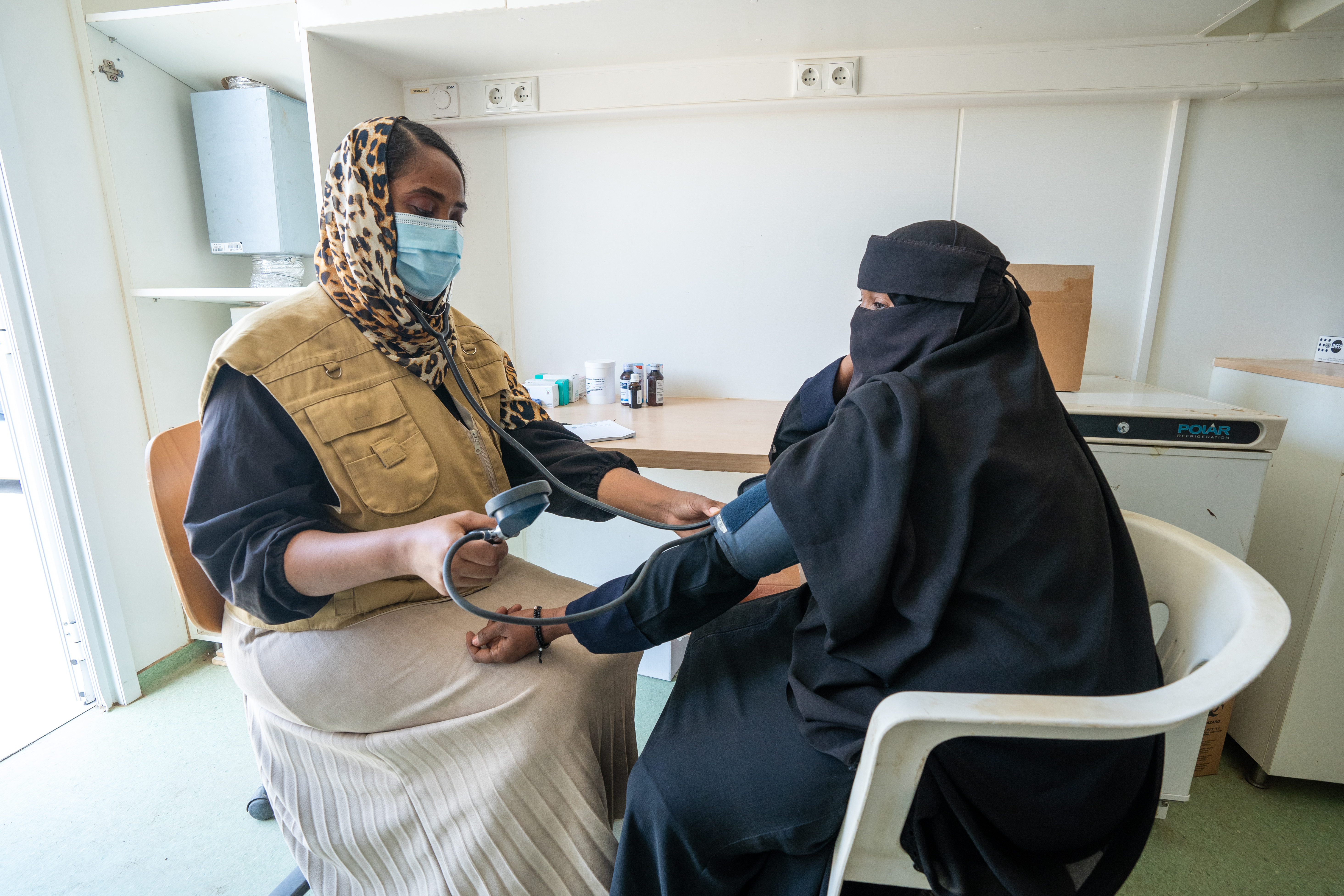
16th April 2026 - A new project titled Strengthening Life-saving Sexual and Reproductive Health (SRH) Services for Internally Displaced Persons (IDPs), has been launched in Sudan. Funded by the Government of Japan and implemented by the IPPF Member Association Sudan Family Planning Association (SFPA), the project will support women and girls in crisis in the Red Sea and Khartoum States. Fifteen million people in Sudan have been displaced by the civil war, and conflicts in neighbouring countries have triggered an influx of returnees and displaced people into Sudan. As a result, the country now hosts 15% of the world’s IDPs. But widespread destruction of infrastructure and deadly disease outbreaks have left the healthcare system unable to cope.An estimated 1.75 million women and girls require urgent sexual and reproductive health (SRH) services, including 270,000 internally displaced pregnant women. With rape increasingly used as a weapon of war, many require urgent medical and psychosocial support. However, essential SRH commodities, including contraceptives, emergency obstetric kits, and menstrual hygiene products, are in critically low supply. SFPA provides essential sexual and reproductive health services to women and girls, including internally displaced persons, through 26 static clinics and 11 mobile clinics across the country. This new funding will enable them to procure, transport and distribute essential supplies to two of the organisation’s static clinics in the Red Sea State and Khartoum State. This vital equipment, including microscopes, blood-testing devices, thermometers, and examination lamps, will enable these clinics to continue providing SRH services, expanding their reach to an additional 2,400 internally displaced people and individuals in host communities. Mr. Nakahara Takanobu, the Chargé d’Affaires ad interim of the Embassy of Japan to Sudan, stated that, “The provision of sexual and reproductive healthcare for women and girls is a critical step in supporting this vulnerable category in Sudan. This is more so when they are IDPs. Thus, we are happy to be able to support IPPF’s Member Association in Sudan - the Sudan Family Planning Association - in this domain, so that we can contribute to improving the safety and well-being of these women and girls, and reassure them that we acknowledge the challenges they face and endure.” Dr Hiba Ahmed Khalil, Emergency and Humanitarian Interventions Manager at SFPA added, “SFPA is honoured to join the Japan Supplementary Budget 2025 project, advancing inclusive health and humanitarian responses that strengthen access to essential services and uphold the rights of communities most at risk. Together, we are building pathways for resilience and equity.” Dr. Fadoua Bakhadda, Regional Director of the IPPF Arab World Regional Office, added, “Every woman and girl deserves access to safe, reliable healthcare, no matter the circumstances. Thanks to the people of Japan, we can equip clinics with the essential tools and supplies needed to continue providing critical sexual and reproductive healthcare. This investment will directly improve the safety, health, and resilience of thousands of internally displaced women and girls.” ---About the Sudan Family Planning Association The Sudan Family Planning Association (SFPA) was established in 1965 by pioneers in obstetrics and gynaecology in response to increases in maternal, neonatal and infant mortality and morbidity. As the statistics show, Sudan is a country in great need of frontline sexual and reproductive health (SRH) services. Advocacy, and undertaking information, education and communication (IEC) programs are critical.About International Planned Parenthood Federation (IPPF) Arab World Office IPPF is a global healthcare provider and a leading advocate of sexual and reproductive health and rights (SRHR) for all. Led by a courageous and determined group of women, IPPF was founded in 1952. Today, we are a movement of over 120 autonomous member associations and 23 collaborative partners with a presence in 146 countries. Established in 1971, the IPPF Arab World Region (IPPF AWR) is one of IPPF’s six regional offices. Based in Tunis, it is the leading Sexual and Reproductive Health (SRH) service delivery organization in North Africa and the Middle East, and the leading Sexual and Reproductive Health and Rights (SRHR) advocacy voice in the region.
media_center
| 16 April 2026
Japan funds essential supplies for healthcare clinics in Sudan
16th April 2026 - A new project titled Strengthening Life-saving Sexual and Reproductive Health (SRH) Services for Internally Displaced Persons (IDPs), has been launched in Sudan. Funded by the Government of Japan and implemented by the IPPF Member Association Sudan Family Planning Association (SFPA), the project will support women and girls in crisis in the Red Sea and Khartoum States. Fifteen million people in Sudan have been displaced by the civil war, and conflicts in neighbouring countries have triggered an influx of returnees and displaced people into Sudan. As a result, the country now hosts 15% of the world’s IDPs. But widespread destruction of infrastructure and deadly disease outbreaks have left the healthcare system unable to cope.An estimated 1.75 million women and girls require urgent sexual and reproductive health (SRH) services, including 270,000 internally displaced pregnant women. With rape increasingly used as a weapon of war, many require urgent medical and psychosocial support. However, essential SRH commodities, including contraceptives, emergency obstetric kits, and menstrual hygiene products, are in critically low supply. SFPA provides essential sexual and reproductive health services to women and girls, including internally displaced persons, through 26 static clinics and 11 mobile clinics across the country. This new funding will enable them to procure, transport and distribute essential supplies to two of the organisation’s static clinics in the Red Sea State and Khartoum State. This vital equipment, including microscopes, blood-testing devices, thermometers, and examination lamps, will enable these clinics to continue providing SRH services, expanding their reach to an additional 2,400 internally displaced people and individuals in host communities. Mr. Nakahara Takanobu, the Chargé d’Affaires ad interim of the Embassy of Japan to Sudan, stated that, “The provision of sexual and reproductive healthcare for women and girls is a critical step in supporting this vulnerable category in Sudan. This is more so when they are IDPs. Thus, we are happy to be able to support IPPF’s Member Association in Sudan - the Sudan Family Planning Association - in this domain, so that we can contribute to improving the safety and well-being of these women and girls, and reassure them that we acknowledge the challenges they face and endure.” Dr Hiba Ahmed Khalil, Emergency and Humanitarian Interventions Manager at SFPA added, “SFPA is honoured to join the Japan Supplementary Budget 2025 project, advancing inclusive health and humanitarian responses that strengthen access to essential services and uphold the rights of communities most at risk. Together, we are building pathways for resilience and equity.” Dr. Fadoua Bakhadda, Regional Director of the IPPF Arab World Regional Office, added, “Every woman and girl deserves access to safe, reliable healthcare, no matter the circumstances. Thanks to the people of Japan, we can equip clinics with the essential tools and supplies needed to continue providing critical sexual and reproductive healthcare. This investment will directly improve the safety, health, and resilience of thousands of internally displaced women and girls.” ---About the Sudan Family Planning Association The Sudan Family Planning Association (SFPA) was established in 1965 by pioneers in obstetrics and gynaecology in response to increases in maternal, neonatal and infant mortality and morbidity. As the statistics show, Sudan is a country in great need of frontline sexual and reproductive health (SRH) services. Advocacy, and undertaking information, education and communication (IEC) programs are critical.About International Planned Parenthood Federation (IPPF) Arab World Office IPPF is a global healthcare provider and a leading advocate of sexual and reproductive health and rights (SRHR) for all. Led by a courageous and determined group of women, IPPF was founded in 1952. Today, we are a movement of over 120 autonomous member associations and 23 collaborative partners with a presence in 146 countries. Established in 1971, the IPPF Arab World Region (IPPF AWR) is one of IPPF’s six regional offices. Based in Tunis, it is the leading Sexual and Reproductive Health (SRH) service delivery organization in North Africa and the Middle East, and the leading Sexual and Reproductive Health and Rights (SRHR) advocacy voice in the region.

media center
| 04 December 2023
Rapes, unplanned pregnancies and sexual and gender-based violence on the rise in Sudan’s forgotten war
Khartoum, 4 December 2023 — As the war in Sudan enters its eight month with no end in sight, widespread conflict-related sexual and gender-based violence (SGBV) has continued unabated, including reports of mass rapes, sexual exploitation and sexual harassment which demonstrate how sexual violence is being used as a tool of war to subjugate, terrorise and punish women and girls. Since the war between Sudan’s Rapid Support Forces and the Sudanese Armed Forces erupted on April 15th, reports of ethnically targeted sexual and gender-based violence have escalated across Sudan, leading to a surge in unplanned pregnancies and sexually transmitted infections. The International Criminal Court (ICC) in The Hague said in July it is investigating the hostilities in Darfur, including reports of killings, rapes and crimes against children. Rape has often been used as a weapon of war over the years in Sudan, human rights groups have said. Sexual violence is prohibited in conflict, and the accounts of rape could constitute war crimes and crimes against humanity. The prevailing conflict and social unrest in various regions of Sudan have created an environment rife for SGBV, leaving countless individuals exposed to the gravest violations of their most intimate rights. Deeply disturbing accounts of gang rapes, sexual assault, harassment, and other forms of sexual, physical and psychological violence have emerged, highlighting the urgent need for comprehensive sexual and reproductive healthcare for survivors. IPPF’s local member association in Sudan, the Sudan Family Planning Association (SFPA) has been providing these services across Sudan since the outbreak of the war, including counselling, medical assistance, and referrals for survivors of SGBV. Despite unprovoked attacks on six SFPA facilities which have so far killed one youth volunteer and injured numerous clients and staff, as well as interrupted the delivery of some health services, SFPA has continued to work in conflict-affected areas through their large network of community based distributors and mobile clinics. Dr Seham Jaber, the director of Digital Health Interventions and Services at SFPA said: “We have noticed escalating rates of sexual and gender-based violence in Sudan since the outbreak of the war in April. Violence against women and girls is occurring at the hands of militants, as well as an increase in domestic and intimate partner violence, including rape. Young girls and boys are living in overcrowded shelters are reporting to us cases of sexual harassment and abuse." Confidentiality, sensitivity and compassion are crucial to SFPA’s work, because many survivors of sexual violence don’t seek medical treatment due to the fear of social stigma and reprisals. SFPA's website and hotline have seen a considerable increase in traffic for reports of SGBV from the community since the start of the war. In response, SFPA is also running community awareness and education campaigns on SGBV, and is enlisting the support of local Imams to promote gender equality, and foster a culture of respect and consent. For media inquiries or to speak to one of our staff in Sudan, please contact media@ippf.org About the Sudan Family Planning Association The Sudan Family Planning Association (SFPA) was established in 1965 by pioneers in obstetrics and gynecology in response to increases in maternal, neonatal and infant mortality and morbidity. Sudan is a country in great need of frontline sexual and reproductive health (SRH) services. In 2022, SFPA provided 26 million services through 24 clinics, 261 associated clinics, and 37 mobile clinics. Since the start of the war on 15 April 2023; the Association teams have been successful in providing 14,706,000 services through 24 SFPA facilities , mobile clinics, mobile teams ,CBDs and partners clinics . SFPA was able to assist 1,145 deliveries under bombardment and provided 167,000 treatments of HIV&AIDS “HIV screening and care for PLHIV” through its static clinics. Mobile clinics are used to offer integrated SRH services including HIV/STI services and condom distribution, STI testing and management, HIV testing and treatment for HIV opportunistic infections, referrals for ARV treatment including PMTCT and awareness sessions both at mobile clinics and at the community level by community health promoters and community base distributors (CBDs). About the International Planned Parenthood Federation IPPF, through its 149 Member Associations and collaborative partners, delivers high-quality sexual and reproductive healthcare and helps advance sexual and reproductive rights, especially for marginalized people with diverse needs that are currently unmet. IPPF's Member Associations and partners are locally owned, independent organisations, which means the support and care they provide are informed by local expertise and context. IPPF advocates for a world where people have the information they need to make informed decisions about their sexual and reproductive health and their bodies. We stand up and fight for sexual and reproductive rights and against those who seek to deny people their human right to bodily autonomy and sexual and reproductive freedom. We deliver care rooted in rights, respect, and dignity for all - no matter what.
media_center
| 04 December 2023
Rapes, unplanned pregnancies and sexual and gender-based violence on the rise in Sudan’s forgotten war
Khartoum, 4 December 2023 — As the war in Sudan enters its eight month with no end in sight, widespread conflict-related sexual and gender-based violence (SGBV) has continued unabated, including reports of mass rapes, sexual exploitation and sexual harassment which demonstrate how sexual violence is being used as a tool of war to subjugate, terrorise and punish women and girls. Since the war between Sudan’s Rapid Support Forces and the Sudanese Armed Forces erupted on April 15th, reports of ethnically targeted sexual and gender-based violence have escalated across Sudan, leading to a surge in unplanned pregnancies and sexually transmitted infections. The International Criminal Court (ICC) in The Hague said in July it is investigating the hostilities in Darfur, including reports of killings, rapes and crimes against children. Rape has often been used as a weapon of war over the years in Sudan, human rights groups have said. Sexual violence is prohibited in conflict, and the accounts of rape could constitute war crimes and crimes against humanity. The prevailing conflict and social unrest in various regions of Sudan have created an environment rife for SGBV, leaving countless individuals exposed to the gravest violations of their most intimate rights. Deeply disturbing accounts of gang rapes, sexual assault, harassment, and other forms of sexual, physical and psychological violence have emerged, highlighting the urgent need for comprehensive sexual and reproductive healthcare for survivors. IPPF’s local member association in Sudan, the Sudan Family Planning Association (SFPA) has been providing these services across Sudan since the outbreak of the war, including counselling, medical assistance, and referrals for survivors of SGBV. Despite unprovoked attacks on six SFPA facilities which have so far killed one youth volunteer and injured numerous clients and staff, as well as interrupted the delivery of some health services, SFPA has continued to work in conflict-affected areas through their large network of community based distributors and mobile clinics. Dr Seham Jaber, the director of Digital Health Interventions and Services at SFPA said: “We have noticed escalating rates of sexual and gender-based violence in Sudan since the outbreak of the war in April. Violence against women and girls is occurring at the hands of militants, as well as an increase in domestic and intimate partner violence, including rape. Young girls and boys are living in overcrowded shelters are reporting to us cases of sexual harassment and abuse." Confidentiality, sensitivity and compassion are crucial to SFPA’s work, because many survivors of sexual violence don’t seek medical treatment due to the fear of social stigma and reprisals. SFPA's website and hotline have seen a considerable increase in traffic for reports of SGBV from the community since the start of the war. In response, SFPA is also running community awareness and education campaigns on SGBV, and is enlisting the support of local Imams to promote gender equality, and foster a culture of respect and consent. For media inquiries or to speak to one of our staff in Sudan, please contact media@ippf.org About the Sudan Family Planning Association The Sudan Family Planning Association (SFPA) was established in 1965 by pioneers in obstetrics and gynecology in response to increases in maternal, neonatal and infant mortality and morbidity. Sudan is a country in great need of frontline sexual and reproductive health (SRH) services. In 2022, SFPA provided 26 million services through 24 clinics, 261 associated clinics, and 37 mobile clinics. Since the start of the war on 15 April 2023; the Association teams have been successful in providing 14,706,000 services through 24 SFPA facilities , mobile clinics, mobile teams ,CBDs and partners clinics . SFPA was able to assist 1,145 deliveries under bombardment and provided 167,000 treatments of HIV&AIDS “HIV screening and care for PLHIV” through its static clinics. Mobile clinics are used to offer integrated SRH services including HIV/STI services and condom distribution, STI testing and management, HIV testing and treatment for HIV opportunistic infections, referrals for ARV treatment including PMTCT and awareness sessions both at mobile clinics and at the community level by community health promoters and community base distributors (CBDs). About the International Planned Parenthood Federation IPPF, through its 149 Member Associations and collaborative partners, delivers high-quality sexual and reproductive healthcare and helps advance sexual and reproductive rights, especially for marginalized people with diverse needs that are currently unmet. IPPF's Member Associations and partners are locally owned, independent organisations, which means the support and care they provide are informed by local expertise and context. IPPF advocates for a world where people have the information they need to make informed decisions about their sexual and reproductive health and their bodies. We stand up and fight for sexual and reproductive rights and against those who seek to deny people their human right to bodily autonomy and sexual and reproductive freedom. We deliver care rooted in rights, respect, and dignity for all - no matter what.

media center
| 14 November 2023
With the forced closure of hospitals, midwives are a lifeline for pregnant women in Gaza
15 November 2023 - With the forced closure of Gaza’s largest hospital, Al Quds, due to the lack of fuel and incessant Israeli bombardment, and the recent storming of al-Shifa Hospital by Israeli forces, midwives are a lifeline for the estimated 180 women who are giving birth each day. As of 13 November, all but one of the hospitals in Gaza City and northern Gaza are reportedly out of service due to lack of power, medical consumables, oxygen, food and water, compounded by bombardments and fighting in their vicinities, according to OCHA. 26 year old Narmeen Al Shafee is a midwife currently living in Deir al-Balah in central Gaza, who has previously worked with the Palestinian Family Planning and Protection Association (PFPPA) outreach team. She describes the case of a 29-year-old pregnant woman who fled along with her family from Sheikh Radwan to Deir al-Balah to seek refuge in a school shelter near her home. The women was in her ninth month of pregnancy and not long after being displaced from her home she underwent a cesarean section. Midwife Al Shafee said: “After giving birth, and for her own safety, the shelters did not want to accommodate her due to the widespread infectious diseases and [the] high risk of infection since she had a cesarean section. Her husband was calling out in the streets for someone to receive his wife and three children. My parents welcomed them into our home to take care of her. I would change her bandages daily and monitor her and her child. After ten days, I removed the stitches. Thank God, her condition is now stable, and there are no problems.” In a separate case, Al Shafee describes caring for her 23-year-old cousin who was pregnant for the first time and lost her husband early in the war. “Her delivery date was approaching, and she gave birth at Nasser Hospital in Khan Younis [in southern Gaza]. Her child faced complications during birth, and due to the bombings she sought refuge with us. I took care of her and her child until their situation stabilized. Now, I am helping her with breastfeeding, as she is finding it difficult.” Aminah*, another midwife who has also previously worked with the PFPPA outreach team, said: “I’ve been in contact with two pregnant women multiple times, providing weekly consultations. One woman experienced severe cramps, and after offering advice, she was referred to the hospital. She needed lung maturation injections for the fetus, along with rest and nutritional supplements and iron. Another woman, 29 weeks pregnant, suffered dizziness and vomiting and she took Ancozine [an antiemetic] for nausea during the visit. I also found out that she was taking iron and provided her with information on the correct way to take iron tablets in order for her to benefit from them as needed. I am also providing information to women in my area and around me hoping that it will help them if and when needed.” According to data from the UNFPA, there are an estimated 50,000 pregnant women in Gaza, with 15% expected to encounter complications. In many instances women are only admitted to hospital when they are fully dilated, with some forced to deliver their babies in cars, in the streets, and in overcrowded shelters where the risk of infection and the spread of disease is high. There are reports of c-sections bring performed without anesthesia, and there is currently no type of post natal care available in Gaza. Levels of early labor and miscarriages are expected to increase with the trauma and conditions being faced. Al Ahli Hospital, in Gaza City, which currently accommodates over 500 patients, is reportedly the sole medical facility able to receive patients, amid increasing shortages and challenges. In Shifa hospital, 32 patients, including three premature babies, have reportedly died since 11 November, following the power cut and amid dire conditions. Without a full and immediate ceasefire, and the unimpeded delivery of humanitarian aid across all parts of Gaza, maternal and neonatal deaths will continue to rise. For media enquiries, or to speak to our staff member in Palestine, please contact media@ippf.org Click here to donate to IPPF's emergency appeal for Palestine. About PFPPA Established in Jerusalem in 1964, the Palestinian Family Planning and Protection Association (PFPPA) is locally registered as an independent, non-profit and non-governmental association with headquarters in Jerusalem. PFPPA has service delivery points located in the West Bank Areas of Ramallah, Bethlehem, Hebron and Halhoul, in addition to one in the Gaza Strip, which has yet to be relocated after it was destroyed following an Israeli airstrike on 8 October. Furthermore, and in cooperation with local partners, PFPPA is also responsible for 3 safe spaces to provide Gender Based Violence (GBV) related services in the Jerusalem area. About the International Planned Parenthood Federation IPPF, through its 149 Member Associations and collaborative partners, delivers high-quality sexual and reproductive healthcare and helps advance sexual and reproductive rights, especially for marginalized people with diverse needs that are currently unmet. IPPF's Member Associations and partners are locally owned, independent organisations, which means the support and care they provide are informed by local expertise and context. IPPF advocates for a world where people have the information they need to make informed decisions about their sexual and reproductive health and their bodies. We stand up and fight for sexual and reproductive rights and against those who seek to deny people their human right to bodily autonomy and sexual and reproductive freedom. We deliver care rooted in rights, respect, and dignity for all - no matter what. Banner image: Midwife Narmeen Al Shafee provides care to a newborn baby in Deir al-Balah, in central Gaza.
media_center
| 15 November 2023
With the forced closure of hospitals, midwives are a lifeline for pregnant women in Gaza
15 November 2023 - With the forced closure of Gaza’s largest hospital, Al Quds, due to the lack of fuel and incessant Israeli bombardment, and the recent storming of al-Shifa Hospital by Israeli forces, midwives are a lifeline for the estimated 180 women who are giving birth each day. As of 13 November, all but one of the hospitals in Gaza City and northern Gaza are reportedly out of service due to lack of power, medical consumables, oxygen, food and water, compounded by bombardments and fighting in their vicinities, according to OCHA. 26 year old Narmeen Al Shafee is a midwife currently living in Deir al-Balah in central Gaza, who has previously worked with the Palestinian Family Planning and Protection Association (PFPPA) outreach team. She describes the case of a 29-year-old pregnant woman who fled along with her family from Sheikh Radwan to Deir al-Balah to seek refuge in a school shelter near her home. The women was in her ninth month of pregnancy and not long after being displaced from her home she underwent a cesarean section. Midwife Al Shafee said: “After giving birth, and for her own safety, the shelters did not want to accommodate her due to the widespread infectious diseases and [the] high risk of infection since she had a cesarean section. Her husband was calling out in the streets for someone to receive his wife and three children. My parents welcomed them into our home to take care of her. I would change her bandages daily and monitor her and her child. After ten days, I removed the stitches. Thank God, her condition is now stable, and there are no problems.” In a separate case, Al Shafee describes caring for her 23-year-old cousin who was pregnant for the first time and lost her husband early in the war. “Her delivery date was approaching, and she gave birth at Nasser Hospital in Khan Younis [in southern Gaza]. Her child faced complications during birth, and due to the bombings she sought refuge with us. I took care of her and her child until their situation stabilized. Now, I am helping her with breastfeeding, as she is finding it difficult.” Aminah*, another midwife who has also previously worked with the PFPPA outreach team, said: “I’ve been in contact with two pregnant women multiple times, providing weekly consultations. One woman experienced severe cramps, and after offering advice, she was referred to the hospital. She needed lung maturation injections for the fetus, along with rest and nutritional supplements and iron. Another woman, 29 weeks pregnant, suffered dizziness and vomiting and she took Ancozine [an antiemetic] for nausea during the visit. I also found out that she was taking iron and provided her with information on the correct way to take iron tablets in order for her to benefit from them as needed. I am also providing information to women in my area and around me hoping that it will help them if and when needed.” According to data from the UNFPA, there are an estimated 50,000 pregnant women in Gaza, with 15% expected to encounter complications. In many instances women are only admitted to hospital when they are fully dilated, with some forced to deliver their babies in cars, in the streets, and in overcrowded shelters where the risk of infection and the spread of disease is high. There are reports of c-sections bring performed without anesthesia, and there is currently no type of post natal care available in Gaza. Levels of early labor and miscarriages are expected to increase with the trauma and conditions being faced. Al Ahli Hospital, in Gaza City, which currently accommodates over 500 patients, is reportedly the sole medical facility able to receive patients, amid increasing shortages and challenges. In Shifa hospital, 32 patients, including three premature babies, have reportedly died since 11 November, following the power cut and amid dire conditions. Without a full and immediate ceasefire, and the unimpeded delivery of humanitarian aid across all parts of Gaza, maternal and neonatal deaths will continue to rise. For media enquiries, or to speak to our staff member in Palestine, please contact media@ippf.org Click here to donate to IPPF's emergency appeal for Palestine. About PFPPA Established in Jerusalem in 1964, the Palestinian Family Planning and Protection Association (PFPPA) is locally registered as an independent, non-profit and non-governmental association with headquarters in Jerusalem. PFPPA has service delivery points located in the West Bank Areas of Ramallah, Bethlehem, Hebron and Halhoul, in addition to one in the Gaza Strip, which has yet to be relocated after it was destroyed following an Israeli airstrike on 8 October. Furthermore, and in cooperation with local partners, PFPPA is also responsible for 3 safe spaces to provide Gender Based Violence (GBV) related services in the Jerusalem area. About the International Planned Parenthood Federation IPPF, through its 149 Member Associations and collaborative partners, delivers high-quality sexual and reproductive healthcare and helps advance sexual and reproductive rights, especially for marginalized people with diverse needs that are currently unmet. IPPF's Member Associations and partners are locally owned, independent organisations, which means the support and care they provide are informed by local expertise and context. IPPF advocates for a world where people have the information they need to make informed decisions about their sexual and reproductive health and their bodies. We stand up and fight for sexual and reproductive rights and against those who seek to deny people their human right to bodily autonomy and sexual and reproductive freedom. We deliver care rooted in rights, respect, and dignity for all - no matter what. Banner image: Midwife Narmeen Al Shafee provides care to a newborn baby in Deir al-Balah, in central Gaza.

media center
| 07 November 2023
30 Days Too Many for Women and Girls in Gaza
Today marks one month since Hamas launched its attack on civilians that triggered Israel’s declaration of an unprecedented war in the Gaza Strip, and a subsequent humanitarian catastrophe. Since 7 October, some 1,400 Israeli civilians have been killed, 200 hostages taken, and thousands injured, according to the Israeli authorities. In Gaza, over 10,000 people have been killed, the vast majority of whom are women and children. IPPF echoes international demands for an immediate and full ceasefire to prevent further atrocities. The continued bombing and rockets will make it virtually impossible to distribute any aid to civilians. In addition to the immediate need for fuel, water, food, and medicine for civilians in Gaza, the urgency of sexual and reproductive health care needs must not be overlooked. Alvaro Bermejo, IPPF Director General said: “Our colleagues in Gaza are currently sheltering for their lives, yet still delivering sexual and reproductive healthcare in any way they can amid appalling conditions. For 30 days, bombs have been falling across Gaza, leaving behind devastation and destruction unlike anything we have dealt with before as a Federation. In the absence of a full ceasefire, we are gravely concerned for the lives of our colleagues, civilians, and humanitarians who are desperately trying to deliver aid inside Gaza.” Insufficient supplies, resources and equipment for sexual and reproductive health and rights were already a pressing issue in Gaza, which has been under Israeli occupation and blockade for decades. Since 7 October, thousands of Palestinian mothers and children have been killed, marking a recurring stifling of reproductive justice in the region. Pregnant women are miscarrying due to stress and shock, and the availability of medical facilities to birth safely is now virtually non-existent. Women and girls are reporting a severe lack of menstrual hygiene products and contraceptives, and a rise in cases of sexually transmitted diseases and urinary tract infections with little to no medical treatment available. Without a full and immediate ceasefire, we can expect to see this vicious cycle continue, with thousands more maternal and newborn deaths. On top of this, we will see a rise in unintended pregnancies, the spread of sexually transmitted infections including HIV, and a rise in psychological trauma and conflict-related sexual violence, all of which will have long-term, generational impacts. We echo calls by the UN Inter-Agency Standing Committee to establish a robust aid operation in a safe and peaceful context. Gaza needs a coordinated effort that meets the urgent needs of all its people, including the particular sexual and reproductive healthcare needs of women, girls and vulnerable groups. There are no justifications for war crimes or grave violations of international humanitarian law, regardless of who commits them or against whom they are committed. We reaffirm that all people have the right to access emergency sexual and reproductive healthcare, no matter where, and no matter what. IPPF calls for an immediate ceasefire to end the violence, deaths and suffering of civilians in Israel and Palestine. This ceasefire is an essential precursor towards a path to peace with justice. For media enquiries, or to speak to our staff member in Palestine, please contact media@ippf.org Click here to donate to IPPF's appeal for Palestine. About PFPPA Established in Jerusalem in 1964, the Palestinian Family Planning and Protection Association (PFPPA) is locally registered as an independent, non-profit and non-governmental association with headquarters in Jerusalem. PFPPA has service delivery points located in the West Bank Areas of Ramallah, Bethlehem, Hebron and Halhoul, in addition to one in the Gaza Strip, which has yet to be relocated after it was destroyed following an Israeli airstrike on 8 October. Furthermore, and in cooperation with local partners, PFPPA is also responsible for 3 safe spaces to provide Gender Based Violence (GBV) related services in the Jerusalem area. About the International Planned Parenthood Federation IPPF, through its 149 Member Associations and collaborative partners, delivers high-quality sexual and reproductive healthcare and helps advance sexual and reproductive rights, especially for marginalized people with diverse needs that are currently unmet. IPPF's Member Associations and partners are locally owned, independent organisations, which means the support and care they provide are informed by local expertise and context. IPPF advocates for a world where people have the information they need to make informed decisions about their sexual and reproductive health and their bodies. We stand up and fight for sexual and reproductive rights and against those who seek to deny people their human right to bodily autonomy and sexual and reproductive freedom. We deliver care rooted in rights, respect, and dignity for all - no matter what.
media_center
| 07 November 2023
30 Days Too Many for Women and Girls in Gaza
Today marks one month since Hamas launched its attack on civilians that triggered Israel’s declaration of an unprecedented war in the Gaza Strip, and a subsequent humanitarian catastrophe. Since 7 October, some 1,400 Israeli civilians have been killed, 200 hostages taken, and thousands injured, according to the Israeli authorities. In Gaza, over 10,000 people have been killed, the vast majority of whom are women and children. IPPF echoes international demands for an immediate and full ceasefire to prevent further atrocities. The continued bombing and rockets will make it virtually impossible to distribute any aid to civilians. In addition to the immediate need for fuel, water, food, and medicine for civilians in Gaza, the urgency of sexual and reproductive health care needs must not be overlooked. Alvaro Bermejo, IPPF Director General said: “Our colleagues in Gaza are currently sheltering for their lives, yet still delivering sexual and reproductive healthcare in any way they can amid appalling conditions. For 30 days, bombs have been falling across Gaza, leaving behind devastation and destruction unlike anything we have dealt with before as a Federation. In the absence of a full ceasefire, we are gravely concerned for the lives of our colleagues, civilians, and humanitarians who are desperately trying to deliver aid inside Gaza.” Insufficient supplies, resources and equipment for sexual and reproductive health and rights were already a pressing issue in Gaza, which has been under Israeli occupation and blockade for decades. Since 7 October, thousands of Palestinian mothers and children have been killed, marking a recurring stifling of reproductive justice in the region. Pregnant women are miscarrying due to stress and shock, and the availability of medical facilities to birth safely is now virtually non-existent. Women and girls are reporting a severe lack of menstrual hygiene products and contraceptives, and a rise in cases of sexually transmitted diseases and urinary tract infections with little to no medical treatment available. Without a full and immediate ceasefire, we can expect to see this vicious cycle continue, with thousands more maternal and newborn deaths. On top of this, we will see a rise in unintended pregnancies, the spread of sexually transmitted infections including HIV, and a rise in psychological trauma and conflict-related sexual violence, all of which will have long-term, generational impacts. We echo calls by the UN Inter-Agency Standing Committee to establish a robust aid operation in a safe and peaceful context. Gaza needs a coordinated effort that meets the urgent needs of all its people, including the particular sexual and reproductive healthcare needs of women, girls and vulnerable groups. There are no justifications for war crimes or grave violations of international humanitarian law, regardless of who commits them or against whom they are committed. We reaffirm that all people have the right to access emergency sexual and reproductive healthcare, no matter where, and no matter what. IPPF calls for an immediate ceasefire to end the violence, deaths and suffering of civilians in Israel and Palestine. This ceasefire is an essential precursor towards a path to peace with justice. For media enquiries, or to speak to our staff member in Palestine, please contact media@ippf.org Click here to donate to IPPF's appeal for Palestine. About PFPPA Established in Jerusalem in 1964, the Palestinian Family Planning and Protection Association (PFPPA) is locally registered as an independent, non-profit and non-governmental association with headquarters in Jerusalem. PFPPA has service delivery points located in the West Bank Areas of Ramallah, Bethlehem, Hebron and Halhoul, in addition to one in the Gaza Strip, which has yet to be relocated after it was destroyed following an Israeli airstrike on 8 October. Furthermore, and in cooperation with local partners, PFPPA is also responsible for 3 safe spaces to provide Gender Based Violence (GBV) related services in the Jerusalem area. About the International Planned Parenthood Federation IPPF, through its 149 Member Associations and collaborative partners, delivers high-quality sexual and reproductive healthcare and helps advance sexual and reproductive rights, especially for marginalized people with diverse needs that are currently unmet. IPPF's Member Associations and partners are locally owned, independent organisations, which means the support and care they provide are informed by local expertise and context. IPPF advocates for a world where people have the information they need to make informed decisions about their sexual and reproductive health and their bodies. We stand up and fight for sexual and reproductive rights and against those who seek to deny people their human right to bodily autonomy and sexual and reproductive freedom. We deliver care rooted in rights, respect, and dignity for all - no matter what.

media center
| 26 October 2023
Dire lack of sexual and reproductive health supplies, disease outbreak in Gaza shelters
Shelter conditions in Gaza for the estimated 1.4 million internally displaced people have become dire, with women and girls reporting a severe lack of menstrual hygiene products, cases of sexually transmitted diseases and urinary tract infections with little to no medical treatment available in the severely overcrowded shelters. Contraception is in very short supply, and according to our local team sheltering and providing services in Gaza, women are sharing contraceptive pills. Women with intrauterine contraceptive devices (IUDs) are experiencing bleeding and infections due to the unhygienic conditions in the camps. There are currently no options for IUD removal in Gaza, posing long term risks to women’s reproductive health, including severe bleeding. On 25 October, the UN said that fuel in Gaza could run out within hours, and that hospitals in the Gaza Strip are taking emergency cases only, which will prevent many women and girls from seeking sexual and reproductive health care. If Israel continues to block humanitarian aid including safe delivery kits from entering Gaza, many of the estimated 50,000 pregnant women[1] in Gaza will have no safe place to give birth, with at least 15% likely to experience complications[2], further compromising already stalled progress in reducing the rates of maternal morbidity and mortality. Wafa Abu-Hasheish, a health worker at PFPPA in Gaza said: “The shelter is suffering from a shortage of water, lack of medical care, and an increase in the incidence of diseases such as influenza, chest infections, skin ulcers, scabies, lice, and diarrheal diseases, and girls and women are reporting menstrual disturbance. There are also cases of sexually transmitted infections and urinary tract infections. Women using contraceptive pills are sharing their supplies with others." The number of internally displaced persons (IDPs) in Gaza is currently estimated at around 1.4 million (more than half the population), with a large part of that population living in overcrowded and under-supplied shelters with food, water, and fuel running out – and basic and life-sustaining services becoming more inaccessible by the hour. The mental and physical health toll on local health workers in Gaza is immense. Abu-Hasheish added: “On a personal level, being the service provider and being present in the shelter has caused me several psychological problems, stress, and fear. I also suffer problems such as neck ache and back muscle tension due to the inability to sleep or sit properly. I have contracted a flu and developed excessive breathing difficulties, but there is a lack of available treatment for displaced people due to the high number of patients and the scarcity of medicines. I had to go home for rest and relaxation, despite the dangers and lack of safety at home. Ammal Awadallah, the Executive Director of the Palestinian Family Planning and Protection Association (PFPPA) said: "If pregnant women are lucky enough to reach a health center or hospital, they are only admitted when they are fully dilated. And they must leave the hospital within three hours after delivery, due to overcrowding in hospital facilities, lack of space and resources. “Women are forced between choosing privacy and a clean space in their own homes, where they still stand, or shelters with dire conditions. It is choosing between the different evils. There is no safe place in Gaza.” For media enquiries, or to speak to our staff member in Palestine, please contact media@ippf.org Click here to donate to IPPF's appeal for Palestine. About PFPPA Established in Jerusalem in 1964, the Palestinian Family Planning and Protection Association (PFPPA) is locally registered as an independent, non-profit and non-governmental association with headquarters in Jerusalem. PFPPA has service delivery points located in the West Bank Areas of Ramallah, Bethlehem, Hebron and Halhoul, in addition to one in the Gaza Strip, which has yet to be relocated after it was destroyed following an Israeli airstrike on 8 October. Furthermore, and in cooperation with local partners, PFPPA is also responsible for 3 safe spaces to provide Gender Based Violence (GBV) related services in the Jerusalem area. About the International Planned Parenthood Federation IPPF, through its 149 Member Associations and collaborative partners, delivers high-quality sexual and reproductive healthcare and helps advance sexual and reproductive rights, especially for marginalized people with diverse needs that are currently unmet. IPPF's Member Associations and partners are locally owned, independent organisations, which means the support and care they provide are informed by local expertise and context. IPPF advocates for a world where people have the information they need to make informed decisions about their sexual and reproductive health and their bodies. We stand up and fight for sexual and reproductive rights and against those who seek to deny people their human right to bodily autonomy and sexual and reproductive freedom. We deliver care rooted in rights, respect, and dignity for all - no matter what. [1] Source: UNFPA [2] Source: MISP
media_center
| 30 October 2023
Dire lack of sexual and reproductive health supplies, disease outbreak in Gaza shelters
Shelter conditions in Gaza for the estimated 1.4 million internally displaced people have become dire, with women and girls reporting a severe lack of menstrual hygiene products, cases of sexually transmitted diseases and urinary tract infections with little to no medical treatment available in the severely overcrowded shelters. Contraception is in very short supply, and according to our local team sheltering and providing services in Gaza, women are sharing contraceptive pills. Women with intrauterine contraceptive devices (IUDs) are experiencing bleeding and infections due to the unhygienic conditions in the camps. There are currently no options for IUD removal in Gaza, posing long term risks to women’s reproductive health, including severe bleeding. On 25 October, the UN said that fuel in Gaza could run out within hours, and that hospitals in the Gaza Strip are taking emergency cases only, which will prevent many women and girls from seeking sexual and reproductive health care. If Israel continues to block humanitarian aid including safe delivery kits from entering Gaza, many of the estimated 50,000 pregnant women[1] in Gaza will have no safe place to give birth, with at least 15% likely to experience complications[2], further compromising already stalled progress in reducing the rates of maternal morbidity and mortality. Wafa Abu-Hasheish, a health worker at PFPPA in Gaza said: “The shelter is suffering from a shortage of water, lack of medical care, and an increase in the incidence of diseases such as influenza, chest infections, skin ulcers, scabies, lice, and diarrheal diseases, and girls and women are reporting menstrual disturbance. There are also cases of sexually transmitted infections and urinary tract infections. Women using contraceptive pills are sharing their supplies with others." The number of internally displaced persons (IDPs) in Gaza is currently estimated at around 1.4 million (more than half the population), with a large part of that population living in overcrowded and under-supplied shelters with food, water, and fuel running out – and basic and life-sustaining services becoming more inaccessible by the hour. The mental and physical health toll on local health workers in Gaza is immense. Abu-Hasheish added: “On a personal level, being the service provider and being present in the shelter has caused me several psychological problems, stress, and fear. I also suffer problems such as neck ache and back muscle tension due to the inability to sleep or sit properly. I have contracted a flu and developed excessive breathing difficulties, but there is a lack of available treatment for displaced people due to the high number of patients and the scarcity of medicines. I had to go home for rest and relaxation, despite the dangers and lack of safety at home. Ammal Awadallah, the Executive Director of the Palestinian Family Planning and Protection Association (PFPPA) said: "If pregnant women are lucky enough to reach a health center or hospital, they are only admitted when they are fully dilated. And they must leave the hospital within three hours after delivery, due to overcrowding in hospital facilities, lack of space and resources. “Women are forced between choosing privacy and a clean space in their own homes, where they still stand, or shelters with dire conditions. It is choosing between the different evils. There is no safe place in Gaza.” For media enquiries, or to speak to our staff member in Palestine, please contact media@ippf.org Click here to donate to IPPF's appeal for Palestine. About PFPPA Established in Jerusalem in 1964, the Palestinian Family Planning and Protection Association (PFPPA) is locally registered as an independent, non-profit and non-governmental association with headquarters in Jerusalem. PFPPA has service delivery points located in the West Bank Areas of Ramallah, Bethlehem, Hebron and Halhoul, in addition to one in the Gaza Strip, which has yet to be relocated after it was destroyed following an Israeli airstrike on 8 October. Furthermore, and in cooperation with local partners, PFPPA is also responsible for 3 safe spaces to provide Gender Based Violence (GBV) related services in the Jerusalem area. About the International Planned Parenthood Federation IPPF, through its 149 Member Associations and collaborative partners, delivers high-quality sexual and reproductive healthcare and helps advance sexual and reproductive rights, especially for marginalized people with diverse needs that are currently unmet. IPPF's Member Associations and partners are locally owned, independent organisations, which means the support and care they provide are informed by local expertise and context. IPPF advocates for a world where people have the information they need to make informed decisions about their sexual and reproductive health and their bodies. We stand up and fight for sexual and reproductive rights and against those who seek to deny people their human right to bodily autonomy and sexual and reproductive freedom. We deliver care rooted in rights, respect, and dignity for all - no matter what. [1] Source: UNFPA [2] Source: MISP
media center
| 12 October 2023
Over 37,000* pregnant women at risk of life-threatening complications in Gaza
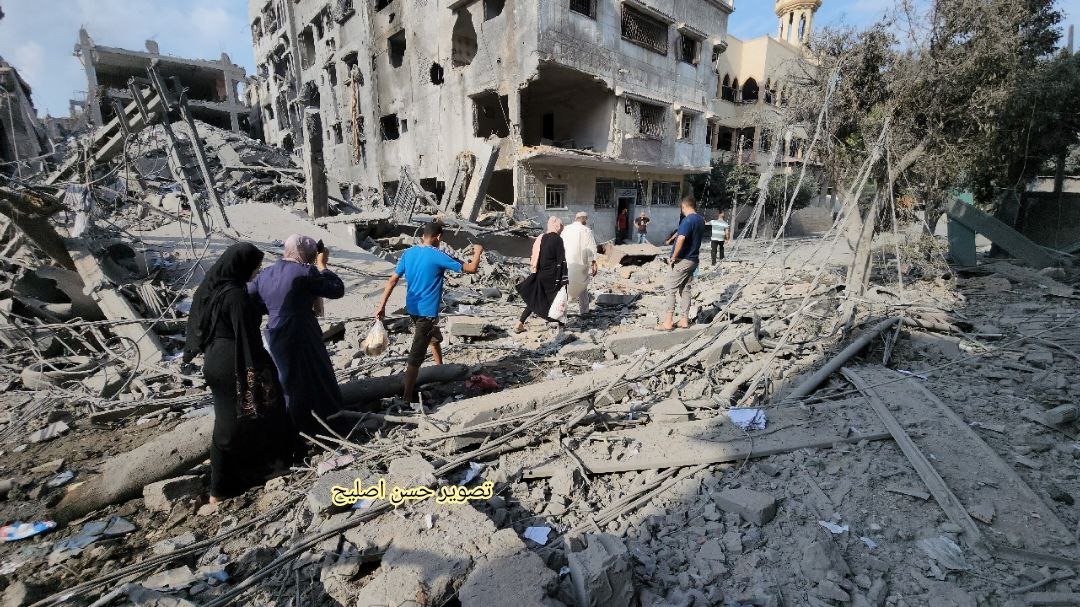
Over 50,000* pregnant women will be forced to give birth with no electricity or medical supplies in Gaza in the coming months, risking life-threatening complications without access to delivery and emergency obstetric care services. Ammal Awadallah, Executive Director of the Palestinian Family Planning and Protection Association (PFPPA) said: “We don’t know what’s going to happen to these women and their newborn babies. Our center is unusable and our options to provide referrals to hospitals are decreasing by the hour. I can’t stress enough how dire the situation is and how desperately we need humanitarian aid to be allowed into Gaza.” On 8 October, PFPPA’s only center in Gaza was destroyed following an Israeli airstrike to an adjacent building, completely cutting off their ability to offer healthcare to women who have already been systematically denied sexual and reproductive healthcare and rights by the Israeli occupation. Israel’s complete blockade of Gaza, as announced on 10 October, is preventing food, water, fuel, and medical supplies into Gaza. Currently, Gazans are only able to access electricity for two hours every day - this supply is due to completely run out in the next few days. The medical system in Gaza, already severely stretched due to 16 years of an illegal blockade, cannot cope with the level of injuries from the current bombardment. Emergency services and medical supplies are not able to reach affected people, including pregnant women, women in labour and newborn babies. It's estimated that 60% of those injured and killed since 10 October are women and children. On 11 October, the only power plant in Gaza ran out of fuel, and three of five water plants are out of service due to the Israeli bombing and lack of fuel. Without clean water, food, basic medicines and vaccines, innocent women and newborn babies will continue to die. Wafa Abu Hasheish, a health worker at PFPPA in Gaza said: "As a health worker and a Palestinian woman, ever since Saturday morning I have been living in constant fear for the safety and livelihood of my family. At the same time I am not able to leave behind my commitment to providing women with health services and information. I have received calls from women having a miscarriage due to the bombings and gas, another going into labor, neighbors reaching out for help… all of which I am trying to assist but with such limited options and resources available and accessible.. I am afraid for their well beings and even for their lives. I do not know how much more the Gazans can take and I am constantly thinking how many more women around Gaza have no one or nowhere to go." Note: This figure was calculated using the Minimum Initial Service Package (MISP) calculator based on the most recent available statistics on the population of Gaza. On 16 October, UNFPA released updated statistics that show there are currently at least 50,000 pregnant women in Gaza. For media enquiries, or to speak to our staff member in Palestine, please contact media@ippf.org Click here to donate to IPPF's appeal for Palestine. About PFPPA Established in Jerusalem in 1964, the Palestinian Family Planning and Protection Association (PFPPA) is locally registered as an independent, non-profit and non-governmental association with headquarters in Jerusalem. PFPPA has service delivery points located in the West Bank Areas of Ramallah, Bethlehem, Hebron and Halhoul, in addition to one in the Gaza Strip, which has yet to be relocated after it was destroyed following an Israeli airstrike on an adjacent building on 8 October. Furthermore, and in cooperation with local partners, PFPPA is also responsible for 3 safe spaces to provide Gender Based Violence (GBV) related services in the Jerusalem area. About the International Planned Parenthood Federation IPPF, through its 149 Member Associations and collaborative partners, delivers high-quality sexual and reproductive healthcare and helps advance sexual and reproductive rights, especially for marginalized people with diverse needs that are currently unmet. IPPF's Member Associations and partners are locally owned, independent organisations, which means the support and care they provide are informed by local expertise and context. IPPF advocates for a world where people have the information they need to make informed decisions about their sexual and reproductive health and their bodies. We stand up and fight for sexual and reproductive rights and against those who seek to deny people their human right to bodily autonomy and sexual and reproductive freedom. We deliver care rooted in rights, respect, and dignity for all - no matter what. *At the time of this press release on 12 October 2023, we reported that there were an estimated 37,000 pregnant women in Gaza, which was calculated using population estimates from the MISP calculator - a tool that helps coordinators and program managers determine affected population demographics for advocacy, fundraising and programming. This statistic has since been updated to an estimated 50,000 pregnant women in Gaza, with 5,500 expected to deliver in the next month, according to the most recent available data from the UNFPA.
media_center
| 12 October 2023
Over 37,000* pregnant women at risk of life-threatening complications in Gaza
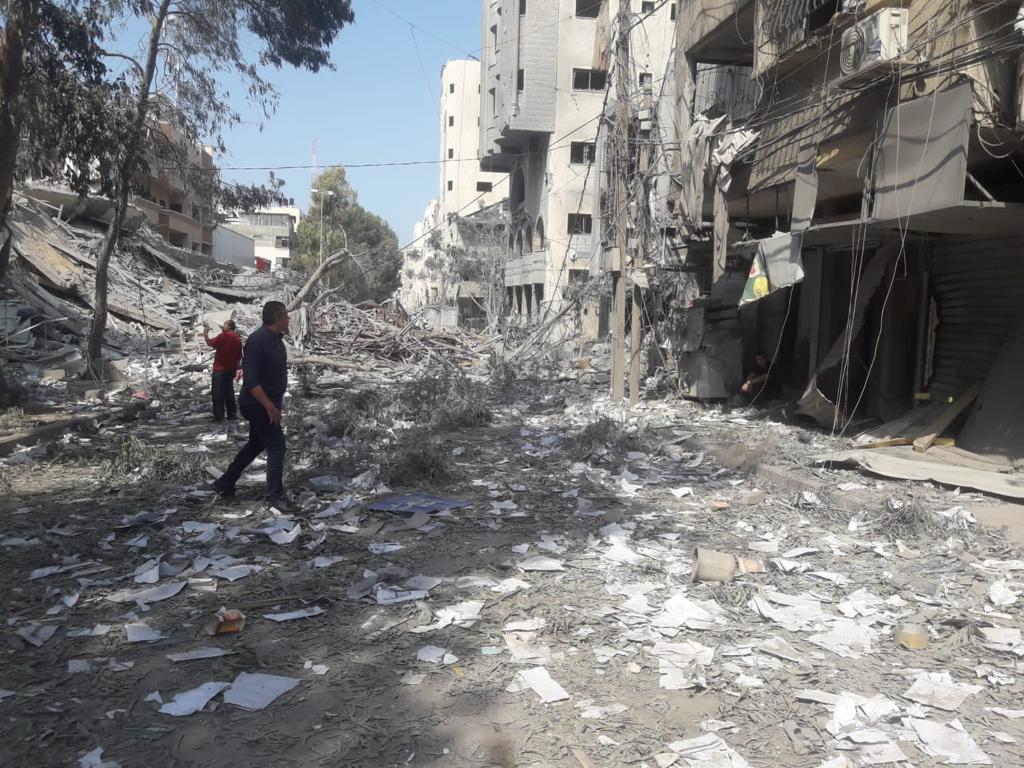
Over 50,000* pregnant women will be forced to give birth with no electricity or medical supplies in Gaza in the coming months, risking life-threatening complications without access to delivery and emergency obstetric care services. Ammal Awadallah, Executive Director of the Palestinian Family Planning and Protection Association (PFPPA) said: “We don’t know what’s going to happen to these women and their newborn babies. Our center is unusable and our options to provide referrals to hospitals are decreasing by the hour. I can’t stress enough how dire the situation is and how desperately we need humanitarian aid to be allowed into Gaza.” On 8 October, PFPPA’s only center in Gaza was destroyed following an Israeli airstrike to an adjacent building, completely cutting off their ability to offer healthcare to women who have already been systematically denied sexual and reproductive healthcare and rights by the Israeli occupation. Israel’s complete blockade of Gaza, as announced on 10 October, is preventing food, water, fuel, and medical supplies into Gaza. Currently, Gazans are only able to access electricity for two hours every day - this supply is due to completely run out in the next few days. The medical system in Gaza, already severely stretched due to 16 years of an illegal blockade, cannot cope with the level of injuries from the current bombardment. Emergency services and medical supplies are not able to reach affected people, including pregnant women, women in labour and newborn babies. It's estimated that 60% of those injured and killed since 10 October are women and children. On 11 October, the only power plant in Gaza ran out of fuel, and three of five water plants are out of service due to the Israeli bombing and lack of fuel. Without clean water, food, basic medicines and vaccines, innocent women and newborn babies will continue to die. Wafa Abu Hasheish, a health worker at PFPPA in Gaza said: "As a health worker and a Palestinian woman, ever since Saturday morning I have been living in constant fear for the safety and livelihood of my family. At the same time I am not able to leave behind my commitment to providing women with health services and information. I have received calls from women having a miscarriage due to the bombings and gas, another going into labor, neighbors reaching out for help… all of which I am trying to assist but with such limited options and resources available and accessible.. I am afraid for their well beings and even for their lives. I do not know how much more the Gazans can take and I am constantly thinking how many more women around Gaza have no one or nowhere to go." Note: This figure was calculated using the Minimum Initial Service Package (MISP) calculator based on the most recent available statistics on the population of Gaza. On 16 October, UNFPA released updated statistics that show there are currently at least 50,000 pregnant women in Gaza. For media enquiries, or to speak to our staff member in Palestine, please contact media@ippf.org Click here to donate to IPPF's appeal for Palestine. About PFPPA Established in Jerusalem in 1964, the Palestinian Family Planning and Protection Association (PFPPA) is locally registered as an independent, non-profit and non-governmental association with headquarters in Jerusalem. PFPPA has service delivery points located in the West Bank Areas of Ramallah, Bethlehem, Hebron and Halhoul, in addition to one in the Gaza Strip, which has yet to be relocated after it was destroyed following an Israeli airstrike on an adjacent building on 8 October. Furthermore, and in cooperation with local partners, PFPPA is also responsible for 3 safe spaces to provide Gender Based Violence (GBV) related services in the Jerusalem area. About the International Planned Parenthood Federation IPPF, through its 149 Member Associations and collaborative partners, delivers high-quality sexual and reproductive healthcare and helps advance sexual and reproductive rights, especially for marginalized people with diverse needs that are currently unmet. IPPF's Member Associations and partners are locally owned, independent organisations, which means the support and care they provide are informed by local expertise and context. IPPF advocates for a world where people have the information they need to make informed decisions about their sexual and reproductive health and their bodies. We stand up and fight for sexual and reproductive rights and against those who seek to deny people their human right to bodily autonomy and sexual and reproductive freedom. We deliver care rooted in rights, respect, and dignity for all - no matter what. *At the time of this press release on 12 October 2023, we reported that there were an estimated 37,000 pregnant women in Gaza, which was calculated using population estimates from the MISP calculator - a tool that helps coordinators and program managers determine affected population demographics for advocacy, fundraising and programming. This statistic has since been updated to an estimated 50,000 pregnant women in Gaza, with 5,500 expected to deliver in the next month, according to the most recent available data from the UNFPA.
media center
| 09 October 2023
IPPF Statement on the Escalating Violence in Gaza
London, 9 October 2023 - Over the past few days, we have watched in horror the escalating violence between Hamas and Israel, the loss of civilian lives and the targeting of health facilities. In response, IPPF has released a media statement on behalf of the Federation and its Member Association directly impacted by the violence. As in all conflict and humanitarian situations, sexual and reproductive health, rights and justice (SRHRJ) challenges will increase significantly in Palestine following the latest outbreak of violence and the targeting of health infrastructure. Sexual and Reproductive Health and Rights must be prioritized now in Palestine, especially for women, girls and the most vulnerable and marginalized groups among them, who have already been facing a protracted humanitarian crisis for decades. IPPF’s Director-General, Dr Alvaro Bermejo, said: "The International Planned Parenthood Federation (IPPF) is deeply concerned about civilians caught up in the recent attacks, and we are devastated by the loss of civilian lives. At a time where human rights are increasingly under attack, we take our responsibility to preserve the enormous gains made in life-saving sexual and reproductive healthcare in this region very seriously, especially for women, girls and marginalised populations, whose vulnerability and experiences are so often overlooked in humanitarian and conflict settings. "Since its establishment in 1964, the Palestinian Family Planning and Protection Association (PFPPA), our local Member Association in Palestine has worked in the most difficult of circumstances to strengthen and protect the reproductive rights of people living in Gaza, the West Bank and Jerusalem. “Our local teams are now contingency planning to address not only the needs of those trapped in Gaza amid escalating violence, but also the more than five million Palestinians currently living under Israeli occupation who will require critical support to continue accessing sexual and reproductive healthcare. We will work closely with partners and other NGOs to ensure the least possible disruption to services, and we will continue to monitor the situation closely to ensure the safety and security of our colleagues across the region.” Ammal Awadallah, Executive Director of the Palestinian Family Planning and Protection Association (PFPPA), IPPF’s local Member Association in Palestine said: “The current situation in Palestine is different than other situations of escalating hostilities. We have many staff that are afraid to come into work, and we had colleagues that were stuck at the border and unable to return home following IPPF meetings outside of the country. On 8 October, one of our critical service delivery points in Gaza was destroyed. While this building can be compensated, lives cannot. PFPPA has been bravely providing services within this protracted humanitarian crisis setting for decades. This has made us stronger and increased our commitment to women and girls, but we are now facing a dire situation. Basic sexual and reproductive health care commodities, like condoms, are banned in Gaza. The total blockade of Gaza will only worsen the situation for millions of desperate people who are denied their most basic of human rights. Palestinians are systematically denied sexual and reproductive healthcare and rights. Our health system has been repeatedly targeted and depleted by the Israeli occupation, and the more it disintegrates, the more it will hinder the full realization of these rights for women and girls.” بالنسبة لوسائل الإعلام العربية، يرجى الاتصال بمصطفى كميل el mkemayel@ippf.org For UK and other international media outlets, please contact media@ippf.org About the Palestinian Family Planning and Protection Association (PFPPA) Established in Jerusalem in 1964, the Palestinian Family Planning and Protection Association (PFPPA) is locally registered as an independent, non-profit and non-governmental association with headquarters in Jerusalem. PFPPA has service delivery points located in the West Bank Areas of Ramallah, Bethlehem, Hebron and Halhoul, in addition to one in the Gaza Strip, which has yet to be relocated after it was destroyed following an Israeli airstrike to an adjacent building on 8 October. Furthermore, and in cooperation with local partners, PFPPA is also responsible for 3 safe spaces to provide Gender Based Violence (GBV) related services in the Jerusalem area. About the International Planned Parenthood Federation The International Planned Parenthood Federation (IPPF) is a global service provider and advocate of sexual and reproductive health and rights for all. For 70 years, IPPF, through its 150 Member Associations and collaborative partners, has delivered high-quality sexual and reproductive healthcare and helped advance sexual rights, especially for people with intersectional and diverse needs that are currently unmet. Our Member Associations and partners are independent organisations that are locally owned, which means the support and care they provide is informed by local expertise and context. We advocate for a world where people have the information they need to make informed decisions about their sexual health and bodies. We stand up and fight for sexual and reproductive rights and against those who seek to deny people their human right to bodily autonomy and freedom. We deliver care that is rooted in rights, respect, and dignity - no matter what.
media_center
| 09 October 2023
IPPF Statement on the Escalating Violence in Gaza
London, 9 October 2023 - Over the past few days, we have watched in horror the escalating violence between Hamas and Israel, the loss of civilian lives and the targeting of health facilities. In response, IPPF has released a media statement on behalf of the Federation and its Member Association directly impacted by the violence. As in all conflict and humanitarian situations, sexual and reproductive health, rights and justice (SRHRJ) challenges will increase significantly in Palestine following the latest outbreak of violence and the targeting of health infrastructure. Sexual and Reproductive Health and Rights must be prioritized now in Palestine, especially for women, girls and the most vulnerable and marginalized groups among them, who have already been facing a protracted humanitarian crisis for decades. IPPF’s Director-General, Dr Alvaro Bermejo, said: "The International Planned Parenthood Federation (IPPF) is deeply concerned about civilians caught up in the recent attacks, and we are devastated by the loss of civilian lives. At a time where human rights are increasingly under attack, we take our responsibility to preserve the enormous gains made in life-saving sexual and reproductive healthcare in this region very seriously, especially for women, girls and marginalised populations, whose vulnerability and experiences are so often overlooked in humanitarian and conflict settings. "Since its establishment in 1964, the Palestinian Family Planning and Protection Association (PFPPA), our local Member Association in Palestine has worked in the most difficult of circumstances to strengthen and protect the reproductive rights of people living in Gaza, the West Bank and Jerusalem. “Our local teams are now contingency planning to address not only the needs of those trapped in Gaza amid escalating violence, but also the more than five million Palestinians currently living under Israeli occupation who will require critical support to continue accessing sexual and reproductive healthcare. We will work closely with partners and other NGOs to ensure the least possible disruption to services, and we will continue to monitor the situation closely to ensure the safety and security of our colleagues across the region.” Ammal Awadallah, Executive Director of the Palestinian Family Planning and Protection Association (PFPPA), IPPF’s local Member Association in Palestine said: “The current situation in Palestine is different than other situations of escalating hostilities. We have many staff that are afraid to come into work, and we had colleagues that were stuck at the border and unable to return home following IPPF meetings outside of the country. On 8 October, one of our critical service delivery points in Gaza was destroyed. While this building can be compensated, lives cannot. PFPPA has been bravely providing services within this protracted humanitarian crisis setting for decades. This has made us stronger and increased our commitment to women and girls, but we are now facing a dire situation. Basic sexual and reproductive health care commodities, like condoms, are banned in Gaza. The total blockade of Gaza will only worsen the situation for millions of desperate people who are denied their most basic of human rights. Palestinians are systematically denied sexual and reproductive healthcare and rights. Our health system has been repeatedly targeted and depleted by the Israeli occupation, and the more it disintegrates, the more it will hinder the full realization of these rights for women and girls.” بالنسبة لوسائل الإعلام العربية، يرجى الاتصال بمصطفى كميل el mkemayel@ippf.org For UK and other international media outlets, please contact media@ippf.org About the Palestinian Family Planning and Protection Association (PFPPA) Established in Jerusalem in 1964, the Palestinian Family Planning and Protection Association (PFPPA) is locally registered as an independent, non-profit and non-governmental association with headquarters in Jerusalem. PFPPA has service delivery points located in the West Bank Areas of Ramallah, Bethlehem, Hebron and Halhoul, in addition to one in the Gaza Strip, which has yet to be relocated after it was destroyed following an Israeli airstrike to an adjacent building on 8 October. Furthermore, and in cooperation with local partners, PFPPA is also responsible for 3 safe spaces to provide Gender Based Violence (GBV) related services in the Jerusalem area. About the International Planned Parenthood Federation The International Planned Parenthood Federation (IPPF) is a global service provider and advocate of sexual and reproductive health and rights for all. For 70 years, IPPF, through its 150 Member Associations and collaborative partners, has delivered high-quality sexual and reproductive healthcare and helped advance sexual rights, especially for people with intersectional and diverse needs that are currently unmet. Our Member Associations and partners are independent organisations that are locally owned, which means the support and care they provide is informed by local expertise and context. We advocate for a world where people have the information they need to make informed decisions about their sexual health and bodies. We stand up and fight for sexual and reproductive rights and against those who seek to deny people their human right to bodily autonomy and freedom. We deliver care that is rooted in rights, respect, and dignity - no matter what.
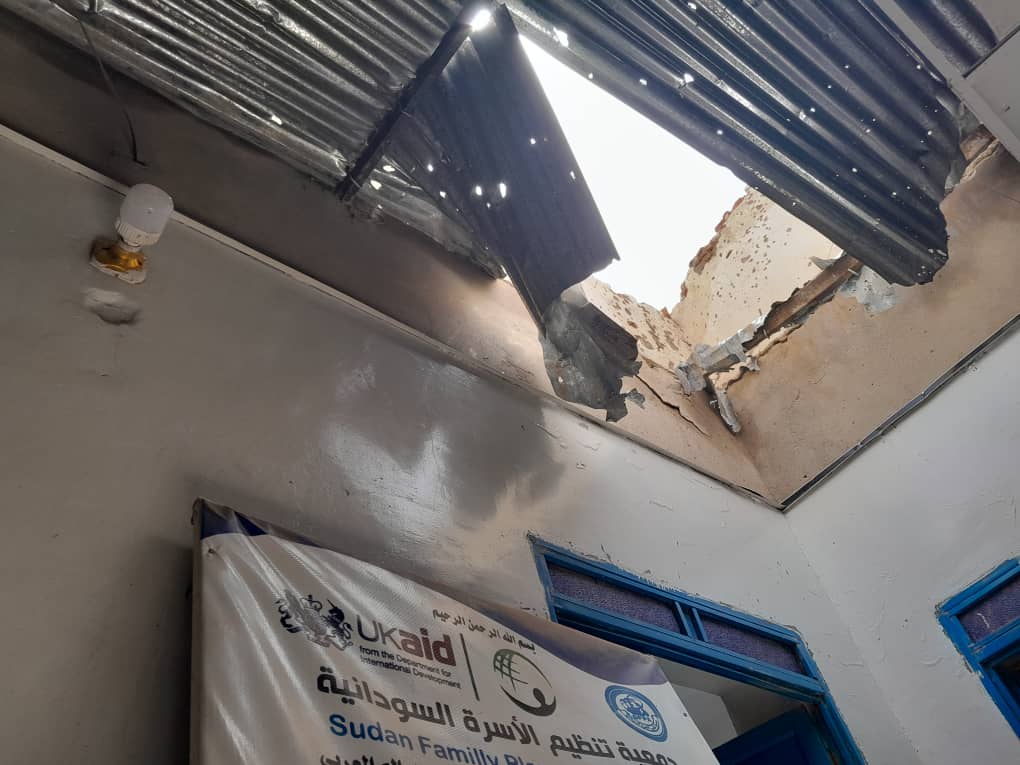
media center
| 11 September 2023
IPPF Statement on RSF Attacks Against Sudan Family Planning Association Health Facilities
Statement from Dr Alvaro Bermejo, IPPF Director General: The International Planned Parenthood Federation condemns the multiple attacks in Khartoum and Elfashir (North Darfur) against clinics and health centers run by the Sudanese Family Planning Association (SFPA) between 7-9 September. Unprovoked attacks against the health facilities in South Khartoum (Elshik Wad Hamad) and in Elfashir City (Aboshok Clinic) have destroyed the infrastructure of the facilities, injured clients and staff, and interrupted the delivery of the most needed health services for vulnerable people of Sudan, especially women and girls of reproductive age. These attacks, just like the previous attacks against health facilities and medical professionals since the outbreak of violence in the country began on 15 April, will prolong the suffering of the Sudanese people. IPPF requests the protection of civilians and civilian institutions, especially healthcare facilities, to ensure the provision of healthcare and the basic humanitarian necessities for the Sudanese people. For media requests, contact media@ippf.org About the Sudan Family Planning Association The Sudan Family Planning Association (SFPA) was established in 1965 by pioneers in obstetrics and gynecology in response to increases in maternal, neonatal and infant mortality and morbidity. As the statistics show, Sudan is a country in great need of frontline sexual and reproductive health (SRH) services. Advocacy, and undertaking information, education and communication (IEC) programs are critical. In 2022, SFPA provided 26 millions of services through 24 clinics, 261 associated clinics, and 37 mobile clinics . Since the start of the crisis in 15th April; the association teams was successful in providing 2,500,000 services through 24 SFPA facilities and 8,500,000 services through non damaged associated and mobile clinics. SFPA was able to assist 1145 deliveries under bombarding and provided 167000 treatments of HIV in its static clinics.
media_center
| 11 September 2023
IPPF Statement on RSF Attacks Against Sudan Family Planning Association Health Facilities
Statement from Dr Alvaro Bermejo, IPPF Director General: The International Planned Parenthood Federation condemns the multiple attacks in Khartoum and Elfashir (North Darfur) against clinics and health centers run by the Sudanese Family Planning Association (SFPA) between 7-9 September. Unprovoked attacks against the health facilities in South Khartoum (Elshik Wad Hamad) and in Elfashir City (Aboshok Clinic) have destroyed the infrastructure of the facilities, injured clients and staff, and interrupted the delivery of the most needed health services for vulnerable people of Sudan, especially women and girls of reproductive age. These attacks, just like the previous attacks against health facilities and medical professionals since the outbreak of violence in the country began on 15 April, will prolong the suffering of the Sudanese people. IPPF requests the protection of civilians and civilian institutions, especially healthcare facilities, to ensure the provision of healthcare and the basic humanitarian necessities for the Sudanese people. For media requests, contact media@ippf.org About the Sudan Family Planning Association The Sudan Family Planning Association (SFPA) was established in 1965 by pioneers in obstetrics and gynecology in response to increases in maternal, neonatal and infant mortality and morbidity. As the statistics show, Sudan is a country in great need of frontline sexual and reproductive health (SRH) services. Advocacy, and undertaking information, education and communication (IEC) programs are critical. In 2022, SFPA provided 26 millions of services through 24 clinics, 261 associated clinics, and 37 mobile clinics . Since the start of the crisis in 15th April; the association teams was successful in providing 2,500,000 services through 24 SFPA facilities and 8,500,000 services through non damaged associated and mobile clinics. SFPA was able to assist 1145 deliveries under bombarding and provided 167000 treatments of HIV in its static clinics.

media center
| 09 February 2023
IPPF responds with SRH care to survivors of the earthquake in Syria
On Monday 6th February, catastrophic earthquakes hit Türkiye and Syria. Within hours, our local member association, the Syrian Family Planning Association (SFPA), was among the first responders assisting and evacuating people to safe shelter and accommodation in Syria. Dr. Lama Mouakea, Executive Director, Syrian Family Planning Association said: “In the aftermath of Monday’s earthquake, at least two hospitals have collapsed, three of our clinics have been damaged, and many health services have been disrupted. This will have an immediate, and dire, impact on women and girls. The catastrophic earthquake combined with the harsh winter makes our response even more critical. We have already sent mobile clinics to the areas affected to provide immediate healthcare.” Dr. Mouakea added: “Women and girls who are being moved into shelters in several areas, such as Aleppo and Idlib, may be subjected to violence or sexual abuse, so the medical and psycho-social service needs are great. We know of one devastating case of a mother giving birth to a baby while buried beneath rubble, who later sadly passed away. So getting pregnant women to safe spaces to deliver their babies is now essential. Our staff visit these areas continuously every week, so are already familiar with the communities and areas that are hardest hit. SFPA has been here before the earthquake providing humanitarian aid and will continue to serve these communities as they recover from this latest disaster.” Whilst also responding to other immediate needs, SFPA is ensuring sexual and reproductive healthcare is on the agenda as a critical component of the response, especially for women, girls and marginalized communities. Three in five preventable maternal deaths occur during natural disasters, and one in five women is likely to be pregnant during a crisis. Without access to reproductive healthcare, women and girls will suffer severe consequences, including miscarriage, premature labour, complications from unassisted deliveries and increased exposure to sexual and domestic violence, sexually transmitted infections, unintended pregnancy, unsafe abortion and even death. Julie Taft, Humanitarian Director, International Planned Parenthood Federation said: “IPPF is deeply saddened to hear of the news of the devastating earthquake in Türkiye and Syria. Our deepest condolences go out to the families who lost loved ones and whose homes were destroyed. Our member association in Syria has already started responding with mobile health clinics, and we stand ready to support the ongoing response efforts of our local partners in their delivery of vital, and lifesaving, sexual and reproductive healthcare to women, girls, and marginalized populations.” Twelve years of war and sanctions have left Syria’s infrastructure, including healthcare systems, battered. A crippling economic crisis has also driven humanitarian needs to record levels. SFPA has been responding throughout these interlinked crises ensuring continued sexual and reproductive healthcare services through their mobile and static clinics. Dr Alvaro Bermejo, Director-General of IPPF said: “It is amongst one of the most devastating natural disasters we have seen in recent times. The focus of all actors must be squarely on the needs of the people, particularly women and girls and those who are more vulnerable. It is not time to play geopolitics when women are giving birth amidst the devastation. It is time to focus on getting aid and support to where it is needed, now. It is not only the rubble that must be removed, but also any obstacle put in place by those in positions of power, locally, nationally or internationally.”
media_center
| 09 February 2023
IPPF responds with SRH care to survivors of the earthquake in Syria
On Monday 6th February, catastrophic earthquakes hit Türkiye and Syria. Within hours, our local member association, the Syrian Family Planning Association (SFPA), was among the first responders assisting and evacuating people to safe shelter and accommodation in Syria. Dr. Lama Mouakea, Executive Director, Syrian Family Planning Association said: “In the aftermath of Monday’s earthquake, at least two hospitals have collapsed, three of our clinics have been damaged, and many health services have been disrupted. This will have an immediate, and dire, impact on women and girls. The catastrophic earthquake combined with the harsh winter makes our response even more critical. We have already sent mobile clinics to the areas affected to provide immediate healthcare.” Dr. Mouakea added: “Women and girls who are being moved into shelters in several areas, such as Aleppo and Idlib, may be subjected to violence or sexual abuse, so the medical and psycho-social service needs are great. We know of one devastating case of a mother giving birth to a baby while buried beneath rubble, who later sadly passed away. So getting pregnant women to safe spaces to deliver their babies is now essential. Our staff visit these areas continuously every week, so are already familiar with the communities and areas that are hardest hit. SFPA has been here before the earthquake providing humanitarian aid and will continue to serve these communities as they recover from this latest disaster.” Whilst also responding to other immediate needs, SFPA is ensuring sexual and reproductive healthcare is on the agenda as a critical component of the response, especially for women, girls and marginalized communities. Three in five preventable maternal deaths occur during natural disasters, and one in five women is likely to be pregnant during a crisis. Without access to reproductive healthcare, women and girls will suffer severe consequences, including miscarriage, premature labour, complications from unassisted deliveries and increased exposure to sexual and domestic violence, sexually transmitted infections, unintended pregnancy, unsafe abortion and even death. Julie Taft, Humanitarian Director, International Planned Parenthood Federation said: “IPPF is deeply saddened to hear of the news of the devastating earthquake in Türkiye and Syria. Our deepest condolences go out to the families who lost loved ones and whose homes were destroyed. Our member association in Syria has already started responding with mobile health clinics, and we stand ready to support the ongoing response efforts of our local partners in their delivery of vital, and lifesaving, sexual and reproductive healthcare to women, girls, and marginalized populations.” Twelve years of war and sanctions have left Syria’s infrastructure, including healthcare systems, battered. A crippling economic crisis has also driven humanitarian needs to record levels. SFPA has been responding throughout these interlinked crises ensuring continued sexual and reproductive healthcare services through their mobile and static clinics. Dr Alvaro Bermejo, Director-General of IPPF said: “It is amongst one of the most devastating natural disasters we have seen in recent times. The focus of all actors must be squarely on the needs of the people, particularly women and girls and those who are more vulnerable. It is not time to play geopolitics when women are giving birth amidst the devastation. It is time to focus on getting aid and support to where it is needed, now. It is not only the rubble that must be removed, but also any obstacle put in place by those in positions of power, locally, nationally or internationally.”
media center
| 16 April 2026
IPPF and Japan team up on another project to sustain sexual and reproductive health services in the West Bank, Palestine
21st April 2026 - IPPF and its Member Association in Palestine (PFPPA) are pleased to announce the launch of a new project financed by the Government of Japan, "Provision of health and medical services for women and children affected by crisis in the West Bank." This project will deliver life-saving maternal healthcare, psychosocial support, and sexual and reproductive health services, in even the hardest-to-reach areas of the West Bank, Palestine, through health centres, mobile medical teams, tele-consultations, and community outreach. The destruction of health facilities, severe restrictions on movement, and raids and attacks on communities in the West Bank have left Palestinians with little to no access to healthcare. According to the UNFPA, over 230,000 women and girls experience difficulties in accessing reproductive health services. Key project activities will include:Maintaining essential sexual and reproductive health (SRH) services, through three static clinics in Khalil, Halhoul and Bethlehem in the West Bank. These clinics will offer services including family planning, obstetrics and gynaecology care and management of sexually transmitted infections, for over 22,000 women and children. This will include specialised support for an estimated 2,300 survivors of sexual and gender-based violence, who will receive medical care, counselling or referrals. Providing maternal and child health care services for 4,600 women and children in hard-to-reach and marginalised areas of the West Bank via a mobile team of doctors, midwives, paediatricians, social workers, pharmacists and lab technicians. The mobile team will also provide psychosocial support services, support for survivors of sexual and gender-based violence, and family planning services. Providing counselling and consultation services via telecommunications and digital channels for those unable to access clinics.Conducting five ‘preparing for birth’ sessions for 90 first time mothers, providing information and support on maternal care and options for labour and delivery. Mr. ARAIKE Katsuhiko, Ambassador of Japan for the Palestinian Affairs says: “As a flagbearer of Universal Health Coverage (UHC) and the Women, Peace, and Security (WPS) agenda, we hope that our new collaboration with IPPF facilitates Palestinian women and children, who are affected by conflicts and live outside service catchment areas, to enjoy Obstetrics and Gynecology (OBGYN) and family planning services, improved well-being, and social participation. This project is part of Japan’s 2026–2027 cooperation package for Palestine. Japan will continue to provide support for the stability and prosperity of Palestine.” Dr. Fadoua Bakhadda, Regional Director of the IPPF Arab World Regional Office adds: “Thanks to the support of the people of Japan, we can continue delivering essential maternal and child health services to communities that have been systematically cut off from care, helping to prevent avoidable maternal and newborn deaths in the West Bank, Palestine.” -- About International Planned Parenthood Federation (IPPF) Arab World Office IPPF is a global healthcare provider and a leading advocate of sexual and reproductive health and rights (SRHR) for all. Led by a courageous and determined group of women, IPPF was founded in 1952. Today, we are a movement of over 120 autonomous member associations and 23 collaborative partners with a presence in 146 countries. Established in 1971, the IPPF Arab World Region (IPPF AWR) is one of IPPF’s six regional offices. Based in Tunis, it is the leading Sexual and Reproductive Health (SRH) service delivery organization in the North Africa and the Middle East, and the leading Sexual and Reproductive Health and Rights (SRHR) advocacy voice in the region.
media_center
| 21 April 2026
IPPF and Japan team up on another project to sustain sexual and reproductive health services in the West Bank, Palestine
21st April 2026 - IPPF and its Member Association in Palestine (PFPPA) are pleased to announce the launch of a new project financed by the Government of Japan, "Provision of health and medical services for women and children affected by crisis in the West Bank." This project will deliver life-saving maternal healthcare, psychosocial support, and sexual and reproductive health services, in even the hardest-to-reach areas of the West Bank, Palestine, through health centres, mobile medical teams, tele-consultations, and community outreach. The destruction of health facilities, severe restrictions on movement, and raids and attacks on communities in the West Bank have left Palestinians with little to no access to healthcare. According to the UNFPA, over 230,000 women and girls experience difficulties in accessing reproductive health services. Key project activities will include:Maintaining essential sexual and reproductive health (SRH) services, through three static clinics in Khalil, Halhoul and Bethlehem in the West Bank. These clinics will offer services including family planning, obstetrics and gynaecology care and management of sexually transmitted infections, for over 22,000 women and children. This will include specialised support for an estimated 2,300 survivors of sexual and gender-based violence, who will receive medical care, counselling or referrals. Providing maternal and child health care services for 4,600 women and children in hard-to-reach and marginalised areas of the West Bank via a mobile team of doctors, midwives, paediatricians, social workers, pharmacists and lab technicians. The mobile team will also provide psychosocial support services, support for survivors of sexual and gender-based violence, and family planning services. Providing counselling and consultation services via telecommunications and digital channels for those unable to access clinics.Conducting five ‘preparing for birth’ sessions for 90 first time mothers, providing information and support on maternal care and options for labour and delivery. Mr. ARAIKE Katsuhiko, Ambassador of Japan for the Palestinian Affairs says: “As a flagbearer of Universal Health Coverage (UHC) and the Women, Peace, and Security (WPS) agenda, we hope that our new collaboration with IPPF facilitates Palestinian women and children, who are affected by conflicts and live outside service catchment areas, to enjoy Obstetrics and Gynecology (OBGYN) and family planning services, improved well-being, and social participation. This project is part of Japan’s 2026–2027 cooperation package for Palestine. Japan will continue to provide support for the stability and prosperity of Palestine.” Dr. Fadoua Bakhadda, Regional Director of the IPPF Arab World Regional Office adds: “Thanks to the support of the people of Japan, we can continue delivering essential maternal and child health services to communities that have been systematically cut off from care, helping to prevent avoidable maternal and newborn deaths in the West Bank, Palestine.” -- About International Planned Parenthood Federation (IPPF) Arab World Office IPPF is a global healthcare provider and a leading advocate of sexual and reproductive health and rights (SRHR) for all. Led by a courageous and determined group of women, IPPF was founded in 1952. Today, we are a movement of over 120 autonomous member associations and 23 collaborative partners with a presence in 146 countries. Established in 1971, the IPPF Arab World Region (IPPF AWR) is one of IPPF’s six regional offices. Based in Tunis, it is the leading Sexual and Reproductive Health (SRH) service delivery organization in the North Africa and the Middle East, and the leading Sexual and Reproductive Health and Rights (SRHR) advocacy voice in the region.
media center
| 16 April 2026
Japan funds essential supplies for healthcare clinics in Sudan
16th April 2026 - A new project titled Strengthening Life-saving Sexual and Reproductive Health (SRH) Services for Internally Displaced Persons (IDPs), has been launched in Sudan. Funded by the Government of Japan and implemented by the IPPF Member Association Sudan Family Planning Association (SFPA), the project will support women and girls in crisis in the Red Sea and Khartoum States. Fifteen million people in Sudan have been displaced by the civil war, and conflicts in neighbouring countries have triggered an influx of returnees and displaced people into Sudan. As a result, the country now hosts 15% of the world’s IDPs. But widespread destruction of infrastructure and deadly disease outbreaks have left the healthcare system unable to cope.An estimated 1.75 million women and girls require urgent sexual and reproductive health (SRH) services, including 270,000 internally displaced pregnant women. With rape increasingly used as a weapon of war, many require urgent medical and psychosocial support. However, essential SRH commodities, including contraceptives, emergency obstetric kits, and menstrual hygiene products, are in critically low supply. SFPA provides essential sexual and reproductive health services to women and girls, including internally displaced persons, through 26 static clinics and 11 mobile clinics across the country. This new funding will enable them to procure, transport and distribute essential supplies to two of the organisation’s static clinics in the Red Sea State and Khartoum State. This vital equipment, including microscopes, blood-testing devices, thermometers, and examination lamps, will enable these clinics to continue providing SRH services, expanding their reach to an additional 2,400 internally displaced people and individuals in host communities. Mr. Nakahara Takanobu, the Chargé d’Affaires ad interim of the Embassy of Japan to Sudan, stated that, “The provision of sexual and reproductive healthcare for women and girls is a critical step in supporting this vulnerable category in Sudan. This is more so when they are IDPs. Thus, we are happy to be able to support IPPF’s Member Association in Sudan - the Sudan Family Planning Association - in this domain, so that we can contribute to improving the safety and well-being of these women and girls, and reassure them that we acknowledge the challenges they face and endure.” Dr Hiba Ahmed Khalil, Emergency and Humanitarian Interventions Manager at SFPA added, “SFPA is honoured to join the Japan Supplementary Budget 2025 project, advancing inclusive health and humanitarian responses that strengthen access to essential services and uphold the rights of communities most at risk. Together, we are building pathways for resilience and equity.” Dr. Fadoua Bakhadda, Regional Director of the IPPF Arab World Regional Office, added, “Every woman and girl deserves access to safe, reliable healthcare, no matter the circumstances. Thanks to the people of Japan, we can equip clinics with the essential tools and supplies needed to continue providing critical sexual and reproductive healthcare. This investment will directly improve the safety, health, and resilience of thousands of internally displaced women and girls.” ---About the Sudan Family Planning Association The Sudan Family Planning Association (SFPA) was established in 1965 by pioneers in obstetrics and gynaecology in response to increases in maternal, neonatal and infant mortality and morbidity. As the statistics show, Sudan is a country in great need of frontline sexual and reproductive health (SRH) services. Advocacy, and undertaking information, education and communication (IEC) programs are critical.About International Planned Parenthood Federation (IPPF) Arab World Office IPPF is a global healthcare provider and a leading advocate of sexual and reproductive health and rights (SRHR) for all. Led by a courageous and determined group of women, IPPF was founded in 1952. Today, we are a movement of over 120 autonomous member associations and 23 collaborative partners with a presence in 146 countries. Established in 1971, the IPPF Arab World Region (IPPF AWR) is one of IPPF’s six regional offices. Based in Tunis, it is the leading Sexual and Reproductive Health (SRH) service delivery organization in North Africa and the Middle East, and the leading Sexual and Reproductive Health and Rights (SRHR) advocacy voice in the region.
media_center
| 16 April 2026
Japan funds essential supplies for healthcare clinics in Sudan
16th April 2026 - A new project titled Strengthening Life-saving Sexual and Reproductive Health (SRH) Services for Internally Displaced Persons (IDPs), has been launched in Sudan. Funded by the Government of Japan and implemented by the IPPF Member Association Sudan Family Planning Association (SFPA), the project will support women and girls in crisis in the Red Sea and Khartoum States. Fifteen million people in Sudan have been displaced by the civil war, and conflicts in neighbouring countries have triggered an influx of returnees and displaced people into Sudan. As a result, the country now hosts 15% of the world’s IDPs. But widespread destruction of infrastructure and deadly disease outbreaks have left the healthcare system unable to cope.An estimated 1.75 million women and girls require urgent sexual and reproductive health (SRH) services, including 270,000 internally displaced pregnant women. With rape increasingly used as a weapon of war, many require urgent medical and psychosocial support. However, essential SRH commodities, including contraceptives, emergency obstetric kits, and menstrual hygiene products, are in critically low supply. SFPA provides essential sexual and reproductive health services to women and girls, including internally displaced persons, through 26 static clinics and 11 mobile clinics across the country. This new funding will enable them to procure, transport and distribute essential supplies to two of the organisation’s static clinics in the Red Sea State and Khartoum State. This vital equipment, including microscopes, blood-testing devices, thermometers, and examination lamps, will enable these clinics to continue providing SRH services, expanding their reach to an additional 2,400 internally displaced people and individuals in host communities. Mr. Nakahara Takanobu, the Chargé d’Affaires ad interim of the Embassy of Japan to Sudan, stated that, “The provision of sexual and reproductive healthcare for women and girls is a critical step in supporting this vulnerable category in Sudan. This is more so when they are IDPs. Thus, we are happy to be able to support IPPF’s Member Association in Sudan - the Sudan Family Planning Association - in this domain, so that we can contribute to improving the safety and well-being of these women and girls, and reassure them that we acknowledge the challenges they face and endure.” Dr Hiba Ahmed Khalil, Emergency and Humanitarian Interventions Manager at SFPA added, “SFPA is honoured to join the Japan Supplementary Budget 2025 project, advancing inclusive health and humanitarian responses that strengthen access to essential services and uphold the rights of communities most at risk. Together, we are building pathways for resilience and equity.” Dr. Fadoua Bakhadda, Regional Director of the IPPF Arab World Regional Office, added, “Every woman and girl deserves access to safe, reliable healthcare, no matter the circumstances. Thanks to the people of Japan, we can equip clinics with the essential tools and supplies needed to continue providing critical sexual and reproductive healthcare. This investment will directly improve the safety, health, and resilience of thousands of internally displaced women and girls.” ---About the Sudan Family Planning Association The Sudan Family Planning Association (SFPA) was established in 1965 by pioneers in obstetrics and gynaecology in response to increases in maternal, neonatal and infant mortality and morbidity. As the statistics show, Sudan is a country in great need of frontline sexual and reproductive health (SRH) services. Advocacy, and undertaking information, education and communication (IEC) programs are critical.About International Planned Parenthood Federation (IPPF) Arab World Office IPPF is a global healthcare provider and a leading advocate of sexual and reproductive health and rights (SRHR) for all. Led by a courageous and determined group of women, IPPF was founded in 1952. Today, we are a movement of over 120 autonomous member associations and 23 collaborative partners with a presence in 146 countries. Established in 1971, the IPPF Arab World Region (IPPF AWR) is one of IPPF’s six regional offices. Based in Tunis, it is the leading Sexual and Reproductive Health (SRH) service delivery organization in North Africa and the Middle East, and the leading Sexual and Reproductive Health and Rights (SRHR) advocacy voice in the region.
media center
| 04 December 2023
Rapes, unplanned pregnancies and sexual and gender-based violence on the rise in Sudan’s forgotten war
Khartoum, 4 December 2023 — As the war in Sudan enters its eight month with no end in sight, widespread conflict-related sexual and gender-based violence (SGBV) has continued unabated, including reports of mass rapes, sexual exploitation and sexual harassment which demonstrate how sexual violence is being used as a tool of war to subjugate, terrorise and punish women and girls. Since the war between Sudan’s Rapid Support Forces and the Sudanese Armed Forces erupted on April 15th, reports of ethnically targeted sexual and gender-based violence have escalated across Sudan, leading to a surge in unplanned pregnancies and sexually transmitted infections. The International Criminal Court (ICC) in The Hague said in July it is investigating the hostilities in Darfur, including reports of killings, rapes and crimes against children. Rape has often been used as a weapon of war over the years in Sudan, human rights groups have said. Sexual violence is prohibited in conflict, and the accounts of rape could constitute war crimes and crimes against humanity. The prevailing conflict and social unrest in various regions of Sudan have created an environment rife for SGBV, leaving countless individuals exposed to the gravest violations of their most intimate rights. Deeply disturbing accounts of gang rapes, sexual assault, harassment, and other forms of sexual, physical and psychological violence have emerged, highlighting the urgent need for comprehensive sexual and reproductive healthcare for survivors. IPPF’s local member association in Sudan, the Sudan Family Planning Association (SFPA) has been providing these services across Sudan since the outbreak of the war, including counselling, medical assistance, and referrals for survivors of SGBV. Despite unprovoked attacks on six SFPA facilities which have so far killed one youth volunteer and injured numerous clients and staff, as well as interrupted the delivery of some health services, SFPA has continued to work in conflict-affected areas through their large network of community based distributors and mobile clinics. Dr Seham Jaber, the director of Digital Health Interventions and Services at SFPA said: “We have noticed escalating rates of sexual and gender-based violence in Sudan since the outbreak of the war in April. Violence against women and girls is occurring at the hands of militants, as well as an increase in domestic and intimate partner violence, including rape. Young girls and boys are living in overcrowded shelters are reporting to us cases of sexual harassment and abuse." Confidentiality, sensitivity and compassion are crucial to SFPA’s work, because many survivors of sexual violence don’t seek medical treatment due to the fear of social stigma and reprisals. SFPA's website and hotline have seen a considerable increase in traffic for reports of SGBV from the community since the start of the war. In response, SFPA is also running community awareness and education campaigns on SGBV, and is enlisting the support of local Imams to promote gender equality, and foster a culture of respect and consent. For media inquiries or to speak to one of our staff in Sudan, please contact media@ippf.org About the Sudan Family Planning Association The Sudan Family Planning Association (SFPA) was established in 1965 by pioneers in obstetrics and gynecology in response to increases in maternal, neonatal and infant mortality and morbidity. Sudan is a country in great need of frontline sexual and reproductive health (SRH) services. In 2022, SFPA provided 26 million services through 24 clinics, 261 associated clinics, and 37 mobile clinics. Since the start of the war on 15 April 2023; the Association teams have been successful in providing 14,706,000 services through 24 SFPA facilities , mobile clinics, mobile teams ,CBDs and partners clinics . SFPA was able to assist 1,145 deliveries under bombardment and provided 167,000 treatments of HIV&AIDS “HIV screening and care for PLHIV” through its static clinics. Mobile clinics are used to offer integrated SRH services including HIV/STI services and condom distribution, STI testing and management, HIV testing and treatment for HIV opportunistic infections, referrals for ARV treatment including PMTCT and awareness sessions both at mobile clinics and at the community level by community health promoters and community base distributors (CBDs). About the International Planned Parenthood Federation IPPF, through its 149 Member Associations and collaborative partners, delivers high-quality sexual and reproductive healthcare and helps advance sexual and reproductive rights, especially for marginalized people with diverse needs that are currently unmet. IPPF's Member Associations and partners are locally owned, independent organisations, which means the support and care they provide are informed by local expertise and context. IPPF advocates for a world where people have the information they need to make informed decisions about their sexual and reproductive health and their bodies. We stand up and fight for sexual and reproductive rights and against those who seek to deny people their human right to bodily autonomy and sexual and reproductive freedom. We deliver care rooted in rights, respect, and dignity for all - no matter what.
media_center
| 04 December 2023
Rapes, unplanned pregnancies and sexual and gender-based violence on the rise in Sudan’s forgotten war
Khartoum, 4 December 2023 — As the war in Sudan enters its eight month with no end in sight, widespread conflict-related sexual and gender-based violence (SGBV) has continued unabated, including reports of mass rapes, sexual exploitation and sexual harassment which demonstrate how sexual violence is being used as a tool of war to subjugate, terrorise and punish women and girls. Since the war between Sudan’s Rapid Support Forces and the Sudanese Armed Forces erupted on April 15th, reports of ethnically targeted sexual and gender-based violence have escalated across Sudan, leading to a surge in unplanned pregnancies and sexually transmitted infections. The International Criminal Court (ICC) in The Hague said in July it is investigating the hostilities in Darfur, including reports of killings, rapes and crimes against children. Rape has often been used as a weapon of war over the years in Sudan, human rights groups have said. Sexual violence is prohibited in conflict, and the accounts of rape could constitute war crimes and crimes against humanity. The prevailing conflict and social unrest in various regions of Sudan have created an environment rife for SGBV, leaving countless individuals exposed to the gravest violations of their most intimate rights. Deeply disturbing accounts of gang rapes, sexual assault, harassment, and other forms of sexual, physical and psychological violence have emerged, highlighting the urgent need for comprehensive sexual and reproductive healthcare for survivors. IPPF’s local member association in Sudan, the Sudan Family Planning Association (SFPA) has been providing these services across Sudan since the outbreak of the war, including counselling, medical assistance, and referrals for survivors of SGBV. Despite unprovoked attacks on six SFPA facilities which have so far killed one youth volunteer and injured numerous clients and staff, as well as interrupted the delivery of some health services, SFPA has continued to work in conflict-affected areas through their large network of community based distributors and mobile clinics. Dr Seham Jaber, the director of Digital Health Interventions and Services at SFPA said: “We have noticed escalating rates of sexual and gender-based violence in Sudan since the outbreak of the war in April. Violence against women and girls is occurring at the hands of militants, as well as an increase in domestic and intimate partner violence, including rape. Young girls and boys are living in overcrowded shelters are reporting to us cases of sexual harassment and abuse." Confidentiality, sensitivity and compassion are crucial to SFPA’s work, because many survivors of sexual violence don’t seek medical treatment due to the fear of social stigma and reprisals. SFPA's website and hotline have seen a considerable increase in traffic for reports of SGBV from the community since the start of the war. In response, SFPA is also running community awareness and education campaigns on SGBV, and is enlisting the support of local Imams to promote gender equality, and foster a culture of respect and consent. For media inquiries or to speak to one of our staff in Sudan, please contact media@ippf.org About the Sudan Family Planning Association The Sudan Family Planning Association (SFPA) was established in 1965 by pioneers in obstetrics and gynecology in response to increases in maternal, neonatal and infant mortality and morbidity. Sudan is a country in great need of frontline sexual and reproductive health (SRH) services. In 2022, SFPA provided 26 million services through 24 clinics, 261 associated clinics, and 37 mobile clinics. Since the start of the war on 15 April 2023; the Association teams have been successful in providing 14,706,000 services through 24 SFPA facilities , mobile clinics, mobile teams ,CBDs and partners clinics . SFPA was able to assist 1,145 deliveries under bombardment and provided 167,000 treatments of HIV&AIDS “HIV screening and care for PLHIV” through its static clinics. Mobile clinics are used to offer integrated SRH services including HIV/STI services and condom distribution, STI testing and management, HIV testing and treatment for HIV opportunistic infections, referrals for ARV treatment including PMTCT and awareness sessions both at mobile clinics and at the community level by community health promoters and community base distributors (CBDs). About the International Planned Parenthood Federation IPPF, through its 149 Member Associations and collaborative partners, delivers high-quality sexual and reproductive healthcare and helps advance sexual and reproductive rights, especially for marginalized people with diverse needs that are currently unmet. IPPF's Member Associations and partners are locally owned, independent organisations, which means the support and care they provide are informed by local expertise and context. IPPF advocates for a world where people have the information they need to make informed decisions about their sexual and reproductive health and their bodies. We stand up and fight for sexual and reproductive rights and against those who seek to deny people their human right to bodily autonomy and sexual and reproductive freedom. We deliver care rooted in rights, respect, and dignity for all - no matter what.
media center
| 14 November 2023
With the forced closure of hospitals, midwives are a lifeline for pregnant women in Gaza
15 November 2023 - With the forced closure of Gaza’s largest hospital, Al Quds, due to the lack of fuel and incessant Israeli bombardment, and the recent storming of al-Shifa Hospital by Israeli forces, midwives are a lifeline for the estimated 180 women who are giving birth each day. As of 13 November, all but one of the hospitals in Gaza City and northern Gaza are reportedly out of service due to lack of power, medical consumables, oxygen, food and water, compounded by bombardments and fighting in their vicinities, according to OCHA. 26 year old Narmeen Al Shafee is a midwife currently living in Deir al-Balah in central Gaza, who has previously worked with the Palestinian Family Planning and Protection Association (PFPPA) outreach team. She describes the case of a 29-year-old pregnant woman who fled along with her family from Sheikh Radwan to Deir al-Balah to seek refuge in a school shelter near her home. The women was in her ninth month of pregnancy and not long after being displaced from her home she underwent a cesarean section. Midwife Al Shafee said: “After giving birth, and for her own safety, the shelters did not want to accommodate her due to the widespread infectious diseases and [the] high risk of infection since she had a cesarean section. Her husband was calling out in the streets for someone to receive his wife and three children. My parents welcomed them into our home to take care of her. I would change her bandages daily and monitor her and her child. After ten days, I removed the stitches. Thank God, her condition is now stable, and there are no problems.” In a separate case, Al Shafee describes caring for her 23-year-old cousin who was pregnant for the first time and lost her husband early in the war. “Her delivery date was approaching, and she gave birth at Nasser Hospital in Khan Younis [in southern Gaza]. Her child faced complications during birth, and due to the bombings she sought refuge with us. I took care of her and her child until their situation stabilized. Now, I am helping her with breastfeeding, as she is finding it difficult.” Aminah*, another midwife who has also previously worked with the PFPPA outreach team, said: “I’ve been in contact with two pregnant women multiple times, providing weekly consultations. One woman experienced severe cramps, and after offering advice, she was referred to the hospital. She needed lung maturation injections for the fetus, along with rest and nutritional supplements and iron. Another woman, 29 weeks pregnant, suffered dizziness and vomiting and she took Ancozine [an antiemetic] for nausea during the visit. I also found out that she was taking iron and provided her with information on the correct way to take iron tablets in order for her to benefit from them as needed. I am also providing information to women in my area and around me hoping that it will help them if and when needed.” According to data from the UNFPA, there are an estimated 50,000 pregnant women in Gaza, with 15% expected to encounter complications. In many instances women are only admitted to hospital when they are fully dilated, with some forced to deliver their babies in cars, in the streets, and in overcrowded shelters where the risk of infection and the spread of disease is high. There are reports of c-sections bring performed without anesthesia, and there is currently no type of post natal care available in Gaza. Levels of early labor and miscarriages are expected to increase with the trauma and conditions being faced. Al Ahli Hospital, in Gaza City, which currently accommodates over 500 patients, is reportedly the sole medical facility able to receive patients, amid increasing shortages and challenges. In Shifa hospital, 32 patients, including three premature babies, have reportedly died since 11 November, following the power cut and amid dire conditions. Without a full and immediate ceasefire, and the unimpeded delivery of humanitarian aid across all parts of Gaza, maternal and neonatal deaths will continue to rise. For media enquiries, or to speak to our staff member in Palestine, please contact media@ippf.org Click here to donate to IPPF's emergency appeal for Palestine. About PFPPA Established in Jerusalem in 1964, the Palestinian Family Planning and Protection Association (PFPPA) is locally registered as an independent, non-profit and non-governmental association with headquarters in Jerusalem. PFPPA has service delivery points located in the West Bank Areas of Ramallah, Bethlehem, Hebron and Halhoul, in addition to one in the Gaza Strip, which has yet to be relocated after it was destroyed following an Israeli airstrike on 8 October. Furthermore, and in cooperation with local partners, PFPPA is also responsible for 3 safe spaces to provide Gender Based Violence (GBV) related services in the Jerusalem area. About the International Planned Parenthood Federation IPPF, through its 149 Member Associations and collaborative partners, delivers high-quality sexual and reproductive healthcare and helps advance sexual and reproductive rights, especially for marginalized people with diverse needs that are currently unmet. IPPF's Member Associations and partners are locally owned, independent organisations, which means the support and care they provide are informed by local expertise and context. IPPF advocates for a world where people have the information they need to make informed decisions about their sexual and reproductive health and their bodies. We stand up and fight for sexual and reproductive rights and against those who seek to deny people their human right to bodily autonomy and sexual and reproductive freedom. We deliver care rooted in rights, respect, and dignity for all - no matter what. Banner image: Midwife Narmeen Al Shafee provides care to a newborn baby in Deir al-Balah, in central Gaza.
media_center
| 15 November 2023
With the forced closure of hospitals, midwives are a lifeline for pregnant women in Gaza
15 November 2023 - With the forced closure of Gaza’s largest hospital, Al Quds, due to the lack of fuel and incessant Israeli bombardment, and the recent storming of al-Shifa Hospital by Israeli forces, midwives are a lifeline for the estimated 180 women who are giving birth each day. As of 13 November, all but one of the hospitals in Gaza City and northern Gaza are reportedly out of service due to lack of power, medical consumables, oxygen, food and water, compounded by bombardments and fighting in their vicinities, according to OCHA. 26 year old Narmeen Al Shafee is a midwife currently living in Deir al-Balah in central Gaza, who has previously worked with the Palestinian Family Planning and Protection Association (PFPPA) outreach team. She describes the case of a 29-year-old pregnant woman who fled along with her family from Sheikh Radwan to Deir al-Balah to seek refuge in a school shelter near her home. The women was in her ninth month of pregnancy and not long after being displaced from her home she underwent a cesarean section. Midwife Al Shafee said: “After giving birth, and for her own safety, the shelters did not want to accommodate her due to the widespread infectious diseases and [the] high risk of infection since she had a cesarean section. Her husband was calling out in the streets for someone to receive his wife and three children. My parents welcomed them into our home to take care of her. I would change her bandages daily and monitor her and her child. After ten days, I removed the stitches. Thank God, her condition is now stable, and there are no problems.” In a separate case, Al Shafee describes caring for her 23-year-old cousin who was pregnant for the first time and lost her husband early in the war. “Her delivery date was approaching, and she gave birth at Nasser Hospital in Khan Younis [in southern Gaza]. Her child faced complications during birth, and due to the bombings she sought refuge with us. I took care of her and her child until their situation stabilized. Now, I am helping her with breastfeeding, as she is finding it difficult.” Aminah*, another midwife who has also previously worked with the PFPPA outreach team, said: “I’ve been in contact with two pregnant women multiple times, providing weekly consultations. One woman experienced severe cramps, and after offering advice, she was referred to the hospital. She needed lung maturation injections for the fetus, along with rest and nutritional supplements and iron. Another woman, 29 weeks pregnant, suffered dizziness and vomiting and she took Ancozine [an antiemetic] for nausea during the visit. I also found out that she was taking iron and provided her with information on the correct way to take iron tablets in order for her to benefit from them as needed. I am also providing information to women in my area and around me hoping that it will help them if and when needed.” According to data from the UNFPA, there are an estimated 50,000 pregnant women in Gaza, with 15% expected to encounter complications. In many instances women are only admitted to hospital when they are fully dilated, with some forced to deliver their babies in cars, in the streets, and in overcrowded shelters where the risk of infection and the spread of disease is high. There are reports of c-sections bring performed without anesthesia, and there is currently no type of post natal care available in Gaza. Levels of early labor and miscarriages are expected to increase with the trauma and conditions being faced. Al Ahli Hospital, in Gaza City, which currently accommodates over 500 patients, is reportedly the sole medical facility able to receive patients, amid increasing shortages and challenges. In Shifa hospital, 32 patients, including three premature babies, have reportedly died since 11 November, following the power cut and amid dire conditions. Without a full and immediate ceasefire, and the unimpeded delivery of humanitarian aid across all parts of Gaza, maternal and neonatal deaths will continue to rise. For media enquiries, or to speak to our staff member in Palestine, please contact media@ippf.org Click here to donate to IPPF's emergency appeal for Palestine. About PFPPA Established in Jerusalem in 1964, the Palestinian Family Planning and Protection Association (PFPPA) is locally registered as an independent, non-profit and non-governmental association with headquarters in Jerusalem. PFPPA has service delivery points located in the West Bank Areas of Ramallah, Bethlehem, Hebron and Halhoul, in addition to one in the Gaza Strip, which has yet to be relocated after it was destroyed following an Israeli airstrike on 8 October. Furthermore, and in cooperation with local partners, PFPPA is also responsible for 3 safe spaces to provide Gender Based Violence (GBV) related services in the Jerusalem area. About the International Planned Parenthood Federation IPPF, through its 149 Member Associations and collaborative partners, delivers high-quality sexual and reproductive healthcare and helps advance sexual and reproductive rights, especially for marginalized people with diverse needs that are currently unmet. IPPF's Member Associations and partners are locally owned, independent organisations, which means the support and care they provide are informed by local expertise and context. IPPF advocates for a world where people have the information they need to make informed decisions about their sexual and reproductive health and their bodies. We stand up and fight for sexual and reproductive rights and against those who seek to deny people their human right to bodily autonomy and sexual and reproductive freedom. We deliver care rooted in rights, respect, and dignity for all - no matter what. Banner image: Midwife Narmeen Al Shafee provides care to a newborn baby in Deir al-Balah, in central Gaza.
media center
| 07 November 2023
30 Days Too Many for Women and Girls in Gaza
Today marks one month since Hamas launched its attack on civilians that triggered Israel’s declaration of an unprecedented war in the Gaza Strip, and a subsequent humanitarian catastrophe. Since 7 October, some 1,400 Israeli civilians have been killed, 200 hostages taken, and thousands injured, according to the Israeli authorities. In Gaza, over 10,000 people have been killed, the vast majority of whom are women and children. IPPF echoes international demands for an immediate and full ceasefire to prevent further atrocities. The continued bombing and rockets will make it virtually impossible to distribute any aid to civilians. In addition to the immediate need for fuel, water, food, and medicine for civilians in Gaza, the urgency of sexual and reproductive health care needs must not be overlooked. Alvaro Bermejo, IPPF Director General said: “Our colleagues in Gaza are currently sheltering for their lives, yet still delivering sexual and reproductive healthcare in any way they can amid appalling conditions. For 30 days, bombs have been falling across Gaza, leaving behind devastation and destruction unlike anything we have dealt with before as a Federation. In the absence of a full ceasefire, we are gravely concerned for the lives of our colleagues, civilians, and humanitarians who are desperately trying to deliver aid inside Gaza.” Insufficient supplies, resources and equipment for sexual and reproductive health and rights were already a pressing issue in Gaza, which has been under Israeli occupation and blockade for decades. Since 7 October, thousands of Palestinian mothers and children have been killed, marking a recurring stifling of reproductive justice in the region. Pregnant women are miscarrying due to stress and shock, and the availability of medical facilities to birth safely is now virtually non-existent. Women and girls are reporting a severe lack of menstrual hygiene products and contraceptives, and a rise in cases of sexually transmitted diseases and urinary tract infections with little to no medical treatment available. Without a full and immediate ceasefire, we can expect to see this vicious cycle continue, with thousands more maternal and newborn deaths. On top of this, we will see a rise in unintended pregnancies, the spread of sexually transmitted infections including HIV, and a rise in psychological trauma and conflict-related sexual violence, all of which will have long-term, generational impacts. We echo calls by the UN Inter-Agency Standing Committee to establish a robust aid operation in a safe and peaceful context. Gaza needs a coordinated effort that meets the urgent needs of all its people, including the particular sexual and reproductive healthcare needs of women, girls and vulnerable groups. There are no justifications for war crimes or grave violations of international humanitarian law, regardless of who commits them or against whom they are committed. We reaffirm that all people have the right to access emergency sexual and reproductive healthcare, no matter where, and no matter what. IPPF calls for an immediate ceasefire to end the violence, deaths and suffering of civilians in Israel and Palestine. This ceasefire is an essential precursor towards a path to peace with justice. For media enquiries, or to speak to our staff member in Palestine, please contact media@ippf.org Click here to donate to IPPF's appeal for Palestine. About PFPPA Established in Jerusalem in 1964, the Palestinian Family Planning and Protection Association (PFPPA) is locally registered as an independent, non-profit and non-governmental association with headquarters in Jerusalem. PFPPA has service delivery points located in the West Bank Areas of Ramallah, Bethlehem, Hebron and Halhoul, in addition to one in the Gaza Strip, which has yet to be relocated after it was destroyed following an Israeli airstrike on 8 October. Furthermore, and in cooperation with local partners, PFPPA is also responsible for 3 safe spaces to provide Gender Based Violence (GBV) related services in the Jerusalem area. About the International Planned Parenthood Federation IPPF, through its 149 Member Associations and collaborative partners, delivers high-quality sexual and reproductive healthcare and helps advance sexual and reproductive rights, especially for marginalized people with diverse needs that are currently unmet. IPPF's Member Associations and partners are locally owned, independent organisations, which means the support and care they provide are informed by local expertise and context. IPPF advocates for a world where people have the information they need to make informed decisions about their sexual and reproductive health and their bodies. We stand up and fight for sexual and reproductive rights and against those who seek to deny people their human right to bodily autonomy and sexual and reproductive freedom. We deliver care rooted in rights, respect, and dignity for all - no matter what.
media_center
| 07 November 2023
30 Days Too Many for Women and Girls in Gaza
Today marks one month since Hamas launched its attack on civilians that triggered Israel’s declaration of an unprecedented war in the Gaza Strip, and a subsequent humanitarian catastrophe. Since 7 October, some 1,400 Israeli civilians have been killed, 200 hostages taken, and thousands injured, according to the Israeli authorities. In Gaza, over 10,000 people have been killed, the vast majority of whom are women and children. IPPF echoes international demands for an immediate and full ceasefire to prevent further atrocities. The continued bombing and rockets will make it virtually impossible to distribute any aid to civilians. In addition to the immediate need for fuel, water, food, and medicine for civilians in Gaza, the urgency of sexual and reproductive health care needs must not be overlooked. Alvaro Bermejo, IPPF Director General said: “Our colleagues in Gaza are currently sheltering for their lives, yet still delivering sexual and reproductive healthcare in any way they can amid appalling conditions. For 30 days, bombs have been falling across Gaza, leaving behind devastation and destruction unlike anything we have dealt with before as a Federation. In the absence of a full ceasefire, we are gravely concerned for the lives of our colleagues, civilians, and humanitarians who are desperately trying to deliver aid inside Gaza.” Insufficient supplies, resources and equipment for sexual and reproductive health and rights were already a pressing issue in Gaza, which has been under Israeli occupation and blockade for decades. Since 7 October, thousands of Palestinian mothers and children have been killed, marking a recurring stifling of reproductive justice in the region. Pregnant women are miscarrying due to stress and shock, and the availability of medical facilities to birth safely is now virtually non-existent. Women and girls are reporting a severe lack of menstrual hygiene products and contraceptives, and a rise in cases of sexually transmitted diseases and urinary tract infections with little to no medical treatment available. Without a full and immediate ceasefire, we can expect to see this vicious cycle continue, with thousands more maternal and newborn deaths. On top of this, we will see a rise in unintended pregnancies, the spread of sexually transmitted infections including HIV, and a rise in psychological trauma and conflict-related sexual violence, all of which will have long-term, generational impacts. We echo calls by the UN Inter-Agency Standing Committee to establish a robust aid operation in a safe and peaceful context. Gaza needs a coordinated effort that meets the urgent needs of all its people, including the particular sexual and reproductive healthcare needs of women, girls and vulnerable groups. There are no justifications for war crimes or grave violations of international humanitarian law, regardless of who commits them or against whom they are committed. We reaffirm that all people have the right to access emergency sexual and reproductive healthcare, no matter where, and no matter what. IPPF calls for an immediate ceasefire to end the violence, deaths and suffering of civilians in Israel and Palestine. This ceasefire is an essential precursor towards a path to peace with justice. For media enquiries, or to speak to our staff member in Palestine, please contact media@ippf.org Click here to donate to IPPF's appeal for Palestine. About PFPPA Established in Jerusalem in 1964, the Palestinian Family Planning and Protection Association (PFPPA) is locally registered as an independent, non-profit and non-governmental association with headquarters in Jerusalem. PFPPA has service delivery points located in the West Bank Areas of Ramallah, Bethlehem, Hebron and Halhoul, in addition to one in the Gaza Strip, which has yet to be relocated after it was destroyed following an Israeli airstrike on 8 October. Furthermore, and in cooperation with local partners, PFPPA is also responsible for 3 safe spaces to provide Gender Based Violence (GBV) related services in the Jerusalem area. About the International Planned Parenthood Federation IPPF, through its 149 Member Associations and collaborative partners, delivers high-quality sexual and reproductive healthcare and helps advance sexual and reproductive rights, especially for marginalized people with diverse needs that are currently unmet. IPPF's Member Associations and partners are locally owned, independent organisations, which means the support and care they provide are informed by local expertise and context. IPPF advocates for a world where people have the information they need to make informed decisions about their sexual and reproductive health and their bodies. We stand up and fight for sexual and reproductive rights and against those who seek to deny people their human right to bodily autonomy and sexual and reproductive freedom. We deliver care rooted in rights, respect, and dignity for all - no matter what.
media center
| 26 October 2023
Dire lack of sexual and reproductive health supplies, disease outbreak in Gaza shelters
Shelter conditions in Gaza for the estimated 1.4 million internally displaced people have become dire, with women and girls reporting a severe lack of menstrual hygiene products, cases of sexually transmitted diseases and urinary tract infections with little to no medical treatment available in the severely overcrowded shelters. Contraception is in very short supply, and according to our local team sheltering and providing services in Gaza, women are sharing contraceptive pills. Women with intrauterine contraceptive devices (IUDs) are experiencing bleeding and infections due to the unhygienic conditions in the camps. There are currently no options for IUD removal in Gaza, posing long term risks to women’s reproductive health, including severe bleeding. On 25 October, the UN said that fuel in Gaza could run out within hours, and that hospitals in the Gaza Strip are taking emergency cases only, which will prevent many women and girls from seeking sexual and reproductive health care. If Israel continues to block humanitarian aid including safe delivery kits from entering Gaza, many of the estimated 50,000 pregnant women[1] in Gaza will have no safe place to give birth, with at least 15% likely to experience complications[2], further compromising already stalled progress in reducing the rates of maternal morbidity and mortality. Wafa Abu-Hasheish, a health worker at PFPPA in Gaza said: “The shelter is suffering from a shortage of water, lack of medical care, and an increase in the incidence of diseases such as influenza, chest infections, skin ulcers, scabies, lice, and diarrheal diseases, and girls and women are reporting menstrual disturbance. There are also cases of sexually transmitted infections and urinary tract infections. Women using contraceptive pills are sharing their supplies with others." The number of internally displaced persons (IDPs) in Gaza is currently estimated at around 1.4 million (more than half the population), with a large part of that population living in overcrowded and under-supplied shelters with food, water, and fuel running out – and basic and life-sustaining services becoming more inaccessible by the hour. The mental and physical health toll on local health workers in Gaza is immense. Abu-Hasheish added: “On a personal level, being the service provider and being present in the shelter has caused me several psychological problems, stress, and fear. I also suffer problems such as neck ache and back muscle tension due to the inability to sleep or sit properly. I have contracted a flu and developed excessive breathing difficulties, but there is a lack of available treatment for displaced people due to the high number of patients and the scarcity of medicines. I had to go home for rest and relaxation, despite the dangers and lack of safety at home. Ammal Awadallah, the Executive Director of the Palestinian Family Planning and Protection Association (PFPPA) said: "If pregnant women are lucky enough to reach a health center or hospital, they are only admitted when they are fully dilated. And they must leave the hospital within three hours after delivery, due to overcrowding in hospital facilities, lack of space and resources. “Women are forced between choosing privacy and a clean space in their own homes, where they still stand, or shelters with dire conditions. It is choosing between the different evils. There is no safe place in Gaza.” For media enquiries, or to speak to our staff member in Palestine, please contact media@ippf.org Click here to donate to IPPF's appeal for Palestine. About PFPPA Established in Jerusalem in 1964, the Palestinian Family Planning and Protection Association (PFPPA) is locally registered as an independent, non-profit and non-governmental association with headquarters in Jerusalem. PFPPA has service delivery points located in the West Bank Areas of Ramallah, Bethlehem, Hebron and Halhoul, in addition to one in the Gaza Strip, which has yet to be relocated after it was destroyed following an Israeli airstrike on 8 October. Furthermore, and in cooperation with local partners, PFPPA is also responsible for 3 safe spaces to provide Gender Based Violence (GBV) related services in the Jerusalem area. About the International Planned Parenthood Federation IPPF, through its 149 Member Associations and collaborative partners, delivers high-quality sexual and reproductive healthcare and helps advance sexual and reproductive rights, especially for marginalized people with diverse needs that are currently unmet. IPPF's Member Associations and partners are locally owned, independent organisations, which means the support and care they provide are informed by local expertise and context. IPPF advocates for a world where people have the information they need to make informed decisions about their sexual and reproductive health and their bodies. We stand up and fight for sexual and reproductive rights and against those who seek to deny people their human right to bodily autonomy and sexual and reproductive freedom. We deliver care rooted in rights, respect, and dignity for all - no matter what. [1] Source: UNFPA [2] Source: MISP
media_center
| 30 October 2023
Dire lack of sexual and reproductive health supplies, disease outbreak in Gaza shelters
Shelter conditions in Gaza for the estimated 1.4 million internally displaced people have become dire, with women and girls reporting a severe lack of menstrual hygiene products, cases of sexually transmitted diseases and urinary tract infections with little to no medical treatment available in the severely overcrowded shelters. Contraception is in very short supply, and according to our local team sheltering and providing services in Gaza, women are sharing contraceptive pills. Women with intrauterine contraceptive devices (IUDs) are experiencing bleeding and infections due to the unhygienic conditions in the camps. There are currently no options for IUD removal in Gaza, posing long term risks to women’s reproductive health, including severe bleeding. On 25 October, the UN said that fuel in Gaza could run out within hours, and that hospitals in the Gaza Strip are taking emergency cases only, which will prevent many women and girls from seeking sexual and reproductive health care. If Israel continues to block humanitarian aid including safe delivery kits from entering Gaza, many of the estimated 50,000 pregnant women[1] in Gaza will have no safe place to give birth, with at least 15% likely to experience complications[2], further compromising already stalled progress in reducing the rates of maternal morbidity and mortality. Wafa Abu-Hasheish, a health worker at PFPPA in Gaza said: “The shelter is suffering from a shortage of water, lack of medical care, and an increase in the incidence of diseases such as influenza, chest infections, skin ulcers, scabies, lice, and diarrheal diseases, and girls and women are reporting menstrual disturbance. There are also cases of sexually transmitted infections and urinary tract infections. Women using contraceptive pills are sharing their supplies with others." The number of internally displaced persons (IDPs) in Gaza is currently estimated at around 1.4 million (more than half the population), with a large part of that population living in overcrowded and under-supplied shelters with food, water, and fuel running out – and basic and life-sustaining services becoming more inaccessible by the hour. The mental and physical health toll on local health workers in Gaza is immense. Abu-Hasheish added: “On a personal level, being the service provider and being present in the shelter has caused me several psychological problems, stress, and fear. I also suffer problems such as neck ache and back muscle tension due to the inability to sleep or sit properly. I have contracted a flu and developed excessive breathing difficulties, but there is a lack of available treatment for displaced people due to the high number of patients and the scarcity of medicines. I had to go home for rest and relaxation, despite the dangers and lack of safety at home. Ammal Awadallah, the Executive Director of the Palestinian Family Planning and Protection Association (PFPPA) said: "If pregnant women are lucky enough to reach a health center or hospital, they are only admitted when they are fully dilated. And they must leave the hospital within three hours after delivery, due to overcrowding in hospital facilities, lack of space and resources. “Women are forced between choosing privacy and a clean space in their own homes, where they still stand, or shelters with dire conditions. It is choosing between the different evils. There is no safe place in Gaza.” For media enquiries, or to speak to our staff member in Palestine, please contact media@ippf.org Click here to donate to IPPF's appeal for Palestine. About PFPPA Established in Jerusalem in 1964, the Palestinian Family Planning and Protection Association (PFPPA) is locally registered as an independent, non-profit and non-governmental association with headquarters in Jerusalem. PFPPA has service delivery points located in the West Bank Areas of Ramallah, Bethlehem, Hebron and Halhoul, in addition to one in the Gaza Strip, which has yet to be relocated after it was destroyed following an Israeli airstrike on 8 October. Furthermore, and in cooperation with local partners, PFPPA is also responsible for 3 safe spaces to provide Gender Based Violence (GBV) related services in the Jerusalem area. About the International Planned Parenthood Federation IPPF, through its 149 Member Associations and collaborative partners, delivers high-quality sexual and reproductive healthcare and helps advance sexual and reproductive rights, especially for marginalized people with diverse needs that are currently unmet. IPPF's Member Associations and partners are locally owned, independent organisations, which means the support and care they provide are informed by local expertise and context. IPPF advocates for a world where people have the information they need to make informed decisions about their sexual and reproductive health and their bodies. We stand up and fight for sexual and reproductive rights and against those who seek to deny people their human right to bodily autonomy and sexual and reproductive freedom. We deliver care rooted in rights, respect, and dignity for all - no matter what. [1] Source: UNFPA [2] Source: MISP
media center
| 12 October 2023
Over 37,000* pregnant women at risk of life-threatening complications in Gaza
Over 50,000* pregnant women will be forced to give birth with no electricity or medical supplies in Gaza in the coming months, risking life-threatening complications without access to delivery and emergency obstetric care services. Ammal Awadallah, Executive Director of the Palestinian Family Planning and Protection Association (PFPPA) said: “We don’t know what’s going to happen to these women and their newborn babies. Our center is unusable and our options to provide referrals to hospitals are decreasing by the hour. I can’t stress enough how dire the situation is and how desperately we need humanitarian aid to be allowed into Gaza.” On 8 October, PFPPA’s only center in Gaza was destroyed following an Israeli airstrike to an adjacent building, completely cutting off their ability to offer healthcare to women who have already been systematically denied sexual and reproductive healthcare and rights by the Israeli occupation. Israel’s complete blockade of Gaza, as announced on 10 October, is preventing food, water, fuel, and medical supplies into Gaza. Currently, Gazans are only able to access electricity for two hours every day - this supply is due to completely run out in the next few days. The medical system in Gaza, already severely stretched due to 16 years of an illegal blockade, cannot cope with the level of injuries from the current bombardment. Emergency services and medical supplies are not able to reach affected people, including pregnant women, women in labour and newborn babies. It's estimated that 60% of those injured and killed since 10 October are women and children. On 11 October, the only power plant in Gaza ran out of fuel, and three of five water plants are out of service due to the Israeli bombing and lack of fuel. Without clean water, food, basic medicines and vaccines, innocent women and newborn babies will continue to die. Wafa Abu Hasheish, a health worker at PFPPA in Gaza said: "As a health worker and a Palestinian woman, ever since Saturday morning I have been living in constant fear for the safety and livelihood of my family. At the same time I am not able to leave behind my commitment to providing women with health services and information. I have received calls from women having a miscarriage due to the bombings and gas, another going into labor, neighbors reaching out for help… all of which I am trying to assist but with such limited options and resources available and accessible.. I am afraid for their well beings and even for their lives. I do not know how much more the Gazans can take and I am constantly thinking how many more women around Gaza have no one or nowhere to go." Note: This figure was calculated using the Minimum Initial Service Package (MISP) calculator based on the most recent available statistics on the population of Gaza. On 16 October, UNFPA released updated statistics that show there are currently at least 50,000 pregnant women in Gaza. For media enquiries, or to speak to our staff member in Palestine, please contact media@ippf.org Click here to donate to IPPF's appeal for Palestine. About PFPPA Established in Jerusalem in 1964, the Palestinian Family Planning and Protection Association (PFPPA) is locally registered as an independent, non-profit and non-governmental association with headquarters in Jerusalem. PFPPA has service delivery points located in the West Bank Areas of Ramallah, Bethlehem, Hebron and Halhoul, in addition to one in the Gaza Strip, which has yet to be relocated after it was destroyed following an Israeli airstrike on an adjacent building on 8 October. Furthermore, and in cooperation with local partners, PFPPA is also responsible for 3 safe spaces to provide Gender Based Violence (GBV) related services in the Jerusalem area. About the International Planned Parenthood Federation IPPF, through its 149 Member Associations and collaborative partners, delivers high-quality sexual and reproductive healthcare and helps advance sexual and reproductive rights, especially for marginalized people with diverse needs that are currently unmet. IPPF's Member Associations and partners are locally owned, independent organisations, which means the support and care they provide are informed by local expertise and context. IPPF advocates for a world where people have the information they need to make informed decisions about their sexual and reproductive health and their bodies. We stand up and fight for sexual and reproductive rights and against those who seek to deny people their human right to bodily autonomy and sexual and reproductive freedom. We deliver care rooted in rights, respect, and dignity for all - no matter what. *At the time of this press release on 12 October 2023, we reported that there were an estimated 37,000 pregnant women in Gaza, which was calculated using population estimates from the MISP calculator - a tool that helps coordinators and program managers determine affected population demographics for advocacy, fundraising and programming. This statistic has since been updated to an estimated 50,000 pregnant women in Gaza, with 5,500 expected to deliver in the next month, according to the most recent available data from the UNFPA.
media_center
| 12 October 2023
Over 37,000* pregnant women at risk of life-threatening complications in Gaza
Over 50,000* pregnant women will be forced to give birth with no electricity or medical supplies in Gaza in the coming months, risking life-threatening complications without access to delivery and emergency obstetric care services. Ammal Awadallah, Executive Director of the Palestinian Family Planning and Protection Association (PFPPA) said: “We don’t know what’s going to happen to these women and their newborn babies. Our center is unusable and our options to provide referrals to hospitals are decreasing by the hour. I can’t stress enough how dire the situation is and how desperately we need humanitarian aid to be allowed into Gaza.” On 8 October, PFPPA’s only center in Gaza was destroyed following an Israeli airstrike to an adjacent building, completely cutting off their ability to offer healthcare to women who have already been systematically denied sexual and reproductive healthcare and rights by the Israeli occupation. Israel’s complete blockade of Gaza, as announced on 10 October, is preventing food, water, fuel, and medical supplies into Gaza. Currently, Gazans are only able to access electricity for two hours every day - this supply is due to completely run out in the next few days. The medical system in Gaza, already severely stretched due to 16 years of an illegal blockade, cannot cope with the level of injuries from the current bombardment. Emergency services and medical supplies are not able to reach affected people, including pregnant women, women in labour and newborn babies. It's estimated that 60% of those injured and killed since 10 October are women and children. On 11 October, the only power plant in Gaza ran out of fuel, and three of five water plants are out of service due to the Israeli bombing and lack of fuel. Without clean water, food, basic medicines and vaccines, innocent women and newborn babies will continue to die. Wafa Abu Hasheish, a health worker at PFPPA in Gaza said: "As a health worker and a Palestinian woman, ever since Saturday morning I have been living in constant fear for the safety and livelihood of my family. At the same time I am not able to leave behind my commitment to providing women with health services and information. I have received calls from women having a miscarriage due to the bombings and gas, another going into labor, neighbors reaching out for help… all of which I am trying to assist but with such limited options and resources available and accessible.. I am afraid for their well beings and even for their lives. I do not know how much more the Gazans can take and I am constantly thinking how many more women around Gaza have no one or nowhere to go." Note: This figure was calculated using the Minimum Initial Service Package (MISP) calculator based on the most recent available statistics on the population of Gaza. On 16 October, UNFPA released updated statistics that show there are currently at least 50,000 pregnant women in Gaza. For media enquiries, or to speak to our staff member in Palestine, please contact media@ippf.org Click here to donate to IPPF's appeal for Palestine. About PFPPA Established in Jerusalem in 1964, the Palestinian Family Planning and Protection Association (PFPPA) is locally registered as an independent, non-profit and non-governmental association with headquarters in Jerusalem. PFPPA has service delivery points located in the West Bank Areas of Ramallah, Bethlehem, Hebron and Halhoul, in addition to one in the Gaza Strip, which has yet to be relocated after it was destroyed following an Israeli airstrike on an adjacent building on 8 October. Furthermore, and in cooperation with local partners, PFPPA is also responsible for 3 safe spaces to provide Gender Based Violence (GBV) related services in the Jerusalem area. About the International Planned Parenthood Federation IPPF, through its 149 Member Associations and collaborative partners, delivers high-quality sexual and reproductive healthcare and helps advance sexual and reproductive rights, especially for marginalized people with diverse needs that are currently unmet. IPPF's Member Associations and partners are locally owned, independent organisations, which means the support and care they provide are informed by local expertise and context. IPPF advocates for a world where people have the information they need to make informed decisions about their sexual and reproductive health and their bodies. We stand up and fight for sexual and reproductive rights and against those who seek to deny people their human right to bodily autonomy and sexual and reproductive freedom. We deliver care rooted in rights, respect, and dignity for all - no matter what. *At the time of this press release on 12 October 2023, we reported that there were an estimated 37,000 pregnant women in Gaza, which was calculated using population estimates from the MISP calculator - a tool that helps coordinators and program managers determine affected population demographics for advocacy, fundraising and programming. This statistic has since been updated to an estimated 50,000 pregnant women in Gaza, with 5,500 expected to deliver in the next month, according to the most recent available data from the UNFPA.
media center
| 09 October 2023
IPPF Statement on the Escalating Violence in Gaza
London, 9 October 2023 - Over the past few days, we have watched in horror the escalating violence between Hamas and Israel, the loss of civilian lives and the targeting of health facilities. In response, IPPF has released a media statement on behalf of the Federation and its Member Association directly impacted by the violence. As in all conflict and humanitarian situations, sexual and reproductive health, rights and justice (SRHRJ) challenges will increase significantly in Palestine following the latest outbreak of violence and the targeting of health infrastructure. Sexual and Reproductive Health and Rights must be prioritized now in Palestine, especially for women, girls and the most vulnerable and marginalized groups among them, who have already been facing a protracted humanitarian crisis for decades. IPPF’s Director-General, Dr Alvaro Bermejo, said: "The International Planned Parenthood Federation (IPPF) is deeply concerned about civilians caught up in the recent attacks, and we are devastated by the loss of civilian lives. At a time where human rights are increasingly under attack, we take our responsibility to preserve the enormous gains made in life-saving sexual and reproductive healthcare in this region very seriously, especially for women, girls and marginalised populations, whose vulnerability and experiences are so often overlooked in humanitarian and conflict settings. "Since its establishment in 1964, the Palestinian Family Planning and Protection Association (PFPPA), our local Member Association in Palestine has worked in the most difficult of circumstances to strengthen and protect the reproductive rights of people living in Gaza, the West Bank and Jerusalem. “Our local teams are now contingency planning to address not only the needs of those trapped in Gaza amid escalating violence, but also the more than five million Palestinians currently living under Israeli occupation who will require critical support to continue accessing sexual and reproductive healthcare. We will work closely with partners and other NGOs to ensure the least possible disruption to services, and we will continue to monitor the situation closely to ensure the safety and security of our colleagues across the region.” Ammal Awadallah, Executive Director of the Palestinian Family Planning and Protection Association (PFPPA), IPPF’s local Member Association in Palestine said: “The current situation in Palestine is different than other situations of escalating hostilities. We have many staff that are afraid to come into work, and we had colleagues that were stuck at the border and unable to return home following IPPF meetings outside of the country. On 8 October, one of our critical service delivery points in Gaza was destroyed. While this building can be compensated, lives cannot. PFPPA has been bravely providing services within this protracted humanitarian crisis setting for decades. This has made us stronger and increased our commitment to women and girls, but we are now facing a dire situation. Basic sexual and reproductive health care commodities, like condoms, are banned in Gaza. The total blockade of Gaza will only worsen the situation for millions of desperate people who are denied their most basic of human rights. Palestinians are systematically denied sexual and reproductive healthcare and rights. Our health system has been repeatedly targeted and depleted by the Israeli occupation, and the more it disintegrates, the more it will hinder the full realization of these rights for women and girls.” بالنسبة لوسائل الإعلام العربية، يرجى الاتصال بمصطفى كميل el mkemayel@ippf.org For UK and other international media outlets, please contact media@ippf.org About the Palestinian Family Planning and Protection Association (PFPPA) Established in Jerusalem in 1964, the Palestinian Family Planning and Protection Association (PFPPA) is locally registered as an independent, non-profit and non-governmental association with headquarters in Jerusalem. PFPPA has service delivery points located in the West Bank Areas of Ramallah, Bethlehem, Hebron and Halhoul, in addition to one in the Gaza Strip, which has yet to be relocated after it was destroyed following an Israeli airstrike to an adjacent building on 8 October. Furthermore, and in cooperation with local partners, PFPPA is also responsible for 3 safe spaces to provide Gender Based Violence (GBV) related services in the Jerusalem area. About the International Planned Parenthood Federation The International Planned Parenthood Federation (IPPF) is a global service provider and advocate of sexual and reproductive health and rights for all. For 70 years, IPPF, through its 150 Member Associations and collaborative partners, has delivered high-quality sexual and reproductive healthcare and helped advance sexual rights, especially for people with intersectional and diverse needs that are currently unmet. Our Member Associations and partners are independent organisations that are locally owned, which means the support and care they provide is informed by local expertise and context. We advocate for a world where people have the information they need to make informed decisions about their sexual health and bodies. We stand up and fight for sexual and reproductive rights and against those who seek to deny people their human right to bodily autonomy and freedom. We deliver care that is rooted in rights, respect, and dignity - no matter what.
media_center
| 09 October 2023
IPPF Statement on the Escalating Violence in Gaza
London, 9 October 2023 - Over the past few days, we have watched in horror the escalating violence between Hamas and Israel, the loss of civilian lives and the targeting of health facilities. In response, IPPF has released a media statement on behalf of the Federation and its Member Association directly impacted by the violence. As in all conflict and humanitarian situations, sexual and reproductive health, rights and justice (SRHRJ) challenges will increase significantly in Palestine following the latest outbreak of violence and the targeting of health infrastructure. Sexual and Reproductive Health and Rights must be prioritized now in Palestine, especially for women, girls and the most vulnerable and marginalized groups among them, who have already been facing a protracted humanitarian crisis for decades. IPPF’s Director-General, Dr Alvaro Bermejo, said: "The International Planned Parenthood Federation (IPPF) is deeply concerned about civilians caught up in the recent attacks, and we are devastated by the loss of civilian lives. At a time where human rights are increasingly under attack, we take our responsibility to preserve the enormous gains made in life-saving sexual and reproductive healthcare in this region very seriously, especially for women, girls and marginalised populations, whose vulnerability and experiences are so often overlooked in humanitarian and conflict settings. "Since its establishment in 1964, the Palestinian Family Planning and Protection Association (PFPPA), our local Member Association in Palestine has worked in the most difficult of circumstances to strengthen and protect the reproductive rights of people living in Gaza, the West Bank and Jerusalem. “Our local teams are now contingency planning to address not only the needs of those trapped in Gaza amid escalating violence, but also the more than five million Palestinians currently living under Israeli occupation who will require critical support to continue accessing sexual and reproductive healthcare. We will work closely with partners and other NGOs to ensure the least possible disruption to services, and we will continue to monitor the situation closely to ensure the safety and security of our colleagues across the region.” Ammal Awadallah, Executive Director of the Palestinian Family Planning and Protection Association (PFPPA), IPPF’s local Member Association in Palestine said: “The current situation in Palestine is different than other situations of escalating hostilities. We have many staff that are afraid to come into work, and we had colleagues that were stuck at the border and unable to return home following IPPF meetings outside of the country. On 8 October, one of our critical service delivery points in Gaza was destroyed. While this building can be compensated, lives cannot. PFPPA has been bravely providing services within this protracted humanitarian crisis setting for decades. This has made us stronger and increased our commitment to women and girls, but we are now facing a dire situation. Basic sexual and reproductive health care commodities, like condoms, are banned in Gaza. The total blockade of Gaza will only worsen the situation for millions of desperate people who are denied their most basic of human rights. Palestinians are systematically denied sexual and reproductive healthcare and rights. Our health system has been repeatedly targeted and depleted by the Israeli occupation, and the more it disintegrates, the more it will hinder the full realization of these rights for women and girls.” بالنسبة لوسائل الإعلام العربية، يرجى الاتصال بمصطفى كميل el mkemayel@ippf.org For UK and other international media outlets, please contact media@ippf.org About the Palestinian Family Planning and Protection Association (PFPPA) Established in Jerusalem in 1964, the Palestinian Family Planning and Protection Association (PFPPA) is locally registered as an independent, non-profit and non-governmental association with headquarters in Jerusalem. PFPPA has service delivery points located in the West Bank Areas of Ramallah, Bethlehem, Hebron and Halhoul, in addition to one in the Gaza Strip, which has yet to be relocated after it was destroyed following an Israeli airstrike to an adjacent building on 8 October. Furthermore, and in cooperation with local partners, PFPPA is also responsible for 3 safe spaces to provide Gender Based Violence (GBV) related services in the Jerusalem area. About the International Planned Parenthood Federation The International Planned Parenthood Federation (IPPF) is a global service provider and advocate of sexual and reproductive health and rights for all. For 70 years, IPPF, through its 150 Member Associations and collaborative partners, has delivered high-quality sexual and reproductive healthcare and helped advance sexual rights, especially for people with intersectional and diverse needs that are currently unmet. Our Member Associations and partners are independent organisations that are locally owned, which means the support and care they provide is informed by local expertise and context. We advocate for a world where people have the information they need to make informed decisions about their sexual health and bodies. We stand up and fight for sexual and reproductive rights and against those who seek to deny people their human right to bodily autonomy and freedom. We deliver care that is rooted in rights, respect, and dignity - no matter what.
media center
| 11 September 2023
IPPF Statement on RSF Attacks Against Sudan Family Planning Association Health Facilities
Statement from Dr Alvaro Bermejo, IPPF Director General: The International Planned Parenthood Federation condemns the multiple attacks in Khartoum and Elfashir (North Darfur) against clinics and health centers run by the Sudanese Family Planning Association (SFPA) between 7-9 September. Unprovoked attacks against the health facilities in South Khartoum (Elshik Wad Hamad) and in Elfashir City (Aboshok Clinic) have destroyed the infrastructure of the facilities, injured clients and staff, and interrupted the delivery of the most needed health services for vulnerable people of Sudan, especially women and girls of reproductive age. These attacks, just like the previous attacks against health facilities and medical professionals since the outbreak of violence in the country began on 15 April, will prolong the suffering of the Sudanese people. IPPF requests the protection of civilians and civilian institutions, especially healthcare facilities, to ensure the provision of healthcare and the basic humanitarian necessities for the Sudanese people. For media requests, contact media@ippf.org About the Sudan Family Planning Association The Sudan Family Planning Association (SFPA) was established in 1965 by pioneers in obstetrics and gynecology in response to increases in maternal, neonatal and infant mortality and morbidity. As the statistics show, Sudan is a country in great need of frontline sexual and reproductive health (SRH) services. Advocacy, and undertaking information, education and communication (IEC) programs are critical. In 2022, SFPA provided 26 millions of services through 24 clinics, 261 associated clinics, and 37 mobile clinics . Since the start of the crisis in 15th April; the association teams was successful in providing 2,500,000 services through 24 SFPA facilities and 8,500,000 services through non damaged associated and mobile clinics. SFPA was able to assist 1145 deliveries under bombarding and provided 167000 treatments of HIV in its static clinics.
media_center
| 11 September 2023
IPPF Statement on RSF Attacks Against Sudan Family Planning Association Health Facilities
Statement from Dr Alvaro Bermejo, IPPF Director General: The International Planned Parenthood Federation condemns the multiple attacks in Khartoum and Elfashir (North Darfur) against clinics and health centers run by the Sudanese Family Planning Association (SFPA) between 7-9 September. Unprovoked attacks against the health facilities in South Khartoum (Elshik Wad Hamad) and in Elfashir City (Aboshok Clinic) have destroyed the infrastructure of the facilities, injured clients and staff, and interrupted the delivery of the most needed health services for vulnerable people of Sudan, especially women and girls of reproductive age. These attacks, just like the previous attacks against health facilities and medical professionals since the outbreak of violence in the country began on 15 April, will prolong the suffering of the Sudanese people. IPPF requests the protection of civilians and civilian institutions, especially healthcare facilities, to ensure the provision of healthcare and the basic humanitarian necessities for the Sudanese people. For media requests, contact media@ippf.org About the Sudan Family Planning Association The Sudan Family Planning Association (SFPA) was established in 1965 by pioneers in obstetrics and gynecology in response to increases in maternal, neonatal and infant mortality and morbidity. As the statistics show, Sudan is a country in great need of frontline sexual and reproductive health (SRH) services. Advocacy, and undertaking information, education and communication (IEC) programs are critical. In 2022, SFPA provided 26 millions of services through 24 clinics, 261 associated clinics, and 37 mobile clinics . Since the start of the crisis in 15th April; the association teams was successful in providing 2,500,000 services through 24 SFPA facilities and 8,500,000 services through non damaged associated and mobile clinics. SFPA was able to assist 1145 deliveries under bombarding and provided 167000 treatments of HIV in its static clinics.
media center
| 09 February 2023
IPPF responds with SRH care to survivors of the earthquake in Syria
On Monday 6th February, catastrophic earthquakes hit Türkiye and Syria. Within hours, our local member association, the Syrian Family Planning Association (SFPA), was among the first responders assisting and evacuating people to safe shelter and accommodation in Syria. Dr. Lama Mouakea, Executive Director, Syrian Family Planning Association said: “In the aftermath of Monday’s earthquake, at least two hospitals have collapsed, three of our clinics have been damaged, and many health services have been disrupted. This will have an immediate, and dire, impact on women and girls. The catastrophic earthquake combined with the harsh winter makes our response even more critical. We have already sent mobile clinics to the areas affected to provide immediate healthcare.” Dr. Mouakea added: “Women and girls who are being moved into shelters in several areas, such as Aleppo and Idlib, may be subjected to violence or sexual abuse, so the medical and psycho-social service needs are great. We know of one devastating case of a mother giving birth to a baby while buried beneath rubble, who later sadly passed away. So getting pregnant women to safe spaces to deliver their babies is now essential. Our staff visit these areas continuously every week, so are already familiar with the communities and areas that are hardest hit. SFPA has been here before the earthquake providing humanitarian aid and will continue to serve these communities as they recover from this latest disaster.” Whilst also responding to other immediate needs, SFPA is ensuring sexual and reproductive healthcare is on the agenda as a critical component of the response, especially for women, girls and marginalized communities. Three in five preventable maternal deaths occur during natural disasters, and one in five women is likely to be pregnant during a crisis. Without access to reproductive healthcare, women and girls will suffer severe consequences, including miscarriage, premature labour, complications from unassisted deliveries and increased exposure to sexual and domestic violence, sexually transmitted infections, unintended pregnancy, unsafe abortion and even death. Julie Taft, Humanitarian Director, International Planned Parenthood Federation said: “IPPF is deeply saddened to hear of the news of the devastating earthquake in Türkiye and Syria. Our deepest condolences go out to the families who lost loved ones and whose homes were destroyed. Our member association in Syria has already started responding with mobile health clinics, and we stand ready to support the ongoing response efforts of our local partners in their delivery of vital, and lifesaving, sexual and reproductive healthcare to women, girls, and marginalized populations.” Twelve years of war and sanctions have left Syria’s infrastructure, including healthcare systems, battered. A crippling economic crisis has also driven humanitarian needs to record levels. SFPA has been responding throughout these interlinked crises ensuring continued sexual and reproductive healthcare services through their mobile and static clinics. Dr Alvaro Bermejo, Director-General of IPPF said: “It is amongst one of the most devastating natural disasters we have seen in recent times. The focus of all actors must be squarely on the needs of the people, particularly women and girls and those who are more vulnerable. It is not time to play geopolitics when women are giving birth amidst the devastation. It is time to focus on getting aid and support to where it is needed, now. It is not only the rubble that must be removed, but also any obstacle put in place by those in positions of power, locally, nationally or internationally.”
media_center
| 09 February 2023
IPPF responds with SRH care to survivors of the earthquake in Syria
On Monday 6th February, catastrophic earthquakes hit Türkiye and Syria. Within hours, our local member association, the Syrian Family Planning Association (SFPA), was among the first responders assisting and evacuating people to safe shelter and accommodation in Syria. Dr. Lama Mouakea, Executive Director, Syrian Family Planning Association said: “In the aftermath of Monday’s earthquake, at least two hospitals have collapsed, three of our clinics have been damaged, and many health services have been disrupted. This will have an immediate, and dire, impact on women and girls. The catastrophic earthquake combined with the harsh winter makes our response even more critical. We have already sent mobile clinics to the areas affected to provide immediate healthcare.” Dr. Mouakea added: “Women and girls who are being moved into shelters in several areas, such as Aleppo and Idlib, may be subjected to violence or sexual abuse, so the medical and psycho-social service needs are great. We know of one devastating case of a mother giving birth to a baby while buried beneath rubble, who later sadly passed away. So getting pregnant women to safe spaces to deliver their babies is now essential. Our staff visit these areas continuously every week, so are already familiar with the communities and areas that are hardest hit. SFPA has been here before the earthquake providing humanitarian aid and will continue to serve these communities as they recover from this latest disaster.” Whilst also responding to other immediate needs, SFPA is ensuring sexual and reproductive healthcare is on the agenda as a critical component of the response, especially for women, girls and marginalized communities. Three in five preventable maternal deaths occur during natural disasters, and one in five women is likely to be pregnant during a crisis. Without access to reproductive healthcare, women and girls will suffer severe consequences, including miscarriage, premature labour, complications from unassisted deliveries and increased exposure to sexual and domestic violence, sexually transmitted infections, unintended pregnancy, unsafe abortion and even death. Julie Taft, Humanitarian Director, International Planned Parenthood Federation said: “IPPF is deeply saddened to hear of the news of the devastating earthquake in Türkiye and Syria. Our deepest condolences go out to the families who lost loved ones and whose homes were destroyed. Our member association in Syria has already started responding with mobile health clinics, and we stand ready to support the ongoing response efforts of our local partners in their delivery of vital, and lifesaving, sexual and reproductive healthcare to women, girls, and marginalized populations.” Twelve years of war and sanctions have left Syria’s infrastructure, including healthcare systems, battered. A crippling economic crisis has also driven humanitarian needs to record levels. SFPA has been responding throughout these interlinked crises ensuring continued sexual and reproductive healthcare services through their mobile and static clinics. Dr Alvaro Bermejo, Director-General of IPPF said: “It is amongst one of the most devastating natural disasters we have seen in recent times. The focus of all actors must be squarely on the needs of the people, particularly women and girls and those who are more vulnerable. It is not time to play geopolitics when women are giving birth amidst the devastation. It is time to focus on getting aid and support to where it is needed, now. It is not only the rubble that must be removed, but also any obstacle put in place by those in positions of power, locally, nationally or internationally.”
