




Latest press releases
A selection of stories from across the Federation

Türkiye
Media center
Press Release: Amid Crackdown on Pride in Türkiye, More Than 120 LGBTQI+ and Feminist Social Media Accounts Suspended
FOR IMMEDIATE RELEASE
For media enquiries
Telephone:
+66 62868 3089Media Inbox:
media@ippf.orgMost Popular This Week
Türkiye

Media center
|
Press Release: Amid Crackdown on Pride in Türkiye, More Than 120 LGBTQI+ and Feminist Social Media Accounts Suspended
Brussels / Istanbul, 13 July 2026 - Amid an escalating crackdown on LGBTQI+ communities in Türkiye, Repro Uncensored, the International Planned Par

Media center
|
May 17, IDAHOBIT: Global day celebrates sexual and gender diversity at the heart of democracy
FOR IMMEDIATE RELEASEILGA World x International Planned Parenthood Federation (IPPF)

Media center
|
RightsCon Cancelled as Global Attacks on SRHR and Digital Freedoms Intensify
FOR IMMEDIATE RELEASERepro Uncensored x International Planned Parenthood Federation (IPPF)
East and South East Asia and Oceania

Media center
|
PRESS RELEASE: Groundbreaking new report outlines the impact of Australia’s investment in SRHR
28 April 2026, Narrm (Melbourne) - Guttmacher has today released its latest report '‘Just the Numbers Australia 2026’’, providing vital analysis on the impact
South Asia, Africa

Media center
|
IPPF condemns the UK’s latest ODA budget allocations and warn of life-threatening consequences for millions
20 March 2026 - The International Planned Parenthood Federation (IPPF) strongly condemns the UK Government’s

Media center
|
US Government Expands Global Gag Rule in a Major Escalation of Regressive Foreign Policy
23 January 2026 - The International Planned Parenthood Federation

Media center
|
Nearly 9 Million Denied Essential Reproductive Healthcare as Trump-Era Funding Cuts Force Global Clinic Closures, IPPF Reports
17 December 2025 - New data reveals the Trump Administration's funding cuts have forced 34 of International Planned Parenthood Federation (IPPF) Member Associa
Tanzania

Media center
|
Almost US$10 mil in US-Funded Contraceptives May Go to Waste in Belgium as Trump Administration Keeps Them In Holding
16 October 2025 - The International Planned Parenthood Federation (IPPF) has been tracking the developing situation in Brussels, where the Trump administration
media center
| 16 April 2026
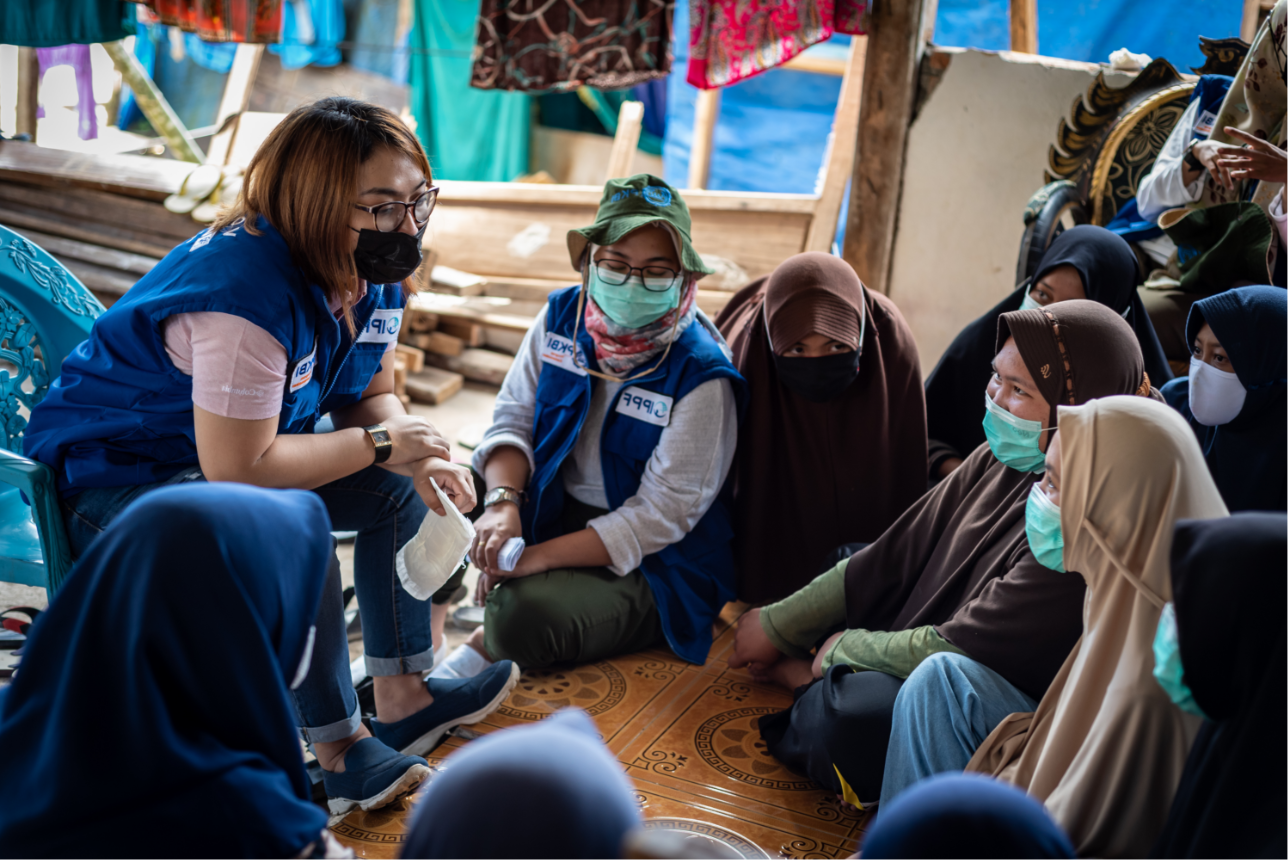
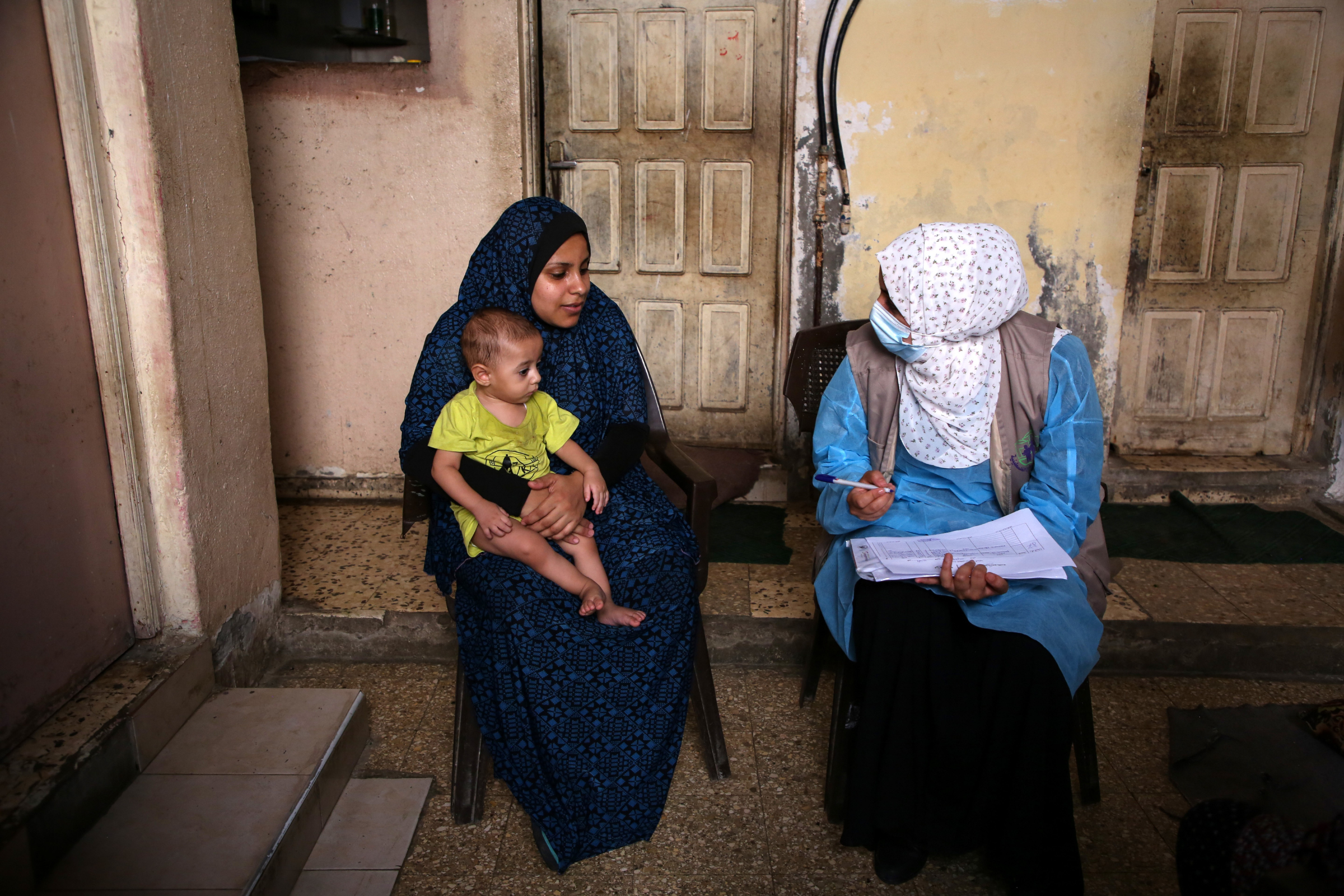
IPPF and Japan team up on another project to sustain sexual and reproductive health services in the West Bank, Palestine
21st April 2026 - IPPF and its Member Association in Palestine (PFPPA) are pleased to announce the launch of a new project financed by the Government of Japan, "Provision of health and medical services for women and children affected by crisis in the West Bank." This project will deliver life-saving maternal healthcare, psychosocial support, and sexual and reproductive health services, in even the hardest-to-reach areas of the West Bank, Palestine, through health centres, mobile medical teams, tele-consultations, and community outreach. The destruction of health facilities, severe restrictions on movement, and raids and attacks on communities in the West Bank have left Palestinians with little to no access to healthcare. According to the UNFPA, over 230,000 women and girls experience difficulties in accessing reproductive health services. Key project activities will include:Maintaining essential sexual and reproductive health (SRH) services, through three static clinics in Khalil, Halhoul and Bethlehem in the West Bank. These clinics will offer services including family planning, obstetrics and gynaecology care and management of sexually transmitted infections, for over 22,000 women and children. This will include specialised support for an estimated 2,300 survivors of sexual and gender-based violence, who will receive medical care, counselling or referrals. Providing maternal and child health care services for 4,600 women and children in hard-to-reach and marginalised areas of the West Bank via a mobile team of doctors, midwives, paediatricians, social workers, pharmacists and lab technicians. The mobile team will also provide psychosocial support services, support for survivors of sexual and gender-based violence, and family planning services. Providing counselling and consultation services via telecommunications and digital channels for those unable to access clinics.Conducting five ‘preparing for birth’ sessions for 90 first time mothers, providing information and support on maternal care and options for labour and delivery. Mr. ARAIKE Katsuhiko, Ambassador of Japan for the Palestinian Affairs says: “As a flagbearer of Universal Health Coverage (UHC) and the Women, Peace, and Security (WPS) agenda, we hope that our new collaboration with IPPF facilitates Palestinian women and children, who are affected by conflicts and live outside service catchment areas, to enjoy Obstetrics and Gynecology (OBGYN) and family planning services, improved well-being, and social participation. This project is part of Japan’s 2026–2027 cooperation package for Palestine. Japan will continue to provide support for the stability and prosperity of Palestine.” Dr. Fadoua Bakhadda, Regional Director of the IPPF Arab World Regional Office adds: “Thanks to the support of the people of Japan, we can continue delivering essential maternal and child health services to communities that have been systematically cut off from care, helping to prevent avoidable maternal and newborn deaths in the West Bank, Palestine.” -- About International Planned Parenthood Federation (IPPF) Arab World Office IPPF is a global healthcare provider and a leading advocate of sexual and reproductive health and rights (SRHR) for all. Led by a courageous and determined group of women, IPPF was founded in 1952. Today, we are a movement of over 120 autonomous member associations and 23 collaborative partners with a presence in 146 countries. Established in 1971, the IPPF Arab World Region (IPPF AWR) is one of IPPF’s six regional offices. Based in Tunis, it is the leading Sexual and Reproductive Health (SRH) service delivery organization in the North Africa and the Middle East, and the leading Sexual and Reproductive Health and Rights (SRHR) advocacy voice in the region.
media_center
| 21 April 2026
IPPF and Japan team up on another project to sustain sexual and reproductive health services in the West Bank, Palestine
21st April 2026 - IPPF and its Member Association in Palestine (PFPPA) are pleased to announce the launch of a new project financed by the Government of Japan, "Provision of health and medical services for women and children affected by crisis in the West Bank." This project will deliver life-saving maternal healthcare, psychosocial support, and sexual and reproductive health services, in even the hardest-to-reach areas of the West Bank, Palestine, through health centres, mobile medical teams, tele-consultations, and community outreach. The destruction of health facilities, severe restrictions on movement, and raids and attacks on communities in the West Bank have left Palestinians with little to no access to healthcare. According to the UNFPA, over 230,000 women and girls experience difficulties in accessing reproductive health services. Key project activities will include:Maintaining essential sexual and reproductive health (SRH) services, through three static clinics in Khalil, Halhoul and Bethlehem in the West Bank. These clinics will offer services including family planning, obstetrics and gynaecology care and management of sexually transmitted infections, for over 22,000 women and children. This will include specialised support for an estimated 2,300 survivors of sexual and gender-based violence, who will receive medical care, counselling or referrals. Providing maternal and child health care services for 4,600 women and children in hard-to-reach and marginalised areas of the West Bank via a mobile team of doctors, midwives, paediatricians, social workers, pharmacists and lab technicians. The mobile team will also provide psychosocial support services, support for survivors of sexual and gender-based violence, and family planning services. Providing counselling and consultation services via telecommunications and digital channels for those unable to access clinics.Conducting five ‘preparing for birth’ sessions for 90 first time mothers, providing information and support on maternal care and options for labour and delivery. Mr. ARAIKE Katsuhiko, Ambassador of Japan for the Palestinian Affairs says: “As a flagbearer of Universal Health Coverage (UHC) and the Women, Peace, and Security (WPS) agenda, we hope that our new collaboration with IPPF facilitates Palestinian women and children, who are affected by conflicts and live outside service catchment areas, to enjoy Obstetrics and Gynecology (OBGYN) and family planning services, improved well-being, and social participation. This project is part of Japan’s 2026–2027 cooperation package for Palestine. Japan will continue to provide support for the stability and prosperity of Palestine.” Dr. Fadoua Bakhadda, Regional Director of the IPPF Arab World Regional Office adds: “Thanks to the support of the people of Japan, we can continue delivering essential maternal and child health services to communities that have been systematically cut off from care, helping to prevent avoidable maternal and newborn deaths in the West Bank, Palestine.” -- About International Planned Parenthood Federation (IPPF) Arab World Office IPPF is a global healthcare provider and a leading advocate of sexual and reproductive health and rights (SRHR) for all. Led by a courageous and determined group of women, IPPF was founded in 1952. Today, we are a movement of over 120 autonomous member associations and 23 collaborative partners with a presence in 146 countries. Established in 1971, the IPPF Arab World Region (IPPF AWR) is one of IPPF’s six regional offices. Based in Tunis, it is the leading Sexual and Reproductive Health (SRH) service delivery organization in the North Africa and the Middle East, and the leading Sexual and Reproductive Health and Rights (SRHR) advocacy voice in the region.
media center
| 16 April 2026
Japan funds essential supplies for healthcare clinics in Sudan
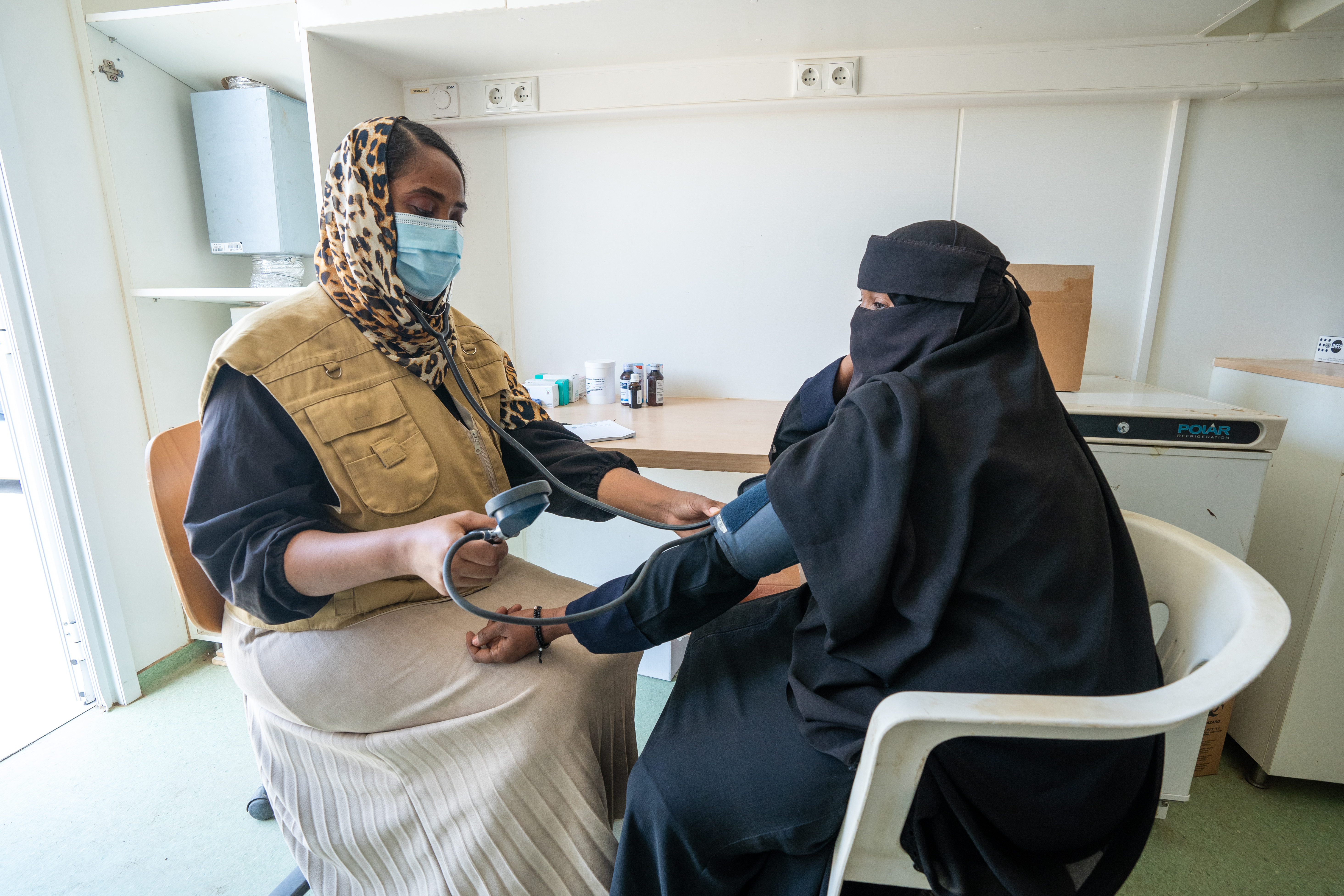
16th April 2026 - A new project titled Strengthening Life-saving Sexual and Reproductive Health (SRH) Services for Internally Displaced Persons (IDPs), has been launched in Sudan. Funded by the Government of Japan and implemented by the IPPF Member Association Sudan Family Planning Association (SFPA), the project will support women and girls in crisis in the Red Sea and Khartoum States. Fifteen million people in Sudan have been displaced by the civil war, and conflicts in neighbouring countries have triggered an influx of returnees and displaced people into Sudan. As a result, the country now hosts 15% of the world’s IDPs. But widespread destruction of infrastructure and deadly disease outbreaks have left the healthcare system unable to cope.An estimated 1.75 million women and girls require urgent sexual and reproductive health (SRH) services, including 270,000 internally displaced pregnant women. With rape increasingly used as a weapon of war, many require urgent medical and psychosocial support. However, essential SRH commodities, including contraceptives, emergency obstetric kits, and menstrual hygiene products, are in critically low supply. SFPA provides essential sexual and reproductive health services to women and girls, including internally displaced persons, through 26 static clinics and 11 mobile clinics across the country. This new funding will enable them to procure, transport and distribute essential supplies to two of the organisation’s static clinics in the Red Sea State and Khartoum State. This vital equipment, including microscopes, blood-testing devices, thermometers, and examination lamps, will enable these clinics to continue providing SRH services, expanding their reach to an additional 2,400 internally displaced people and individuals in host communities. Mr. Nakahara Takanobu, the Chargé d’Affaires ad interim of the Embassy of Japan to Sudan, stated that, “The provision of sexual and reproductive healthcare for women and girls is a critical step in supporting this vulnerable category in Sudan. This is more so when they are IDPs. Thus, we are happy to be able to support IPPF’s Member Association in Sudan - the Sudan Family Planning Association - in this domain, so that we can contribute to improving the safety and well-being of these women and girls, and reassure them that we acknowledge the challenges they face and endure.” Dr Hiba Ahmed Khalil, Emergency and Humanitarian Interventions Manager at SFPA added, “SFPA is honoured to join the Japan Supplementary Budget 2025 project, advancing inclusive health and humanitarian responses that strengthen access to essential services and uphold the rights of communities most at risk. Together, we are building pathways for resilience and equity.” Dr. Fadoua Bakhadda, Regional Director of the IPPF Arab World Regional Office, added, “Every woman and girl deserves access to safe, reliable healthcare, no matter the circumstances. Thanks to the people of Japan, we can equip clinics with the essential tools and supplies needed to continue providing critical sexual and reproductive healthcare. This investment will directly improve the safety, health, and resilience of thousands of internally displaced women and girls.” ---About the Sudan Family Planning Association The Sudan Family Planning Association (SFPA) was established in 1965 by pioneers in obstetrics and gynaecology in response to increases in maternal, neonatal and infant mortality and morbidity. As the statistics show, Sudan is a country in great need of frontline sexual and reproductive health (SRH) services. Advocacy, and undertaking information, education and communication (IEC) programs are critical.About International Planned Parenthood Federation (IPPF) Arab World Office IPPF is a global healthcare provider and a leading advocate of sexual and reproductive health and rights (SRHR) for all. Led by a courageous and determined group of women, IPPF was founded in 1952. Today, we are a movement of over 120 autonomous member associations and 23 collaborative partners with a presence in 146 countries. Established in 1971, the IPPF Arab World Region (IPPF AWR) is one of IPPF’s six regional offices. Based in Tunis, it is the leading Sexual and Reproductive Health (SRH) service delivery organization in North Africa and the Middle East, and the leading Sexual and Reproductive Health and Rights (SRHR) advocacy voice in the region.
media_center
| 16 April 2026
Japan funds essential supplies for healthcare clinics in Sudan
16th April 2026 - A new project titled Strengthening Life-saving Sexual and Reproductive Health (SRH) Services for Internally Displaced Persons (IDPs), has been launched in Sudan. Funded by the Government of Japan and implemented by the IPPF Member Association Sudan Family Planning Association (SFPA), the project will support women and girls in crisis in the Red Sea and Khartoum States. Fifteen million people in Sudan have been displaced by the civil war, and conflicts in neighbouring countries have triggered an influx of returnees and displaced people into Sudan. As a result, the country now hosts 15% of the world’s IDPs. But widespread destruction of infrastructure and deadly disease outbreaks have left the healthcare system unable to cope.An estimated 1.75 million women and girls require urgent sexual and reproductive health (SRH) services, including 270,000 internally displaced pregnant women. With rape increasingly used as a weapon of war, many require urgent medical and psychosocial support. However, essential SRH commodities, including contraceptives, emergency obstetric kits, and menstrual hygiene products, are in critically low supply. SFPA provides essential sexual and reproductive health services to women and girls, including internally displaced persons, through 26 static clinics and 11 mobile clinics across the country. This new funding will enable them to procure, transport and distribute essential supplies to two of the organisation’s static clinics in the Red Sea State and Khartoum State. This vital equipment, including microscopes, blood-testing devices, thermometers, and examination lamps, will enable these clinics to continue providing SRH services, expanding their reach to an additional 2,400 internally displaced people and individuals in host communities. Mr. Nakahara Takanobu, the Chargé d’Affaires ad interim of the Embassy of Japan to Sudan, stated that, “The provision of sexual and reproductive healthcare for women and girls is a critical step in supporting this vulnerable category in Sudan. This is more so when they are IDPs. Thus, we are happy to be able to support IPPF’s Member Association in Sudan - the Sudan Family Planning Association - in this domain, so that we can contribute to improving the safety and well-being of these women and girls, and reassure them that we acknowledge the challenges they face and endure.” Dr Hiba Ahmed Khalil, Emergency and Humanitarian Interventions Manager at SFPA added, “SFPA is honoured to join the Japan Supplementary Budget 2025 project, advancing inclusive health and humanitarian responses that strengthen access to essential services and uphold the rights of communities most at risk. Together, we are building pathways for resilience and equity.” Dr. Fadoua Bakhadda, Regional Director of the IPPF Arab World Regional Office, added, “Every woman and girl deserves access to safe, reliable healthcare, no matter the circumstances. Thanks to the people of Japan, we can equip clinics with the essential tools and supplies needed to continue providing critical sexual and reproductive healthcare. This investment will directly improve the safety, health, and resilience of thousands of internally displaced women and girls.” ---About the Sudan Family Planning Association The Sudan Family Planning Association (SFPA) was established in 1965 by pioneers in obstetrics and gynaecology in response to increases in maternal, neonatal and infant mortality and morbidity. As the statistics show, Sudan is a country in great need of frontline sexual and reproductive health (SRH) services. Advocacy, and undertaking information, education and communication (IEC) programs are critical.About International Planned Parenthood Federation (IPPF) Arab World Office IPPF is a global healthcare provider and a leading advocate of sexual and reproductive health and rights (SRHR) for all. Led by a courageous and determined group of women, IPPF was founded in 1952. Today, we are a movement of over 120 autonomous member associations and 23 collaborative partners with a presence in 146 countries. Established in 1971, the IPPF Arab World Region (IPPF AWR) is one of IPPF’s six regional offices. Based in Tunis, it is the leading Sexual and Reproductive Health (SRH) service delivery organization in North Africa and the Middle East, and the leading Sexual and Reproductive Health and Rights (SRHR) advocacy voice in the region.

media center
| 20 March 2026
IPPF condemns the UK’s latest ODA budget allocations and warn of life-threatening consequences for millions
20 March 2026 - The International Planned Parenthood Federation (IPPF) strongly condemns the UK Government’s latest ODA budget allocations, which entrench deep cuts to UK aid and mark a profound and damaging retreat from its commitment to women and girls, with immediate and life-threatening consequences for millions.UK ODA will fall to £6.8 billion in 2026/27 and £6.2 billion in 2027/28, with only a partial recovery to £6.9 billion in 2028/29, locking in years of reduced support. This is not a reprioritisation of aid, it is the continuation of a political choice by successive UK governments to cut lifesaving support as global crises intensify, prioritising military spending over the health and rights of civilians, a decision that directly endangers the lives of women, children, and health workers.Among the programmes affected is the Women’s Integrated Sexual Health 2 (WISH2) programme, the UK’s flagship initiative delivering contraception and sexual and reproductive health services across 13 African countries, with IPPF delivering in seven of those countries in Eastern and Southern Africa. Despite being described as “relatively protected” according to the government’s own Equality Impact Assessment (EIA), IPPF’s delivery will receive a 22% funding cut.These reductions will force a rollback of frontline services, severely disrupting access to lifesaving care for millions of women and girls. The consequences are stark: fewer clinics, fewer trained providers, and reduced access to contraception and essential life-saving health services. Since 2024, IPPF’s implementation of WISH2 has averted over 567,000 unintended pregnancies, 157,000 unsafe abortions, and more than 1,000 maternal deaths. However, a 22% funding cut now threatens to reverse this progress, projected to lead to over 442,000 unintended pregnancies, 122,000 unsafe abortions, and 770 maternal deaths due to reductions in IPPF’s programming — outcomes that would otherwise have been prevented.This decision will also have significant consequences for the UK’s relationships with partner governments across Africa. The programme has been a cornerstone of long-standing, trusted partnerships in fragile and conflict-affected settings, supporting national priorities and strengthening public systems. Abrupt funding reductions risk undermining that trust, disrupting jointly planned programmes, and weakening the UK’s credibility as a reliable and predictable partner.At a time when global aid is contracting and opposition to sexual and reproductive health and rights is growing, this decision sends a dangerous signal about the future of UK leadership on women’s health and rights.Maria Antonieta Alcalde, IPPF Director General, said:“Yesterday’s confirmation of deep cuts to UK aid through the government’s budget allocations will have devastating and immediate consequences. We know what these decisions mean in practice. They mean more women dying in childbirth, more unsafe abortions, and millions denied access to the most basic, lifesaving care.These decisions reflect a deliberate and sustained choice, in the UK and globally, to scale back aid while increasing military spending, placing the communities we serve and our healthcare workers directly in harm’s way. At the same time, we are seeing a growing and coordinated opposition to sexual and reproductive health and rights, exploiting the gaps left behind as funding is withdrawn.”We call on the UK Government to urgently reconsider these decisions, restore its commitment to women and girls, in all their diversity, and ensure that programmes like WISH2 can continue delivering the care that millions depend on. The consequences of inaction will be measured in lives lost.ENDSAbout WISH:The Women’s Integrated Sexual Health 2 (WISH2) programme is funded by the UK’s Foreign, Commonwealth and Development Office (FCDO) and delivered through two consortia led by IPPF and MSI, alongside partners. The WISH2 Lot 2 Consortium is led by International Planned Parenthood Federation (IPPF), with Ipas, International Rescue Committee (IRC), John Hopkins Center for Communication Programs (JHUCCP), and Options.The programme operates across 13 countries in Africa, with IPPF delivering in seven, and has been critical in expanding access to contraception, supporting community-based healthcare providers, and strengthening health systems in some of the most underserved and fragile settings.The sudden reduction in funding now puts this progress at risk, threatening clinic closures, disrupting contraceptive supply chains, and limiting outreach to the most marginalised communities.IPPF’s Impact:WISH2 builds on the success of the original WISH programme (2018–2024), which reached an estimated 16.9 million women and adolescent girls with modern methods of contraception across Africa and Asia.Since launching in 2024, IPPF’s delivery under WISH2 has achieved:1.8 million family planning visits, including 15% for young people under 201.2 million couple-years of protection567,000 unintended pregnancies averted157,000 unsafe abortions averted1,000 maternal deaths averted11,000 child deaths avertedIPPF’s partners have also generated £39.8 million in healthcare cost savings across seven countries, while driving policy reform and strengthening national health systems.About IPPF:IPPF is a global healthcare provider and a leading advocate of sexual and reproductive health and rights (SRHR) for all. Led by a courageous and determined group of women, IPPF was founded in 1952 at the Third International Planned Parenthood Conference. Today, we are a movement of 100+ locally led Member Associations with a presence in 150+ countries.Our work is wide-ranging, and includes services for sexual health and well-being, contraception, abortion care, sexually transmitted infections and reproductive tract infections, HIV, obstetrics and gynaecology, fertility support, sexual and gender-based violence, comprehensive sex education, and responding to humanitarian crises. We pride ourselves on being local through our members and global through our network. At the heart of our mission is the provision of – and advocacy in support of – integrated healthcare to anyone who needs it regardless of race, gender, sex, income, and, crucially, no matter how remote.
media_center
| 20 March 2026
IPPF condemns the UK’s latest ODA budget allocations and warn of life-threatening consequences for millions
20 March 2026 - The International Planned Parenthood Federation (IPPF) strongly condemns the UK Government’s latest ODA budget allocations, which entrench deep cuts to UK aid and mark a profound and damaging retreat from its commitment to women and girls, with immediate and life-threatening consequences for millions.UK ODA will fall to £6.8 billion in 2026/27 and £6.2 billion in 2027/28, with only a partial recovery to £6.9 billion in 2028/29, locking in years of reduced support. This is not a reprioritisation of aid, it is the continuation of a political choice by successive UK governments to cut lifesaving support as global crises intensify, prioritising military spending over the health and rights of civilians, a decision that directly endangers the lives of women, children, and health workers.Among the programmes affected is the Women’s Integrated Sexual Health 2 (WISH2) programme, the UK’s flagship initiative delivering contraception and sexual and reproductive health services across 13 African countries, with IPPF delivering in seven of those countries in Eastern and Southern Africa. Despite being described as “relatively protected” according to the government’s own Equality Impact Assessment (EIA), IPPF’s delivery will receive a 22% funding cut.These reductions will force a rollback of frontline services, severely disrupting access to lifesaving care for millions of women and girls. The consequences are stark: fewer clinics, fewer trained providers, and reduced access to contraception and essential life-saving health services. Since 2024, IPPF’s implementation of WISH2 has averted over 567,000 unintended pregnancies, 157,000 unsafe abortions, and more than 1,000 maternal deaths. However, a 22% funding cut now threatens to reverse this progress, projected to lead to over 442,000 unintended pregnancies, 122,000 unsafe abortions, and 770 maternal deaths due to reductions in IPPF’s programming — outcomes that would otherwise have been prevented.This decision will also have significant consequences for the UK’s relationships with partner governments across Africa. The programme has been a cornerstone of long-standing, trusted partnerships in fragile and conflict-affected settings, supporting national priorities and strengthening public systems. Abrupt funding reductions risk undermining that trust, disrupting jointly planned programmes, and weakening the UK’s credibility as a reliable and predictable partner.At a time when global aid is contracting and opposition to sexual and reproductive health and rights is growing, this decision sends a dangerous signal about the future of UK leadership on women’s health and rights.Maria Antonieta Alcalde, IPPF Director General, said:“Yesterday’s confirmation of deep cuts to UK aid through the government’s budget allocations will have devastating and immediate consequences. We know what these decisions mean in practice. They mean more women dying in childbirth, more unsafe abortions, and millions denied access to the most basic, lifesaving care.These decisions reflect a deliberate and sustained choice, in the UK and globally, to scale back aid while increasing military spending, placing the communities we serve and our healthcare workers directly in harm’s way. At the same time, we are seeing a growing and coordinated opposition to sexual and reproductive health and rights, exploiting the gaps left behind as funding is withdrawn.”We call on the UK Government to urgently reconsider these decisions, restore its commitment to women and girls, in all their diversity, and ensure that programmes like WISH2 can continue delivering the care that millions depend on. The consequences of inaction will be measured in lives lost.ENDSAbout WISH:The Women’s Integrated Sexual Health 2 (WISH2) programme is funded by the UK’s Foreign, Commonwealth and Development Office (FCDO) and delivered through two consortia led by IPPF and MSI, alongside partners. The WISH2 Lot 2 Consortium is led by International Planned Parenthood Federation (IPPF), with Ipas, International Rescue Committee (IRC), John Hopkins Center for Communication Programs (JHUCCP), and Options.The programme operates across 13 countries in Africa, with IPPF delivering in seven, and has been critical in expanding access to contraception, supporting community-based healthcare providers, and strengthening health systems in some of the most underserved and fragile settings.The sudden reduction in funding now puts this progress at risk, threatening clinic closures, disrupting contraceptive supply chains, and limiting outreach to the most marginalised communities.IPPF’s Impact:WISH2 builds on the success of the original WISH programme (2018–2024), which reached an estimated 16.9 million women and adolescent girls with modern methods of contraception across Africa and Asia.Since launching in 2024, IPPF’s delivery under WISH2 has achieved:1.8 million family planning visits, including 15% for young people under 201.2 million couple-years of protection567,000 unintended pregnancies averted157,000 unsafe abortions averted1,000 maternal deaths averted11,000 child deaths avertedIPPF’s partners have also generated £39.8 million in healthcare cost savings across seven countries, while driving policy reform and strengthening national health systems.About IPPF:IPPF is a global healthcare provider and a leading advocate of sexual and reproductive health and rights (SRHR) for all. Led by a courageous and determined group of women, IPPF was founded in 1952 at the Third International Planned Parenthood Conference. Today, we are a movement of 100+ locally led Member Associations with a presence in 150+ countries.Our work is wide-ranging, and includes services for sexual health and well-being, contraception, abortion care, sexually transmitted infections and reproductive tract infections, HIV, obstetrics and gynaecology, fertility support, sexual and gender-based violence, comprehensive sex education, and responding to humanitarian crises. We pride ourselves on being local through our members and global through our network. At the heart of our mission is the provision of – and advocacy in support of – integrated healthcare to anyone who needs it regardless of race, gender, sex, income, and, crucially, no matter how remote.

media center
| 14 April 2025
Sudan’s First Mobile Telemedicine Clinic Brings Care to the Frontlines
15th April 2025, River Nile State, Sudan - In a groundbreaking step for healthcare access in Sudan, the Sudan Family Planning Association (SFPA) has launched the country’s first mobile telemedicine clinic in River Nile State. Funded by IPPF and FCDO, this innovation brings specialist remote care to people in isolated and conflict-affected areas, reducing the need for physical travel to health facilities. The mobile telemedicine clinic trucks are equipped with high-speed Starlink satellite internet and can travel to remote and rural locations. Clients receive essential treatment on-site and can connect directly, through secure video calls, with medical specialists across Sudan and internationally, including consultants based in Europe. This initiative is part of SFPA’s broader telemedicine project, designed to ensure the continued delivery of sexual and reproductive health services to the most vulnerable populations, particularly in areas where healthcare systems have collapsed due to conflict. Ms Kawthar, Executive Director of the SFPA branch in River Nile State, noted that the launch of the mobile telemedicine clinic, in Quoz Al-Halq, marks the beginning of a new era in healthcare service delivery within the state. “This project represents a landmark moment in Sudan’s healthcare history. We face enormous challenges in reaching people affected by conflict and displacement with essential health services. But this clinic changes what’s possible. We can now deliver integrated healthcare solutions through smart technologies – we’re breaking down barriers to health.” This innovation comes as Sudan approaches the third year of a brutal conflict, which began on 15 April 2023. Over 12.5 million people have been forcibly displaced[i], and more than two-thirds of the population are in need of humanitarian aid[ii]. Rates of sexually transmitted infections and gender-based violence, including sexual violence, have risen sharply[iii]. Many clinics and hospitals have been destroyed or abandoned. There is a severe shortage of qualified medical personnel, many of whom have fled the country. Access to care has disappeared entirely in some areas. SFPA facilities and staff have also been directly affected by the conflict, with nine of its clinics attacked, resulting in the tragic loss of volunteers and healthcare workers. Amid these challenges, SFPA managed to reach 9.8 million humanitarian clients in 2024. The new mobile telemedicine clinic offers a leap forward in how care can be delivered. It will provide: In-person and digital health consultations Psychosocial support for survivors of gender-based violence Awareness campaigns on reproductive health and sexually transmitted infections Fully integrated digital referral system, linking primary care with specialised medical facilities. Dr Siham Gaber, Director of Digital Health Interventions and Services at SFPA, said the initiative reflects the Association’s vision to harness technology for sustainable healthcare delivery in crisis contexts. “The mobile telemedicine clinic is a significant step forward in improving access to reproductive health services. It enables remote medical consultations and connects patients with doctors and specialists without the need for long-distance travel. This is especially important for women, youth and displaced people, who often face serious risks just to access a health facility. Now, they can get the right care where they are - safely and with dignity.” Mr El-Shafie Mohamed Ali, Executive Director of SFPA, added: “This clinic is not just a mobile health unit. It represents a comprehensive model for integrating telemedicine solutions into the provision of healthcare services. It contributes to expanding coverage and narrowing the health gap caused by conflict and insecurity.” The first phase of the project will see mobile telemedicine clinics deployed in five key states: River Nile, Red Sea, Kassala, Gedaref and Blue Nile. A second expansion phase will begin in May and aims to extend coverage across all 15 states where SFPA operates. This will ensure broader access to services for those most in need. “We remain dedicated to innovation and the scaling of digital solutions to ensure every Sudanese citizen, regardless of their location or circumstance, has access to quality healthcare,” said Mr El-Shafie Mohamed Ali. For more information and to speak to SFPA staff in Sudan, please email media@ippf.org ------- About the Sudan Family Planning Association The Sudan Family Planning Association (SFPA) was established in 1965 by pioneers in obstetrics and gynaecology in response to increases in maternal, neonatal and infant mortality and morbidity. As the statistics show, Sudan is a country in great need of frontline sexual and reproductive health (SRH) services. Advocacy, and undertaking information, education and communication (IEC) programs are critical. In 2024, SFPA provided 43.4 million services to 12.6 million clients (9.8 million of which were humanitarian clients) through 26 static clinics, 39 mobile clinics, 1499 community-based distributors, private physicians and associated clinics. About the International Planned Parenthood Federation The International Planned Parenthood Federation (IPPF) is a global healthcare provider and a leading advocate of sexual and reproductive health and rights (SRHR) for all. We are a movement of 150 Member Associations and Collaborative Partners with a presence in over 146 countries. Building on a proud history of 70 years of achievement, we commit to lead a locally owned, globally connected civil society movement that provides and enables services and champions sexual and reproductive health and rights for all, especially the under-served. We advocate for a world where people are provided with the information they need to make informed decisions about their sexual health and bodies. We stand up and fight for sexual and reproductive rights, and against those who seek to deny people their human right to bodily autonomy and freedom. We deliver care that is rooted in rights, respect, and dignity - no matter what. [i] https://www.unrefugees.org/news/sudan-crisis-explained/ [ii] https://humanitarianaction.info/plan/1220 [iii] https://www.unwomen.org/en/news-stories/press-release/2024/09/sudan-humanitarian-crisis-has-catastrophic-impact-for-women-and-girls-with-two-fold-increase-of-gender-based-violence
media_center
| 15 April 2025
Sudan’s First Mobile Telemedicine Clinic Brings Care to the Frontlines
15th April 2025, River Nile State, Sudan - In a groundbreaking step for healthcare access in Sudan, the Sudan Family Planning Association (SFPA) has launched the country’s first mobile telemedicine clinic in River Nile State. Funded by IPPF and FCDO, this innovation brings specialist remote care to people in isolated and conflict-affected areas, reducing the need for physical travel to health facilities. The mobile telemedicine clinic trucks are equipped with high-speed Starlink satellite internet and can travel to remote and rural locations. Clients receive essential treatment on-site and can connect directly, through secure video calls, with medical specialists across Sudan and internationally, including consultants based in Europe. This initiative is part of SFPA’s broader telemedicine project, designed to ensure the continued delivery of sexual and reproductive health services to the most vulnerable populations, particularly in areas where healthcare systems have collapsed due to conflict. Ms Kawthar, Executive Director of the SFPA branch in River Nile State, noted that the launch of the mobile telemedicine clinic, in Quoz Al-Halq, marks the beginning of a new era in healthcare service delivery within the state. “This project represents a landmark moment in Sudan’s healthcare history. We face enormous challenges in reaching people affected by conflict and displacement with essential health services. But this clinic changes what’s possible. We can now deliver integrated healthcare solutions through smart technologies – we’re breaking down barriers to health.” This innovation comes as Sudan approaches the third year of a brutal conflict, which began on 15 April 2023. Over 12.5 million people have been forcibly displaced[i], and more than two-thirds of the population are in need of humanitarian aid[ii]. Rates of sexually transmitted infections and gender-based violence, including sexual violence, have risen sharply[iii]. Many clinics and hospitals have been destroyed or abandoned. There is a severe shortage of qualified medical personnel, many of whom have fled the country. Access to care has disappeared entirely in some areas. SFPA facilities and staff have also been directly affected by the conflict, with nine of its clinics attacked, resulting in the tragic loss of volunteers and healthcare workers. Amid these challenges, SFPA managed to reach 9.8 million humanitarian clients in 2024. The new mobile telemedicine clinic offers a leap forward in how care can be delivered. It will provide: In-person and digital health consultations Psychosocial support for survivors of gender-based violence Awareness campaigns on reproductive health and sexually transmitted infections Fully integrated digital referral system, linking primary care with specialised medical facilities. Dr Siham Gaber, Director of Digital Health Interventions and Services at SFPA, said the initiative reflects the Association’s vision to harness technology for sustainable healthcare delivery in crisis contexts. “The mobile telemedicine clinic is a significant step forward in improving access to reproductive health services. It enables remote medical consultations and connects patients with doctors and specialists without the need for long-distance travel. This is especially important for women, youth and displaced people, who often face serious risks just to access a health facility. Now, they can get the right care where they are - safely and with dignity.” Mr El-Shafie Mohamed Ali, Executive Director of SFPA, added: “This clinic is not just a mobile health unit. It represents a comprehensive model for integrating telemedicine solutions into the provision of healthcare services. It contributes to expanding coverage and narrowing the health gap caused by conflict and insecurity.” The first phase of the project will see mobile telemedicine clinics deployed in five key states: River Nile, Red Sea, Kassala, Gedaref and Blue Nile. A second expansion phase will begin in May and aims to extend coverage across all 15 states where SFPA operates. This will ensure broader access to services for those most in need. “We remain dedicated to innovation and the scaling of digital solutions to ensure every Sudanese citizen, regardless of their location or circumstance, has access to quality healthcare,” said Mr El-Shafie Mohamed Ali. For more information and to speak to SFPA staff in Sudan, please email media@ippf.org ------- About the Sudan Family Planning Association The Sudan Family Planning Association (SFPA) was established in 1965 by pioneers in obstetrics and gynaecology in response to increases in maternal, neonatal and infant mortality and morbidity. As the statistics show, Sudan is a country in great need of frontline sexual and reproductive health (SRH) services. Advocacy, and undertaking information, education and communication (IEC) programs are critical. In 2024, SFPA provided 43.4 million services to 12.6 million clients (9.8 million of which were humanitarian clients) through 26 static clinics, 39 mobile clinics, 1499 community-based distributors, private physicians and associated clinics. About the International Planned Parenthood Federation The International Planned Parenthood Federation (IPPF) is a global healthcare provider and a leading advocate of sexual and reproductive health and rights (SRHR) for all. We are a movement of 150 Member Associations and Collaborative Partners with a presence in over 146 countries. Building on a proud history of 70 years of achievement, we commit to lead a locally owned, globally connected civil society movement that provides and enables services and champions sexual and reproductive health and rights for all, especially the under-served. We advocate for a world where people are provided with the information they need to make informed decisions about their sexual health and bodies. We stand up and fight for sexual and reproductive rights, and against those who seek to deny people their human right to bodily autonomy and freedom. We deliver care that is rooted in rights, respect, and dignity - no matter what. [i] https://www.unrefugees.org/news/sudan-crisis-explained/ [ii] https://humanitarianaction.info/plan/1220 [iii] https://www.unwomen.org/en/news-stories/press-release/2024/09/sudan-humanitarian-crisis-has-catastrophic-impact-for-women-and-girls-with-two-fold-increase-of-gender-based-violence
media center
| 08 April 2025
Japan Supports IPPF Yemen Project with $750,000 to Provide Critical Maternal and Reproductive Health Services
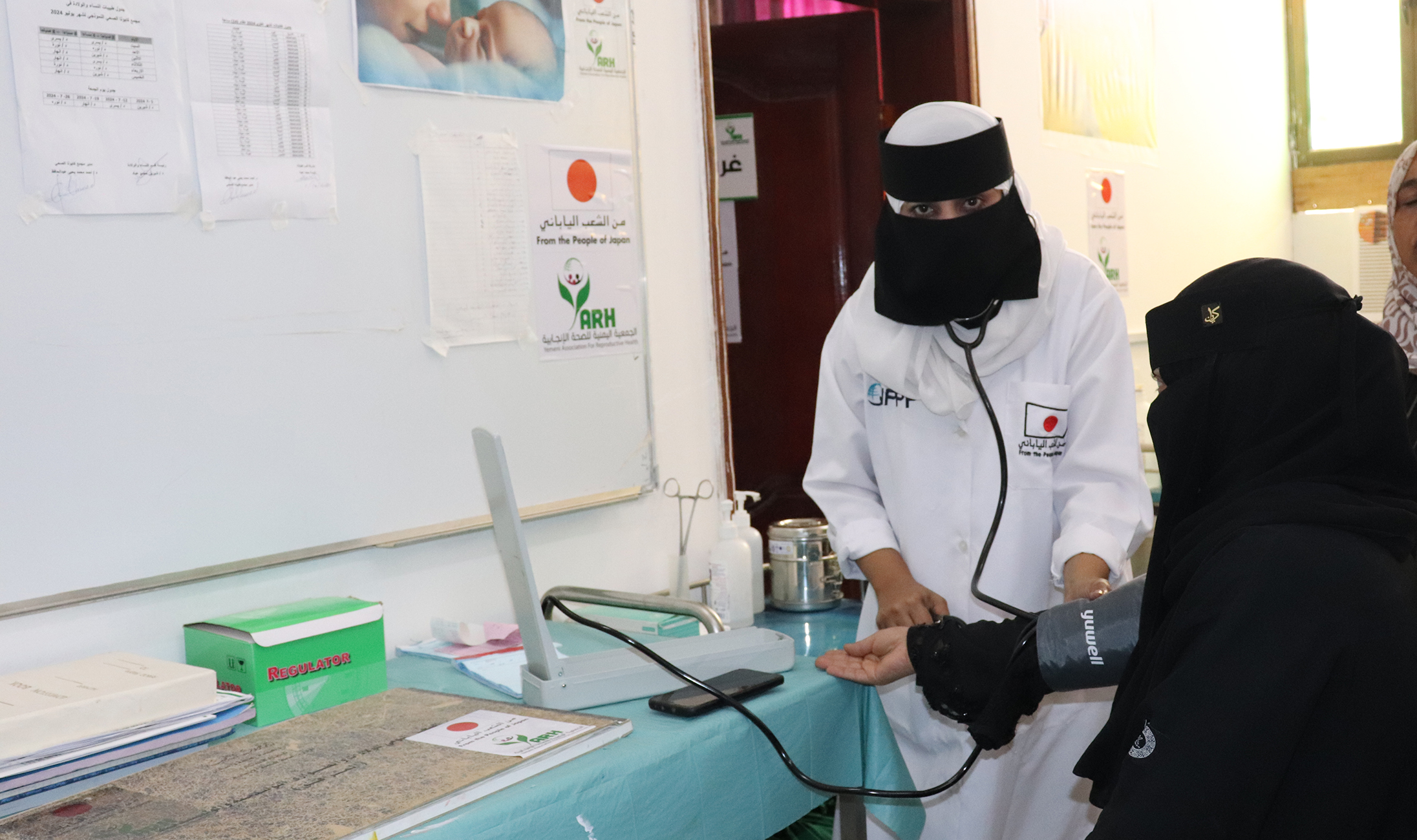
April 8th, 2025 - A new project titled "Providing Critical Sexual, Reproductive and Maternal Health Care to Internally Displaced People and Local Communities in Yemen" has been launched. Funded by the Government of Japan and implemented by IPPF Member Association in Yemen, the Yemeni Association for Reproductive Health (YARH), the project aims to enhance and sustain high-quality sexual and reproductive health (SRH) services and awareness for Yemen’s crisis-affected populations in Aden and Amran. Following years of conflict and instability, Yemen's humanitarian needs remain severe, with an estimated 19.5 million people in need of assistance (OCHA). Internally displaced persons (IDPs), returnees, and host communities are particularly affected, struggling to access essential maternal, newborn, and reproductive healthcare. The new funding will allow for expanded services, ensuring lifesaving care reaches more communities, particularly women, youth, and newborns. It aims to reduce maternal and newborn mortality and morbidity while improving care for survivors of gender-based violence. Additionally, community outreach and capacity-building programmes will empower individuals with the knowledge to make informed decisions about their sexual and reproductive health and rights. Key activities include: Renovating and upgrading two health facilities (one in each project governorate) to provide high-quality SRH, maternal and child health, and gender-based violence (GBV) services, as well as nutrition and cholera treatment. Ensuring IDPs, host communities, and returnees receive critical reproductive healthcare, including antenatal and postnatal care, family planning, and emergency obstetric and newborn care. Training healthcare professionals from YARH and other local health facilities in the Minimum Initial Service Package (MISP), Clinical Management of Rape, and sexual reproductive health in emergencies (SRHiE). Conducting 480 awareness-raising sessions led by trained peer educators to educate nearly 5,000 individuals on SRH, HIV, cholera, nutrition, and gender-based violence. Training 40 community and youth peer educators to strengthen SRH education and advocacy efforts in local communities. H.E. Mr. NAKASHIMA Yoichi, Ambassador of Japan to Yemen stated, “Ensuring access to quality maternal and reproductive health services for crisis-affected communities underscores our commitment to supporting vulnerable populations in Yemen. We look forward to beginning this new project”. Dr. Ali Norman, Executive Director of YARH, emphasised, “By strengthening health infrastructure, training healthcare workers, and engaging communities, we are improving the health and well-being of mothers, newborns, and families across the region. We are grateful for the support from the Government of Japan.” Dr. Fadoua Bakhadda, Regional Director of the IPPF Arab World Regional Office, added, “This support ensures that we can keep delivering essential SRH services to communities in greatest need. This funding will be transformative for women, children, and families in Yemen, particularly in underserved areas.” Over the course of this project, it is anticipated that: Over 10,000 women, newborns, and young people will receive quality SRH and maternal health services. 1,000 women will be reached with gender-based violence services. Over 4,000 internally displaced persons and host community members will receive information on sexual and reproductive health and rights, including GBV and other health services. Peer educators will be trained in communication skills, basic health, hygiene, and SRHR education. Healthcare service providers will receive specialised training to enhance the quality of SRH services in emergencies. About YARH Established in June 2009 as a not-for-profit voluntary non-governmental organisation, the Yemeni Association for Reproductive Health (YARH) is registered with the Ministry of Social Affairs and became an IPPF Member Association in 2010. Through two clinics and one youth-friendly service centre, YARH provides quality SRH services to people in Yemen. The organisation plays a key role in building strategic partnerships with other entities focused on young people’s programmes and actively involves youth in identifying, implementing, monitoring, and evaluating projects. YARH is a strong advocate for sexual and reproductive health and rights (SRHR). Key partnerships include the Ministry of Public Health (Department of Reproductive Health, National AIDS Programme, General Directorate for Women's and Child's Health), the Ministry of Youth and Sports (Scouts, Guides, and Sport Clubs), Sana’a University, the Population Research and Studies Centre, local NGOs active in reproductive health, private universities, and organisations focused on human rights, gender equality, and women's rights, including the Women's National Committee and the National Information Centre. About IPPF Arab World Office The International Planned Parenthood Federation (IPPF) Arab World Office is a leading healthcare provider and advocate for SRHR in North Africa and the Middle East. Established in 1971, it is one of IPPF’s six regional offices, supporting a network of member associations across the region. IPPF AWR is committed to delivering essential health services and championing reproductive rights, particularly in crisis and humanitarian settings.
media_center
| 08 April 2025
Japan Supports IPPF Yemen Project with $750,000 to Provide Critical Maternal and Reproductive Health Services
April 8th, 2025 - A new project titled "Providing Critical Sexual, Reproductive and Maternal Health Care to Internally Displaced People and Local Communities in Yemen" has been launched. Funded by the Government of Japan and implemented by IPPF Member Association in Yemen, the Yemeni Association for Reproductive Health (YARH), the project aims to enhance and sustain high-quality sexual and reproductive health (SRH) services and awareness for Yemen’s crisis-affected populations in Aden and Amran. Following years of conflict and instability, Yemen's humanitarian needs remain severe, with an estimated 19.5 million people in need of assistance (OCHA). Internally displaced persons (IDPs), returnees, and host communities are particularly affected, struggling to access essential maternal, newborn, and reproductive healthcare. The new funding will allow for expanded services, ensuring lifesaving care reaches more communities, particularly women, youth, and newborns. It aims to reduce maternal and newborn mortality and morbidity while improving care for survivors of gender-based violence. Additionally, community outreach and capacity-building programmes will empower individuals with the knowledge to make informed decisions about their sexual and reproductive health and rights. Key activities include: Renovating and upgrading two health facilities (one in each project governorate) to provide high-quality SRH, maternal and child health, and gender-based violence (GBV) services, as well as nutrition and cholera treatment. Ensuring IDPs, host communities, and returnees receive critical reproductive healthcare, including antenatal and postnatal care, family planning, and emergency obstetric and newborn care. Training healthcare professionals from YARH and other local health facilities in the Minimum Initial Service Package (MISP), Clinical Management of Rape, and sexual reproductive health in emergencies (SRHiE). Conducting 480 awareness-raising sessions led by trained peer educators to educate nearly 5,000 individuals on SRH, HIV, cholera, nutrition, and gender-based violence. Training 40 community and youth peer educators to strengthen SRH education and advocacy efforts in local communities. H.E. Mr. NAKASHIMA Yoichi, Ambassador of Japan to Yemen stated, “Ensuring access to quality maternal and reproductive health services for crisis-affected communities underscores our commitment to supporting vulnerable populations in Yemen. We look forward to beginning this new project”. Dr. Ali Norman, Executive Director of YARH, emphasised, “By strengthening health infrastructure, training healthcare workers, and engaging communities, we are improving the health and well-being of mothers, newborns, and families across the region. We are grateful for the support from the Government of Japan.” Dr. Fadoua Bakhadda, Regional Director of the IPPF Arab World Regional Office, added, “This support ensures that we can keep delivering essential SRH services to communities in greatest need. This funding will be transformative for women, children, and families in Yemen, particularly in underserved areas.” Over the course of this project, it is anticipated that: Over 10,000 women, newborns, and young people will receive quality SRH and maternal health services. 1,000 women will be reached with gender-based violence services. Over 4,000 internally displaced persons and host community members will receive information on sexual and reproductive health and rights, including GBV and other health services. Peer educators will be trained in communication skills, basic health, hygiene, and SRHR education. Healthcare service providers will receive specialised training to enhance the quality of SRH services in emergencies. About YARH Established in June 2009 as a not-for-profit voluntary non-governmental organisation, the Yemeni Association for Reproductive Health (YARH) is registered with the Ministry of Social Affairs and became an IPPF Member Association in 2010. Through two clinics and one youth-friendly service centre, YARH provides quality SRH services to people in Yemen. The organisation plays a key role in building strategic partnerships with other entities focused on young people’s programmes and actively involves youth in identifying, implementing, monitoring, and evaluating projects. YARH is a strong advocate for sexual and reproductive health and rights (SRHR). Key partnerships include the Ministry of Public Health (Department of Reproductive Health, National AIDS Programme, General Directorate for Women's and Child's Health), the Ministry of Youth and Sports (Scouts, Guides, and Sport Clubs), Sana’a University, the Population Research and Studies Centre, local NGOs active in reproductive health, private universities, and organisations focused on human rights, gender equality, and women's rights, including the Women's National Committee and the National Information Centre. About IPPF Arab World Office The International Planned Parenthood Federation (IPPF) Arab World Office is a leading healthcare provider and advocate for SRHR in North Africa and the Middle East. Established in 1971, it is one of IPPF’s six regional offices, supporting a network of member associations across the region. IPPF AWR is committed to delivering essential health services and championing reproductive rights, particularly in crisis and humanitarian settings.

media center
| 13 March 2025
IPPF Lebanon Project Receives $500,000 from Japan to Protect Maternal and Reproductive Health
March 13th, 2025 - A new project titled “Preventing Maternal and Reproductive Health Morbidities and Mortalities Among Crisis-Affected Populations, IDPs, Syrian Refugees, and Host Communities in Lebanon” has officially launched. Funded by the Government of Japan and implemented by IPPF Member Association, SALAMA (The Lebanese Association for Family Health), this project aims to enhance and sustain high-quality sexual and reproductive health (SRH) services for Lebanon’s crisis-affected populations Following the ceasefire in Lebanon last year, the need for comprehensive SRH services remains urgent, as many people continue to struggle to access essential maternal, newborn, and reproductive healthcare. Internally displaced people, Syrian refugees, and local host communities in the Beqaa Valley require multifaceted interventions that include not only clinical care but also psychosocial support, medical services, and targeted community outreach. This project addresses these needs by providing quality, clinic-based SRH services for women, youth, and other marginalised groups to reduce SRH-related mortality and morbidity and to improve care for survivors of gender-based violence. Additionally, community outreach and capacity-building programs will empower individuals to make informed decisions regarding their sexual and reproductive health. Key activities include: Clinical services: Offering high quality, rights-based, and client-centered SRH care, including specialised maternal, newborn, and child health services such as safe delivery and newborn care. Distribution of kits: Providing pregnant and postpartum women with ‘mama-baby’ kits, as well as dignity and sanitary kits containing essential hygiene items for key populations. Community outreach: Conducting awareness sessions and collaborative events on SRHR, family planning, gender-based violence, and HIV. Capacity building: Training service providers and peer educators in comprehensive SRHR service delivery and developing educational materials. H.E. Ambassador MAGOSHI Masayuki stated, “Ensuring that crisis-affected communities have access to quality maternal and reproductive health services is a matter of human rights and dignity, hence human security. This initiative reaffirms our commitment to supporting vulnerable populations in Lebanon and underscores the critical importance of sexual and reproductive health to foster resilient communities.” Lina Sabre, Executive Director of SALAMA, noted, “The health and well-being of our mothers, children, and families are paramount. Through this project, we are dedicated to providing life-saving services and empowering communities, even in times of crisis, with the knowledge they need to make informed health decisions.” Dr. Fadoua Bakhadda, Regional Director of the IPPF Arab World Regional Office, added, “This project will be for transformative for women in Lebanon. This funding ensures the continued provision of essential sexual and reproductive healthcare, and the safety for pregnant mothers and newborns." Over the course of this project, it is anticipated that: 28,000 crisis-affected individuals will gain access to essential SRH services, 84,000 SRH service interventions will be delivered, and Nearly 37,000 people will be reached through comprehensive awareness initiatives. About SALAMA SALAMA, the Lebanese Association for Family Health, is an NGO founded in 2008 under the statement of registration No 1740. SALAMA advocates for sexual and reproductive health and rights SRHR by inducing the concerned authorities in Lebanon to support and protect SRHR, promotes and provides high quality SRH services (for children, young people, men and women), and raises awareness for all groups in the society (particularly the underserved and marginalized) in order that they make informed decisions regarding their SRHR. About IPPF Arab World Office International Planned Parenthood Federation (IPPF) Arab World Office: IPPF is a global healthcare provider and a leading advocate of sexual and reproductive health and rights (SRHR) for all. Led by a courageous and determined group of women, IPPF was founded in 1952. Today, we are a movement of over 120 autonomous member associations and 23 collaborative partners with a presence in 146 countries. Established in 1971 the IPPF Arab World Region (IPPF AWR) is one of IPPF’s six regional offices. Based in Tunis, it is the leading Sexual and Reproductive Health (SRH) service delivery organization in North Africa and the Middle East, and the leading Sexual and Reproductive Health and Rights (SRHR) advocacy voice in the region.
media_center
| 13 March 2025
IPPF Lebanon Project Receives $500,000 from Japan to Protect Maternal and Reproductive Health
March 13th, 2025 - A new project titled “Preventing Maternal and Reproductive Health Morbidities and Mortalities Among Crisis-Affected Populations, IDPs, Syrian Refugees, and Host Communities in Lebanon” has officially launched. Funded by the Government of Japan and implemented by IPPF Member Association, SALAMA (The Lebanese Association for Family Health), this project aims to enhance and sustain high-quality sexual and reproductive health (SRH) services for Lebanon’s crisis-affected populations Following the ceasefire in Lebanon last year, the need for comprehensive SRH services remains urgent, as many people continue to struggle to access essential maternal, newborn, and reproductive healthcare. Internally displaced people, Syrian refugees, and local host communities in the Beqaa Valley require multifaceted interventions that include not only clinical care but also psychosocial support, medical services, and targeted community outreach. This project addresses these needs by providing quality, clinic-based SRH services for women, youth, and other marginalised groups to reduce SRH-related mortality and morbidity and to improve care for survivors of gender-based violence. Additionally, community outreach and capacity-building programs will empower individuals to make informed decisions regarding their sexual and reproductive health. Key activities include: Clinical services: Offering high quality, rights-based, and client-centered SRH care, including specialised maternal, newborn, and child health services such as safe delivery and newborn care. Distribution of kits: Providing pregnant and postpartum women with ‘mama-baby’ kits, as well as dignity and sanitary kits containing essential hygiene items for key populations. Community outreach: Conducting awareness sessions and collaborative events on SRHR, family planning, gender-based violence, and HIV. Capacity building: Training service providers and peer educators in comprehensive SRHR service delivery and developing educational materials. H.E. Ambassador MAGOSHI Masayuki stated, “Ensuring that crisis-affected communities have access to quality maternal and reproductive health services is a matter of human rights and dignity, hence human security. This initiative reaffirms our commitment to supporting vulnerable populations in Lebanon and underscores the critical importance of sexual and reproductive health to foster resilient communities.” Lina Sabre, Executive Director of SALAMA, noted, “The health and well-being of our mothers, children, and families are paramount. Through this project, we are dedicated to providing life-saving services and empowering communities, even in times of crisis, with the knowledge they need to make informed health decisions.” Dr. Fadoua Bakhadda, Regional Director of the IPPF Arab World Regional Office, added, “This project will be for transformative for women in Lebanon. This funding ensures the continued provision of essential sexual and reproductive healthcare, and the safety for pregnant mothers and newborns." Over the course of this project, it is anticipated that: 28,000 crisis-affected individuals will gain access to essential SRH services, 84,000 SRH service interventions will be delivered, and Nearly 37,000 people will be reached through comprehensive awareness initiatives. About SALAMA SALAMA, the Lebanese Association for Family Health, is an NGO founded in 2008 under the statement of registration No 1740. SALAMA advocates for sexual and reproductive health and rights SRHR by inducing the concerned authorities in Lebanon to support and protect SRHR, promotes and provides high quality SRH services (for children, young people, men and women), and raises awareness for all groups in the society (particularly the underserved and marginalized) in order that they make informed decisions regarding their SRHR. About IPPF Arab World Office International Planned Parenthood Federation (IPPF) Arab World Office: IPPF is a global healthcare provider and a leading advocate of sexual and reproductive health and rights (SRHR) for all. Led by a courageous and determined group of women, IPPF was founded in 1952. Today, we are a movement of over 120 autonomous member associations and 23 collaborative partners with a presence in 146 countries. Established in 1971 the IPPF Arab World Region (IPPF AWR) is one of IPPF’s six regional offices. Based in Tunis, it is the leading Sexual and Reproductive Health (SRH) service delivery organization in North Africa and the Middle East, and the leading Sexual and Reproductive Health and Rights (SRHR) advocacy voice in the region.

media center
| 12 March 2025
Japan Funds New $400,000 Project to Support Maternal and Reproductive Health in Afghanistan
12th of March, 2025 – A new project titled “Meeting the Urgent Needs of Marginalised Populations in Crisis-Affected Provinces through Provision of Quality Reproductive and Maternal Child Health Services” has been launched. Funded by the Government of Japan and implemented by the Afghan Family Guidance Association (AFGA), an IPPF Member Association, the project aims to improve access to essential reproductive and maternal health services for vulnerable populations in Afghanistan's crisis-affected provinces. With ongoing challenges from natural disasters, internal displacement, and a fragile healthcare system, comprehensive reproductive and maternal health services in Afghanistan are urgently needed. The project will focus on Logar and Parwan provinces, where communities continue to face significant barriers to accessing vital maternal, newborn, and reproductive healthcare. This initiative will provide high-quality, clinic-based services, including safe delivery care, prenatal and postnatal services, and psychosocial support services (PSS). In addition to clinical care, the project will focus on community outreach and capacity-building programs, empowering individuals with the knowledge and resources needed to make informed decisions about their reproductive health. Key activities and expected outcomes include: Strengthening 21 health centres in Logar and Parwan provinces to provide essential reproductive and maternal care services. This will benefit over 40,000 people, with an estimated 120,000 health services delivered to the local population. Comprehensive reproductive and maternal health services including prenatal and postnatal care for over 2,500 pregnant women, ensuring healthy pregnancies and deliveries. Safe deliveries will take place at Family Health Houses, ensuring the health and safety of mothers and babies. Breast and cervical cancer screening and referrals for over 30,000 women. Psychosocial support through counselling and mental health services. Community outreach and education to raise awareness on reproductive health and rights and family planning. Training local healthcare providers to improve their skills in reproductive healthcare, maternal care, and other essential services - enhancing the overall quality of care provided. H.E. Mr. KUROMIYA Takayoshi, the Ambassador of Japan to Afghanistan, commented, “In Afghanistan, communities affected by crises need urgent access to essential maternal and reproductive health services. This project reflects Japan’s continued dedication to supporting those most severely affected to ensure leaving no one behind.” Dr. Abdul Qayum Azeemi of AFGA, said, “The health of women and children in Afghanistan has always been at the heart of our work. This project will not only provide life-saving maternal and reproductive health services, but it will also help strengthen the healthcare infrastructure in the regions most affected by crises. Together with Japan’s support, we can ensure that those facing the greatest challenges have access to the care they need for a healthier future.” Valerie Dourdin, IPPF Global Humanitarian Director, added, “For years, women and girls in Afghanistan have faced significant barriers to accessing essential health services. Now, more than ever, it is critical that we increase our support. This project will provide life-saving care, offering these communities the health services they so urgently need.” --- About AFGA The Afghan Family Guidance Association (AFGA) is an NGO that advocates for reproductive health and rights and provides quality maternal and reproductive health services across Afghanistan. AFGA is committed to empowering individuals to make informed decisions regarding their health, particularly in underserved and vulnerable communities. About IPPF The International Planned Parenthood Federation (IPPF) is a global healthcare provider and a leading advocate for reproductive health and rights. Established in 1952, in India, IPPF operates in over 146 countries through its network of autonomous member associations.
media_center
| 12 March 2025
Japan Funds New $400,000 Project to Support Maternal and Reproductive Health in Afghanistan
12th of March, 2025 – A new project titled “Meeting the Urgent Needs of Marginalised Populations in Crisis-Affected Provinces through Provision of Quality Reproductive and Maternal Child Health Services” has been launched. Funded by the Government of Japan and implemented by the Afghan Family Guidance Association (AFGA), an IPPF Member Association, the project aims to improve access to essential reproductive and maternal health services for vulnerable populations in Afghanistan's crisis-affected provinces. With ongoing challenges from natural disasters, internal displacement, and a fragile healthcare system, comprehensive reproductive and maternal health services in Afghanistan are urgently needed. The project will focus on Logar and Parwan provinces, where communities continue to face significant barriers to accessing vital maternal, newborn, and reproductive healthcare. This initiative will provide high-quality, clinic-based services, including safe delivery care, prenatal and postnatal services, and psychosocial support services (PSS). In addition to clinical care, the project will focus on community outreach and capacity-building programs, empowering individuals with the knowledge and resources needed to make informed decisions about their reproductive health. Key activities and expected outcomes include: Strengthening 21 health centres in Logar and Parwan provinces to provide essential reproductive and maternal care services. This will benefit over 40,000 people, with an estimated 120,000 health services delivered to the local population. Comprehensive reproductive and maternal health services including prenatal and postnatal care for over 2,500 pregnant women, ensuring healthy pregnancies and deliveries. Safe deliveries will take place at Family Health Houses, ensuring the health and safety of mothers and babies. Breast and cervical cancer screening and referrals for over 30,000 women. Psychosocial support through counselling and mental health services. Community outreach and education to raise awareness on reproductive health and rights and family planning. Training local healthcare providers to improve their skills in reproductive healthcare, maternal care, and other essential services - enhancing the overall quality of care provided. H.E. Mr. KUROMIYA Takayoshi, the Ambassador of Japan to Afghanistan, commented, “In Afghanistan, communities affected by crises need urgent access to essential maternal and reproductive health services. This project reflects Japan’s continued dedication to supporting those most severely affected to ensure leaving no one behind.” Dr. Abdul Qayum Azeemi of AFGA, said, “The health of women and children in Afghanistan has always been at the heart of our work. This project will not only provide life-saving maternal and reproductive health services, but it will also help strengthen the healthcare infrastructure in the regions most affected by crises. Together with Japan’s support, we can ensure that those facing the greatest challenges have access to the care they need for a healthier future.” Valerie Dourdin, IPPF Global Humanitarian Director, added, “For years, women and girls in Afghanistan have faced significant barriers to accessing essential health services. Now, more than ever, it is critical that we increase our support. This project will provide life-saving care, offering these communities the health services they so urgently need.” --- About AFGA The Afghan Family Guidance Association (AFGA) is an NGO that advocates for reproductive health and rights and provides quality maternal and reproductive health services across Afghanistan. AFGA is committed to empowering individuals to make informed decisions regarding their health, particularly in underserved and vulnerable communities. About IPPF The International Planned Parenthood Federation (IPPF) is a global healthcare provider and a leading advocate for reproductive health and rights. Established in 1952, in India, IPPF operates in over 146 countries through its network of autonomous member associations.
media center
| 11 December 2024
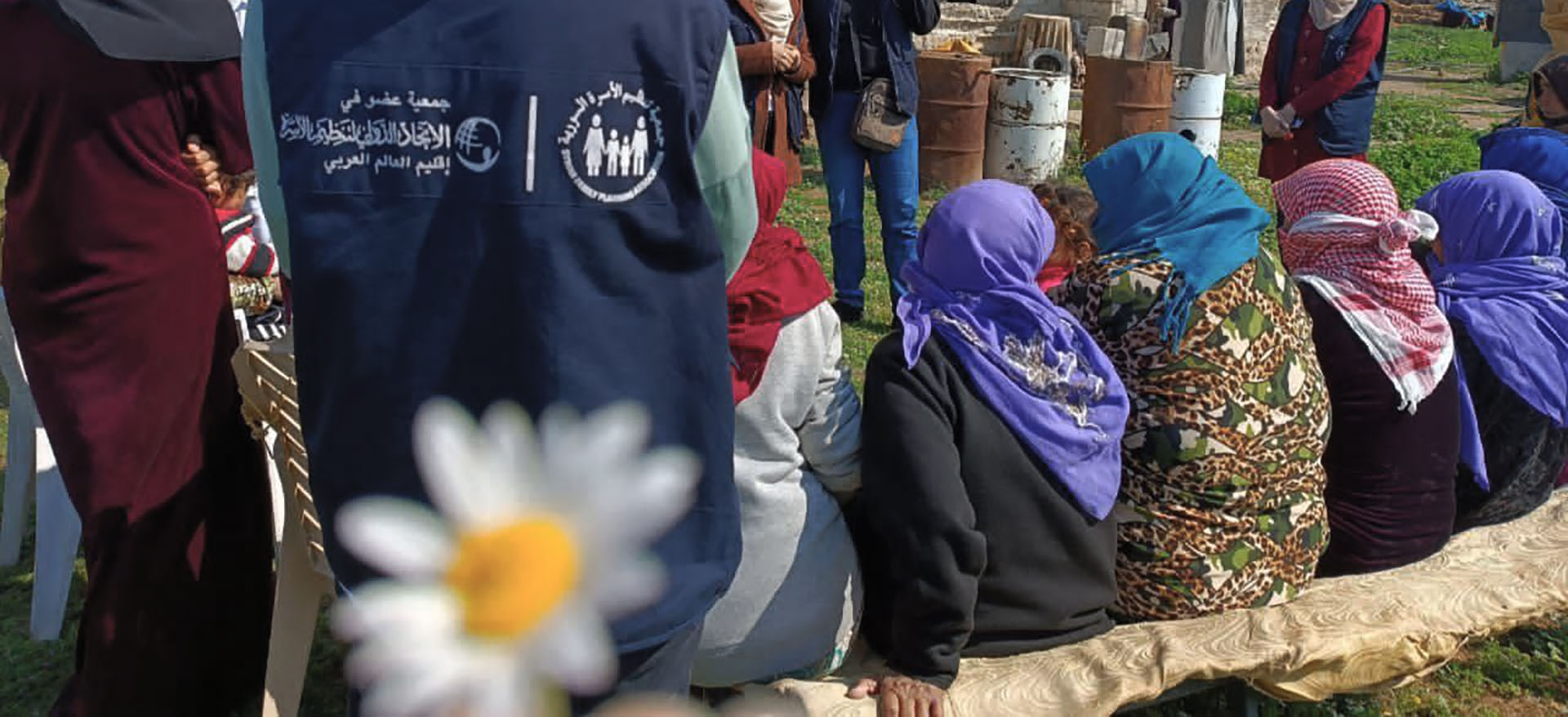
We Must Protect Critical Sexual and Reproductive Health and Rights During Syria's Transition
IPPF remains steadfast in its commitment to supporting its Member Association, the Syrian Family Planning Association (SFPA), in providing essential SRHR services for all. Within the uncertainty and instability, we continue to work together with SFPA to empower communities, protect the rights of women and adolescents, and address the urgent needs of marginalized populations, particularly in the face of increased vulnerability. Our collective mission stands firm: we are committed to ensuring that dignity, health, and choice are accessible to all, regardless of political or social challenges. Even in these uncertain times, we believe that SRHR services must continue - because the need for family planning, maternal healthcare, and gender-based violence (GBV) support does not diminish, even in the midst of conflict. Syria is enduring a difficult period of transition, but sexual and reproductive health cannot be sidelined. The health and well-being of Syria’s most vulnerable populations, especially women and youth, remain a top priority. The work of SFPA is more essential than ever, as it continues to provide vital services such as family planning, postnatal care, and GBV screening. At Al-Hasakah, SFPA is on the frontlines, directly supporting over 5,000 people, the majority of whom are women in urgent need of reproductive healthcare services. These women face an increased risk of complications due to the lack of access to safe and comprehensive health services, but SFPA is committed to meeting their needs. From providing postnatal care to offering family planning options and GBV screenings, SFPA is ensuring that women in these vulnerable circumstances are not forgotten. SFPA’s clinics, such as the one in southern Daraa and the besieged Al-Waer in Homs, have become lifelines, serving as a beacon of hope for those in need. They provide up to 70 beneficiaries a day with crucial services, including health counselling and early marriage awareness. SFPA has faced significant challenges, including the seizing of vehicles and temporary clinic closures in the suburbs of Homs. Yet SFPA's perseverance in delivering SRHR services remains an essential lifeline for the people of Syria. We will continue to stand alongside SFPA in their tireless efforts to safeguard sexual and reproductive health rights, ensuring that every woman, adolescent, and marginalized person has access to the care they deserve. Together, we stand for dignity, health, and choice, even in the face of uncertainty. The challenges are great, but the importance of maintaining SRHR services is immeasurable. Through unwavering dedication, we can support those in need and contribute to a future where everyone has access to the care and rights they deserve. Contact: +44 7918 845944 Image credit: SFPA/Wasim Kashlan
media_center
| 11 December 2024
We Must Protect Critical Sexual and Reproductive Health and Rights During Syria's Transition
IPPF remains steadfast in its commitment to supporting its Member Association, the Syrian Family Planning Association (SFPA), in providing essential SRHR services for all. Within the uncertainty and instability, we continue to work together with SFPA to empower communities, protect the rights of women and adolescents, and address the urgent needs of marginalized populations, particularly in the face of increased vulnerability. Our collective mission stands firm: we are committed to ensuring that dignity, health, and choice are accessible to all, regardless of political or social challenges. Even in these uncertain times, we believe that SRHR services must continue - because the need for family planning, maternal healthcare, and gender-based violence (GBV) support does not diminish, even in the midst of conflict. Syria is enduring a difficult period of transition, but sexual and reproductive health cannot be sidelined. The health and well-being of Syria’s most vulnerable populations, especially women and youth, remain a top priority. The work of SFPA is more essential than ever, as it continues to provide vital services such as family planning, postnatal care, and GBV screening. At Al-Hasakah, SFPA is on the frontlines, directly supporting over 5,000 people, the majority of whom are women in urgent need of reproductive healthcare services. These women face an increased risk of complications due to the lack of access to safe and comprehensive health services, but SFPA is committed to meeting their needs. From providing postnatal care to offering family planning options and GBV screenings, SFPA is ensuring that women in these vulnerable circumstances are not forgotten. SFPA’s clinics, such as the one in southern Daraa and the besieged Al-Waer in Homs, have become lifelines, serving as a beacon of hope for those in need. They provide up to 70 beneficiaries a day with crucial services, including health counselling and early marriage awareness. SFPA has faced significant challenges, including the seizing of vehicles and temporary clinic closures in the suburbs of Homs. Yet SFPA's perseverance in delivering SRHR services remains an essential lifeline for the people of Syria. We will continue to stand alongside SFPA in their tireless efforts to safeguard sexual and reproductive health rights, ensuring that every woman, adolescent, and marginalized person has access to the care they deserve. Together, we stand for dignity, health, and choice, even in the face of uncertainty. The challenges are great, but the importance of maintaining SRHR services is immeasurable. Through unwavering dedication, we can support those in need and contribute to a future where everyone has access to the care and rights they deserve. Contact: +44 7918 845944 Image credit: SFPA/Wasim Kashlan

media center
| 26 September 2024
IPPF Statement on Escalation of Violence Against Health Care Workers
ENOUGH IS ENOUGH! Nearly a year into targeted, reproductive violence against Palestinian women and girls, and the bombing of our reproductive health site in Gaza; IPPF readies itself for a fresh wave of attacks against its health workers and clinics in Lebanon. "Our healthcare workers in Lebanon are under attack. 70% of them are women. The facilities where women come and access life-saving reproductive services have already been destroyed in Gaza. Now the world is forced to watch another horrific spectacle of the same war crimes being committed in Lebanon.” “We demand all governments - including the U.S., Germany, UK and others - that are supplying these weapons that kill, maim and displace our fellow healthcare workers to stop. We demand an end to the killing of ALL civilians; we will not be silenced, we will continue to collect evidence and talk about these crimes against our collective humanity,” said Dr. Alvaro Bermejo, Director General, International Planned Parenthood Federation. Israel's indiscriminate attacks on Gaza have had devastating consequences for women's reproductive health. The attacks on our own health site, on hospitals and maternal health sites significantly limited access to care. We are experiencing this in Sudan too; clinics destroyed, men’s use of violence against our health workers, and rape used as a weapon of war. In Palestine, obstetric and reproductive violence have been evidenced as a feature of Israel’s violence; we are urgently ringing all alarm bells before these crimes are repeated against women and girls in Lebanon. “Our staff are terrified; they are running for their lives. Contact with our team is limited - health care workers are too scared to use their phones. We fear not just for our colleagues; but for every single woman and girl. Once again, the very essence of humanity is at stake, as though women, children, and all human beings are merely numbers,” said Lina Sabra, Executive Director of IPPF Member Association in Lebanon, SALAMA. Lebanon is experiencing its deadliest days since the country’s civil war ended in 1990. The acceleration in killing over the past few days amid the escalation between Israel and Hezbollah is only made possible by powerful countries with a vested interest in the continuation of this war. We remind all parties that acts of obstetric and reproductive violence have been prosecuted as crimes against humanity.
media_center
| 26 September 2024
IPPF Statement on Escalation of Violence Against Health Care Workers
ENOUGH IS ENOUGH! Nearly a year into targeted, reproductive violence against Palestinian women and girls, and the bombing of our reproductive health site in Gaza; IPPF readies itself for a fresh wave of attacks against its health workers and clinics in Lebanon. "Our healthcare workers in Lebanon are under attack. 70% of them are women. The facilities where women come and access life-saving reproductive services have already been destroyed in Gaza. Now the world is forced to watch another horrific spectacle of the same war crimes being committed in Lebanon.” “We demand all governments - including the U.S., Germany, UK and others - that are supplying these weapons that kill, maim and displace our fellow healthcare workers to stop. We demand an end to the killing of ALL civilians; we will not be silenced, we will continue to collect evidence and talk about these crimes against our collective humanity,” said Dr. Alvaro Bermejo, Director General, International Planned Parenthood Federation. Israel's indiscriminate attacks on Gaza have had devastating consequences for women's reproductive health. The attacks on our own health site, on hospitals and maternal health sites significantly limited access to care. We are experiencing this in Sudan too; clinics destroyed, men’s use of violence against our health workers, and rape used as a weapon of war. In Palestine, obstetric and reproductive violence have been evidenced as a feature of Israel’s violence; we are urgently ringing all alarm bells before these crimes are repeated against women and girls in Lebanon. “Our staff are terrified; they are running for their lives. Contact with our team is limited - health care workers are too scared to use their phones. We fear not just for our colleagues; but for every single woman and girl. Once again, the very essence of humanity is at stake, as though women, children, and all human beings are merely numbers,” said Lina Sabra, Executive Director of IPPF Member Association in Lebanon, SALAMA. Lebanon is experiencing its deadliest days since the country’s civil war ended in 1990. The acceleration in killing over the past few days amid the escalation between Israel and Hezbollah is only made possible by powerful countries with a vested interest in the continuation of this war. We remind all parties that acts of obstetric and reproductive violence have been prosecuted as crimes against humanity.

media center
| 09 July 2024
Press Release: Gaza nine months on, pregnant women carry the burden of conflict
Jerusalem, 9 July 2024: Nine months on since the start of the Israeli aggression in Gaza, maternal healthcare is almost decimated. Pregnant, postpartum, and breastfeeding women in Gaza are facing serious health consequences. Miscarriages have risen at least 300% since October last year. One of our own health workers from the Palestinian Family Planning and Protection Association (PFPPA) recently lost her pregnancy due to the stress of the attacks. “I am a healthcare worker with PFPPA, and I have been forced to flee not once, not twice, but six times since the start of the violence, with my husband and three small children. Our home was destroyed by bombing. Whilst I was fleeing from one location to another, I started to unexpectedly bleed. I was able to find a doctor only after reaching Rafah, who confirmed I was miscarrying. I didn’t even realise I was pregnant,” Wafa, our healthcare worker in Gaza, told us. With the starvation being faced by the people in Gaza in addition to the lack of drinking water, our service providers are reporting on daily basis of pregnant women suffering from anaemia, malnutrition and in desperate need of prenatal vitamins and supplements. Our service providers in Gaza are also witnessing many women who are either having premature deliveries or miscarriages. Women of newborns are unable to breastfeed their babies due their own malnutrition and anxiety, while at the same time most families cannot afford milk formula as prices are becoming extremely high - and that is if they can find it in the market. When medical facilities are available, many women are unwilling to leave their shelters to obtain pre- and post-natal care, as they worry if they are separated from their families there will be military attacks and bombings and fear for their and their loved one's fate if they do so. Ammal Awadallah, Executive Director of PFPPA, said: “Nine months on, and a woman who conceived at the start of these hostilities will now be giving birth. But where, how, and what life is that baby entering? This will be a lost generation in Gaza, a generation born into genocide. We’re doing the best we can to offer support to women in Gaza, but the conditions to get aid into Gaza, let alone warehouse supplies, make our jobs extremely difficult. PFPPA has always been committed to women’s health and that doesn’t stop, now or ever.” Over 37,900 people have now lost their lives in Gaza. Women and girls that survive are facing a myriad of challenges; deprived of sexual and reproductive health services, sanitary and hygiene products. We believe every single person and organisation needs to mobilise to end this, by calling on their governments to demand unhindered humanitarian aid access, to demand a permanent ceasefire, and divest from any organisations aiding and abetting Israel’s military campaign against Palestine. We are working in close collaboration with colleagues in Palestine on how best to serve those caught up in the violence, to ensure health workers are safe and able to provide sexual and reproductive health care without threat to life. For more information and to speak to our Executive Director in Palestine, please email media@ippf.org About the Palestinian Family Planning and Protection Association Established in Jerusalem in 1964, the Palestinian Family Planning and Protection Association (PFPPA) is locally registered as an independent, non-profit and non-governmental association with headquarters in Jerusalem. PFPPA has service delivery points located in the West Bank Areas of Ramallah, Bethlehem, Hebron and Halhoul, in addition to one in the Gaza Strip, which has yet to be relocated after it was destroyed following an Israeli airstrike on 8 October. Furthermore, and in cooperation with local partners, PFPPA is also responsible for three safe spaces to provide Gender Based Violence (GBV) related services in the Jerusalem area. About the International Planned Parenthood Federation IPPF is a global healthcare provider and a leading advocate of sexual and reproductive health and rights (SRHR) for all. Led by a courageous and determined group of women, IPPF was founded in 1952 at the Third International Planned Parenthood Conference. Today, we are a movement of 150 Member Associations and Collaborative Partners with a presence in over 146 countries. Our work is wide-ranging, including comprehensive sex education, provision of contraceptive, safe abortion, and maternal care and responding to humanitarian crises. We pride ourselves on being local through our members and global through our network. At the heart of our mission is the provision of – and advocacy in support of – integrated healthcare to anyone who needs it regardless of race, gender, sex, income, and crucially no matter how remote.
media_center
| 09 July 2024
Press Release: Gaza nine months on, pregnant women carry the burden of conflict
Jerusalem, 9 July 2024: Nine months on since the start of the Israeli aggression in Gaza, maternal healthcare is almost decimated. Pregnant, postpartum, and breastfeeding women in Gaza are facing serious health consequences. Miscarriages have risen at least 300% since October last year. One of our own health workers from the Palestinian Family Planning and Protection Association (PFPPA) recently lost her pregnancy due to the stress of the attacks. “I am a healthcare worker with PFPPA, and I have been forced to flee not once, not twice, but six times since the start of the violence, with my husband and three small children. Our home was destroyed by bombing. Whilst I was fleeing from one location to another, I started to unexpectedly bleed. I was able to find a doctor only after reaching Rafah, who confirmed I was miscarrying. I didn’t even realise I was pregnant,” Wafa, our healthcare worker in Gaza, told us. With the starvation being faced by the people in Gaza in addition to the lack of drinking water, our service providers are reporting on daily basis of pregnant women suffering from anaemia, malnutrition and in desperate need of prenatal vitamins and supplements. Our service providers in Gaza are also witnessing many women who are either having premature deliveries or miscarriages. Women of newborns are unable to breastfeed their babies due their own malnutrition and anxiety, while at the same time most families cannot afford milk formula as prices are becoming extremely high - and that is if they can find it in the market. When medical facilities are available, many women are unwilling to leave their shelters to obtain pre- and post-natal care, as they worry if they are separated from their families there will be military attacks and bombings and fear for their and their loved one's fate if they do so. Ammal Awadallah, Executive Director of PFPPA, said: “Nine months on, and a woman who conceived at the start of these hostilities will now be giving birth. But where, how, and what life is that baby entering? This will be a lost generation in Gaza, a generation born into genocide. We’re doing the best we can to offer support to women in Gaza, but the conditions to get aid into Gaza, let alone warehouse supplies, make our jobs extremely difficult. PFPPA has always been committed to women’s health and that doesn’t stop, now or ever.” Over 37,900 people have now lost their lives in Gaza. Women and girls that survive are facing a myriad of challenges; deprived of sexual and reproductive health services, sanitary and hygiene products. We believe every single person and organisation needs to mobilise to end this, by calling on their governments to demand unhindered humanitarian aid access, to demand a permanent ceasefire, and divest from any organisations aiding and abetting Israel’s military campaign against Palestine. We are working in close collaboration with colleagues in Palestine on how best to serve those caught up in the violence, to ensure health workers are safe and able to provide sexual and reproductive health care without threat to life. For more information and to speak to our Executive Director in Palestine, please email media@ippf.org About the Palestinian Family Planning and Protection Association Established in Jerusalem in 1964, the Palestinian Family Planning and Protection Association (PFPPA) is locally registered as an independent, non-profit and non-governmental association with headquarters in Jerusalem. PFPPA has service delivery points located in the West Bank Areas of Ramallah, Bethlehem, Hebron and Halhoul, in addition to one in the Gaza Strip, which has yet to be relocated after it was destroyed following an Israeli airstrike on 8 October. Furthermore, and in cooperation with local partners, PFPPA is also responsible for three safe spaces to provide Gender Based Violence (GBV) related services in the Jerusalem area. About the International Planned Parenthood Federation IPPF is a global healthcare provider and a leading advocate of sexual and reproductive health and rights (SRHR) for all. Led by a courageous and determined group of women, IPPF was founded in 1952 at the Third International Planned Parenthood Conference. Today, we are a movement of 150 Member Associations and Collaborative Partners with a presence in over 146 countries. Our work is wide-ranging, including comprehensive sex education, provision of contraceptive, safe abortion, and maternal care and responding to humanitarian crises. We pride ourselves on being local through our members and global through our network. At the heart of our mission is the provision of – and advocacy in support of – integrated healthcare to anyone who needs it regardless of race, gender, sex, income, and crucially no matter how remote.
media center
| 16 April 2026
IPPF and Japan team up on another project to sustain sexual and reproductive health services in the West Bank, Palestine
21st April 2026 - IPPF and its Member Association in Palestine (PFPPA) are pleased to announce the launch of a new project financed by the Government of Japan, "Provision of health and medical services for women and children affected by crisis in the West Bank." This project will deliver life-saving maternal healthcare, psychosocial support, and sexual and reproductive health services, in even the hardest-to-reach areas of the West Bank, Palestine, through health centres, mobile medical teams, tele-consultations, and community outreach. The destruction of health facilities, severe restrictions on movement, and raids and attacks on communities in the West Bank have left Palestinians with little to no access to healthcare. According to the UNFPA, over 230,000 women and girls experience difficulties in accessing reproductive health services. Key project activities will include:Maintaining essential sexual and reproductive health (SRH) services, through three static clinics in Khalil, Halhoul and Bethlehem in the West Bank. These clinics will offer services including family planning, obstetrics and gynaecology care and management of sexually transmitted infections, for over 22,000 women and children. This will include specialised support for an estimated 2,300 survivors of sexual and gender-based violence, who will receive medical care, counselling or referrals. Providing maternal and child health care services for 4,600 women and children in hard-to-reach and marginalised areas of the West Bank via a mobile team of doctors, midwives, paediatricians, social workers, pharmacists and lab technicians. The mobile team will also provide psychosocial support services, support for survivors of sexual and gender-based violence, and family planning services. Providing counselling and consultation services via telecommunications and digital channels for those unable to access clinics.Conducting five ‘preparing for birth’ sessions for 90 first time mothers, providing information and support on maternal care and options for labour and delivery. Mr. ARAIKE Katsuhiko, Ambassador of Japan for the Palestinian Affairs says: “As a flagbearer of Universal Health Coverage (UHC) and the Women, Peace, and Security (WPS) agenda, we hope that our new collaboration with IPPF facilitates Palestinian women and children, who are affected by conflicts and live outside service catchment areas, to enjoy Obstetrics and Gynecology (OBGYN) and family planning services, improved well-being, and social participation. This project is part of Japan’s 2026–2027 cooperation package for Palestine. Japan will continue to provide support for the stability and prosperity of Palestine.” Dr. Fadoua Bakhadda, Regional Director of the IPPF Arab World Regional Office adds: “Thanks to the support of the people of Japan, we can continue delivering essential maternal and child health services to communities that have been systematically cut off from care, helping to prevent avoidable maternal and newborn deaths in the West Bank, Palestine.” -- About International Planned Parenthood Federation (IPPF) Arab World Office IPPF is a global healthcare provider and a leading advocate of sexual and reproductive health and rights (SRHR) for all. Led by a courageous and determined group of women, IPPF was founded in 1952. Today, we are a movement of over 120 autonomous member associations and 23 collaborative partners with a presence in 146 countries. Established in 1971, the IPPF Arab World Region (IPPF AWR) is one of IPPF’s six regional offices. Based in Tunis, it is the leading Sexual and Reproductive Health (SRH) service delivery organization in the North Africa and the Middle East, and the leading Sexual and Reproductive Health and Rights (SRHR) advocacy voice in the region.
media_center
| 21 April 2026
IPPF and Japan team up on another project to sustain sexual and reproductive health services in the West Bank, Palestine
21st April 2026 - IPPF and its Member Association in Palestine (PFPPA) are pleased to announce the launch of a new project financed by the Government of Japan, "Provision of health and medical services for women and children affected by crisis in the West Bank." This project will deliver life-saving maternal healthcare, psychosocial support, and sexual and reproductive health services, in even the hardest-to-reach areas of the West Bank, Palestine, through health centres, mobile medical teams, tele-consultations, and community outreach. The destruction of health facilities, severe restrictions on movement, and raids and attacks on communities in the West Bank have left Palestinians with little to no access to healthcare. According to the UNFPA, over 230,000 women and girls experience difficulties in accessing reproductive health services. Key project activities will include:Maintaining essential sexual and reproductive health (SRH) services, through three static clinics in Khalil, Halhoul and Bethlehem in the West Bank. These clinics will offer services including family planning, obstetrics and gynaecology care and management of sexually transmitted infections, for over 22,000 women and children. This will include specialised support for an estimated 2,300 survivors of sexual and gender-based violence, who will receive medical care, counselling or referrals. Providing maternal and child health care services for 4,600 women and children in hard-to-reach and marginalised areas of the West Bank via a mobile team of doctors, midwives, paediatricians, social workers, pharmacists and lab technicians. The mobile team will also provide psychosocial support services, support for survivors of sexual and gender-based violence, and family planning services. Providing counselling and consultation services via telecommunications and digital channels for those unable to access clinics.Conducting five ‘preparing for birth’ sessions for 90 first time mothers, providing information and support on maternal care and options for labour and delivery. Mr. ARAIKE Katsuhiko, Ambassador of Japan for the Palestinian Affairs says: “As a flagbearer of Universal Health Coverage (UHC) and the Women, Peace, and Security (WPS) agenda, we hope that our new collaboration with IPPF facilitates Palestinian women and children, who are affected by conflicts and live outside service catchment areas, to enjoy Obstetrics and Gynecology (OBGYN) and family planning services, improved well-being, and social participation. This project is part of Japan’s 2026–2027 cooperation package for Palestine. Japan will continue to provide support for the stability and prosperity of Palestine.” Dr. Fadoua Bakhadda, Regional Director of the IPPF Arab World Regional Office adds: “Thanks to the support of the people of Japan, we can continue delivering essential maternal and child health services to communities that have been systematically cut off from care, helping to prevent avoidable maternal and newborn deaths in the West Bank, Palestine.” -- About International Planned Parenthood Federation (IPPF) Arab World Office IPPF is a global healthcare provider and a leading advocate of sexual and reproductive health and rights (SRHR) for all. Led by a courageous and determined group of women, IPPF was founded in 1952. Today, we are a movement of over 120 autonomous member associations and 23 collaborative partners with a presence in 146 countries. Established in 1971, the IPPF Arab World Region (IPPF AWR) is one of IPPF’s six regional offices. Based in Tunis, it is the leading Sexual and Reproductive Health (SRH) service delivery organization in the North Africa and the Middle East, and the leading Sexual and Reproductive Health and Rights (SRHR) advocacy voice in the region.
media center
| 16 April 2026
Japan funds essential supplies for healthcare clinics in Sudan
16th April 2026 - A new project titled Strengthening Life-saving Sexual and Reproductive Health (SRH) Services for Internally Displaced Persons (IDPs), has been launched in Sudan. Funded by the Government of Japan and implemented by the IPPF Member Association Sudan Family Planning Association (SFPA), the project will support women and girls in crisis in the Red Sea and Khartoum States. Fifteen million people in Sudan have been displaced by the civil war, and conflicts in neighbouring countries have triggered an influx of returnees and displaced people into Sudan. As a result, the country now hosts 15% of the world’s IDPs. But widespread destruction of infrastructure and deadly disease outbreaks have left the healthcare system unable to cope.An estimated 1.75 million women and girls require urgent sexual and reproductive health (SRH) services, including 270,000 internally displaced pregnant women. With rape increasingly used as a weapon of war, many require urgent medical and psychosocial support. However, essential SRH commodities, including contraceptives, emergency obstetric kits, and menstrual hygiene products, are in critically low supply. SFPA provides essential sexual and reproductive health services to women and girls, including internally displaced persons, through 26 static clinics and 11 mobile clinics across the country. This new funding will enable them to procure, transport and distribute essential supplies to two of the organisation’s static clinics in the Red Sea State and Khartoum State. This vital equipment, including microscopes, blood-testing devices, thermometers, and examination lamps, will enable these clinics to continue providing SRH services, expanding their reach to an additional 2,400 internally displaced people and individuals in host communities. Mr. Nakahara Takanobu, the Chargé d’Affaires ad interim of the Embassy of Japan to Sudan, stated that, “The provision of sexual and reproductive healthcare for women and girls is a critical step in supporting this vulnerable category in Sudan. This is more so when they are IDPs. Thus, we are happy to be able to support IPPF’s Member Association in Sudan - the Sudan Family Planning Association - in this domain, so that we can contribute to improving the safety and well-being of these women and girls, and reassure them that we acknowledge the challenges they face and endure.” Dr Hiba Ahmed Khalil, Emergency and Humanitarian Interventions Manager at SFPA added, “SFPA is honoured to join the Japan Supplementary Budget 2025 project, advancing inclusive health and humanitarian responses that strengthen access to essential services and uphold the rights of communities most at risk. Together, we are building pathways for resilience and equity.” Dr. Fadoua Bakhadda, Regional Director of the IPPF Arab World Regional Office, added, “Every woman and girl deserves access to safe, reliable healthcare, no matter the circumstances. Thanks to the people of Japan, we can equip clinics with the essential tools and supplies needed to continue providing critical sexual and reproductive healthcare. This investment will directly improve the safety, health, and resilience of thousands of internally displaced women and girls.” ---About the Sudan Family Planning Association The Sudan Family Planning Association (SFPA) was established in 1965 by pioneers in obstetrics and gynaecology in response to increases in maternal, neonatal and infant mortality and morbidity. As the statistics show, Sudan is a country in great need of frontline sexual and reproductive health (SRH) services. Advocacy, and undertaking information, education and communication (IEC) programs are critical.About International Planned Parenthood Federation (IPPF) Arab World Office IPPF is a global healthcare provider and a leading advocate of sexual and reproductive health and rights (SRHR) for all. Led by a courageous and determined group of women, IPPF was founded in 1952. Today, we are a movement of over 120 autonomous member associations and 23 collaborative partners with a presence in 146 countries. Established in 1971, the IPPF Arab World Region (IPPF AWR) is one of IPPF’s six regional offices. Based in Tunis, it is the leading Sexual and Reproductive Health (SRH) service delivery organization in North Africa and the Middle East, and the leading Sexual and Reproductive Health and Rights (SRHR) advocacy voice in the region.
media_center
| 16 April 2026
Japan funds essential supplies for healthcare clinics in Sudan
16th April 2026 - A new project titled Strengthening Life-saving Sexual and Reproductive Health (SRH) Services for Internally Displaced Persons (IDPs), has been launched in Sudan. Funded by the Government of Japan and implemented by the IPPF Member Association Sudan Family Planning Association (SFPA), the project will support women and girls in crisis in the Red Sea and Khartoum States. Fifteen million people in Sudan have been displaced by the civil war, and conflicts in neighbouring countries have triggered an influx of returnees and displaced people into Sudan. As a result, the country now hosts 15% of the world’s IDPs. But widespread destruction of infrastructure and deadly disease outbreaks have left the healthcare system unable to cope.An estimated 1.75 million women and girls require urgent sexual and reproductive health (SRH) services, including 270,000 internally displaced pregnant women. With rape increasingly used as a weapon of war, many require urgent medical and psychosocial support. However, essential SRH commodities, including contraceptives, emergency obstetric kits, and menstrual hygiene products, are in critically low supply. SFPA provides essential sexual and reproductive health services to women and girls, including internally displaced persons, through 26 static clinics and 11 mobile clinics across the country. This new funding will enable them to procure, transport and distribute essential supplies to two of the organisation’s static clinics in the Red Sea State and Khartoum State. This vital equipment, including microscopes, blood-testing devices, thermometers, and examination lamps, will enable these clinics to continue providing SRH services, expanding their reach to an additional 2,400 internally displaced people and individuals in host communities. Mr. Nakahara Takanobu, the Chargé d’Affaires ad interim of the Embassy of Japan to Sudan, stated that, “The provision of sexual and reproductive healthcare for women and girls is a critical step in supporting this vulnerable category in Sudan. This is more so when they are IDPs. Thus, we are happy to be able to support IPPF’s Member Association in Sudan - the Sudan Family Planning Association - in this domain, so that we can contribute to improving the safety and well-being of these women and girls, and reassure them that we acknowledge the challenges they face and endure.” Dr Hiba Ahmed Khalil, Emergency and Humanitarian Interventions Manager at SFPA added, “SFPA is honoured to join the Japan Supplementary Budget 2025 project, advancing inclusive health and humanitarian responses that strengthen access to essential services and uphold the rights of communities most at risk. Together, we are building pathways for resilience and equity.” Dr. Fadoua Bakhadda, Regional Director of the IPPF Arab World Regional Office, added, “Every woman and girl deserves access to safe, reliable healthcare, no matter the circumstances. Thanks to the people of Japan, we can equip clinics with the essential tools and supplies needed to continue providing critical sexual and reproductive healthcare. This investment will directly improve the safety, health, and resilience of thousands of internally displaced women and girls.” ---About the Sudan Family Planning Association The Sudan Family Planning Association (SFPA) was established in 1965 by pioneers in obstetrics and gynaecology in response to increases in maternal, neonatal and infant mortality and morbidity. As the statistics show, Sudan is a country in great need of frontline sexual and reproductive health (SRH) services. Advocacy, and undertaking information, education and communication (IEC) programs are critical.About International Planned Parenthood Federation (IPPF) Arab World Office IPPF is a global healthcare provider and a leading advocate of sexual and reproductive health and rights (SRHR) for all. Led by a courageous and determined group of women, IPPF was founded in 1952. Today, we are a movement of over 120 autonomous member associations and 23 collaborative partners with a presence in 146 countries. Established in 1971, the IPPF Arab World Region (IPPF AWR) is one of IPPF’s six regional offices. Based in Tunis, it is the leading Sexual and Reproductive Health (SRH) service delivery organization in North Africa and the Middle East, and the leading Sexual and Reproductive Health and Rights (SRHR) advocacy voice in the region.
media center
| 20 March 2026
IPPF condemns the UK’s latest ODA budget allocations and warn of life-threatening consequences for millions
20 March 2026 - The International Planned Parenthood Federation (IPPF) strongly condemns the UK Government’s latest ODA budget allocations, which entrench deep cuts to UK aid and mark a profound and damaging retreat from its commitment to women and girls, with immediate and life-threatening consequences for millions.UK ODA will fall to £6.8 billion in 2026/27 and £6.2 billion in 2027/28, with only a partial recovery to £6.9 billion in 2028/29, locking in years of reduced support. This is not a reprioritisation of aid, it is the continuation of a political choice by successive UK governments to cut lifesaving support as global crises intensify, prioritising military spending over the health and rights of civilians, a decision that directly endangers the lives of women, children, and health workers.Among the programmes affected is the Women’s Integrated Sexual Health 2 (WISH2) programme, the UK’s flagship initiative delivering contraception and sexual and reproductive health services across 13 African countries, with IPPF delivering in seven of those countries in Eastern and Southern Africa. Despite being described as “relatively protected” according to the government’s own Equality Impact Assessment (EIA), IPPF’s delivery will receive a 22% funding cut.These reductions will force a rollback of frontline services, severely disrupting access to lifesaving care for millions of women and girls. The consequences are stark: fewer clinics, fewer trained providers, and reduced access to contraception and essential life-saving health services. Since 2024, IPPF’s implementation of WISH2 has averted over 567,000 unintended pregnancies, 157,000 unsafe abortions, and more than 1,000 maternal deaths. However, a 22% funding cut now threatens to reverse this progress, projected to lead to over 442,000 unintended pregnancies, 122,000 unsafe abortions, and 770 maternal deaths due to reductions in IPPF’s programming — outcomes that would otherwise have been prevented.This decision will also have significant consequences for the UK’s relationships with partner governments across Africa. The programme has been a cornerstone of long-standing, trusted partnerships in fragile and conflict-affected settings, supporting national priorities and strengthening public systems. Abrupt funding reductions risk undermining that trust, disrupting jointly planned programmes, and weakening the UK’s credibility as a reliable and predictable partner.At a time when global aid is contracting and opposition to sexual and reproductive health and rights is growing, this decision sends a dangerous signal about the future of UK leadership on women’s health and rights.Maria Antonieta Alcalde, IPPF Director General, said:“Yesterday’s confirmation of deep cuts to UK aid through the government’s budget allocations will have devastating and immediate consequences. We know what these decisions mean in practice. They mean more women dying in childbirth, more unsafe abortions, and millions denied access to the most basic, lifesaving care.These decisions reflect a deliberate and sustained choice, in the UK and globally, to scale back aid while increasing military spending, placing the communities we serve and our healthcare workers directly in harm’s way. At the same time, we are seeing a growing and coordinated opposition to sexual and reproductive health and rights, exploiting the gaps left behind as funding is withdrawn.”We call on the UK Government to urgently reconsider these decisions, restore its commitment to women and girls, in all their diversity, and ensure that programmes like WISH2 can continue delivering the care that millions depend on. The consequences of inaction will be measured in lives lost.ENDSAbout WISH:The Women’s Integrated Sexual Health 2 (WISH2) programme is funded by the UK’s Foreign, Commonwealth and Development Office (FCDO) and delivered through two consortia led by IPPF and MSI, alongside partners. The WISH2 Lot 2 Consortium is led by International Planned Parenthood Federation (IPPF), with Ipas, International Rescue Committee (IRC), John Hopkins Center for Communication Programs (JHUCCP), and Options.The programme operates across 13 countries in Africa, with IPPF delivering in seven, and has been critical in expanding access to contraception, supporting community-based healthcare providers, and strengthening health systems in some of the most underserved and fragile settings.The sudden reduction in funding now puts this progress at risk, threatening clinic closures, disrupting contraceptive supply chains, and limiting outreach to the most marginalised communities.IPPF’s Impact:WISH2 builds on the success of the original WISH programme (2018–2024), which reached an estimated 16.9 million women and adolescent girls with modern methods of contraception across Africa and Asia.Since launching in 2024, IPPF’s delivery under WISH2 has achieved:1.8 million family planning visits, including 15% for young people under 201.2 million couple-years of protection567,000 unintended pregnancies averted157,000 unsafe abortions averted1,000 maternal deaths averted11,000 child deaths avertedIPPF’s partners have also generated £39.8 million in healthcare cost savings across seven countries, while driving policy reform and strengthening national health systems.About IPPF:IPPF is a global healthcare provider and a leading advocate of sexual and reproductive health and rights (SRHR) for all. Led by a courageous and determined group of women, IPPF was founded in 1952 at the Third International Planned Parenthood Conference. Today, we are a movement of 100+ locally led Member Associations with a presence in 150+ countries.Our work is wide-ranging, and includes services for sexual health and well-being, contraception, abortion care, sexually transmitted infections and reproductive tract infections, HIV, obstetrics and gynaecology, fertility support, sexual and gender-based violence, comprehensive sex education, and responding to humanitarian crises. We pride ourselves on being local through our members and global through our network. At the heart of our mission is the provision of – and advocacy in support of – integrated healthcare to anyone who needs it regardless of race, gender, sex, income, and, crucially, no matter how remote.
media_center
| 20 March 2026
IPPF condemns the UK’s latest ODA budget allocations and warn of life-threatening consequences for millions
20 March 2026 - The International Planned Parenthood Federation (IPPF) strongly condemns the UK Government’s latest ODA budget allocations, which entrench deep cuts to UK aid and mark a profound and damaging retreat from its commitment to women and girls, with immediate and life-threatening consequences for millions.UK ODA will fall to £6.8 billion in 2026/27 and £6.2 billion in 2027/28, with only a partial recovery to £6.9 billion in 2028/29, locking in years of reduced support. This is not a reprioritisation of aid, it is the continuation of a political choice by successive UK governments to cut lifesaving support as global crises intensify, prioritising military spending over the health and rights of civilians, a decision that directly endangers the lives of women, children, and health workers.Among the programmes affected is the Women’s Integrated Sexual Health 2 (WISH2) programme, the UK’s flagship initiative delivering contraception and sexual and reproductive health services across 13 African countries, with IPPF delivering in seven of those countries in Eastern and Southern Africa. Despite being described as “relatively protected” according to the government’s own Equality Impact Assessment (EIA), IPPF’s delivery will receive a 22% funding cut.These reductions will force a rollback of frontline services, severely disrupting access to lifesaving care for millions of women and girls. The consequences are stark: fewer clinics, fewer trained providers, and reduced access to contraception and essential life-saving health services. Since 2024, IPPF’s implementation of WISH2 has averted over 567,000 unintended pregnancies, 157,000 unsafe abortions, and more than 1,000 maternal deaths. However, a 22% funding cut now threatens to reverse this progress, projected to lead to over 442,000 unintended pregnancies, 122,000 unsafe abortions, and 770 maternal deaths due to reductions in IPPF’s programming — outcomes that would otherwise have been prevented.This decision will also have significant consequences for the UK’s relationships with partner governments across Africa. The programme has been a cornerstone of long-standing, trusted partnerships in fragile and conflict-affected settings, supporting national priorities and strengthening public systems. Abrupt funding reductions risk undermining that trust, disrupting jointly planned programmes, and weakening the UK’s credibility as a reliable and predictable partner.At a time when global aid is contracting and opposition to sexual and reproductive health and rights is growing, this decision sends a dangerous signal about the future of UK leadership on women’s health and rights.Maria Antonieta Alcalde, IPPF Director General, said:“Yesterday’s confirmation of deep cuts to UK aid through the government’s budget allocations will have devastating and immediate consequences. We know what these decisions mean in practice. They mean more women dying in childbirth, more unsafe abortions, and millions denied access to the most basic, lifesaving care.These decisions reflect a deliberate and sustained choice, in the UK and globally, to scale back aid while increasing military spending, placing the communities we serve and our healthcare workers directly in harm’s way. At the same time, we are seeing a growing and coordinated opposition to sexual and reproductive health and rights, exploiting the gaps left behind as funding is withdrawn.”We call on the UK Government to urgently reconsider these decisions, restore its commitment to women and girls, in all their diversity, and ensure that programmes like WISH2 can continue delivering the care that millions depend on. The consequences of inaction will be measured in lives lost.ENDSAbout WISH:The Women’s Integrated Sexual Health 2 (WISH2) programme is funded by the UK’s Foreign, Commonwealth and Development Office (FCDO) and delivered through two consortia led by IPPF and MSI, alongside partners. The WISH2 Lot 2 Consortium is led by International Planned Parenthood Federation (IPPF), with Ipas, International Rescue Committee (IRC), John Hopkins Center for Communication Programs (JHUCCP), and Options.The programme operates across 13 countries in Africa, with IPPF delivering in seven, and has been critical in expanding access to contraception, supporting community-based healthcare providers, and strengthening health systems in some of the most underserved and fragile settings.The sudden reduction in funding now puts this progress at risk, threatening clinic closures, disrupting contraceptive supply chains, and limiting outreach to the most marginalised communities.IPPF’s Impact:WISH2 builds on the success of the original WISH programme (2018–2024), which reached an estimated 16.9 million women and adolescent girls with modern methods of contraception across Africa and Asia.Since launching in 2024, IPPF’s delivery under WISH2 has achieved:1.8 million family planning visits, including 15% for young people under 201.2 million couple-years of protection567,000 unintended pregnancies averted157,000 unsafe abortions averted1,000 maternal deaths averted11,000 child deaths avertedIPPF’s partners have also generated £39.8 million in healthcare cost savings across seven countries, while driving policy reform and strengthening national health systems.About IPPF:IPPF is a global healthcare provider and a leading advocate of sexual and reproductive health and rights (SRHR) for all. Led by a courageous and determined group of women, IPPF was founded in 1952 at the Third International Planned Parenthood Conference. Today, we are a movement of 100+ locally led Member Associations with a presence in 150+ countries.Our work is wide-ranging, and includes services for sexual health and well-being, contraception, abortion care, sexually transmitted infections and reproductive tract infections, HIV, obstetrics and gynaecology, fertility support, sexual and gender-based violence, comprehensive sex education, and responding to humanitarian crises. We pride ourselves on being local through our members and global through our network. At the heart of our mission is the provision of – and advocacy in support of – integrated healthcare to anyone who needs it regardless of race, gender, sex, income, and, crucially, no matter how remote.
media center
| 14 April 2025
Sudan’s First Mobile Telemedicine Clinic Brings Care to the Frontlines
15th April 2025, River Nile State, Sudan - In a groundbreaking step for healthcare access in Sudan, the Sudan Family Planning Association (SFPA) has launched the country’s first mobile telemedicine clinic in River Nile State. Funded by IPPF and FCDO, this innovation brings specialist remote care to people in isolated and conflict-affected areas, reducing the need for physical travel to health facilities. The mobile telemedicine clinic trucks are equipped with high-speed Starlink satellite internet and can travel to remote and rural locations. Clients receive essential treatment on-site and can connect directly, through secure video calls, with medical specialists across Sudan and internationally, including consultants based in Europe. This initiative is part of SFPA’s broader telemedicine project, designed to ensure the continued delivery of sexual and reproductive health services to the most vulnerable populations, particularly in areas where healthcare systems have collapsed due to conflict. Ms Kawthar, Executive Director of the SFPA branch in River Nile State, noted that the launch of the mobile telemedicine clinic, in Quoz Al-Halq, marks the beginning of a new era in healthcare service delivery within the state. “This project represents a landmark moment in Sudan’s healthcare history. We face enormous challenges in reaching people affected by conflict and displacement with essential health services. But this clinic changes what’s possible. We can now deliver integrated healthcare solutions through smart technologies – we’re breaking down barriers to health.” This innovation comes as Sudan approaches the third year of a brutal conflict, which began on 15 April 2023. Over 12.5 million people have been forcibly displaced[i], and more than two-thirds of the population are in need of humanitarian aid[ii]. Rates of sexually transmitted infections and gender-based violence, including sexual violence, have risen sharply[iii]. Many clinics and hospitals have been destroyed or abandoned. There is a severe shortage of qualified medical personnel, many of whom have fled the country. Access to care has disappeared entirely in some areas. SFPA facilities and staff have also been directly affected by the conflict, with nine of its clinics attacked, resulting in the tragic loss of volunteers and healthcare workers. Amid these challenges, SFPA managed to reach 9.8 million humanitarian clients in 2024. The new mobile telemedicine clinic offers a leap forward in how care can be delivered. It will provide: In-person and digital health consultations Psychosocial support for survivors of gender-based violence Awareness campaigns on reproductive health and sexually transmitted infections Fully integrated digital referral system, linking primary care with specialised medical facilities. Dr Siham Gaber, Director of Digital Health Interventions and Services at SFPA, said the initiative reflects the Association’s vision to harness technology for sustainable healthcare delivery in crisis contexts. “The mobile telemedicine clinic is a significant step forward in improving access to reproductive health services. It enables remote medical consultations and connects patients with doctors and specialists without the need for long-distance travel. This is especially important for women, youth and displaced people, who often face serious risks just to access a health facility. Now, they can get the right care where they are - safely and with dignity.” Mr El-Shafie Mohamed Ali, Executive Director of SFPA, added: “This clinic is not just a mobile health unit. It represents a comprehensive model for integrating telemedicine solutions into the provision of healthcare services. It contributes to expanding coverage and narrowing the health gap caused by conflict and insecurity.” The first phase of the project will see mobile telemedicine clinics deployed in five key states: River Nile, Red Sea, Kassala, Gedaref and Blue Nile. A second expansion phase will begin in May and aims to extend coverage across all 15 states where SFPA operates. This will ensure broader access to services for those most in need. “We remain dedicated to innovation and the scaling of digital solutions to ensure every Sudanese citizen, regardless of their location or circumstance, has access to quality healthcare,” said Mr El-Shafie Mohamed Ali. For more information and to speak to SFPA staff in Sudan, please email media@ippf.org ------- About the Sudan Family Planning Association The Sudan Family Planning Association (SFPA) was established in 1965 by pioneers in obstetrics and gynaecology in response to increases in maternal, neonatal and infant mortality and morbidity. As the statistics show, Sudan is a country in great need of frontline sexual and reproductive health (SRH) services. Advocacy, and undertaking information, education and communication (IEC) programs are critical. In 2024, SFPA provided 43.4 million services to 12.6 million clients (9.8 million of which were humanitarian clients) through 26 static clinics, 39 mobile clinics, 1499 community-based distributors, private physicians and associated clinics. About the International Planned Parenthood Federation The International Planned Parenthood Federation (IPPF) is a global healthcare provider and a leading advocate of sexual and reproductive health and rights (SRHR) for all. We are a movement of 150 Member Associations and Collaborative Partners with a presence in over 146 countries. Building on a proud history of 70 years of achievement, we commit to lead a locally owned, globally connected civil society movement that provides and enables services and champions sexual and reproductive health and rights for all, especially the under-served. We advocate for a world where people are provided with the information they need to make informed decisions about their sexual health and bodies. We stand up and fight for sexual and reproductive rights, and against those who seek to deny people their human right to bodily autonomy and freedom. We deliver care that is rooted in rights, respect, and dignity - no matter what. [i] https://www.unrefugees.org/news/sudan-crisis-explained/ [ii] https://humanitarianaction.info/plan/1220 [iii] https://www.unwomen.org/en/news-stories/press-release/2024/09/sudan-humanitarian-crisis-has-catastrophic-impact-for-women-and-girls-with-two-fold-increase-of-gender-based-violence
media_center
| 15 April 2025
Sudan’s First Mobile Telemedicine Clinic Brings Care to the Frontlines
15th April 2025, River Nile State, Sudan - In a groundbreaking step for healthcare access in Sudan, the Sudan Family Planning Association (SFPA) has launched the country’s first mobile telemedicine clinic in River Nile State. Funded by IPPF and FCDO, this innovation brings specialist remote care to people in isolated and conflict-affected areas, reducing the need for physical travel to health facilities. The mobile telemedicine clinic trucks are equipped with high-speed Starlink satellite internet and can travel to remote and rural locations. Clients receive essential treatment on-site and can connect directly, through secure video calls, with medical specialists across Sudan and internationally, including consultants based in Europe. This initiative is part of SFPA’s broader telemedicine project, designed to ensure the continued delivery of sexual and reproductive health services to the most vulnerable populations, particularly in areas where healthcare systems have collapsed due to conflict. Ms Kawthar, Executive Director of the SFPA branch in River Nile State, noted that the launch of the mobile telemedicine clinic, in Quoz Al-Halq, marks the beginning of a new era in healthcare service delivery within the state. “This project represents a landmark moment in Sudan’s healthcare history. We face enormous challenges in reaching people affected by conflict and displacement with essential health services. But this clinic changes what’s possible. We can now deliver integrated healthcare solutions through smart technologies – we’re breaking down barriers to health.” This innovation comes as Sudan approaches the third year of a brutal conflict, which began on 15 April 2023. Over 12.5 million people have been forcibly displaced[i], and more than two-thirds of the population are in need of humanitarian aid[ii]. Rates of sexually transmitted infections and gender-based violence, including sexual violence, have risen sharply[iii]. Many clinics and hospitals have been destroyed or abandoned. There is a severe shortage of qualified medical personnel, many of whom have fled the country. Access to care has disappeared entirely in some areas. SFPA facilities and staff have also been directly affected by the conflict, with nine of its clinics attacked, resulting in the tragic loss of volunteers and healthcare workers. Amid these challenges, SFPA managed to reach 9.8 million humanitarian clients in 2024. The new mobile telemedicine clinic offers a leap forward in how care can be delivered. It will provide: In-person and digital health consultations Psychosocial support for survivors of gender-based violence Awareness campaigns on reproductive health and sexually transmitted infections Fully integrated digital referral system, linking primary care with specialised medical facilities. Dr Siham Gaber, Director of Digital Health Interventions and Services at SFPA, said the initiative reflects the Association’s vision to harness technology for sustainable healthcare delivery in crisis contexts. “The mobile telemedicine clinic is a significant step forward in improving access to reproductive health services. It enables remote medical consultations and connects patients with doctors and specialists without the need for long-distance travel. This is especially important for women, youth and displaced people, who often face serious risks just to access a health facility. Now, they can get the right care where they are - safely and with dignity.” Mr El-Shafie Mohamed Ali, Executive Director of SFPA, added: “This clinic is not just a mobile health unit. It represents a comprehensive model for integrating telemedicine solutions into the provision of healthcare services. It contributes to expanding coverage and narrowing the health gap caused by conflict and insecurity.” The first phase of the project will see mobile telemedicine clinics deployed in five key states: River Nile, Red Sea, Kassala, Gedaref and Blue Nile. A second expansion phase will begin in May and aims to extend coverage across all 15 states where SFPA operates. This will ensure broader access to services for those most in need. “We remain dedicated to innovation and the scaling of digital solutions to ensure every Sudanese citizen, regardless of their location or circumstance, has access to quality healthcare,” said Mr El-Shafie Mohamed Ali. For more information and to speak to SFPA staff in Sudan, please email media@ippf.org ------- About the Sudan Family Planning Association The Sudan Family Planning Association (SFPA) was established in 1965 by pioneers in obstetrics and gynaecology in response to increases in maternal, neonatal and infant mortality and morbidity. As the statistics show, Sudan is a country in great need of frontline sexual and reproductive health (SRH) services. Advocacy, and undertaking information, education and communication (IEC) programs are critical. In 2024, SFPA provided 43.4 million services to 12.6 million clients (9.8 million of which were humanitarian clients) through 26 static clinics, 39 mobile clinics, 1499 community-based distributors, private physicians and associated clinics. About the International Planned Parenthood Federation The International Planned Parenthood Federation (IPPF) is a global healthcare provider and a leading advocate of sexual and reproductive health and rights (SRHR) for all. We are a movement of 150 Member Associations and Collaborative Partners with a presence in over 146 countries. Building on a proud history of 70 years of achievement, we commit to lead a locally owned, globally connected civil society movement that provides and enables services and champions sexual and reproductive health and rights for all, especially the under-served. We advocate for a world where people are provided with the information they need to make informed decisions about their sexual health and bodies. We stand up and fight for sexual and reproductive rights, and against those who seek to deny people their human right to bodily autonomy and freedom. We deliver care that is rooted in rights, respect, and dignity - no matter what. [i] https://www.unrefugees.org/news/sudan-crisis-explained/ [ii] https://humanitarianaction.info/plan/1220 [iii] https://www.unwomen.org/en/news-stories/press-release/2024/09/sudan-humanitarian-crisis-has-catastrophic-impact-for-women-and-girls-with-two-fold-increase-of-gender-based-violence
media center
| 08 April 2025
Japan Supports IPPF Yemen Project with $750,000 to Provide Critical Maternal and Reproductive Health Services
April 8th, 2025 - A new project titled "Providing Critical Sexual, Reproductive and Maternal Health Care to Internally Displaced People and Local Communities in Yemen" has been launched. Funded by the Government of Japan and implemented by IPPF Member Association in Yemen, the Yemeni Association for Reproductive Health (YARH), the project aims to enhance and sustain high-quality sexual and reproductive health (SRH) services and awareness for Yemen’s crisis-affected populations in Aden and Amran. Following years of conflict and instability, Yemen's humanitarian needs remain severe, with an estimated 19.5 million people in need of assistance (OCHA). Internally displaced persons (IDPs), returnees, and host communities are particularly affected, struggling to access essential maternal, newborn, and reproductive healthcare. The new funding will allow for expanded services, ensuring lifesaving care reaches more communities, particularly women, youth, and newborns. It aims to reduce maternal and newborn mortality and morbidity while improving care for survivors of gender-based violence. Additionally, community outreach and capacity-building programmes will empower individuals with the knowledge to make informed decisions about their sexual and reproductive health and rights. Key activities include: Renovating and upgrading two health facilities (one in each project governorate) to provide high-quality SRH, maternal and child health, and gender-based violence (GBV) services, as well as nutrition and cholera treatment. Ensuring IDPs, host communities, and returnees receive critical reproductive healthcare, including antenatal and postnatal care, family planning, and emergency obstetric and newborn care. Training healthcare professionals from YARH and other local health facilities in the Minimum Initial Service Package (MISP), Clinical Management of Rape, and sexual reproductive health in emergencies (SRHiE). Conducting 480 awareness-raising sessions led by trained peer educators to educate nearly 5,000 individuals on SRH, HIV, cholera, nutrition, and gender-based violence. Training 40 community and youth peer educators to strengthen SRH education and advocacy efforts in local communities. H.E. Mr. NAKASHIMA Yoichi, Ambassador of Japan to Yemen stated, “Ensuring access to quality maternal and reproductive health services for crisis-affected communities underscores our commitment to supporting vulnerable populations in Yemen. We look forward to beginning this new project”. Dr. Ali Norman, Executive Director of YARH, emphasised, “By strengthening health infrastructure, training healthcare workers, and engaging communities, we are improving the health and well-being of mothers, newborns, and families across the region. We are grateful for the support from the Government of Japan.” Dr. Fadoua Bakhadda, Regional Director of the IPPF Arab World Regional Office, added, “This support ensures that we can keep delivering essential SRH services to communities in greatest need. This funding will be transformative for women, children, and families in Yemen, particularly in underserved areas.” Over the course of this project, it is anticipated that: Over 10,000 women, newborns, and young people will receive quality SRH and maternal health services. 1,000 women will be reached with gender-based violence services. Over 4,000 internally displaced persons and host community members will receive information on sexual and reproductive health and rights, including GBV and other health services. Peer educators will be trained in communication skills, basic health, hygiene, and SRHR education. Healthcare service providers will receive specialised training to enhance the quality of SRH services in emergencies. About YARH Established in June 2009 as a not-for-profit voluntary non-governmental organisation, the Yemeni Association for Reproductive Health (YARH) is registered with the Ministry of Social Affairs and became an IPPF Member Association in 2010. Through two clinics and one youth-friendly service centre, YARH provides quality SRH services to people in Yemen. The organisation plays a key role in building strategic partnerships with other entities focused on young people’s programmes and actively involves youth in identifying, implementing, monitoring, and evaluating projects. YARH is a strong advocate for sexual and reproductive health and rights (SRHR). Key partnerships include the Ministry of Public Health (Department of Reproductive Health, National AIDS Programme, General Directorate for Women's and Child's Health), the Ministry of Youth and Sports (Scouts, Guides, and Sport Clubs), Sana’a University, the Population Research and Studies Centre, local NGOs active in reproductive health, private universities, and organisations focused on human rights, gender equality, and women's rights, including the Women's National Committee and the National Information Centre. About IPPF Arab World Office The International Planned Parenthood Federation (IPPF) Arab World Office is a leading healthcare provider and advocate for SRHR in North Africa and the Middle East. Established in 1971, it is one of IPPF’s six regional offices, supporting a network of member associations across the region. IPPF AWR is committed to delivering essential health services and championing reproductive rights, particularly in crisis and humanitarian settings.
media_center
| 08 April 2025
Japan Supports IPPF Yemen Project with $750,000 to Provide Critical Maternal and Reproductive Health Services
April 8th, 2025 - A new project titled "Providing Critical Sexual, Reproductive and Maternal Health Care to Internally Displaced People and Local Communities in Yemen" has been launched. Funded by the Government of Japan and implemented by IPPF Member Association in Yemen, the Yemeni Association for Reproductive Health (YARH), the project aims to enhance and sustain high-quality sexual and reproductive health (SRH) services and awareness for Yemen’s crisis-affected populations in Aden and Amran. Following years of conflict and instability, Yemen's humanitarian needs remain severe, with an estimated 19.5 million people in need of assistance (OCHA). Internally displaced persons (IDPs), returnees, and host communities are particularly affected, struggling to access essential maternal, newborn, and reproductive healthcare. The new funding will allow for expanded services, ensuring lifesaving care reaches more communities, particularly women, youth, and newborns. It aims to reduce maternal and newborn mortality and morbidity while improving care for survivors of gender-based violence. Additionally, community outreach and capacity-building programmes will empower individuals with the knowledge to make informed decisions about their sexual and reproductive health and rights. Key activities include: Renovating and upgrading two health facilities (one in each project governorate) to provide high-quality SRH, maternal and child health, and gender-based violence (GBV) services, as well as nutrition and cholera treatment. Ensuring IDPs, host communities, and returnees receive critical reproductive healthcare, including antenatal and postnatal care, family planning, and emergency obstetric and newborn care. Training healthcare professionals from YARH and other local health facilities in the Minimum Initial Service Package (MISP), Clinical Management of Rape, and sexual reproductive health in emergencies (SRHiE). Conducting 480 awareness-raising sessions led by trained peer educators to educate nearly 5,000 individuals on SRH, HIV, cholera, nutrition, and gender-based violence. Training 40 community and youth peer educators to strengthen SRH education and advocacy efforts in local communities. H.E. Mr. NAKASHIMA Yoichi, Ambassador of Japan to Yemen stated, “Ensuring access to quality maternal and reproductive health services for crisis-affected communities underscores our commitment to supporting vulnerable populations in Yemen. We look forward to beginning this new project”. Dr. Ali Norman, Executive Director of YARH, emphasised, “By strengthening health infrastructure, training healthcare workers, and engaging communities, we are improving the health and well-being of mothers, newborns, and families across the region. We are grateful for the support from the Government of Japan.” Dr. Fadoua Bakhadda, Regional Director of the IPPF Arab World Regional Office, added, “This support ensures that we can keep delivering essential SRH services to communities in greatest need. This funding will be transformative for women, children, and families in Yemen, particularly in underserved areas.” Over the course of this project, it is anticipated that: Over 10,000 women, newborns, and young people will receive quality SRH and maternal health services. 1,000 women will be reached with gender-based violence services. Over 4,000 internally displaced persons and host community members will receive information on sexual and reproductive health and rights, including GBV and other health services. Peer educators will be trained in communication skills, basic health, hygiene, and SRHR education. Healthcare service providers will receive specialised training to enhance the quality of SRH services in emergencies. About YARH Established in June 2009 as a not-for-profit voluntary non-governmental organisation, the Yemeni Association for Reproductive Health (YARH) is registered with the Ministry of Social Affairs and became an IPPF Member Association in 2010. Through two clinics and one youth-friendly service centre, YARH provides quality SRH services to people in Yemen. The organisation plays a key role in building strategic partnerships with other entities focused on young people’s programmes and actively involves youth in identifying, implementing, monitoring, and evaluating projects. YARH is a strong advocate for sexual and reproductive health and rights (SRHR). Key partnerships include the Ministry of Public Health (Department of Reproductive Health, National AIDS Programme, General Directorate for Women's and Child's Health), the Ministry of Youth and Sports (Scouts, Guides, and Sport Clubs), Sana’a University, the Population Research and Studies Centre, local NGOs active in reproductive health, private universities, and organisations focused on human rights, gender equality, and women's rights, including the Women's National Committee and the National Information Centre. About IPPF Arab World Office The International Planned Parenthood Federation (IPPF) Arab World Office is a leading healthcare provider and advocate for SRHR in North Africa and the Middle East. Established in 1971, it is one of IPPF’s six regional offices, supporting a network of member associations across the region. IPPF AWR is committed to delivering essential health services and championing reproductive rights, particularly in crisis and humanitarian settings.
media center
| 13 March 2025
IPPF Lebanon Project Receives $500,000 from Japan to Protect Maternal and Reproductive Health
March 13th, 2025 - A new project titled “Preventing Maternal and Reproductive Health Morbidities and Mortalities Among Crisis-Affected Populations, IDPs, Syrian Refugees, and Host Communities in Lebanon” has officially launched. Funded by the Government of Japan and implemented by IPPF Member Association, SALAMA (The Lebanese Association for Family Health), this project aims to enhance and sustain high-quality sexual and reproductive health (SRH) services for Lebanon’s crisis-affected populations Following the ceasefire in Lebanon last year, the need for comprehensive SRH services remains urgent, as many people continue to struggle to access essential maternal, newborn, and reproductive healthcare. Internally displaced people, Syrian refugees, and local host communities in the Beqaa Valley require multifaceted interventions that include not only clinical care but also psychosocial support, medical services, and targeted community outreach. This project addresses these needs by providing quality, clinic-based SRH services for women, youth, and other marginalised groups to reduce SRH-related mortality and morbidity and to improve care for survivors of gender-based violence. Additionally, community outreach and capacity-building programs will empower individuals to make informed decisions regarding their sexual and reproductive health. Key activities include: Clinical services: Offering high quality, rights-based, and client-centered SRH care, including specialised maternal, newborn, and child health services such as safe delivery and newborn care. Distribution of kits: Providing pregnant and postpartum women with ‘mama-baby’ kits, as well as dignity and sanitary kits containing essential hygiene items for key populations. Community outreach: Conducting awareness sessions and collaborative events on SRHR, family planning, gender-based violence, and HIV. Capacity building: Training service providers and peer educators in comprehensive SRHR service delivery and developing educational materials. H.E. Ambassador MAGOSHI Masayuki stated, “Ensuring that crisis-affected communities have access to quality maternal and reproductive health services is a matter of human rights and dignity, hence human security. This initiative reaffirms our commitment to supporting vulnerable populations in Lebanon and underscores the critical importance of sexual and reproductive health to foster resilient communities.” Lina Sabre, Executive Director of SALAMA, noted, “The health and well-being of our mothers, children, and families are paramount. Through this project, we are dedicated to providing life-saving services and empowering communities, even in times of crisis, with the knowledge they need to make informed health decisions.” Dr. Fadoua Bakhadda, Regional Director of the IPPF Arab World Regional Office, added, “This project will be for transformative for women in Lebanon. This funding ensures the continued provision of essential sexual and reproductive healthcare, and the safety for pregnant mothers and newborns." Over the course of this project, it is anticipated that: 28,000 crisis-affected individuals will gain access to essential SRH services, 84,000 SRH service interventions will be delivered, and Nearly 37,000 people will be reached through comprehensive awareness initiatives. About SALAMA SALAMA, the Lebanese Association for Family Health, is an NGO founded in 2008 under the statement of registration No 1740. SALAMA advocates for sexual and reproductive health and rights SRHR by inducing the concerned authorities in Lebanon to support and protect SRHR, promotes and provides high quality SRH services (for children, young people, men and women), and raises awareness for all groups in the society (particularly the underserved and marginalized) in order that they make informed decisions regarding their SRHR. About IPPF Arab World Office International Planned Parenthood Federation (IPPF) Arab World Office: IPPF is a global healthcare provider and a leading advocate of sexual and reproductive health and rights (SRHR) for all. Led by a courageous and determined group of women, IPPF was founded in 1952. Today, we are a movement of over 120 autonomous member associations and 23 collaborative partners with a presence in 146 countries. Established in 1971 the IPPF Arab World Region (IPPF AWR) is one of IPPF’s six regional offices. Based in Tunis, it is the leading Sexual and Reproductive Health (SRH) service delivery organization in North Africa and the Middle East, and the leading Sexual and Reproductive Health and Rights (SRHR) advocacy voice in the region.
media_center
| 13 March 2025
IPPF Lebanon Project Receives $500,000 from Japan to Protect Maternal and Reproductive Health
March 13th, 2025 - A new project titled “Preventing Maternal and Reproductive Health Morbidities and Mortalities Among Crisis-Affected Populations, IDPs, Syrian Refugees, and Host Communities in Lebanon” has officially launched. Funded by the Government of Japan and implemented by IPPF Member Association, SALAMA (The Lebanese Association for Family Health), this project aims to enhance and sustain high-quality sexual and reproductive health (SRH) services for Lebanon’s crisis-affected populations Following the ceasefire in Lebanon last year, the need for comprehensive SRH services remains urgent, as many people continue to struggle to access essential maternal, newborn, and reproductive healthcare. Internally displaced people, Syrian refugees, and local host communities in the Beqaa Valley require multifaceted interventions that include not only clinical care but also psychosocial support, medical services, and targeted community outreach. This project addresses these needs by providing quality, clinic-based SRH services for women, youth, and other marginalised groups to reduce SRH-related mortality and morbidity and to improve care for survivors of gender-based violence. Additionally, community outreach and capacity-building programs will empower individuals to make informed decisions regarding their sexual and reproductive health. Key activities include: Clinical services: Offering high quality, rights-based, and client-centered SRH care, including specialised maternal, newborn, and child health services such as safe delivery and newborn care. Distribution of kits: Providing pregnant and postpartum women with ‘mama-baby’ kits, as well as dignity and sanitary kits containing essential hygiene items for key populations. Community outreach: Conducting awareness sessions and collaborative events on SRHR, family planning, gender-based violence, and HIV. Capacity building: Training service providers and peer educators in comprehensive SRHR service delivery and developing educational materials. H.E. Ambassador MAGOSHI Masayuki stated, “Ensuring that crisis-affected communities have access to quality maternal and reproductive health services is a matter of human rights and dignity, hence human security. This initiative reaffirms our commitment to supporting vulnerable populations in Lebanon and underscores the critical importance of sexual and reproductive health to foster resilient communities.” Lina Sabre, Executive Director of SALAMA, noted, “The health and well-being of our mothers, children, and families are paramount. Through this project, we are dedicated to providing life-saving services and empowering communities, even in times of crisis, with the knowledge they need to make informed health decisions.” Dr. Fadoua Bakhadda, Regional Director of the IPPF Arab World Regional Office, added, “This project will be for transformative for women in Lebanon. This funding ensures the continued provision of essential sexual and reproductive healthcare, and the safety for pregnant mothers and newborns." Over the course of this project, it is anticipated that: 28,000 crisis-affected individuals will gain access to essential SRH services, 84,000 SRH service interventions will be delivered, and Nearly 37,000 people will be reached through comprehensive awareness initiatives. About SALAMA SALAMA, the Lebanese Association for Family Health, is an NGO founded in 2008 under the statement of registration No 1740. SALAMA advocates for sexual and reproductive health and rights SRHR by inducing the concerned authorities in Lebanon to support and protect SRHR, promotes and provides high quality SRH services (for children, young people, men and women), and raises awareness for all groups in the society (particularly the underserved and marginalized) in order that they make informed decisions regarding their SRHR. About IPPF Arab World Office International Planned Parenthood Federation (IPPF) Arab World Office: IPPF is a global healthcare provider and a leading advocate of sexual and reproductive health and rights (SRHR) for all. Led by a courageous and determined group of women, IPPF was founded in 1952. Today, we are a movement of over 120 autonomous member associations and 23 collaborative partners with a presence in 146 countries. Established in 1971 the IPPF Arab World Region (IPPF AWR) is one of IPPF’s six regional offices. Based in Tunis, it is the leading Sexual and Reproductive Health (SRH) service delivery organization in North Africa and the Middle East, and the leading Sexual and Reproductive Health and Rights (SRHR) advocacy voice in the region.
media center
| 12 March 2025
Japan Funds New $400,000 Project to Support Maternal and Reproductive Health in Afghanistan
12th of March, 2025 – A new project titled “Meeting the Urgent Needs of Marginalised Populations in Crisis-Affected Provinces through Provision of Quality Reproductive and Maternal Child Health Services” has been launched. Funded by the Government of Japan and implemented by the Afghan Family Guidance Association (AFGA), an IPPF Member Association, the project aims to improve access to essential reproductive and maternal health services for vulnerable populations in Afghanistan's crisis-affected provinces. With ongoing challenges from natural disasters, internal displacement, and a fragile healthcare system, comprehensive reproductive and maternal health services in Afghanistan are urgently needed. The project will focus on Logar and Parwan provinces, where communities continue to face significant barriers to accessing vital maternal, newborn, and reproductive healthcare. This initiative will provide high-quality, clinic-based services, including safe delivery care, prenatal and postnatal services, and psychosocial support services (PSS). In addition to clinical care, the project will focus on community outreach and capacity-building programs, empowering individuals with the knowledge and resources needed to make informed decisions about their reproductive health. Key activities and expected outcomes include: Strengthening 21 health centres in Logar and Parwan provinces to provide essential reproductive and maternal care services. This will benefit over 40,000 people, with an estimated 120,000 health services delivered to the local population. Comprehensive reproductive and maternal health services including prenatal and postnatal care for over 2,500 pregnant women, ensuring healthy pregnancies and deliveries. Safe deliveries will take place at Family Health Houses, ensuring the health and safety of mothers and babies. Breast and cervical cancer screening and referrals for over 30,000 women. Psychosocial support through counselling and mental health services. Community outreach and education to raise awareness on reproductive health and rights and family planning. Training local healthcare providers to improve their skills in reproductive healthcare, maternal care, and other essential services - enhancing the overall quality of care provided. H.E. Mr. KUROMIYA Takayoshi, the Ambassador of Japan to Afghanistan, commented, “In Afghanistan, communities affected by crises need urgent access to essential maternal and reproductive health services. This project reflects Japan’s continued dedication to supporting those most severely affected to ensure leaving no one behind.” Dr. Abdul Qayum Azeemi of AFGA, said, “The health of women and children in Afghanistan has always been at the heart of our work. This project will not only provide life-saving maternal and reproductive health services, but it will also help strengthen the healthcare infrastructure in the regions most affected by crises. Together with Japan’s support, we can ensure that those facing the greatest challenges have access to the care they need for a healthier future.” Valerie Dourdin, IPPF Global Humanitarian Director, added, “For years, women and girls in Afghanistan have faced significant barriers to accessing essential health services. Now, more than ever, it is critical that we increase our support. This project will provide life-saving care, offering these communities the health services they so urgently need.” --- About AFGA The Afghan Family Guidance Association (AFGA) is an NGO that advocates for reproductive health and rights and provides quality maternal and reproductive health services across Afghanistan. AFGA is committed to empowering individuals to make informed decisions regarding their health, particularly in underserved and vulnerable communities. About IPPF The International Planned Parenthood Federation (IPPF) is a global healthcare provider and a leading advocate for reproductive health and rights. Established in 1952, in India, IPPF operates in over 146 countries through its network of autonomous member associations.
media_center
| 12 March 2025
Japan Funds New $400,000 Project to Support Maternal and Reproductive Health in Afghanistan
12th of March, 2025 – A new project titled “Meeting the Urgent Needs of Marginalised Populations in Crisis-Affected Provinces through Provision of Quality Reproductive and Maternal Child Health Services” has been launched. Funded by the Government of Japan and implemented by the Afghan Family Guidance Association (AFGA), an IPPF Member Association, the project aims to improve access to essential reproductive and maternal health services for vulnerable populations in Afghanistan's crisis-affected provinces. With ongoing challenges from natural disasters, internal displacement, and a fragile healthcare system, comprehensive reproductive and maternal health services in Afghanistan are urgently needed. The project will focus on Logar and Parwan provinces, where communities continue to face significant barriers to accessing vital maternal, newborn, and reproductive healthcare. This initiative will provide high-quality, clinic-based services, including safe delivery care, prenatal and postnatal services, and psychosocial support services (PSS). In addition to clinical care, the project will focus on community outreach and capacity-building programs, empowering individuals with the knowledge and resources needed to make informed decisions about their reproductive health. Key activities and expected outcomes include: Strengthening 21 health centres in Logar and Parwan provinces to provide essential reproductive and maternal care services. This will benefit over 40,000 people, with an estimated 120,000 health services delivered to the local population. Comprehensive reproductive and maternal health services including prenatal and postnatal care for over 2,500 pregnant women, ensuring healthy pregnancies and deliveries. Safe deliveries will take place at Family Health Houses, ensuring the health and safety of mothers and babies. Breast and cervical cancer screening and referrals for over 30,000 women. Psychosocial support through counselling and mental health services. Community outreach and education to raise awareness on reproductive health and rights and family planning. Training local healthcare providers to improve their skills in reproductive healthcare, maternal care, and other essential services - enhancing the overall quality of care provided. H.E. Mr. KUROMIYA Takayoshi, the Ambassador of Japan to Afghanistan, commented, “In Afghanistan, communities affected by crises need urgent access to essential maternal and reproductive health services. This project reflects Japan’s continued dedication to supporting those most severely affected to ensure leaving no one behind.” Dr. Abdul Qayum Azeemi of AFGA, said, “The health of women and children in Afghanistan has always been at the heart of our work. This project will not only provide life-saving maternal and reproductive health services, but it will also help strengthen the healthcare infrastructure in the regions most affected by crises. Together with Japan’s support, we can ensure that those facing the greatest challenges have access to the care they need for a healthier future.” Valerie Dourdin, IPPF Global Humanitarian Director, added, “For years, women and girls in Afghanistan have faced significant barriers to accessing essential health services. Now, more than ever, it is critical that we increase our support. This project will provide life-saving care, offering these communities the health services they so urgently need.” --- About AFGA The Afghan Family Guidance Association (AFGA) is an NGO that advocates for reproductive health and rights and provides quality maternal and reproductive health services across Afghanistan. AFGA is committed to empowering individuals to make informed decisions regarding their health, particularly in underserved and vulnerable communities. About IPPF The International Planned Parenthood Federation (IPPF) is a global healthcare provider and a leading advocate for reproductive health and rights. Established in 1952, in India, IPPF operates in over 146 countries through its network of autonomous member associations.
media center
| 11 December 2024
We Must Protect Critical Sexual and Reproductive Health and Rights During Syria's Transition
IPPF remains steadfast in its commitment to supporting its Member Association, the Syrian Family Planning Association (SFPA), in providing essential SRHR services for all. Within the uncertainty and instability, we continue to work together with SFPA to empower communities, protect the rights of women and adolescents, and address the urgent needs of marginalized populations, particularly in the face of increased vulnerability. Our collective mission stands firm: we are committed to ensuring that dignity, health, and choice are accessible to all, regardless of political or social challenges. Even in these uncertain times, we believe that SRHR services must continue - because the need for family planning, maternal healthcare, and gender-based violence (GBV) support does not diminish, even in the midst of conflict. Syria is enduring a difficult period of transition, but sexual and reproductive health cannot be sidelined. The health and well-being of Syria’s most vulnerable populations, especially women and youth, remain a top priority. The work of SFPA is more essential than ever, as it continues to provide vital services such as family planning, postnatal care, and GBV screening. At Al-Hasakah, SFPA is on the frontlines, directly supporting over 5,000 people, the majority of whom are women in urgent need of reproductive healthcare services. These women face an increased risk of complications due to the lack of access to safe and comprehensive health services, but SFPA is committed to meeting their needs. From providing postnatal care to offering family planning options and GBV screenings, SFPA is ensuring that women in these vulnerable circumstances are not forgotten. SFPA’s clinics, such as the one in southern Daraa and the besieged Al-Waer in Homs, have become lifelines, serving as a beacon of hope for those in need. They provide up to 70 beneficiaries a day with crucial services, including health counselling and early marriage awareness. SFPA has faced significant challenges, including the seizing of vehicles and temporary clinic closures in the suburbs of Homs. Yet SFPA's perseverance in delivering SRHR services remains an essential lifeline for the people of Syria. We will continue to stand alongside SFPA in their tireless efforts to safeguard sexual and reproductive health rights, ensuring that every woman, adolescent, and marginalized person has access to the care they deserve. Together, we stand for dignity, health, and choice, even in the face of uncertainty. The challenges are great, but the importance of maintaining SRHR services is immeasurable. Through unwavering dedication, we can support those in need and contribute to a future where everyone has access to the care and rights they deserve. Contact: +44 7918 845944 Image credit: SFPA/Wasim Kashlan
media_center
| 11 December 2024
We Must Protect Critical Sexual and Reproductive Health and Rights During Syria's Transition
IPPF remains steadfast in its commitment to supporting its Member Association, the Syrian Family Planning Association (SFPA), in providing essential SRHR services for all. Within the uncertainty and instability, we continue to work together with SFPA to empower communities, protect the rights of women and adolescents, and address the urgent needs of marginalized populations, particularly in the face of increased vulnerability. Our collective mission stands firm: we are committed to ensuring that dignity, health, and choice are accessible to all, regardless of political or social challenges. Even in these uncertain times, we believe that SRHR services must continue - because the need for family planning, maternal healthcare, and gender-based violence (GBV) support does not diminish, even in the midst of conflict. Syria is enduring a difficult period of transition, but sexual and reproductive health cannot be sidelined. The health and well-being of Syria’s most vulnerable populations, especially women and youth, remain a top priority. The work of SFPA is more essential than ever, as it continues to provide vital services such as family planning, postnatal care, and GBV screening. At Al-Hasakah, SFPA is on the frontlines, directly supporting over 5,000 people, the majority of whom are women in urgent need of reproductive healthcare services. These women face an increased risk of complications due to the lack of access to safe and comprehensive health services, but SFPA is committed to meeting their needs. From providing postnatal care to offering family planning options and GBV screenings, SFPA is ensuring that women in these vulnerable circumstances are not forgotten. SFPA’s clinics, such as the one in southern Daraa and the besieged Al-Waer in Homs, have become lifelines, serving as a beacon of hope for those in need. They provide up to 70 beneficiaries a day with crucial services, including health counselling and early marriage awareness. SFPA has faced significant challenges, including the seizing of vehicles and temporary clinic closures in the suburbs of Homs. Yet SFPA's perseverance in delivering SRHR services remains an essential lifeline for the people of Syria. We will continue to stand alongside SFPA in their tireless efforts to safeguard sexual and reproductive health rights, ensuring that every woman, adolescent, and marginalized person has access to the care they deserve. Together, we stand for dignity, health, and choice, even in the face of uncertainty. The challenges are great, but the importance of maintaining SRHR services is immeasurable. Through unwavering dedication, we can support those in need and contribute to a future where everyone has access to the care and rights they deserve. Contact: +44 7918 845944 Image credit: SFPA/Wasim Kashlan
media center
| 26 September 2024
IPPF Statement on Escalation of Violence Against Health Care Workers
ENOUGH IS ENOUGH! Nearly a year into targeted, reproductive violence against Palestinian women and girls, and the bombing of our reproductive health site in Gaza; IPPF readies itself for a fresh wave of attacks against its health workers and clinics in Lebanon. "Our healthcare workers in Lebanon are under attack. 70% of them are women. The facilities where women come and access life-saving reproductive services have already been destroyed in Gaza. Now the world is forced to watch another horrific spectacle of the same war crimes being committed in Lebanon.” “We demand all governments - including the U.S., Germany, UK and others - that are supplying these weapons that kill, maim and displace our fellow healthcare workers to stop. We demand an end to the killing of ALL civilians; we will not be silenced, we will continue to collect evidence and talk about these crimes against our collective humanity,” said Dr. Alvaro Bermejo, Director General, International Planned Parenthood Federation. Israel's indiscriminate attacks on Gaza have had devastating consequences for women's reproductive health. The attacks on our own health site, on hospitals and maternal health sites significantly limited access to care. We are experiencing this in Sudan too; clinics destroyed, men’s use of violence against our health workers, and rape used as a weapon of war. In Palestine, obstetric and reproductive violence have been evidenced as a feature of Israel’s violence; we are urgently ringing all alarm bells before these crimes are repeated against women and girls in Lebanon. “Our staff are terrified; they are running for their lives. Contact with our team is limited - health care workers are too scared to use their phones. We fear not just for our colleagues; but for every single woman and girl. Once again, the very essence of humanity is at stake, as though women, children, and all human beings are merely numbers,” said Lina Sabra, Executive Director of IPPF Member Association in Lebanon, SALAMA. Lebanon is experiencing its deadliest days since the country’s civil war ended in 1990. The acceleration in killing over the past few days amid the escalation between Israel and Hezbollah is only made possible by powerful countries with a vested interest in the continuation of this war. We remind all parties that acts of obstetric and reproductive violence have been prosecuted as crimes against humanity.
media_center
| 26 September 2024
IPPF Statement on Escalation of Violence Against Health Care Workers
ENOUGH IS ENOUGH! Nearly a year into targeted, reproductive violence against Palestinian women and girls, and the bombing of our reproductive health site in Gaza; IPPF readies itself for a fresh wave of attacks against its health workers and clinics in Lebanon. "Our healthcare workers in Lebanon are under attack. 70% of them are women. The facilities where women come and access life-saving reproductive services have already been destroyed in Gaza. Now the world is forced to watch another horrific spectacle of the same war crimes being committed in Lebanon.” “We demand all governments - including the U.S., Germany, UK and others - that are supplying these weapons that kill, maim and displace our fellow healthcare workers to stop. We demand an end to the killing of ALL civilians; we will not be silenced, we will continue to collect evidence and talk about these crimes against our collective humanity,” said Dr. Alvaro Bermejo, Director General, International Planned Parenthood Federation. Israel's indiscriminate attacks on Gaza have had devastating consequences for women's reproductive health. The attacks on our own health site, on hospitals and maternal health sites significantly limited access to care. We are experiencing this in Sudan too; clinics destroyed, men’s use of violence against our health workers, and rape used as a weapon of war. In Palestine, obstetric and reproductive violence have been evidenced as a feature of Israel’s violence; we are urgently ringing all alarm bells before these crimes are repeated against women and girls in Lebanon. “Our staff are terrified; they are running for their lives. Contact with our team is limited - health care workers are too scared to use their phones. We fear not just for our colleagues; but for every single woman and girl. Once again, the very essence of humanity is at stake, as though women, children, and all human beings are merely numbers,” said Lina Sabra, Executive Director of IPPF Member Association in Lebanon, SALAMA. Lebanon is experiencing its deadliest days since the country’s civil war ended in 1990. The acceleration in killing over the past few days amid the escalation between Israel and Hezbollah is only made possible by powerful countries with a vested interest in the continuation of this war. We remind all parties that acts of obstetric and reproductive violence have been prosecuted as crimes against humanity.
media center
| 09 July 2024
Press Release: Gaza nine months on, pregnant women carry the burden of conflict
Jerusalem, 9 July 2024: Nine months on since the start of the Israeli aggression in Gaza, maternal healthcare is almost decimated. Pregnant, postpartum, and breastfeeding women in Gaza are facing serious health consequences. Miscarriages have risen at least 300% since October last year. One of our own health workers from the Palestinian Family Planning and Protection Association (PFPPA) recently lost her pregnancy due to the stress of the attacks. “I am a healthcare worker with PFPPA, and I have been forced to flee not once, not twice, but six times since the start of the violence, with my husband and three small children. Our home was destroyed by bombing. Whilst I was fleeing from one location to another, I started to unexpectedly bleed. I was able to find a doctor only after reaching Rafah, who confirmed I was miscarrying. I didn’t even realise I was pregnant,” Wafa, our healthcare worker in Gaza, told us. With the starvation being faced by the people in Gaza in addition to the lack of drinking water, our service providers are reporting on daily basis of pregnant women suffering from anaemia, malnutrition and in desperate need of prenatal vitamins and supplements. Our service providers in Gaza are also witnessing many women who are either having premature deliveries or miscarriages. Women of newborns are unable to breastfeed their babies due their own malnutrition and anxiety, while at the same time most families cannot afford milk formula as prices are becoming extremely high - and that is if they can find it in the market. When medical facilities are available, many women are unwilling to leave their shelters to obtain pre- and post-natal care, as they worry if they are separated from their families there will be military attacks and bombings and fear for their and their loved one's fate if they do so. Ammal Awadallah, Executive Director of PFPPA, said: “Nine months on, and a woman who conceived at the start of these hostilities will now be giving birth. But where, how, and what life is that baby entering? This will be a lost generation in Gaza, a generation born into genocide. We’re doing the best we can to offer support to women in Gaza, but the conditions to get aid into Gaza, let alone warehouse supplies, make our jobs extremely difficult. PFPPA has always been committed to women’s health and that doesn’t stop, now or ever.” Over 37,900 people have now lost their lives in Gaza. Women and girls that survive are facing a myriad of challenges; deprived of sexual and reproductive health services, sanitary and hygiene products. We believe every single person and organisation needs to mobilise to end this, by calling on their governments to demand unhindered humanitarian aid access, to demand a permanent ceasefire, and divest from any organisations aiding and abetting Israel’s military campaign against Palestine. We are working in close collaboration with colleagues in Palestine on how best to serve those caught up in the violence, to ensure health workers are safe and able to provide sexual and reproductive health care without threat to life. For more information and to speak to our Executive Director in Palestine, please email media@ippf.org About the Palestinian Family Planning and Protection Association Established in Jerusalem in 1964, the Palestinian Family Planning and Protection Association (PFPPA) is locally registered as an independent, non-profit and non-governmental association with headquarters in Jerusalem. PFPPA has service delivery points located in the West Bank Areas of Ramallah, Bethlehem, Hebron and Halhoul, in addition to one in the Gaza Strip, which has yet to be relocated after it was destroyed following an Israeli airstrike on 8 October. Furthermore, and in cooperation with local partners, PFPPA is also responsible for three safe spaces to provide Gender Based Violence (GBV) related services in the Jerusalem area. About the International Planned Parenthood Federation IPPF is a global healthcare provider and a leading advocate of sexual and reproductive health and rights (SRHR) for all. Led by a courageous and determined group of women, IPPF was founded in 1952 at the Third International Planned Parenthood Conference. Today, we are a movement of 150 Member Associations and Collaborative Partners with a presence in over 146 countries. Our work is wide-ranging, including comprehensive sex education, provision of contraceptive, safe abortion, and maternal care and responding to humanitarian crises. We pride ourselves on being local through our members and global through our network. At the heart of our mission is the provision of – and advocacy in support of – integrated healthcare to anyone who needs it regardless of race, gender, sex, income, and crucially no matter how remote.
media_center
| 09 July 2024
Press Release: Gaza nine months on, pregnant women carry the burden of conflict
Jerusalem, 9 July 2024: Nine months on since the start of the Israeli aggression in Gaza, maternal healthcare is almost decimated. Pregnant, postpartum, and breastfeeding women in Gaza are facing serious health consequences. Miscarriages have risen at least 300% since October last year. One of our own health workers from the Palestinian Family Planning and Protection Association (PFPPA) recently lost her pregnancy due to the stress of the attacks. “I am a healthcare worker with PFPPA, and I have been forced to flee not once, not twice, but six times since the start of the violence, with my husband and three small children. Our home was destroyed by bombing. Whilst I was fleeing from one location to another, I started to unexpectedly bleed. I was able to find a doctor only after reaching Rafah, who confirmed I was miscarrying. I didn’t even realise I was pregnant,” Wafa, our healthcare worker in Gaza, told us. With the starvation being faced by the people in Gaza in addition to the lack of drinking water, our service providers are reporting on daily basis of pregnant women suffering from anaemia, malnutrition and in desperate need of prenatal vitamins and supplements. Our service providers in Gaza are also witnessing many women who are either having premature deliveries or miscarriages. Women of newborns are unable to breastfeed their babies due their own malnutrition and anxiety, while at the same time most families cannot afford milk formula as prices are becoming extremely high - and that is if they can find it in the market. When medical facilities are available, many women are unwilling to leave their shelters to obtain pre- and post-natal care, as they worry if they are separated from their families there will be military attacks and bombings and fear for their and their loved one's fate if they do so. Ammal Awadallah, Executive Director of PFPPA, said: “Nine months on, and a woman who conceived at the start of these hostilities will now be giving birth. But where, how, and what life is that baby entering? This will be a lost generation in Gaza, a generation born into genocide. We’re doing the best we can to offer support to women in Gaza, but the conditions to get aid into Gaza, let alone warehouse supplies, make our jobs extremely difficult. PFPPA has always been committed to women’s health and that doesn’t stop, now or ever.” Over 37,900 people have now lost their lives in Gaza. Women and girls that survive are facing a myriad of challenges; deprived of sexual and reproductive health services, sanitary and hygiene products. We believe every single person and organisation needs to mobilise to end this, by calling on their governments to demand unhindered humanitarian aid access, to demand a permanent ceasefire, and divest from any organisations aiding and abetting Israel’s military campaign against Palestine. We are working in close collaboration with colleagues in Palestine on how best to serve those caught up in the violence, to ensure health workers are safe and able to provide sexual and reproductive health care without threat to life. For more information and to speak to our Executive Director in Palestine, please email media@ippf.org About the Palestinian Family Planning and Protection Association Established in Jerusalem in 1964, the Palestinian Family Planning and Protection Association (PFPPA) is locally registered as an independent, non-profit and non-governmental association with headquarters in Jerusalem. PFPPA has service delivery points located in the West Bank Areas of Ramallah, Bethlehem, Hebron and Halhoul, in addition to one in the Gaza Strip, which has yet to be relocated after it was destroyed following an Israeli airstrike on 8 October. Furthermore, and in cooperation with local partners, PFPPA is also responsible for three safe spaces to provide Gender Based Violence (GBV) related services in the Jerusalem area. About the International Planned Parenthood Federation IPPF is a global healthcare provider and a leading advocate of sexual and reproductive health and rights (SRHR) for all. Led by a courageous and determined group of women, IPPF was founded in 1952 at the Third International Planned Parenthood Conference. Today, we are a movement of 150 Member Associations and Collaborative Partners with a presence in over 146 countries. Our work is wide-ranging, including comprehensive sex education, provision of contraceptive, safe abortion, and maternal care and responding to humanitarian crises. We pride ourselves on being local through our members and global through our network. At the heart of our mission is the provision of – and advocacy in support of – integrated healthcare to anyone who needs it regardless of race, gender, sex, income, and crucially no matter how remote.
