



Latest press releases
A selection of stories from across the Federation

South Asia, Africa
Media center
IPPF condemns the UK’s latest ODA budget allocations and warn of life-threatening consequences for millions
FOR IMMEDIATE RELEASE
For media enquiries
Telephone:
+44 7918 845944Email IPPF:
Email: media@ippf.orgMost Popular This Week
South Asia, Africa

Media center
|
IPPF condemns the UK’s latest ODA budget allocations and warn of life-threatening consequences for millions
20 March 2026 - The International Planned Parenthood Federation (IPPF) strongly condemns the UK Government’s

Media center
|
US Government Expands Global Gag Rule in a Major Escalation of Regressive Foreign Policy
23 January 2026 - The International Planned Parenthood Federation

Media center
|
Nearly 9 Million Denied Essential Reproductive Healthcare as Trump-Era Funding Cuts Force Global Clinic Closures, IPPF Reports
17 December 2025 - New data reveals the Trump Administration's funding cuts have forced 34 of International Planned Parenthood Federation (IPPF) Member Associa
Tanzania

Media center
|
Almost US$10 mil in US-Funded Contraceptives May Go to Waste in Belgium as Trump Administration Keeps Them In Holding
16 October 2025 - The International Planned Parenthood Federation (IPPF) has been tracking the developing situation in Brussels, where the Trump administration

Media center
|
IPPF response to the UN Secretary-General’s report on UN80 Initiative
September 26, 2025 - At its 80th anniversary, the UN faces its deepest crisis yet.
Zambia, Tanzania, Kenya, Congo, Dem. Rep., Mali

Media center
|
Over 1.4 Million Women and Girls in Africa Left Without Contraception as U.S. Orders Destruction of Global Supply
6 August 2025 - The International Planned Parenthood Federation (IPPF) has learned that over $9.7 million worth of US-funded contraceptives are now set to be incine
France, Belgium, United States

Media center
|
Response to the U.S. State Department’s Senseless Plan to Destroy Supplies and Deny Contraceptive Care
In a matter of hours, the Trump Administration will be enacting a cruel and ideologically driven decision to

Media center
|
Human Rights Council takes important steps towards SRHR and gender equality
Geneva, 9 July – The International Planned Parenthood Federation welcomes the adoption by consensus of the resolution on Violence Against Women and Girls by the UN Human Rig
media center
| 13 November 2025
Press release: Belgian and European governments must act to save USAID supplies and not cut back on funding - shipment of American contraceptives: 20 of the 24 shipments have already been lost –
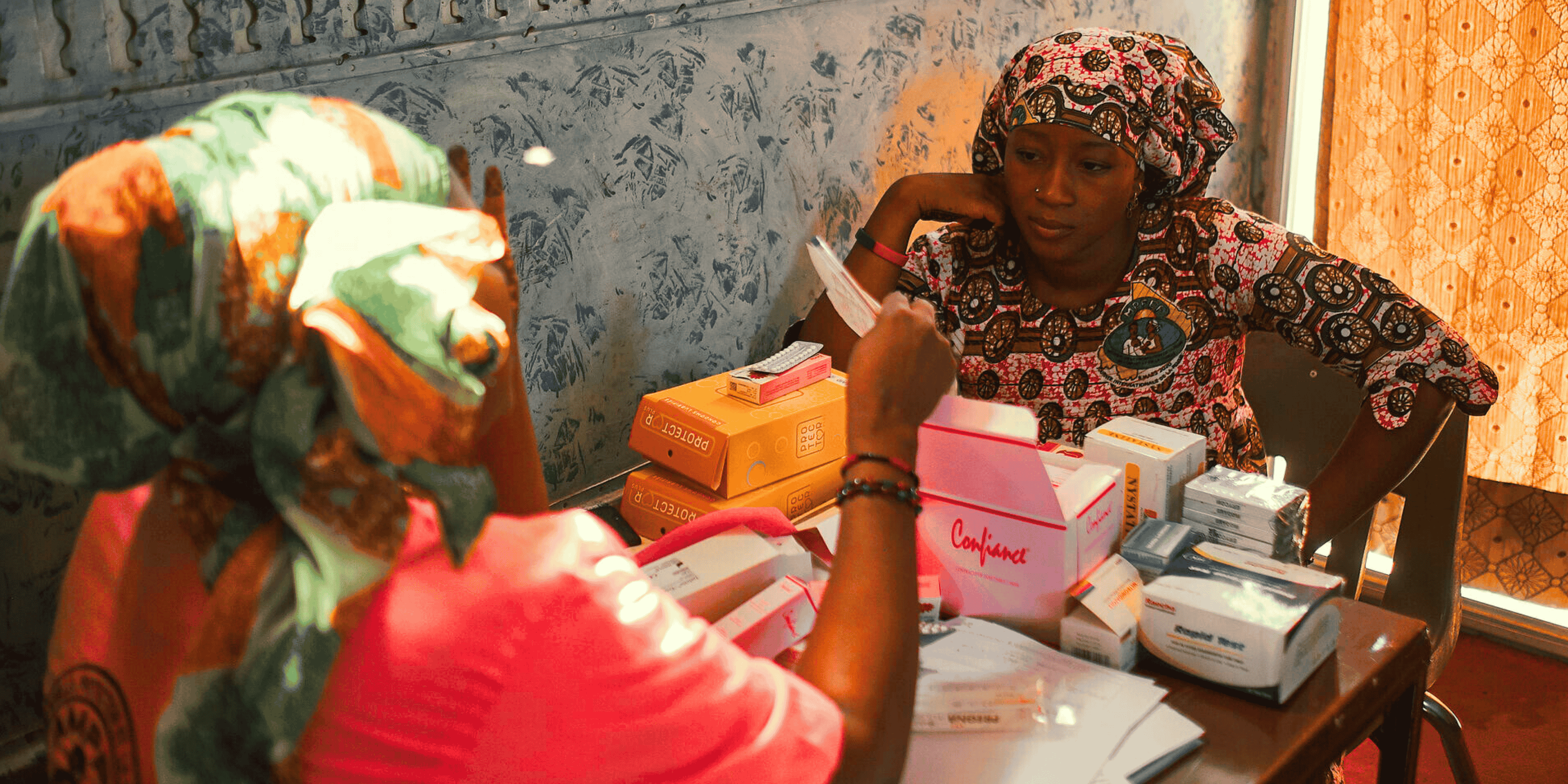
Sensoa, La Fédération Laïque des Centres de Planning Familial, Le Planning Familial, and International Planned Parenthood Federation (IPPF) call on the Belgian government to continue negotiations to save the remaining contraceptive supplies in Geel. These organizations are also asking that there be no (further) cuts to international cooperation and support for sexual and reproductive health and rights. The latter demand is also directed at European policymakers. 20 shipments of contraceptives lost The damage caused by Trump's war on women appears to be greater than expected: in addition to the already known stock of contraceptives, stored correctly in a warehouse in Geel (4 truckloads worth $9.7 million), it is now confirmed there are another 20 truckloads at an unknown location in Kallo. The conditions of the medical products in the trucks are not controlled, and most of it has already likely become unusable. This is evident from the response of Flemish Minister of the Environment Jo Brouns to a parliamentary question from Mieke Schauvliege, Flemish member of parliament for Groen. As a reminder, since President Trump dismantled USAID, the US Agency for International Development, he has wanted to burn a stockpile of contraceptives stored in Belgium. These supplies were intended for women in 13 countries in total: destination countries include DR Congo, Tanzania, Haiti, Mali & Kenya among other places, many of which are already facing severe humanitarian crises. The Belgian government has since been in negotiations with the US government to save this stockpile. The human cost of the lost stockpile is great and will impact the lives of thousands of women. President Trump will have millions of deaths on his conscienceNot only is Trump's policy deliberately cruel and morally reprehensible, it is also a waste of useful (contraceptive) resources and therefore millions of dollars. This is the result of politicians deciding to abruptly cut back on international cooperation, which rolls back the progress made over de past years. The discontinuation of USAID will cause 14 million deaths worldwide by 2030, including 4.5 million children under the age of five. European governments must not cut back on international solidarity It is clear that budget cuts have a major impact on women’s health. Voices are now growing louder at the European level to also cut back on international cooperation, including SRHR. So instead of trying to fill the gap the US is leaving, European governments are making it even bigger.The Belgian government has plans to cut back on international solidarity by 25%. Belgian press is reporting that these cuts could be increased even further. This would further widen the gap already created by Trump. SRHR organisations does not want any further cuts to international solidarity funding. "Since the discontinuation of USAID support, it has become much more difficult to continue our services. Our contraceptive supplies are exhausted and new deliveries are sporadic. Previously, anyone who wanted to avoid pregnancy could come to us and choose the contraceptive that suited them. Now women have to switch to whatever is available, or we cannot help them." Dr. Bakari Omary of UMATI, Project Coordinator at Umati, IPPF's Member Association in Tanzania Practical information and contact information of spokespersons:More background on the USAID supplies: read our previous statement here, here and hereIPPF EN Media, enpress@ippf.org Sara Salarkiya, International Policy Advisor at Sensoa sara.salarkiya@sensoa.beBoris Cruyssaert, Communications, Sensoa boris.cruyssaert@sensoa.be Sarah Durocher, President, Le Planning familialsarah.durocher@planning-familial.org
media_center
| 13 November 2025
Press release: Belgian and European governments must act to save USAID supplies and not cut back on funding - shipment of American contraceptives: 20 of the 24 shipments have already been lost –
Sensoa, La Fédération Laïque des Centres de Planning Familial, Le Planning Familial, and International Planned Parenthood Federation (IPPF) call on the Belgian government to continue negotiations to save the remaining contraceptive supplies in Geel. These organizations are also asking that there be no (further) cuts to international cooperation and support for sexual and reproductive health and rights. The latter demand is also directed at European policymakers. 20 shipments of contraceptives lost The damage caused by Trump's war on women appears to be greater than expected: in addition to the already known stock of contraceptives, stored correctly in a warehouse in Geel (4 truckloads worth $9.7 million), it is now confirmed there are another 20 truckloads at an unknown location in Kallo. The conditions of the medical products in the trucks are not controlled, and most of it has already likely become unusable. This is evident from the response of Flemish Minister of the Environment Jo Brouns to a parliamentary question from Mieke Schauvliege, Flemish member of parliament for Groen. As a reminder, since President Trump dismantled USAID, the US Agency for International Development, he has wanted to burn a stockpile of contraceptives stored in Belgium. These supplies were intended for women in 13 countries in total: destination countries include DR Congo, Tanzania, Haiti, Mali & Kenya among other places, many of which are already facing severe humanitarian crises. The Belgian government has since been in negotiations with the US government to save this stockpile. The human cost of the lost stockpile is great and will impact the lives of thousands of women. President Trump will have millions of deaths on his conscienceNot only is Trump's policy deliberately cruel and morally reprehensible, it is also a waste of useful (contraceptive) resources and therefore millions of dollars. This is the result of politicians deciding to abruptly cut back on international cooperation, which rolls back the progress made over de past years. The discontinuation of USAID will cause 14 million deaths worldwide by 2030, including 4.5 million children under the age of five. European governments must not cut back on international solidarity It is clear that budget cuts have a major impact on women’s health. Voices are now growing louder at the European level to also cut back on international cooperation, including SRHR. So instead of trying to fill the gap the US is leaving, European governments are making it even bigger.The Belgian government has plans to cut back on international solidarity by 25%. Belgian press is reporting that these cuts could be increased even further. This would further widen the gap already created by Trump. SRHR organisations does not want any further cuts to international solidarity funding. "Since the discontinuation of USAID support, it has become much more difficult to continue our services. Our contraceptive supplies are exhausted and new deliveries are sporadic. Previously, anyone who wanted to avoid pregnancy could come to us and choose the contraceptive that suited them. Now women have to switch to whatever is available, or we cannot help them." Dr. Bakari Omary of UMATI, Project Coordinator at Umati, IPPF's Member Association in Tanzania Practical information and contact information of spokespersons:More background on the USAID supplies: read our previous statement here, here and hereIPPF EN Media, enpress@ippf.org Sara Salarkiya, International Policy Advisor at Sensoa sara.salarkiya@sensoa.beBoris Cruyssaert, Communications, Sensoa boris.cruyssaert@sensoa.be Sarah Durocher, President, Le Planning familialsarah.durocher@planning-familial.org

media center
| 25 July 2025
Response to the U.S. State Department’s Senseless Plan to Destroy Supplies and Deny Contraceptive Care
In a matter of hours, the Trump Administration will be enacting a cruel and ideologically driven decision to destroy $10 million worth of life-saving contraceptives - resources that were procured by U.S. taxpayer funds to support critical health needs in partner countries across the Global South, including those of 218 million women facing an unmet need for contraceptive care.This is an intentional act of reproductive coercion.Despite multiple offers from international humanitarian organizations, governments and global health actors to purchase or redistribute these supplies, the U.S. government has refused all alternatives. Instead, they are choosing waste and extremist ideology over care, human rights, safety and health. Reports indicate that the cost of destroying these supplies may reach $167.000 paid by American citizens. This decision is not about money: IPPF has offered to collect the products in Brussels, to transport and repack the products in its warehouse in The Netherlands and to distribute the products onwards to women in need across the globe. All at no cost to the US government. This decision is about imposing an anti-rights agenda on the entire world that denies women the choice of when and how many children to have, and denies people the opportunity to protect themselves against HIV and other STIs. “It’s the height of hypocrisy for a government to preach efficiency and cutting waste, only to turn around and recklessly destroy life-saving supplies when the need has never been greater. This isn’t just inefficient — it’s unconscionable.” said Micah Grzywnowicz, Regional Director of IPPF European Network. “This action seriously undermines global public health efforts and limits access to essential care, particularly for communities already facing significant barriers. It reflects a troubling disregard for the rights and well-being of those most in need, as well as complete lack of basic empathy.”The Trump Administration has been relentless in its obsession with controlling women’s bodies - not only in the United States, but globally. This is the latest attack in a long-term campaign to dismantle access to sexual and reproductive health care around the world. According to a survey run by the International Planned Parenthood Federation (IPPF), these attacks could result in 8.5 million people worldwide being denied lifesaving SRH care. Now, pallets of contraceptives sit unused in warehouses—including one in Geel, Belgium—awaiting destruction. These are allegedly already scheduled for incineration in France in the coming days.Nico Bogaerts, Director of Sensoa, the Flemish expertise centre on sexual health: "Destroying the USAID supplies stocked in Geel, Belgium is incredibly wasteful. That the US government would prefer to pay to destroy supplies they have already paid for, instead of releasing them to other organizations is cruel. These supplies could save people's lives. We strongly encourage the Belgian and French governments to find a way to save them from incineration and to ensure that they reach people who need them."Sarah Durocher, President of Le Planning familial, IPPF French Member Association: “France has the moral responsibility to act. A government that proudly enshrines abortion rights in its Constitution must also work to protect contraception and the rights of young girls beyond its borders. With its voice respected on the international stage, the French government cannot stay silent while contraceptive supplies are being destroyed and thousands of people are put in danger.”We call on the French company that would be responsible for destroying these contraceptives to reconsider its role. They have an immense moral and societal responsibility. The company has the power to reject this agreement. Sexual and reproductive rights are not a commodity like any other to be discarded.At the same time, we urge the U.S. Administration to immediately halt this senseless destruction. These cruel actions will have far-reaching consequences — and they will cost lives.This moment demands leadership rooted in dignity and humanity. It is only right that everyone can choose whether and when to have children, to be who we are and love who we love, and for our children to be taught about having safe, healthy, and happy relationships. We have the collective moral obligation to work with people around the world to build communities in which everyone can flourish and thrive. Signatories:Fédération Laïque de Centres de Planning Familial (FLCPF), BelgiumInternational Planned Parenthood Federation (IPPF)Le Planning familial, FrancePlanned Parenthood Federation of America (PPFA)Sensoa, BelgiumCountdown 2030 EuropeMSI Reproductive Choices Media contacts:IPPF Media, media@ippf.org Heleen Heysse, International Policy Officer, Sensoaheleen.heysse@sensoa.be Boris Cruyssaert, Communications, Sensoa boris.cruyssaert@sensoa.be Sarah Durocher, President, Le Planning familialsarah.durocher@planning-familial.org
media_center
| 25 July 2025
Response to the U.S. State Department’s Senseless Plan to Destroy Supplies and Deny Contraceptive Care
In a matter of hours, the Trump Administration will be enacting a cruel and ideologically driven decision to destroy $10 million worth of life-saving contraceptives - resources that were procured by U.S. taxpayer funds to support critical health needs in partner countries across the Global South, including those of 218 million women facing an unmet need for contraceptive care.This is an intentional act of reproductive coercion.Despite multiple offers from international humanitarian organizations, governments and global health actors to purchase or redistribute these supplies, the U.S. government has refused all alternatives. Instead, they are choosing waste and extremist ideology over care, human rights, safety and health. Reports indicate that the cost of destroying these supplies may reach $167.000 paid by American citizens. This decision is not about money: IPPF has offered to collect the products in Brussels, to transport and repack the products in its warehouse in The Netherlands and to distribute the products onwards to women in need across the globe. All at no cost to the US government. This decision is about imposing an anti-rights agenda on the entire world that denies women the choice of when and how many children to have, and denies people the opportunity to protect themselves against HIV and other STIs. “It’s the height of hypocrisy for a government to preach efficiency and cutting waste, only to turn around and recklessly destroy life-saving supplies when the need has never been greater. This isn’t just inefficient — it’s unconscionable.” said Micah Grzywnowicz, Regional Director of IPPF European Network. “This action seriously undermines global public health efforts and limits access to essential care, particularly for communities already facing significant barriers. It reflects a troubling disregard for the rights and well-being of those most in need, as well as complete lack of basic empathy.”The Trump Administration has been relentless in its obsession with controlling women’s bodies - not only in the United States, but globally. This is the latest attack in a long-term campaign to dismantle access to sexual and reproductive health care around the world. According to a survey run by the International Planned Parenthood Federation (IPPF), these attacks could result in 8.5 million people worldwide being denied lifesaving SRH care. Now, pallets of contraceptives sit unused in warehouses—including one in Geel, Belgium—awaiting destruction. These are allegedly already scheduled for incineration in France in the coming days.Nico Bogaerts, Director of Sensoa, the Flemish expertise centre on sexual health: "Destroying the USAID supplies stocked in Geel, Belgium is incredibly wasteful. That the US government would prefer to pay to destroy supplies they have already paid for, instead of releasing them to other organizations is cruel. These supplies could save people's lives. We strongly encourage the Belgian and French governments to find a way to save them from incineration and to ensure that they reach people who need them."Sarah Durocher, President of Le Planning familial, IPPF French Member Association: “France has the moral responsibility to act. A government that proudly enshrines abortion rights in its Constitution must also work to protect contraception and the rights of young girls beyond its borders. With its voice respected on the international stage, the French government cannot stay silent while contraceptive supplies are being destroyed and thousands of people are put in danger.”We call on the French company that would be responsible for destroying these contraceptives to reconsider its role. They have an immense moral and societal responsibility. The company has the power to reject this agreement. Sexual and reproductive rights are not a commodity like any other to be discarded.At the same time, we urge the U.S. Administration to immediately halt this senseless destruction. These cruel actions will have far-reaching consequences — and they will cost lives.This moment demands leadership rooted in dignity and humanity. It is only right that everyone can choose whether and when to have children, to be who we are and love who we love, and for our children to be taught about having safe, healthy, and happy relationships. We have the collective moral obligation to work with people around the world to build communities in which everyone can flourish and thrive. Signatories:Fédération Laïque de Centres de Planning Familial (FLCPF), BelgiumInternational Planned Parenthood Federation (IPPF)Le Planning familial, FrancePlanned Parenthood Federation of America (PPFA)Sensoa, BelgiumCountdown 2030 EuropeMSI Reproductive Choices Media contacts:IPPF Media, media@ippf.org Heleen Heysse, International Policy Officer, Sensoaheleen.heysse@sensoa.be Boris Cruyssaert, Communications, Sensoa boris.cruyssaert@sensoa.be Sarah Durocher, President, Le Planning familialsarah.durocher@planning-familial.org
media center
| 27 June 2025
Amid Devastating Budget Cuts, Groundbreaking HIV Prevention Injectable Launches in Eswatini, Lesotho & Malawi
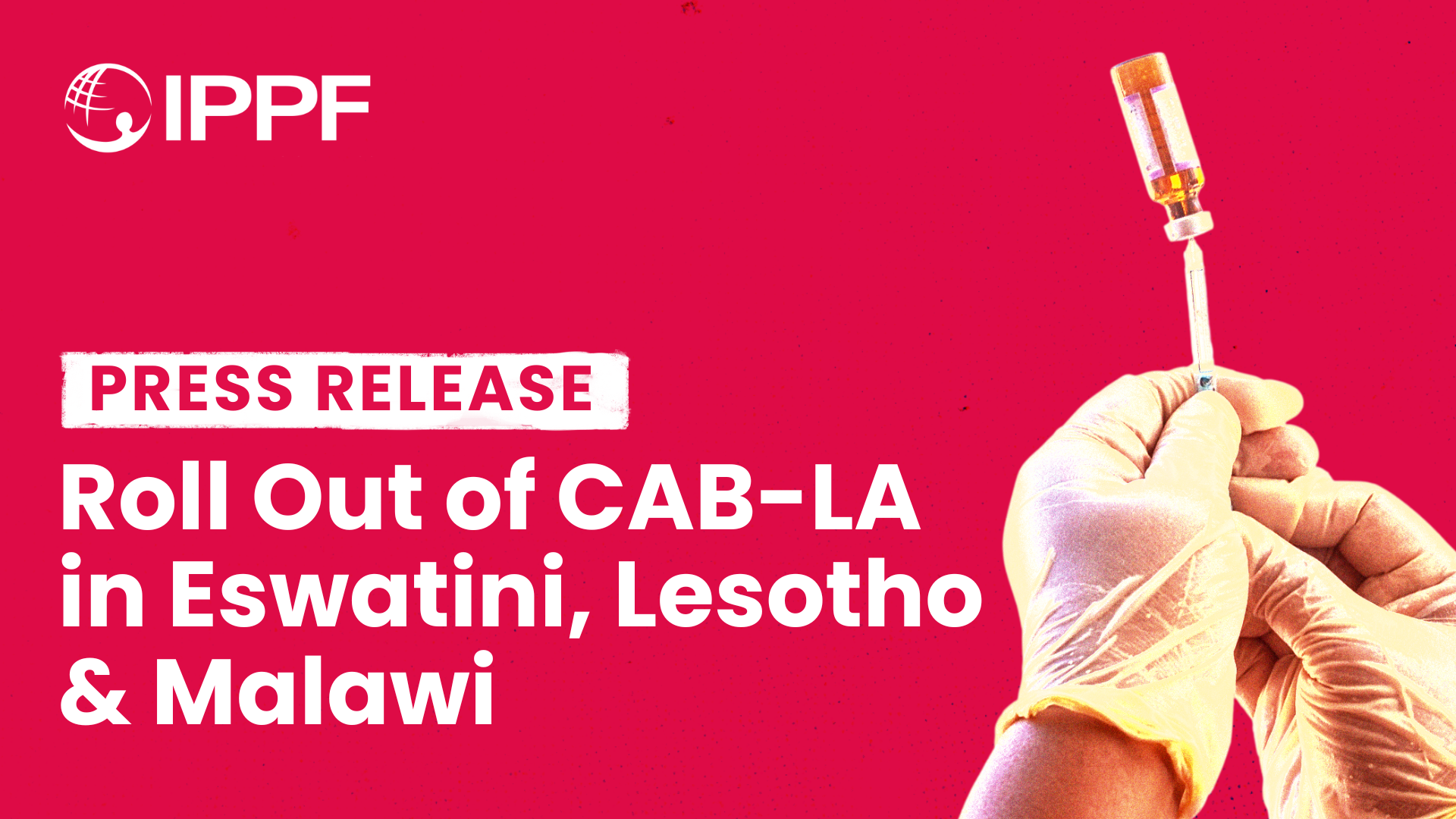
30 June 2025 - The International Planned Parenthood Federation (IPPF) is proud to announce the roll out of CAB-LA (cabotegravir-long acting), a form of pre-exposure prophylaxis (PrEP) for HIV, in Eswatini, and Malawi, and a pilot project in Lesotho - a major milestone in the fight against HIV. IPPF Member Associations (MAs) in the three countries - Family Life Association of Eswatini (FLAS), Lesotho Planned Parenthood Association (LPPA), and Family Planning Association of Malawi ( FPAM) will soon begin to distribute CAB-LA for HIV prevention to individuals who would like to use this form of HIV prevention. CAB-LA, a long-acting injectable PrEP, is a game changer for HIV prevention. PrEP is an HIV prevention method where HIV-negative individuals take medication to significantly reduce their risk of acquiring HIV. Administered every 8 weeks, CAB-LA greatly reduces infection risk and does not rely on remembering to take a daily pill, addressing adherence challenges faced by some people using oral PrEP. This roll-out comes when US budget cuts have severely impacted governments and organizations providing sexual and reproductive health services, HIV prevention, and humanitarian aid. These financial restrictions have significantly impacted access to essential sexual and reproductive health medications globally, compromising HIV prevention and treatment for many, especially those most in need. The arrival of CAB-LA is a major step forward in the fight against HIV/AIDS, providing longer-term protection, a more convenient option, and a discreet alternative to daily pills. Family Life Association of Eswatini, Lesotho Planned Parenthood Association, and the Family Planning Association of Malawi will be providing CAB-LA for PrEP through their static clinics and other public service delivery points. This effort underscores the vital role our MAs play in securing and delivering universal access to sexual and reproductive healthcare. For more information, please contact media@ippf.orgAbout the International Planned Parenthood Federation IPPF is a global healthcare provider and a leading advocate of sexual and reproductive health and rights (SRHR) for all. Led by a courageous and determined group of women, IPPF was founded in 1952 at the Third International Planned Parenthood Conference. Today, we are a movement of 158 Member Associations and Collaborative Partners with a presence in over 153 countries. Our work is wide-ranging, and includes services for sexual health and well-being, contraception, abortion care, sexually transmitted infections and reproductive tract infections, HIV, obstetrics and gynecology, fertility support, sexual and gender-based violence, comprehensive sex education, and responding to humanitarian crises. We pride ourselves on being local through our members and global through our network. At the heart of our mission is the provision of – and advocacy in support of – integrated healthcare to anyone who needs it regardless of race, gender, sex, income, and, crucially no matter how remote.
media_center
| 30 June 2025
Amid Devastating Budget Cuts, Groundbreaking HIV Prevention Injectable Launches in Eswatini, Lesotho & Malawi
30 June 2025 - The International Planned Parenthood Federation (IPPF) is proud to announce the roll out of CAB-LA (cabotegravir-long acting), a form of pre-exposure prophylaxis (PrEP) for HIV, in Eswatini, and Malawi, and a pilot project in Lesotho - a major milestone in the fight against HIV. IPPF Member Associations (MAs) in the three countries - Family Life Association of Eswatini (FLAS), Lesotho Planned Parenthood Association (LPPA), and Family Planning Association of Malawi ( FPAM) will soon begin to distribute CAB-LA for HIV prevention to individuals who would like to use this form of HIV prevention. CAB-LA, a long-acting injectable PrEP, is a game changer for HIV prevention. PrEP is an HIV prevention method where HIV-negative individuals take medication to significantly reduce their risk of acquiring HIV. Administered every 8 weeks, CAB-LA greatly reduces infection risk and does not rely on remembering to take a daily pill, addressing adherence challenges faced by some people using oral PrEP. This roll-out comes when US budget cuts have severely impacted governments and organizations providing sexual and reproductive health services, HIV prevention, and humanitarian aid. These financial restrictions have significantly impacted access to essential sexual and reproductive health medications globally, compromising HIV prevention and treatment for many, especially those most in need. The arrival of CAB-LA is a major step forward in the fight against HIV/AIDS, providing longer-term protection, a more convenient option, and a discreet alternative to daily pills. Family Life Association of Eswatini, Lesotho Planned Parenthood Association, and the Family Planning Association of Malawi will be providing CAB-LA for PrEP through their static clinics and other public service delivery points. This effort underscores the vital role our MAs play in securing and delivering universal access to sexual and reproductive healthcare. For more information, please contact media@ippf.orgAbout the International Planned Parenthood Federation IPPF is a global healthcare provider and a leading advocate of sexual and reproductive health and rights (SRHR) for all. Led by a courageous and determined group of women, IPPF was founded in 1952 at the Third International Planned Parenthood Conference. Today, we are a movement of 158 Member Associations and Collaborative Partners with a presence in over 153 countries. Our work is wide-ranging, and includes services for sexual health and well-being, contraception, abortion care, sexually transmitted infections and reproductive tract infections, HIV, obstetrics and gynecology, fertility support, sexual and gender-based violence, comprehensive sex education, and responding to humanitarian crises. We pride ourselves on being local through our members and global through our network. At the heart of our mission is the provision of – and advocacy in support of – integrated healthcare to anyone who needs it regardless of race, gender, sex, income, and, crucially no matter how remote.

media center
| 24 August 2024
Eswatini to roll out first women-controlled HIV prevention product
Eswatini (27 August 2024) - IPPF’s Member Association in Eswatini, the Family Life Association of Eswatini (FLAS), is soon to roll out the first women-controlled HIV prevention product, the dapivirine vaginal ring (DVR). FLAS will be among the first organisations to offer the DVR outside implementation or pilot studies anywhere in the world. Made of flexible silicone, the ring is inserted into the vagina by a woman and slowly releases the antiretroviral drug dapivirine in the vagina over a one-month period, helping to reduce a woman’s risk of acquiring HIV. In 2023, in sub-Saharan Africa, women and girls accounted for 62% of all new HIV infections and every week, 3,100 adolescent girls and young women aged 15–24 years became infected with HIV. Therefore, there continues to be an urgent need for HIV prevention methods that females can use to protect themselves. The DVR is a product women can control themselves and use without the knowledge or consent of their partners, unlike condoms, which men often refuse to use. The DVR is inserted into the vagina and left for a one-month period, where it can then be replaced each month for continued protection. Unlike daily oral PrEP, the DVR does not rely on remembering to take a pill each day and is also discreet as it stays inside the vagina throughout the month. The DVR does not prevent pregnancy or other sexually transmitted infections (STIs), so women choosing to use the ring may want to consider combining it with condoms and methods of contraception. The availability of the DVR is an exciting step in supporting women’s autonomy and choice in HIV prevention. This need for women-controlled HIV prevention products has long been advocated for, with the African Women Prevention Community Accountability Board launching the HIV Prevention Choice Manifesto in early 2023. The Choice Manifesto prioritises the principle of choice to ensure that women and girls have the right to choose which HIV prevention methods work for them. Currently the ring is available at selected facilities through implementation studies across six countries in East and Southern Africa; South Africa, Kenya, Zimbabwe, Lesotho, Eswatini, and Uganda. Diantha Pillay, Associate Director for Product Access for IPM South Africa NPC (an affiliate of the Population Council), said: “It is encouraging to see the efforts made by FLAS and IPPF to support the choice agenda for HIV prevention for women and make effective HIV prevention methods, like the DVR, more widely accessible in a real-world setting. We hope this can pave the way for introduction of future pipeline products that speak to the needs of women.” The Population Council is currently developing a longer duration DVR that women would use for three months versus one month to significantly lower annual product costs and offer women a more convenient option to protect themselves. Thabo Lizwe Masuku, Programs Manager for FLAS, said: “Women have been telling us for a long time that there is a need for a variety of methods for HIV prevention, since they are highly exposed. For women and girls to truly have choice about what works for them as they navigate different stages and circumstances of their lives, policy makers, donors, governments and implementers must ensure the mix of HIV prevention methods are available, accessible, and affordable. Access to the ring through our clinics in Eswatini now gives women choice and options to protect themselves against HIV.” IPPF is committed to ensuring that choice in HIV prevention is a reality for women and girls and aims to roll out the dapivirine vaginal rings at as many Member Associations as possible, as well as offer other HIV-prevention choices, as we work alongside our partners towards a future free of HIV in Africa and beyond. For more information and to speak to staff in Eswatini, please email media@ippf.org Notes: The dapivirine vaginal ring has been recommended by the WHO since January 2021. (25) In clinical trials, the ring was shown to reduce HIV infection by 35% in The Ring Study (26,27) and 27% in the ASPIRE Study. (28,29) Recent open-label studies show greater adherence to the ring, and modelling data suggest that HIV risk could be reduced by about 50%. (30) The dapivirine ring has received regulatory approval from the European Medicines Agency (EMA), as well as from local medicines regulators in Namibia, South Africa, Kenya, Zimbabwe, Uganda, Zambia, Malawi, Rwanda, Eswatini, Lesotho, Botswana and is currently under regulatory review in a number of other countries Our Member Associations (MAs) that provide clinical services are required to provide comprehensive SRH services through our Integrated Package of Essential Services (IPES) which include services for sexual health and well-being, contraception, abortion care, sexually transmitted infections (STIs)/reproductive tract infections (RTIs), HIV, obstetrics and gynaecology, fertility support, and sexual and gender-based violence. IPPF’s new five-year strategy, Come Together, focuses on expanding choice. In support of this, we recently launched a special programme to expand our HIV prevention options, which aims to integrate the newest HIV prevention methods – the vaginal ring and injectable PrEP - into our comprehensive sexual and reproductive health services. IPPF’s IMAP Statement on Biomedical HIV Prevention can be found here. About the Family Life Association of Eswatini (FLAS) For over 30 years, the Family Life Association of Eswatini (FLAS) has provided sexual and reproductive health (SRH) services to the people of Eswatini (formally Swaziland). While family planning, antenatal, post-natal and post-abortion care form a key part of FLAS services, there’s a significant focus on HIV and AIDS programmes. Eswatini has some of the highest HIV and AIDS prevalence rates in the world. As a result, the prevention and management of HIV and AIDS, the provision of voluntary counselling and testing (VCT), and the prevention of mother to child transmission (PMTCT) are central to FLAS’s work. FLAS has 15 service points, including three permanent clinics and three mobile facilities, staffed by a permanent team of 40 staff backed by 230 volunteers, 180 Youth Action Movement members and 29 peer educators. About the International Planned Parenthood Federation (IPPF) IPPF is a global healthcare provider and a leading advocate of sexual and reproductive health and rights (SRHR) for all. Led by a courageous and determined group of women, IPPF was founded in 1952 at the Third International Planned Parenthood Conference. Today, we are a movement of 150 Member Associations and Collaborative Partners with a presence in over 146 countries.Our work is wide-ranging, including comprehensive sex education, provision of contraceptives, safe abortion, and maternal care and responding to humanitarian crises. We pride ourselves on being local through our members and global through our network. At the heart of our mission is the provision of – and advocacy in support of – integrated healthcare to anyone who needs it regardless of race, gender, sex, income, and crucially no matter how remote. Our services are available to all, and reach the most marginalised groups in societies, including key and priority populations, youth, and people with disabilities. Most of our MAs have special programs to engage youth (10-24) inside and outside of school settings. Because our clinics offer comprehensive services, attending our clinics is non-stigmatizing and does not label people as having a particular disease or membership to a particular group. This model of services that are integrated and open to all, embedded in indigenous, locally owned organisations, is ideal for ensuring that the most vulnerable and marginalised groups can access the HIV prevention services they need. About the Population Council The Population Council is a leading research organization dedicated to building an equitable and sustainable world that enhances the health and well-being of current and future generations. The Council transforms global thinking on critical health and development issues through social science, public health, and biomedical research. We generate ideas, produce evidence, and design solutions to improve the lives of underserved populations around the world.
media_center
| 27 August 2024
Eswatini to roll out first women-controlled HIV prevention product
Eswatini (27 August 2024) - IPPF’s Member Association in Eswatini, the Family Life Association of Eswatini (FLAS), is soon to roll out the first women-controlled HIV prevention product, the dapivirine vaginal ring (DVR). FLAS will be among the first organisations to offer the DVR outside implementation or pilot studies anywhere in the world. Made of flexible silicone, the ring is inserted into the vagina by a woman and slowly releases the antiretroviral drug dapivirine in the vagina over a one-month period, helping to reduce a woman’s risk of acquiring HIV. In 2023, in sub-Saharan Africa, women and girls accounted for 62% of all new HIV infections and every week, 3,100 adolescent girls and young women aged 15–24 years became infected with HIV. Therefore, there continues to be an urgent need for HIV prevention methods that females can use to protect themselves. The DVR is a product women can control themselves and use without the knowledge or consent of their partners, unlike condoms, which men often refuse to use. The DVR is inserted into the vagina and left for a one-month period, where it can then be replaced each month for continued protection. Unlike daily oral PrEP, the DVR does not rely on remembering to take a pill each day and is also discreet as it stays inside the vagina throughout the month. The DVR does not prevent pregnancy or other sexually transmitted infections (STIs), so women choosing to use the ring may want to consider combining it with condoms and methods of contraception. The availability of the DVR is an exciting step in supporting women’s autonomy and choice in HIV prevention. This need for women-controlled HIV prevention products has long been advocated for, with the African Women Prevention Community Accountability Board launching the HIV Prevention Choice Manifesto in early 2023. The Choice Manifesto prioritises the principle of choice to ensure that women and girls have the right to choose which HIV prevention methods work for them. Currently the ring is available at selected facilities through implementation studies across six countries in East and Southern Africa; South Africa, Kenya, Zimbabwe, Lesotho, Eswatini, and Uganda. Diantha Pillay, Associate Director for Product Access for IPM South Africa NPC (an affiliate of the Population Council), said: “It is encouraging to see the efforts made by FLAS and IPPF to support the choice agenda for HIV prevention for women and make effective HIV prevention methods, like the DVR, more widely accessible in a real-world setting. We hope this can pave the way for introduction of future pipeline products that speak to the needs of women.” The Population Council is currently developing a longer duration DVR that women would use for three months versus one month to significantly lower annual product costs and offer women a more convenient option to protect themselves. Thabo Lizwe Masuku, Programs Manager for FLAS, said: “Women have been telling us for a long time that there is a need for a variety of methods for HIV prevention, since they are highly exposed. For women and girls to truly have choice about what works for them as they navigate different stages and circumstances of their lives, policy makers, donors, governments and implementers must ensure the mix of HIV prevention methods are available, accessible, and affordable. Access to the ring through our clinics in Eswatini now gives women choice and options to protect themselves against HIV.” IPPF is committed to ensuring that choice in HIV prevention is a reality for women and girls and aims to roll out the dapivirine vaginal rings at as many Member Associations as possible, as well as offer other HIV-prevention choices, as we work alongside our partners towards a future free of HIV in Africa and beyond. For more information and to speak to staff in Eswatini, please email media@ippf.org Notes: The dapivirine vaginal ring has been recommended by the WHO since January 2021. (25) In clinical trials, the ring was shown to reduce HIV infection by 35% in The Ring Study (26,27) and 27% in the ASPIRE Study. (28,29) Recent open-label studies show greater adherence to the ring, and modelling data suggest that HIV risk could be reduced by about 50%. (30) The dapivirine ring has received regulatory approval from the European Medicines Agency (EMA), as well as from local medicines regulators in Namibia, South Africa, Kenya, Zimbabwe, Uganda, Zambia, Malawi, Rwanda, Eswatini, Lesotho, Botswana and is currently under regulatory review in a number of other countries Our Member Associations (MAs) that provide clinical services are required to provide comprehensive SRH services through our Integrated Package of Essential Services (IPES) which include services for sexual health and well-being, contraception, abortion care, sexually transmitted infections (STIs)/reproductive tract infections (RTIs), HIV, obstetrics and gynaecology, fertility support, and sexual and gender-based violence. IPPF’s new five-year strategy, Come Together, focuses on expanding choice. In support of this, we recently launched a special programme to expand our HIV prevention options, which aims to integrate the newest HIV prevention methods – the vaginal ring and injectable PrEP - into our comprehensive sexual and reproductive health services. IPPF’s IMAP Statement on Biomedical HIV Prevention can be found here. About the Family Life Association of Eswatini (FLAS) For over 30 years, the Family Life Association of Eswatini (FLAS) has provided sexual and reproductive health (SRH) services to the people of Eswatini (formally Swaziland). While family planning, antenatal, post-natal and post-abortion care form a key part of FLAS services, there’s a significant focus on HIV and AIDS programmes. Eswatini has some of the highest HIV and AIDS prevalence rates in the world. As a result, the prevention and management of HIV and AIDS, the provision of voluntary counselling and testing (VCT), and the prevention of mother to child transmission (PMTCT) are central to FLAS’s work. FLAS has 15 service points, including three permanent clinics and three mobile facilities, staffed by a permanent team of 40 staff backed by 230 volunteers, 180 Youth Action Movement members and 29 peer educators. About the International Planned Parenthood Federation (IPPF) IPPF is a global healthcare provider and a leading advocate of sexual and reproductive health and rights (SRHR) for all. Led by a courageous and determined group of women, IPPF was founded in 1952 at the Third International Planned Parenthood Conference. Today, we are a movement of 150 Member Associations and Collaborative Partners with a presence in over 146 countries.Our work is wide-ranging, including comprehensive sex education, provision of contraceptives, safe abortion, and maternal care and responding to humanitarian crises. We pride ourselves on being local through our members and global through our network. At the heart of our mission is the provision of – and advocacy in support of – integrated healthcare to anyone who needs it regardless of race, gender, sex, income, and crucially no matter how remote. Our services are available to all, and reach the most marginalised groups in societies, including key and priority populations, youth, and people with disabilities. Most of our MAs have special programs to engage youth (10-24) inside and outside of school settings. Because our clinics offer comprehensive services, attending our clinics is non-stigmatizing and does not label people as having a particular disease or membership to a particular group. This model of services that are integrated and open to all, embedded in indigenous, locally owned organisations, is ideal for ensuring that the most vulnerable and marginalised groups can access the HIV prevention services they need. About the Population Council The Population Council is a leading research organization dedicated to building an equitable and sustainable world that enhances the health and well-being of current and future generations. The Council transforms global thinking on critical health and development issues through social science, public health, and biomedical research. We generate ideas, produce evidence, and design solutions to improve the lives of underserved populations around the world.

media center
| 21 September 2023
IPPF Condemns the Arson Attacks on Schools Delivering Sex Education in Belgium
IPPF condemns the multiple school arsons across the French-speaking Wallonia region in Belgium over the past week, which have been connected to public protests against the compulsory “education in relationships, affective and sexual life” (EVRAS) program. These targeted attacks are evidence of a growing movement opposed to Comprehensive Sexuality Education (CSE) curricula, and the duty of states to support and protect children in their sexual development. IPPF is deeply concerned that a small cadre of those with extremist views are targeting schools with violence, which serve as vital safe spaces for children and young people to become educated, empowered citizens. In the face of global misinformation campaigns and attempts to silence the organizations and institutions providing high quality comprehensive sexuality education, IPPF affirms that these programs empower children and young people to protect their health and well-being and support them in developing healthy and positive relationships throughout their lives. Dr. Alvaro Bermejo, IPPF Director General said: “The violent attacks on schools in Belgium are proof of how anti-rights campaigners are multiplying around the world and fuelling divisions by spreading false or misleading information about existing education curricula. We know from decades of research and our own programmatic experience in this area that comprehensive sexuality education helps children and young people to understand and enjoy their sexuality, take responsibility for their own sexual and reproductive health and rights and respect other people’s. We stand with the educators in Belgium who are delivering on a sex education curriculum that promotes children and young people’s rights.” Research shows that parents and young people agree that sexuality education should be offered in schools, and that parents are willing to join these programs, particularly as they help their children to navigate relationships and sexuality amid the complex challenges of the digital era. Many governments around the world, including Belgium, are making sexuality education programs a national priority to protect all children and young people from harm. IPPF stands with the schools and educators delivering this vital education in Belgium and around the world, and we remain committed to providing children and young people with the knowledge to protect and promote their safety, health and wellbeing. For media inquiries, contact media@ippf.org Banner image: Shutterstock
media_center
| 21 September 2023
IPPF Condemns the Arson Attacks on Schools Delivering Sex Education in Belgium
IPPF condemns the multiple school arsons across the French-speaking Wallonia region in Belgium over the past week, which have been connected to public protests against the compulsory “education in relationships, affective and sexual life” (EVRAS) program. These targeted attacks are evidence of a growing movement opposed to Comprehensive Sexuality Education (CSE) curricula, and the duty of states to support and protect children in their sexual development. IPPF is deeply concerned that a small cadre of those with extremist views are targeting schools with violence, which serve as vital safe spaces for children and young people to become educated, empowered citizens. In the face of global misinformation campaigns and attempts to silence the organizations and institutions providing high quality comprehensive sexuality education, IPPF affirms that these programs empower children and young people to protect their health and well-being and support them in developing healthy and positive relationships throughout their lives. Dr. Alvaro Bermejo, IPPF Director General said: “The violent attacks on schools in Belgium are proof of how anti-rights campaigners are multiplying around the world and fuelling divisions by spreading false or misleading information about existing education curricula. We know from decades of research and our own programmatic experience in this area that comprehensive sexuality education helps children and young people to understand and enjoy their sexuality, take responsibility for their own sexual and reproductive health and rights and respect other people’s. We stand with the educators in Belgium who are delivering on a sex education curriculum that promotes children and young people’s rights.” Research shows that parents and young people agree that sexuality education should be offered in schools, and that parents are willing to join these programs, particularly as they help their children to navigate relationships and sexuality amid the complex challenges of the digital era. Many governments around the world, including Belgium, are making sexuality education programs a national priority to protect all children and young people from harm. IPPF stands with the schools and educators delivering this vital education in Belgium and around the world, and we remain committed to providing children and young people with the knowledge to protect and promote their safety, health and wellbeing. For media inquiries, contact media@ippf.org Banner image: Shutterstock

media center
| 03 March 2022
Statement on the growing humanitarian crisis in Ukraine
Over the past few days, the world has watched in horror and disbelief at the events unfolding in Ukraine. It is estimated that over 500,000 people have now fled – many of whom are women and children – into neighbouring countries such as Poland, Hungary and Romania. The UN anticipates 4 million refugees by July 2022. During Humanitarian crises, sexual and reproductive healthcare is often overlooked. But the reality is daily sexual and reproductive healthcare needs such as essential care for pregnant people, access to menstruation products for people who menstruate, as well as ensuring people who need sexual and reproductive health assistance have access to the right information, remains an urgent priority. IPPF is working with partners on the ground in Poland to link those fleeing the conflict with critical sexual and reproductive health services as well as provide them with essential items. Julie Taft, Director of Humanitarian for the International Planned Parenthood Federation, said "As we mark one week since the invasion of Ukraine, the complex humanitarian situation has become even more apparent. Right now, millions across the country are fighting for their survival, while food, medical supplies and essential hygiene products run dangerously low, including equipment needed to provide life-saving sexual and reproductive healthcare. The destruction of healthcare infrastructure also means that women are forced to deliver their babies in bomb shelters. At the same time, sick and vulnerable new-borns must receive care in the basements of hospitals. "In response to the growing humanitarian crisis, the International Planned Parenthood Federation has partnered with the All-Poland's Women's Strike, a Polish women's rights movement currently supporting people displaced by the war. The $50,000 USD grant will go towards dignity kits, consisting of basic hygiene supplies, menstrual-hygiene products, blankets, food, diapers and baby clothes. Items will be distributed to Ukrainians who have fled into Poland as well as transported cross-border into Ukraine. The funds will also support the All-Poland's women's strike to link refugees who have crossed the Ukraine-Poland border with essential healthcare services. "IPPF is proud to partner with such a brave and unyielding organisation on the frontline and will continue to work closely with other NGOs to facilitate care for those who need it most. However, NGOs cannot operate efficiently without the support of the international community, which must guarantee the safe passage of humanitarian aid into Ukraine. The urgent need for unhindered humanitarian access is especially significant for unaccompanied minors and those left behind, who are often the most vulnerable populations and who will require distinct care during this tragic situation." Marta Lempart, Founder of the All-Poland Women's Strike, said: "We are deeply committed to helping displaced people flee the invasion of our neighbour, Ukraine. Our teams across Poland are working around the clock to support vulnerable people crossing both at the border, including unaccompanied minors at-risk of trafficking and those left behind or heading back to Ukraine. Both groups will require personalised care and support. "We are pleased to partner with the International Planned Parenthood Federation, so we can continue delivering dignity kits to those who need them most; for displaced people arriving with just the clothes on their back, access to even simple necessities are a lifeline. We are also thankful for the outpouring of support from across Europe - the funding will help care for exhausted families who have made it safely across the border, covering transport, rent, bills and other expenses as they begin to build their futures outside of Ukraine. "Disasters reinforce, perpetuate, and increase existing inequalities, making bad situations even more tragic and resulting in consequences that will carry down for generations. But with the international community's support, we can ensure that organisations like Women's Strike and IPPF are there for people every step of the way." Click here if you would like to donate to IPPF's Ukraine Appeal. For media enquiries, please contact Karmen Ivey on kivey@ippf.org or media@ippf.org
media_center
| 03 March 2022
Statement on the growing humanitarian crisis in Ukraine
Over the past few days, the world has watched in horror and disbelief at the events unfolding in Ukraine. It is estimated that over 500,000 people have now fled – many of whom are women and children – into neighbouring countries such as Poland, Hungary and Romania. The UN anticipates 4 million refugees by July 2022. During Humanitarian crises, sexual and reproductive healthcare is often overlooked. But the reality is daily sexual and reproductive healthcare needs such as essential care for pregnant people, access to menstruation products for people who menstruate, as well as ensuring people who need sexual and reproductive health assistance have access to the right information, remains an urgent priority. IPPF is working with partners on the ground in Poland to link those fleeing the conflict with critical sexual and reproductive health services as well as provide them with essential items. Julie Taft, Director of Humanitarian for the International Planned Parenthood Federation, said "As we mark one week since the invasion of Ukraine, the complex humanitarian situation has become even more apparent. Right now, millions across the country are fighting for their survival, while food, medical supplies and essential hygiene products run dangerously low, including equipment needed to provide life-saving sexual and reproductive healthcare. The destruction of healthcare infrastructure also means that women are forced to deliver their babies in bomb shelters. At the same time, sick and vulnerable new-borns must receive care in the basements of hospitals. "In response to the growing humanitarian crisis, the International Planned Parenthood Federation has partnered with the All-Poland's Women's Strike, a Polish women's rights movement currently supporting people displaced by the war. The $50,000 USD grant will go towards dignity kits, consisting of basic hygiene supplies, menstrual-hygiene products, blankets, food, diapers and baby clothes. Items will be distributed to Ukrainians who have fled into Poland as well as transported cross-border into Ukraine. The funds will also support the All-Poland's women's strike to link refugees who have crossed the Ukraine-Poland border with essential healthcare services. "IPPF is proud to partner with such a brave and unyielding organisation on the frontline and will continue to work closely with other NGOs to facilitate care for those who need it most. However, NGOs cannot operate efficiently without the support of the international community, which must guarantee the safe passage of humanitarian aid into Ukraine. The urgent need for unhindered humanitarian access is especially significant for unaccompanied minors and those left behind, who are often the most vulnerable populations and who will require distinct care during this tragic situation." Marta Lempart, Founder of the All-Poland Women's Strike, said: "We are deeply committed to helping displaced people flee the invasion of our neighbour, Ukraine. Our teams across Poland are working around the clock to support vulnerable people crossing both at the border, including unaccompanied minors at-risk of trafficking and those left behind or heading back to Ukraine. Both groups will require personalised care and support. "We are pleased to partner with the International Planned Parenthood Federation, so we can continue delivering dignity kits to those who need them most; for displaced people arriving with just the clothes on their back, access to even simple necessities are a lifeline. We are also thankful for the outpouring of support from across Europe - the funding will help care for exhausted families who have made it safely across the border, covering transport, rent, bills and other expenses as they begin to build their futures outside of Ukraine. "Disasters reinforce, perpetuate, and increase existing inequalities, making bad situations even more tragic and resulting in consequences that will carry down for generations. But with the international community's support, we can ensure that organisations like Women's Strike and IPPF are there for people every step of the way." Click here if you would like to donate to IPPF's Ukraine Appeal. For media enquiries, please contact Karmen Ivey on kivey@ippf.org or media@ippf.org

media center
| 24 February 2022
Statement on the escalating conflict in Ukraine
Following the disturbing reports coming out of Ukraine, IPPF has released a media statement on behalf of the Federation and its Member Association in Ukraine. Despite the fact that sexual and reproductive healthcare (SRHR) needs increase significantly during conflict and humanitarian situations, the significant vulnerabilities of affected populations and displaced people are often overlooked, especially the experiences of women, girls and marginalized populations who are at increased risk of unintended pregnancy, sexually transmitted infections and sexual and gender-based violence. IPPF’s Director-General, Dr Alvaro Bermejo, said: "The International Planned Parenthood Federation (IPPF) is deeply concerned about the escalation of conflict in Ukraine. We take our responsibility to preserve the enormous gains made in life-saving sexual and reproductive healthcare across the country very seriously, especially for women, girls and marginalised populations, whose vulnerability and experiences are so often overlooked in humanitarian situations. "For 20 years, IPPF has consistently worked to strengthen and protect the reproductive rights of people in Ukraine, working in the frontline conflict zones of Lugansk and Donetsk since 2014, training medical specialists to provide life-saving reproductive healthcare, psychosocial support and quality care to survivors of sexual and gender-based violence. “Our teams are now contingency planning across the region to address not only the needs of those still in Ukraine, but also the millions who are likely to be displaced by the conflict and who will require critical support to continue accessing healthcare. We will work closely with partners and other NGOs to ensure the least possible disruption to services. "IPPF stands in solidarity with the international community and the brave people of Ukraine who for the last eight years have faced terrifying and difficult circumstances that nobody should ever have to suffer through. We stand by IPPF's frontline team, who, despite the dangers, continue to facilitate life-saving healthcare for those who need it most. We will be monitoring the situation closely to ensure the safety of our colleagues across the region.” For European outlets, please contact press@ippfen.org For UK and other international media outlets, please contact Karmen Ivey on kivey@ippf.org or media@ippf.org
media_center
| 24 February 2022
Statement on the escalating conflict in Ukraine
Following the disturbing reports coming out of Ukraine, IPPF has released a media statement on behalf of the Federation and its Member Association in Ukraine. Despite the fact that sexual and reproductive healthcare (SRHR) needs increase significantly during conflict and humanitarian situations, the significant vulnerabilities of affected populations and displaced people are often overlooked, especially the experiences of women, girls and marginalized populations who are at increased risk of unintended pregnancy, sexually transmitted infections and sexual and gender-based violence. IPPF’s Director-General, Dr Alvaro Bermejo, said: "The International Planned Parenthood Federation (IPPF) is deeply concerned about the escalation of conflict in Ukraine. We take our responsibility to preserve the enormous gains made in life-saving sexual and reproductive healthcare across the country very seriously, especially for women, girls and marginalised populations, whose vulnerability and experiences are so often overlooked in humanitarian situations. "For 20 years, IPPF has consistently worked to strengthen and protect the reproductive rights of people in Ukraine, working in the frontline conflict zones of Lugansk and Donetsk since 2014, training medical specialists to provide life-saving reproductive healthcare, psychosocial support and quality care to survivors of sexual and gender-based violence. “Our teams are now contingency planning across the region to address not only the needs of those still in Ukraine, but also the millions who are likely to be displaced by the conflict and who will require critical support to continue accessing healthcare. We will work closely with partners and other NGOs to ensure the least possible disruption to services. "IPPF stands in solidarity with the international community and the brave people of Ukraine who for the last eight years have faced terrifying and difficult circumstances that nobody should ever have to suffer through. We stand by IPPF's frontline team, who, despite the dangers, continue to facilitate life-saving healthcare for those who need it most. We will be monitoring the situation closely to ensure the safety of our colleagues across the region.” For European outlets, please contact press@ippfen.org For UK and other international media outlets, please contact Karmen Ivey on kivey@ippf.org or media@ippf.org
media center
| 13 November 2025
Press release: Belgian and European governments must act to save USAID supplies and not cut back on funding - shipment of American contraceptives: 20 of the 24 shipments have already been lost –
Sensoa, La Fédération Laïque des Centres de Planning Familial, Le Planning Familial, and International Planned Parenthood Federation (IPPF) call on the Belgian government to continue negotiations to save the remaining contraceptive supplies in Geel. These organizations are also asking that there be no (further) cuts to international cooperation and support for sexual and reproductive health and rights. The latter demand is also directed at European policymakers. 20 shipments of contraceptives lost The damage caused by Trump's war on women appears to be greater than expected: in addition to the already known stock of contraceptives, stored correctly in a warehouse in Geel (4 truckloads worth $9.7 million), it is now confirmed there are another 20 truckloads at an unknown location in Kallo. The conditions of the medical products in the trucks are not controlled, and most of it has already likely become unusable. This is evident from the response of Flemish Minister of the Environment Jo Brouns to a parliamentary question from Mieke Schauvliege, Flemish member of parliament for Groen. As a reminder, since President Trump dismantled USAID, the US Agency for International Development, he has wanted to burn a stockpile of contraceptives stored in Belgium. These supplies were intended for women in 13 countries in total: destination countries include DR Congo, Tanzania, Haiti, Mali & Kenya among other places, many of which are already facing severe humanitarian crises. The Belgian government has since been in negotiations with the US government to save this stockpile. The human cost of the lost stockpile is great and will impact the lives of thousands of women. President Trump will have millions of deaths on his conscienceNot only is Trump's policy deliberately cruel and morally reprehensible, it is also a waste of useful (contraceptive) resources and therefore millions of dollars. This is the result of politicians deciding to abruptly cut back on international cooperation, which rolls back the progress made over de past years. The discontinuation of USAID will cause 14 million deaths worldwide by 2030, including 4.5 million children under the age of five. European governments must not cut back on international solidarity It is clear that budget cuts have a major impact on women’s health. Voices are now growing louder at the European level to also cut back on international cooperation, including SRHR. So instead of trying to fill the gap the US is leaving, European governments are making it even bigger.The Belgian government has plans to cut back on international solidarity by 25%. Belgian press is reporting that these cuts could be increased even further. This would further widen the gap already created by Trump. SRHR organisations does not want any further cuts to international solidarity funding. "Since the discontinuation of USAID support, it has become much more difficult to continue our services. Our contraceptive supplies are exhausted and new deliveries are sporadic. Previously, anyone who wanted to avoid pregnancy could come to us and choose the contraceptive that suited them. Now women have to switch to whatever is available, or we cannot help them." Dr. Bakari Omary of UMATI, Project Coordinator at Umati, IPPF's Member Association in Tanzania Practical information and contact information of spokespersons:More background on the USAID supplies: read our previous statement here, here and hereIPPF EN Media, enpress@ippf.org Sara Salarkiya, International Policy Advisor at Sensoa sara.salarkiya@sensoa.beBoris Cruyssaert, Communications, Sensoa boris.cruyssaert@sensoa.be Sarah Durocher, President, Le Planning familialsarah.durocher@planning-familial.org
media_center
| 13 November 2025
Press release: Belgian and European governments must act to save USAID supplies and not cut back on funding - shipment of American contraceptives: 20 of the 24 shipments have already been lost –
Sensoa, La Fédération Laïque des Centres de Planning Familial, Le Planning Familial, and International Planned Parenthood Federation (IPPF) call on the Belgian government to continue negotiations to save the remaining contraceptive supplies in Geel. These organizations are also asking that there be no (further) cuts to international cooperation and support for sexual and reproductive health and rights. The latter demand is also directed at European policymakers. 20 shipments of contraceptives lost The damage caused by Trump's war on women appears to be greater than expected: in addition to the already known stock of contraceptives, stored correctly in a warehouse in Geel (4 truckloads worth $9.7 million), it is now confirmed there are another 20 truckloads at an unknown location in Kallo. The conditions of the medical products in the trucks are not controlled, and most of it has already likely become unusable. This is evident from the response of Flemish Minister of the Environment Jo Brouns to a parliamentary question from Mieke Schauvliege, Flemish member of parliament for Groen. As a reminder, since President Trump dismantled USAID, the US Agency for International Development, he has wanted to burn a stockpile of contraceptives stored in Belgium. These supplies were intended for women in 13 countries in total: destination countries include DR Congo, Tanzania, Haiti, Mali & Kenya among other places, many of which are already facing severe humanitarian crises. The Belgian government has since been in negotiations with the US government to save this stockpile. The human cost of the lost stockpile is great and will impact the lives of thousands of women. President Trump will have millions of deaths on his conscienceNot only is Trump's policy deliberately cruel and morally reprehensible, it is also a waste of useful (contraceptive) resources and therefore millions of dollars. This is the result of politicians deciding to abruptly cut back on international cooperation, which rolls back the progress made over de past years. The discontinuation of USAID will cause 14 million deaths worldwide by 2030, including 4.5 million children under the age of five. European governments must not cut back on international solidarity It is clear that budget cuts have a major impact on women’s health. Voices are now growing louder at the European level to also cut back on international cooperation, including SRHR. So instead of trying to fill the gap the US is leaving, European governments are making it even bigger.The Belgian government has plans to cut back on international solidarity by 25%. Belgian press is reporting that these cuts could be increased even further. This would further widen the gap already created by Trump. SRHR organisations does not want any further cuts to international solidarity funding. "Since the discontinuation of USAID support, it has become much more difficult to continue our services. Our contraceptive supplies are exhausted and new deliveries are sporadic. Previously, anyone who wanted to avoid pregnancy could come to us and choose the contraceptive that suited them. Now women have to switch to whatever is available, or we cannot help them." Dr. Bakari Omary of UMATI, Project Coordinator at Umati, IPPF's Member Association in Tanzania Practical information and contact information of spokespersons:More background on the USAID supplies: read our previous statement here, here and hereIPPF EN Media, enpress@ippf.org Sara Salarkiya, International Policy Advisor at Sensoa sara.salarkiya@sensoa.beBoris Cruyssaert, Communications, Sensoa boris.cruyssaert@sensoa.be Sarah Durocher, President, Le Planning familialsarah.durocher@planning-familial.org
media center
| 25 July 2025
Response to the U.S. State Department’s Senseless Plan to Destroy Supplies and Deny Contraceptive Care
In a matter of hours, the Trump Administration will be enacting a cruel and ideologically driven decision to destroy $10 million worth of life-saving contraceptives - resources that were procured by U.S. taxpayer funds to support critical health needs in partner countries across the Global South, including those of 218 million women facing an unmet need for contraceptive care.This is an intentional act of reproductive coercion.Despite multiple offers from international humanitarian organizations, governments and global health actors to purchase or redistribute these supplies, the U.S. government has refused all alternatives. Instead, they are choosing waste and extremist ideology over care, human rights, safety and health. Reports indicate that the cost of destroying these supplies may reach $167.000 paid by American citizens. This decision is not about money: IPPF has offered to collect the products in Brussels, to transport and repack the products in its warehouse in The Netherlands and to distribute the products onwards to women in need across the globe. All at no cost to the US government. This decision is about imposing an anti-rights agenda on the entire world that denies women the choice of when and how many children to have, and denies people the opportunity to protect themselves against HIV and other STIs. “It’s the height of hypocrisy for a government to preach efficiency and cutting waste, only to turn around and recklessly destroy life-saving supplies when the need has never been greater. This isn’t just inefficient — it’s unconscionable.” said Micah Grzywnowicz, Regional Director of IPPF European Network. “This action seriously undermines global public health efforts and limits access to essential care, particularly for communities already facing significant barriers. It reflects a troubling disregard for the rights and well-being of those most in need, as well as complete lack of basic empathy.”The Trump Administration has been relentless in its obsession with controlling women’s bodies - not only in the United States, but globally. This is the latest attack in a long-term campaign to dismantle access to sexual and reproductive health care around the world. According to a survey run by the International Planned Parenthood Federation (IPPF), these attacks could result in 8.5 million people worldwide being denied lifesaving SRH care. Now, pallets of contraceptives sit unused in warehouses—including one in Geel, Belgium—awaiting destruction. These are allegedly already scheduled for incineration in France in the coming days.Nico Bogaerts, Director of Sensoa, the Flemish expertise centre on sexual health: "Destroying the USAID supplies stocked in Geel, Belgium is incredibly wasteful. That the US government would prefer to pay to destroy supplies they have already paid for, instead of releasing them to other organizations is cruel. These supplies could save people's lives. We strongly encourage the Belgian and French governments to find a way to save them from incineration and to ensure that they reach people who need them."Sarah Durocher, President of Le Planning familial, IPPF French Member Association: “France has the moral responsibility to act. A government that proudly enshrines abortion rights in its Constitution must also work to protect contraception and the rights of young girls beyond its borders. With its voice respected on the international stage, the French government cannot stay silent while contraceptive supplies are being destroyed and thousands of people are put in danger.”We call on the French company that would be responsible for destroying these contraceptives to reconsider its role. They have an immense moral and societal responsibility. The company has the power to reject this agreement. Sexual and reproductive rights are not a commodity like any other to be discarded.At the same time, we urge the U.S. Administration to immediately halt this senseless destruction. These cruel actions will have far-reaching consequences — and they will cost lives.This moment demands leadership rooted in dignity and humanity. It is only right that everyone can choose whether and when to have children, to be who we are and love who we love, and for our children to be taught about having safe, healthy, and happy relationships. We have the collective moral obligation to work with people around the world to build communities in which everyone can flourish and thrive. Signatories:Fédération Laïque de Centres de Planning Familial (FLCPF), BelgiumInternational Planned Parenthood Federation (IPPF)Le Planning familial, FrancePlanned Parenthood Federation of America (PPFA)Sensoa, BelgiumCountdown 2030 EuropeMSI Reproductive Choices Media contacts:IPPF Media, media@ippf.org Heleen Heysse, International Policy Officer, Sensoaheleen.heysse@sensoa.be Boris Cruyssaert, Communications, Sensoa boris.cruyssaert@sensoa.be Sarah Durocher, President, Le Planning familialsarah.durocher@planning-familial.org
media_center
| 25 July 2025
Response to the U.S. State Department’s Senseless Plan to Destroy Supplies and Deny Contraceptive Care
In a matter of hours, the Trump Administration will be enacting a cruel and ideologically driven decision to destroy $10 million worth of life-saving contraceptives - resources that were procured by U.S. taxpayer funds to support critical health needs in partner countries across the Global South, including those of 218 million women facing an unmet need for contraceptive care.This is an intentional act of reproductive coercion.Despite multiple offers from international humanitarian organizations, governments and global health actors to purchase or redistribute these supplies, the U.S. government has refused all alternatives. Instead, they are choosing waste and extremist ideology over care, human rights, safety and health. Reports indicate that the cost of destroying these supplies may reach $167.000 paid by American citizens. This decision is not about money: IPPF has offered to collect the products in Brussels, to transport and repack the products in its warehouse in The Netherlands and to distribute the products onwards to women in need across the globe. All at no cost to the US government. This decision is about imposing an anti-rights agenda on the entire world that denies women the choice of when and how many children to have, and denies people the opportunity to protect themselves against HIV and other STIs. “It’s the height of hypocrisy for a government to preach efficiency and cutting waste, only to turn around and recklessly destroy life-saving supplies when the need has never been greater. This isn’t just inefficient — it’s unconscionable.” said Micah Grzywnowicz, Regional Director of IPPF European Network. “This action seriously undermines global public health efforts and limits access to essential care, particularly for communities already facing significant barriers. It reflects a troubling disregard for the rights and well-being of those most in need, as well as complete lack of basic empathy.”The Trump Administration has been relentless in its obsession with controlling women’s bodies - not only in the United States, but globally. This is the latest attack in a long-term campaign to dismantle access to sexual and reproductive health care around the world. According to a survey run by the International Planned Parenthood Federation (IPPF), these attacks could result in 8.5 million people worldwide being denied lifesaving SRH care. Now, pallets of contraceptives sit unused in warehouses—including one in Geel, Belgium—awaiting destruction. These are allegedly already scheduled for incineration in France in the coming days.Nico Bogaerts, Director of Sensoa, the Flemish expertise centre on sexual health: "Destroying the USAID supplies stocked in Geel, Belgium is incredibly wasteful. That the US government would prefer to pay to destroy supplies they have already paid for, instead of releasing them to other organizations is cruel. These supplies could save people's lives. We strongly encourage the Belgian and French governments to find a way to save them from incineration and to ensure that they reach people who need them."Sarah Durocher, President of Le Planning familial, IPPF French Member Association: “France has the moral responsibility to act. A government that proudly enshrines abortion rights in its Constitution must also work to protect contraception and the rights of young girls beyond its borders. With its voice respected on the international stage, the French government cannot stay silent while contraceptive supplies are being destroyed and thousands of people are put in danger.”We call on the French company that would be responsible for destroying these contraceptives to reconsider its role. They have an immense moral and societal responsibility. The company has the power to reject this agreement. Sexual and reproductive rights are not a commodity like any other to be discarded.At the same time, we urge the U.S. Administration to immediately halt this senseless destruction. These cruel actions will have far-reaching consequences — and they will cost lives.This moment demands leadership rooted in dignity and humanity. It is only right that everyone can choose whether and when to have children, to be who we are and love who we love, and for our children to be taught about having safe, healthy, and happy relationships. We have the collective moral obligation to work with people around the world to build communities in which everyone can flourish and thrive. Signatories:Fédération Laïque de Centres de Planning Familial (FLCPF), BelgiumInternational Planned Parenthood Federation (IPPF)Le Planning familial, FrancePlanned Parenthood Federation of America (PPFA)Sensoa, BelgiumCountdown 2030 EuropeMSI Reproductive Choices Media contacts:IPPF Media, media@ippf.org Heleen Heysse, International Policy Officer, Sensoaheleen.heysse@sensoa.be Boris Cruyssaert, Communications, Sensoa boris.cruyssaert@sensoa.be Sarah Durocher, President, Le Planning familialsarah.durocher@planning-familial.org
media center
| 27 June 2025
Amid Devastating Budget Cuts, Groundbreaking HIV Prevention Injectable Launches in Eswatini, Lesotho & Malawi
30 June 2025 - The International Planned Parenthood Federation (IPPF) is proud to announce the roll out of CAB-LA (cabotegravir-long acting), a form of pre-exposure prophylaxis (PrEP) for HIV, in Eswatini, and Malawi, and a pilot project in Lesotho - a major milestone in the fight against HIV. IPPF Member Associations (MAs) in the three countries - Family Life Association of Eswatini (FLAS), Lesotho Planned Parenthood Association (LPPA), and Family Planning Association of Malawi ( FPAM) will soon begin to distribute CAB-LA for HIV prevention to individuals who would like to use this form of HIV prevention. CAB-LA, a long-acting injectable PrEP, is a game changer for HIV prevention. PrEP is an HIV prevention method where HIV-negative individuals take medication to significantly reduce their risk of acquiring HIV. Administered every 8 weeks, CAB-LA greatly reduces infection risk and does not rely on remembering to take a daily pill, addressing adherence challenges faced by some people using oral PrEP. This roll-out comes when US budget cuts have severely impacted governments and organizations providing sexual and reproductive health services, HIV prevention, and humanitarian aid. These financial restrictions have significantly impacted access to essential sexual and reproductive health medications globally, compromising HIV prevention and treatment for many, especially those most in need. The arrival of CAB-LA is a major step forward in the fight against HIV/AIDS, providing longer-term protection, a more convenient option, and a discreet alternative to daily pills. Family Life Association of Eswatini, Lesotho Planned Parenthood Association, and the Family Planning Association of Malawi will be providing CAB-LA for PrEP through their static clinics and other public service delivery points. This effort underscores the vital role our MAs play in securing and delivering universal access to sexual and reproductive healthcare. For more information, please contact media@ippf.orgAbout the International Planned Parenthood Federation IPPF is a global healthcare provider and a leading advocate of sexual and reproductive health and rights (SRHR) for all. Led by a courageous and determined group of women, IPPF was founded in 1952 at the Third International Planned Parenthood Conference. Today, we are a movement of 158 Member Associations and Collaborative Partners with a presence in over 153 countries. Our work is wide-ranging, and includes services for sexual health and well-being, contraception, abortion care, sexually transmitted infections and reproductive tract infections, HIV, obstetrics and gynecology, fertility support, sexual and gender-based violence, comprehensive sex education, and responding to humanitarian crises. We pride ourselves on being local through our members and global through our network. At the heart of our mission is the provision of – and advocacy in support of – integrated healthcare to anyone who needs it regardless of race, gender, sex, income, and, crucially no matter how remote.
media_center
| 30 June 2025
Amid Devastating Budget Cuts, Groundbreaking HIV Prevention Injectable Launches in Eswatini, Lesotho & Malawi
30 June 2025 - The International Planned Parenthood Federation (IPPF) is proud to announce the roll out of CAB-LA (cabotegravir-long acting), a form of pre-exposure prophylaxis (PrEP) for HIV, in Eswatini, and Malawi, and a pilot project in Lesotho - a major milestone in the fight against HIV. IPPF Member Associations (MAs) in the three countries - Family Life Association of Eswatini (FLAS), Lesotho Planned Parenthood Association (LPPA), and Family Planning Association of Malawi ( FPAM) will soon begin to distribute CAB-LA for HIV prevention to individuals who would like to use this form of HIV prevention. CAB-LA, a long-acting injectable PrEP, is a game changer for HIV prevention. PrEP is an HIV prevention method where HIV-negative individuals take medication to significantly reduce their risk of acquiring HIV. Administered every 8 weeks, CAB-LA greatly reduces infection risk and does not rely on remembering to take a daily pill, addressing adherence challenges faced by some people using oral PrEP. This roll-out comes when US budget cuts have severely impacted governments and organizations providing sexual and reproductive health services, HIV prevention, and humanitarian aid. These financial restrictions have significantly impacted access to essential sexual and reproductive health medications globally, compromising HIV prevention and treatment for many, especially those most in need. The arrival of CAB-LA is a major step forward in the fight against HIV/AIDS, providing longer-term protection, a more convenient option, and a discreet alternative to daily pills. Family Life Association of Eswatini, Lesotho Planned Parenthood Association, and the Family Planning Association of Malawi will be providing CAB-LA for PrEP through their static clinics and other public service delivery points. This effort underscores the vital role our MAs play in securing and delivering universal access to sexual and reproductive healthcare. For more information, please contact media@ippf.orgAbout the International Planned Parenthood Federation IPPF is a global healthcare provider and a leading advocate of sexual and reproductive health and rights (SRHR) for all. Led by a courageous and determined group of women, IPPF was founded in 1952 at the Third International Planned Parenthood Conference. Today, we are a movement of 158 Member Associations and Collaborative Partners with a presence in over 153 countries. Our work is wide-ranging, and includes services for sexual health and well-being, contraception, abortion care, sexually transmitted infections and reproductive tract infections, HIV, obstetrics and gynecology, fertility support, sexual and gender-based violence, comprehensive sex education, and responding to humanitarian crises. We pride ourselves on being local through our members and global through our network. At the heart of our mission is the provision of – and advocacy in support of – integrated healthcare to anyone who needs it regardless of race, gender, sex, income, and, crucially no matter how remote.
media center
| 24 August 2024
Eswatini to roll out first women-controlled HIV prevention product
Eswatini (27 August 2024) - IPPF’s Member Association in Eswatini, the Family Life Association of Eswatini (FLAS), is soon to roll out the first women-controlled HIV prevention product, the dapivirine vaginal ring (DVR). FLAS will be among the first organisations to offer the DVR outside implementation or pilot studies anywhere in the world. Made of flexible silicone, the ring is inserted into the vagina by a woman and slowly releases the antiretroviral drug dapivirine in the vagina over a one-month period, helping to reduce a woman’s risk of acquiring HIV. In 2023, in sub-Saharan Africa, women and girls accounted for 62% of all new HIV infections and every week, 3,100 adolescent girls and young women aged 15–24 years became infected with HIV. Therefore, there continues to be an urgent need for HIV prevention methods that females can use to protect themselves. The DVR is a product women can control themselves and use without the knowledge or consent of their partners, unlike condoms, which men often refuse to use. The DVR is inserted into the vagina and left for a one-month period, where it can then be replaced each month for continued protection. Unlike daily oral PrEP, the DVR does not rely on remembering to take a pill each day and is also discreet as it stays inside the vagina throughout the month. The DVR does not prevent pregnancy or other sexually transmitted infections (STIs), so women choosing to use the ring may want to consider combining it with condoms and methods of contraception. The availability of the DVR is an exciting step in supporting women’s autonomy and choice in HIV prevention. This need for women-controlled HIV prevention products has long been advocated for, with the African Women Prevention Community Accountability Board launching the HIV Prevention Choice Manifesto in early 2023. The Choice Manifesto prioritises the principle of choice to ensure that women and girls have the right to choose which HIV prevention methods work for them. Currently the ring is available at selected facilities through implementation studies across six countries in East and Southern Africa; South Africa, Kenya, Zimbabwe, Lesotho, Eswatini, and Uganda. Diantha Pillay, Associate Director for Product Access for IPM South Africa NPC (an affiliate of the Population Council), said: “It is encouraging to see the efforts made by FLAS and IPPF to support the choice agenda for HIV prevention for women and make effective HIV prevention methods, like the DVR, more widely accessible in a real-world setting. We hope this can pave the way for introduction of future pipeline products that speak to the needs of women.” The Population Council is currently developing a longer duration DVR that women would use for three months versus one month to significantly lower annual product costs and offer women a more convenient option to protect themselves. Thabo Lizwe Masuku, Programs Manager for FLAS, said: “Women have been telling us for a long time that there is a need for a variety of methods for HIV prevention, since they are highly exposed. For women and girls to truly have choice about what works for them as they navigate different stages and circumstances of their lives, policy makers, donors, governments and implementers must ensure the mix of HIV prevention methods are available, accessible, and affordable. Access to the ring through our clinics in Eswatini now gives women choice and options to protect themselves against HIV.” IPPF is committed to ensuring that choice in HIV prevention is a reality for women and girls and aims to roll out the dapivirine vaginal rings at as many Member Associations as possible, as well as offer other HIV-prevention choices, as we work alongside our partners towards a future free of HIV in Africa and beyond. For more information and to speak to staff in Eswatini, please email media@ippf.org Notes: The dapivirine vaginal ring has been recommended by the WHO since January 2021. (25) In clinical trials, the ring was shown to reduce HIV infection by 35% in The Ring Study (26,27) and 27% in the ASPIRE Study. (28,29) Recent open-label studies show greater adherence to the ring, and modelling data suggest that HIV risk could be reduced by about 50%. (30) The dapivirine ring has received regulatory approval from the European Medicines Agency (EMA), as well as from local medicines regulators in Namibia, South Africa, Kenya, Zimbabwe, Uganda, Zambia, Malawi, Rwanda, Eswatini, Lesotho, Botswana and is currently under regulatory review in a number of other countries Our Member Associations (MAs) that provide clinical services are required to provide comprehensive SRH services through our Integrated Package of Essential Services (IPES) which include services for sexual health and well-being, contraception, abortion care, sexually transmitted infections (STIs)/reproductive tract infections (RTIs), HIV, obstetrics and gynaecology, fertility support, and sexual and gender-based violence. IPPF’s new five-year strategy, Come Together, focuses on expanding choice. In support of this, we recently launched a special programme to expand our HIV prevention options, which aims to integrate the newest HIV prevention methods – the vaginal ring and injectable PrEP - into our comprehensive sexual and reproductive health services. IPPF’s IMAP Statement on Biomedical HIV Prevention can be found here. About the Family Life Association of Eswatini (FLAS) For over 30 years, the Family Life Association of Eswatini (FLAS) has provided sexual and reproductive health (SRH) services to the people of Eswatini (formally Swaziland). While family planning, antenatal, post-natal and post-abortion care form a key part of FLAS services, there’s a significant focus on HIV and AIDS programmes. Eswatini has some of the highest HIV and AIDS prevalence rates in the world. As a result, the prevention and management of HIV and AIDS, the provision of voluntary counselling and testing (VCT), and the prevention of mother to child transmission (PMTCT) are central to FLAS’s work. FLAS has 15 service points, including three permanent clinics and three mobile facilities, staffed by a permanent team of 40 staff backed by 230 volunteers, 180 Youth Action Movement members and 29 peer educators. About the International Planned Parenthood Federation (IPPF) IPPF is a global healthcare provider and a leading advocate of sexual and reproductive health and rights (SRHR) for all. Led by a courageous and determined group of women, IPPF was founded in 1952 at the Third International Planned Parenthood Conference. Today, we are a movement of 150 Member Associations and Collaborative Partners with a presence in over 146 countries.Our work is wide-ranging, including comprehensive sex education, provision of contraceptives, safe abortion, and maternal care and responding to humanitarian crises. We pride ourselves on being local through our members and global through our network. At the heart of our mission is the provision of – and advocacy in support of – integrated healthcare to anyone who needs it regardless of race, gender, sex, income, and crucially no matter how remote. Our services are available to all, and reach the most marginalised groups in societies, including key and priority populations, youth, and people with disabilities. Most of our MAs have special programs to engage youth (10-24) inside and outside of school settings. Because our clinics offer comprehensive services, attending our clinics is non-stigmatizing and does not label people as having a particular disease or membership to a particular group. This model of services that are integrated and open to all, embedded in indigenous, locally owned organisations, is ideal for ensuring that the most vulnerable and marginalised groups can access the HIV prevention services they need. About the Population Council The Population Council is a leading research organization dedicated to building an equitable and sustainable world that enhances the health and well-being of current and future generations. The Council transforms global thinking on critical health and development issues through social science, public health, and biomedical research. We generate ideas, produce evidence, and design solutions to improve the lives of underserved populations around the world.
media_center
| 27 August 2024
Eswatini to roll out first women-controlled HIV prevention product
Eswatini (27 August 2024) - IPPF’s Member Association in Eswatini, the Family Life Association of Eswatini (FLAS), is soon to roll out the first women-controlled HIV prevention product, the dapivirine vaginal ring (DVR). FLAS will be among the first organisations to offer the DVR outside implementation or pilot studies anywhere in the world. Made of flexible silicone, the ring is inserted into the vagina by a woman and slowly releases the antiretroviral drug dapivirine in the vagina over a one-month period, helping to reduce a woman’s risk of acquiring HIV. In 2023, in sub-Saharan Africa, women and girls accounted for 62% of all new HIV infections and every week, 3,100 adolescent girls and young women aged 15–24 years became infected with HIV. Therefore, there continues to be an urgent need for HIV prevention methods that females can use to protect themselves. The DVR is a product women can control themselves and use without the knowledge or consent of their partners, unlike condoms, which men often refuse to use. The DVR is inserted into the vagina and left for a one-month period, where it can then be replaced each month for continued protection. Unlike daily oral PrEP, the DVR does not rely on remembering to take a pill each day and is also discreet as it stays inside the vagina throughout the month. The DVR does not prevent pregnancy or other sexually transmitted infections (STIs), so women choosing to use the ring may want to consider combining it with condoms and methods of contraception. The availability of the DVR is an exciting step in supporting women’s autonomy and choice in HIV prevention. This need for women-controlled HIV prevention products has long been advocated for, with the African Women Prevention Community Accountability Board launching the HIV Prevention Choice Manifesto in early 2023. The Choice Manifesto prioritises the principle of choice to ensure that women and girls have the right to choose which HIV prevention methods work for them. Currently the ring is available at selected facilities through implementation studies across six countries in East and Southern Africa; South Africa, Kenya, Zimbabwe, Lesotho, Eswatini, and Uganda. Diantha Pillay, Associate Director for Product Access for IPM South Africa NPC (an affiliate of the Population Council), said: “It is encouraging to see the efforts made by FLAS and IPPF to support the choice agenda for HIV prevention for women and make effective HIV prevention methods, like the DVR, more widely accessible in a real-world setting. We hope this can pave the way for introduction of future pipeline products that speak to the needs of women.” The Population Council is currently developing a longer duration DVR that women would use for three months versus one month to significantly lower annual product costs and offer women a more convenient option to protect themselves. Thabo Lizwe Masuku, Programs Manager for FLAS, said: “Women have been telling us for a long time that there is a need for a variety of methods for HIV prevention, since they are highly exposed. For women and girls to truly have choice about what works for them as they navigate different stages and circumstances of their lives, policy makers, donors, governments and implementers must ensure the mix of HIV prevention methods are available, accessible, and affordable. Access to the ring through our clinics in Eswatini now gives women choice and options to protect themselves against HIV.” IPPF is committed to ensuring that choice in HIV prevention is a reality for women and girls and aims to roll out the dapivirine vaginal rings at as many Member Associations as possible, as well as offer other HIV-prevention choices, as we work alongside our partners towards a future free of HIV in Africa and beyond. For more information and to speak to staff in Eswatini, please email media@ippf.org Notes: The dapivirine vaginal ring has been recommended by the WHO since January 2021. (25) In clinical trials, the ring was shown to reduce HIV infection by 35% in The Ring Study (26,27) and 27% in the ASPIRE Study. (28,29) Recent open-label studies show greater adherence to the ring, and modelling data suggest that HIV risk could be reduced by about 50%. (30) The dapivirine ring has received regulatory approval from the European Medicines Agency (EMA), as well as from local medicines regulators in Namibia, South Africa, Kenya, Zimbabwe, Uganda, Zambia, Malawi, Rwanda, Eswatini, Lesotho, Botswana and is currently under regulatory review in a number of other countries Our Member Associations (MAs) that provide clinical services are required to provide comprehensive SRH services through our Integrated Package of Essential Services (IPES) which include services for sexual health and well-being, contraception, abortion care, sexually transmitted infections (STIs)/reproductive tract infections (RTIs), HIV, obstetrics and gynaecology, fertility support, and sexual and gender-based violence. IPPF’s new five-year strategy, Come Together, focuses on expanding choice. In support of this, we recently launched a special programme to expand our HIV prevention options, which aims to integrate the newest HIV prevention methods – the vaginal ring and injectable PrEP - into our comprehensive sexual and reproductive health services. IPPF’s IMAP Statement on Biomedical HIV Prevention can be found here. About the Family Life Association of Eswatini (FLAS) For over 30 years, the Family Life Association of Eswatini (FLAS) has provided sexual and reproductive health (SRH) services to the people of Eswatini (formally Swaziland). While family planning, antenatal, post-natal and post-abortion care form a key part of FLAS services, there’s a significant focus on HIV and AIDS programmes. Eswatini has some of the highest HIV and AIDS prevalence rates in the world. As a result, the prevention and management of HIV and AIDS, the provision of voluntary counselling and testing (VCT), and the prevention of mother to child transmission (PMTCT) are central to FLAS’s work. FLAS has 15 service points, including three permanent clinics and three mobile facilities, staffed by a permanent team of 40 staff backed by 230 volunteers, 180 Youth Action Movement members and 29 peer educators. About the International Planned Parenthood Federation (IPPF) IPPF is a global healthcare provider and a leading advocate of sexual and reproductive health and rights (SRHR) for all. Led by a courageous and determined group of women, IPPF was founded in 1952 at the Third International Planned Parenthood Conference. Today, we are a movement of 150 Member Associations and Collaborative Partners with a presence in over 146 countries.Our work is wide-ranging, including comprehensive sex education, provision of contraceptives, safe abortion, and maternal care and responding to humanitarian crises. We pride ourselves on being local through our members and global through our network. At the heart of our mission is the provision of – and advocacy in support of – integrated healthcare to anyone who needs it regardless of race, gender, sex, income, and crucially no matter how remote. Our services are available to all, and reach the most marginalised groups in societies, including key and priority populations, youth, and people with disabilities. Most of our MAs have special programs to engage youth (10-24) inside and outside of school settings. Because our clinics offer comprehensive services, attending our clinics is non-stigmatizing and does not label people as having a particular disease or membership to a particular group. This model of services that are integrated and open to all, embedded in indigenous, locally owned organisations, is ideal for ensuring that the most vulnerable and marginalised groups can access the HIV prevention services they need. About the Population Council The Population Council is a leading research organization dedicated to building an equitable and sustainable world that enhances the health and well-being of current and future generations. The Council transforms global thinking on critical health and development issues through social science, public health, and biomedical research. We generate ideas, produce evidence, and design solutions to improve the lives of underserved populations around the world.
media center
| 21 September 2023
IPPF Condemns the Arson Attacks on Schools Delivering Sex Education in Belgium
IPPF condemns the multiple school arsons across the French-speaking Wallonia region in Belgium over the past week, which have been connected to public protests against the compulsory “education in relationships, affective and sexual life” (EVRAS) program. These targeted attacks are evidence of a growing movement opposed to Comprehensive Sexuality Education (CSE) curricula, and the duty of states to support and protect children in their sexual development. IPPF is deeply concerned that a small cadre of those with extremist views are targeting schools with violence, which serve as vital safe spaces for children and young people to become educated, empowered citizens. In the face of global misinformation campaigns and attempts to silence the organizations and institutions providing high quality comprehensive sexuality education, IPPF affirms that these programs empower children and young people to protect their health and well-being and support them in developing healthy and positive relationships throughout their lives. Dr. Alvaro Bermejo, IPPF Director General said: “The violent attacks on schools in Belgium are proof of how anti-rights campaigners are multiplying around the world and fuelling divisions by spreading false or misleading information about existing education curricula. We know from decades of research and our own programmatic experience in this area that comprehensive sexuality education helps children and young people to understand and enjoy their sexuality, take responsibility for their own sexual and reproductive health and rights and respect other people’s. We stand with the educators in Belgium who are delivering on a sex education curriculum that promotes children and young people’s rights.” Research shows that parents and young people agree that sexuality education should be offered in schools, and that parents are willing to join these programs, particularly as they help their children to navigate relationships and sexuality amid the complex challenges of the digital era. Many governments around the world, including Belgium, are making sexuality education programs a national priority to protect all children and young people from harm. IPPF stands with the schools and educators delivering this vital education in Belgium and around the world, and we remain committed to providing children and young people with the knowledge to protect and promote their safety, health and wellbeing. For media inquiries, contact media@ippf.org Banner image: Shutterstock
media_center
| 21 September 2023
IPPF Condemns the Arson Attacks on Schools Delivering Sex Education in Belgium
IPPF condemns the multiple school arsons across the French-speaking Wallonia region in Belgium over the past week, which have been connected to public protests against the compulsory “education in relationships, affective and sexual life” (EVRAS) program. These targeted attacks are evidence of a growing movement opposed to Comprehensive Sexuality Education (CSE) curricula, and the duty of states to support and protect children in their sexual development. IPPF is deeply concerned that a small cadre of those with extremist views are targeting schools with violence, which serve as vital safe spaces for children and young people to become educated, empowered citizens. In the face of global misinformation campaigns and attempts to silence the organizations and institutions providing high quality comprehensive sexuality education, IPPF affirms that these programs empower children and young people to protect their health and well-being and support them in developing healthy and positive relationships throughout their lives. Dr. Alvaro Bermejo, IPPF Director General said: “The violent attacks on schools in Belgium are proof of how anti-rights campaigners are multiplying around the world and fuelling divisions by spreading false or misleading information about existing education curricula. We know from decades of research and our own programmatic experience in this area that comprehensive sexuality education helps children and young people to understand and enjoy their sexuality, take responsibility for their own sexual and reproductive health and rights and respect other people’s. We stand with the educators in Belgium who are delivering on a sex education curriculum that promotes children and young people’s rights.” Research shows that parents and young people agree that sexuality education should be offered in schools, and that parents are willing to join these programs, particularly as they help their children to navigate relationships and sexuality amid the complex challenges of the digital era. Many governments around the world, including Belgium, are making sexuality education programs a national priority to protect all children and young people from harm. IPPF stands with the schools and educators delivering this vital education in Belgium and around the world, and we remain committed to providing children and young people with the knowledge to protect and promote their safety, health and wellbeing. For media inquiries, contact media@ippf.org Banner image: Shutterstock
media center
| 03 March 2022
Statement on the growing humanitarian crisis in Ukraine
Over the past few days, the world has watched in horror and disbelief at the events unfolding in Ukraine. It is estimated that over 500,000 people have now fled – many of whom are women and children – into neighbouring countries such as Poland, Hungary and Romania. The UN anticipates 4 million refugees by July 2022. During Humanitarian crises, sexual and reproductive healthcare is often overlooked. But the reality is daily sexual and reproductive healthcare needs such as essential care for pregnant people, access to menstruation products for people who menstruate, as well as ensuring people who need sexual and reproductive health assistance have access to the right information, remains an urgent priority. IPPF is working with partners on the ground in Poland to link those fleeing the conflict with critical sexual and reproductive health services as well as provide them with essential items. Julie Taft, Director of Humanitarian for the International Planned Parenthood Federation, said "As we mark one week since the invasion of Ukraine, the complex humanitarian situation has become even more apparent. Right now, millions across the country are fighting for their survival, while food, medical supplies and essential hygiene products run dangerously low, including equipment needed to provide life-saving sexual and reproductive healthcare. The destruction of healthcare infrastructure also means that women are forced to deliver their babies in bomb shelters. At the same time, sick and vulnerable new-borns must receive care in the basements of hospitals. "In response to the growing humanitarian crisis, the International Planned Parenthood Federation has partnered with the All-Poland's Women's Strike, a Polish women's rights movement currently supporting people displaced by the war. The $50,000 USD grant will go towards dignity kits, consisting of basic hygiene supplies, menstrual-hygiene products, blankets, food, diapers and baby clothes. Items will be distributed to Ukrainians who have fled into Poland as well as transported cross-border into Ukraine. The funds will also support the All-Poland's women's strike to link refugees who have crossed the Ukraine-Poland border with essential healthcare services. "IPPF is proud to partner with such a brave and unyielding organisation on the frontline and will continue to work closely with other NGOs to facilitate care for those who need it most. However, NGOs cannot operate efficiently without the support of the international community, which must guarantee the safe passage of humanitarian aid into Ukraine. The urgent need for unhindered humanitarian access is especially significant for unaccompanied minors and those left behind, who are often the most vulnerable populations and who will require distinct care during this tragic situation." Marta Lempart, Founder of the All-Poland Women's Strike, said: "We are deeply committed to helping displaced people flee the invasion of our neighbour, Ukraine. Our teams across Poland are working around the clock to support vulnerable people crossing both at the border, including unaccompanied minors at-risk of trafficking and those left behind or heading back to Ukraine. Both groups will require personalised care and support. "We are pleased to partner with the International Planned Parenthood Federation, so we can continue delivering dignity kits to those who need them most; for displaced people arriving with just the clothes on their back, access to even simple necessities are a lifeline. We are also thankful for the outpouring of support from across Europe - the funding will help care for exhausted families who have made it safely across the border, covering transport, rent, bills and other expenses as they begin to build their futures outside of Ukraine. "Disasters reinforce, perpetuate, and increase existing inequalities, making bad situations even more tragic and resulting in consequences that will carry down for generations. But with the international community's support, we can ensure that organisations like Women's Strike and IPPF are there for people every step of the way." Click here if you would like to donate to IPPF's Ukraine Appeal. For media enquiries, please contact Karmen Ivey on kivey@ippf.org or media@ippf.org
media_center
| 03 March 2022
Statement on the growing humanitarian crisis in Ukraine
Over the past few days, the world has watched in horror and disbelief at the events unfolding in Ukraine. It is estimated that over 500,000 people have now fled – many of whom are women and children – into neighbouring countries such as Poland, Hungary and Romania. The UN anticipates 4 million refugees by July 2022. During Humanitarian crises, sexual and reproductive healthcare is often overlooked. But the reality is daily sexual and reproductive healthcare needs such as essential care for pregnant people, access to menstruation products for people who menstruate, as well as ensuring people who need sexual and reproductive health assistance have access to the right information, remains an urgent priority. IPPF is working with partners on the ground in Poland to link those fleeing the conflict with critical sexual and reproductive health services as well as provide them with essential items. Julie Taft, Director of Humanitarian for the International Planned Parenthood Federation, said "As we mark one week since the invasion of Ukraine, the complex humanitarian situation has become even more apparent. Right now, millions across the country are fighting for their survival, while food, medical supplies and essential hygiene products run dangerously low, including equipment needed to provide life-saving sexual and reproductive healthcare. The destruction of healthcare infrastructure also means that women are forced to deliver their babies in bomb shelters. At the same time, sick and vulnerable new-borns must receive care in the basements of hospitals. "In response to the growing humanitarian crisis, the International Planned Parenthood Federation has partnered with the All-Poland's Women's Strike, a Polish women's rights movement currently supporting people displaced by the war. The $50,000 USD grant will go towards dignity kits, consisting of basic hygiene supplies, menstrual-hygiene products, blankets, food, diapers and baby clothes. Items will be distributed to Ukrainians who have fled into Poland as well as transported cross-border into Ukraine. The funds will also support the All-Poland's women's strike to link refugees who have crossed the Ukraine-Poland border with essential healthcare services. "IPPF is proud to partner with such a brave and unyielding organisation on the frontline and will continue to work closely with other NGOs to facilitate care for those who need it most. However, NGOs cannot operate efficiently without the support of the international community, which must guarantee the safe passage of humanitarian aid into Ukraine. The urgent need for unhindered humanitarian access is especially significant for unaccompanied minors and those left behind, who are often the most vulnerable populations and who will require distinct care during this tragic situation." Marta Lempart, Founder of the All-Poland Women's Strike, said: "We are deeply committed to helping displaced people flee the invasion of our neighbour, Ukraine. Our teams across Poland are working around the clock to support vulnerable people crossing both at the border, including unaccompanied minors at-risk of trafficking and those left behind or heading back to Ukraine. Both groups will require personalised care and support. "We are pleased to partner with the International Planned Parenthood Federation, so we can continue delivering dignity kits to those who need them most; for displaced people arriving with just the clothes on their back, access to even simple necessities are a lifeline. We are also thankful for the outpouring of support from across Europe - the funding will help care for exhausted families who have made it safely across the border, covering transport, rent, bills and other expenses as they begin to build their futures outside of Ukraine. "Disasters reinforce, perpetuate, and increase existing inequalities, making bad situations even more tragic and resulting in consequences that will carry down for generations. But with the international community's support, we can ensure that organisations like Women's Strike and IPPF are there for people every step of the way." Click here if you would like to donate to IPPF's Ukraine Appeal. For media enquiries, please contact Karmen Ivey on kivey@ippf.org or media@ippf.org
media center
| 24 February 2022
Statement on the escalating conflict in Ukraine
Following the disturbing reports coming out of Ukraine, IPPF has released a media statement on behalf of the Federation and its Member Association in Ukraine. Despite the fact that sexual and reproductive healthcare (SRHR) needs increase significantly during conflict and humanitarian situations, the significant vulnerabilities of affected populations and displaced people are often overlooked, especially the experiences of women, girls and marginalized populations who are at increased risk of unintended pregnancy, sexually transmitted infections and sexual and gender-based violence. IPPF’s Director-General, Dr Alvaro Bermejo, said: "The International Planned Parenthood Federation (IPPF) is deeply concerned about the escalation of conflict in Ukraine. We take our responsibility to preserve the enormous gains made in life-saving sexual and reproductive healthcare across the country very seriously, especially for women, girls and marginalised populations, whose vulnerability and experiences are so often overlooked in humanitarian situations. "For 20 years, IPPF has consistently worked to strengthen and protect the reproductive rights of people in Ukraine, working in the frontline conflict zones of Lugansk and Donetsk since 2014, training medical specialists to provide life-saving reproductive healthcare, psychosocial support and quality care to survivors of sexual and gender-based violence. “Our teams are now contingency planning across the region to address not only the needs of those still in Ukraine, but also the millions who are likely to be displaced by the conflict and who will require critical support to continue accessing healthcare. We will work closely with partners and other NGOs to ensure the least possible disruption to services. "IPPF stands in solidarity with the international community and the brave people of Ukraine who for the last eight years have faced terrifying and difficult circumstances that nobody should ever have to suffer through. We stand by IPPF's frontline team, who, despite the dangers, continue to facilitate life-saving healthcare for those who need it most. We will be monitoring the situation closely to ensure the safety of our colleagues across the region.” For European outlets, please contact press@ippfen.org For UK and other international media outlets, please contact Karmen Ivey on kivey@ippf.org or media@ippf.org
media_center
| 24 February 2022
Statement on the escalating conflict in Ukraine
Following the disturbing reports coming out of Ukraine, IPPF has released a media statement on behalf of the Federation and its Member Association in Ukraine. Despite the fact that sexual and reproductive healthcare (SRHR) needs increase significantly during conflict and humanitarian situations, the significant vulnerabilities of affected populations and displaced people are often overlooked, especially the experiences of women, girls and marginalized populations who are at increased risk of unintended pregnancy, sexually transmitted infections and sexual and gender-based violence. IPPF’s Director-General, Dr Alvaro Bermejo, said: "The International Planned Parenthood Federation (IPPF) is deeply concerned about the escalation of conflict in Ukraine. We take our responsibility to preserve the enormous gains made in life-saving sexual and reproductive healthcare across the country very seriously, especially for women, girls and marginalised populations, whose vulnerability and experiences are so often overlooked in humanitarian situations. "For 20 years, IPPF has consistently worked to strengthen and protect the reproductive rights of people in Ukraine, working in the frontline conflict zones of Lugansk and Donetsk since 2014, training medical specialists to provide life-saving reproductive healthcare, psychosocial support and quality care to survivors of sexual and gender-based violence. “Our teams are now contingency planning across the region to address not only the needs of those still in Ukraine, but also the millions who are likely to be displaced by the conflict and who will require critical support to continue accessing healthcare. We will work closely with partners and other NGOs to ensure the least possible disruption to services. "IPPF stands in solidarity with the international community and the brave people of Ukraine who for the last eight years have faced terrifying and difficult circumstances that nobody should ever have to suffer through. We stand by IPPF's frontline team, who, despite the dangers, continue to facilitate life-saving healthcare for those who need it most. We will be monitoring the situation closely to ensure the safety of our colleagues across the region.” For European outlets, please contact press@ippfen.org For UK and other international media outlets, please contact Karmen Ivey on kivey@ippf.org or media@ippf.org
