




People have always moved in search of safety, survival and opportunity. But today, conflict, climate change and economic insecurity are driving movement, while increasingly restrictive border policies are making many journeys longer, riskier and more uncertain. Over 280 million people are currently on the move globally — nearly half of them women and girls.
From supporting refugees in Burundi and Thailand, to connecting care for women and girls crossing continents, we work to ensure people on the move can still access quality sexual and reproductive healthcare.
How does migration and displacement affect sexual and reproductive health?
Across every stage of their migration journey – from border crossings to life in destination countries - women, girls and marginalised communities are exposed to violence, exploitation, discrimination and barriers to essential services.
Studies estimate that more than half of female migrants will experience sexual and gender-based violence. These risks rise because people are forced into unsafe spaces. The lack of private shelter, the breakdown of support systems, and the dangerous dependence on smugglers, traffickers or corrupt officials compound the risk for abuse and insecurity. For refugees fleeing conflict, sexual and gender-based violence is often used as a deliberate weapon of war.
At a time when care is needed most, legal barriers, discrimination, misinformation, and underfunded health systems often prevent people on the move from receiving the support they need. For women and girls, interrupted access to contraception, prenatal care, and reliable information about available support increases the risk of unwanted pregnancies, untreated infections, and obstetric complications. SRH, HIV treatment, SGBV care and mental health support requires continuous attention. Without coordination, each border crossing risks interrupting treatment or losing medical information.
IPPF's Humanitarian Response
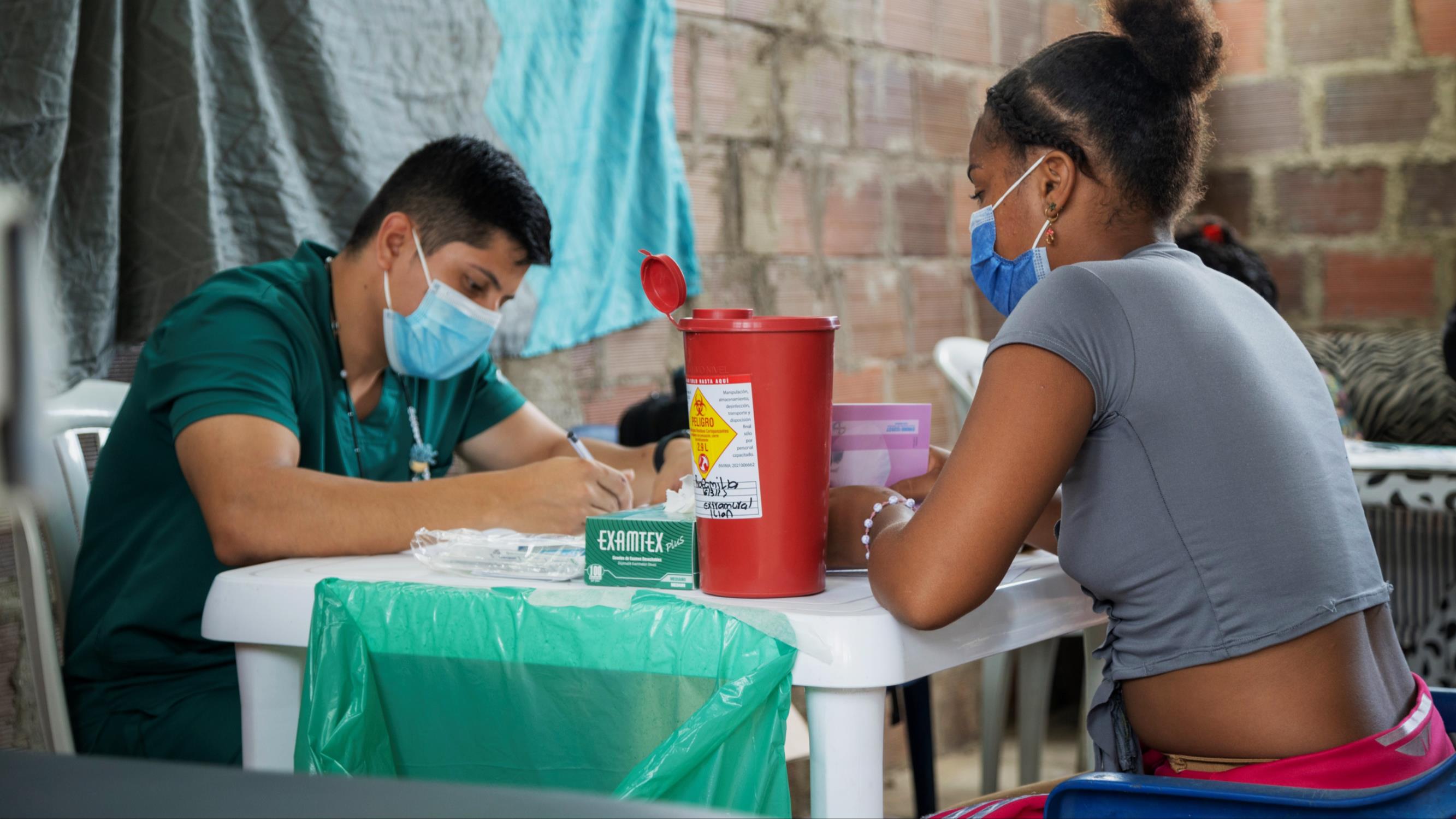
IPPF’s Member Associations and Collaborative Partners work to ensure that however far from home they are, women, girls and marginalised communities can access the care they need. We provide emergency sexual and reproductive healthcare to communities displaced by conflict or natural disasters, and ongoing, continuous care for people moving across continents.
Safe Passage
Safe Passage is our pioneering global initiative working to deliver uninterrupted sexual and reproductive healthcare for people on the move. Migration is not a single event - people on the move experience changing vulnerabilities - including conflict, displacement, irregular transit, exploitation, interrupted healthcare, SGBV and barriers to protection. Safe Passage provides adaptive, coordinated, and cross-border systems capable of accompanying people throughout their journeys.
The initiative is led by Member Associations, and connects 15 MAs working in two consortia across Latin America, Africa and the Arab World region. Through a combination of fixed clinics, mobile units, digital health approaches, and referral systems, we ensure that people can access safe, timely, and continuous care throughout their journeys. We provide specialized sexual and reproductive health services, mental health support, and care for survivors of gender-based violence along perilous migration routes.
Member Associations are trusted, local organizsations embedded in the communities in which they work. Alongside supporting internally displaced people, refugees, and migrants, they continue to provide sexual and reproductive health care to host communities, and work to change the narrative on migration and displacement from border control to human rights and equality.
when