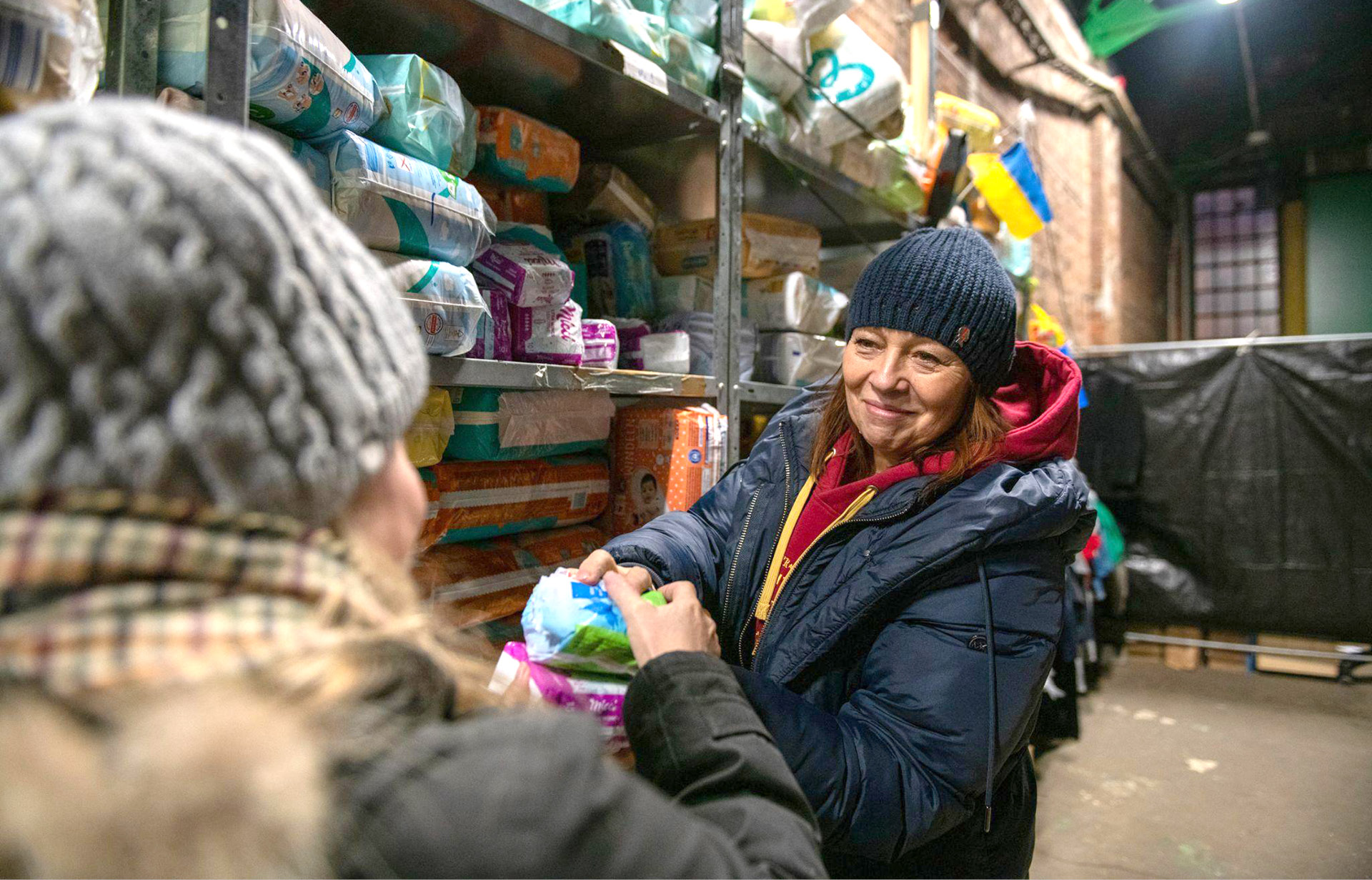




Life in Ukraine is still extremely hard and unstable. Even in places that feel calmer, the fear never fully goes away. The risk of missile and drone attacks is constant. It’s terrifying. People try to live normally, but the truth is that we are living in survival mode.
Healthcare access is limited, especially closer to the front lines. Hospitals have been damaged. Millions have been displaced, losing both their homes and their livelihoods.
The constant stress, uncertainty, and displacement have taken a toll on people’s mental health. At the same time, communities are trying to rebuild schools, homes and heating systems while the war is still going on around them.
But alongside the violence we can see and hear, another war has been quietly unfolding. It is a war waged on bodies, dignity and the most intimate parts of people’s lives. Sexual and gender-based violence has become one of its most devastating and least visible consequences, as survivors across Ukraine face the deliberate and targeted use of conflict related sexual violence that demands global attention.
Rape and sexual torture are being used deliberately by the Russian military as a calculated military tactic to terrorise communities in occupied areas. They see sexual violence as an easy, brutal way to break a community and assert total power. It’s a way to humiliate and destroy hope. The documented cases are only a fraction of what is happening. These crimes are massively underreported due to shame, fear, and the lack of access to temporarily occupied areas.
And we must also talk about men and boys. Sexual violence against them happens too, but it is too often hidden. When men and boys are captured by the Russian military, sexual violence is frequently used as a form of torture, interrogation, and severe humiliation. This can involve sexualized abuse, forced nudity, and genital mutilation.
For male survivors, the shame and stigma is huge. They worry that disclosing abuse means they have somehow lost their 'manhood.' This prevents many from speaking out or seeking the vital help they need. This is why our approach must always be gender inclusive. Every survivor deserves care.
Domestic violence has risen sharply too. War breaks down social norms and coping mechanisms. Trauma, stress, grief and displacement spill over inside households, and it is women and girls who often bear the brunt of this frustration and aggression.
At Women’s Health and Family Planning (WHFP), we are on the front lines of this work because we are on the front lines of healthcare. We provide confidential medical care to survivors, including emergency contraception, STI treatment, and psychological first aid. Our hotline and online chat services provide crucial support and information.
But we are not only responding, we are also working to prevent future harm. Working in partnership with the Ministry of Health, WHO and UNFPA, we are pushing preventative measures such as the HPV vaccine, which remains critical even in wartime. We are also training doctors, nurses and local healthcare staff to recognise the signs of abuse and refer survivors safely, compassionately and without judgement to legal and protection services.
Bringing perpetrators to justice is one of our major priorities. Ukraine’s Prosecutor General’s Office is actively investigating hundreds of cases of conflict-related sexual violence, working hard to build strong cases against the aggressors.
Ukraine is also working closely with the International Criminal Court and international experts to ensure we meet the highest standards for evidence gathering and prosecution. The process is tough. It requires extreme care for the survivors, and it’s very hard to prosecute people who are not in our custody. But we are committed to seeing justice served for every single survivor.
Being a national organisation is one of our greatest strengths. People trust us. Survivors feel safer opening up to people who speak their language, share their culture, and who they know will stay in the community for the long run. We understand the Ukrainian legal system, the realities of healthcare during the war, and the specific needs of our people in a way that international organisations often cannot. Our work ensures that the solutions we create are sustainable. We are building the national capacity for recovery and justice, making sure that support for survivors is a permanent feature of the new, post-war Ukraine.
But the world must continue to pay attention. There is a real danger of attention fatigue. When global interest fades, so does the funding that keeps services running. Survivors need long-term support, not just emergency assistance. Continued attention also keeps pressure on international courts and investigators. These crimes must not be forgotten or ignored. Sexual violence is a war crime, and the world must treat it as such.
Our hope for the future is simple – we want women and girls in Ukraine to live free from bombs and all forms of violence. We want them to have reliable access to the full health services they need, from cancer prevention to comprehensive reproductive care. We want every survivor to receive the support they need to heal and reclaim their voice.
And I believe women must be at the heart of Ukraine’s recovery. I hope they take their rightful place in leadership, at the highest levels of government and community, ensuring a truly equal, democratic and prosperous post-war Ukraine. Because we are not only fighting to survive this war. We are fighting for the kind of country we want to rebuild afterwards.
when
country
Ukraine
region
European Network
Related Member Association
Women Health and Family Planning - Ukraine