


Luca Stevenson
IPPF Community Engagement and Partnership Global LeadLuca Stevenson is IPPF Community Engagement and Partnership Global Lead.
Articles by Luca Stevenson
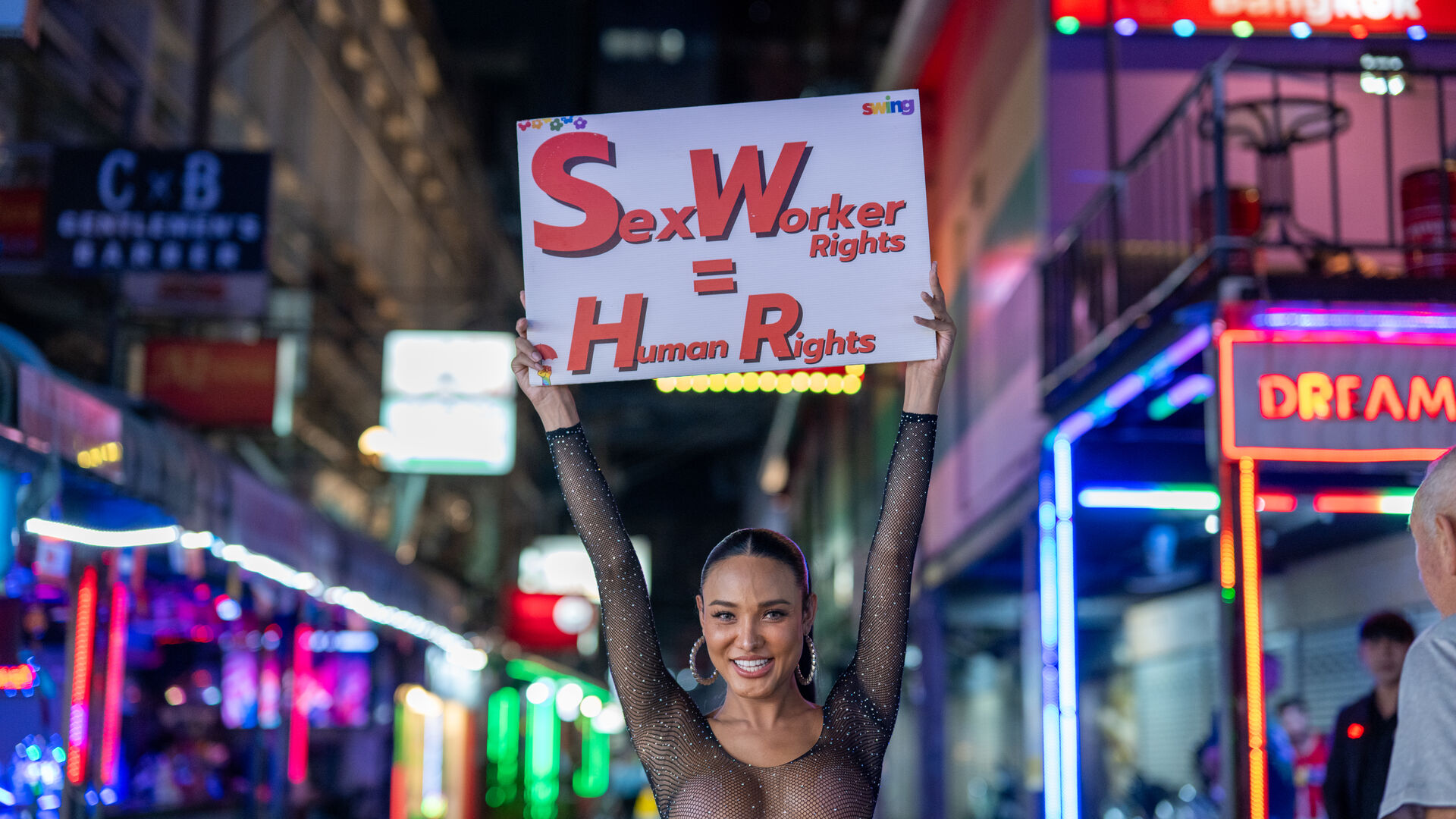
Sex Worker Pride Day: No reproductive justice without sex workers
For too long, sex workers have been treated as a niche issue for the SRHR sector, rather than a community of people with intersecting, full lives. Conversations around sex workers have focused narrowly on HIV, trafficking or legal debates, with outside voices doing most of the talking. Sex workers themselves have too often been left out of the conversation on decisions that directly affect them.That has to change.At its core, our work is about one thing: everyone's right to make decisions about their own body, sexuality, and live a life free from coercion, discrimination and violence. That's why IPPF supports sex workers and the sex worker rights movement.The lived impact of criminalisation and stigma directly impacts whether someone feels safe walking into a clinic, reporting violence, organising with others or seeking justice. And while health programmes have long engaged sex workers mainly through a HIV lens, the sexual and reproductive health needs of sex workers goes far beyond that. Like anyone else, sex workers need contraception, abortion care, cancer screening, mental health support and protection from gender-based violence.Over the past two years, our Sex Work Consortium has put that belief into action, and taught us what real solidarity looks like.Led by the Planned Parenthood Association of Thailand, the Consortium brings together IPPF Member Associations, sex worker-led organisations, and regional and global networks. It asks a different question: what becomes possible when sex worker communities are treated as partners and leaders.The results speak for themselves. In Indonesia, the Indonesian Planned Parenthood Association partnered with sex worker-led organisation Indonesian Social Change Organization (OPSI) to link community outreach with SRH services, legal support and public health facilities, giving more than 1,200 sex workers access to mobile SRH services and, just as importantly, building lasting trust between communities and healthcare providers. In Latin America, RedTraSex has helped sex workers step into political leadership roles, while networks like NSWP and APNSW have connected communities across countries to share knowledge. A key practical tool ‘Advancing Sex Workers’ Sexual and Reproductive Health and Rights: A Toolkit for Inclusive Programming’ was launched at AIDS2026 in Rio and is available to all service providers and sex workers organisations to strengthen and improve SRH services and advocacy for decriminalisation.The biggest lesson from all this is that real community engagement isn't just inviting people into a programme or meeting. It means listening, sharing resources and decision-making power, and being willing to change how our own institutions work.Around the world, anti-rights attacks on abortion rights, LGBTQI+ rights, gender equality, sexuality education and sex workers' rights are drawing on the same playbook: controlling sexuality, deciding which choices count as legitimate, and deciding who can be trusted to make decisions about their own body.For IPPF, these fights are inseparable. We can't defend bodily autonomy while accepting that sex workers deserve less of it. We can't fight gender-based violence while ignoring how criminalisation, stigma and policing can make people more vulnerable to it. And we can't build an inclusive feminist and reproductive justice movement while sex workers are still talked about instead of listened to.The relationship between sex work and the feminist movement has been complicated at times, but that history should never be used as an excuse to exclude sex workers or compromise on the self-determination we champion for everyone else. That's the biggest thing the Sex Work Consortium has taught us. We're proud of the healthcare access we've expanded, the organisations we've grown, and the leaders we've helped develop. But our greatest win is the partnerships themselves: sex worker advocates and Member Associations sharing knowledge, shaping policy, and making sure sex workers lead the conversations about their own lives.Sex Worker Pride Day is a chance to celebrate what we've built together, and to recommit to each other.Sex workers' rights are human rights. No one can claim to champion bodily autonomy while leaving marginalised communities behind. As we mark Sex Worker Pride, we're proud of what we've achieved, and ready for the work still ahead.

04 December 2024
Countdown to 2030: The Challenges of Ending the HIV Pandemic
In the wake of World AIDS Day, we reflect on the recent AIDS conference, which convened over 11,000 researchers, policymakers, industry leaders, funders, and civil society representatives united in the fight against HIV and AIDS. IPPF participated with a delegation comprising representatives from its Member Associations and staff, collectively representing 16 countries. This conference, the largest global gathering on HIV & AIDS, offered a crucial opportunity to explore the latest scientific developments, particularly in bio-medical prevention tools such as the long-acting PrEP injectable and dual prevention pills. Beyond science, the event also provided a platform to examine the wider political and social contexts that continue to impact the global fight against the pandemic. A grim reality: the numbers speak Despite decades of progress, the goal of ending HIV by 2030 remains challenging, as underscored by a few sobering statistics: Someone dies from AIDS-related illnesses every minute In 2023 alone, 630,000 people died from AIDS-related illnesses There are still 1.3 million new cases of HIV annually The fastest-growing rates of HIV are in the MENA region, Latin America, Central Asia, and Eastern Europe The country with the highest rate of new cases worldwide is Eswatini These figures serve as a stark reminder of the ongoing impact of HIV on global populations.
Sex Worker Pride Day: No reproductive justice without sex workers
For too long, sex workers have been treated as a niche issue for the SRHR sector, rather than a community of people with intersecting, full lives. Conversations around sex workers have focused narrowly on HIV, trafficking or legal debates, with outside voices doing most of the talking. Sex workers themselves have too often been left out of the conversation on decisions that directly affect them.That has to change.At its core, our work is about one thing: everyone's right to make decisions about their own body, sexuality, and live a life free from coercion, discrimination and violence. That's why IPPF supports sex workers and the sex worker rights movement.The lived impact of criminalisation and stigma directly impacts whether someone feels safe walking into a clinic, reporting violence, organising with others or seeking justice. And while health programmes have long engaged sex workers mainly through a HIV lens, the sexual and reproductive health needs of sex workers goes far beyond that. Like anyone else, sex workers need contraception, abortion care, cancer screening, mental health support and protection from gender-based violence.Over the past two years, our Sex Work Consortium has put that belief into action, and taught us what real solidarity looks like.Led by the Planned Parenthood Association of Thailand, the Consortium brings together IPPF Member Associations, sex worker-led organisations, and regional and global networks. It asks a different question: what becomes possible when sex worker communities are treated as partners and leaders.The results speak for themselves. In Indonesia, the Indonesian Planned Parenthood Association partnered with sex worker-led organisation Indonesian Social Change Organization (OPSI) to link community outreach with SRH services, legal support and public health facilities, giving more than 1,200 sex workers access to mobile SRH services and, just as importantly, building lasting trust between communities and healthcare providers. In Latin America, RedTraSex has helped sex workers step into political leadership roles, while networks like NSWP and APNSW have connected communities across countries to share knowledge. A key practical tool ‘Advancing Sex Workers’ Sexual and Reproductive Health and Rights: A Toolkit for Inclusive Programming’ was launched at AIDS2026 in Rio and is available to all service providers and sex workers organisations to strengthen and improve SRH services and advocacy for decriminalisation.The biggest lesson from all this is that real community engagement isn't just inviting people into a programme or meeting. It means listening, sharing resources and decision-making power, and being willing to change how our own institutions work.Around the world, anti-rights attacks on abortion rights, LGBTQI+ rights, gender equality, sexuality education and sex workers' rights are drawing on the same playbook: controlling sexuality, deciding which choices count as legitimate, and deciding who can be trusted to make decisions about their own body.For IPPF, these fights are inseparable. We can't defend bodily autonomy while accepting that sex workers deserve less of it. We can't fight gender-based violence while ignoring how criminalisation, stigma and policing can make people more vulnerable to it. And we can't build an inclusive feminist and reproductive justice movement while sex workers are still talked about instead of listened to.The relationship between sex work and the feminist movement has been complicated at times, but that history should never be used as an excuse to exclude sex workers or compromise on the self-determination we champion for everyone else. That's the biggest thing the Sex Work Consortium has taught us. We're proud of the healthcare access we've expanded, the organisations we've grown, and the leaders we've helped develop. But our greatest win is the partnerships themselves: sex worker advocates and Member Associations sharing knowledge, shaping policy, and making sure sex workers lead the conversations about their own lives.Sex Worker Pride Day is a chance to celebrate what we've built together, and to recommit to each other.Sex workers' rights are human rights. No one can claim to champion bodily autonomy while leaving marginalised communities behind. As we mark Sex Worker Pride, we're proud of what we've achieved, and ready for the work still ahead.
04 December 2024
Countdown to 2030: The Challenges of Ending the HIV Pandemic
In the wake of World AIDS Day, we reflect on the recent AIDS conference, which convened over 11,000 researchers, policymakers, industry leaders, funders, and civil society representatives united in the fight against HIV and AIDS. IPPF participated with a delegation comprising representatives from its Member Associations and staff, collectively representing 16 countries. This conference, the largest global gathering on HIV & AIDS, offered a crucial opportunity to explore the latest scientific developments, particularly in bio-medical prevention tools such as the long-acting PrEP injectable and dual prevention pills. Beyond science, the event also provided a platform to examine the wider political and social contexts that continue to impact the global fight against the pandemic. A grim reality: the numbers speak Despite decades of progress, the goal of ending HIV by 2030 remains challenging, as underscored by a few sobering statistics: Someone dies from AIDS-related illnesses every minute In 2023 alone, 630,000 people died from AIDS-related illnesses There are still 1.3 million new cases of HIV annually The fastest-growing rates of HIV are in the MENA region, Latin America, Central Asia, and Eastern Europe The country with the highest rate of new cases worldwide is Eswatini These figures serve as a stark reminder of the ongoing impact of HIV on global populations.
